Seasonal Home Improvement: Planning and Executing Projects Throughout the Year
By Housey · Last reviewed 24th of May 2026
Seasonal Home Improvement: Planning and Executing Projects Throughout the Year
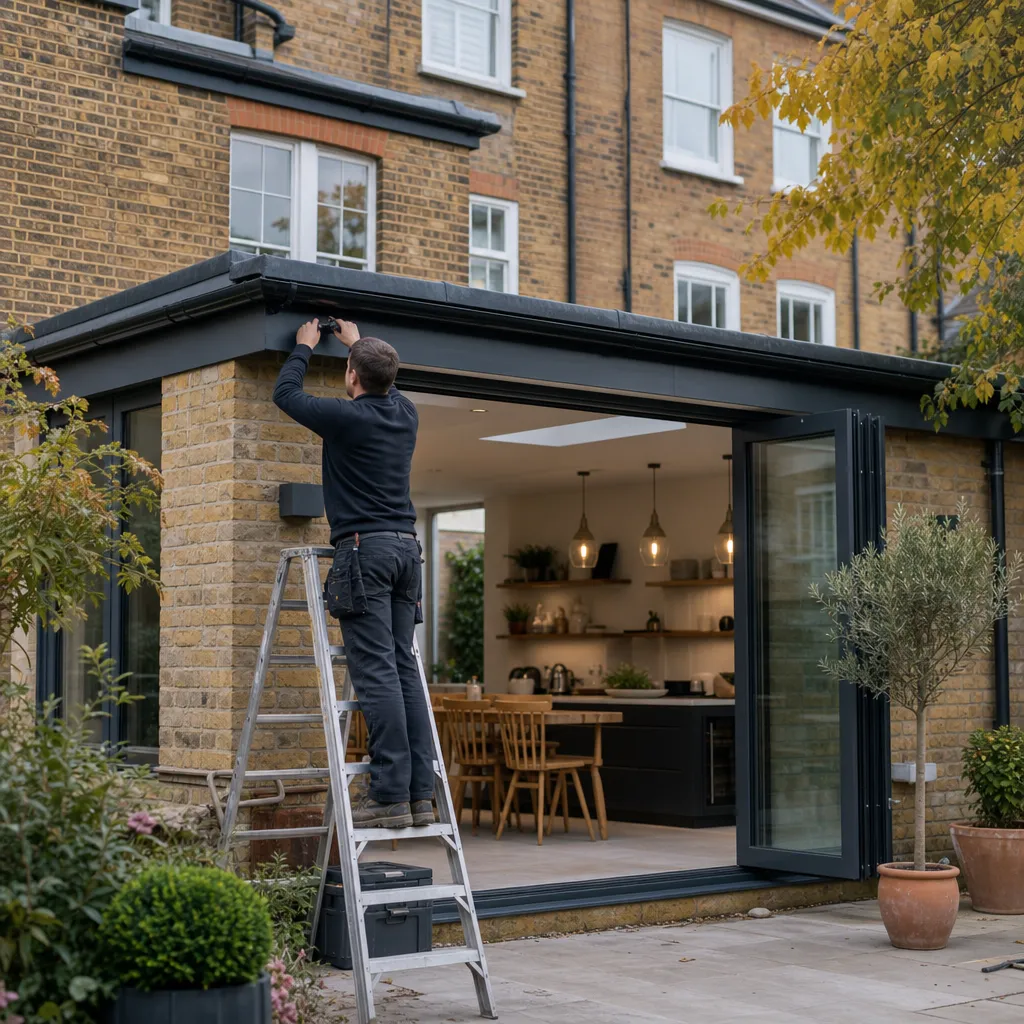
Timing a home improvement project is one of the most common sources of delay and frustration for UK homeowners. Whether you are planning a single-storey extension, a new roof, or a loft conversion, the season you choose to start affects contractor availability, weather risk, and material curing times. Most homeowners begin planning in January or February, only to find that trade demand and regulatory lead times mean work cannot safely begin until April or later — a gap that careful seasonal planning can close.
Key points
- Planning permission for householder applications typically takes 8 weeks from validation under the Town and Country Planning Act 1990 — factor this into your project start date.
- Building Regulations approval via the full plans route can take 5–8 weeks; the building notice route is faster but carries more risk if non-compliant work is carried out.
- Roofers and external contractors report peak demand from April to September; approaching them in January or February often secures an April–June start date.
- Wet concrete and render require temperatures above 5°C to cure correctly — a critical consideration for any groundwork or masonry planned between November and March.
- Loft conversions can proceed in most months, but scaffold erection and external structural work carry greater weather risk between October and February.
When does the season matter most?
Season matters most for any work that depends on weather, external access, or drying times. Roofing, extensions, new-build garden structures, and masonry are most affected. Interior projects — kitchen fitting, bathroom refurbishment, and electrical upgrades — are largely season-agnostic, though damp ingress during winter can affect plastering schedules on projects where the building envelope is not yet watertight.
The following table shows how common project types map to UK seasons:
Project type | Best season | Winter risk | Notes |
|---|---|---|---|
Roof replacement or repair | April–September | High — rain, ice, short daylight | Slating and tiling require dry, frost-free conditions |
Single-storey extension | April–October | Moderate — groundwork affected by frost | Foundations require ground above 0°C; internal fit-out can continue in winter |
Loft conversion | March–October | Low–moderate | Structural frame can be erected in most weather; external work riskier in ice |
New driveway or paving | April–September | High — sub-base moisture-sensitive | Tarmac requires ambient temperatures above 5°C |
Kitchen or bathroom refurbishment | Year-round | Low | No external exposure; trades can work around a temporary heating arrangement |
Garden landscaping | March–November | Moderate — ground may be waterlogged | Lawn seeding and turfing best April–October |
External painting and rendering | April–September | High — render must not freeze | Minimum 5°C for most render systems |
Spring and summer (March–August): securing external works
Spring and summer are the peak season for external construction in the UK. Contractor demand rises sharply from March as homeowners activate projects planned over winter. If you want work to start in April or May, approach contractors no later than January — for roofers and extension builders, a 3–6 month lead time is common in many areas.
Key actions for a spring or summer start:
- Submit any planning applications by January so you have a decision before an April start — the 8-week statutory period means a mid-January submission typically yields a mid-March result.
- Obtain at least three quotes in February so you can compare scope, payment schedules, and warranties before committing.
- Confirm building regulations applications are in place before structural work begins — no exemption applies to most extensions and conversions.
- Order bespoke materials (windows, structural steel, roofing products) early; supply chain delays of 4–8 weeks are common for custom items.
Autumn (September–November): interiors, planning, and preparation
Autumn is often the most cost-effective period for interior work and for laying the groundwork for a spring external project. Contractor demand for loft conversions, kitchen refurbishments, and bathroom replacements eases slightly compared with peak summer, which can mean shorter lead times and more competitive quotes.
This window also suits:
- Submitting householder planning applications for works intended to begin the following spring.
- Commissioning structural engineer or architect drawings for extensions or conversions.
- Carrying out pre-project surveys — damp assessments, structural inspections, and energy assessments — while the building is accessible and conditions are dry.
- Making the building envelope watertight before winter: check and repair roof coverings, gutters, and external pointing.
Winter (December–February): planning, quoting, and interior projects
Winter is not a dead season for home improvement. External structural work becomes riskier, but this period suits:
- Detailed planning and contractor tendering: prepare specification documents for building control and planning submissions.
- Interior projects where the shell is already weatherproof: first-fix electrics, kitchen installation, bathroom refurbishment, and internal plastering.
- Obtaining and comparing quotes for spring external works.
- Applying for planning permission so approval arrives by February or March, ahead of a spring construction start.
Check your buildings insurance policy before deferring urgent repair work. Some insurers will not pay out on claims where a known defect — such as a failing roof covering — was not addressed within a reasonable period.
Which project should you prioritise? A decision guide
- Prioritise urgent repairs — roof leaks, structural movement, failed damp-proofing — over cosmetic improvements regardless of season. Deferred maintenance typically increases repair costs.
- Choose exterior works in spring–summer if budget allows only one major project per year; longer days and drier weather reduce risk.
- Schedule interior works in autumn–winter to use the lower-demand period and prepare the property for external works the following year.
- Sequence logically: complete structural work before interior finishes; complete roof work before a loft conversion; complete an extension shell before fitting it out internally.
- Speak to a structural engineer or architect before sequencing multiple large projects — interdependencies are not always obvious from a homeowner's perspective.
Homeowner planning checklist
Before booking any seasonal home improvement project, work through the following:
When to get professional help
Most seasonal planning decisions can be made by well-informed homeowners, but professional advice is important when:
- You are uncertain whether planning permission or Building Regulations approval is required.
- The project involves structural alterations, new loadbearing elements, or work close to a boundary.
- You have identified damp, cracking, or other defects that may affect the project scope.
- You are planning simultaneous or closely sequenced projects and need to understand dependencies.
- A contractor's quote excludes structural engineer sign-off, building control, or party wall matters — on most structural projects, these elements are not optional.
How Housey can help
Housey connects UK homeowners with vetted local tradespeople for extension builds, roofing work, and loft conversions. Describe your project and preferred start date, and receive responses from local contractors who can confirm their availability for your chosen season.
Frequently asked questions
What is the best time of year to start a home extension in the UK?
Spring — typically April to June — is generally the most suitable time to begin a home extension. Ground conditions are stable, days are lengthening, and drying times for concrete and render are reasonable. To secure an April start, approach contractors in January and ensure any planning or building regulations applications are submitted promptly, allowing for the 8-week statutory determination period.
Can building work proceed in winter in the UK?
Yes. Interior refurbishments, first-fix trades, kitchen and bathroom installation, and internal plastering are largely unaffected by winter weather. Groundwork, external masonry, roofing, and rendering are more weather-dependent and may be delayed or paused if temperatures drop below 5°C or prolonged rain is forecast.
How far in advance should I book a builder for a major renovation?
For major projects such as extensions or loft conversions, booking 3–6 months ahead of your preferred start date is advisable, particularly for spring and early summer starts. Smaller interior projects tend to have shorter lead times, but reputable tradespeople commonly carry waiting lists of 4–12 weeks.
Does planning permission timing affect when I can start work?
Yes. Householder planning applications under the Town and Country Planning Act 1990 typically take 8 weeks from the date the application is validated. Submitting in January can yield a decision by mid-March, supporting a spring construction start. Some applications take longer if the LPA requests additional information or the case is referred to a planning committee.
Sources and further reading
Useful next reads
 Improvement & Build
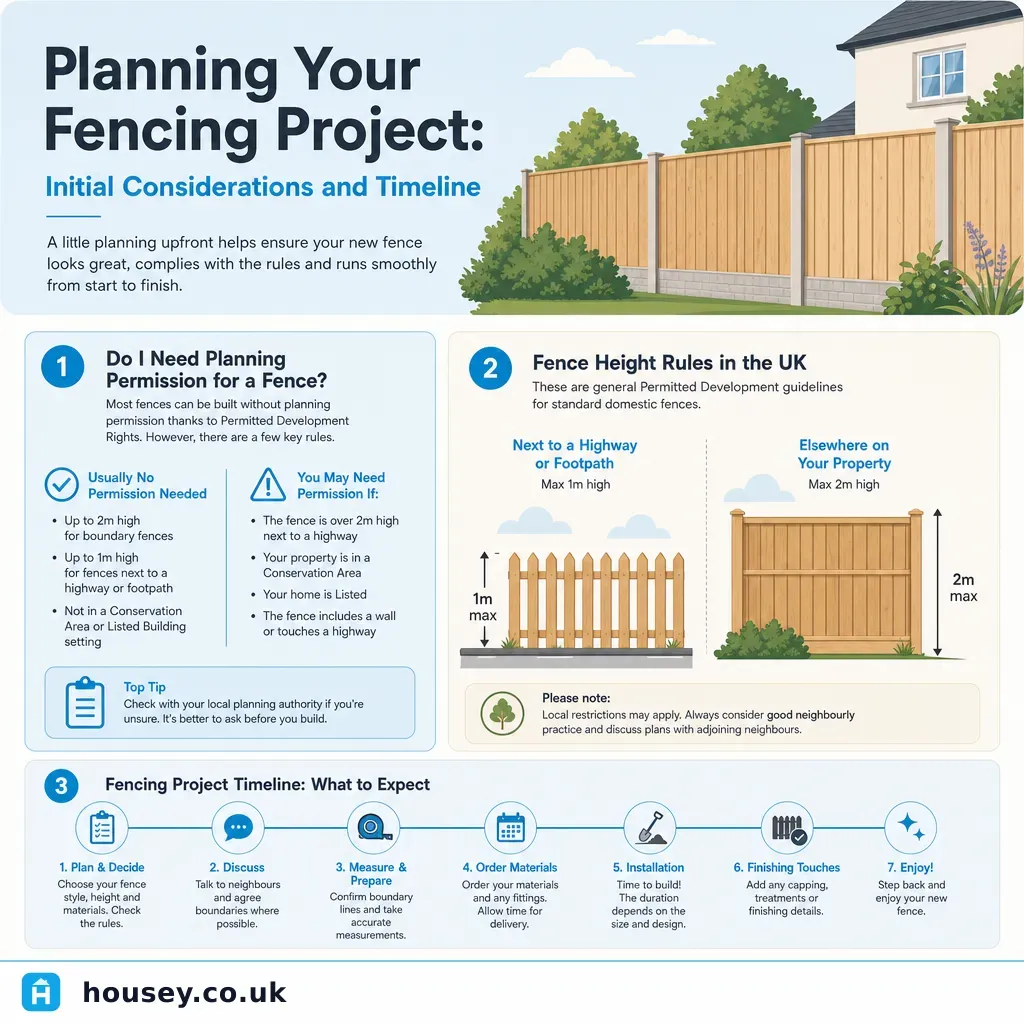
Planning Your Fencing Project: Initial Considerations and Timeline
Planning a fencing project involves checking boundary ownership from your title deeds, confirming planning permission thresholds — 2m maximum height in England, or 1m adjacent to a highway — and choosing a material suited to your climate and budget.
 Improvement & Build
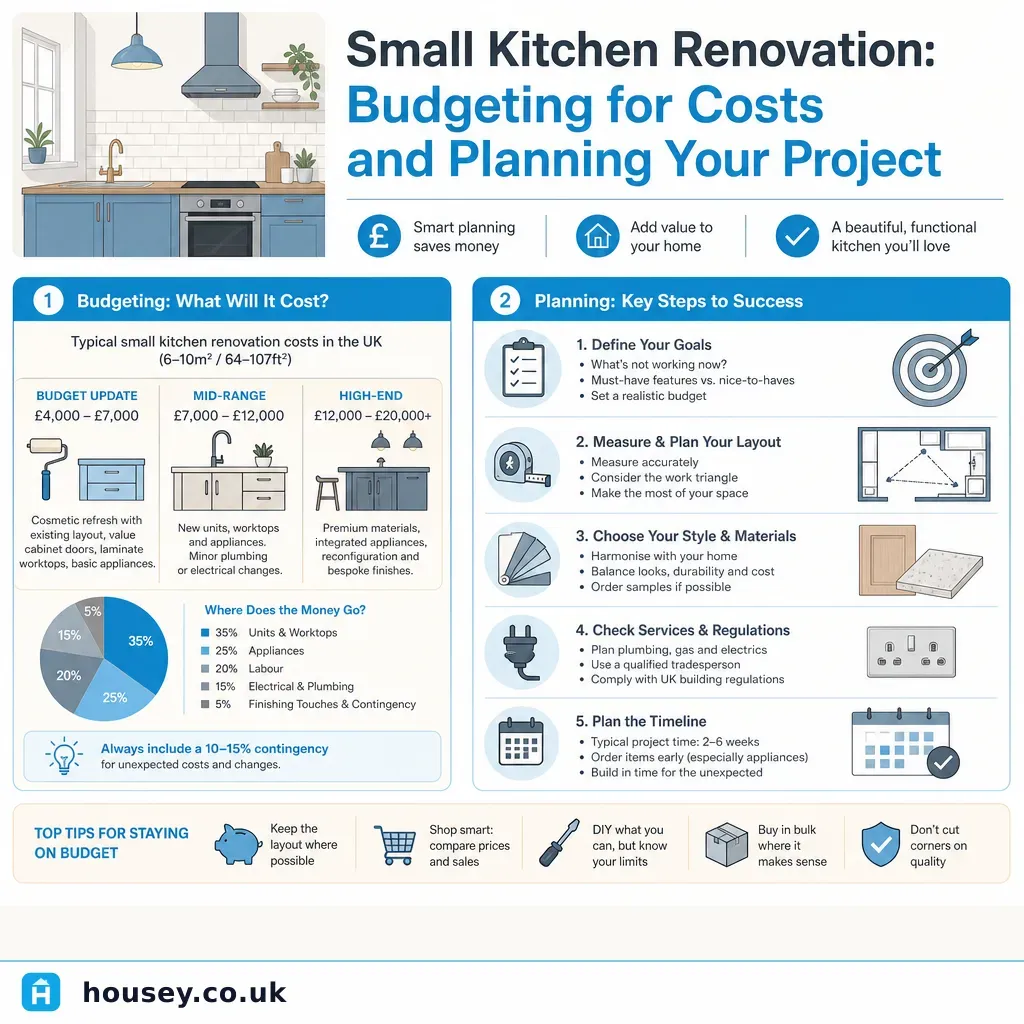
Small kitchen renovation: budgeting for costs and planning your project
A small kitchen renovation in the UK typically costs £5,000–£15,000 for a full refresh including new units, worktops, tiling, and appliances, though costs vary widely by specification, region, and whether structural changes or rewiring are involved.
 Improvement & Build
Conservatories and Garden Extensions: Design and Building Guide
Most conservatories qualify as permitted development in England if they are single-storey, within 50% of original curtilage, and meet dimensional limits.
 Improvement & Build
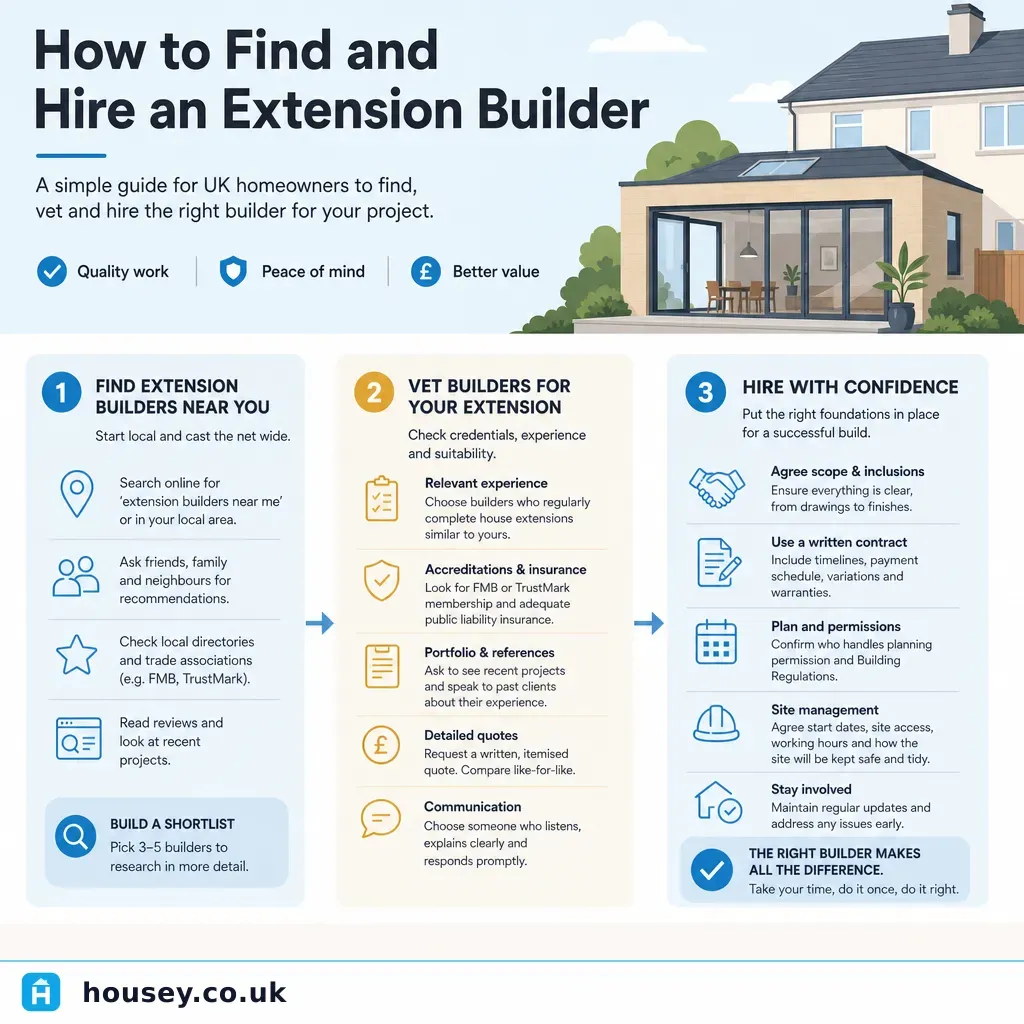
How to Find and Hire an Extension Builder
To hire a reliable extension builder, get at least three detailed written quotes from contractors with documented experience of similar projects.
 Improvement & Build
Painting Interior Doors: Preparation and Technique
Painting interior doors well depends on preparation rather than paint choice.