Selecting a Concrete Contractor: What to Ask Before You Hire
By Housey · Last reviewed 18th of May 2026
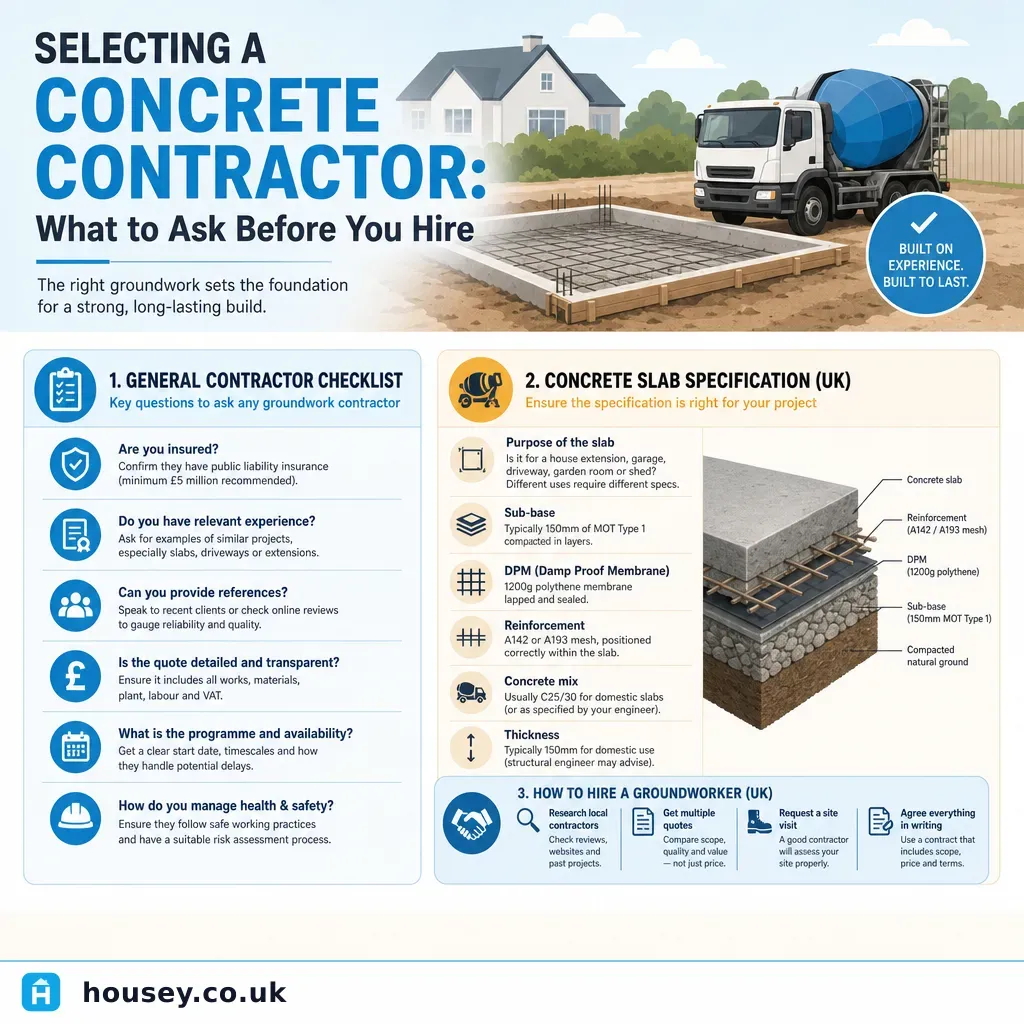
Selecting a Concrete Contractor: What to Ask Before You Hire
Concrete work underpins many of the most significant improvements a UK homeowner can make — from new foundations and drainage channels to garden paths, outbuildings, and driveways. Choosing the wrong contractor can mean cracking, subsidence, or work that fails building control inspection, leaving you with costly remediation. Understanding what to discuss before signing a contract is the single most effective way to protect your investment.
Key points
- Concrete mixes for domestic groundwork are specified to BS 8500 — GEN3 is the minimum designated mix for strip foundations, while C30 is commonly used for reinforced driveway and floor slabs.
- Any concrete work forming part of a structural element (foundations, retaining walls, load-bearing slabs) may require building control notification under Building Regulations Part A.
- Reputable contractors should carry public liability insurance of at least £1 million; £2 million or more is standard for larger groundworks projects.
- Concrete achieves approximately 70% of its design strength within 7 days but requires 28 days for full curing — avoid loading a new slab before this period unless your contractor advises otherwise.
- The Construction Skills Certification Scheme (CSCS) provides cards confirming that operatives have passed a health and safety test and hold relevant trade qualifications — checking for these is a basic indicator of verified competence.
What qualifications and experience should a concrete contractor have?
There is no single mandatory licence for concrete contractors in England and Wales, but several indicators signal a credible, competent operator.
Look for membership of trade bodies such as the Federation of Master Builders (FMB) or the National Federation of Builders (NFB). These organisations require members to demonstrate insurance, references, and trading history before accepting them.
For groundworks specifically, ask whether operatives hold CSCS cards. While not legally mandated on domestic sites, CSCS cards show that workers have passed a health and safety assessment and hold relevant qualifications — a useful baseline check before work starts.
Where the project involves drainage, check whether the contractor is familiar with Part H of the Building Regulations (drainage and waste disposal) and the requirements of your local water authority.
What to ask before accepting a quote
Use this checklist when speaking to any concrete contractor before committing to a quote.
About the company
- How long have you been trading, and can you provide references from comparable projects completed in the last 12 months?
- Are you a sole trader or limited company, and can you provide evidence of public liability insurance (minimum £1 million)?
- Do your operatives hold CSCS cards?
- Are you a member of a recognised trade body such as the FMB or NFB?
About the specification
- What concrete mix are you specifying, and why is it appropriate for this project?
- Will the work comply with BS 8500, and can you confirm this in writing?
- What sub-base preparation is included — will you remove existing material, and to what depth?
- Is reinforcement (mesh or rebar) included, and to what specification?
- How will you handle expansion joints, and at what intervals?
About the contract and costs
- Is VAT included in the quoted price?
- What payment terms do you require, and do you ask for a deposit?
- What are the start and completion dates, and what happens if there are delays?
- What is excluded from the price — skip hire, disposal of arisings, temporary access?
- Who is responsible for obtaining any necessary building control approval?
About aftercare
- What curing period do you recommend before the slab can be loaded?
- Is there a defects liability period, and what does it cover?
- What happens if cracking appears within 12 months?
Understanding a concrete quote
Quotes can vary significantly because contractors price sub-base preparation, materials, labour, and disposal differently. When comparing quotes, look for these line items:
Line item | What to check |
|---|---|
Sub-base | Depth specified (typically 100–150 mm compacted hardcore for a domestic slab) |
Concrete mix | Grade stated (e.g., C25, C30) and compliance with BS 8500 |
Reinforcement | Mesh type and weight (e.g., A142, A193) where applicable |
Formwork | Whether included or charged additionally |
Disposal | Skip hire and removal of excavated material — often quoted separately |
VAT | Confirm whether the price is ex-VAT or inclusive |
Finishing | Type of finish specified (power-float, broom, exposed aggregate) |
A quote that omits these line items or provides a single lump sum without breakdown is harder to compare and should prompt further questions before you commit.
Red flags to watch for
- Unusually low price with no breakdown: low quotes often mean a thinner sub-base, lower-grade concrete, or absent reinforcement — all of which affect long-term performance.
- Pressure to start immediately: legitimate contractors can usually give you time to consider a quote before committing.
- Cash-only payment demanded upfront: reputable contractors accept staged payment — typically a deposit on agreement, then payment on satisfactory completion.
- No written contract or specification: verbal agreements are inadequate for concrete projects; get the scope and price confirmed in writing before work begins.
- No insurance documentation: ask to see the actual certificate, not just a verbal assurance.
- Reluctance to discuss building control: if your project may require notification, a contractor who discourages this is a warning sign.
When to get professional help
For straightforward concrete paths or garden areas, a competent groundworks contractor is usually sufficient. However, seek additional professional input if:
- The project involves new foundations for an extension, garage, or outbuilding — a structural engineer or building control officer should review specifications.
- You are working near an existing structure and are unsure of the current foundation depth or condition.
- Ground conditions are poor — made ground, clay with high-shrinkage potential, or areas of known subsidence may warrant a soil investigation before work begins.
- The project is in a conservation area or involves a listed building, where even minor groundworks can require listed building consent.
How Housey can help
Housey connects you with vetted groundworkers and driveway installers who can provide itemised quotes for concrete work across the UK. Compare up to four quotes from local specialists and review their credentials before committing to any contractor.
Frequently asked questions
Does concrete work require building regulations approval?
It depends on scope. A simple garden path generally needs no building regulations approval. Concrete foundations for an extension, garage, or new structure will typically require building control notification and inspection under Part A (structural) and possibly Part C (site preparation and resistance to contaminants and moisture). Check with your local authority building control (LABC) or an approved inspector before starting.
How long does a concrete slab take to cure?
Concrete reaches approximately 70% of its design strength within 7 days under normal UK conditions. Full curing takes around 28 days. In cold or wet weather, curing slows significantly — avoid laying concrete when temperatures are forecast to drop below 5°C without appropriate frost protection.
What is the difference between ready-mix and site-mixed concrete?
Ready-mix concrete is batched to a precise specification at a plant and delivered by truck — more consistent and suitable for larger pours. Site-mixed concrete is produced on-site using a mixer, offering flexibility for small quantities but with less control over consistency. For structural groundwork, ready-mix is usually the more reliable choice.
How much should I expect to pay for a domestic concrete slab?
Indicative UK costs, last reviewed 2026-05-18: a basic 100 mm C25 concrete slab on 100 mm compacted hardcore sub-base typically costs between £80 and £130 per m², including labour, materials, and disposal, but excluding VAT. Prices vary by region, access, ground conditions, and specification. Always obtain at least three itemised quotes.
Sources and further reading
- Building Regulations Approved Document A (structure) — GOV.UK
- Building Regulations Approved Document H (drainage and waste disposal) — GOV.UK
- Construction Skills Certification Scheme (CSCS) — CSCS
- Federation of Master Builders — find a builder — Federation of Master Builders
- BS 8500 — specifying and manufacturing concrete — BSI Group
Useful next reads
 Improvement & Build
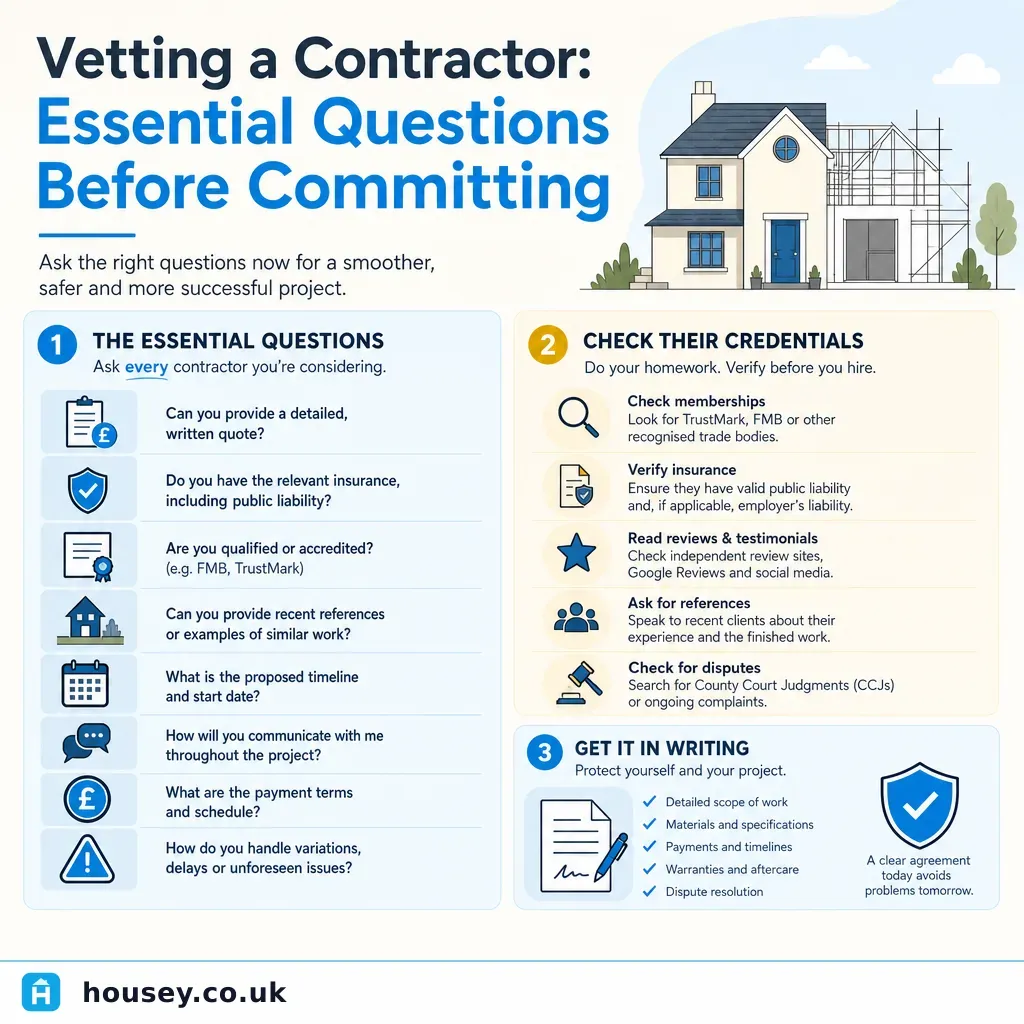
Vetting a Contractor: Essential Questions Before Committing
Vet a contractor by checking their full business name on Companies House, requesting current insurance certificates, verifying trade body membership directly with the association, and speaking to references from comparable recent jobs.
 Improvement & Build
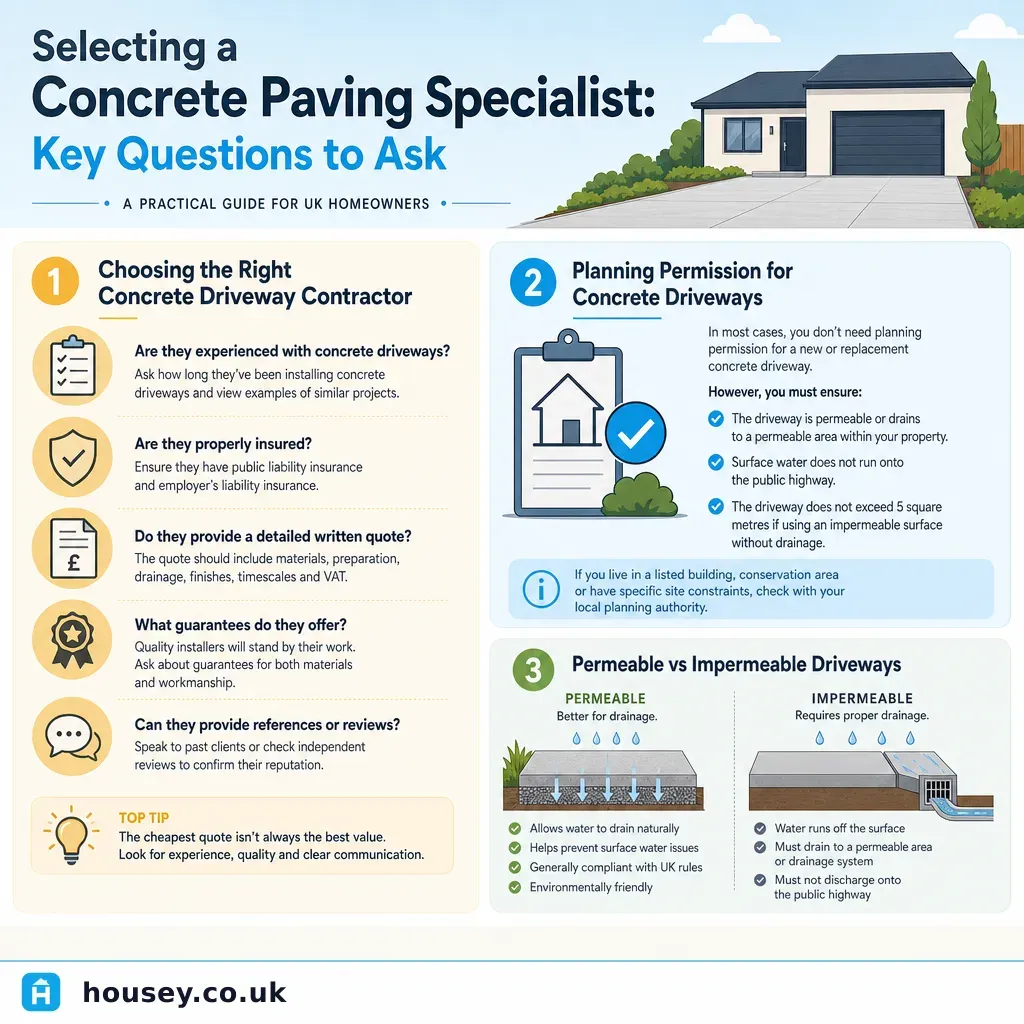
Selecting a Concrete Paving Specialist: Key Questions to Ask
When selecting a concrete paving specialist, check whether your planned surface requires planning permission — in England, impermeable driveways over 5 m² usually need consent unless drainage is properly managed.
 Improvement & Build
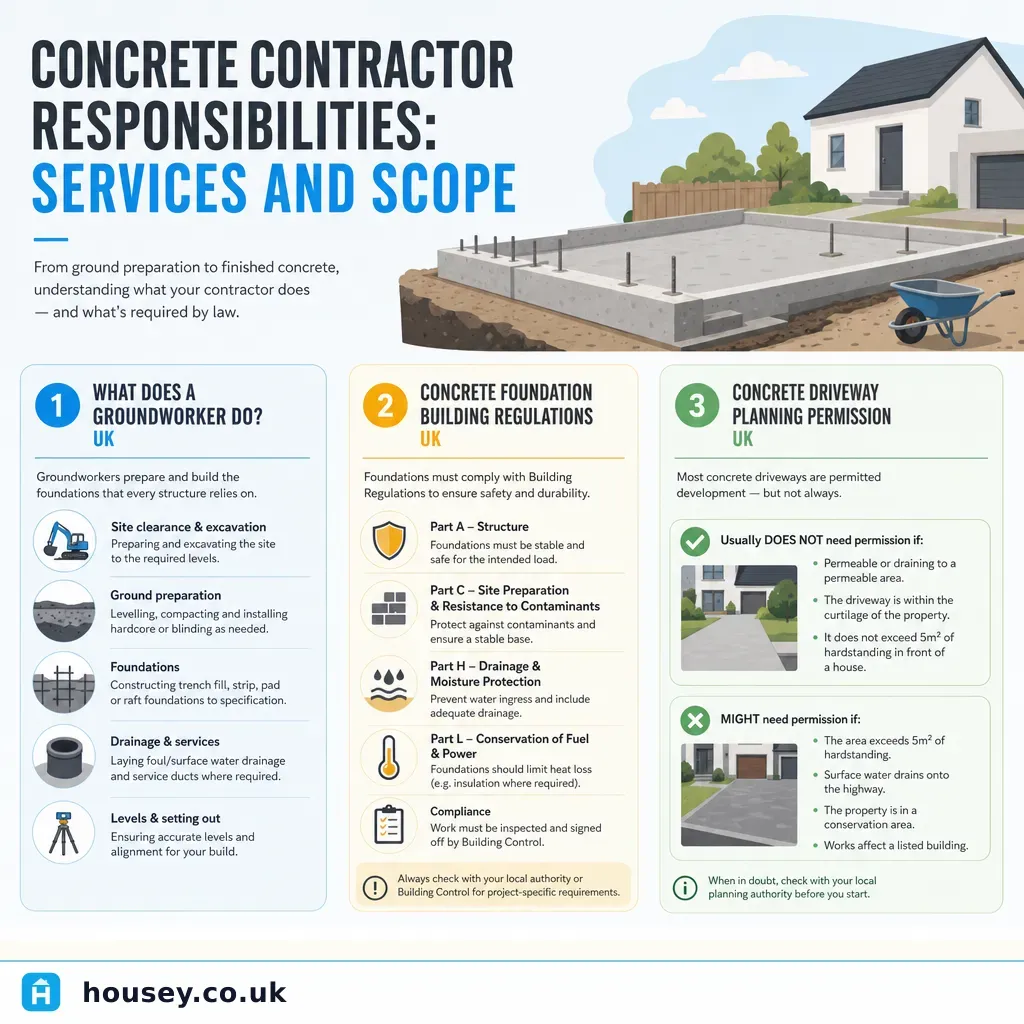
Concrete Contractor Responsibilities: Services and Scope
Concrete contractors and groundworkers handle the sub-structure of UK building projects — excavating, forming foundations, laying floor slabs, and installing driveways and hardstanding.
 Improvement & Build
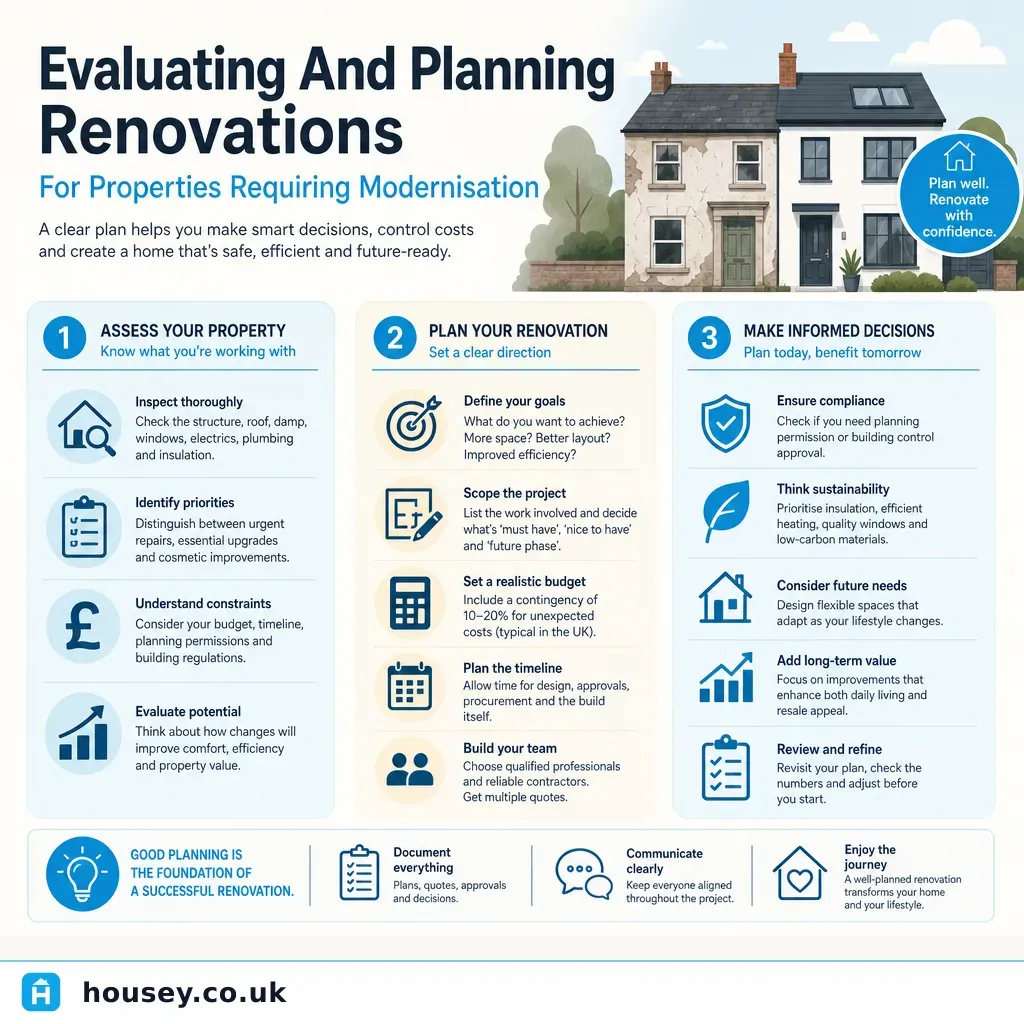
Evaluating And Planning Renovations For Properties Requiring Modernisation
Start by commissioning a condition survey — RICS Level 3 for pre-1919 properties — to identify structural defects, damp, and services issues before finalising a budget.
 Improvement & Build
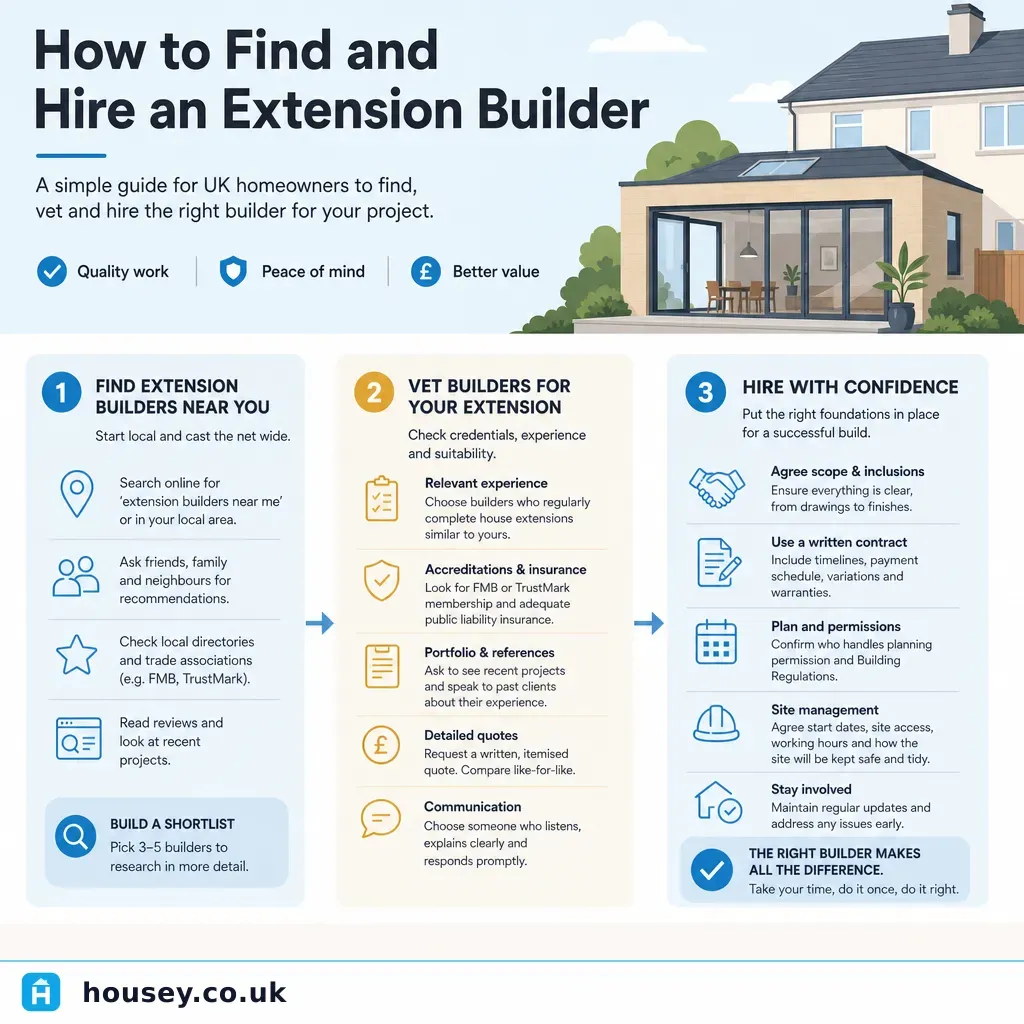
How to Find and Hire an Extension Builder
To hire a reliable extension builder, get at least three detailed written quotes from contractors with documented experience of similar projects.