Selecting an Energy-Efficient Boiler for Your Home
By Housey · Last reviewed 30th of May 2026
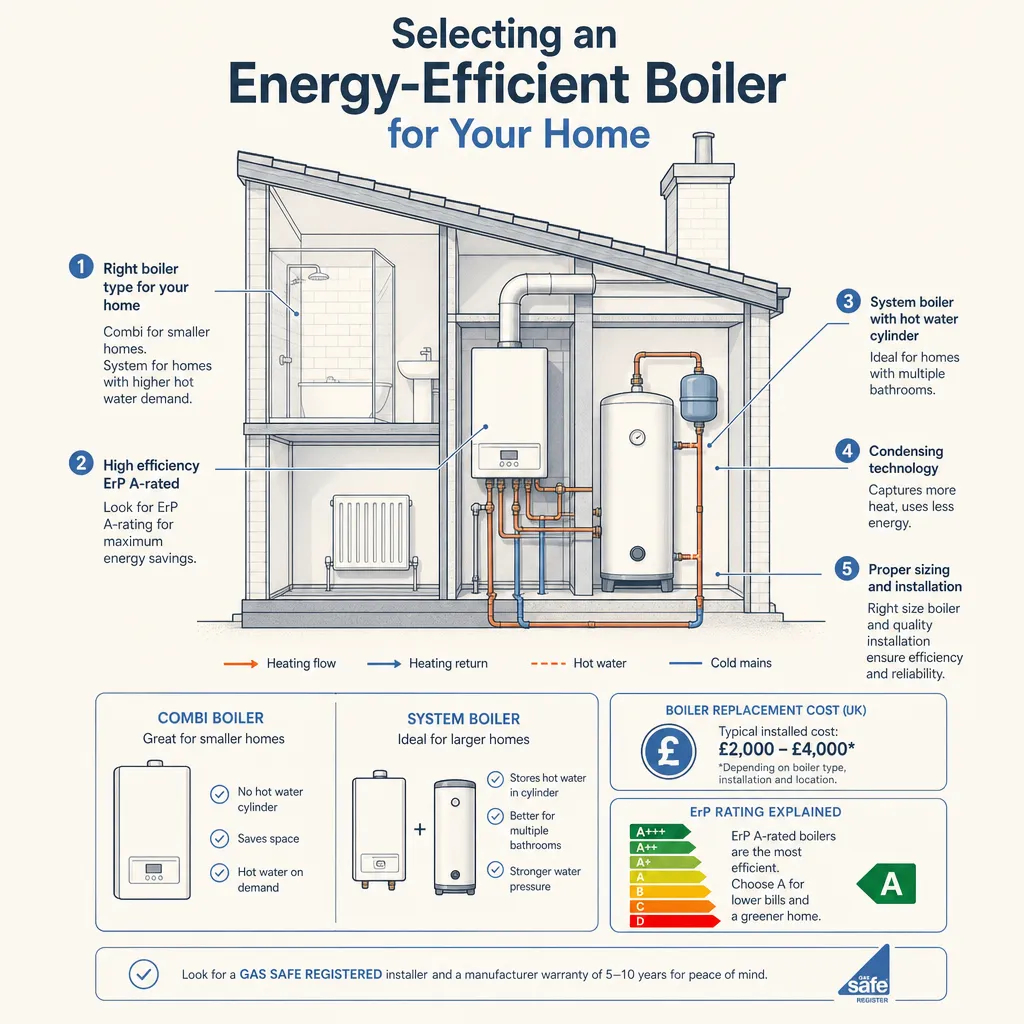
Selecting an Energy-Efficient Boiler for Your Home
Replacing or upgrading a boiler is one of the most consequential energy decisions a UK homeowner makes — it affects heating bills, comfort, carbon emissions, and, in the case of gas systems, safety. With gas boilers facing tighter policy restrictions in the coming years and the range of high-efficiency alternatives expanding, understanding the differences between boiler types, ErP ratings, and fuel options is more important than it used to be.
Key points
- All new gas and oil boilers installed in England, Wales, and Scotland must be condensing type under Building Regulations Part L, achieving 90% or more seasonal efficiency.
- The Boiler Plus regulations (England, in force since April 2018) require all new combi boilers to include at least one additional efficiency measure: time and temperature zone controls, a flue gas heat recovery device, weather compensation, or load compensation.
- ErP (Energy-related Products) ratings run from A (92% or higher seasonal space-heating efficiency) to G — look for A-rated models when comparing quotes.
- All gas boiler installation and servicing must be carried out by a Gas Safe registered engineer; unregistered gas work is illegal in Great Britain.
- The Boiler Upgrade Scheme (BUS) offers grants of up to £7,500 for air source heat pumps and up to £7,500 for ground source heat pumps as alternatives to gas boilers.
Understanding boiler types
Condensing technology
All new boilers sold in the UK must use condensing technology, which recovers heat from flue gases that older non-condensing boilers expelled as waste. Modern condensing boilers typically achieve 90–94% seasonal efficiency, compared with 60–70% for older non-condensing models. Replacing an old non-condensing boiler with a modern A-rated model is one of the most straightforward energy efficiency improvements available to most homeowners.
Combi, system, and regular boilers compared
Boiler type | How it works | Best for | Not ideal for |
|---|---|---|---|
Combi (combination) | Heats water on demand; no separate hot water cylinder needed | Smaller homes with 1–2 bathrooms and adequate mains pressure | High simultaneous hot water demand; low mains water pressure |
System boiler | Heats radiators and fills a hot water cylinder; expansion vessel built in | Larger homes with 2+ bathrooms and medium-to-high demand | Very small homes; requires space for a cylinder |
Regular (conventional) | Works with a separate cylinder and cold water storage tank | Older properties with existing tank systems in good condition | Requires the most space; less suited to modern small homes |
Which boiler type should you choose?
- Choose a combi boiler if you have a smaller home (1–2 bedrooms), one bathroom, adequate mains water pressure, and limited space for a hot water cylinder.
- Choose a system boiler if you have two or more bathrooms, higher simultaneous hot water demand, or plan to integrate solar thermal collectors.
- Choose a regular boiler if you are replacing an existing conventional system where the pipework, cylinder, and tanks are in good condition and a full system conversion would be disproportionately costly.
- Ask a Gas Safe registered heating engineer if your property has unusual requirements, low mains pressure, or you are considering switching fuel type.
- Consider a heat pump assessment if your home has reasonable insulation and you are open to a lower-carbon alternative — the Boiler Upgrade Scheme grant may offset a significant portion of the additional cost.
What ErP ratings mean in practice
The UK retained the EU Energy-related Products (ErP) Directive, which requires boilers to display a seasonal efficiency rating. A-rated boilers achieve 90% or more seasonal space-heating efficiency, meaning less than 10% of fuel energy is wasted. Most modern condensing gas combi boilers from major manufacturers reach A or A+ ratings.
When comparing quotes, ask specifically for the ErP seasonal space-heating efficiency figure expressed as a percentage. Marketing descriptions such as 'highly efficient' carry no standard definition and should not be used as the sole basis for comparison.
Fuel type considerations
- Mains gas: the most common fuel for UK central heating; typically the cheapest per kWh. New-build homes off the gas grid cannot install gas boilers from 2025. The government has indicated the sale of new gas boilers for existing homes is expected to phase out from 2035, though policy may evolve.
- Oil: used in approximately 1.7 million off-gas-grid UK homes. High-efficiency condensing oil boilers are available; HVO (hydrotreated vegetable oil) is a drop-in renewable alternative compatible with many existing oil systems.
- LPG: another off-gas-grid option; high-efficiency condensing LPG boilers are widely available, though LPG fuel costs vary significantly by supplier and contract.
- Heat pumps: the primary low-carbon heating alternative to gas. Require MCS-accredited installation, careful sizing, and work most effectively in well-insulated homes. Eligible for the Boiler Upgrade Scheme grant.
Indicative costs
Indicative UK costs, last reviewed 2026-05-30. Prices vary by property, system complexity, and region. Always obtain at least three itemised quotes from Gas Safe registered installers.
Installation type | Approximate installed cost |
|---|---|
Combi boiler replacement (like-for-like) | £1,500–£3,500 |
System boiler replacement | £1,800–£4,000 |
Regular/conventional boiler replacement | £1,500–£3,500 |
Full system change (e.g. regular to combi) | £2,500–£5,500+ |
Air source heat pump (after £7,500 BUS grant) | £3,000–£8,000 net |
Check that quotes include removal of the old boiler, flue modifications if needed, a system flush, and commissioning.
What to ask before accepting a quote
- Is the engineer Gas Safe registered? Ask to see the Gas Safe card or verify at gassaferegister.co.uk
- What ErP seasonal space-heating efficiency rating does the proposed boiler achieve, as a percentage?
- Is the quote for a like-for-like swap, or does it include pipework modifications?
- Is a system power flush or inline filter included?
- What manufacturer warranty does the boiler carry, and is it conditional on annual servicing?
- Will you receive a Building Regulations compliance certificate?
- Is removal and disposal of the old unit included in the price?
- Which Boiler Plus efficiency measure will be fitted with the new combi?
- Is VAT included, and at what rate?
Important limitations
This article provides general guidance on boiler types and efficiency ratings. Gas boiler installation involves regulated gas work and notifiable Building Regulations work. The right boiler specification for your home depends on heat demand, insulation levels, pipework condition, hot water usage patterns, mains water pressure, and local fuel costs — factors that only a qualified heating engineer can properly assess on site. Do not rely solely on this guide when making a final installation decision.
When this becomes urgent
- A boiler losing pressure repeatedly, making loud banging or kettling noises, or displaying persistent fault codes may be failing — contact a Gas Safe registered engineer promptly rather than waiting for a complete breakdown.
- If you smell gas: leave the building immediately, do not operate any switches or appliances, open windows if safe to do so, and call the National Gas Emergency Service on 0800 111 999.
- If a carbon monoxide alarm activates, evacuate the property immediately and call 999.
What to ask a qualified professional
Before instructing a heating engineer, ask:
- Is my existing radiator system sized correctly for the output of the new boiler, particularly at the lower flow temperatures used by modern condensing boilers?
- Does my home's insulation level make it suitable for a heat pump, or would significant upgrades be needed first?
- What output (kW) does a heat loss calculation indicate I need? Oversizing a boiler is common and reduces seasonal efficiency.
- Will a new flue route or extension be required?
- Are there any Building Regulations compliance certificates or local authority notifications required for this installation?
- Will you carry out a documented system pressure test and flush before commissioning?
When to get professional help
All work on gas boilers and gas supply pipework must be carried out by a Gas Safe registered engineer — it is illegal for unregistered individuals to perform gas work. Seek a registered engineer for:
- Annual boiler service (maintains warranty and confirms safe operation)
- Fault diagnosis and repair
- Full boiler replacement or system modifications
- Commissioning and pressure testing after any work on the system
How Housey can help
An energy-efficiency consultant can help you assess whether a new boiler, a heat pump, or a combination of measures offers the best whole-house energy outcome before you commit to any installation. Housey connects you with qualified professionals who can review your property's heat demand, insulation, and fuel options and provide impartial recommendations.
Frequently asked questions
Does my new boiler installation need a Building Regulations certificate?
Yes. In England and Wales, boiler installation is notifiable work under Building Regulations Part L. A Gas Safe registered installer operating under a competent person scheme will self-certify the work and provide a compliance certificate. Keep this document safely — it will be required when you sell the property and confirms the installation met legal requirements at the time.
How long should a new boiler last?
A well-maintained modern condensing boiler typically lasts 10–15 years. Annual servicing by a Gas Safe registered engineer extends lifespan and keeps the manufacturer warranty valid. Some higher-specification models carry warranties of up to 10 years if serviced according to the manufacturer's schedule and by an approved engineer.
Can I keep my existing radiators with a new combi boiler?
Often yes, provided the radiators are in good condition and adequately sized for the heat output required. A heating engineer should check radiator sizing and recommend a system flush to remove magnetite sludge before commissioning the new boiler. Undersized radiators reduce efficiency at the lower flow temperatures used by modern condensing boilers.
What is the Boiler Upgrade Scheme?
The Boiler Upgrade Scheme (BUS) offers a £7,500 grant towards the cost of an air source or ground source heat pump as an alternative to a gas or oil boiler. You must use an MCS-accredited installer and the property must have a valid EPC. Check GOV.UK for current eligibility criteria and funding availability, as scheme details may change.
Sources and further reading
- Gas Safe Register — find a registered engineer — Gas Safe Register
- Building Regulations Approved Document L: Conservation of fuel and power — GOV.UK
- Boiler Plus technical guidance — GOV.UK
- Apply for the Boiler Upgrade Scheme — GOV.UK
- Boilers — energy saving advice — Energy Saving Trust
Useful next reads
 Energy & Retrofit
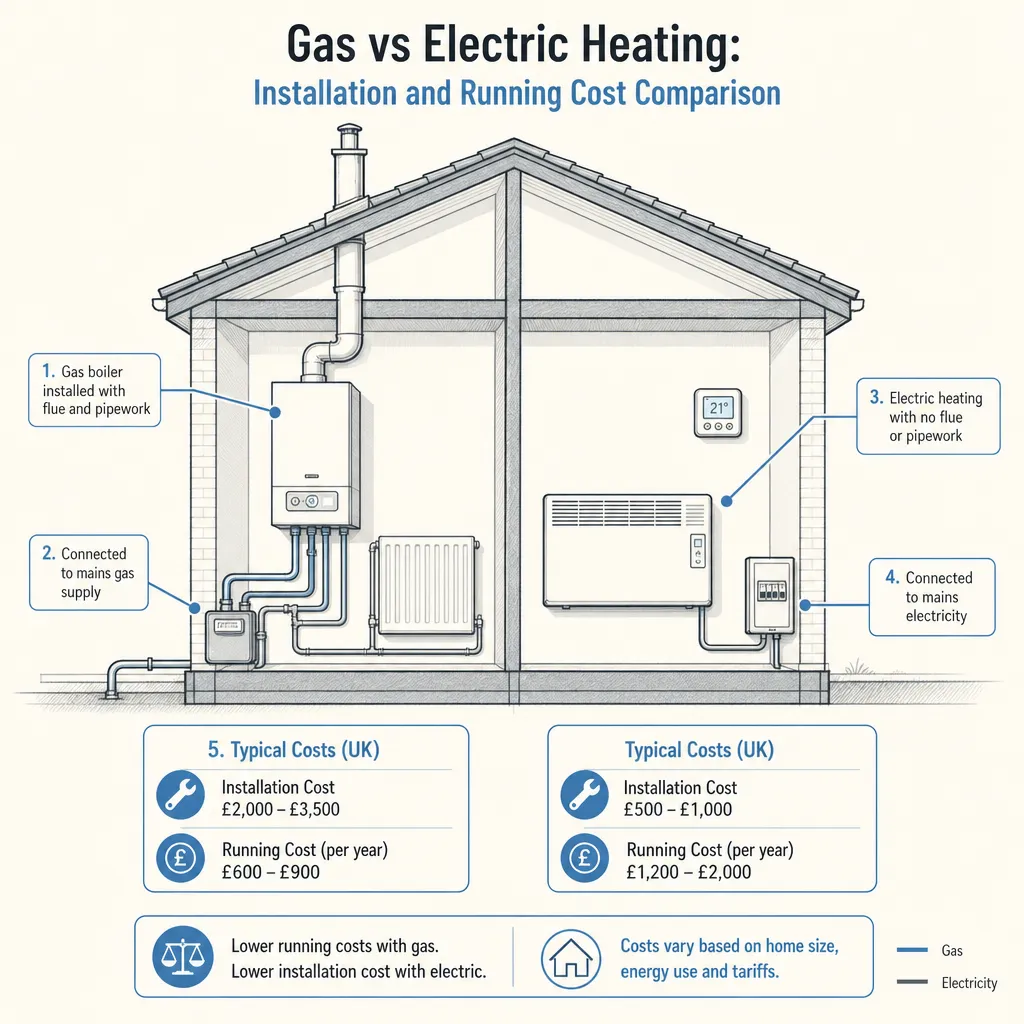
Gas vs Electric Heating: Installation and Running Cost Comparison
Gas central heating usually has lower running costs per kWh than direct electric heating in the UK, though heat pumps can change that equation.
 Energy & Retrofit
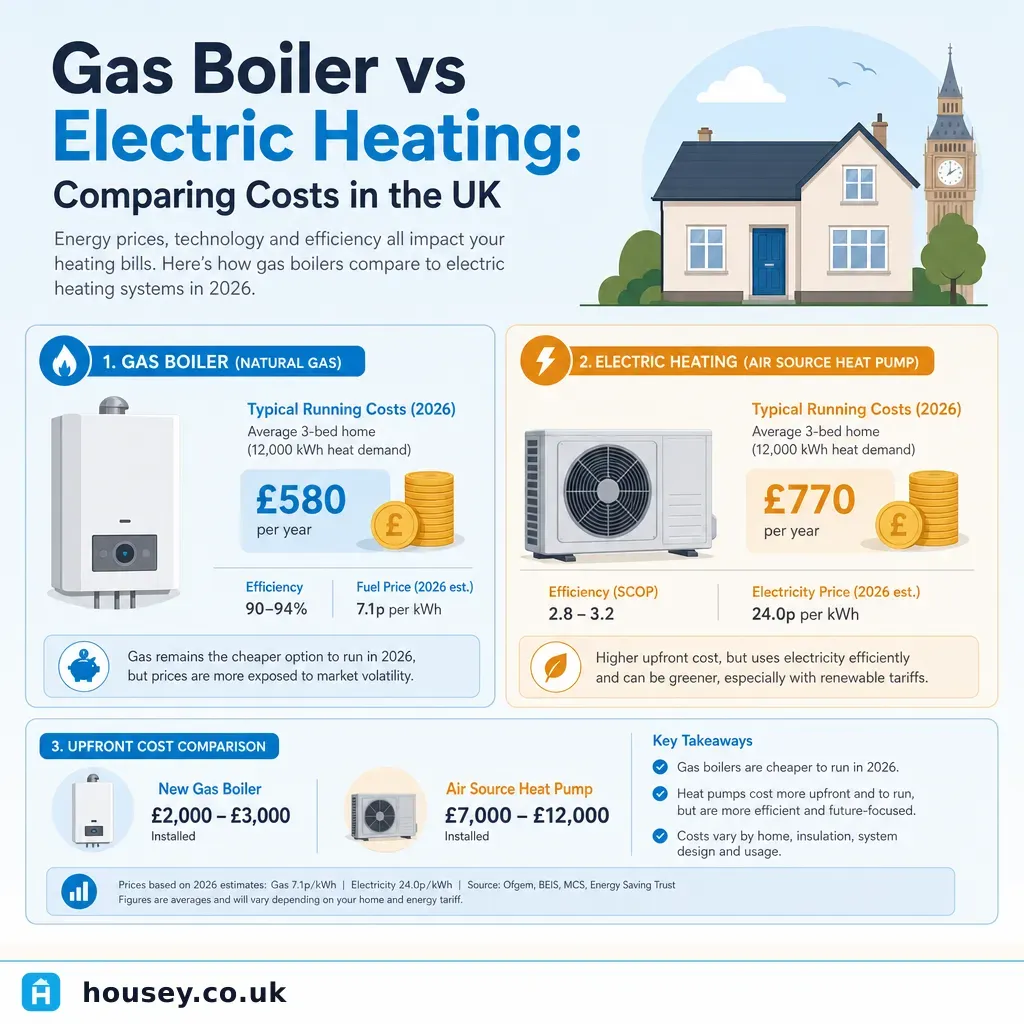
Gas Boiler vs Electric Heating: Comparing Costs in the UK
Gas boilers currently cost around 6.
 Energy & Retrofit
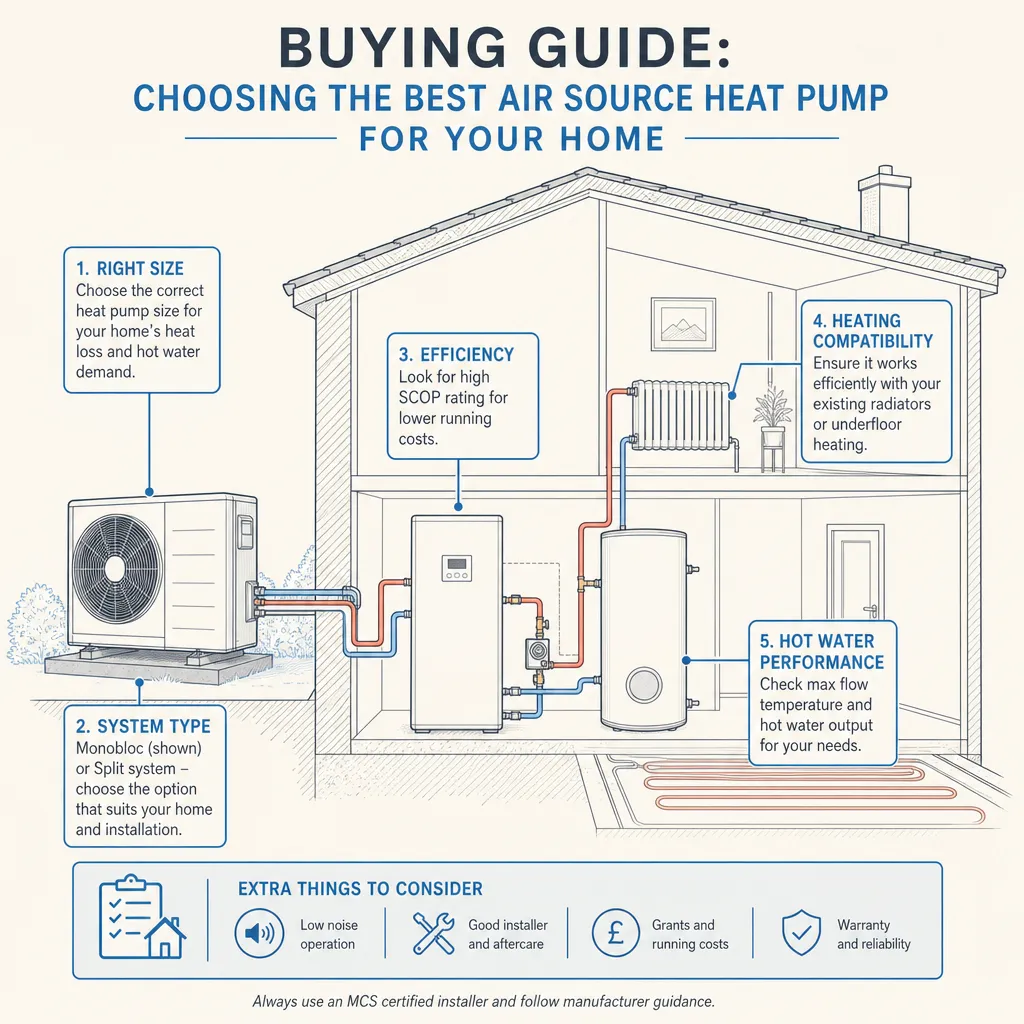
Buying guide: choosing the best air source heat pump for your home
Choose an air source heat pump by matching output to your home's BS EN 12831 heat loss calculation — not floor area alone.
 Energy & Retrofit
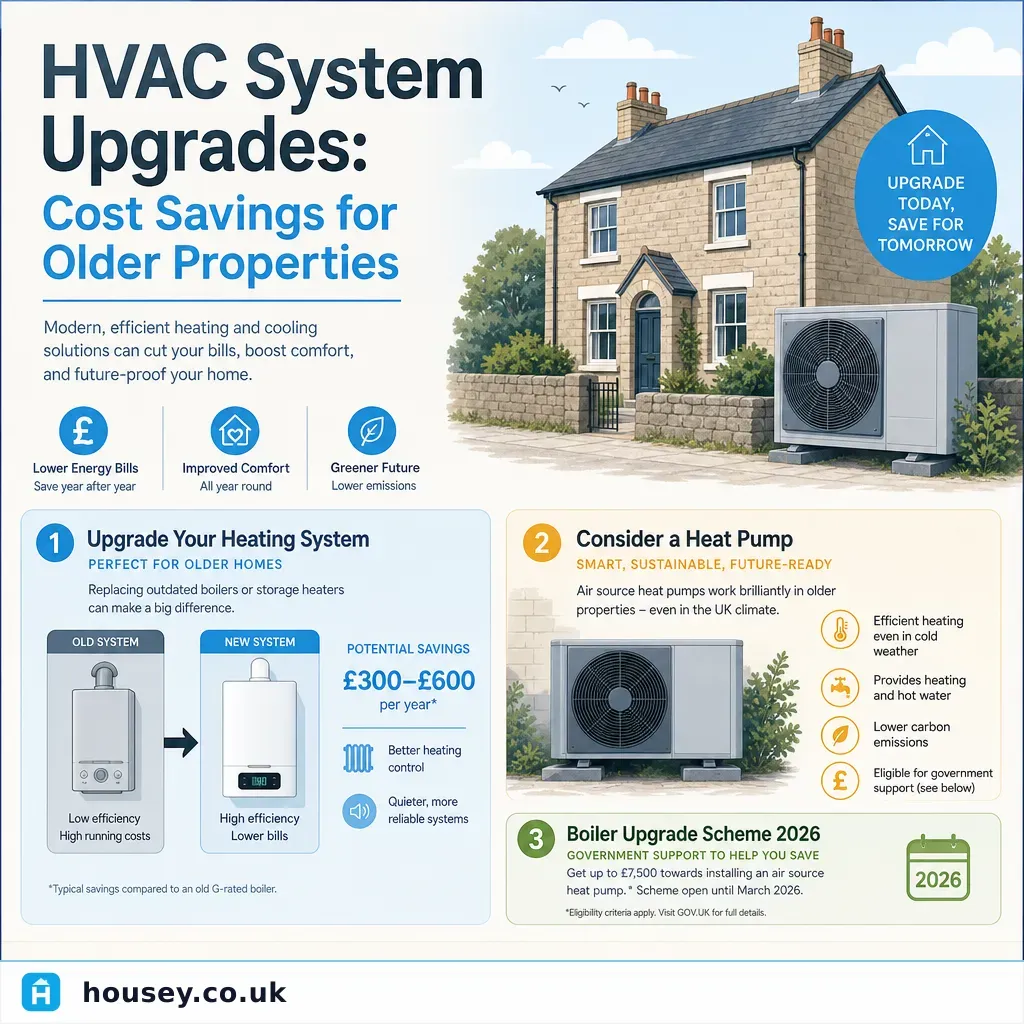
HVAC System Upgrades: Cost Savings for Older Properties
Upgrading heating and ventilation systems in an older UK home can significantly reduce energy bills, but the best approach depends on the property's insulation, construction, and heat demand.
 Energy & Retrofit
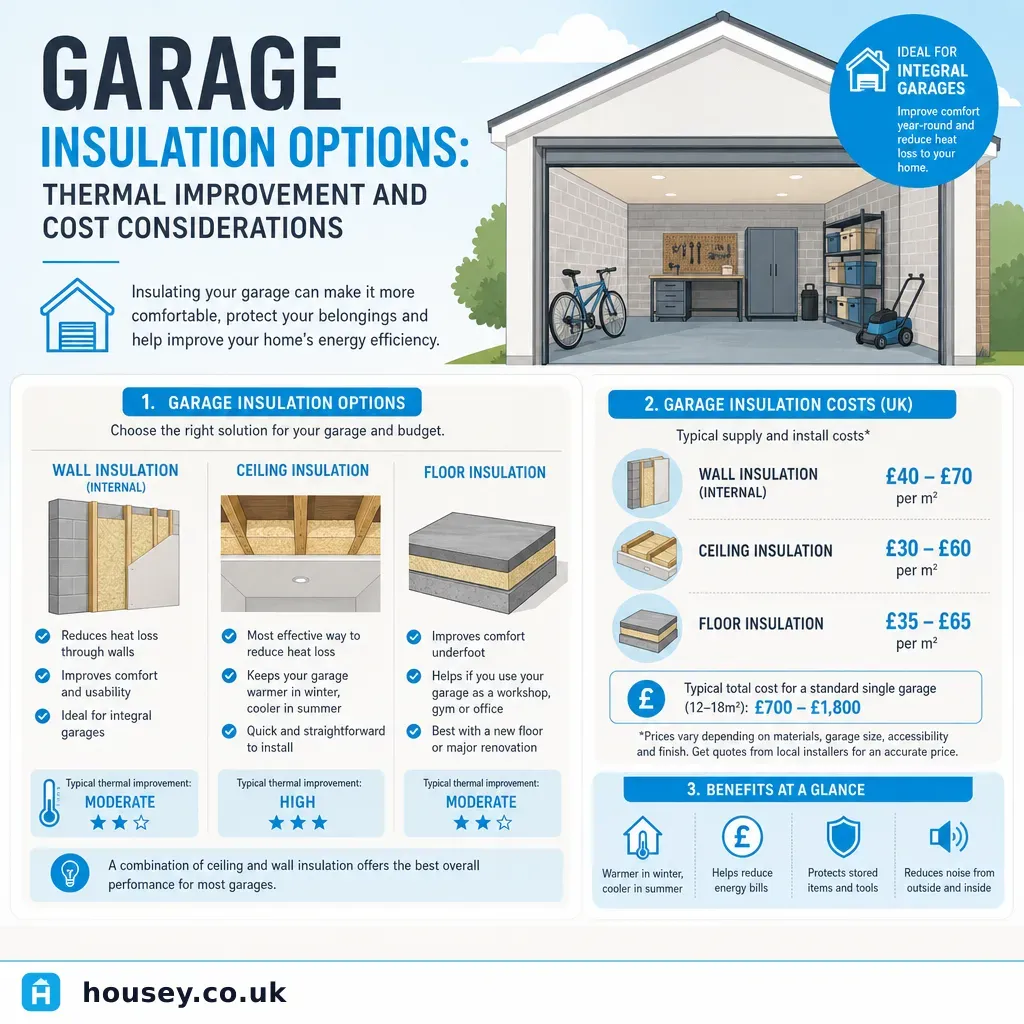
Garage Insulation Options: Thermal Improvement and Cost Considerations
Garage insulation options in the UK include mineral wool batts, rigid foam boards (PIR or EPS), and insulated garage doors.