Selecting uPVC Windows: Installation Guide and Performance Overview
By Housey · Last reviewed 12th of May 2026
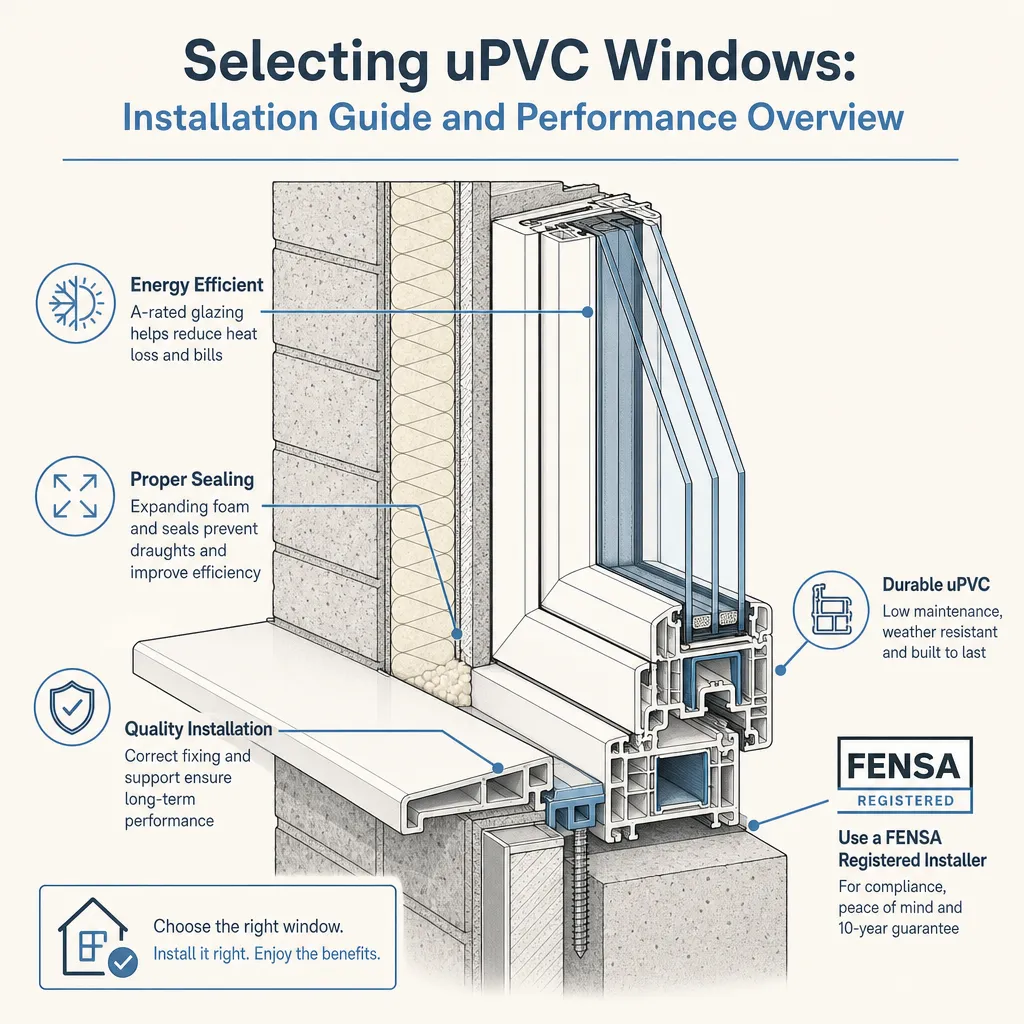
Selecting uPVC Windows: Installation Guide and Performance Overview
uPVC (unplasticised polyvinyl chloride) is the most widely fitted window material in UK homes, found in everything from 1980s new-builds to recently refurbished Victorian terraces. Homeowners typically face this decision when existing frames are failing, when upgrading from single glazing, or when preparing a property for sale or let. Getting the specification wrong can mean poor thermal performance, persistent condensation, or a compliance issue that complicates a property sale years later.
Key points
- Replacement windows in England must meet Building Regulations Part L (Approved Document L, 2021 edition), with a minimum whole-window U-value of 1.6 W/m²K.
- A FENSA-registered or Competent Person Scheme (CPS) installer can self-certify compliance without a separate building control application; the resulting certificate is checked during conveyancing.
- The British Fenestration Rating Council (BFRC) Window Energy Rating (WER) runs from A++ to E; specify Band A or above for best whole-life thermal performance.
- In conservation areas or on listed buildings, uPVC windows often require planning permission or listed building consent regardless of their thermal specification.
- Most reputable manufacturers offer a 10-year frame guarantee; always request an insurance-backed guarantee (IBG) so cover continues if the company ceases trading.
Understanding energy ratings for uPVC windows
The BFRC Window Energy Rating scheme uses a label similar to the appliance energy rating familiar from white goods. The rating is calculated from three inputs: the whole-window U-value (heat loss through frame and glass combined), the solar factor (useful solar heat gain), and the air-leakage rate.
Band A and above means the window gains more useful solar heat than it loses across a typical UK heating season — making it a net thermal contributor rather than a heat drain. Band C or below will technically pass Building Regulations but underperforms over the 20–30 year lifespan typical of a replacement installation.
For glazing specification, the minimum required to satisfy Part L in England is double glazing with a low-emissivity (low-e) coating and an argon-filled cavity. Triple glazing achieves lower U-values — typically 0.6–0.8 W/m²K for the glass unit alone — and reduces cold-surface condensation on the inner pane. It adds weight to the frame and typically costs 20–40% more than an equivalent double-glazed unit, so the payback period is longer and may not suit every property.
uPVC window styles: choosing the right configuration
Style | Best for | Ventilation | Cleaning access |
|---|---|---|---|
Casement (side-hung) | Most rooms; maximum air flow | High | Good from inside |
Tilt-and-turn | Upper floors; restricted external access | High | Excellent from inside |
Vertical sliding sash | Period properties matching original character | Moderate | Tilt-in variants clean easily from inside |
Fixed light | Where ventilation is provided elsewhere | None | External access only |
Bay or bow combination | Front elevations, corner rooms | Varies by opener configuration | Depends on opening lights |
For period properties in conservation areas, engineered uPVC vertical sliding sash windows with slimline sight lines and optional leaded glazing can offer a closer visual match to original timber sash windows. Even so, planning permission may still be required; confirm with your local planning authority's conservation officer before ordering.
Building Regulations and compliance routes
All replacement windows in England and Wales are notifiable under Building Regulations Part L. Two main compliance routes exist.
Self-certification via a CPS installer: FENSA, CERTASS, and several other Competent Person Scheme operators allow registered installers to self-certify. The homeowner receives a certificate lodged with the local authority. Solicitors check for this certificate during property searches — a missing certificate can delay exchange or require a retrospective building control application to clear.
Building control application: If your installer is not CPS-registered, you must apply to your local authority building control (LABC) or an approved inspector. Fees and a site inspection apply. In Scotland requirements sit under Scottish Building Standards; in Northern Ireland under the Building Regulations (Northern Ireland). Always confirm the applicable regime for your property's location.
Installer comparison checklist
Before accepting a quote, confirm the following for each installer:
What to ask before accepting a quote
- What BFRC energy band do the frames and units achieve?
- How many chambers does the uPVC profile have? Five or more chambers is typical for better-performing products.
- What is the glazing unit thickness — 28 mm or 36 mm double, or triple glazed?
- What gas fill is used — argon or krypton?
- Is the guarantee insurance-backed, and with which insurer?
- Who carries out the installation — directly employed fitters or subcontractors?
- Does the price include making good any damage to internal reveals or plasterwork?
- What happens if access issues or hidden defects are found on the day of fitting?
Indicative costs
Indicative UK costs, last reviewed 2026-05-12. Quotes vary significantly by window size, style, specification, and region.
Supply and installation of a standard double-glazed uPVC casement window typically ranges from £400 to £900 per window for domestic sizes. Bay window combinations and larger units command higher prices. Triple-glazed equivalents typically add 20–40% to the supply element. Always obtain at least three written quotes and verify that each covers the same scope — sub-frame replacement, waste disposal, and reveals dressing are frequently omitted from initial quotations.
When to get professional help
For most like-for-like replacements, a FENSA-registered installer handles specification, compliance, and certification without additional professional input. Seek further advice if:
- The property is listed or in a conservation area — consult your local planning authority's conservation officer before ordering anything.
- Existing frames have caused damp penetration or reveal damage — a building surveyor should assess whether structural repairs are needed before new windows are fitted.
- The existing windows appear to contain original leaded lights, crown glass, or historic glazing bars — Historic England guidance and your conservation officer apply.
- The new configuration materially changes the opening size — this may require structural assessment beyond the Part L compliance check.
How Housey can help
Housey connects homeowners with vetted window and door installers who hold FENSA or equivalent Competent Person Scheme registration. Submit your requirements once, compare up to four quotes from accredited installers, and review credentials before committing.
Frequently asked questions
Do I need planning permission to replace windows with uPVC?
Most like-for-like replacements are permitted development in England and do not require a planning application. Exceptions include listed buildings (listed building consent always required), conservation areas where design, materials, or style may be restricted, and Article 4 Direction areas where permitted development rights have been removed. Always check with your local planning authority before ordering.
How long do uPVC windows last?
A well-manufactured, correctly installed uPVC frame typically lasts 20–35 years. The sealed glazing unit carries a separate 5–10 year unit guarantee against seal failure, independent of the frame guarantee. A 10-year frame guarantee is standard industry practice; always request an insurance-backed guarantee so cover survives company insolvency.
What is a FENSA certificate and why does it matter?
A FENSA certificate confirms that replacement windows were installed by a registered scheme member, comply with Building Regulations Part L, and have been notified to the local authority. Solicitors check for FENSA or equivalent certificates during property searches; missing certificates can cause delays at exchange or require retrospective building control sign-off to resolve.
Can uPVC windows be fitted in a conservation area?
Many conservation area management plans discourage or refuse uPVC on primary street-facing elevations, particularly on pre-1919 buildings. Some local authorities permit uPVC on rear elevations not publicly visible. Policy varies considerably by local authority; always consult your planning authority's conservation officer before purchasing windows for a property in a designated area.
Sources and further reading
- Approved Document L — Conservation of Fuel and Power (2021 edition) — GOV.UK / DLUHC
- FENSA — Fenestration Self-Assessment Scheme — FENSA
- British Fenestration Rating Council — Window Energy Ratings — BFRC
- Windows in historic buildings — Historic England
- Windows and glazing advice — Energy Saving Trust
Useful next reads
 Improvement & Build
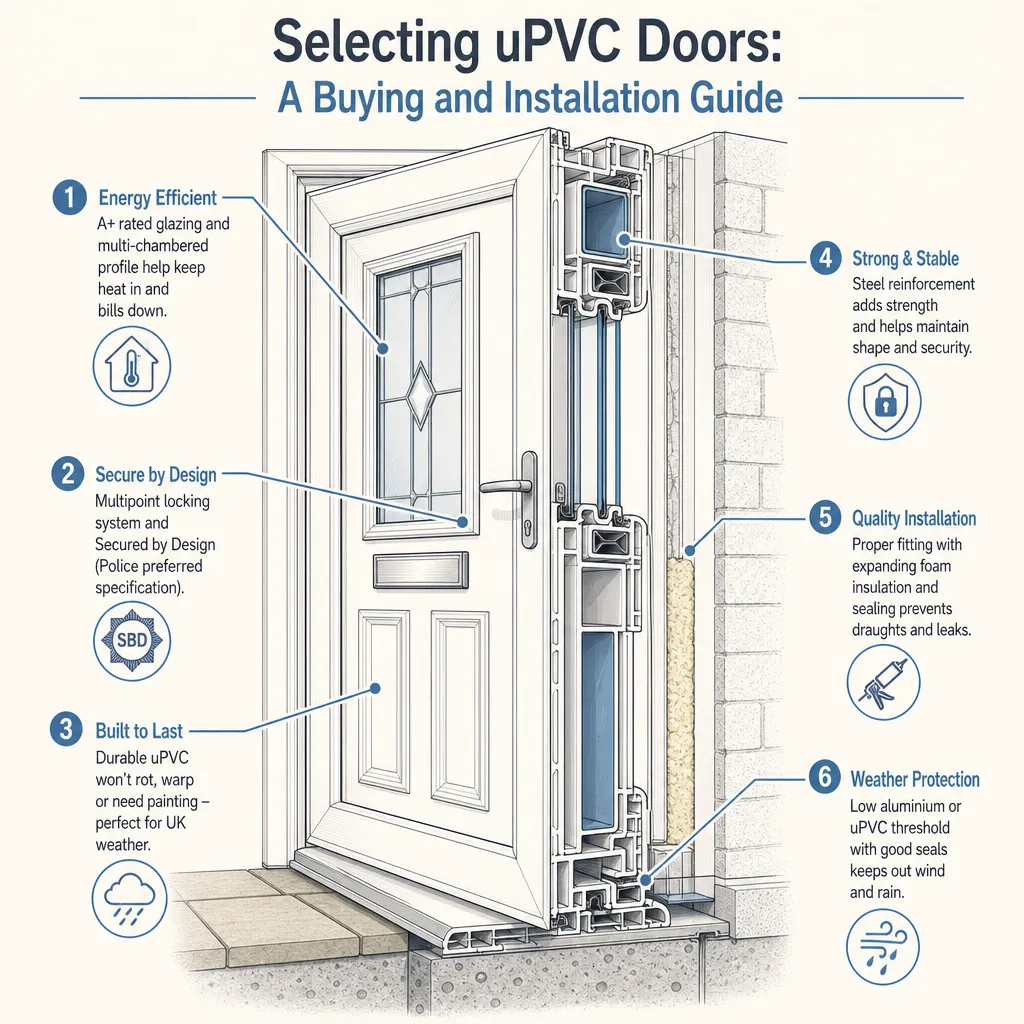
Selecting uPVC Doors: A Buying and Installation Guide
When buying a uPVC door, confirm the doorset U-value meets Part L (currently 1.
 Improvement & Build
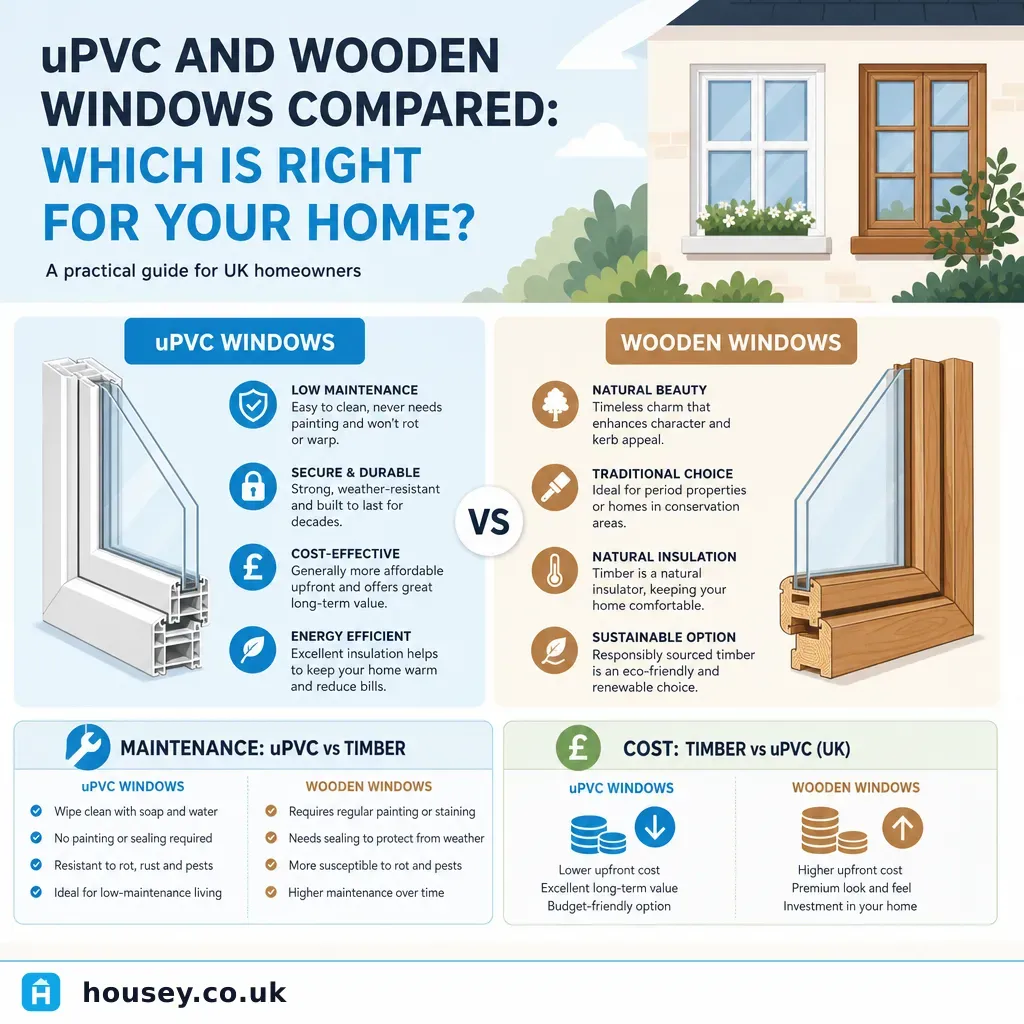
uPVC and Wooden Windows Compared: Which Is Right for Your Home
uPVC and timber windows both meet Building Regulations when properly specified.
 Improvement & Build
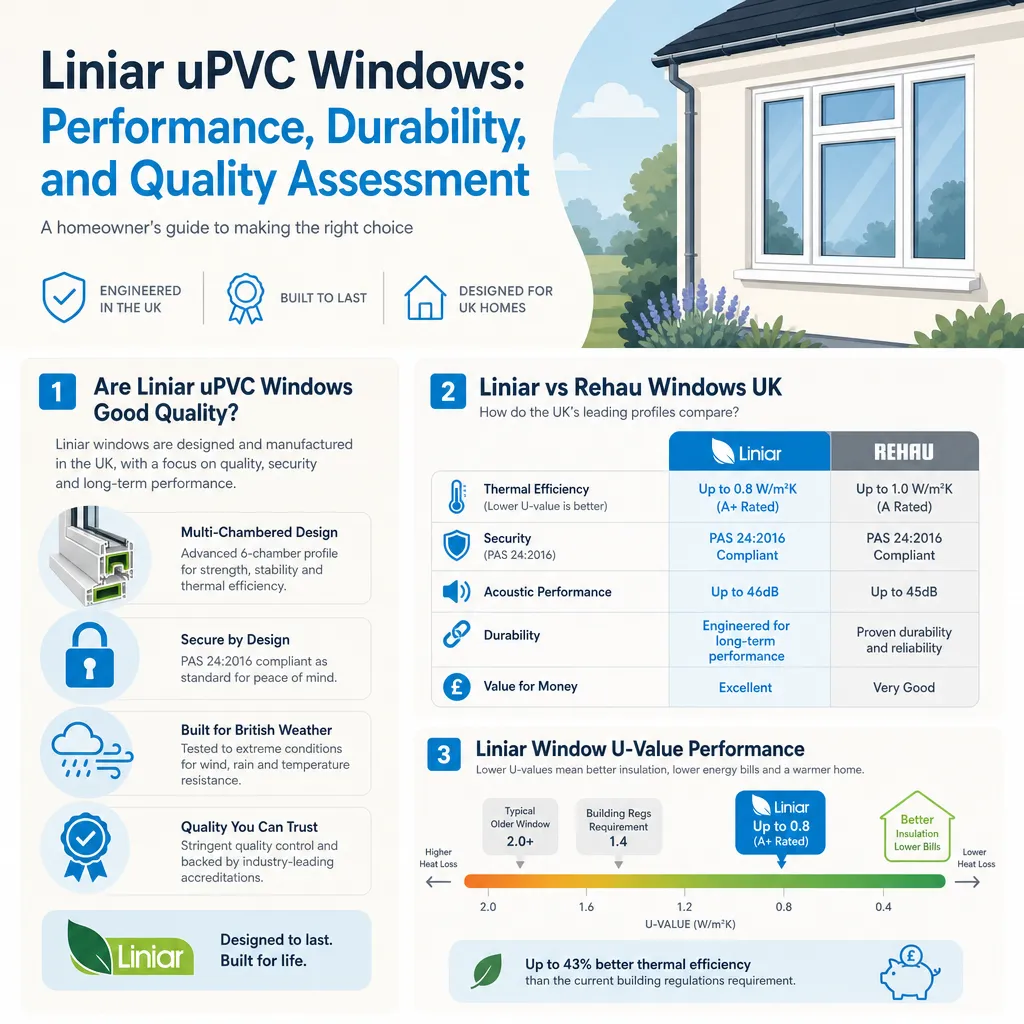
Liniar uPVC Windows: Performance, Durability, and Quality Assessment
Liniar uPVC window profiles are manufactured in the UK using multi-chambered, foamed frames.
 Improvement & Build
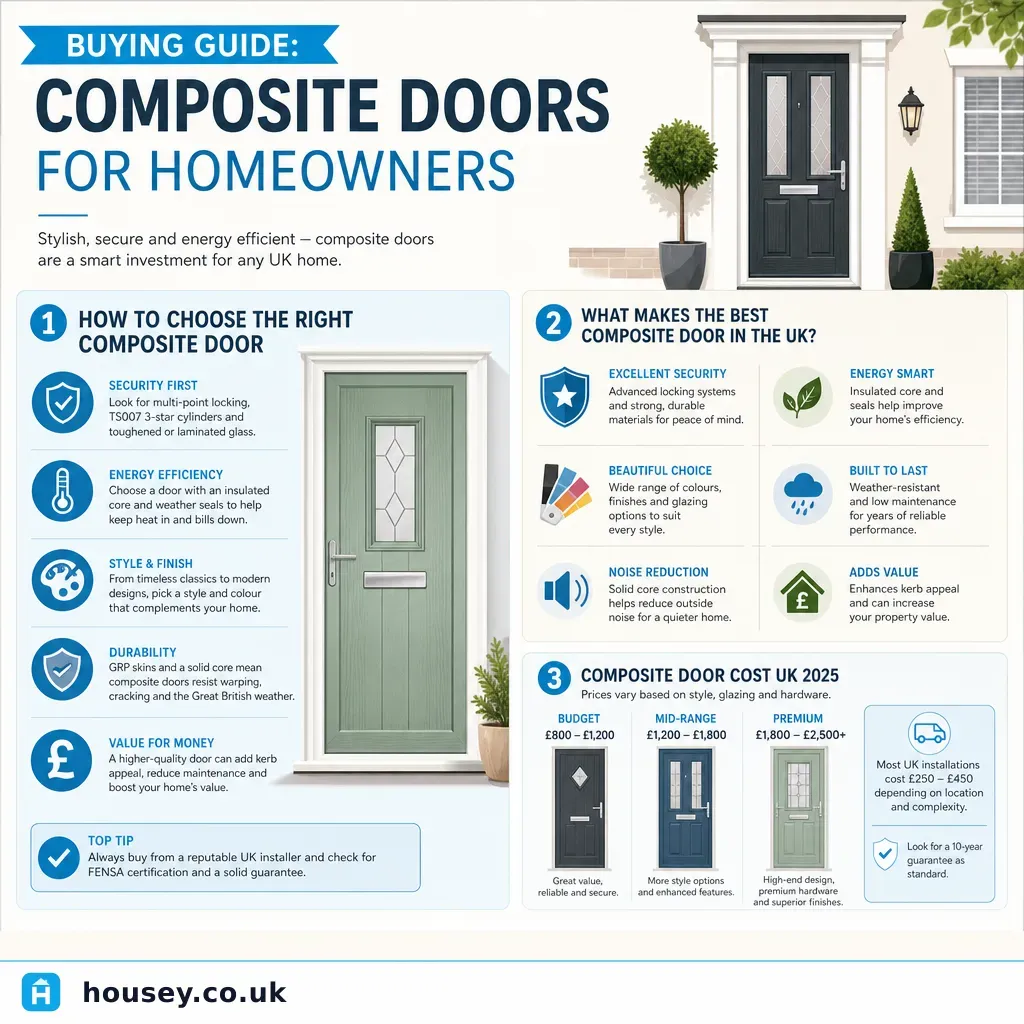
Buying guide: composite doors for homeowners
A composite door is a multi-layer product with a glass reinforced plastic outer skin, solid foam core, and multipoint locking as standard.
 Improvement & Build
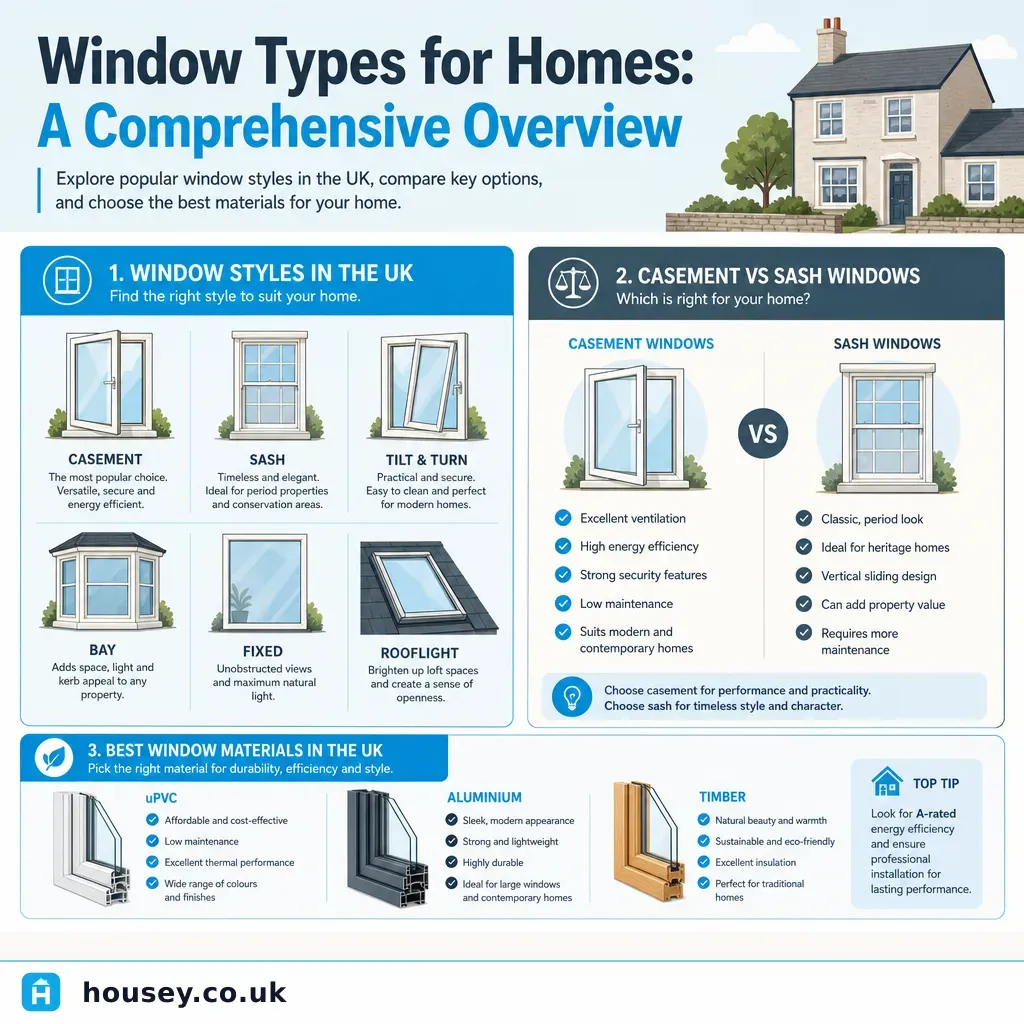
Window Types for Homes: A Comprehensive Overview
UK homes use several main window styles: casement (outward-swinging), sash (vertically sliding), tilt-and-turn, fixed light, and bay or bow.