uPVC and Wooden Windows Compared: Which Is Right for Your Home
By Housey · Last reviewed 12th of May 2026
uPVC and Wooden Windows Compared: Which Is Right for Your Home
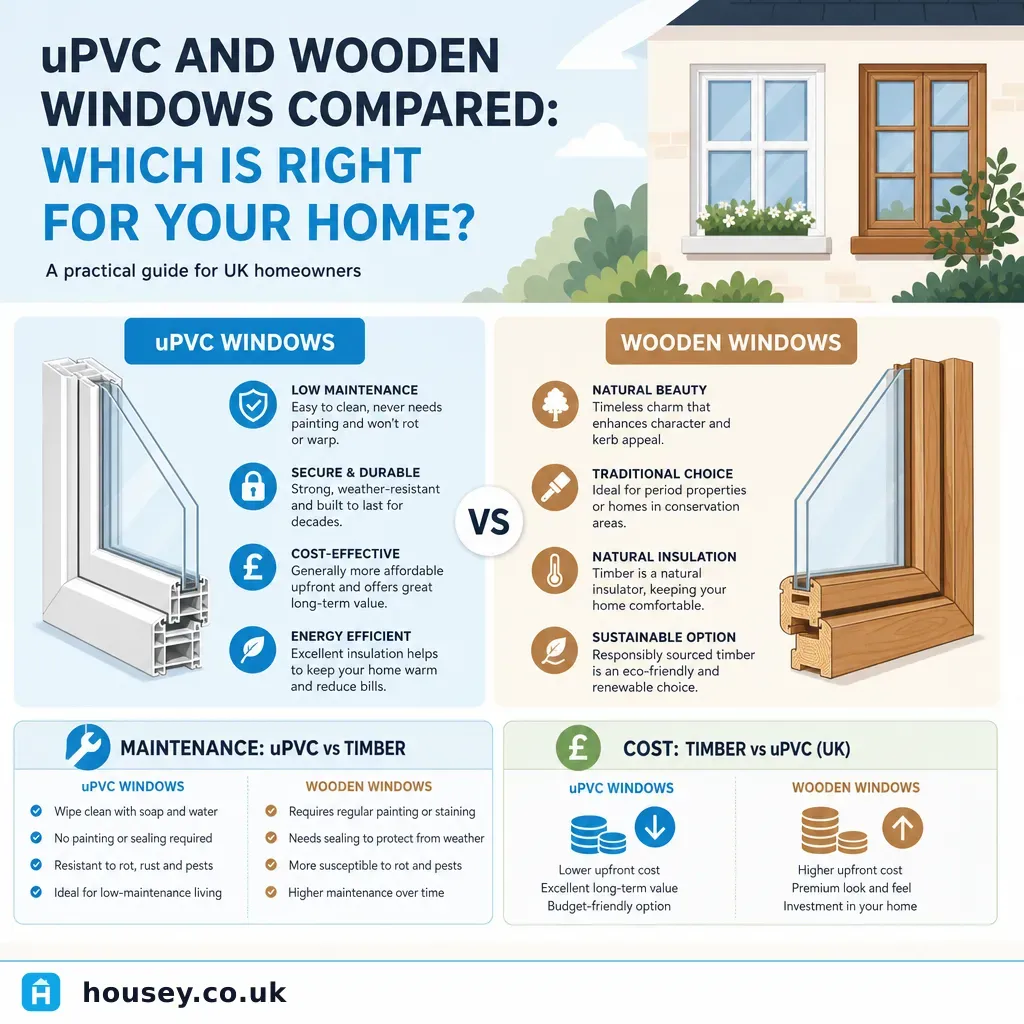
Choosing between uPVC and timber frames is one of the more consequential window decisions a UK homeowner can make — the material shapes maintenance demands, visual character, planning compliance, and long-term cost. The question arises most often when original timber frames in pre-1960s properties are reaching end of life, and the case for uPVC is made on convenience while the case for timber rests on character and heritage appropriateness. Neither material is universally correct; the right answer depends on your property type, local planning constraints, and ownership priorities.
Key points
- Timber windows in conservation areas or on listed buildings are often required by planning policy; uPVC may be refused as a replacement regardless of its thermal performance.
- uPVC frames require no painting and minimal upkeep; timber frames need repainting or restaining every 5–8 years to prevent moisture ingress and rot.
- Hardwood timber windows (oak, iroko, accoya) are typically 40–80% more expensive to supply and fit than uPVC equivalents, but have a potential lifespan of 50–100+ years with maintenance.
- Both materials must comply with Building Regulations Part L in England — a minimum whole-window U-value of 1.6 W/m²K — when used as replacements.
- Reclaimed or carefully repaired timber sash windows are often the most cost-effective and planning-appropriate option for period properties where frames are structurally sound but draughty.
Comparing uPVC and timber: key factors side by side
Factor | uPVC | Timber (hardwood) | Timber (softwood) |
|---|---|---|---|
Maintenance | Very low — wipe clean, no painting | Moderate — refinish every 7–10 years | High — repaint every 5–7 years |
Lifespan | 20–35 years (frame) | 50–100+ years with maintenance | 20–40 years with maintenance |
Energy performance | Good — Band A achievable with standard spec | Excellent — thermally broken hardwood can reach U < 1.0 W/m²K | Good — comparable to uPVC if well-specified |
Visual character | Functional; limited period authenticity | Authentic period appearance; highly customisable | Period appearance; more prone to movement |
Conservation area suitability | Often refused on primary elevations | Generally preferred or required | Accepted as an authentic material |
Repairability | Frame damage usually requires replacement | Localised repair by a joiner is viable | Repair viable; rot progresses faster |
Indicative supply and fit cost | Lower | Higher (40–80% above uPVC) | Comparable to uPVC |
Embodied carbon | Higher in manufacture | Lower if sustainably sourced | Lower than uPVC in manufacture |
Indicative UK costs, last reviewed 2026-05-12.
Which window type should you choose?
- Choose uPVC if the property is post-1970s with no heritage or planning restrictions, low maintenance is a priority, and retaining a timber appearance offers no practical or planning benefit.
- Choose hardwood timber if the property is pre-1919 or within a conservation area, original character matters to you or to planning policy, or you plan a long ownership period where repairability and longevity justify higher upfront cost.
- Choose softwood timber if budget is constrained but a timber appearance is required — accept that the maintenance cycle will be more frequent than hardwood and factor this into the whole-life cost.
- Check with your local planning authority if the property is listed, in a conservation area, or in an Article 4 Direction area — in many cases the material choice is constrained or determined by planning policy rather than owner preference.
- Ask a heritage joiner or conservation architect if the existing windows contain original leaded glass, crown glass, or historic glazing proportions that should be preserved or replicated exactly.
Maintenance in practice
The difference in maintenance burden is the most decisive practical factor for many homeowners.
uPVC: A wipe-down with soapy water once or twice a year, occasional hinge lubrication, and rubber seal checks is typically all that is required. The profile will not rot or warp. If it fades, discolours, or is physically damaged, it cannot usually be repaired — the affected section or full frame is replaced.
Timber: Softwood frames need sanding and repainting every 5–7 years to prevent moisture ingress leading to rot. Hardwood (oak, iroko, accoya modified timber) is dimensionally more stable and tolerates longer intervals between finishing, but still requires periodic attention. The practical advantage of timber is that localised rot or damage can often be repaired by a joiner using wood-hardener treatment or a splice repair — significantly extending service life without full-frame replacement.
Energy performance: is there a meaningful difference?
Both materials can meet Building Regulations Part L when correctly specified with double or triple glazing. The frame material is one input in the whole-window U-value calculation alongside the glazing unit specification.
uPVC achieves good performance through multi-chambered profiles that create still-air zones within the frame section. Engineered hardwood timber frames with thermally broken spacer bars and triple-glazed units can achieve whole-window U-values below 1.0 W/m²K — outperforming standard uPVC double glazing. In practice, for most domestic replacements the real-world energy difference between a well-specified A-rated uPVC window and an equivalent timber window is modest. The glazing unit specification — double versus triple, low-e coating, gas fill — has a greater impact than frame material alone.
Conservation areas and listed buildings
Heritage planning policy is often the deciding factor. Historic England and many local planning authorities actively discourage or refuse uPVC on primary street-facing elevations in conservation areas, particularly on pre-1919 properties. The planning rationale is that new windows should preserve the character of the historic streetscape.
On listed buildings, all window replacements require listed building consent regardless of the proposed material. Replacing original timber sash windows with uPVC — even where the profile appears superficially similar — has frequently been refused on character grounds. Speak to your conservation officer before ordering any windows in a designated area.
A worked UK property scenario
Property: Edwardian terraced house, circa 1905, within a conservation area in a London Borough. Original softwood sash windows; several with failed putty, one with a rotten lower rail.
Options considered:
- Replace like-for-like with new softwood double-glazed sash windows (slim profile, draught-stripped): approximately £700–£950 per window supplied and fitted. Planning consent likely not required for matching like-for-like replacement on the primary elevation.
- Replace with uPVC sash windows: local conservation officer indicated refusal for the street-facing elevation; uPVC accepted on the single-storey rear extension only.
- Repair and draught-strip structurally sound existing sashes; replace only the rotten frame like-for-like.
Outcome: Sound frames repaired, draught-stripped, and redecorated. The rotten frame replaced with a matching new softwood sash. uPVC used only on the rear extension window not visible from the street. Conservation officer confirmed no planning application was needed for like-for-like replacement on the primary elevation.
This scenario is illustrative. Rules vary by local authority and property history. Always confirm requirements with your planning authority. Indicative costs, last reviewed 2026-05-12.
When to get professional help
- If the property is in a conservation area or is listed, speak to the local planning authority's conservation officer before ordering any windows.
- If existing frames show signs of structural movement — distorted openings, sticking frames — instruct a building surveyor before replacement; new windows fitted into a moving reveal may fail prematurely.
- If rot extends into the surrounding masonry reveal or lintel, a builder or surveyor should assess the full extent of damage before the installer proceeds.
How Housey can help
Whether you are leaning towards uPVC or timber, Housey can connect you with vetted window and door installers who can advise on material suitability, energy ratings, and planning considerations. Compare up to four accredited installers and review credentials before committing.
Frequently asked questions
Are uPVC windows allowed in conservation areas?
Policy varies, but many conservation area management plans expressly discourage or refuse uPVC on primary street-facing elevations, particularly on pre-1919 buildings. Some local authorities permit uPVC on rear elevations not publicly visible. Always check with your local planning authority's conservation officer before ordering — the rules differ significantly between councils.
How much more expensive are timber windows than uPVC?
Hardwood timber windows (oak, iroko, accoya) typically cost 40–80% more than equivalent uPVC units for supply and installation. Engineered softwood timber is often closer in price to uPVC but requires more frequent maintenance. Over a 30-year ownership period, hardwood timber may prove cost-competitive with uPVC when replacement costs are factored in. Indicative UK costs, last reviewed 2026-05-12.
Which lasts longer — uPVC or timber?
A well-maintained hardwood timber window can last 50–100 years or more. uPVC frames typically last 20–35 years before degradation makes replacement advisable. In both materials, sealed glazing units carry a separate 5–10 year guarantee against seal failure. Timber's lifespan advantage depends on regular maintenance; neglected softwood frames can fail faster than well-maintained uPVC.
Do I need planning permission to replace timber windows with uPVC?
In most cases, like-for-like window replacement is permitted development in England. However, changing from timber to uPVC in a conservation area, or on a listed building, is likely to require planning permission or listed building consent. The change of material — not just the style — can trigger the requirement. Always check with your local planning authority before proceeding.
Sources and further reading
- Windows in historic buildings — Historic England
- Approved Document L — Conservation of Fuel and Power (2021 edition) — GOV.UK / DLUHC
- Planning practice guidance — conserving and enhancing the historic environment — GOV.UK
- Windows and glazing advice — Energy Saving Trust
- FENSA scheme — FENSA
Useful next reads
 Improvement & Build
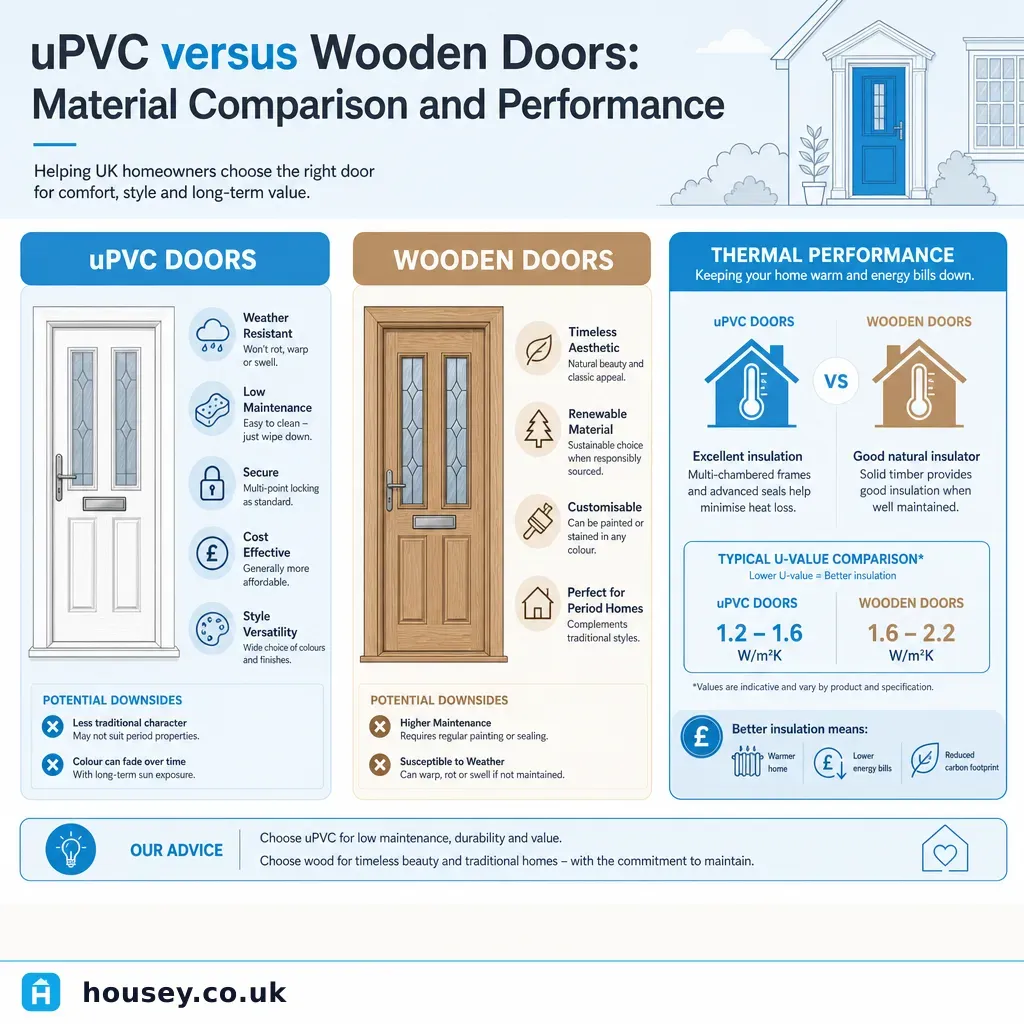
uPVC versus Wooden Doors: Material Comparison and Performance
uPVC doors are generally lower maintenance, better draught-sealed from the factory, and cheaper to install than timber doors.
 Improvement & Build
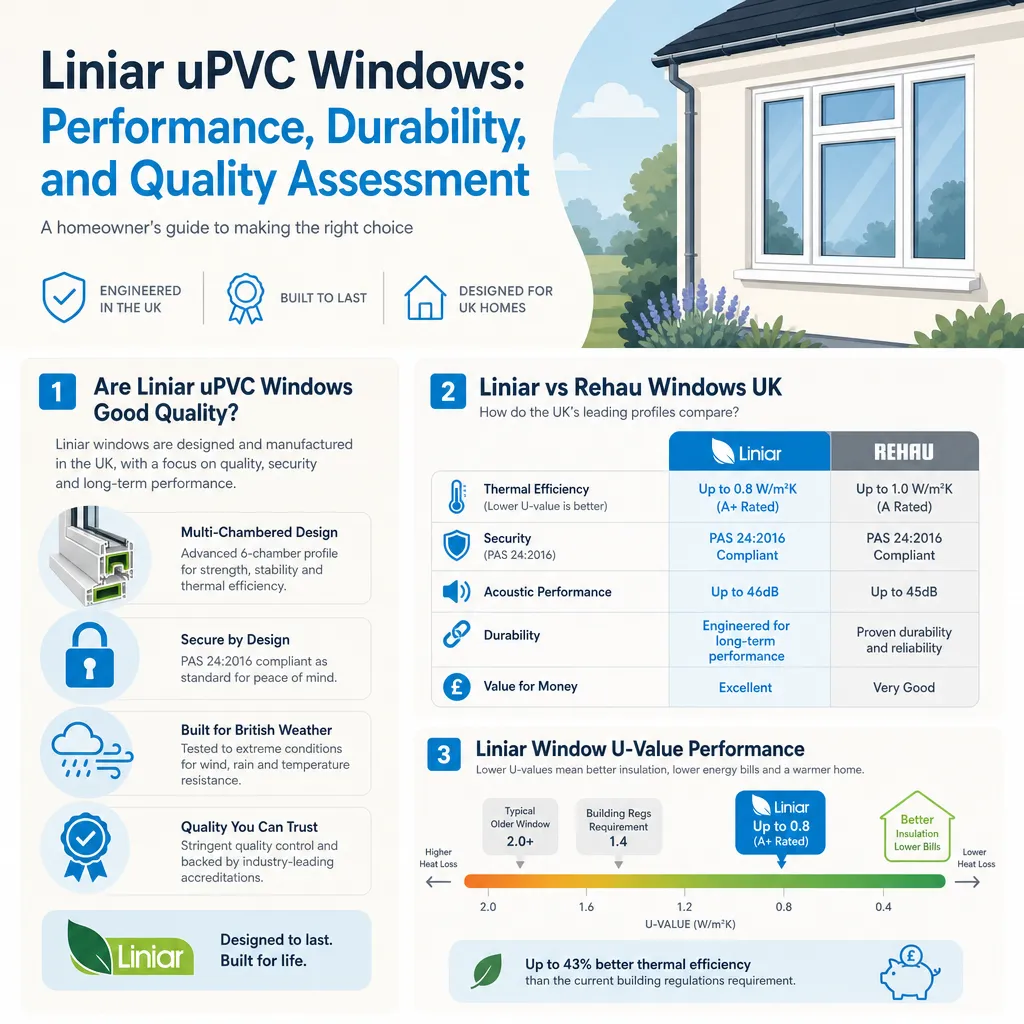
Liniar uPVC Windows: Performance, Durability, and Quality Assessment
Liniar uPVC window profiles are manufactured in the UK using multi-chambered, foamed frames.
 Improvement & Build
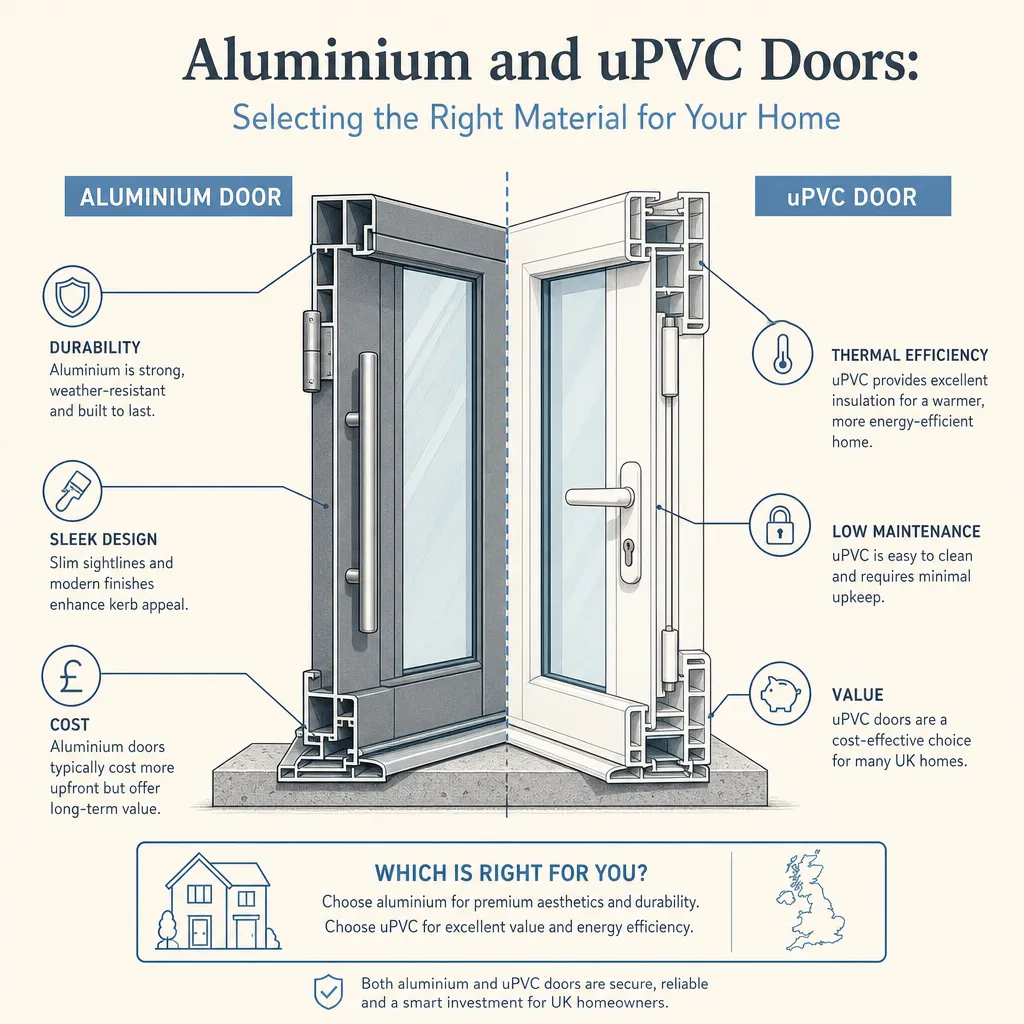
Aluminium and uPVC Doors: Selecting the Right Material for Your Home
uPVC doors are lower-cost and low-maintenance, making them a practical choice for most UK homes.
 Improvement & Build
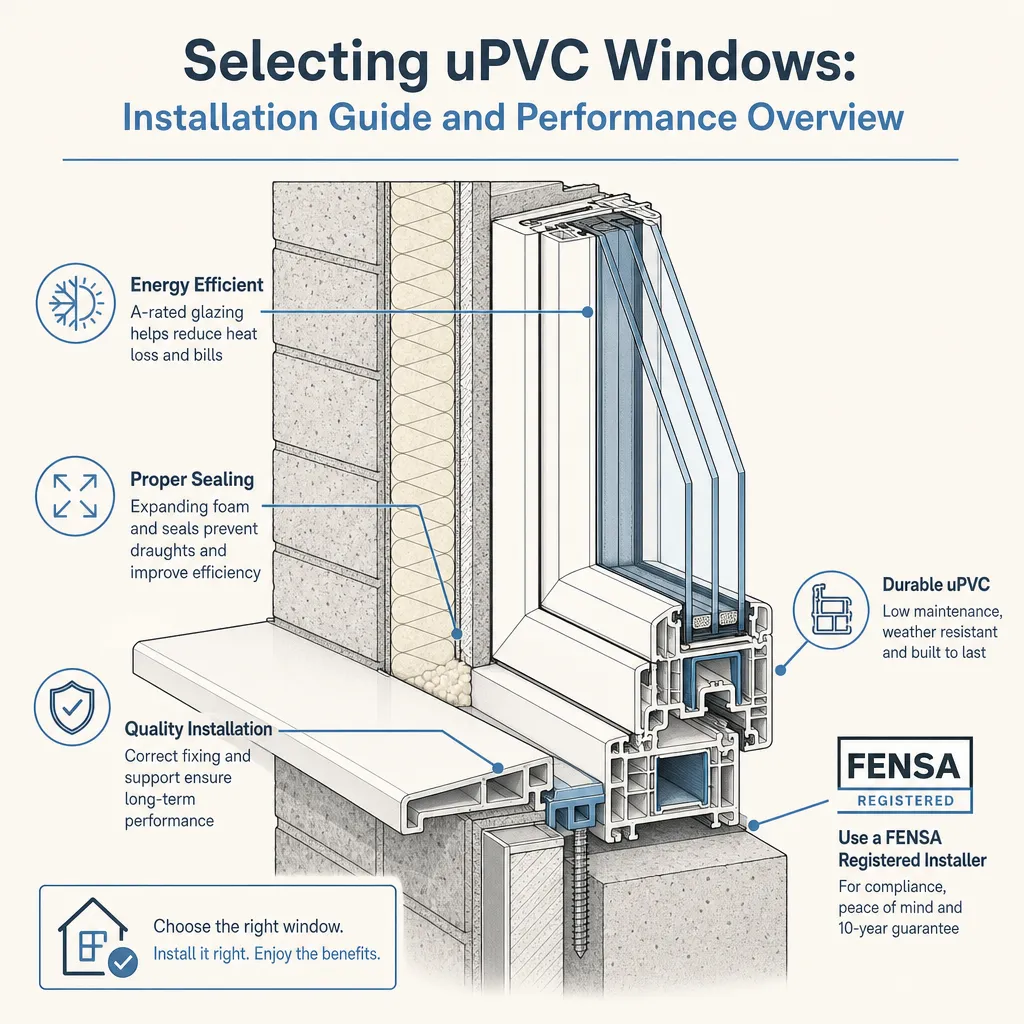
Selecting uPVC Windows: Installation Guide and Performance Overview
uPVC windows are a practical, low-maintenance choice for most UK homes.
 Improvement & Build
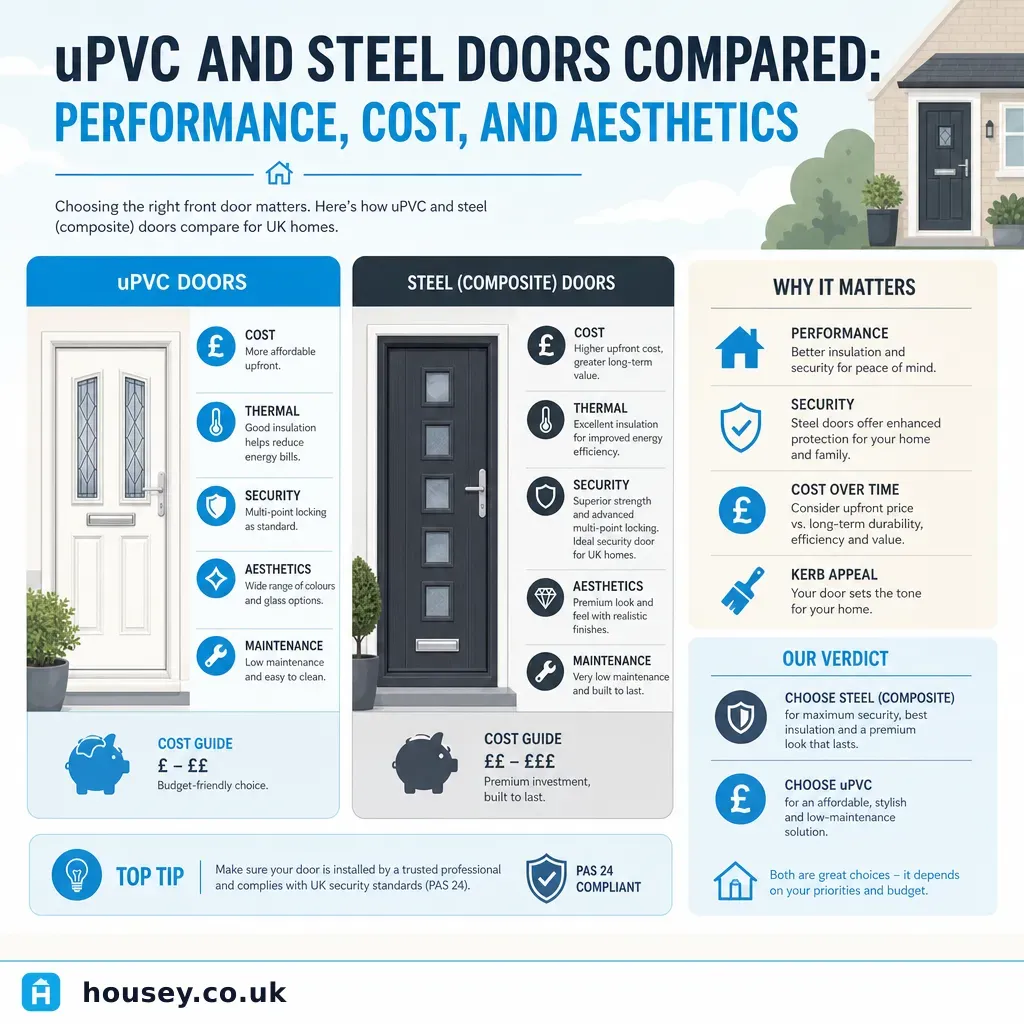
uPVC and Steel Doors Compared: Performance, Cost, and Aesthetics
uPVC and steel composite doors can both achieve PAS 24:2022 security certification and similar thermal performance, meeting Building Regulations Part L.