Septic Tank Inspection: Assessment and Diagnostic Costs
By Housey · Last reviewed 10th of May 2026
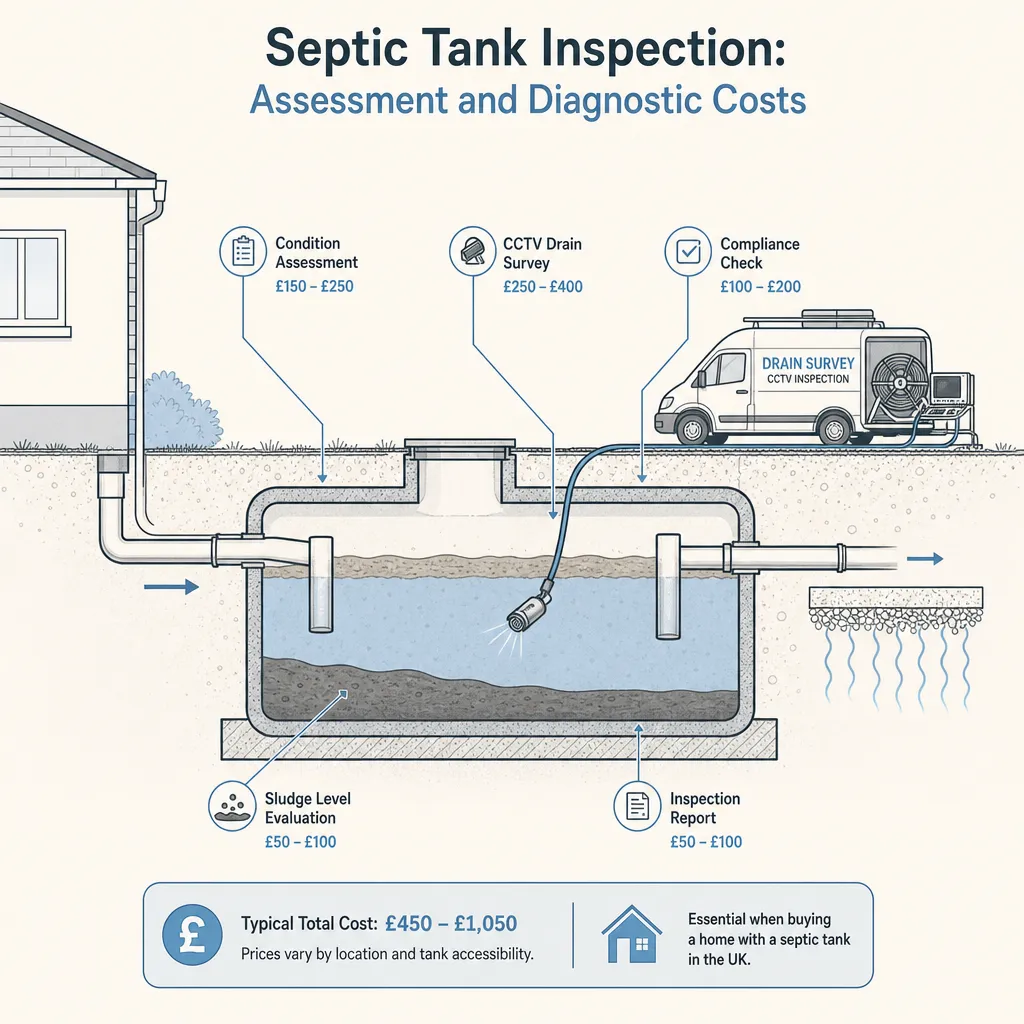
Septic Tank Inspection: Assessment and Diagnostic Costs
A septic tank inspection is typically required when buying or selling a rural property, when a system shows signs of failure, or when a homeowner needs to confirm compliance ahead of a planning application or change of use. Unlike routine emptying, an inspection involves a structured assessment of the tank's physical condition, its inlet and outlet arrangements, and whether the drainage field is still performing as intended. A clear picture of system health before exchange of contracts can mean the difference between a straightforward purchase and an unforeseen five-figure remediation bill.
Key points
- A basic visual septic tank inspection typically costs £100–£250; a full assessment including CCTV investigation of the pipework typically costs £250–£600 (Indicative UK costs, last reviewed 2026-05-10).
- In England and Wales, the Environment Agency's General Binding Rules require septic tanks that discharge to surface water to be upgraded — an inspection can confirm whether your system is compliant.
- CCTV drain surveys can detect displaced joints, root ingress, collapsed pipe sections, or internal tank cracks that visual inspection alone cannot identify.
- Mortgage lenders increasingly require a septic tank condition report before advancing funds on properties not connected to mains drainage.
- A failed drainage field cannot typically be repaired — replacement commonly costs £3,000–£10,000+ depending on plot constraints and ground conditions.
What does a septic tank inspection involve?
The scope varies depending on why it is commissioned. A thorough professional inspection covers:
- Visual inspection of the tank exterior — checking for cracking, ground settlement, saturation around the tank, and vegetation growth over the lid.
- Inspection of inlet and outlet baffles — failed baffles allow scum into the drainage field and are a common, preventable cause of soakaway failure.
- Sludge depth measurement — establishes whether the tank needs emptying and indicates how well it has been maintained.
- Drainage field assessment — looking for ground saturation, surface odour, or abnormally green vegetation indicating effluent at the surface.
- CCTV investigation (if included) — a camera is passed through the drainage pipework to identify cracked pipes, displaced joints, blockages, or root ingress.
- Compliance check — confirming whether the system discharges to ground (permitted under the General Binding Rules in England) or to a watercourse (which requires an exemption or upgrade).
Which type of inspection do you need?
Assessment type | Best for | What is included | Typical cost |
|---|---|---|---|
Visual inspection only | General condition check after recent emptying | Tank exterior, baffles, covers, drainage field surface | £100–£200 |
Visual + CCTV drain survey | Buying or selling, suspected pipe damage | Above plus camera inspection of inlet and outlet pipework | £250–£500 |
Full drainage investigation | Failing system, planning or mortgage requirement | Above plus soakaway percolation test, written report | £400–£700 |
Combined empty and inspect | Maintenance with a condition check | Desludge plus visual and baffle check | £300–£500 |
Indicative UK costs, last reviewed 2026-05-10.
Decision tree: which type of inspection do I need?
- Buying a property with a septic tank → commission a full drainage survey (visual + CCTV + drainage field assessment) and request a written report suitable for sharing with your solicitor and lender.
- Selling a property → a pre-sale inspection report reduces buyer concerns; emptying and inspection carried out together is common practice.
- System draining slowly or producing odours → arrange an inspection alongside an empty to distinguish between an overfull tank and a failing drainage field.
- Planning a development, extension, or change of use → your local planning authority may require a formal drainage assessment.
- Routine maintenance check → a combined empty and visual inspection every 3–5 years is sufficient for most well-maintained domestic systems.
- Discharge destination is unknown → a compliance check must be carried out before any property transaction or planned works.
Septic tank inspection red flags
The following signs indicate that professional investigation should not be delayed:
- Ground is wet or smells foul near the soakaway — likely drainage field failure; inspection is urgent, not optional.
- Sewage is backing up into the property — immediate professional investigation is required.
- The tank lid is at or above ground level and is damaged or displaced — an open or damaged cover is a safety hazard; do not approach without caution.
- The tank is concrete and more than 40 years old — internal cracking and baffle deterioration become increasingly common with age.
- Previous owners cannot confirm the system type or discharge point — compliance status is unknown and must be established before sale.
- The property sits close to a borehole, spring, or watercourse — environmental risk is elevated and Environment Agency notification may be required.
What happens if the inspection reveals a problem?
The outcome depends on what is found:
Minor issues (baffle replacement, small pipe repair): A failed inlet or outlet baffle can often be replaced for £200–£500 including labour. Small pipe repairs are similarly contained in cost.
Drainage field failure: A failed soakaway cannot be patch-repaired. A replacement drainage field must be designed following a percolation test. Replacement typically costs £3,000–£10,000+ depending on plot size, soil conditions, and whether building control approval is needed.
Non-compliant discharge to surface water: In England and Wales, you must register an exemption or upgrade to a sewage treatment plant. Treatment plants typically cost £3,000–£8,000 for supply and installation, plus ongoing desludging.
Structural tank failure: Replacement of the tank itself costs £2,000–£6,000+ depending on tank type (concrete versus plastic) and site access.
Buying a property with a septic tank
When purchasing a property not connected to mains drainage, commission a specialist inspection before exchange of contracts. Follow these steps:
- Raise drainage enquiries in the pre-contract stage — establish whether the property uses mains sewerage, a septic tank, a sewage treatment plant, or a cesspit.
- Commission an independent inspection — do not rely solely on seller representations or a general building survey.
- Check compliance status under the General Binding Rules (England and Wales) or SEPA's regulations in Scotland.
- Confirm the drainage field sits within the property boundary or is covered by a legally binding easement.
- Ask the seller for service records, waste transfer notes, and any Environment Agency or SEPA correspondence.
- Factor potential remediation costs into your offer if problems are identified.
A drainage survey via Housey provides a structured written assessment suitable for sharing with your solicitor and mortgage lender.
When to get professional help
Arrange an inspection promptly if:
- You are buying or selling a property with private drainage.
- Drains are slow or backing up and the last empty date is unknown.
- Ground near the drainage field is wet, foul-smelling, or showing visible effluent.
- The tank is old concrete construction and has not been inspected in over five years.
- A lender or solicitor requires a formal drainage condition report.
How Housey can help
Housey connects you with vetted drainage survey specialists and professionals who carry out CCTV drain surveys for both residential maintenance and pre-purchase inspections. Specialists on the platform provide written condition reports suitable for sharing with solicitors, lenders, and the Environment Agency where required.
Frequently asked questions
Do I need a septic tank inspection when buying a house?
A septic tank inspection is not a legal requirement but is strongly advisable. A failed drainage field can cost £5,000–£10,000 or more to replace. Many mortgage lenders now request a drainage condition report for properties not connected to mains drainage. Your solicitor should raise drainage enquiries as part of the pre-contract conveyancing process.
How long does a septic tank inspection take?
A visual inspection of a domestic septic tank typically takes 30–60 minutes. Adding a CCTV survey of the inlet and outlet pipework extends this to 1.5–2.5 hours. A full drainage investigation including a soakaway percolation test may require a full day across two visits, to allow water to drain between tests.
Who carries out septic tank inspections in the UK?
Drainage contractors, drainage engineers, and specialist drainage surveyors all carry out septic tank inspections. For pre-purchase reports accepted by mortgage lenders, check that the contractor provides a formal written report with their credentials. A qualified drainage engineer or CHAS-registered contractor is generally preferable for reports used in conveyancing.
Is a septic tank inspection the same as a CCTV drain survey?
No, though they often overlap. A septic tank inspection typically covers a visual check of the tank, baffles, and drainage field surface. A CCTV drain survey passes a camera through the pipework to identify internal defects not visible externally. For a thorough pre-purchase assessment, both together are advisable and often combined by specialist drainage contractors.
Sources and further reading
- General binding rules: small sewage discharge to the ground — Environment Agency / GOV.UK
- General binding rules: small sewage discharge to a surface water — Environment Agency / GOV.UK
- Septic tanks and other sewage systems — Scottish Environment Protection Agency (SEPA)
- Problems with sewers and drains — Citizens Advice
Useful next reads
 Surveys & Inspections
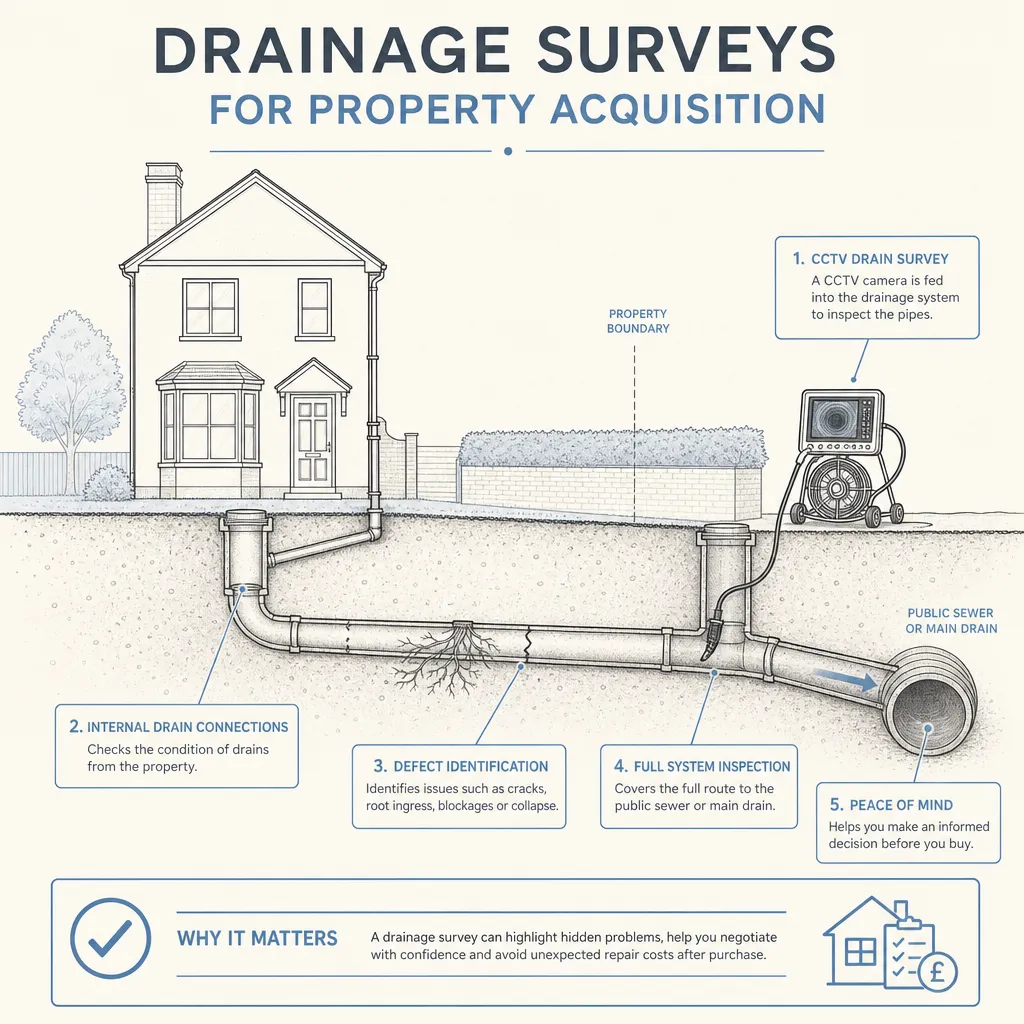
Drainage Surveys for Property Acquisition
A drainage survey — typically a CCTV camera inspection of underground drain runs — helps identify blockages, collapsed sections, root ingress, and misconnections that would not be visible in a standard property survey.
 Surveys & Inspections
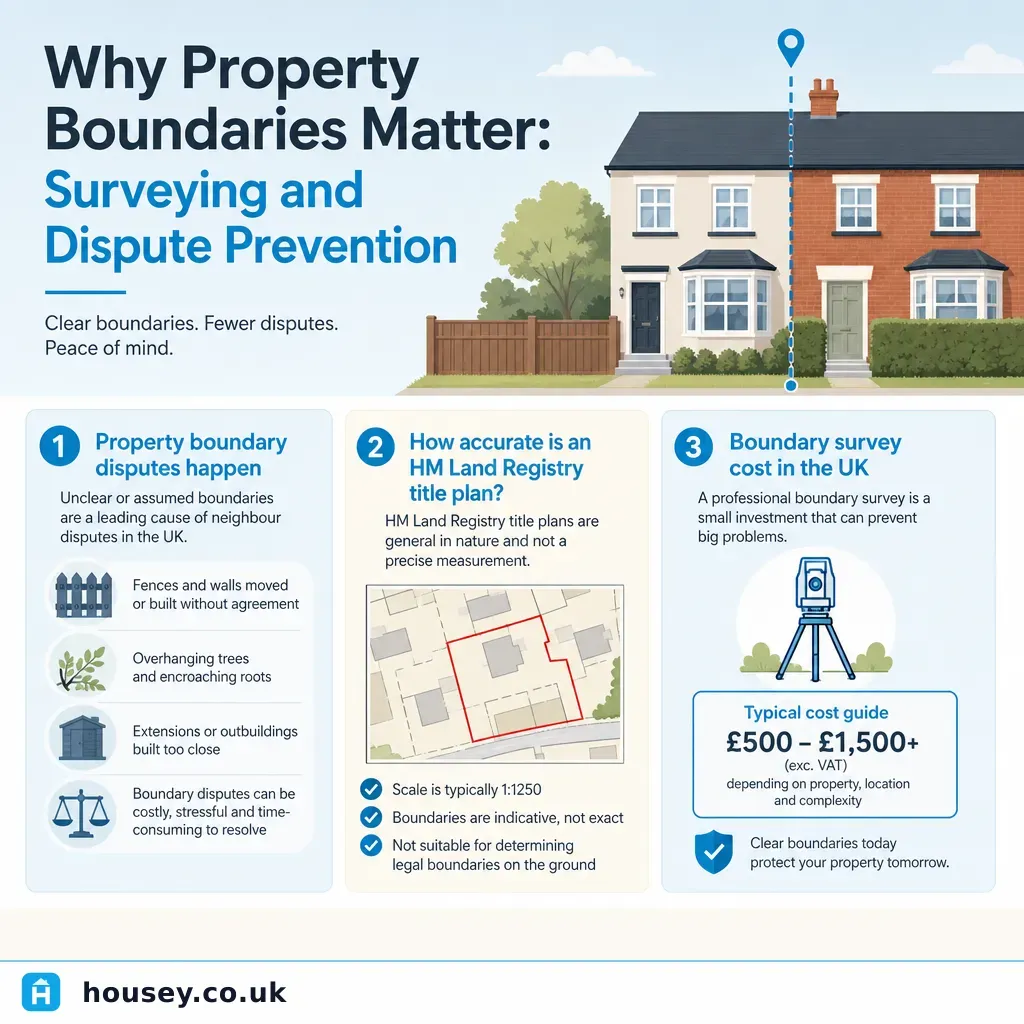
Why Property Boundaries Matter: Surveying and Dispute Prevention
Property boundaries in England and Wales are recorded as general boundaries by HM Land Registry — not precise measurements.
 Surveys & Inspections
Safe Property Viewing Practices: Protecting Yourself During Inspections
When viewing a property in the UK, always tell someone where you are going and share the full address before you leave.
 Surveys & Inspections
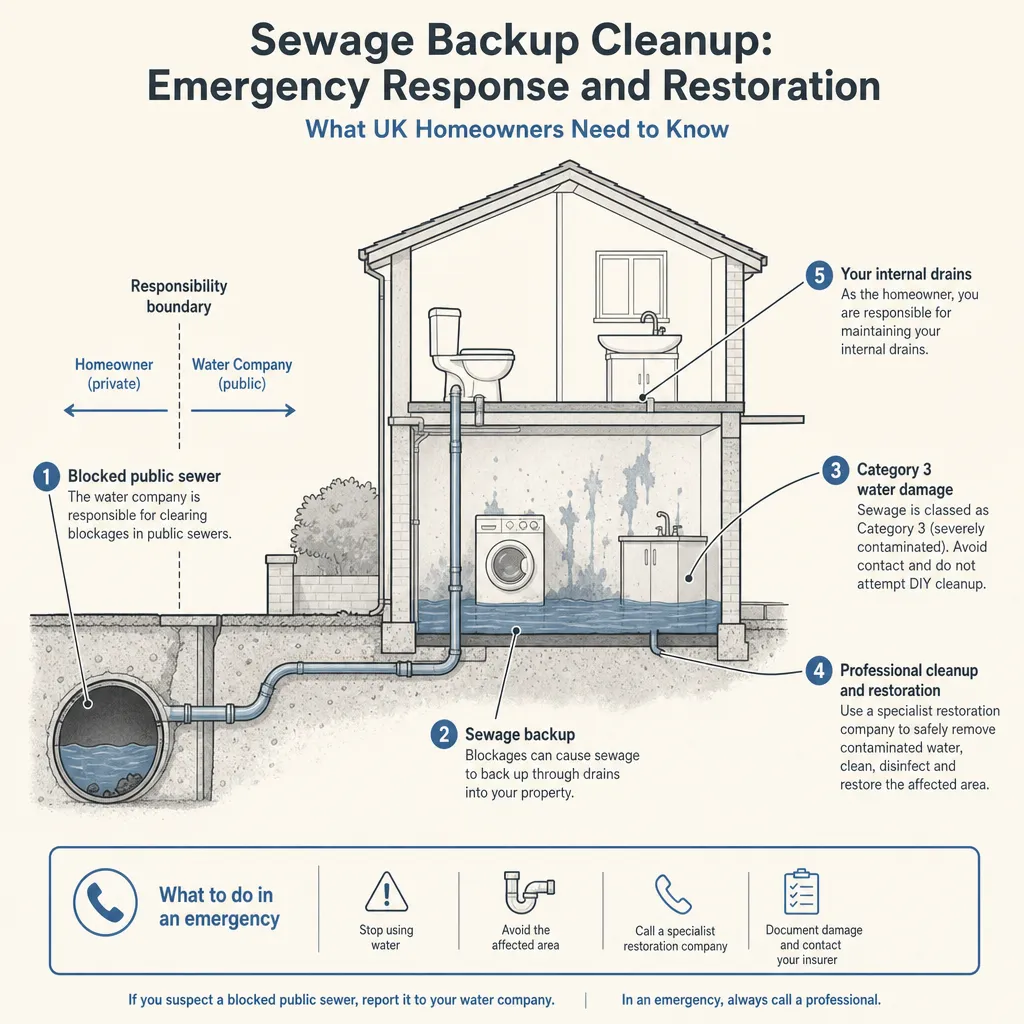
Sewage Backup Cleanup: Emergency Response and Restoration
A sewage backup should be treated as a Category 3 contamination event.
 Surveys & Inspections
Identifying Asbestos Insulation: What You Need to Know for Your Property
Asbestos insulation was widely used in UK properties built before 2000, commonly found in pipe lagging, ceiling tiles, loose-fill loft insulation, and around boilers.