Septic Tank Installation: Planning and Budget Considerations
By Housey · Last reviewed 10th of May 2026
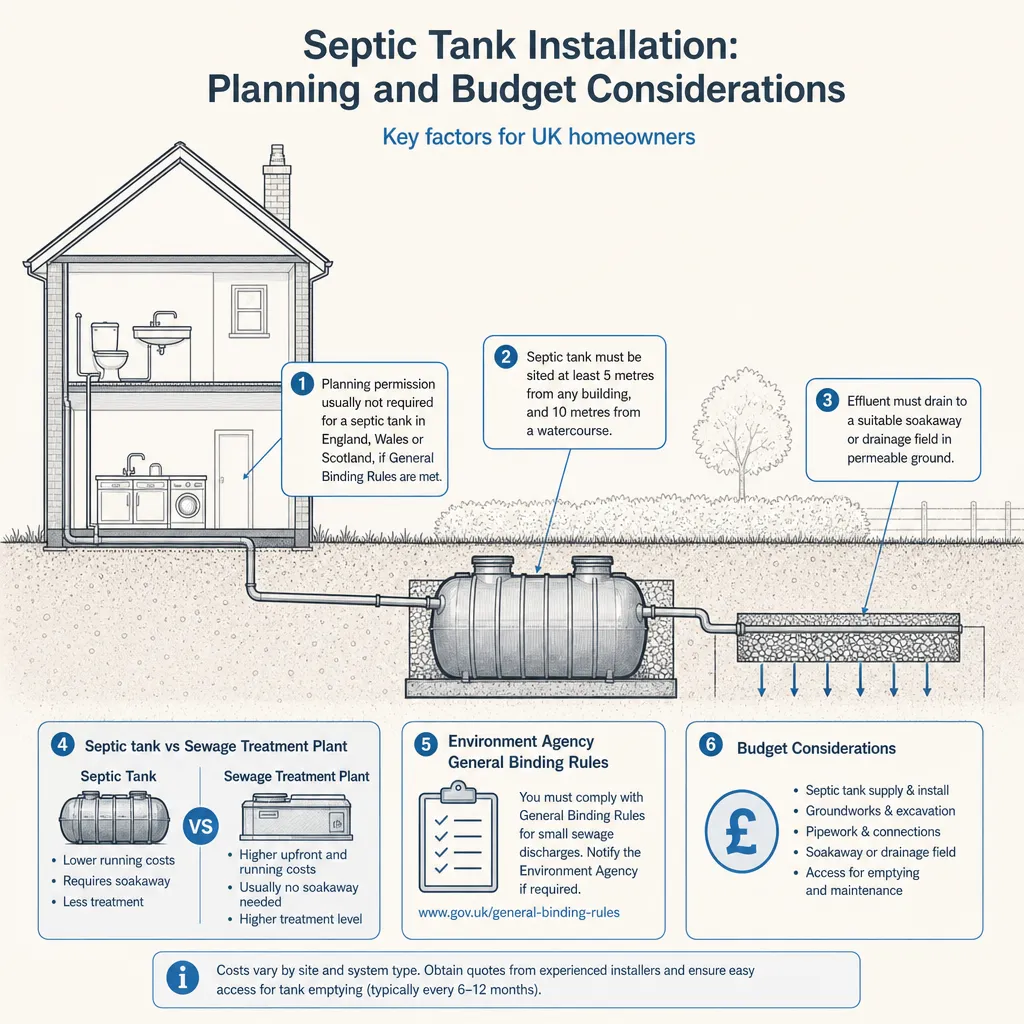
Septic Tank Installation: Planning and Budget Considerations
Installing a septic tank or sewage treatment plant is typically required when a rural or semi-rural property cannot connect to the public sewer network — a situation common across England, Wales, Scotland, and Northern Ireland. The process involves regulatory approvals, specialist ground investigation, and staged building control inspections, making early planning and the right professional team essential to avoid enforcement action or costly remedial works.
Key points
- Properties discharging to a septic tank or small sewage treatment plant in England generally require either an Environment Agency permit or registration under a General Binding Rule exemption under the Environmental Permitting Regulations 2016 — registration is completed via GOV.UK.
- Building Regulations approval under Approved Document H (Drainage and Waste Disposal) is required for all new installations in England and Wales — a building control inspector must carry out stage inspections during the work.
- A soil percolation test to BS 6297 is required before system selection to determine whether the ground can support a soakaway drainage field.
- Since January 2020, existing septic tanks discharging directly to surface water (rivers, streams, or ditches) must be upgraded or replaced under the Environment Agency's General Binding Rules.
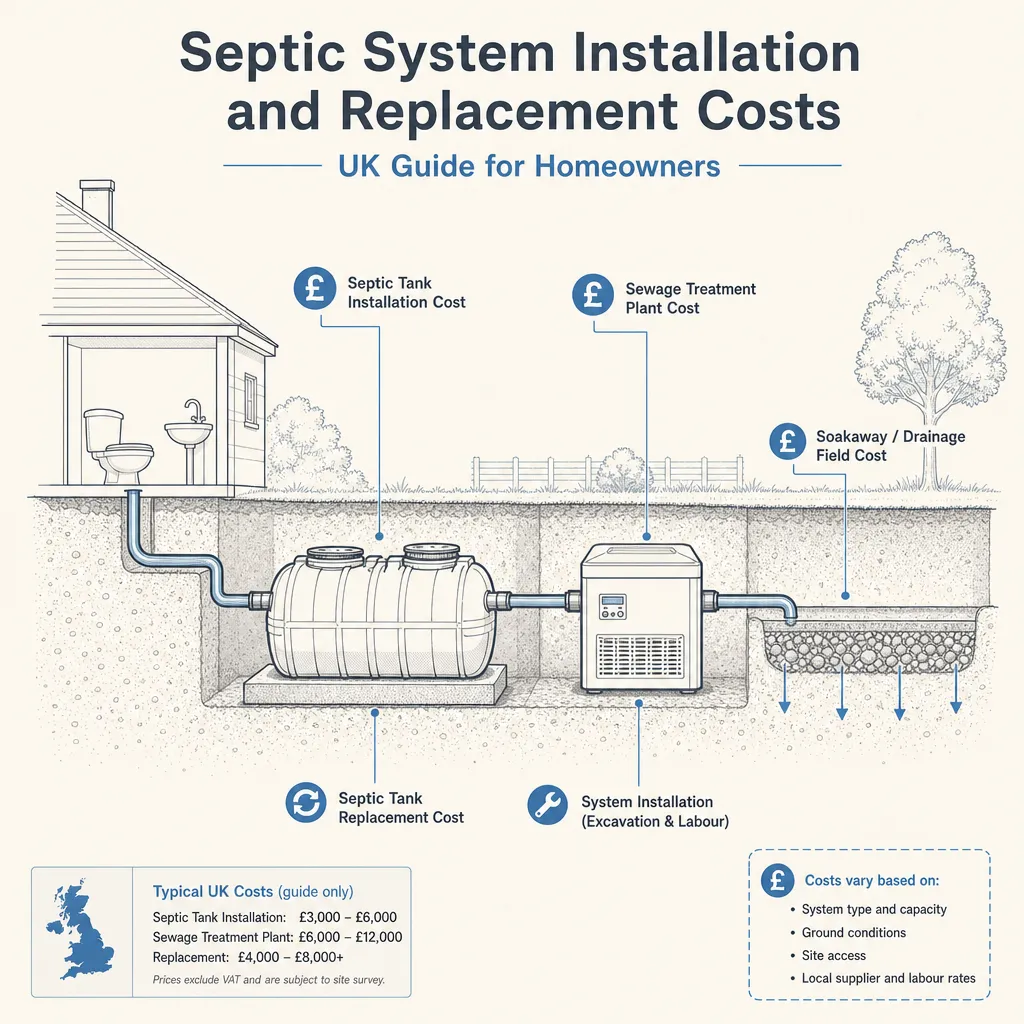
- Indicative installed costs range from £3,000–£5,500 for a basic septic tank to £8,000–£20,000 or more for a sewage treatment plant with a drainage field, depending on system size, ground conditions, and access. Indicative UK costs, last reviewed 2026-05-10.
Important limitations
This article provides general guidance on planning, regulatory, and cost considerations for septic tank installation in England. Regulatory requirements, system design, and appropriate technology vary significantly depending on site-specific ground conditions, proximity to watercourses, local authority policies, and the number of occupants served. A qualified drainage engineer, civil engineer, or chartered surveyor should assess your specific site before any work is commissioned. This article does not constitute technical design, legal, or regulatory advice.
Septic tank, sewage treatment plant, or cesspool: which do you need?
These systems work differently and carry different regulatory implications.
System | How it works | Discharge route | Regulatory position | Typical installed cost |
|---|---|---|---|---|
Septic tank | Separates solids; partially treats liquid effluent | Drainage field (soakaway) only — not to surface water since 2020 | Exempt if discharging to drainage field per General Binding Rules | £3,000–£5,500 |
Sewage treatment plant (STP) | Active biological treatment; higher-quality effluent | Drainage field or surface water with a permit | May need Environment Agency permit; some qualify for exemption | £5,000–£20,000+ |
Cesspool (cesspit) | Sealed storage only — no treatment | None — contents pumped out by licensed waste carrier | No discharge means no permit required | £2,500–£5,000 installed; high ongoing emptying costs |
Indicative UK costs, last reviewed 2026-05-10. Costs vary by location, access, ground conditions, and system specification.
The planning and approval process
Installing a septic tank involves multiple approval stages. Completing them out of sequence is a common and costly mistake.
Step 1: Site investigation
Engage a drainage engineer or civil engineer to assess: proximity to the nearest public sewer (contact your water authority first); ground type and permeability; proximity to watercourses, boreholes, and wells; and available land area for a drainage field.
Step 2: Soil percolation test
A percolation test to BS 6297 determines whether the ground can support a drainage field. If the ground drains too quickly or too slowly, alternative options — such as pump chambers, mound systems, or a sewage treatment plant with a permit to discharge to surface water — may be needed.
Step 3: Regulatory notifications
- Environment Agency exemption registration (for eligible systems in England): register online via GOV.UK before the system is commissioned.
- Building Regulations application (Part H): submit a full plans application to your local building control body before work begins. A building control officer will inspect at key stages including excavation, bedding, connection, and backfill.
- Planning permission: not usually required for a below-ground installation or replacement, but check with your local planning authority, particularly in designated areas or where above-ground structures are involved.
Step 4: Installation
Use only a suitably qualified drainage or groundworks contractor. Building control stage inspections must be passed before backfilling each element of the installation.
Step 5: Documentation
Retain the Environment Agency exemption reference, Building Regulations completion certificate, manufacturer system documentation, and the installer's warranty. These documents are required by mortgage lenders and will be requested on any future sale.
Decision tree: which system is right for your site?
- Can you connect to the public sewer? Contact your water authority. Public sewer connection is almost always preferable where feasible.
- Is ground permeability suitable for a drainage field? If yes — a septic tank or sewage treatment plant draining to a soakaway is likely appropriate, subject to a percolation test confirming suitability.
- Is permeability unsuitable or insufficient land available? An STP with an Environment Agency permit to discharge to surface water may be required — specialist advice is essential.
- Is an existing septic tank discharging directly to a watercourse? Upgrade or replacement is required under the Environment Agency General Binding Rules.
- Is the property listed, in a flood zone, or near a sensitive water catchment? Early engagement with the Environment Agency and a qualified civil or structural engineer is essential before selecting any system.
Homeowner checklist: before instructing a contractor
When this becomes urgent
- An existing tank is failing, causing back-up, or producing odour — this is a public health matter requiring urgent professional attention.
- You have received an enforcement notice from the Environment Agency or local authority.
- You are purchasing a rural property with an existing private drainage system that has not been inspected — arrange a drainage survey before exchange of contracts.
- Ground instability, flooding, or proximity to a watercourse makes the suitability of a standard soakaway uncertain.
What to ask a qualified professional
- Is this site suitable for a drainage field based on a percolation test to BS 6297?
- Which system — septic tank, sewage treatment plant, or cesspool — is most appropriate for this site and the number of occupants?
- Which Environment Agency exemption or permit applies, and will you handle the registration or application on our behalf?
- What Building Regulations route will you use, and at which stages will building control inspect the work?
- What happens if the percolation test results fall outside acceptable ranges?
- What standard applies to the tank or system (for example, BS EN 12566), and what is the specification?
- What warranty does the manufacturer and installer offer?
- What are the ongoing maintenance requirements and approximate annual servicing costs?
How Housey can help
Housey connects you with qualified drainage contractors, experienced groundworkers, civil engineers, and building control consultants who can manage the full process from site investigation and regulatory approvals through to installation and building control sign-off.
Frequently asked questions
Do I need planning permission to install a septic tank?
In most cases, a below-ground septic tank or sewage treatment plant installation does not require planning permission under permitted development rights. However, if the property is listed, in a conservation area or designated landscape, or if any visible above-ground structure is involved, check with your local planning authority before proceeding.
How often does a septic tank need emptying?
A standard septic tank typically requires desludging by a licensed waste carrier every 12 to 18 months, depending on tank capacity and the number of occupants. Sewage treatment plants have different service intervals specified by the manufacturer. Regular servicing is a condition of the General Binding Rule exemption in England.
What are the Environment Agency General Binding Rules for septic tanks?
In force in England since January 2020, the General Binding Rules set minimum standards for small sewage discharges to the ground. Existing septic tanks discharging directly to surface water must be upgraded or replaced. Compliant systems draining to a properly designed drainage field may operate under an exemption registration rather than a full permit. Current rules are published on GOV.UK.
Can I install a septic tank myself?
While there is no absolute legal prohibition on owner-occupier installation, the work requires a Building Regulations full plans application, stage inspections by building control, and Environment Agency registration. Most mortgage lenders and insurers expect certified professional installation. In practice, DIY installation carries significant regulatory and financial risk.
Sources and further reading
- General binding rules: small sewage discharges to the ground — GOV.UK
- Approved Document H: Drainage and Waste Disposal — GOV.UK
- Environmental Permitting (England and Wales) Regulations 2016 — legislation.gov.uk
- BS 6297: Code of practice for the design and installation of drainage fields — BSI
- Planning Portal: Do I need permission? — Planning Portal
Useful next reads
 Improvement & Build
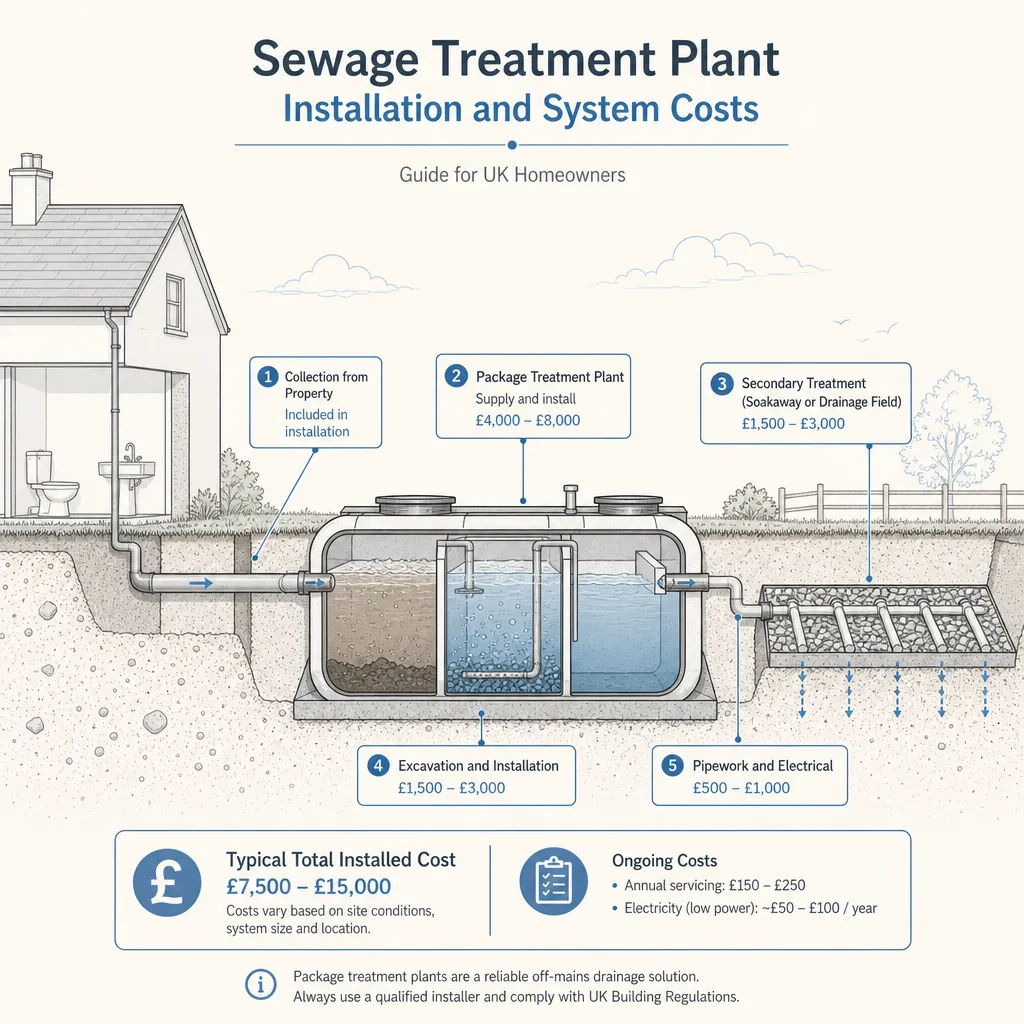
Sewage Treatment Plant Installation and System Costs
A domestic sewage treatment plant typically costs £5,000–£12,000 installed in the UK, depending on capacity, site conditions, and discharge route.
 Improvement & Build
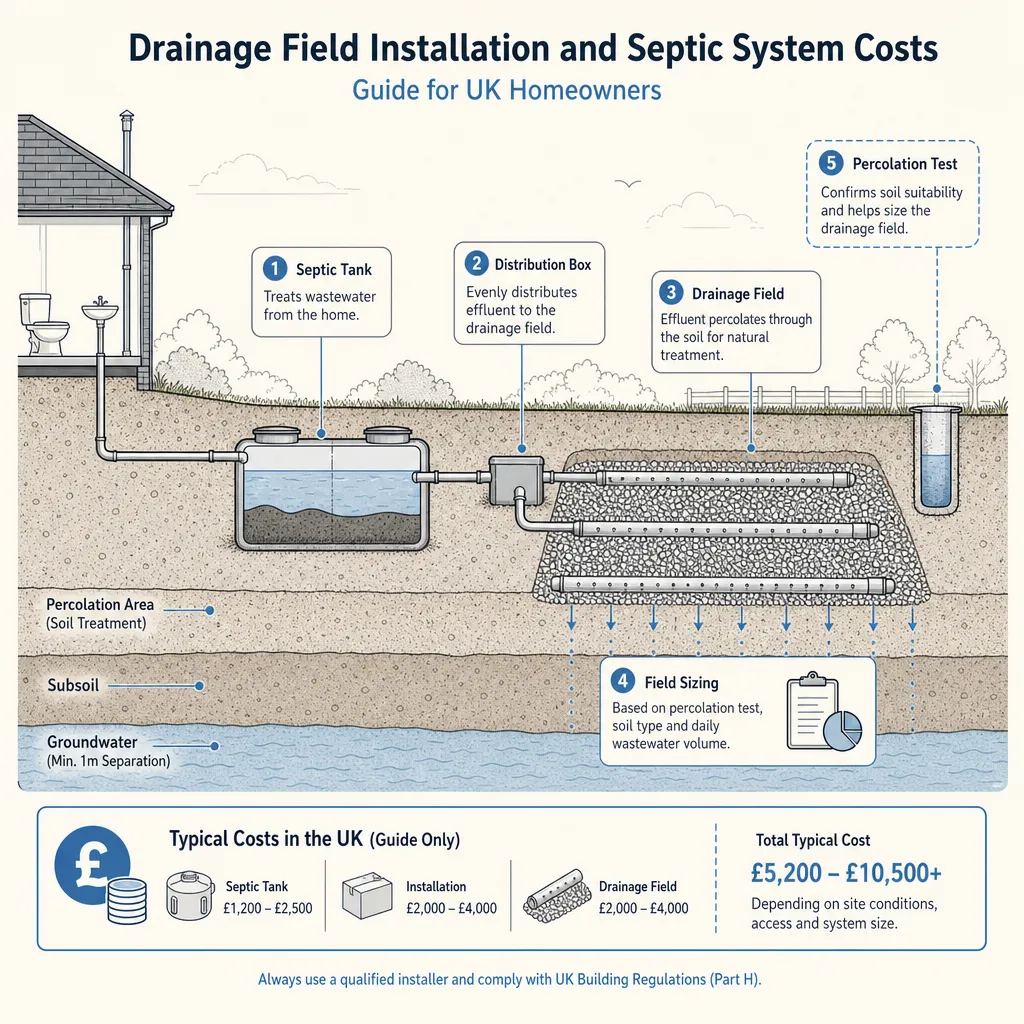
Drainage Field Installation and Septic System Costs
A drainage field disperses treated effluent from a septic tank or sewage treatment plant into the ground via perforated pipes in gravel-filled trenches.
 Improvement & Build
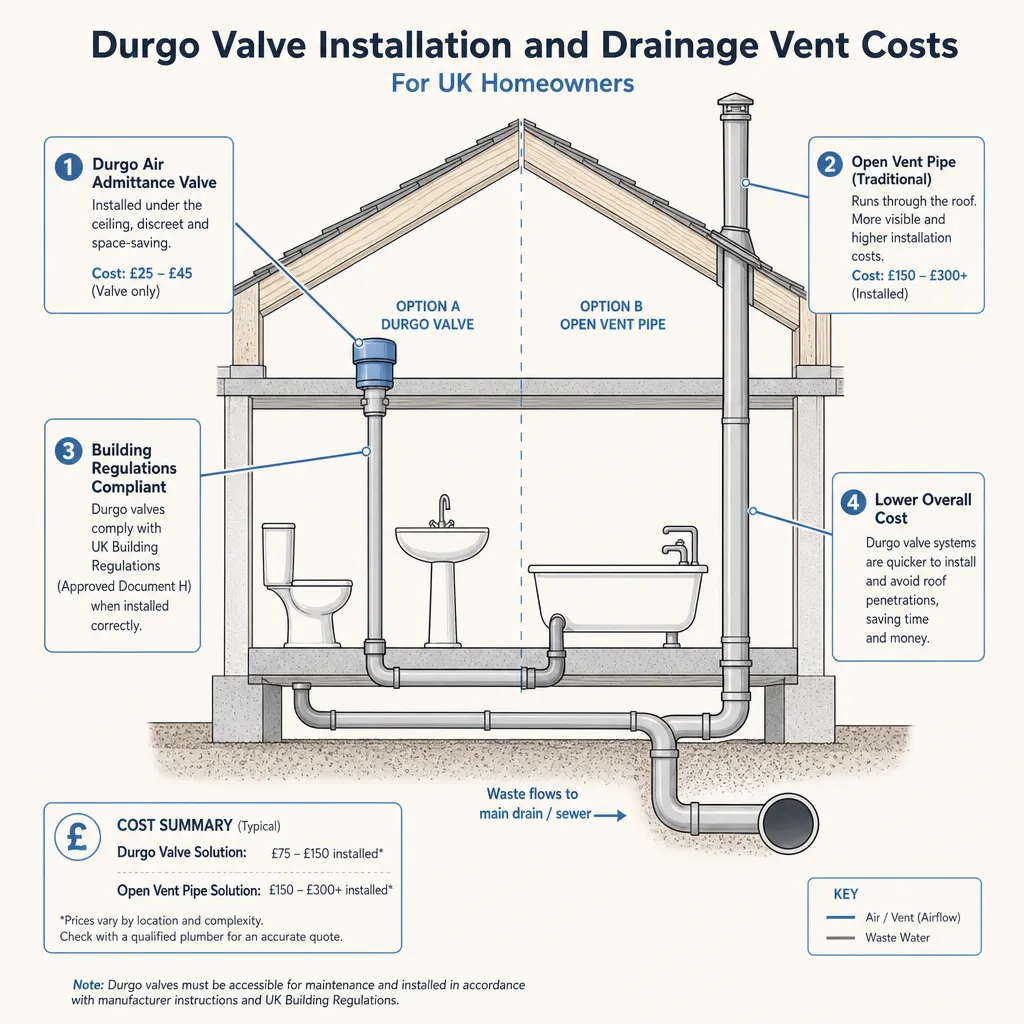
Durgo Valve Installation and Drainage Vent Costs
A Durgo valve is a brand of air admittance valve (AAV) used to vent drainage systems without an open pipe to atmosphere.
 Improvement & Build
Septic System Installation and Replacement Costs
New and replacement off-mains drainage in the UK requires a percolation test, Building Regulations Part H sign-off, and compliance with the Environment Agency's General Binding Rules.
 Improvement & Build
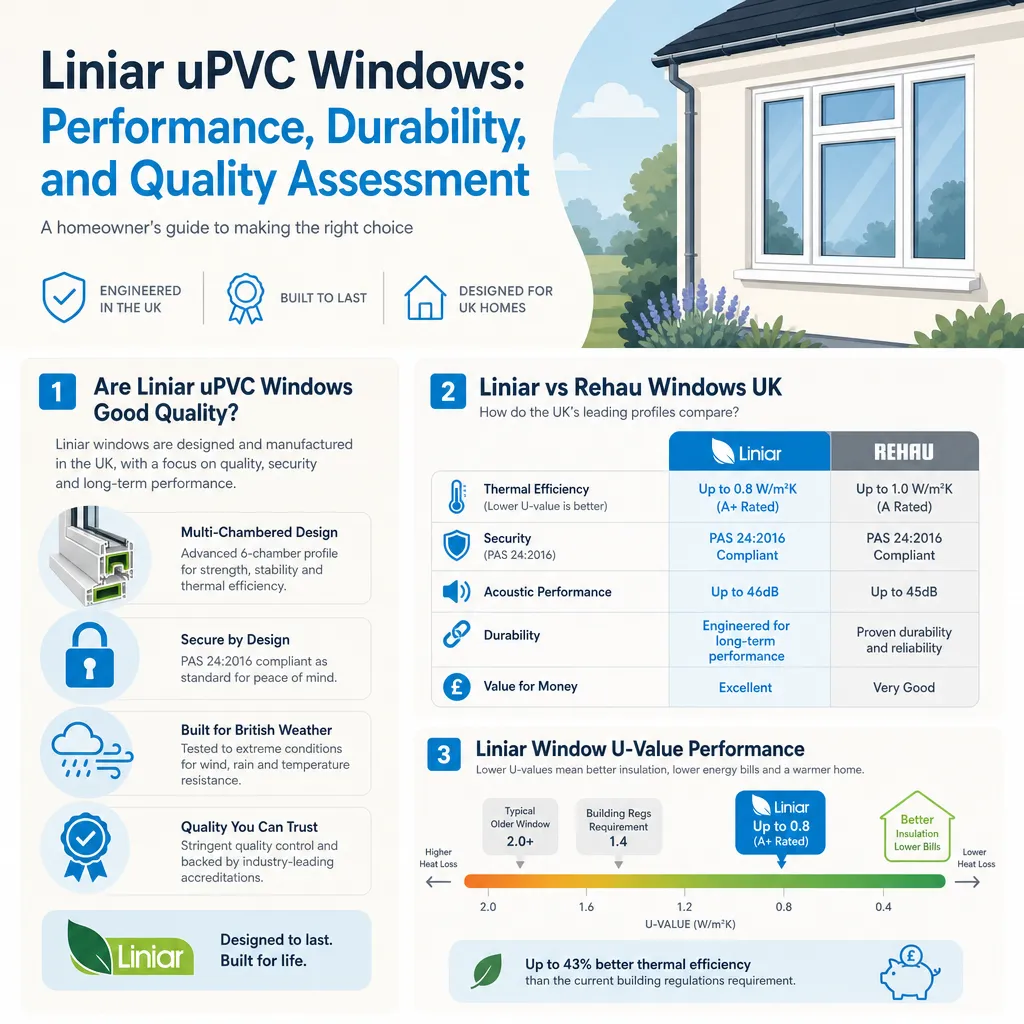
Liniar uPVC Windows: Performance, Durability, and Quality Assessment
Liniar uPVC window profiles are manufactured in the UK using multi-chambered, foamed frames.