Sequencing Window Replacement and Cladding Installation Projects
By Housey · Last reviewed 1st of June 2026
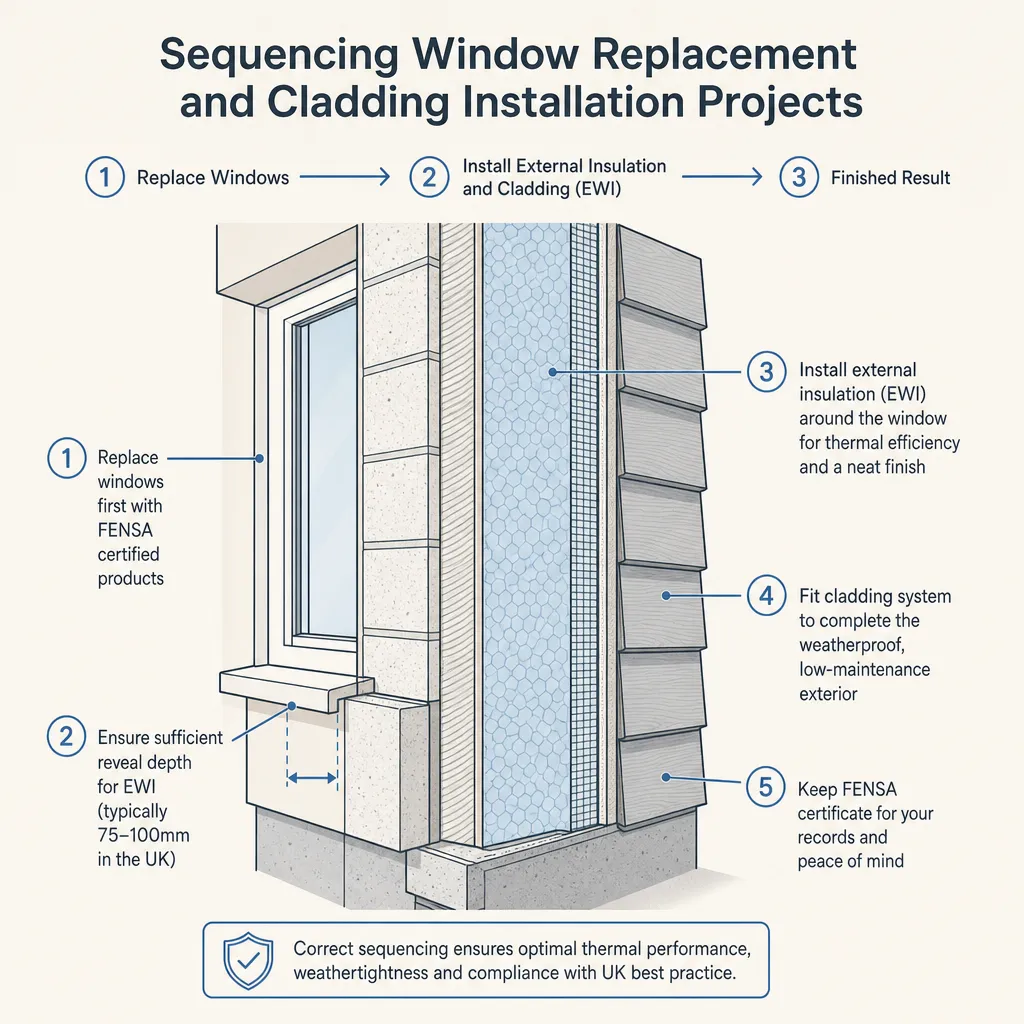
Sequencing Window Replacement and Cladding Installation Projects
External renovation projects combining new windows with cladding, render, or external wall insulation (EWI) are increasingly common as UK homeowners look to improve thermal performance and kerb appeal in a single phase of work. Getting the installation sequence wrong can lead to weathertightness failures, voided system warranties, or the need to reopen completed finishes — adding cost and delay to what can already be a complex programme.
Key points
- Windows are almost always installed before cladding or external wall insulation systems, so the reveal depth and junction detailing can be set correctly before the cladding face is established.
- Building Regulations Approved Document L requires replacement windows in England to achieve a whole-window U-value of no more than 1.4 W/m²K (or a centre-pane U-value of 1.2 W/m²K).
- FENSA-registered window installers must self-certify compliance with Building Regulations and issue a compliance certificate — retain this for conveyancing and insurance purposes.
- EWI system warranties — typically 10–25 years from manufacturers such as Sto, Weber, and Knauf — can be voided if subsequent trades damage the render or insulation substrate.
- Where EWI is being added to a solid-wall property, windows may need to be moved outward on sub-frames or extended cills to prevent cold bridging and maintain a functional window reveal.
Why sequencing matters for external renovation
The order in which trades work on an external renovation affects three things: weathertightness during the build programme, the long-term performance of junctions between components, and the validity of manufacturers' system warranties. The most common sequencing failure occurs when cladding or EWI is completed before windows are replaced — the window installation then damages or bridges the insulation layer, compromising both thermal performance and warranty cover.
A secondary issue is reveal depth. When EWI is applied to a solid-wall or cavity-wall property, the exterior face moves outward by typically 80–150 mm. If windows remain in their original position, the resulting reveal is too shallow, creates a cold bridge at the surround, and looks visually poor. Planning window replacement and EWI as a coordinated package allows installers to set window frames at the correct depth from the outset.
The recommended installation sequence
For most projects combining window replacement with external cladding or EWI:
- Scaffold erection — a single scaffold phase covering all external trades reduces cost and disruption. Plan for scaffold to remain until all external works are complete and snagged.
- Structural checks — if any openings are being enlarged or lintels replaced, carry out structural work before windows or cladding begin.
- Window removal and replacement — install new windows, setting frames on sub-frames or extended cills if the EWI outstand requires it.
- Weatherproofing membranes and tapes — apply breather membrane and window surround tapes to achieve a continuous air and weather barrier at all junctions before cladding begins.
- EWI or cladding system installation — with windows in place, EWI board edges, beads, and profiles are cut and detailed accurately against the fixed window frames.
- Render or cladding finish — silicone render coat or cladding panel finishing is applied and trimmed around the windows.
- Scaffold removal and snagging — inspect all junctions before scaffold is struck. Rectifying missed details after scaffold comes down is costly.
Sequencing scenarios: comparison table
Scenario | Recommended sequence | Key risk if reversed |
|---|---|---|
Window replacement only, no external changes | Windows first; internal redecoration after | Minimal risk if no EWI involved |
EWI on solid-wall property | Windows first, set at correct outstand depth | Cold bridging, voided EWI warranty, poor aesthetics |
Timber or composite cladding over new EWI | Windows first; cladding battened over substrate | Substrate damage during subsequent window installation |
Silicone render on cavity-wall (no insulation added) | Windows first preferred; either order acceptable | Window installation can crack render near jambs if render applied first |
Full façade: windows, EWI, and rainscreen cladding | Windows and EWI before rainscreen panel installation | Cannot fit panels cleanly without correct reveal established |
Project planning checklist
Before appointing contractors, work through the following:
Choosing the right sequence: decision guide
- Install windows before EWI if adding insulation to an existing wall — the reveal depth must reflect the finished wall thickness.
- Install windows before render if applying a base-coat or silicone render directly to blockwork — window frame edges need to be taped and beaded before render is applied.
- Either order is acceptable for stand-alone cladding replacement at similar wall thickness where window positions do not change significantly — but windows first remains preferable to protect the new cladding during installation.
- Engage a principal contractor or project manager if more than two trades are working on the external envelope simultaneously, to avoid programme clashes and responsibility gaps.
- Seek PAS 2035 guidance if applying for ECO4 or Great British Insulation Scheme funding, which requires a certified Retrofit Coordinator to approve the specification and sequence.
When to get professional help
External renovation involving EWI, render systems, or rainscreen cladding is technically demanding. Consider professional project management if:
- Your property is listed or in a conservation area where consent may be needed for cladding or window materials
- You are applying for government energy efficiency funding requiring PAS 2030-certified installation and a PAS 2035 Retrofit Coordinator
- Cracks, damp penetration, or structural movement are visible on the existing façade before works begin
- You are managing multiple trades without a principal contractor taking programme responsibility
How Housey can help
Housey connects homeowners with experienced window and door installers and roofers who understand whole-façade project coordination, including roofline, cladding, and glazing work across a shared scaffold programme. Request and compare quotes before committing to a combined programme.
Frequently asked questions
Do I need planning permission to replace windows in a conservation area?
In a conservation area, permitted development rights for replacing windows may require you to match the original design, material, and appearance. In many conservation areas, uPVC replacements are not permitted where original windows were timber. Check with your local planning authority before ordering to avoid having to redo completed work.
What is a FENSA certificate and why do I need one?
A FENSA certificate confirms that replacement windows or doors in England and Wales comply with the thermal performance and safety requirements of the Building Regulations. FENSA-registered installers self-certify and issue the certificate automatically. You will need it when selling the property. If your installer is not FENSA- or CERTASS-registered, a local authority building control inspection is required instead.
Can I claim funding for EWI and new windows together?
Some government schemes, including ECO4 and the Great British Insulation Scheme, may fund EWI on eligible properties. Windows are not usually funded separately, but a coordinated application through a PAS 2035 Retrofit Coordinator may include window upgrades within an approved Whole House Plan. Check eligibility via the Energy Saving Trust or your local authority.
What if my existing cladding contains combustible materials?
External cladding on buildings over 11 metres in England is subject to strict controls under the Building (Higher-Risk Buildings) Regulations 2023, including restrictions on combustible materials and mandatory fire safety assessments. If you are uncertain about the fire performance of existing or proposed cladding materials, seek specialist advice before proceeding — particularly on blocks of flats and multi-occupancy buildings.
Sources and further reading
- Approved Document L (2021) — GOV.UK
- FENSA — FENSA
- Solid wall insulation — Energy Saving Trust
- Great British Insulation Scheme — GOV.UK
- Permitted development rights for householders — Planning Portal
Useful next reads
 Improvement & Build
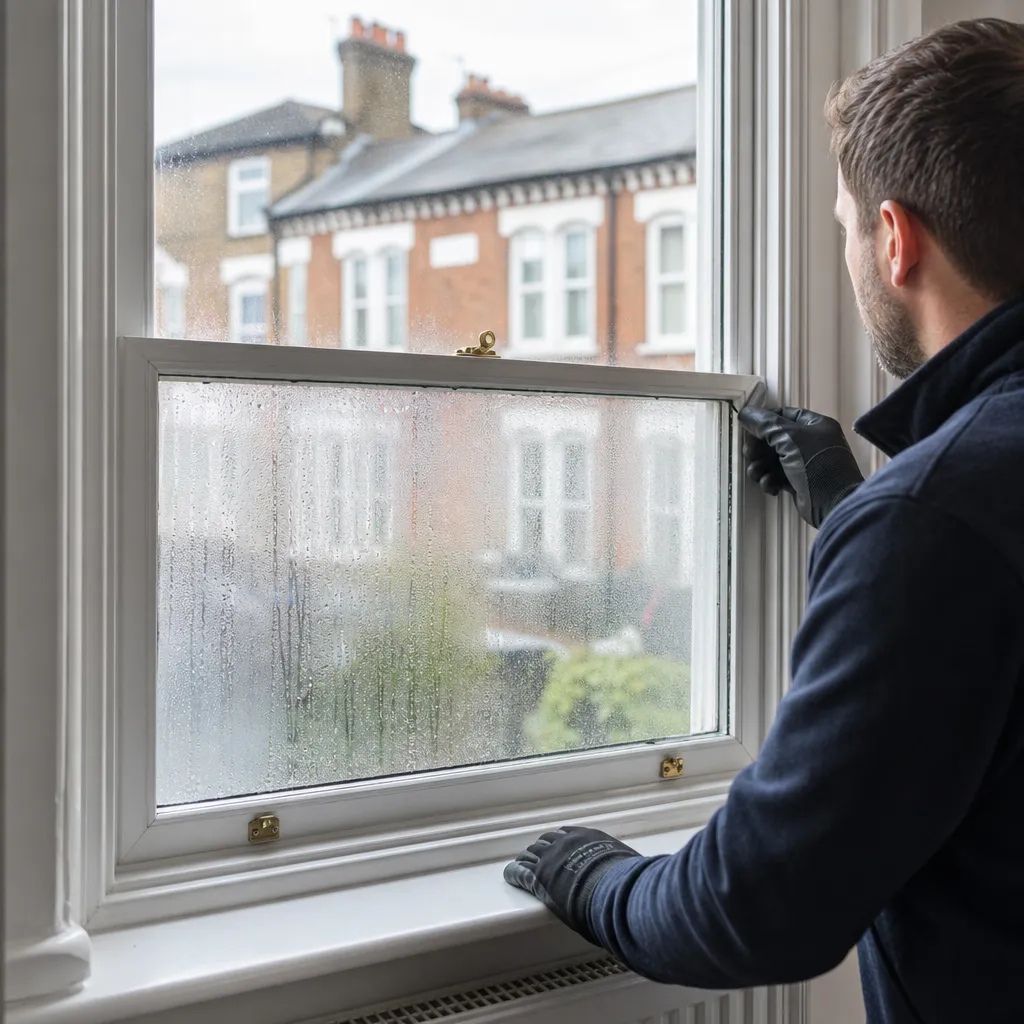
Repairing Failed Window Seals and Condensation Issues
Condensation between double-glazed panes means the hermetic seal on the insulated glass unit has failed.
 Improvement & Build
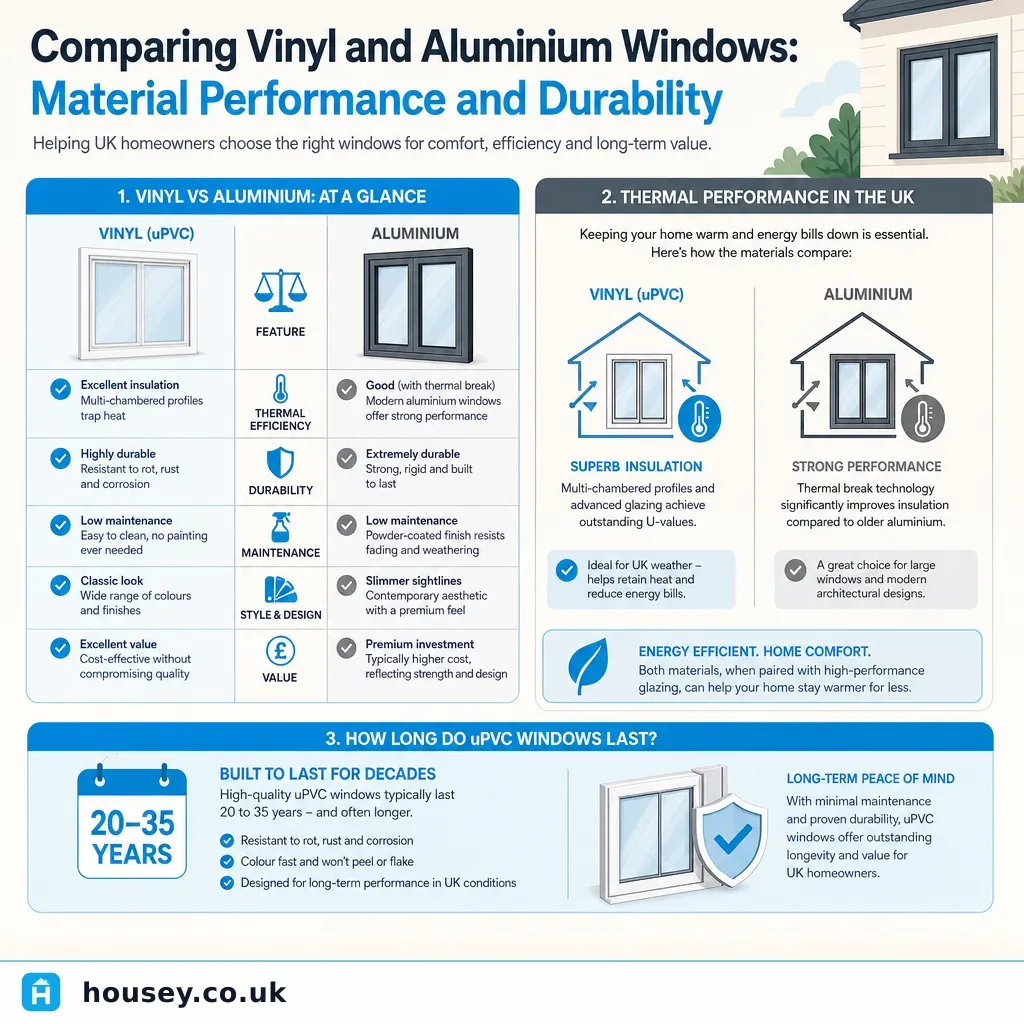
Comparing Vinyl and Aluminium Windows: Material Performance and Durability
uPVC (vinyl) and aluminium windows both meet UK Building Regulations Part L when properly specified.
 Improvement & Build
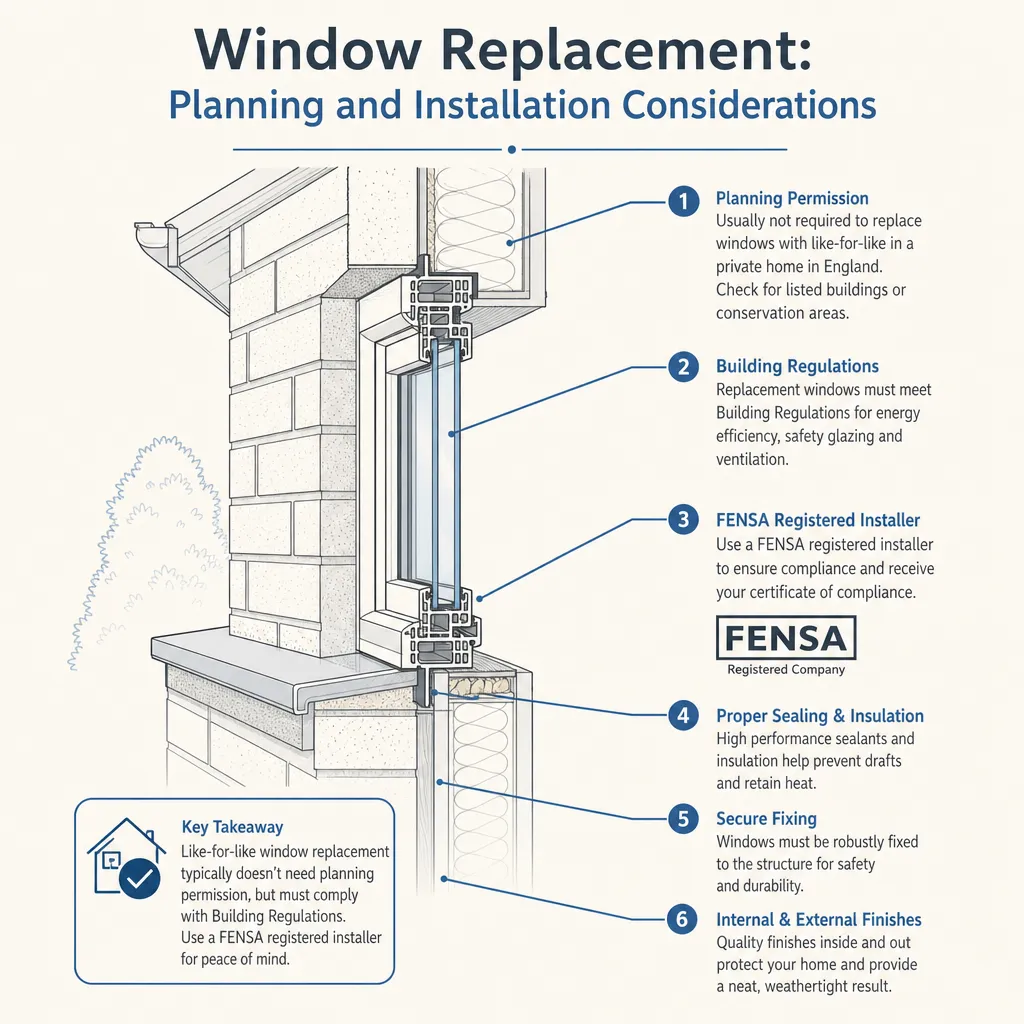
Window Replacement: Planning and Installation Considerations
Most window replacements in England fall under permitted development and do not need planning permission, though listed buildings, flats, and conservation areas are exceptions.
 Improvement & Build
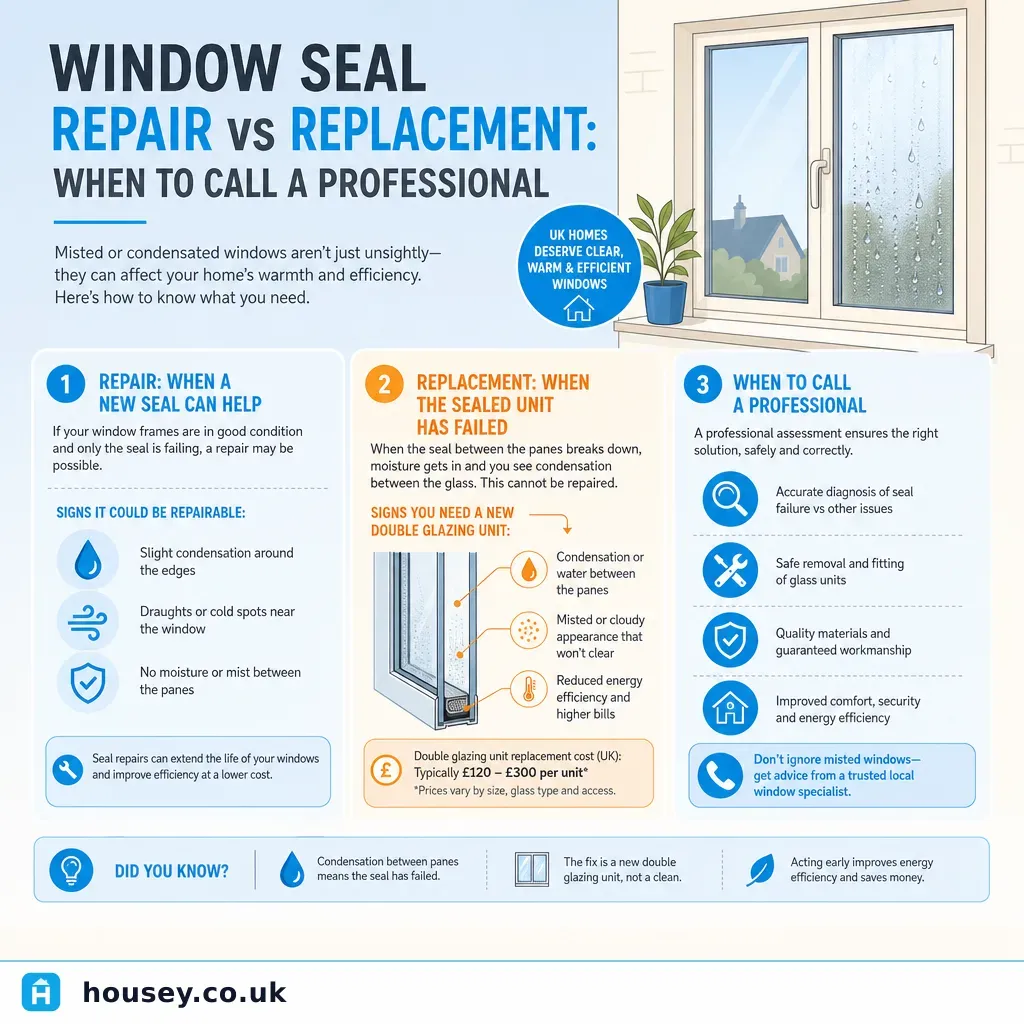
Window Seal Repair vs Replacement: When to Call a Professional
Failed window seals usually mean the double-glazed unit needs replacing — resealing a misted unit rarely works long-term.
 Improvement & Build
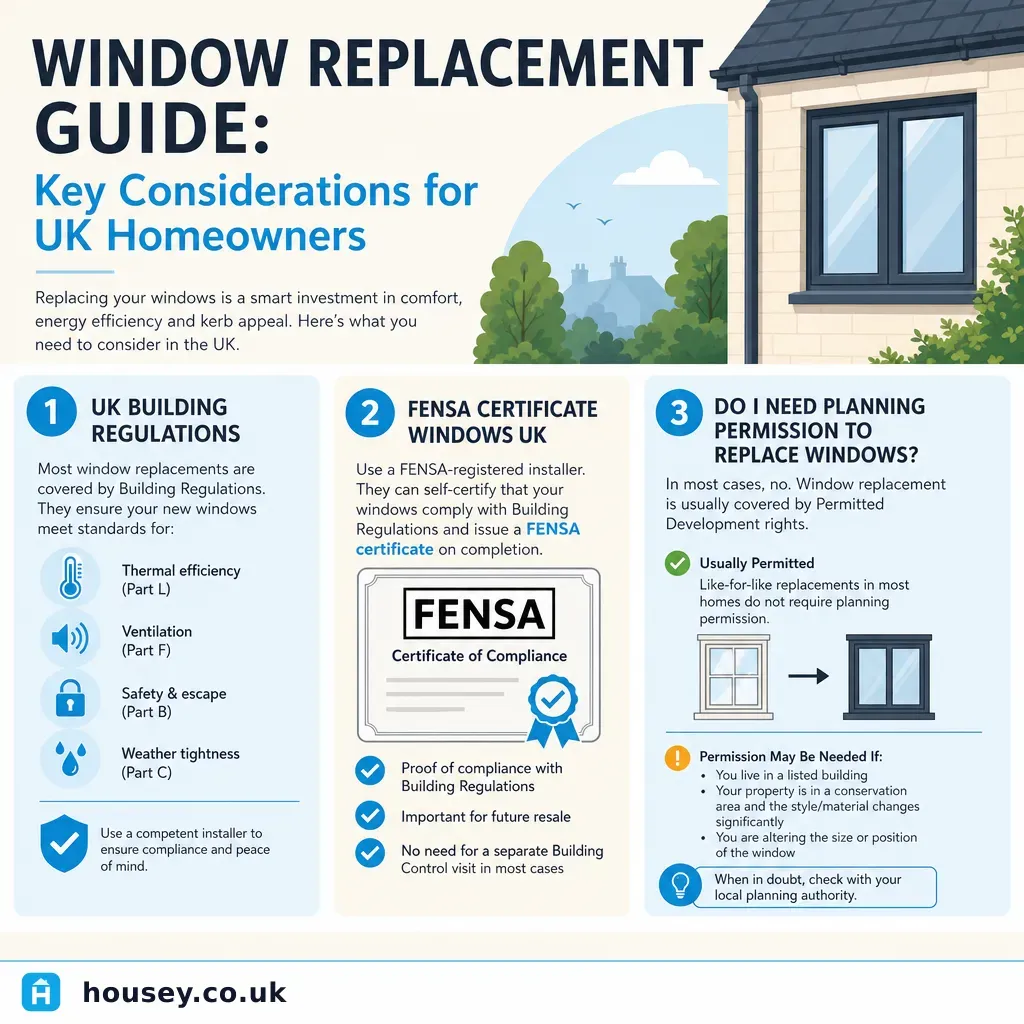
Window Replacement Guide: Key Considerations for UK Homeowners
Replacing windows in England and Wales requires compliance with Building Regulations Part L, with a minimum whole-window U-value of 1.