Window Replacement Guide: Key Considerations for UK Homeowners
By Housey · Last reviewed 11th of May 2026
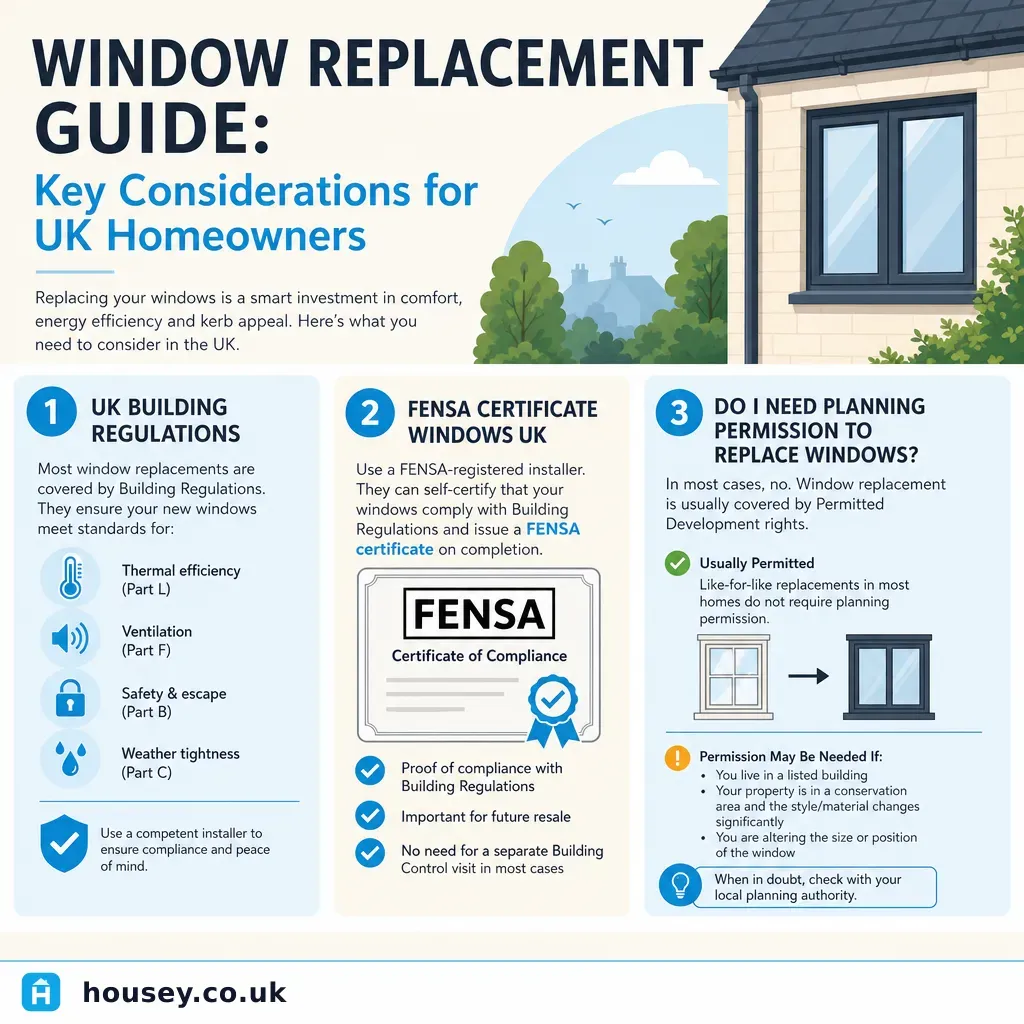
Window Replacement Guide: Key Considerations for UK Homeowners
Window replacement is one of the most common home improvement projects in the UK, and also one of the most regulated. Whether you are upgrading single-glazed originals in a 1930s semi or replacing failed double glazing in a 1990s new-build, the decisions you make about glazing specification, installer accreditation, and compliance documentation will affect energy performance, comfort, resale value, and your ability to sell or re-mortgage the property in the future.
Key points
- Replacement windows in England and Wales must meet Building Regulations Approved Document L (2021 edition); the minimum whole-window U-value is 1.2 W/m²K for replacement windows installed from June 2022.
- Work must either be carried out by a FENSA- or CERTASS-registered installer (who self-certifies compliance and issues a certificate) or be formally notified to local authority building control; the certificate is required when selling the property.
- In conservation areas, replacing windows with a different style or material typically requires planning permission; uPVC frames are frequently refused where original timber sash windows are present.
- Listed buildings require Listed Building Consent for any window replacement, including like-for-like replacements, under the Planning (Listed Buildings and Conservation Areas) Act 1990.
- Secondary glazing — a second unit fitted inside the existing frame — is often the preferred solution for listed and conservation-area properties where outright replacement is not permitted, and can meaningfully reduce heat loss.
Do I need planning permission to replace my windows?
For most homeowners in standard residential areas, window replacement is permitted development and requires no planning application. However, there are important exceptions.
Conservation areas: Replacing windows with a different style or material usually requires planning permission. Local conservation area guidance typically requires replacements to match the original style; uPVC casements in place of original timber sash windows are commonly refused.
Listed buildings: Any window replacement on a listed building — including like-for-like replacements — requires Listed Building Consent. This applies regardless of whether the property is also within a conservation area.
Article 4 Directions: Some local authorities have removed permitted development rights for window replacement in specific streets or areas. Check with your local planning authority before starting work.
Flats and leasehold properties: Permitted development rights for window replacement do not apply to flats. The building's freeholder and, in some cases, the local planning authority must be consulted before any window change.
Building regulations: FENSA, CERTASS, and building control
All replacement windows in England and Wales must comply with Building Regulations Approved Document L (energy efficiency) and, where relevant, Approved Document K (safety glazing). There are two compliance routes.
Route 1 — FENSA or CERTASS registered installer: The most common route for homeowners. A window installer registered with the Fenestration Self-Assessment Scheme (FENSA) or CERTASS can self-certify that the work meets building regulations. They issue a compliance certificate, which is registered with the local authority. This certificate is required when you sell the property.
Route 2 — Building control notification: If your installer is not FENSA or CERTASS registered, they must submit a building notice to local authority building control before starting work. Building control will inspect the installation and issue a completion certificate on satisfactory completion.
If you have bought a property where previous windows were replaced without any certificate, a conveyancer can advise on whether retrospective confirmation from building control or an indemnity insurance policy is appropriate.
Window types comparison
Window type | Best for | Thermal performance | Planning risk | Indicative installed cost (per pair) |
|---|---|---|---|---|
uPVC double glazing | Post-1960 homes and straightforward replacements | Good — A-rated units typically 1.0–1.4 W/m²K | Often refused in conservation areas | £400–£900 |
Timber double glazing | Period properties, conservation areas, listed buildings | Good to very good, depending on specification | Usually acceptable in conservation areas | £800–£2,000+ |
Aluminium double glazing | Contemporary homes and commercial-feel properties | Good, with slim sightlines | Case by case in conservation areas | £700–£1,500 |
Secondary glazing | Listed and conservation-area properties where replacement refused | Moderate — reduces heat loss significantly but less than full replacement | Usually permitted without consent | £200–£600 per window |
Triple glazing | New builds, very cold exposures, high-specification retrofit | Excellent — U-values below 0.8 W/m²K achievable | Not typically restricted | £600–£1,500+ |
Indicative UK costs, last reviewed 2026-05-11. Prices vary significantly by window size, specification, and region. Always obtain at least three quotes from registered installers.
Sash windows: repair versus replacement
Victorian and Edwardian sash windows are a specific case that warrants careful consideration. Many homeowners assume they need replacing because of draughts or rattling, but draught-proofing, rebalancing sash weights, and addressing failed paint are often sufficient — and at a fraction of the cost of replacement.
Repair is usually the right choice if:
- The timber frames and cills are structurally sound with no rot through the frame
- The property is in a conservation area or is listed
- The original glazing bars and proportions are intact and you want to preserve period character
- You are trying to keep costs proportionate on an otherwise sound property
Replacement may be worth considering if:
- The timber is extensively rotted and beyond economic repair
- The existing sashes are already non-original replacements from the 1970s–1990s
- The property is unlisted and outside a conservation area
- You are choosing slim-profile, authentic-appearance timber double-glazed replacement sashes
A specialist joinery firm can typically overhaul and draught-proof a pair of sash windows for £300–£600, compared with £900–£1,500 or more for replacement timber sash units. Get a condition assessment before deciding. Indicative UK costs, last reviewed 2026-05-11.
Homeowner checklist: window replacement project
What to ask before accepting a quote
- Are you registered with FENSA or CERTASS, and will you provide a compliance certificate on completion?
- What is the whole-window U-value and what Window Energy Rating does the unit carry?
- Is this quote for supply and installation, or supply only?
- What is the frame material, profile system, and glazing unit specification?
- What is the warranty on frames and sealed units, and who underwrites it?
- What happens if a sealed unit fails (misting) within the warranty period?
- Is VAT included in the quoted price?
- What is the installation timeline, and will the property be weathertight at the end of each working day?
- What will you do if the opening reveals unexpected issues such as rot, lintel movement, or incorrect reveal dimensions?
When to get professional help
Most window replacement projects are straightforward when carried out by a registered installer. Seek specialist advice if the property is listed — consult a conservation architect or heritage consultant before any window work — or if the property is in a conservation area and you are unsure what is permitted (seek pre-application advice from the local planning authority). Also take advice if the existing opening shows signs of lintel failure, damp penetration, or settlement before installing new windows, or if the property is leasehold and freeholder consent may be required.
How Housey can help
Housey connects you with vetted window and door installers who are familiar with UK building regulations, FENSA certification requirements, and the specific constraints of conservation areas and period properties. Compare quotes and verify installer credentials before committing to your window replacement project.
Frequently asked questions
What is a FENSA certificate and why do I need it?
A FENSA certificate is issued by a FENSA-registered window installer to confirm that replacement windows comply with Building Regulations Part L. It is registered with the local authority and is required when you sell the property. Missing FENSA certificates are a common issue raised at conveyancing and can delay a sale; if one is missing, ask your conveyancer about indemnity insurance options.
Can I replace my windows without planning permission?
In most cases, yes — window replacement in England is permitted development for houses. Exceptions include properties in conservation areas, listed buildings, and areas subject to Article 4 Directions. Always check with your local planning authority if you are in any doubt, as enforcement action for unauthorised changes to a conservation area or listed building can be costly.
How much does window replacement cost in the UK?
Costs vary by window type, size, specification, and region. As a rough guide, uPVC double-glazed windows typically cost £400–£900 per pair installed; timber windows cost £800–£2,000 or more per pair. Always obtain at least three quotes from FENSA- or CERTASS-registered installers. Indicative UK costs, last reviewed 2026-05-11.
Should I repair or replace original sash windows?
For Victorian and Edwardian sash windows that are structurally sound, repair and draught-proofing is usually both the planning-compliant and most cost-effective option, particularly in conservation areas or listed buildings. Replacement is worth considering when frames are beyond economic repair or when existing windows are already non-original replacements from a later period.
What glazing specification should I ask for?
For compliance with Building Regulations Part L in England and Wales, replacement windows must achieve a whole-window U-value of no more than 1.2 W/m²K. For best energy performance within the standard double-glazing range, look for A- or A+-rated units on the BFRC Window Energy Rating scale. Triple glazing offers better performance but is more expensive and may not be proportionate in most standard retrofit situations.
Sources and further reading
- Approved Document L: Conservation of fuel and power (2021) — GOV.UK
- FENSA: Fenestration Self-Assessment Scheme — FENSA
- Windows in historic buildings — Historic England
- BFRC Window Energy Ratings — British Fenestration Rating Council
- Planning permission guidance — GOV.UK
Useful next reads
 Improvement & Build
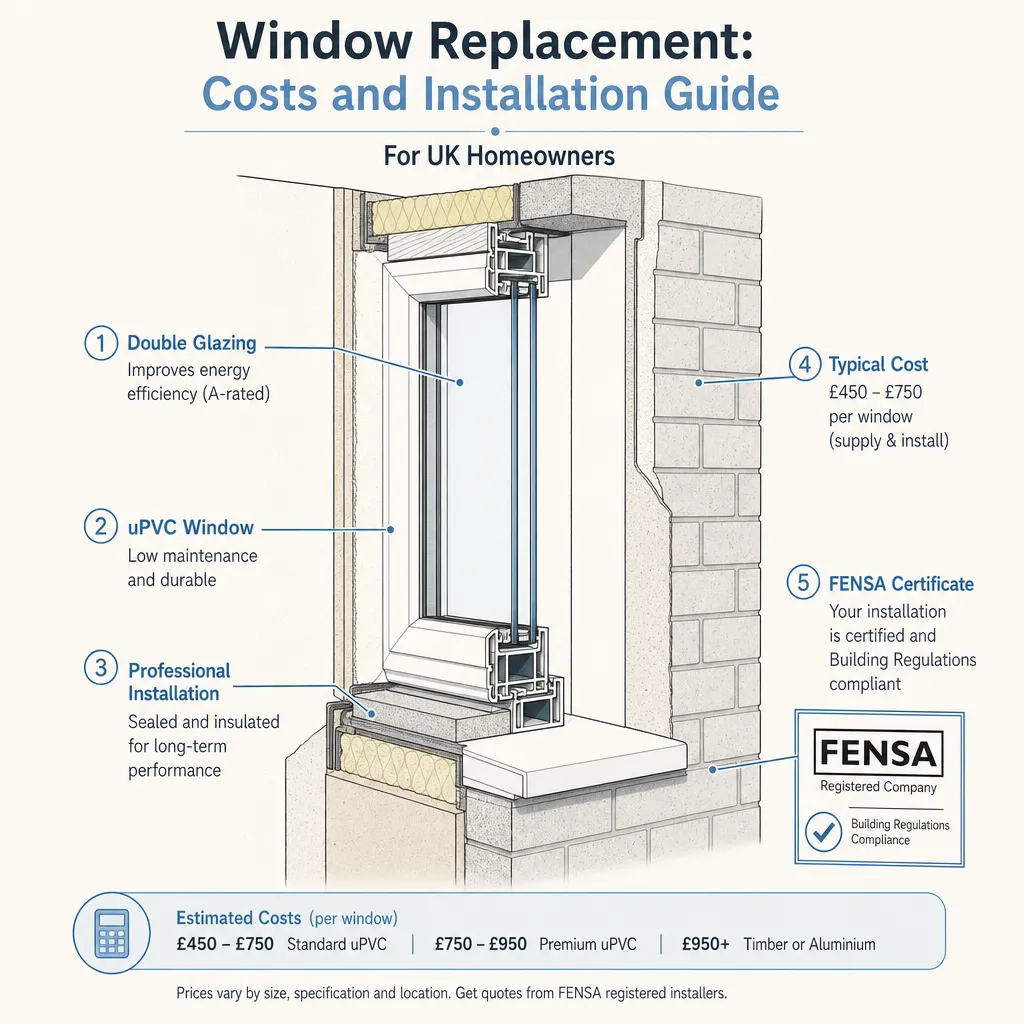
Window Replacement: Costs and Installation Guide
Replacing windows in a UK home typically costs £400–£900 per uPVC casement window installed, rising to £1,500–£3,000 for timber sash windows.
 Improvement & Build
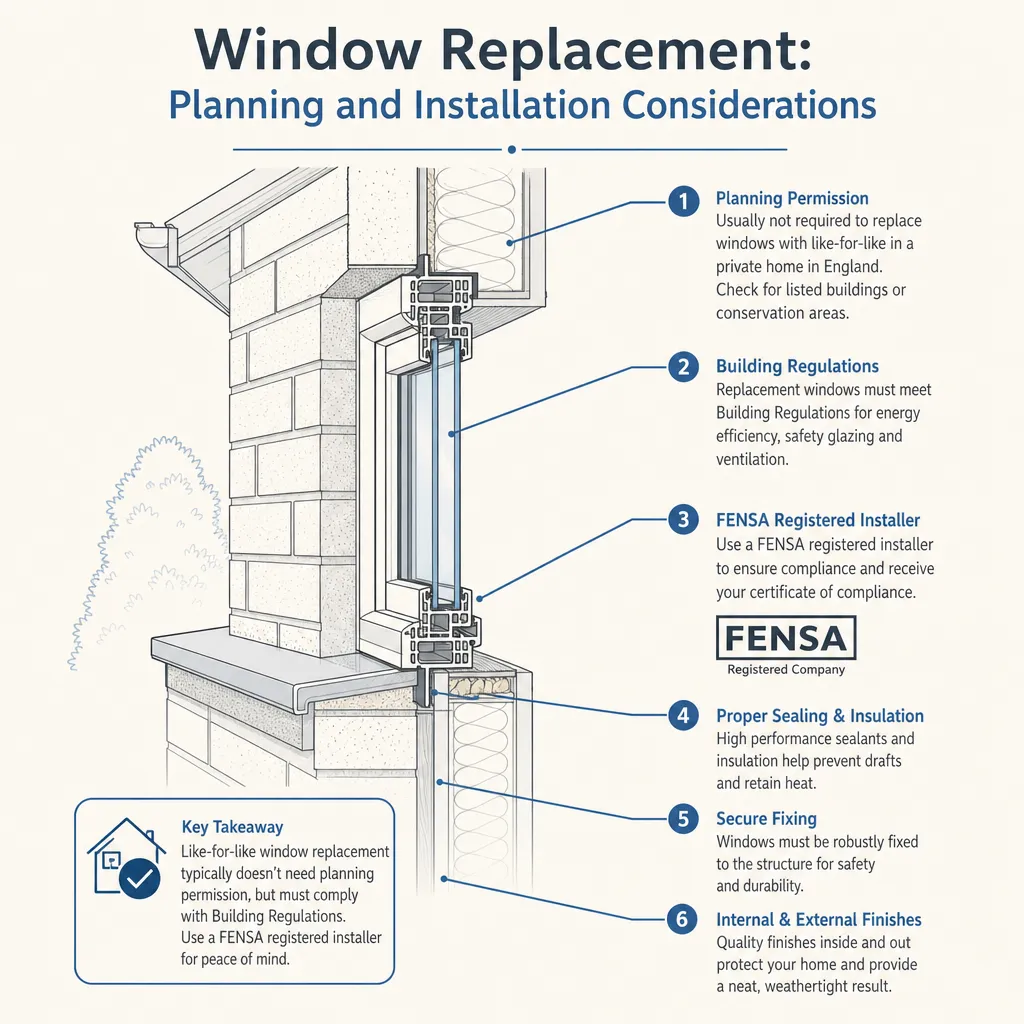
Window Replacement: Planning and Installation Considerations
Most window replacements in England fall under permitted development and do not need planning permission, though listed buildings, flats, and conservation areas are exceptions.
 Improvement & Build
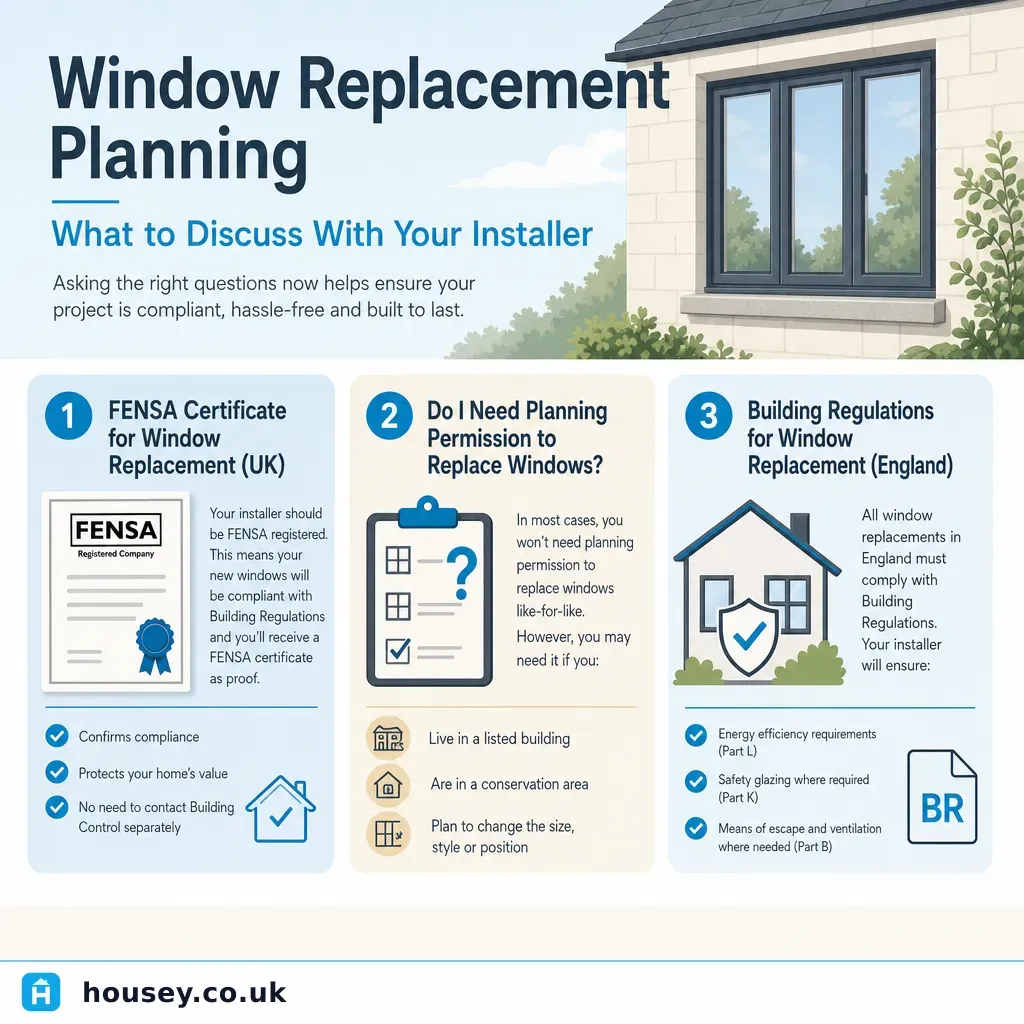
Window Replacement Planning: What to Discuss With Your Installer
Most window replacements in England fall under permitted development rights and do not require planning permission, but they must comply with Building Regulations Part L and Part K.
 Improvement & Build
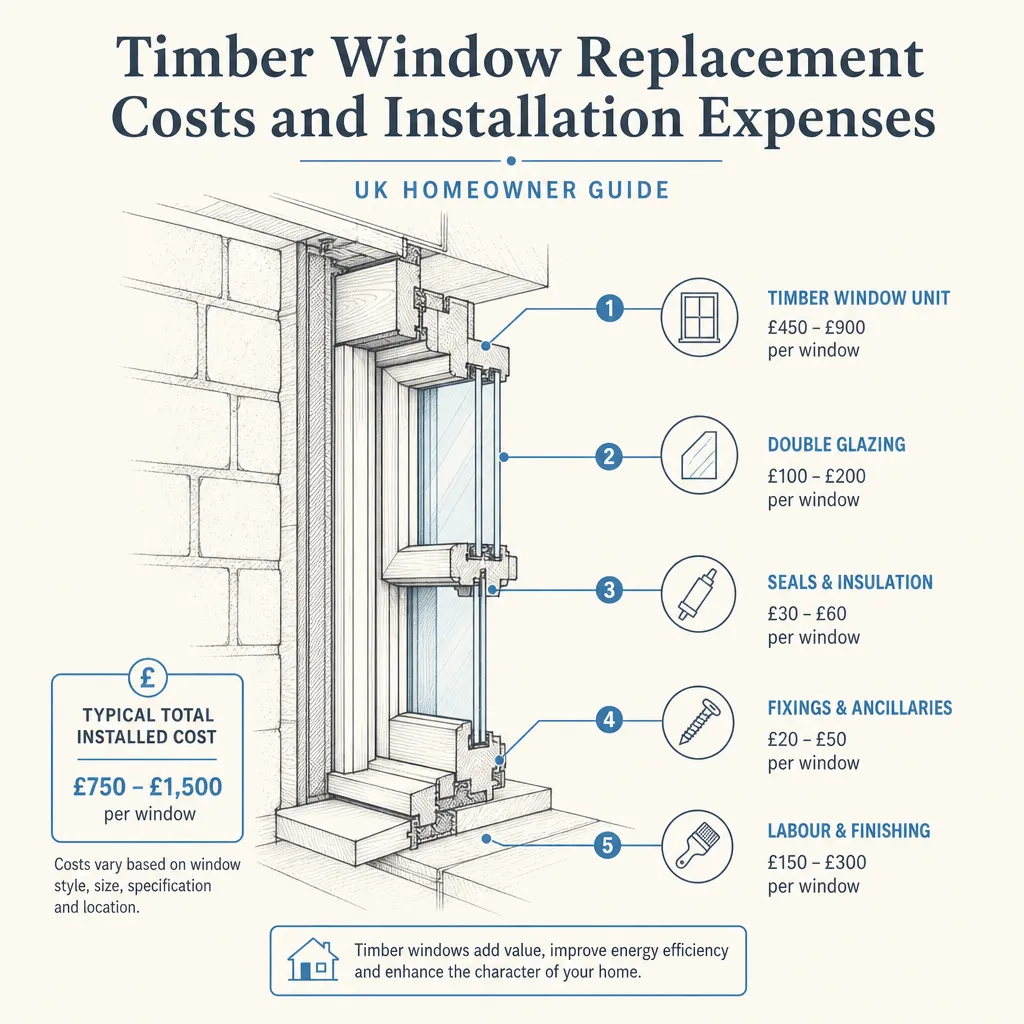
Timber Window Replacement Costs and Installation Expenses
Replacing timber windows in the UK typically costs £400 to £900 per casement window and £700 to £1,800 per sash window, including supply and installation.
 Improvement & Build
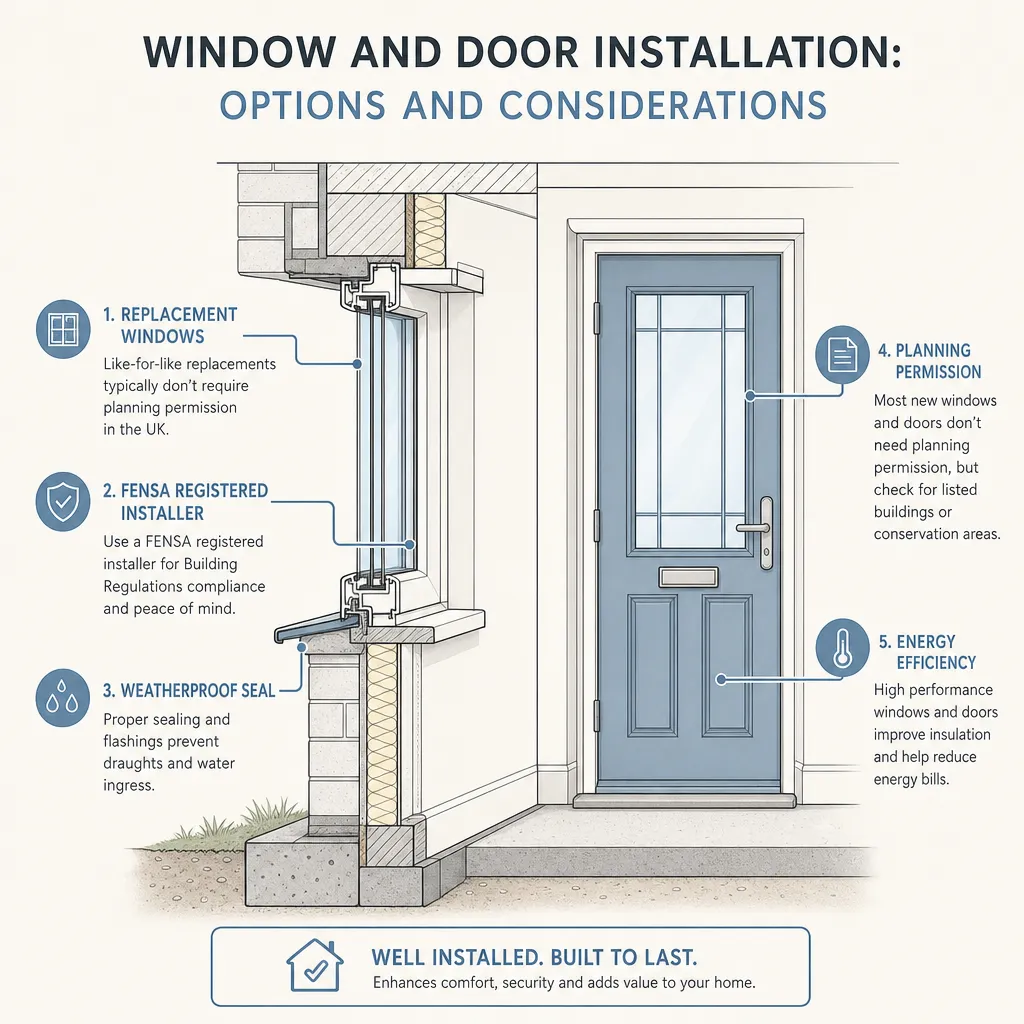
Window and Door Installation: Options and Considerations
Replacing windows and external doors in the UK requires compliance with Building Regulations Part L (thermal performance) and Part K (safety glazing).