Understanding Service Provider Invoicing and Payment Terms
By Housey · Last reviewed 24th of May 2026

Understanding Service Provider Invoicing and Payment Terms
When you commission building or renovation work in the UK, the financial relationship between you and your contractor is shaped by the payment terms agreed before work begins — yet many homeowners scrutinise only the headline quote, not the payment schedule, invoice structure, or what happens if milestones are disputed. Disagreements over payment are among the most common sources of conflict in home improvement projects, whether the job is a single-storey extension on a 1930s semi or a flat-roof replacement on a 1960s terrace. Understanding how invoicing and payment terms work in practice protects both your money and your project.
Key points
- The Housing Grants, Construction and Regeneration Act 1996 governs payment provisions in most UK construction contracts; Section 106 excludes contracts with residential occupiers from the statutory payment regime, but adopting the same disciplines — staged invoicing, written payment notices, and defined timescales — is strongly recommended for any domestic project.
- A deposit exceeding 25–30% of the total contract value is unusual for standard domestic work and may be a red flag; a higher deposit can be justified for bespoke or specialist materials but should be explicitly documented in the contract.
- Retentions of 2.5–5% of the contract value, held back for a defects liability period of 6–12 months after practical completion, are standard practice on larger domestic contracts and give you recourse if defects emerge after handover.
- VAT on most domestic building work is charged at the standard rate of 20%; the reduced rate of 5% applies only in limited circumstances, such as certain qualifying energy-saving measure installations.
- Cash-in-hand payment arrangements undermine your legal protections by removing the paper trail needed to pursue a dispute or demonstrate what was agreed.
How stage payments typically work
Stage payments tie each invoice to a completed milestone rather than to a calendar date. A typical programme for a rear extension might follow this sequence:
- Deposit / mobilisation — paid on contract signing; usually 10–20% on standard projects.
- Foundations and groundworks complete — structure below damp-proof level finished and signed off by building control.
- Superstructure to wall plate — walls built and roof structure ready.
- Weathertight — roof covering, windows, and external doors installed.
- First fix — mechanical, electrical, and plumbing rough-in complete.
- Second fix and decoration — internal finishes installed, snagging list in progress.
- Practical completion / final balance — works complete; retention released after the defects liability period.
The exact stages depend on the scope of work. A specialist roofer replacing a flat roof may use two or three stages; a large extension project may use five or more. Agree and sign the payment schedule before any money changes hands.
What a proper invoice from a builder should include
Field | Why it matters |
|---|---|
Contractor's full legal and trading name | Confirms who you are paying |
VAT registration number (if VAT-registered) | Required for any VAT reclaim; absence on a large invoice is a red flag |
Invoice number and date | Essential for records and dispute resolution |
Your name and property address | Confirms the invoice is for your specific project |
Description of works completed | Lets you verify the invoice matches the agreed stage |
Amount claimed, broken down by stage or item | Required to reconcile against the contract |
VAT amount and applicable rate | Standard rate is 20%; confirm if a reduced rate is claimed |
Total amount including VAT | The figure you actually pay |
Payment due date | Must align with the contracted payment period |
Bank account details | Should be confirmed separately before the first payment |
If an invoice is missing key fields — particularly a VAT registration number on a project where VAT is being charged — ask for a corrected invoice before paying.
Red flags in payment requests
Be alert to these warning signs before transferring money:
- Request for cash payment. Legitimate contractors accept bank transfer; cash provides no audit trail and may indicate undeclared income.
- Deposit exceeding 30% without material justification. Bespoke structural steel or specialist glazing may justify a higher advance, but this should be explicitly tied to the cost of those materials in the contract.
- Invoice ahead of the agreed milestone. If an invoice describes work as complete but you can see it is not, do not pay until the stage is genuinely finished. Raise the discrepancy in writing.
- Pressure to pay immediately. A professional contractor allows the contracted payment period, typically 14–30 days from invoice date.
- A change of bank account details by email or text. Always verify any new bank details by calling the contractor on a number you already hold; mandate fraud — where criminals intercept emails and substitute their own account details — is a real risk on building projects.
- No written contract before requesting a deposit. Do not pay anything without a signed agreement setting out scope, price, payment stages, and programme.
What to ask before accepting a quote or signing a contract
- What is the full payment schedule, with clear milestone definitions?
- What specifically triggers each invoice — completion of a defined stage, or a calendar date?
- What is the retention percentage and defects liability period?
- Is VAT included in all figures shown, and at what rate?
- What happens if unforeseen conditions (for example, rotten timbers found beneath a roof covering) change the final cost?
- Who confirms that a stage is complete before the next payment is due?
- What are the payment terms — how many days from the invoice date?
- Do you hold employer's liability and public liability insurance? Can I see the current certificates?
Retentions: your post-completion safety net
A retention is a percentage of each stage payment that you withhold until the end of a defects liability period — typically 6–12 months after practical completion. If defects appear during this period and the contractor does not remedy them, the retention can fund repairs carried out by others.
Retentions of 2.5–5% are standard on larger domestic contracts. On smaller single-trade jobs, retentions are less common but can still be agreed. Including a retention clause in any contract over £5,000 is generally advisable.
A professional contractor will expect and accept a retention. Outright refusal to agree any retention is itself a warning sign.
When to get professional help
Consider instructing a project manager or quantity surveyor when:
- Your project exceeds £50,000 and involves multiple trades.
- You are uncertain whether an interim invoice accurately reflects work completed.
- You have already paid ahead of agreed stages and work has stalled.
- A contractor has issued a formal payment dispute or threatened to suspend work.
In disputes, Citizens Advice, the Federation of Master Builders dispute service, or a solicitor specialising in construction law can advise on your options. The Scheme for Construction Contracts (England and Wales) Regulations 1998 sets out a statutory adjudication mechanism that is faster and cheaper than litigation for many disputes.
How Housey can help
Housey helps you find and compare quotes from vetted extension builders, roofers, and drainage contractors. All professionals on Housey provide written quotes with clear payment schedules, making it straightforward to compare terms side by side and spot unusual payment demands before you commit.
Frequently asked questions
Can a builder legally demand full payment upfront?
Legally, a contractor can propose whatever payment terms you agree to — but full payment upfront leaves you with no protection if work is defective or unfinished. Refuse full upfront payment on any project over a few hundred pounds and negotiate a staged schedule instead, with each payment tied to a verifiable milestone.
What if I disagree with an invoice amount?
Do not simply refuse to pay. If your contract includes a pay less mechanism, withholding payment requires you to serve a written pay less notice by the deadline set in the contract. Pay the undisputed amount, serve the notice for the disputed element with clear reasoning, and seek legal advice early on amounts above a few thousand pounds.
Is a verbal agreement legally binding for building work?
A verbal contract is legally binding in England and Wales but extremely difficult to enforce when terms are disputed. Always insist on a written agreement before any money changes hands — even a signed letter covering scope, total price, payment stages, and programme is far better than relying on a verbal understanding.
Should I pay by bank transfer or credit card?
Bank transfer (Faster Payments or BACS) is standard in the industry and creates a clear paper trail. Credit card payments benefit from Section 75 consumer protection on purchases between £100 and £30,000, which can be useful for deposits. Many contractors do not offer card payment facilities, so discuss options at the quote stage.
Sources and further reading
- Housing Grants, Construction and Regeneration Act 1996 — legislation.gov.uk
- Scheme for Construction Contracts (England and Wales) Regulations 1998 — legislation.gov.uk
- Problems with building work, decorating and home improvements — Citizens Advice
- Find a builder and model contracts — Federation of Master Builders
- VAT on construction services — HMRC / GOV.UK
Useful next reads
 Improvement & Build
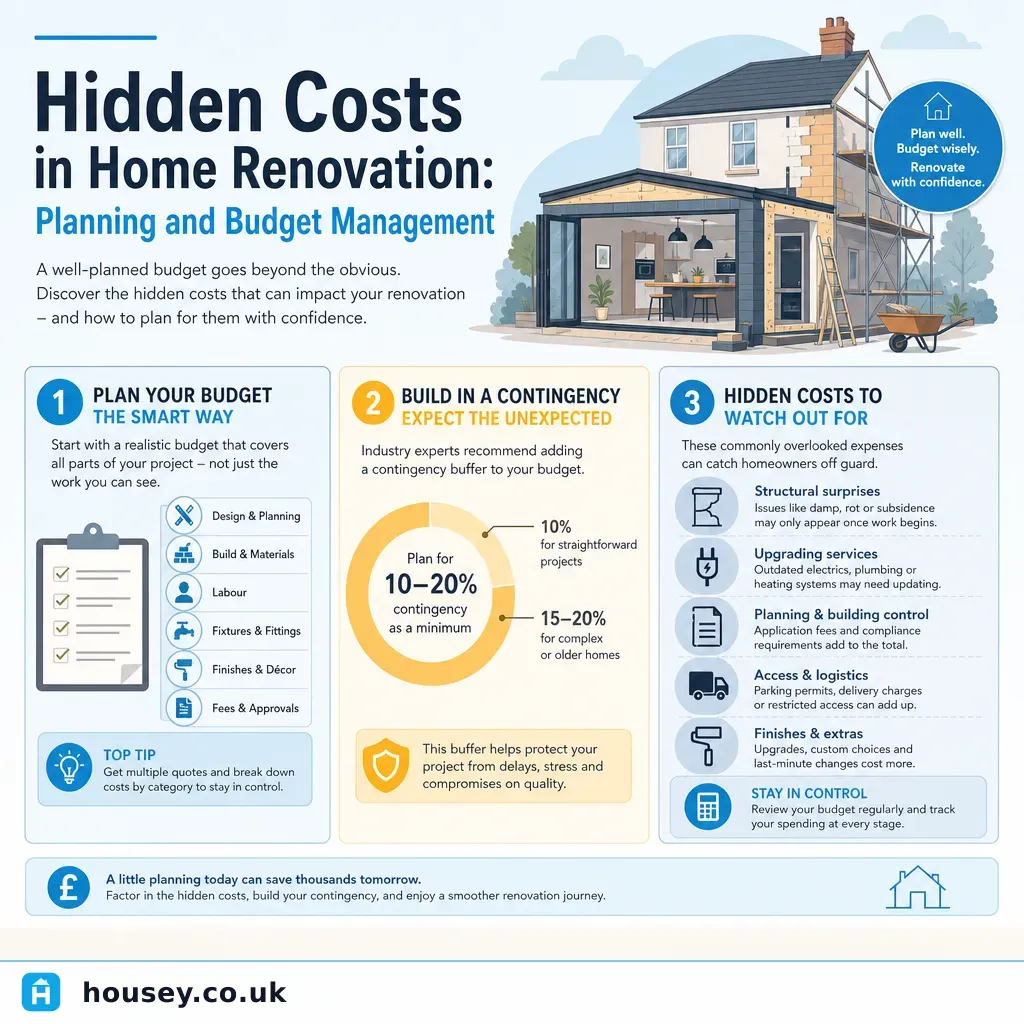
Hidden Costs in Home Renovation: Planning and Budget Management
Most UK renovation projects run 10–20% over the initial builder quote because professional fees, VAT, statutory fees, and party wall costs are routinely excluded from early estimates.
 Improvement & Build
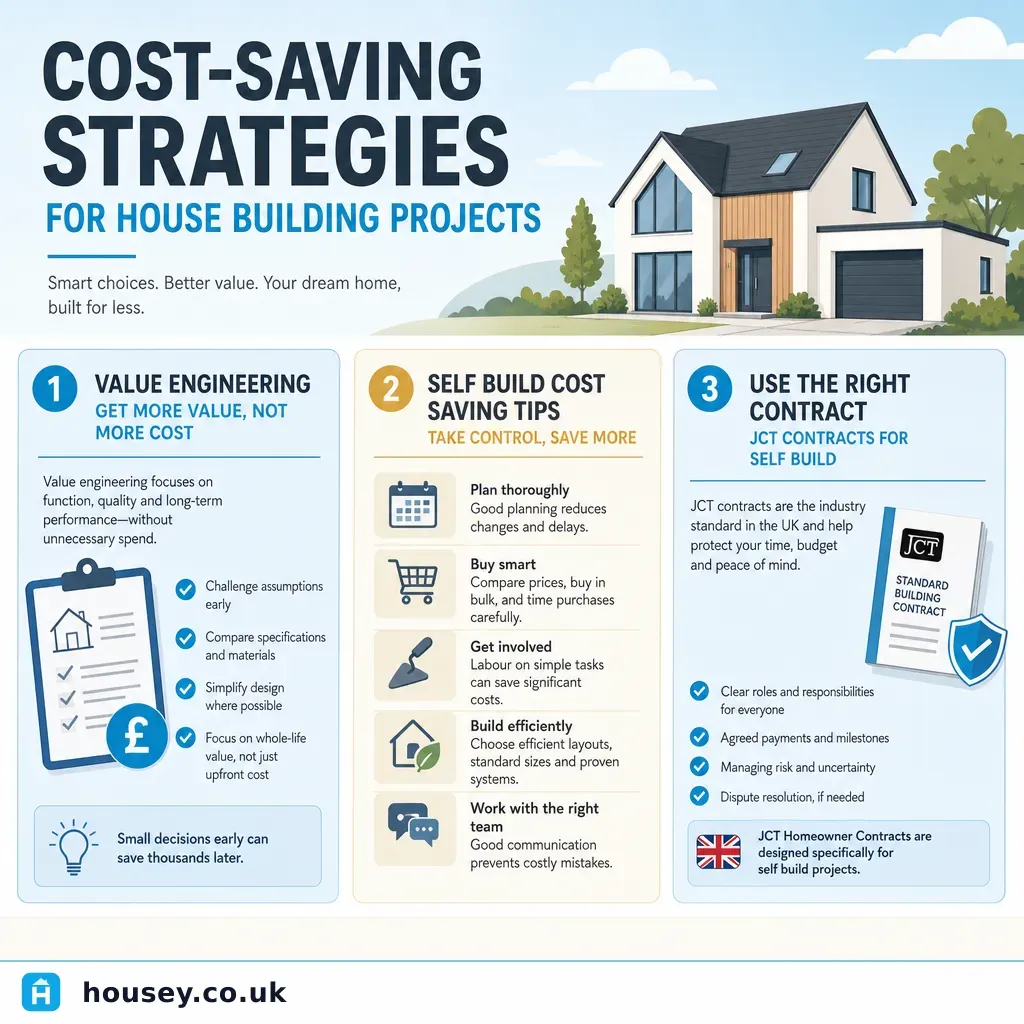
Cost-Saving Strategies for House Building Projects
Reducing house building costs requires a complete design before tendering, value engineering at design stage, competitive tendering with at least three contractors, a fixed-price JCT contract, and a 10–15% contingency.
 Improvement & Build
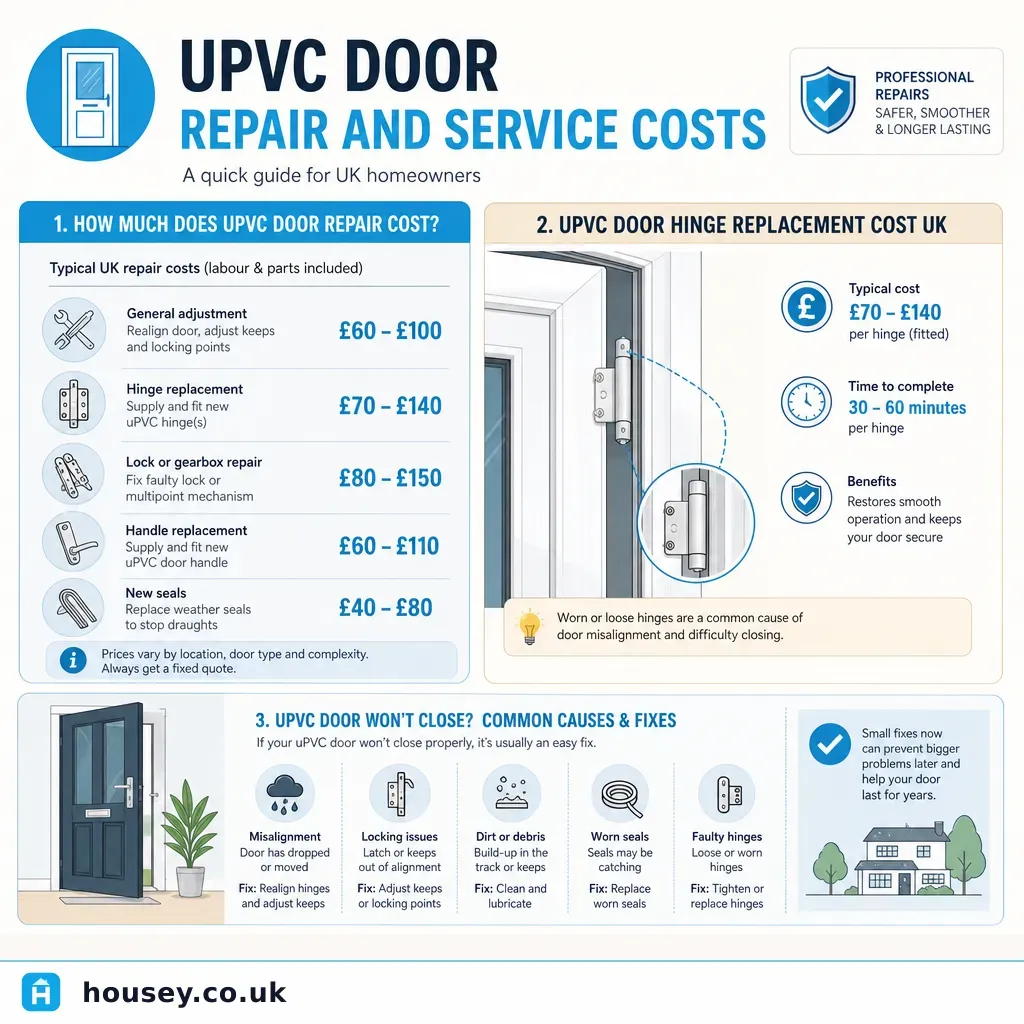
UPVC Door Repair and Service Costs
UPVC door repairs in the UK typically cost £50–£300 depending on the fault.
 Improvement & Build
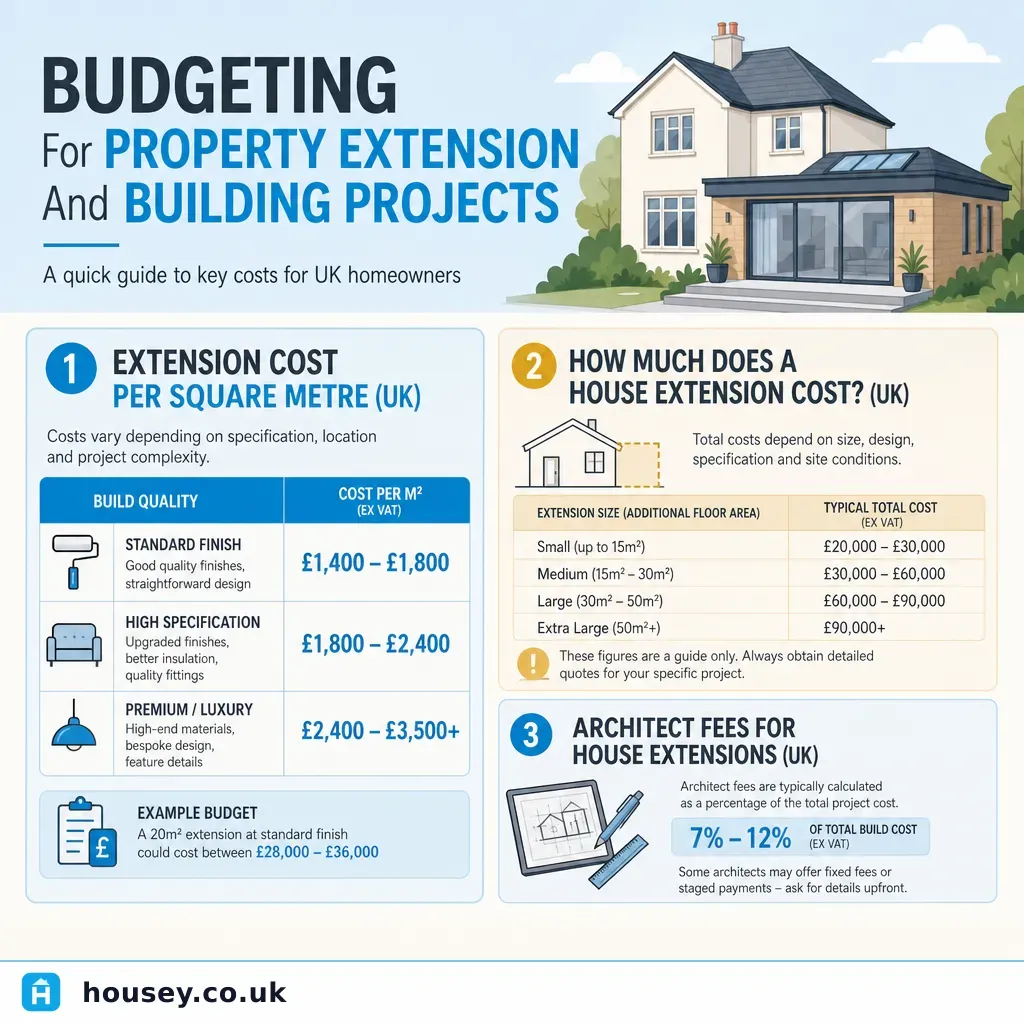
Budgeting For Property Extension And Building Projects
A typical UK single-storey rear extension costs roughly £1,500–£2,500 per square metre to build, before professional fees, planning costs, and VAT.
 Improvement & Build
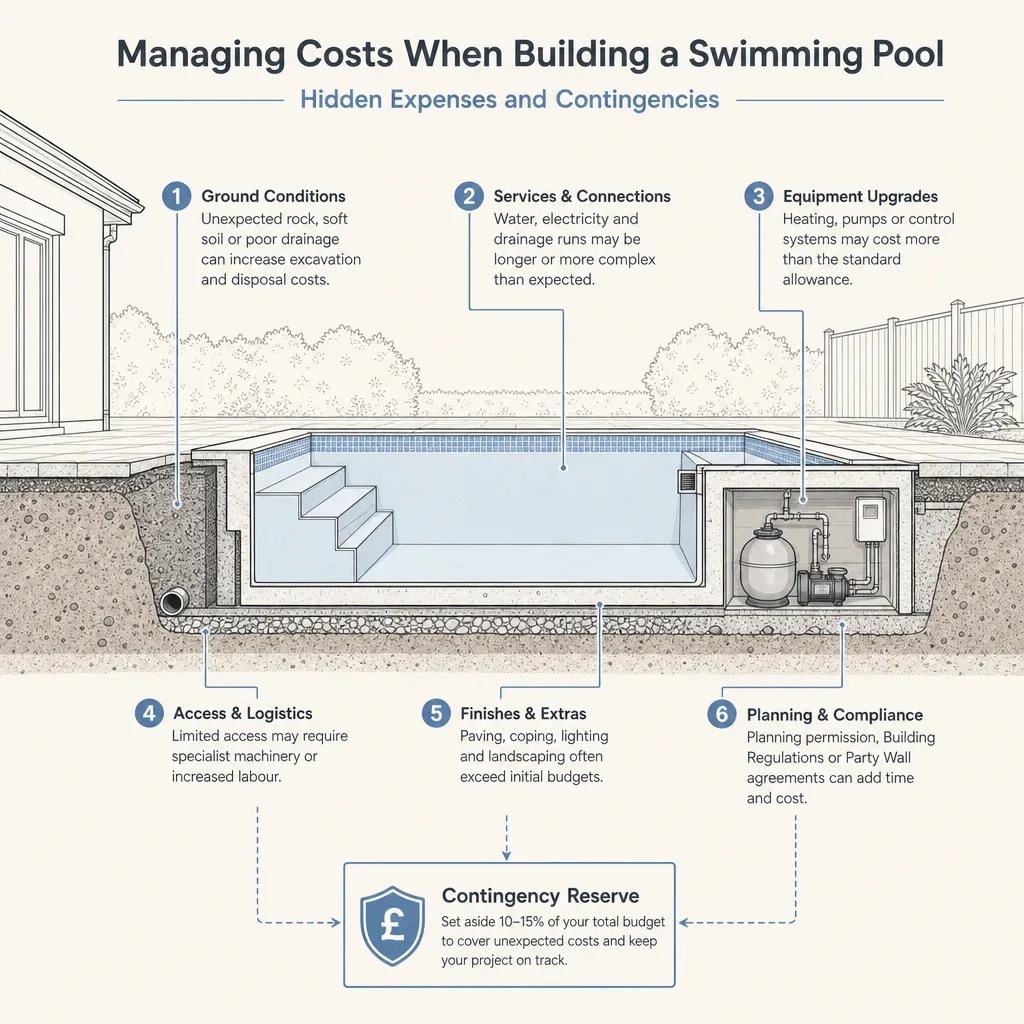
Managing Costs When Building a Swimming Pool: Hidden Expenses and Contingencies
Swimming pool projects in the UK frequently exceed initial quotes due to groundwork surprises, hidden infrastructure costs, and items excluded from headline prices.