UPVC Door Repair and Service Costs
By Housey · Last reviewed 11th of May 2026
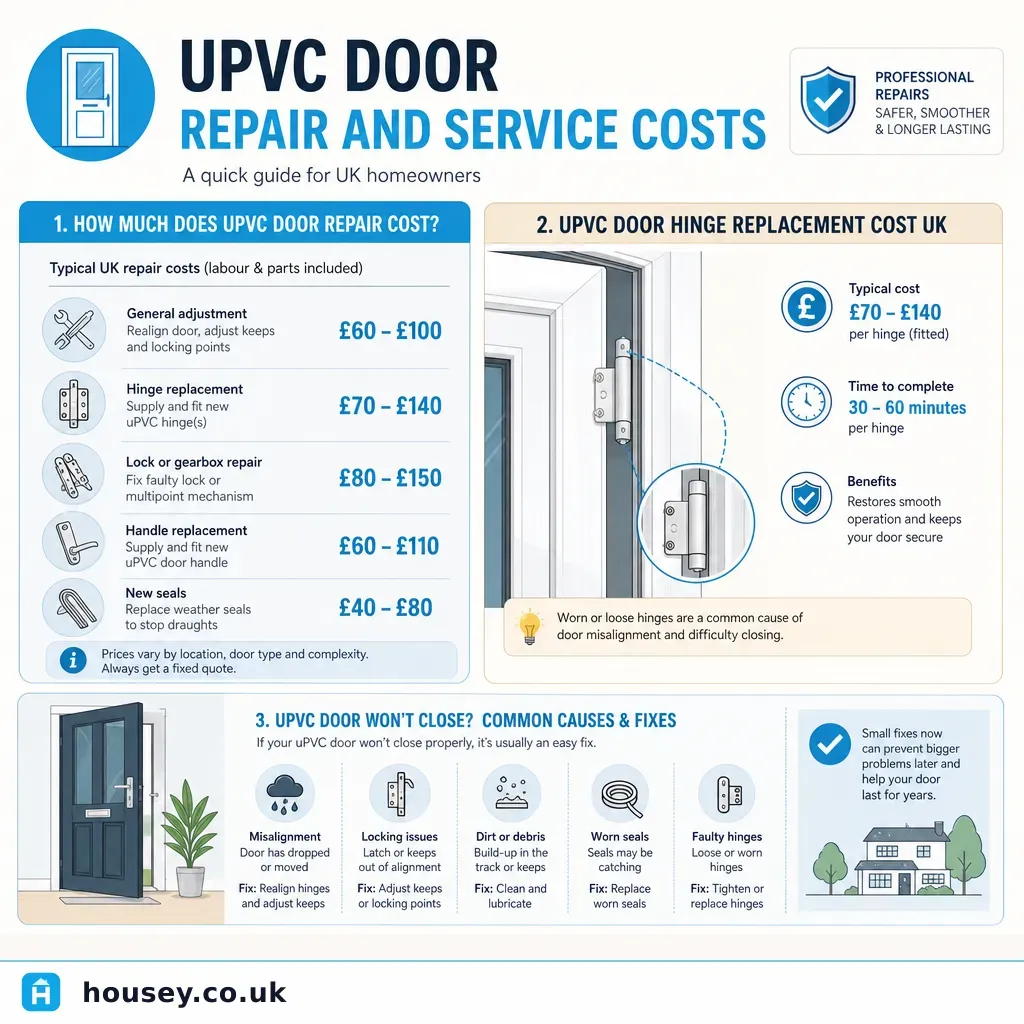
UPVC Door Repair and Service Costs
UPVC doors are built to last, but years of daily use take a predictable toll — hinges sag, seals harden, and lock mechanisms wear in ways that a well-timed repair can put right without the cost of full replacement. Most faults are straightforward to diagnose and fix if caught early, and understanding which component has failed helps you decide who to call and what to budget. This question comes up regularly for homeowners with doors aged ten years or more, and equally for those who have moved into a property and inherited a maintenance backlog.
Key points
- UPVC door hinge adjustment or replacement typically costs £60–£150 including labour (Indicative UK costs, last reviewed 2026-05-11).
- A full door service — covering hinges, locks, seals, and handle — typically costs £80–£150 as a single call-out.
- Replacing a failed double-glazed sealed unit within a UPVC door costs £80–£200 per pane.
- Door compression seals that have hardened or shrunk can be replaced for £30–£80 and significantly reduce draughts.
- A door that no longer closes flush is usually a hinge or frame alignment issue, not a lock fault — adjusting before replacing any parts saves money.
Common UPVC door faults and what they cost to fix
Fault | Likely cause | Typical repair cost | Who to call |
|---|---|---|---|
Door won't close flush | Hinge drop or frame settlement | £60–£150 | Window and door specialist |
Draught around the door edge | Worn or hardened compression seal | £30–£80 | Window and door specialist |
Handle stiff or dropped | Worn gearbox or spindle | £80–£150 | Locksmith or installer |
Lock stiff or hard to turn | Dry or dirty mechanism | £30–£60 (service only) | Locksmith |
Condensation inside glass panel | Failed sealed unit | £80–£200 per unit | Glazier or installer |
Letterbox stiff or draughty | Worn springs or seal flap | £40–£80 | Window and door specialist |
Key won't lock the door | Misaligned keeps or mechanism fault | £50–£120 | Locksmith |
Indicative UK costs, last reviewed 2026-05-11. Costs vary by region, door brand, and access difficulty. Obtain at least two quotes.
How to diagnose your UPVC door problem
Work through these checks before calling a professional to identify the likely fault:
Is the door difficult to close or no longer closing flush?
- Door scrapes at the bottom or won't latch → hinge sag; the hinges need adjusting or replacing
- Door bows outward at the top or middle → possible frame distortion; get a specialist assessment before replacing any hardware
Is the lock or handle the problem?
- Handle drops when released → spindle or gearbox worn; service or handle replacement needed
- Key turns but hooks don't engage → multipoint mechanism fault; service or mechanism replacement needed
- Key is stiff or hard to turn → lubricate the cylinder; replace it if stiffness persists after lubrication
Is there a draught?
- Draught around the door edge → compression seal worn or hardened; replaceable without removing the door
- Draught at the bottom threshold → door threshold seal worn; a straightforward replacement
- Draught through the letterbox → worn spring or seal flap; often a quick fix
Is there condensation or misting in the glass panel?
- Misting between the panes → sealed unit has failed; glass unit replacement needed, not the whole door
What a full UPVC door service includes
Many window and door specialists offer a comprehensive service visit covering the whole door system rather than a single component. A typical full service includes:
- Inspection and three-way adjustment of all hinges
- Lubrication of the multipoint locking mechanism at all hook, roller, and bolt points
- Function test of all locking points
- Inspection of compression seals with a condition report
- Handle tightening and spindle check
- Realignment of the door within the frame where needed
A full service typically costs £80–£150 and is particularly worthwhile for doors aged eight years or more, or in autumn before cold weather causes mechanisms to seize.
Repair versus replacement: when is fixing the right choice?
A UPVC door can be repaired economically as long as the frame, threshold, and glass are in reasonable condition. Consider a full door replacement if:
- The door frame has warped beyond what adjustment can correct
- Multiple components are failing simultaneously — hinges, mechanism, seals, and glass
- The door is over 20 years old and no longer thermally efficient
- The frame has been compromised by a forced-entry attempt
A replacement UPVC door typically costs £700–£1,800 supply and fit (Indicative UK costs, last reviewed 2026-05-11), so repair is usually the better short-term option for isolated faults.
Homeowner checklist before booking a repair
When to get professional help
UPVC door faults are generally low-risk, but certain situations need prompt attention:
- The door will not close or lock, leaving the property unsecured overnight
- A break-in attempt has caused visible damage to the frame, hinges, or lock keeps
- A hinge has completely failed and the door is unstable in the frame
- The sealed glass unit has shattered or cracked
How Housey can help
Housey connects homeowners with rated local window and door installers who can service, repair, or replace UPVC doors across the UK. Compare quotes from nearby specialists and get the right fix at a fair price.
Frequently asked questions
How long does a UPVC door repair usually take?
Most single-fault repairs — hinge adjustment, lock lubrication, seal replacement, or handle swap — take one to two hours. A full door service typically takes two to three hours. Mechanism replacement can take two to four hours depending on the door model and whether parts are available on the day.
Can UPVC door hinges be adjusted without replacing them?
Yes — most UPVC door hinges have three-way adjustment via hex-key screws, allowing movement in height, side-to-side position, and compression. A specialist can often realign a dropped door in under an hour without replacing any components. If the hinge body has cracked, corroded, or lost its adjustment range, a like-for-like replacement hinge is needed.
Is UPVC door repair covered by home insurance?
General wear and gradual deterioration is not typically covered by home insurance. Sudden damage from a storm or break-in may be covered under your buildings or contents policy. Check your policy wording and speak to your insurer before arranging repairs, as some policies require an approved repairer and prior notification before work begins.
What lubricant should I use on a UPVC door mechanism?
Use a UPVC-specific lubricant or a dry PTFE-based spray. Apply it to the lock mechanism via the door edge and operate the handle and key several times to distribute it. Avoid WD-40 and oil-based lubricants, which attract dirt, gum up the internal components over time, and can cause stiffness to worsen rather than improve.
Sources and further reading
- Glass and Glazing Federation — finding a member installer — Glass and Glazing Federation
- Which? — UPVC door maintenance advice — Which?
- GOV.UK — building regulations: replacement windows and doors — GOV.UK
Useful next reads
 Improvement & Build
Door Repair and Replacement Services
For most UK homes, door repair is cost-effective when the frame is sound and the fault is mechanical.
 Improvement & Build
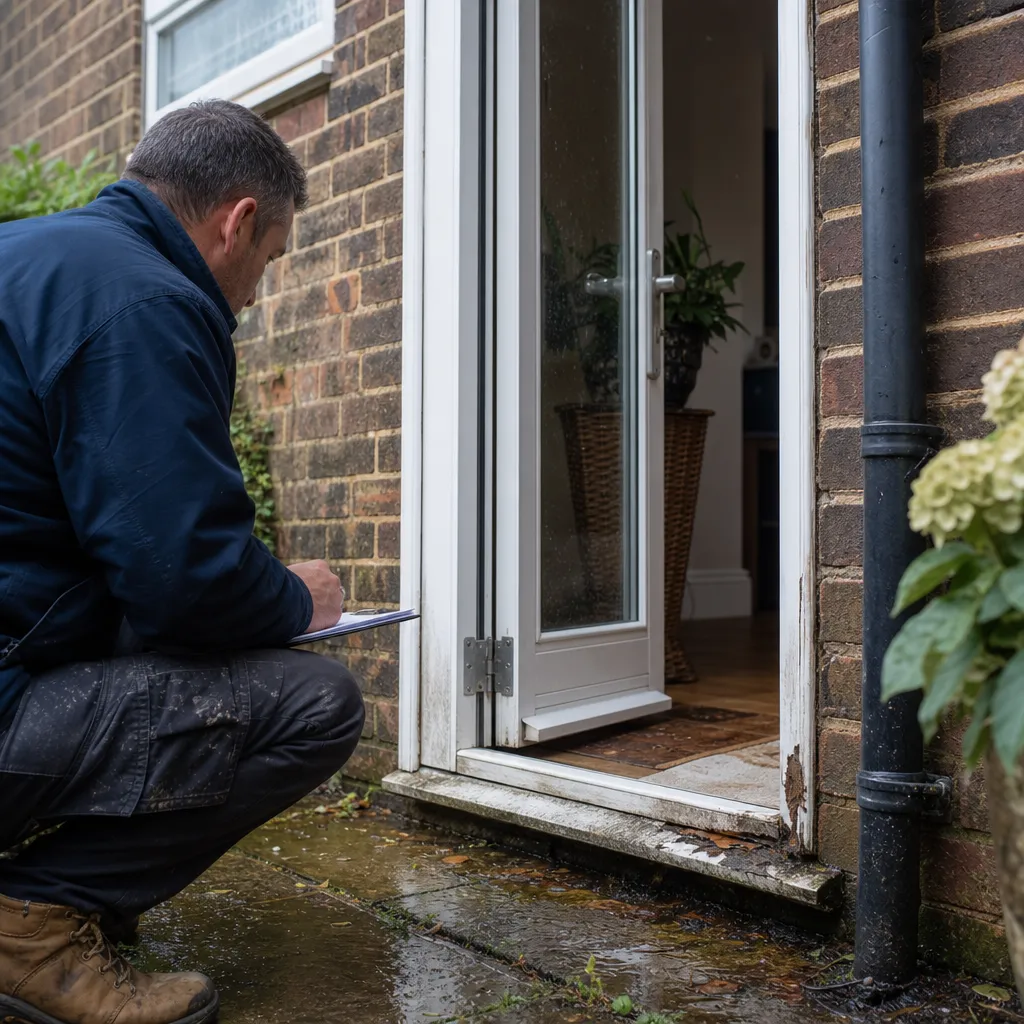
Fixing Leaking Back Doors and Water Ingress
Most leaking back doors in UK homes fail at one of three points: the threshold or door sill joint, the frame-to-masonry mastic seal, or the door weatherstrip.
 Improvement & Build
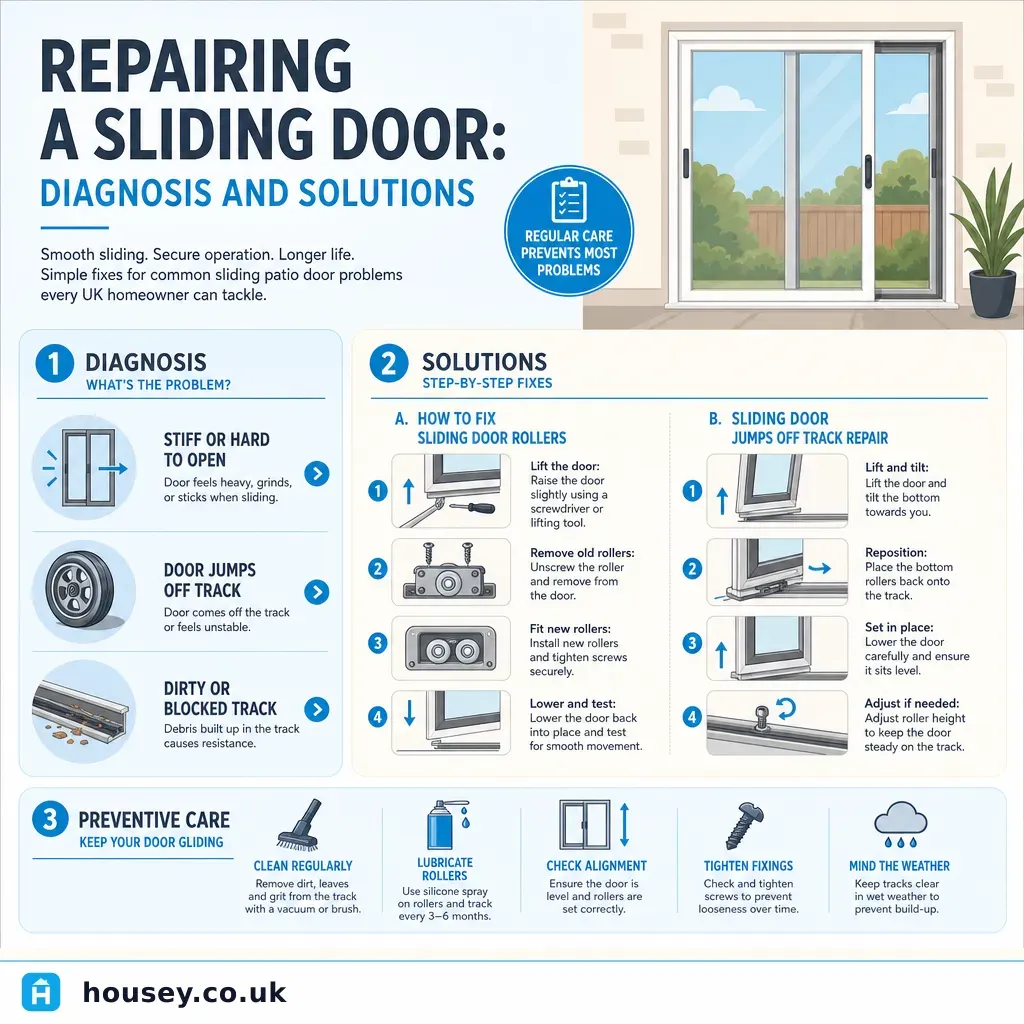
Repairing a Sliding Door: Diagnosis and Solutions
Most sliding door problems — stiffness, jumping off track, or draughts — are caused by dirty tracks, worn rollers, or misaligned guides.
 Improvement & Build
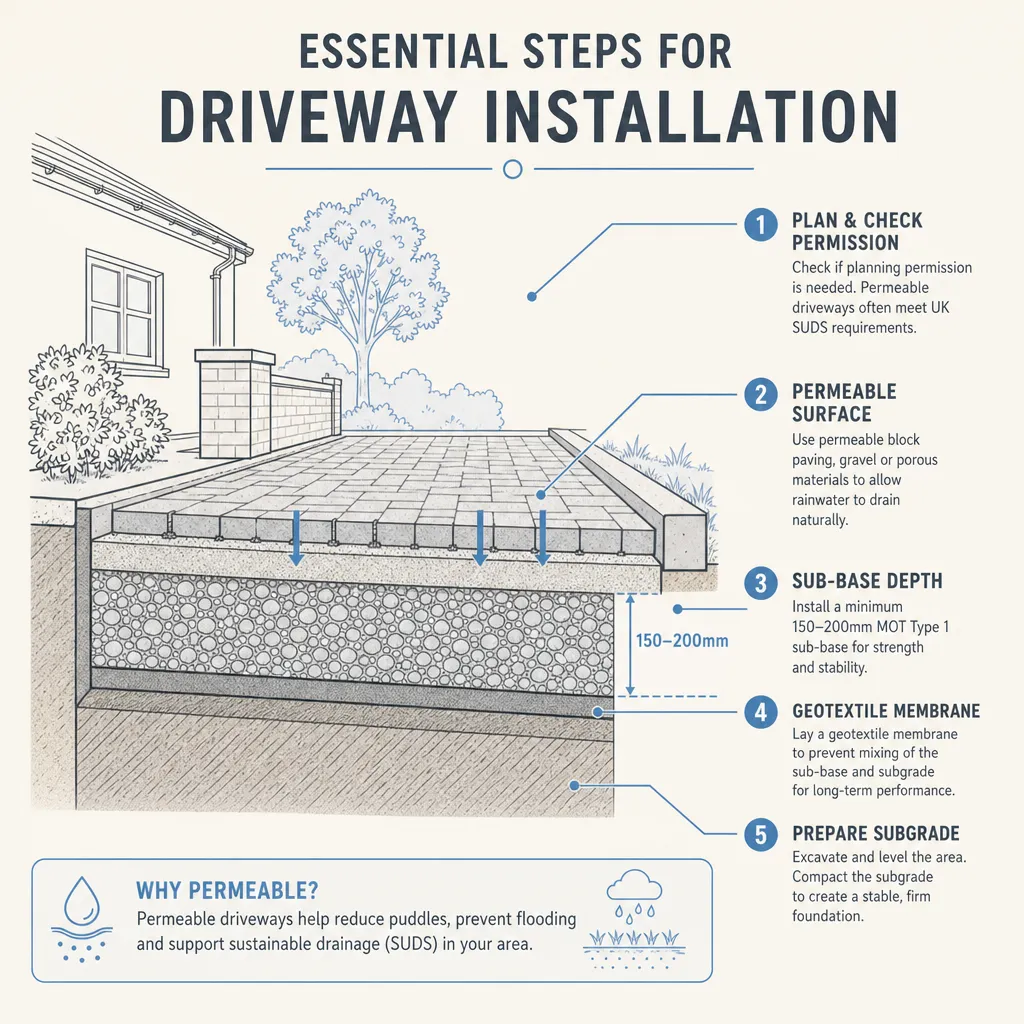
Essential Steps for Driveway Installation
Installing a driveway in England requires planning permission only when using an impermeable surface (standard tarmac, concrete, or block paving) on a front garden area over 5 m².
 Improvement & Build
Preparing Walls for Patching: Surface Preparation Best Practice
Durable wall patching starts with removing all loose material, cutting back to a clean and stable edge, cleaning the substrate, and priming with a construction-grade PVA bonding agent before applying any filler or plaster.