Shared Garage Walls and Building Extensions: Party Wall Rights and Responsibilities
By Housey · Last reviewed 4th of May 2026
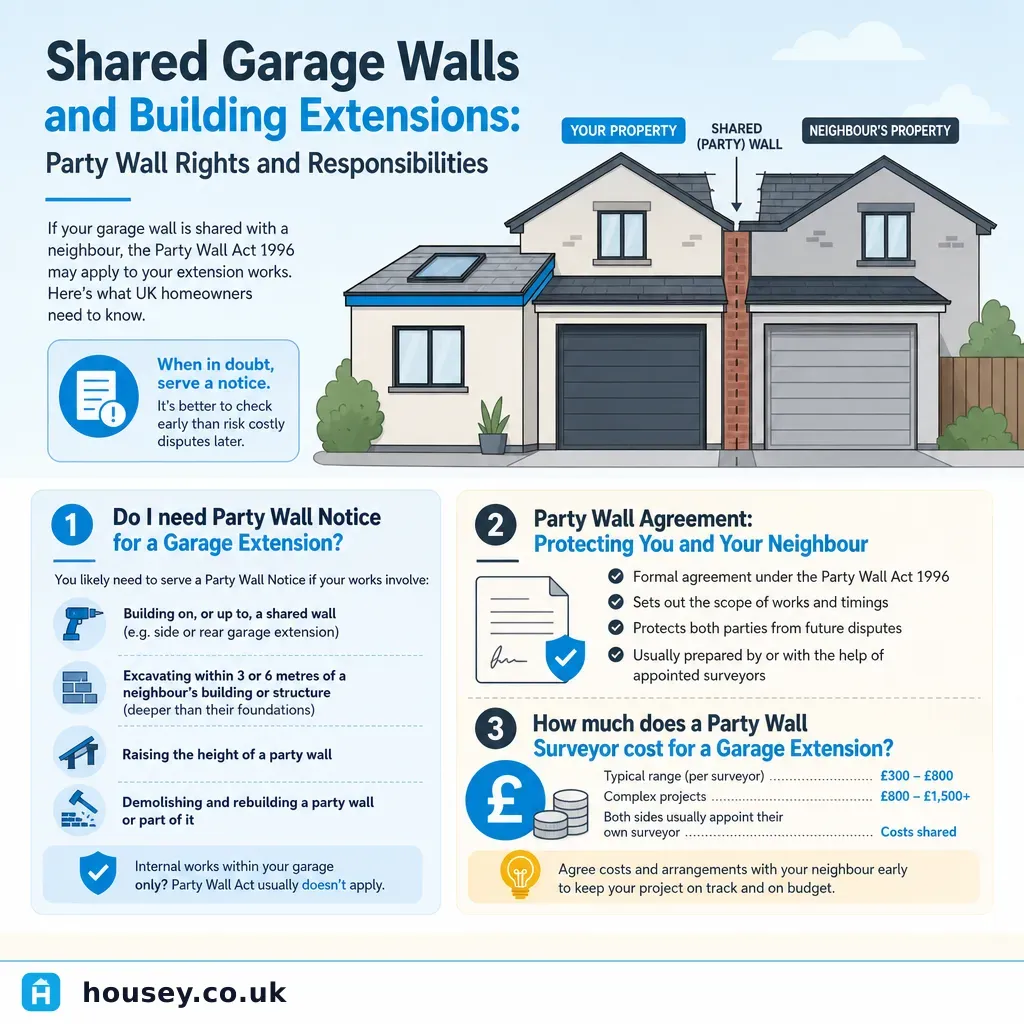
Shared Garage Walls and Building Extensions: Party Wall Rights and Responsibilities
If you are planning an extension that will use or affect a shared garage wall, the legal framework governing that work is more complex than many homeowners expect. The Party Wall etc. Act 1996 imposes specific notice requirements and dispute-resolution procedures that apply regardless of how straightforward the build may appear — and missing a step can delay your project, expose you to injunctions, or invalidate work already carried out. Understanding your obligations early, at the design stage, is far less costly than resolving a dispute mid-build.
Key points
- The Party Wall etc. Act 1996 applies to work on shared walls, including garage walls that sit on the boundary line or are built on the line of junction between two properties.
- Written party wall notice must be served at least two months before starting notifiable works on a party wall (one month for Section 6 excavation notices within 3–6 metres of a neighbouring structure).
- Your neighbour has 14 days to respond in writing; silence is treated as dissent by default under the Act, triggering the formal surveyor appointment process.
- If your neighbour dissents or fails to respond, a party wall award — a legally binding document — must be agreed and signed before work starts.
- The building owner normally bears all reasonable costs of the party wall process, including the adjoining owner's surveyor fees.
Does a shared garage wall count as a party wall?
A wall is a party wall under the Act if it stands on the land of two or more owners, or if it forms part of a building on the boundary between two properties. A detached garage sharing a wall with a neighbour's garage, or a garage wall sitting directly on the boundary line, commonly meets this definition.
The term "party structure" also extends to floors, partitions, and party fence walls — walls used solely to divide properties rather than forming part of a building. Even if the garage is not a full dwelling, the shared wall element may still attract the Act's requirements.
What the Act does not cover: a wall built entirely within your own land, set back from the boundary, is not a party wall. However, if you plan to excavate within 3 metres of your neighbour's foundations to a depth greater than their existing foundations, the Section 6 notice provisions apply separately — often relevant when an extension requires new footings close to a shared boundary.
If you are uncertain whether the garage wall qualifies, a party wall surveyor can carry out a preliminary assessment before you commit to a design.
When must you serve a party wall notice?
Notice is required before carrying out any of the following works affecting a shared garage wall:
- Building on or cutting into the party wall — for example, inserting a steel beam, forming a new opening, or raising the wall height.
- Demolishing and rebuilding the party wall — including demolition of the garage if the shared wall will be removed or altered.
- Underpinning, thickening, or weather-proofing the party wall on either side.
- Excavating within 3–6 metres of a neighbouring structure (the applicable distance depends on the relative depths of the new and existing foundations).
For most extension projects involving a shared garage wall, the relevant notice is served under Section 2 of the Act (work to an existing party wall) and, where a new wall will be built on the boundary, Section 3 as well. Permitted development rights or planning consent for your extension do not replace the party wall notice — the two regimes run entirely in parallel and must each be satisfied independently.
What happens after you serve notice?
Once written notice is served, your neighbour has 14 days to respond in writing. The outcome determines the next step.
Outcomes after serving party wall notice
Outcome | What it means | Next step |
|---|---|---|
Consent in writing | Neighbour agrees to the works as described | Work can proceed — keep the written consent on file throughout the build |
Counter-notice | Neighbour requests additional or different works, e.g. raising the wall simultaneously | Negotiate scope and cost; shared-benefit works may be cost-shared between both parties |
Dissent | Neighbour formally objects to the proposed works | Both parties appoint surveyors (one agreed surveyor, or one each) to draw up a party wall award |
No response within 14 days | Treated as dissent by default under the Act | Surveyor appointment process begins as for formal dissent |
A party wall award sets out exactly what works are permitted, how they must be carried out, and what protections apply to the neighbouring property. It is legally binding on both owners and their successors in title.
Decision tree: do I need to serve a party wall notice?
- Is the garage wall built on the boundary line, or shared with a neighbouring building? → The Act likely applies. Serve notice before proceeding.
- Is the garage wall entirely on your land, set back from the boundary? → The Act may not apply to that wall, but check whether excavations will come within 3 metres of the neighbour's foundations.
- Are you carrying out internal works only, with no structural effect on the shared wall? → Notice is usually not required, but confirm with a party wall surveyor before committing.
- Has your architect or structural engineer flagged potential party wall implications? → Obtain formal advice before finalising the design. Changes at drawing stage are far less costly than mid-build disputes.
- Is the adjoining property leasehold? → Notice must be served on all owners of the adjoining property. For leasehold garages, both the leaseholder and freeholder may need to receive separate notices.
What a party wall award covers
A well-drafted party wall award typically includes:
- A schedule of condition of the neighbouring property, recording its existing state before works begin. This protects both parties if damage claims arise during or after construction.
- Permitted working hours and access arrangements for the build.
- Details of how the wall must be repaired or made good if damaged during construction.
- Insurance requirements the building owner must maintain throughout the works.
- Any agreed works the neighbour has requested in a counter-notice.
The schedule of condition is particularly valuable when building against an existing shared garage wall: even minor pre-existing cracking can become a point of contention without a documented baseline. A structural engineer may also be engaged to assess the shared wall's load-bearing capacity as part of the process, especially where new beams or openings are proposed.
Red flags that a party wall dispute may be escalating
Seek specialist advice promptly if any of the following arise:
- Your neighbour has instructed their own surveyor who is raising objections beyond the standard scope of the proposed works.
- Work has started without a valid party wall award in place — a serious legal exposure for the building owner.
- The adjoining property shows new cracking during or after construction.
- Your neighbour disputes the boundary line or the ownership of the shared wall.
- Disagreement about the schedule of condition is preventing the award from being signed off.
Proceeding without a valid party wall award can expose you to court injunctions, claims for compensation, and your neighbour's legal costs.
Important limitations
This article provides general information about the Party Wall etc. Act 1996 as it typically applies to shared garage walls and extensions in England and Wales. It is not legal advice. The Act's application depends on the specific construction of your property, the exact boundary position, tenure arrangements, and the nature of the proposed works. Scotland and Northern Ireland have different legal frameworks.
A qualified party wall surveyor should always assess your specific situation before you serve notice or begin work. Rules and procedures can vary depending on how the wall was built, its history, and local factors.
What to ask a qualified professional
Before instructing a party wall surveyor or beginning design work on a garage extension involving a shared wall, ask:
- Does this wall meet the definition of a party wall or party structure under the 1996 Act?
- Which sections of the Act apply to my proposed works, and what notice periods are required?
- Who should be named on the notice — the neighbour's freeholder, leaseholder, or both?
- What should be included in the schedule of condition, and who arranges it?
- If my neighbour and I use a single agreed surveyor, what are the risks to my position?
- What are your fees, and how will they be structured if the neighbour dissents and appoints a separate surveyor?
- Are there aspects of the current design that might increase the likelihood of dissent or delay?
When to get professional help
Consult a qualified party wall surveyor before serving any notice if:
- You are unsure whether the shared garage wall qualifies as a party wall under the Act.
- The garage wall is load-bearing or forms part of the structural envelope of both properties.
- Your extension will require excavation near the neighbour's foundations.
- The neighbour has already indicated they may object to the works.
- The build involves demolishing the shared wall rather than building alongside it.
A party wall surveyor can review your architect's drawings to check compliance with the Act before notice is served, avoiding costly redesigns later. Where structural loads or foundation work are complex, a structural engineer may need to advise in parallel with the party wall process.
How Housey can help
If your extension project involves a shared garage wall, Housey can connect you with experienced party wall surveyors and structural engineers who can assess your specific situation, prepare the necessary notices, and draft a party wall award. You can also request quotes from planning consultants and building control consultants to coordinate the full regulatory picture for your extension project.
Frequently asked questions
Do I need a party wall agreement even if my neighbour seems happy for me to build?
Verbal agreement is not sufficient under the Party Wall etc. Act 1996. Written consent must be given within 14 days of receiving your notice. If your neighbour provides written consent, no formal party wall award is needed, but a schedule of condition is still advisable to document the existing state of both properties before work starts and protect both parties from future damage claims.
How much does a party wall surveyor cost for a garage extension?
Indicative UK costs, last reviewed 2026-05-04. Where both parties appoint their own surveyors, total fees typically range from £1,500 to £3,500 or more, depending on complexity and location. A single agreed surveyor is usually less costly. The building owner normally bears all reasonable surveyor fees. Always obtain itemised quotes before appointing.
Can my neighbour stop my extension by refusing to agree a party wall award?
A neighbour cannot indefinitely block lawful works. If they dissent and fail to engage with the surveyor process, the Act allows a surveyor to be appointed on their behalf. Either party may appeal a party wall award to the county court within 14 days of it being made. The process is designed to facilitate works and resolve disputes, not to prevent lawful building.
What happens if I start work without serving a party wall notice?
Starting notifiable works without a valid party wall notice is unlawful under the Act. Your neighbour may apply to the court for an injunction to stop the works. You may also face claims for the cost of making good any damage, plus legal and surveyor fees. Always serve notice before work begins, however cooperative your neighbour appears to be.
Do permitted development rights remove the need for party wall compliance?
No. Permitted development rights and the Party Wall etc. Act 1996 are entirely separate legal regimes. Planning consent or permitted development approval for your extension does not affect your obligations under the Act. Both sets of requirements must be satisfied independently before work starts on any notifiable works affecting a shared wall.
Sources and further reading
- Party Wall etc. Act 1996 — legislation.gov.uk
- Party walls and building work — GOV.UK
- Party Wall Legislation and Procedure Guidance Note — RICS
- Faculty of Party Wall Surveyors — homeowner guidance — FPWS
Useful next reads
 Planning & Pre-Build
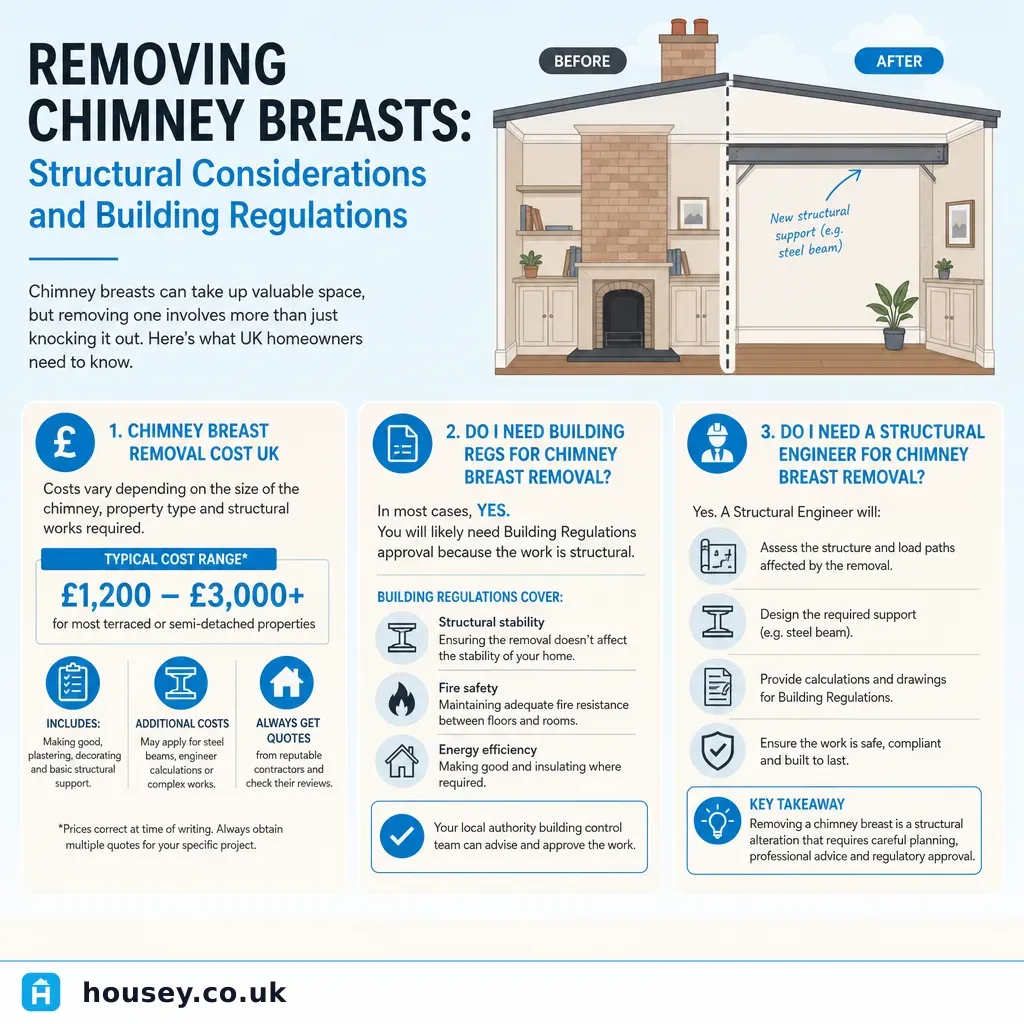
Removing Chimney Breasts: Structural Considerations and Building Regulations
Removing a chimney breast in England and Wales almost always requires building regulations approval because it is structural work.
 Planning & Pre-Build
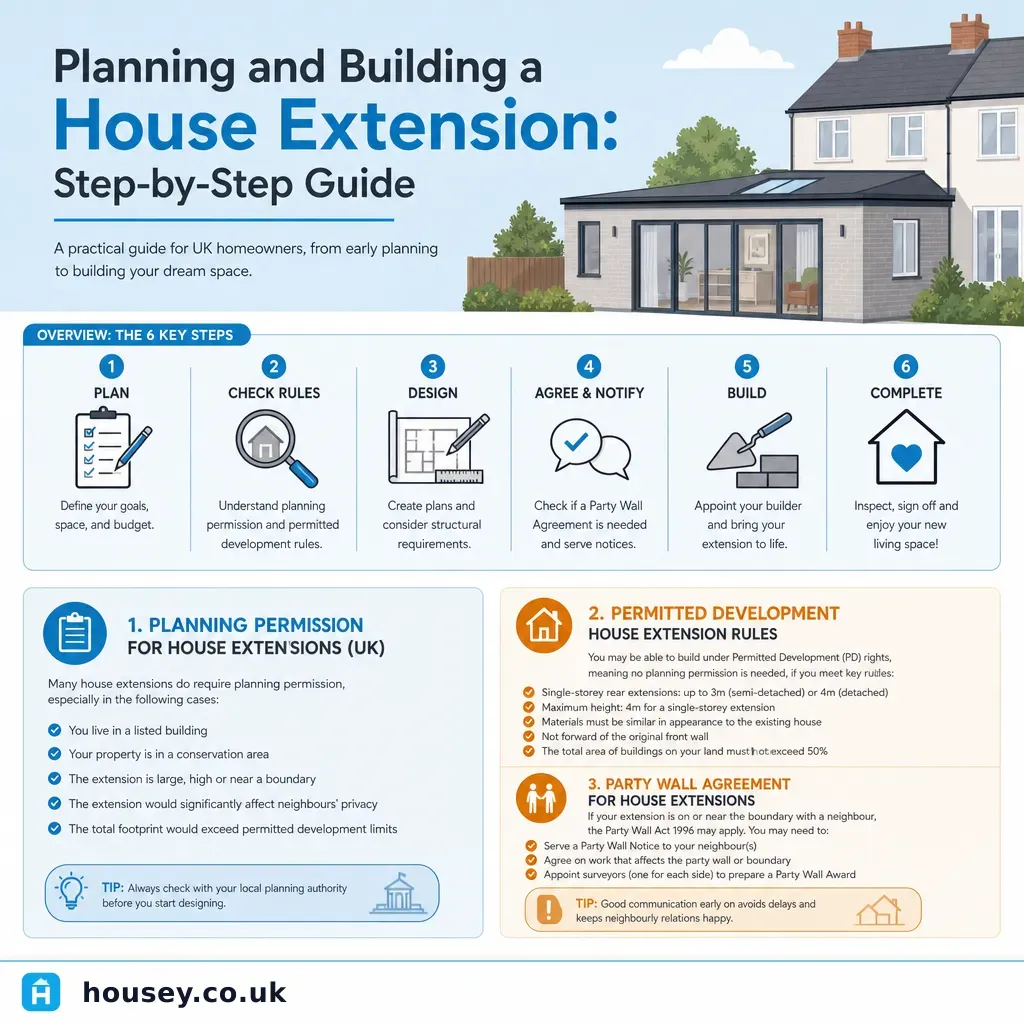
Planning and Building a House Extension: Step-by-Step Guide
A house extension in the UK usually requires either planning permission or confirmation of permitted development rights, Building Regulations approval, and — where work affects a shared wall or boundary — compliance with the Party Wall etc.
 Planning & Pre-Build
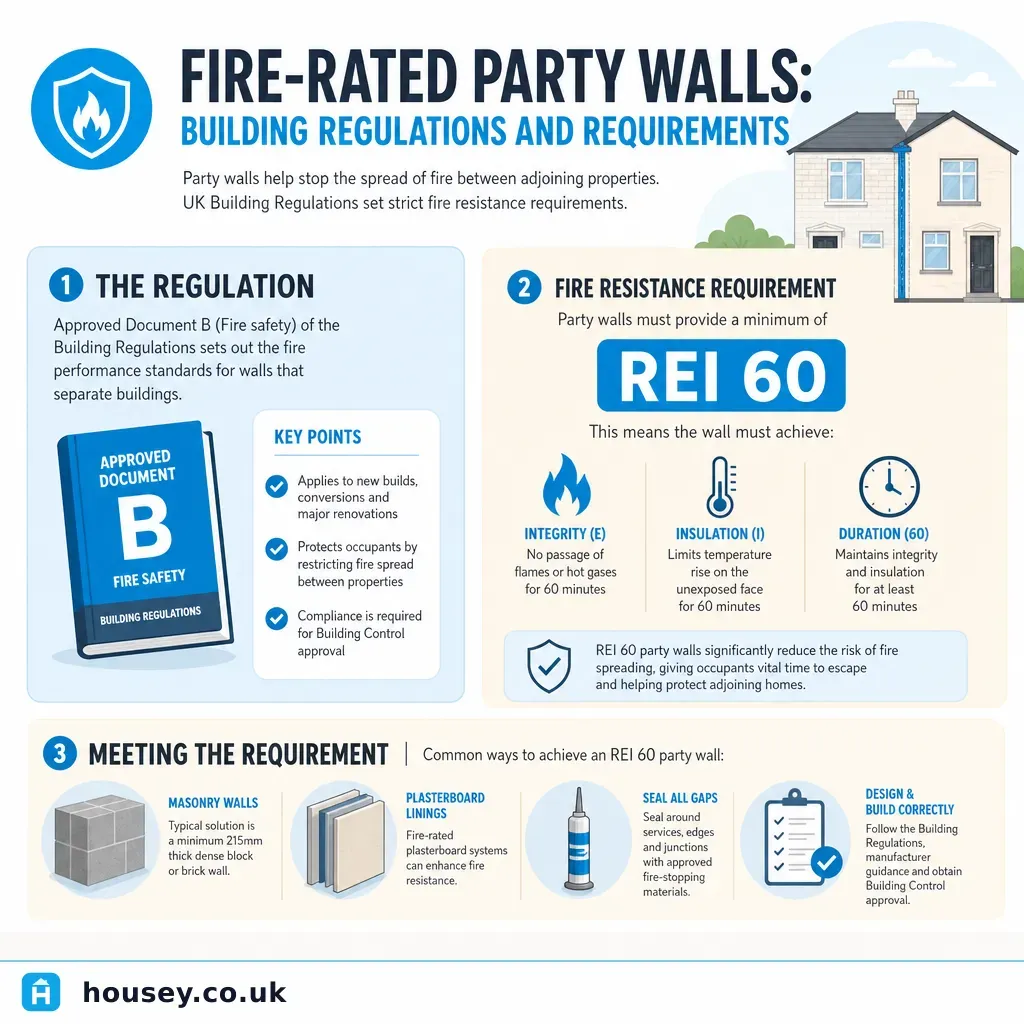
Fire-Rated Party Walls: Building Regulations and Requirements
Party walls between dwellings must achieve at least 60 minutes' fire resistance, expressed as REI 60, under Building Regulations Approved Document B.
 Planning & Pre-Build
Managing Overhanging Trees: Legal Rights, Responsibilities and Remedies
In the UK, a tree belongs to whoever owns the land in which it is rooted.
 Planning & Pre-Build
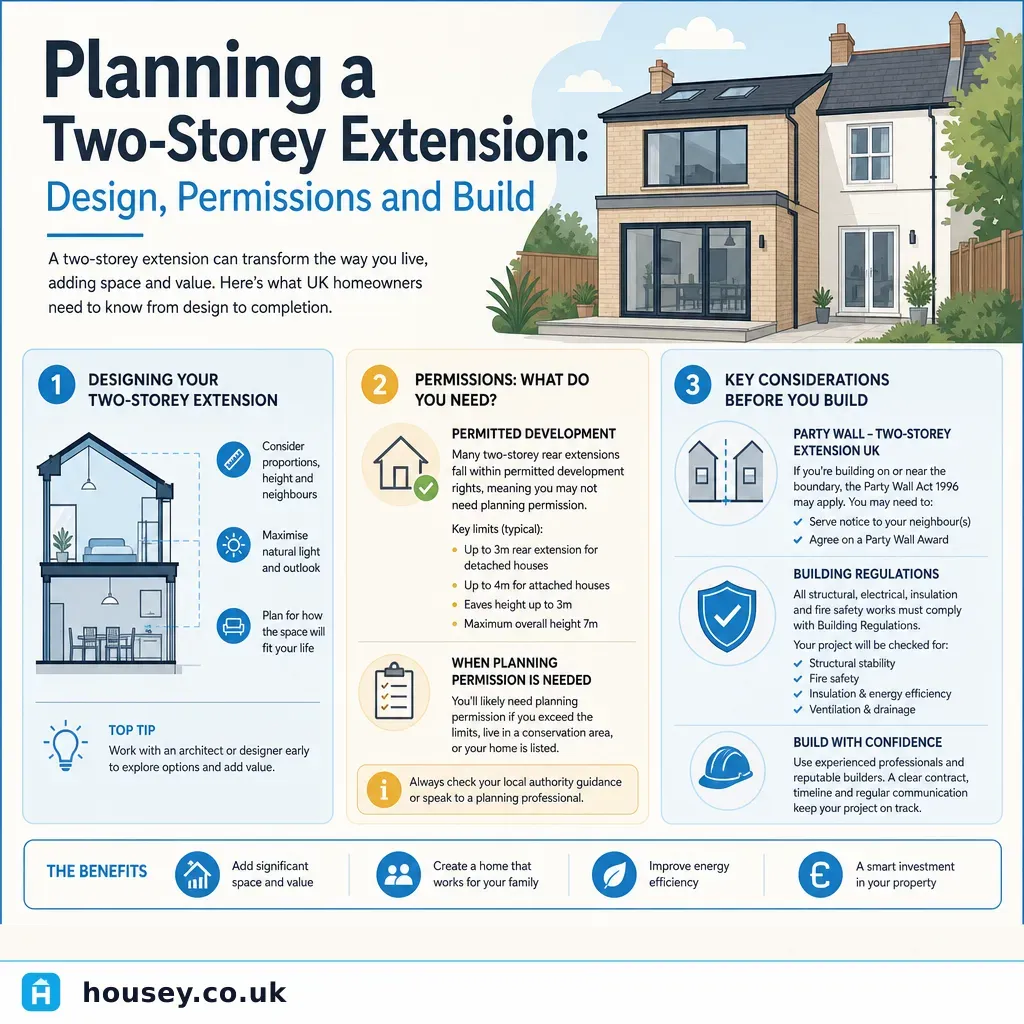
Planning a Two-Storey Extension: Design, Permissions and Build
A two-storey extension usually requires full planning permission, though a rear extension may fall within Permitted Development if it projects no more than 3 metres.