Choosing Between Sharp Sand and Building Sand for Patio Installation
By Housey · Last reviewed 4th of May 2026
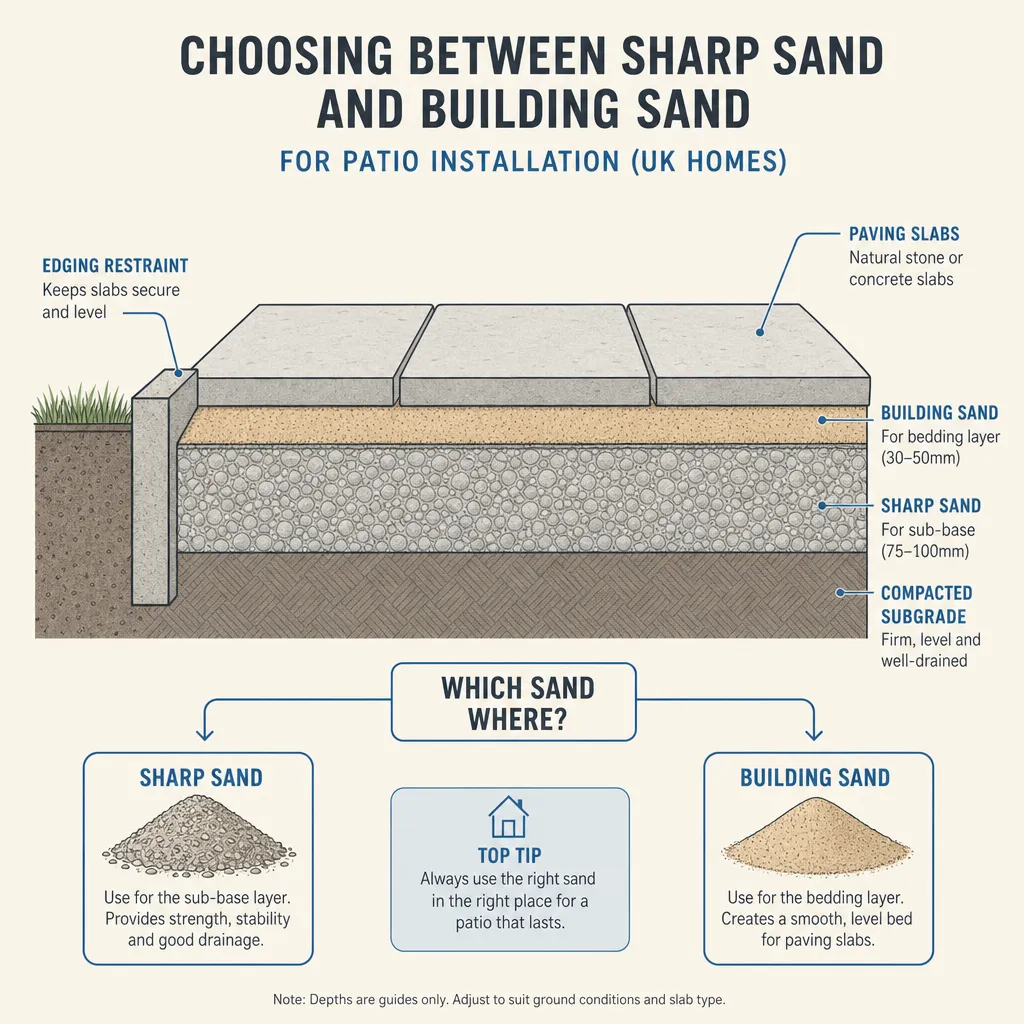
Choosing Between Sharp Sand and Building Sand for Patio Installation
The difference between a level, stable patio and one that sinks, shifts, or cracks within a season often comes down to which sand was used in the bedding layer. Sharp sand and building sand look similar in a bag but behave very differently under load — and using the wrong type is one of the most common patio installation mistakes in the UK. The question typically arises when ordering materials: both sands are widely available and similarly priced, but their particle shapes, drainage properties, and load-bearing characteristics make them suitable for fundamentally different tasks in a patio build.
Key points
- Sharp sand (coarse, angular particles, 0.5–4mm) is the correct choice for bedding layers beneath paving slabs and block paving — it compacts to a stable, load-bearing, well-draining surface.
- Building sand (fine, rounded particles, also called soft sand or bricklaying sand) is too compressible for structural bedding and should only be used for mortar pointing or bricklaying, mixed with cement.
- BS 7533 — the British Standard for pavements constructed with clay, natural stone, or concrete pavers — specifies a coarse sand or grit sand bedding layer for flexible block paving.
- The recommended uncompacted bedding layer depth for paving slabs is 25–50mm of sharp sand, which compacts to approximately 15–40mm after tamping.
- Kiln-dried jointing sand is a separate, specialist product used to fill the joints of block paving after laying — it is not sharp sand or building sand.
Sharp sand vs building sand: what is the difference?
Property | Sharp sand | Building sand |
|---|---|---|
Particle shape | Angular, irregular | Rounded, smooth |
Particle size | Coarser (0.5–4mm typical) | Finer (0.1–0.5mm typical) |
Drainage | Good — particles do not pack tightly | Poor — fine particles fill voids |
Compaction behaviour | Stable under load | Compresses and shifts under load |
Typical colour | Yellow-grey | Orange-red |
Primary patio use | Bedding layer beneath slabs or blocks | Mortar pointing (mixed with cement) |
Block paving joints | Not suitable alone | Not suitable alone |
Which sand for which patio task?
Bedding layer under paving slabs
Use sharp sand only. Angular particles interlock under compaction, creating a stable sub-base that resists settlement and allows water to drain through the bed. Using building sand as a bedding layer causes settlement as fine particles migrate under foot and vehicle loads, water retention beneath the slab leading to frost heave in winter, and differential movement that causes slabs to rock or crack.
Mortar pointing between paving slabs
A mix of building sand and cement — typically 3:1 or 4:1 building sand to ordinary Portland cement — is standard for pointed joints between natural stone or large concrete paving slabs. Sharp sand produces a coarser, more porous mortar less suited to fine joint work. Some installers use brush-in grout or resin-based jointing compounds for large-format porcelain paving, which eliminates sand-and-cement pointing entirely.
Jointing for block paving
Interlocking block paving uses kiln-dried fine sand brushed into the joints after laying. This is a distinct product from both sharp sand and building sand. It must be dry when applied and is typically topped up periodically as joints weather and compact.
Decision tree: which sand do I need?
- Laying a bedding layer under paving slabs? → Use sharp sand (25–50mm uncompacted depth).
- Pointing joints between natural stone or large concrete slabs? → Use building sand and cement (3:1 or 4:1 mix).
- Jointing concrete block paving? → Use kiln-dried jointing sand — not sharp or building sand.
- Mixing mortar for a kerb, edging, or raised border? → Use building sand and cement.
- Laying large-format porcelain paving? → Use sharp sand for bedding; check the paving manufacturer's specification for jointing — resin grout is often recommended.
How much sharp sand do I need? A worked example
To calculate sharp sand for a bedding layer:
- Measure the patio area in square metres (length × width).
- Multiply by the bedding depth in metres — for example, 0.04m for a 40mm uncompacted layer.
- The result is cubic metres. Multiply by approximately 1,600 to convert to kilograms (the bulk density of sharp sand).
- Divide by 25 for the number of 25kg bags, or order by the bulk tonne for larger areas.
Example: A 3m × 4m patio (12m²) with a 40mm sharp sand bed requires 12 × 0.04 = 0.48m³, which is approximately 768kg, or around 31 bags of 25kg sharp sand. Allow a 10–15% wastage margin. For patios over 20m², ordering loose bulk bags (typically 850kg each) is usually more economical than individual bags.
Homeowner checklist: before you order sand
Semi-dry mortar beds: when to use cement with sharp sand
For large-format slabs — particularly porcelain paving over 600mm × 600mm — most manufacturers recommend a semi-dry sharp sand and cement mortar bed (typically 6:1 sharp sand to cement) rather than a loose sand bed. This provides a rigid, full-contact support that prevents cracking in thin, brittle paving formats. Always check the paving manufacturer's laying specification, as some porcelain suppliers specify proprietary adhesive mortar systems rather than a sand-and-cement mix.
When to get professional help
Most small residential patio installations are manageable for a competent DIYer, but consider instructing a landscaping or paving contractor if:
- The area is large (over 20–30m²) or involves significant changes in level.
- You are working near existing drainage runs, inspection chambers, or service trenches.
- The ground is soft, waterlogged, or shows signs of previous movement.
- You are laying expensive natural stone or large-format porcelain that requires consistent full mortar bedding.
- The patio abuts the house — drainage falls, damp-proof course relationships, and building regulations may apply.
A patio built immediately against the house must be graded to fall away from the building to protect the damp-proof course. Check the DPC level before setting your finished surface heights.
How Housey can help
For patio projects that go beyond DIY scope, or where correct sub-base, drainage, and sand specification are critical to a lasting result, Housey can connect you with local landscaping and paving contractors. Use the platform to compare quotes and check credentials before you commit to a professional.
Frequently asked questions
Can I use building sand for paving slabs if I mix it with cement?
For a full mortar bed, the standard mix is sharp sand and cement, not building sand and cement. Sharp sand produces a stronger, more stable mortar bed because of its angular particles. Some installers blend the two, but guidance for structural paving applications specifies coarse or sharp aggregates for bedding rather than fine building sand.
What is the difference between sharp sand and grit sand?
The terms are often used interchangeably in the UK trade. Grit sand typically refers to a coarser variant up to 4mm or beyond, sometimes used for drainage layers, while sharp sand sits in the 0.5–4mm range. For most paving bedding purposes, sharp sand and grit sand perform similarly — both are suitable. Check the product grading specification if working to BS 7533.
How deep should the sand bed be under paving slabs?
The uncompacted sharp sand bedding layer should typically be 25–50mm before tamping. After compaction, this reduces to roughly 15–40mm. The overall build-up — sub-base, bedding, and slab — should be designed so the finished surface is at least 150mm below the damp-proof course of any adjacent wall.
Does laying a patio require planning permission or building regulations?
Most domestic patio installations do not require planning permission. However, if the patio is in the front garden and uses an impermeable surface over 5m², planning permission may be required unless the surface drains to a lawn or border. Building regulations are not typically required for a ground-level patio, though works near house foundations or drainage should be considered carefully.
Sources and further reading
- BS 7533: Pavements constructed with clay, natural stone or concrete pavers — BSI (British Standards Institution)
- Permeable surfacing of front gardens guidance — GOV.UK
- Approved Document H: Drainage and waste disposal — GOV.UK
Useful next reads
 Improvement & Build
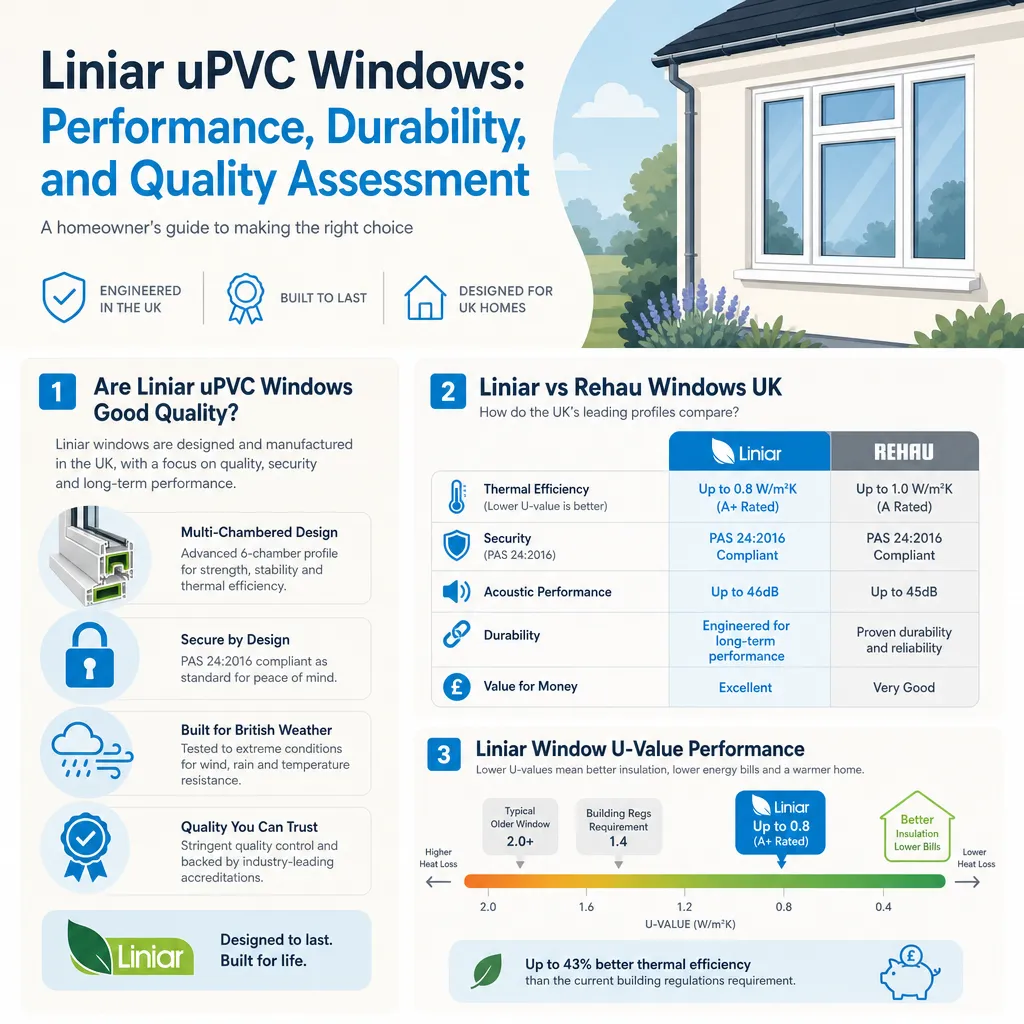
Liniar uPVC Windows: Performance, Durability, and Quality Assessment
Liniar uPVC window profiles are manufactured in the UK using multi-chambered, foamed frames.
 Improvement & Build
Garden Tap Installation with Hot and Cold Water: Plumbing Options
Adding a cold garden tap is a common DIY project, but routing hot water outdoors requires a plumber to connect to your domestic hot water system and comply with the Water Supply (Water Fittings) Regulations 1999.
 Improvement & Build
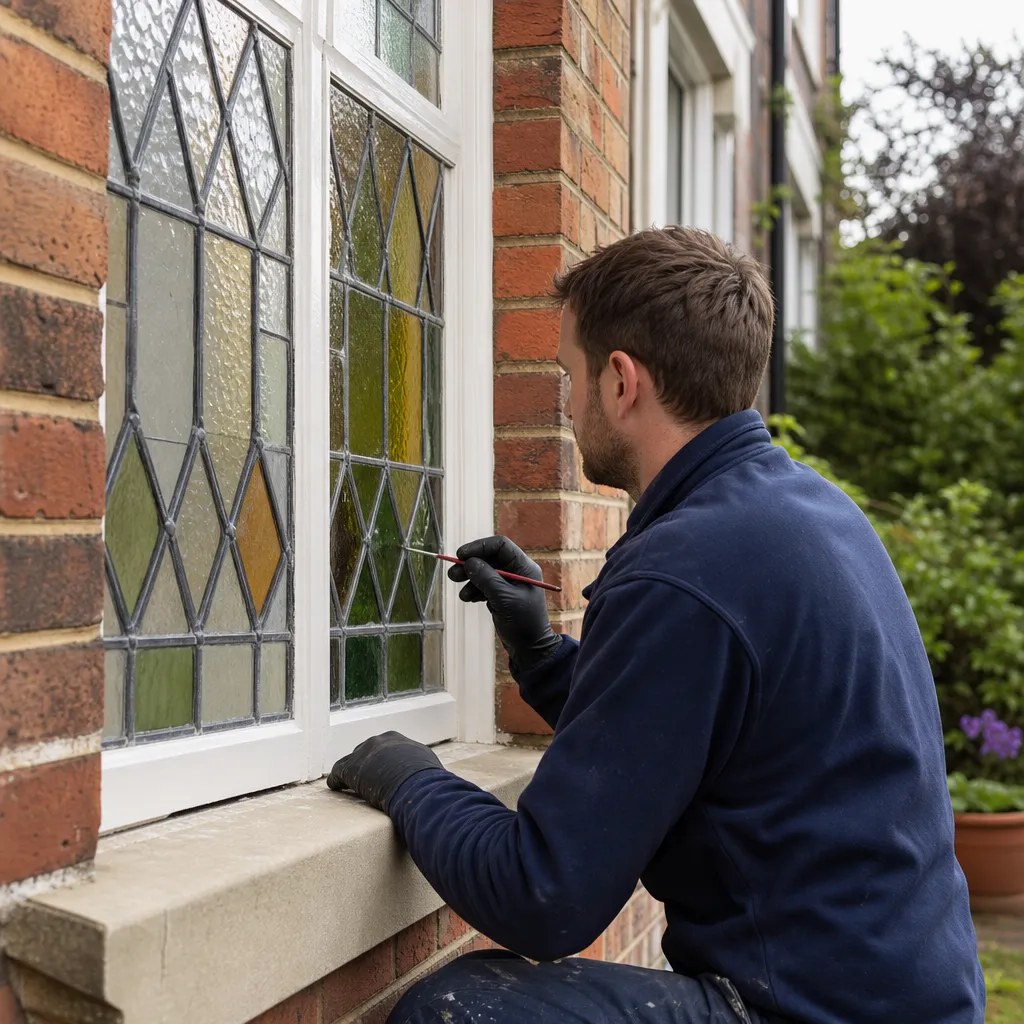
Sealing and Maintaining Historic Leaded Glass Windows: Preservation and Performance
Leaded glass windows are maintained using traditional linseed oil cement — not silicone or modern sealants, which prevent natural movement in the lead came.
 Improvement & Build
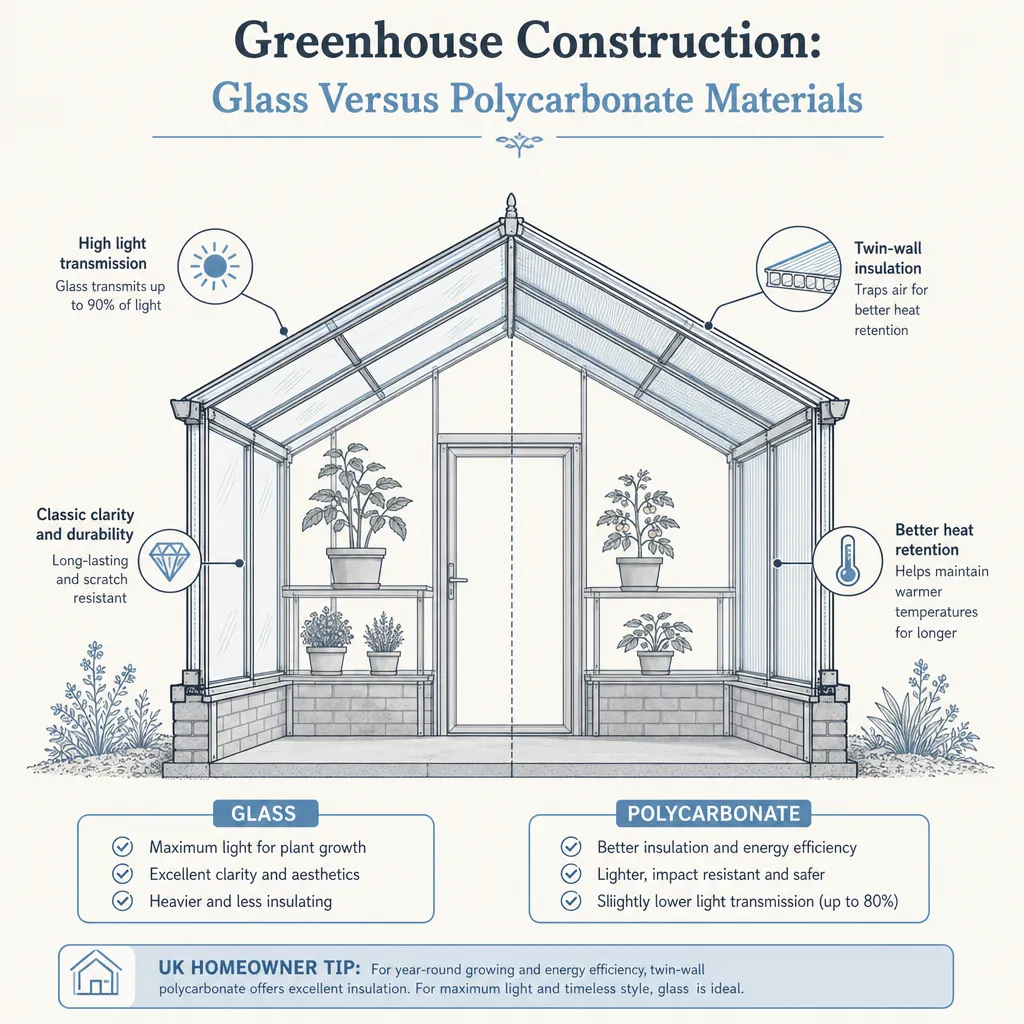
Greenhouse Construction: Glass Versus Polycarbonate Materials
Glass transmits around 90% of available light and lasts indefinitely if unbroken, but insulates poorly and shatters into sharp fragments.
 Improvement & Build
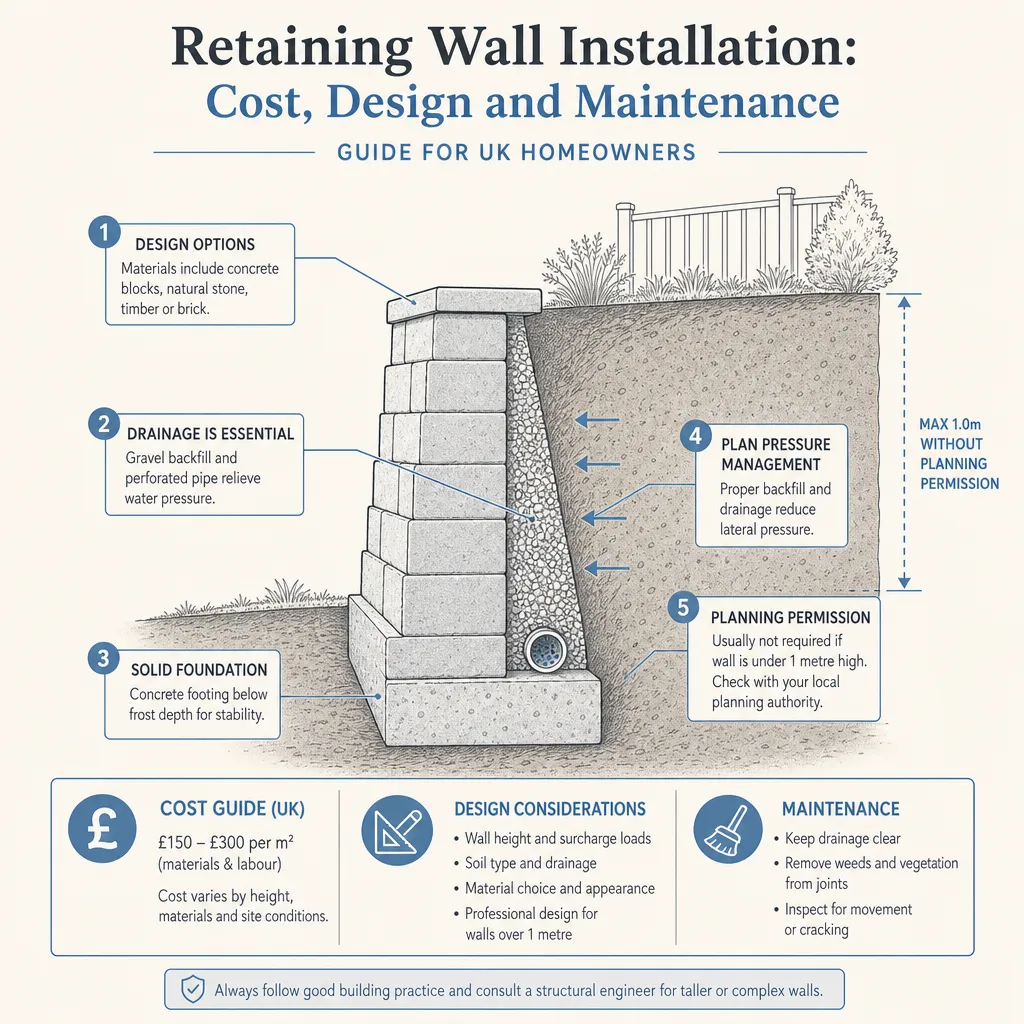
Retaining Wall Installation: Cost, Design and Maintenance
A retaining wall holds back soil on a sloped or banked site.