Shed Roof Replacement and Repair Options
By Housey · Last reviewed 10th of May 2026
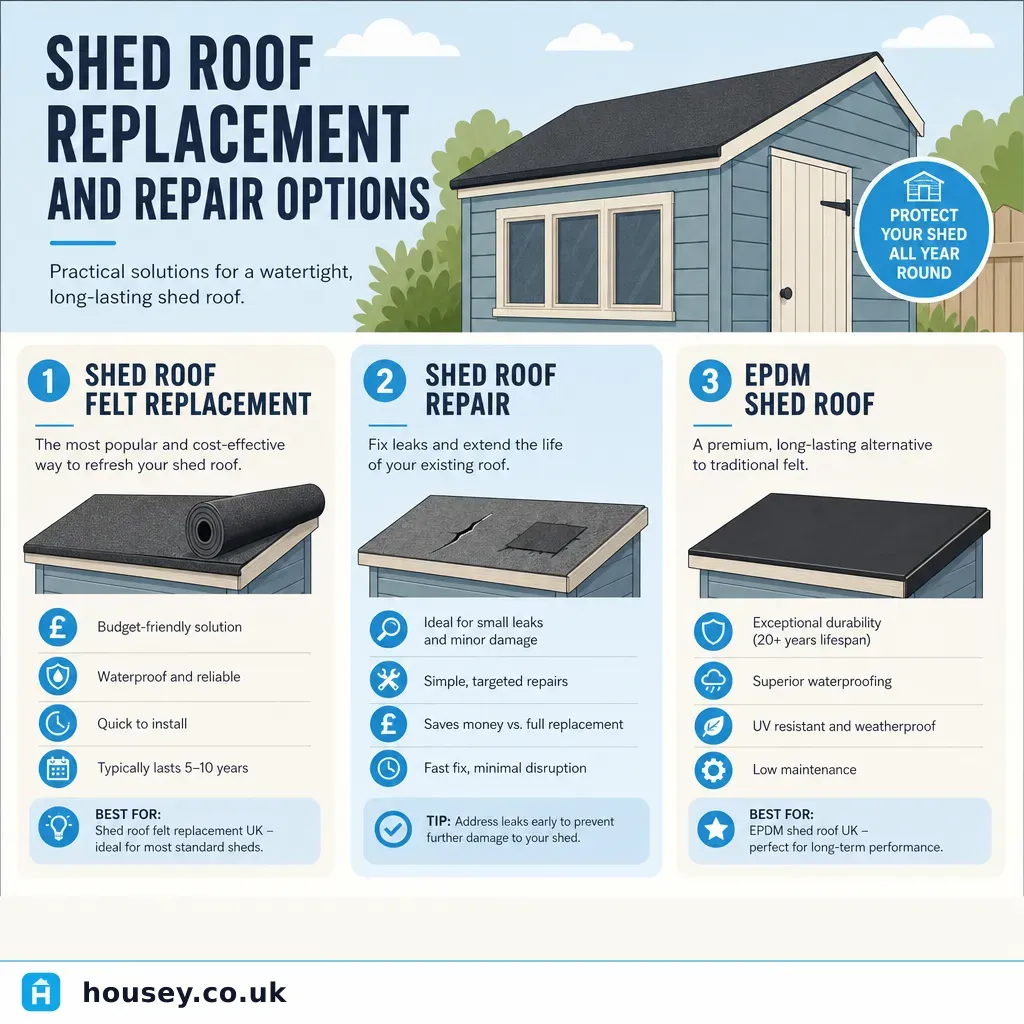
Shed Roof Replacement and Repair Options
Whether you have noticed sagging felt, pooling rainwater, or green mould spreading across your garden shed, a failing roof is one of the most common maintenance issues for UK outbuilding owners. The damp British climate makes weatherproofing critical, and choosing the wrong material — or delaying repair too long — risks water ingress that rots the timber frame beneath, turning a modest roofing job into a structural rebuild.
Key points
- Mineral felt (also called shed felt) is the most widely used shed roofing material in the UK, but typically lasts only 5–15 years before replacement is needed.
- EPDM rubber membrane has an expected lifespan of 20–30 years and is increasingly specified for sheds and garden rooms as a longer-lasting alternative to felt.
- Most shed roof repairs and replacements are classed as permitted development in England and do not require planning permission, provided the outbuilding remains within its existing footprint.
- Building Regulations generally do not apply to detached outbuildings under 15 m² with no sleeping accommodation, under Schedule 2, Class 7 of the Building Regulations 2010.
- Mineral felt is available in grades 1F, 3F, and 5F — Grade 5F (the heaviest, at approximately 38 kg per roll) is more resistant to tearing and UV degradation and is recommended for long-term replacement work.
What are the main shed roofing material options?
The right material depends on roof pitch, budget, and how long you want the repair to last.
Material | Typical lifespan | Approx. supply cost per m² | Best for | Notes |
|---|---|---|---|---|
Mineral felt (Grade 3F) | 5–10 years | £2–£5 | Budget repair, shallow pitch | Prone to UV cracking; inspect annually |
Mineral felt (Grade 5F) | 10–15 years | £5–£10 | Standard replacement | Heavier; better UV and tear resistance |
EPDM rubber membrane | 20–30 years | £8–£18 | Flat or low-pitch roofs, long-term solution | Cold-bond adhesive; no hot torch required |
Corrugated bitumen sheets | 15–25 years | £5–£12 | Apex (pitched) roofs | Ridge and side overlaps must be sealed |
Polycarbonate sheets | 10–15 years | £10–£20 | Letting in natural light | UV yellowing over time; check sealing annually |
Corrugated steel or aluminium | 25–40 years | £12–£30 | Permanent garden rooms | May need structural check before installing |
Indicative UK costs, last reviewed 2026-05-10. Supply-only costs; installation adds labour.
EPDM (ethylene propylene diene monomer) is the preferred choice for flat or very low-pitch roofs because it forms a continuous membrane with no laps or seams — meaning fewer potential entry points for water. It bonds cold, removing open-flame fire risk, which makes it practical for a confident DIYer on a smaller structure.
For apex sheds, corrugated bitumen sheets are a practical option. Their flexibility means they follow slight irregularities in an ageing timber frame without cracking, and their overlap design sheds water effectively at the ridge and verge.
How to assess whether repair or full replacement is needed
Inspect the existing roof before ordering materials. Signs that full replacement is needed rather than patching:
- Blistering or widespread cracking in mineral felt — UV degradation that allows water under the surface layer.
- Delamination where the felt has separated from the layer below, creating bubbles or lifted edges across a significant area.
- Sagging or soft decking boards — re-felting over rotten boards will fail within a season. Boards must be replaced first.
- Persistent mould or moss across the surface — often a sign of moisture retention rather than a single active leak point.
- Multiple or recurring leak points — patching is no longer cost-effective and a full strip and replacement is the better approach.
If replacing decking boards, use OSB3 (Oriented Strand Board, Exposure Class 3), which handles moisture exposure better than standard OSB2.
Do I need planning permission or building control approval?
In England, like-for-like shed roof replacement is almost always permitted development under the Town and Country Planning Act 1990 and the GPDO 2015 — no planning application is required. There are exceptions:
- Listed buildings: works within the curtilage may require listed building consent. Check with your local authority before starting.
- Conservation areas: changing external materials on an outbuilding can require a planning application in some conservation areas.
- Significantly heavier materials: replacing felt with corrugated metal or heavy tiles increases load on the frame — check whether the existing rafters and wall plates can carry the additional weight.
Building Regulations generally do not apply to detached sheds under 15 m² with no sleeping accommodation. For sheds of 15–30 m², exemption may still apply if sited more than 1 m from a boundary. Check the Building Regulations Schedule 2 exemptions on GOV.UK for the current position.
Shed roof replacement homeowner checklist
Before starting work:
During and after work:
When to get professional help
Most shed roof replacements are manageable for a confident DIYer, but call a professional roofer if:
- The shed roof area exceeds around 15–20 m² and requires safe working at height above 2 m.
- Decking boards are heavily rotted and rafters beneath may also be compromised.
- The shed is attached to or shares a wall with the house.
- The property is in a conservation area or within the curtilage of a listed building.
- You are unsure whether the existing timber frame can carry a heavier replacement material.
How Housey can help
If your shed roof replacement involves significant height, a large outbuilding, or a structure attached to the house, find a local roofer through Housey to receive up to four quotes from vetted professionals. For garden rooms or outbuildings over 15 m² where building control may apply, building control consultants can advise on whether a formal application is required.
Frequently asked questions
How long does shed roof felt last in the UK?
Standard Grade 3F felt lasts roughly 5–10 years in the UK climate; Grade 5F (heavier) typically lasts 10–15 years. UV exposure, standing water, and moss growth all accelerate degradation. EPDM rubber membranes, while more expensive upfront, can last 20–30 years with minimal maintenance and no recoating required.
Can I replace shed roof felt myself?
For a small shed (under 10 m²) at low height, re-felting is a common DIY task. You will need a felt knife, galvanised clout nails, a staple gun, and lap adhesive. Always replace rotten decking boards first. Working at height — even on a shed — requires a stable ladder and ideally a second person present.
Does a new shed roof need planning permission?
In England, like-for-like repair or replacement of a shed roof is normally permitted development and does not require a planning application. Exceptions include listed buildings, some conservation areas, and where the work materially increases the building's height or footprint. Always check with your local planning authority if unsure.
What is the cheapest way to repair a leaking shed roof?
Self-adhesive flashing tape or bitumen repair tape can stop active leaks as a short-term measure while you plan a full replacement. These products will not last long-term. A full re-felt with Grade 5F felt or an EPDM membrane applied over sound decking is the most cost-effective permanent repair.
Sources and further reading
- GOV.UK: Building Regulations — exempt buildings and work — MHCLG
- Planning Portal: Outbuildings permitted development guidance — Planning Portal
- HSE: Working at height — a brief guide — Health and Safety Executive
Useful next reads
 Improvement & Build
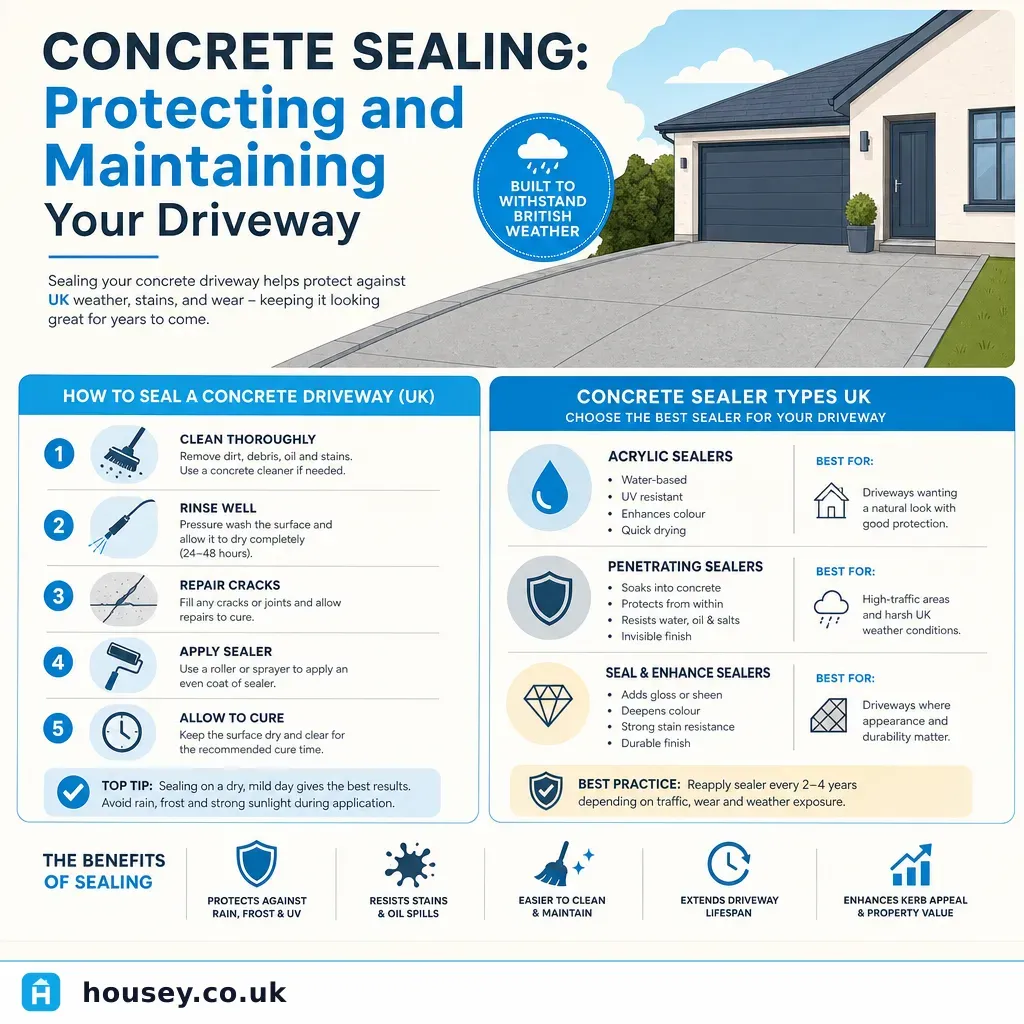
Concrete Sealing: Protecting and Maintaining Your Driveway
Sealing a concrete driveway protects against water ingress, freeze-thaw damage, oil stains, and surface wear.
 Improvement & Build
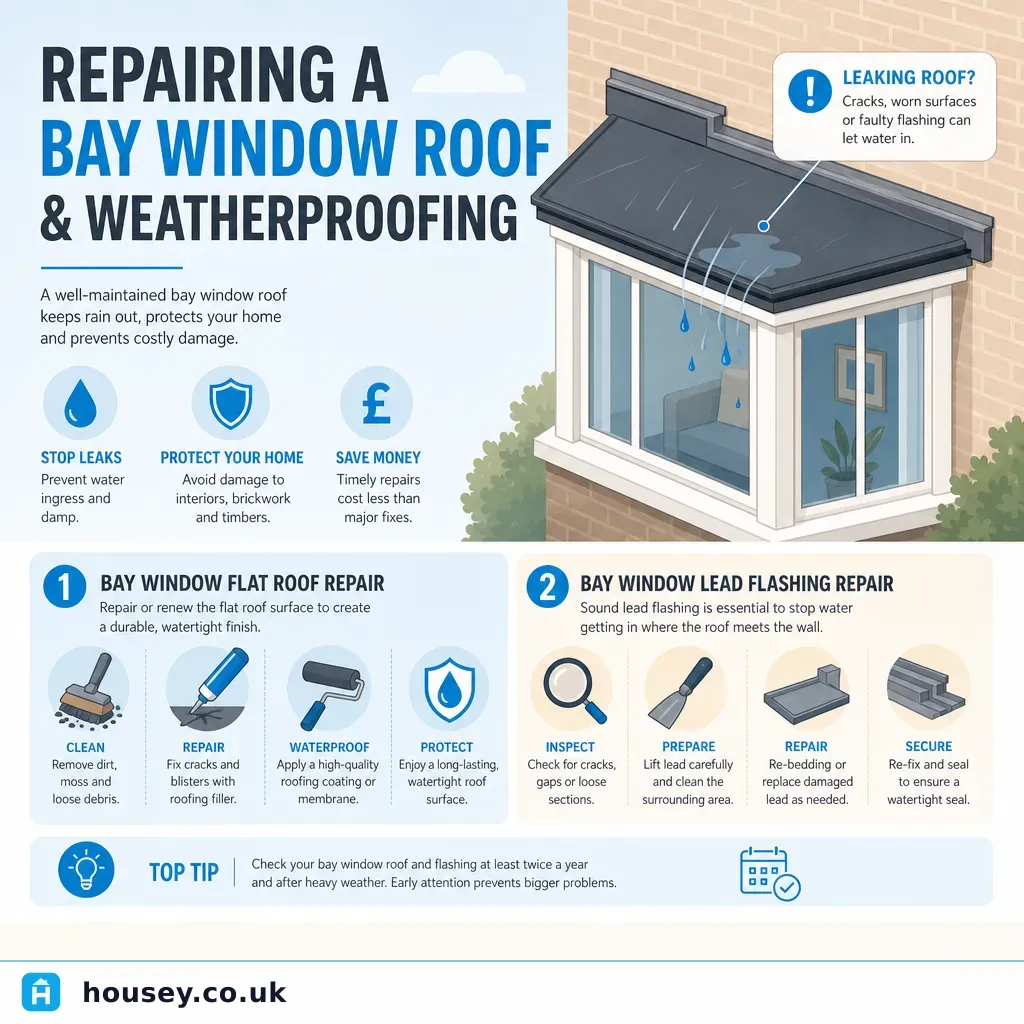
Repairing a Bay Window Roof and Weatherproofing
A bay window roof typically uses felt, lead, or EPDM rubber as its waterproof covering.
 Improvement & Build
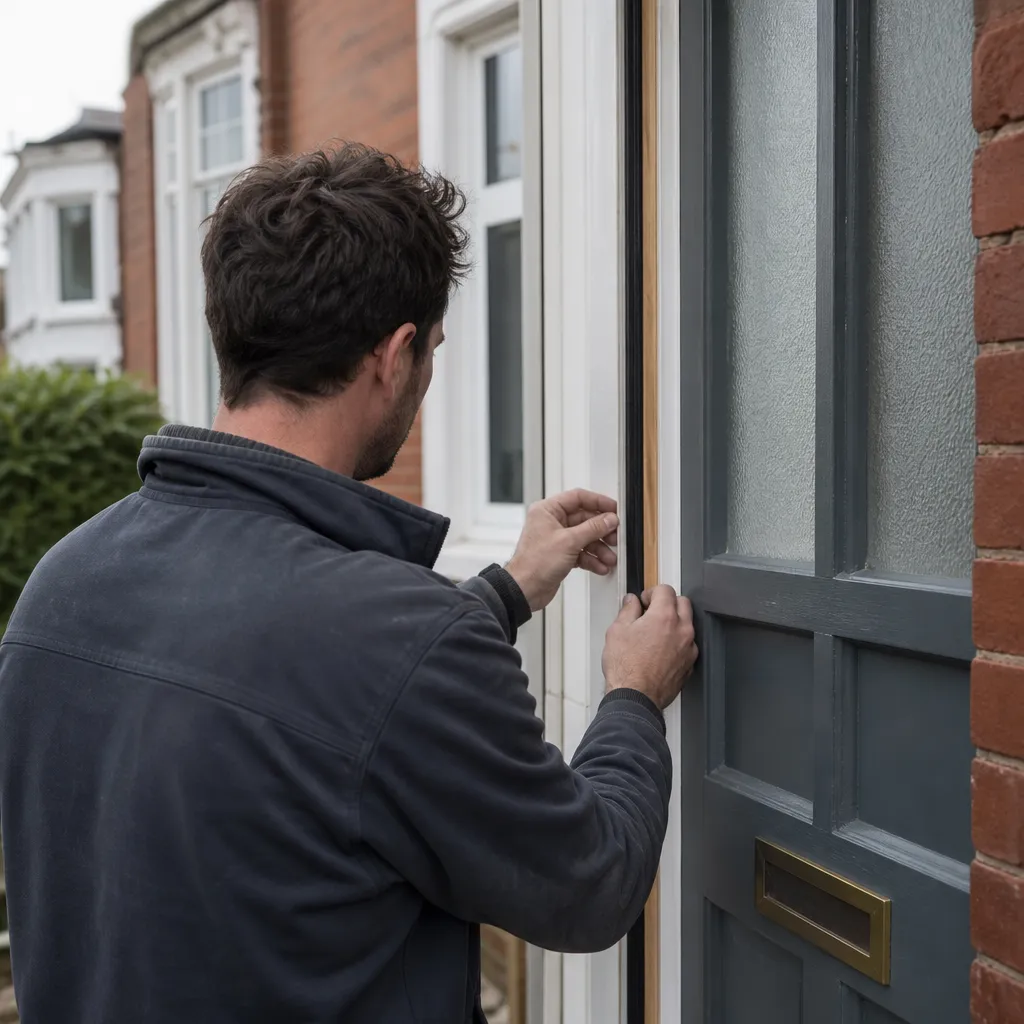
Door Weatherproofing And Sealing: Window And Door Contractors
Door weatherproofing involves fitting draught seals, threshold strips, letterbox brushes, and door sweeps to stop cold air and rain entering around the frame and threshold.
 Improvement & Build
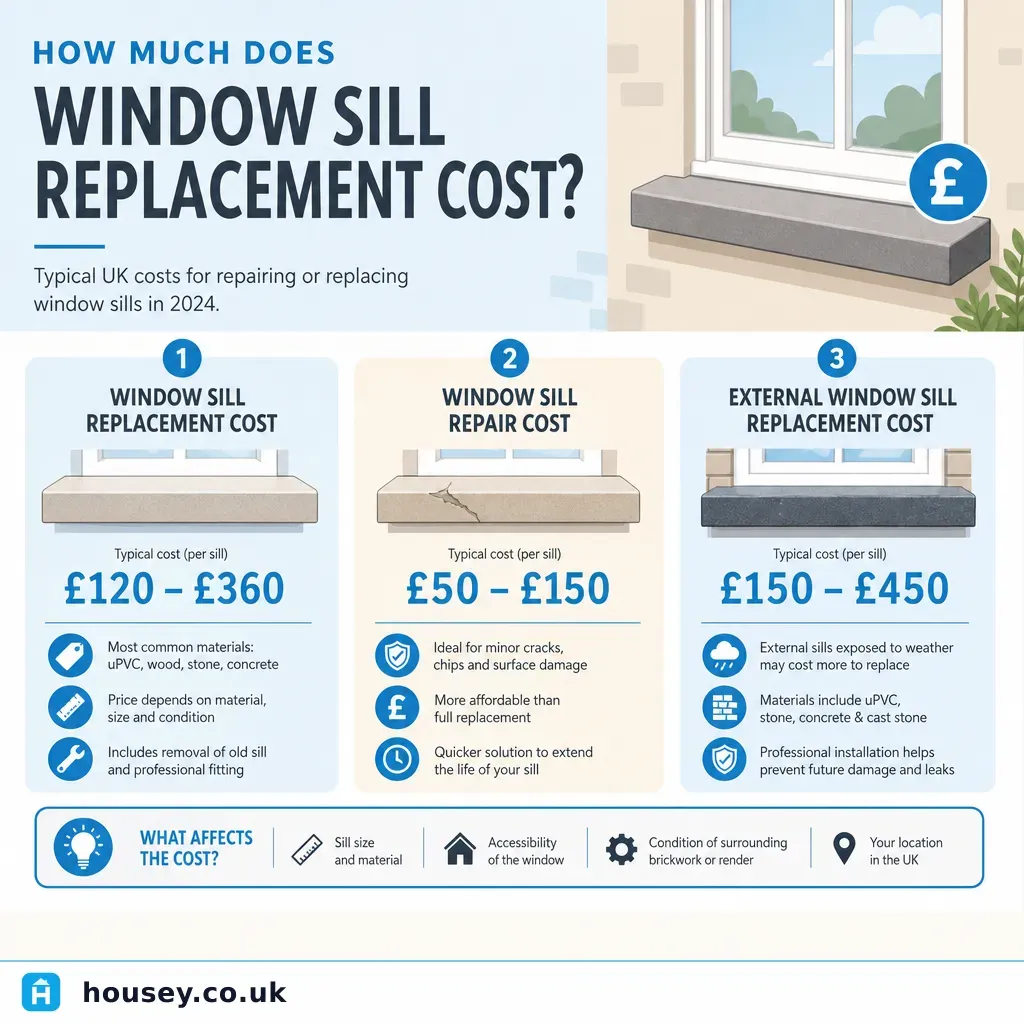
How much does window sill replacement cost
Window sill replacement in the UK typically costs £100–£400 per sill for a standard installation, depending on the material — uPVC, timber, stone, or composite — and whether the sill is internal or external.
 Improvement & Build
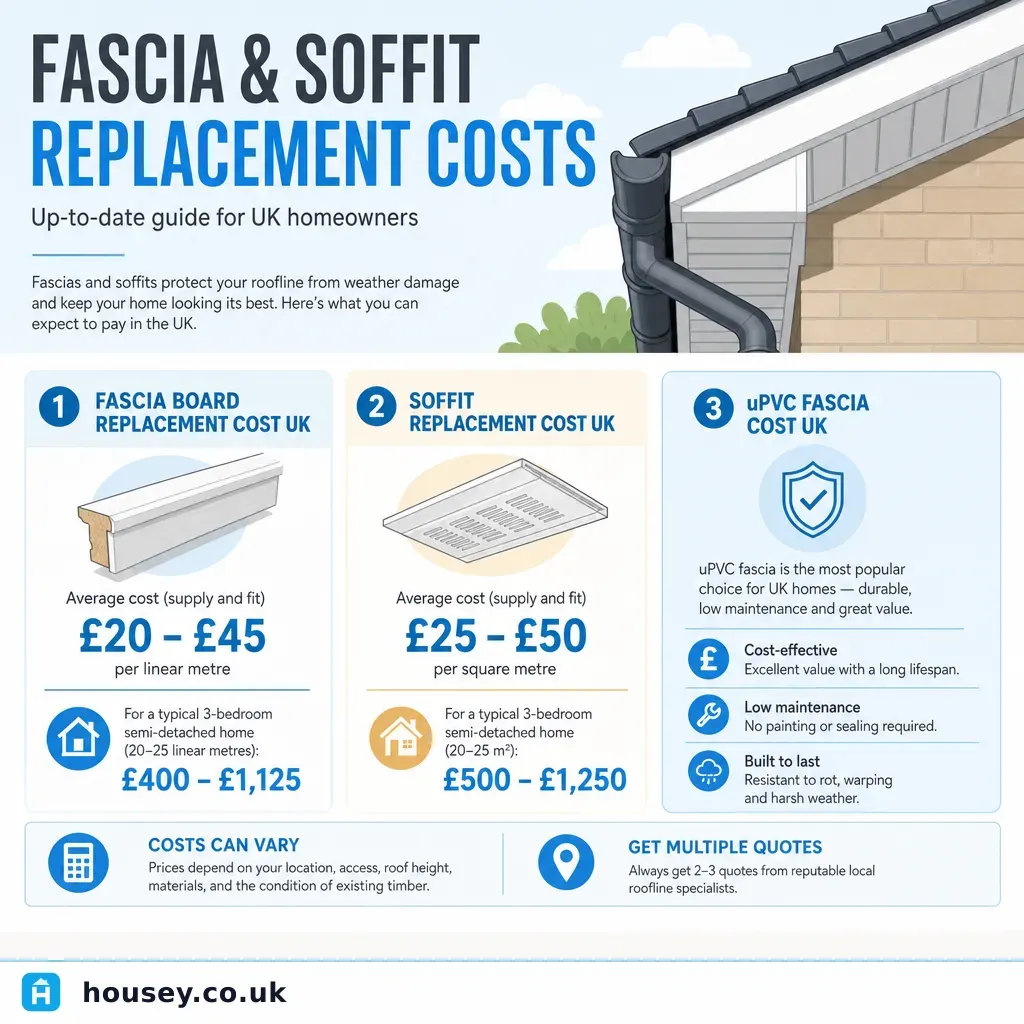
Fascia and Soffit Replacement Costs
Fascia and soffit replacement for a semi-detached house in the UK typically costs £1,800–£4,500 for uPVC boards and new guttering.