Shotcrete Installation Costs and Ground Preparation
By Housey · Last reviewed 18th of May 2026
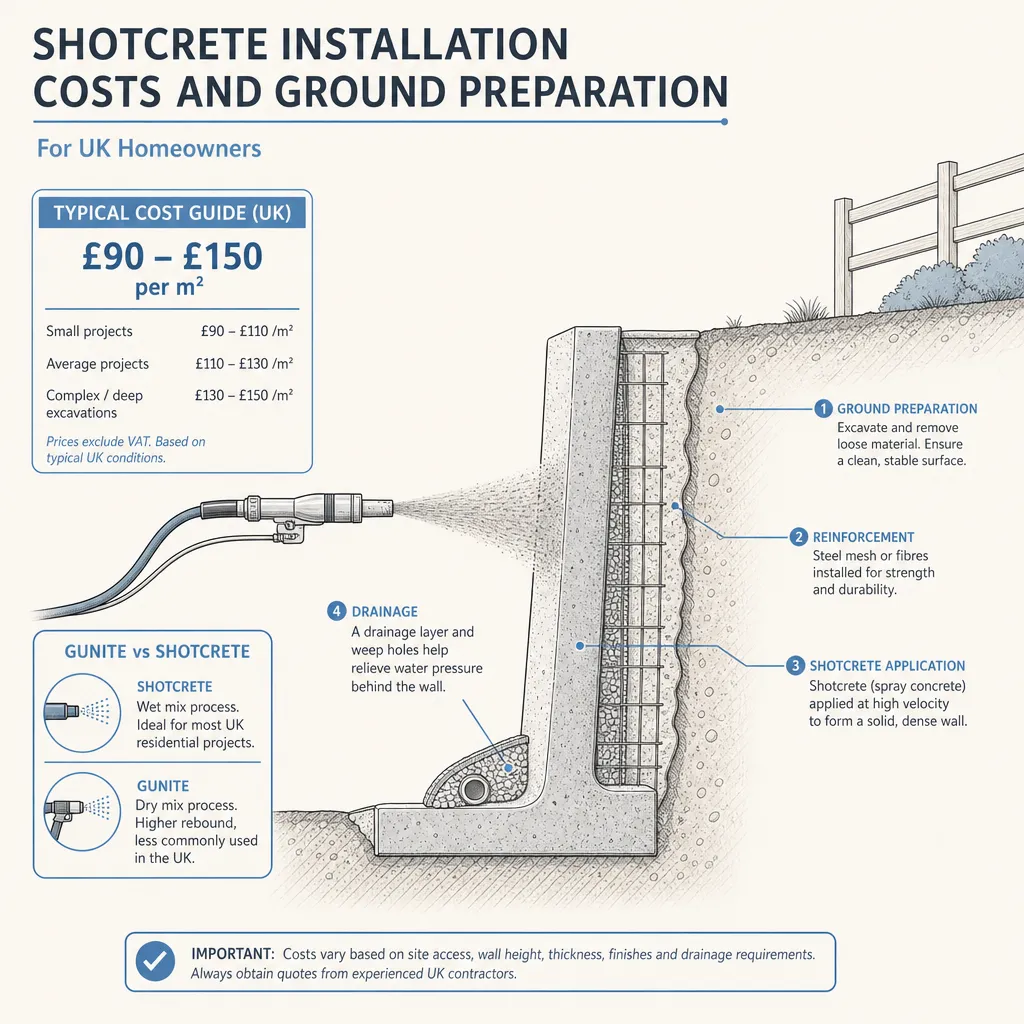
Shotcrete Installation Costs and Ground Preparation
Shotcrete — also called spray concrete or gunite — is encountered at the groundwork stage of many residential projects, from retaining walls and swimming pool shells to basement waterproofing liners and slope stabilisation. For homeowners and self-builders, understanding what drives the cost and what the ground needs to look like before the spray rig arrives can prevent expensive surprises once a contractor is on site.
Key points
- Indicative UK application costs for shotcrete range from £80 to £200 per m², depending on mix specification, layer thickness, and site access — always obtain itemised quotes before committing.
- Two processes are used: wet-mix shotcrete (concrete pre-batched before pumping) and dry-mix shotcrete or gunite (water added at the nozzle) — the choice affects equipment, rebound waste, and finish quality.
- Ground preparation — removing loose material, grading the substrate, and installing steel reinforcement — must be complete before spraying and is typically priced separately from application.
- Structural shotcrete applications (retaining walls, basement liners) require a structural engineer's design specifying mix strength, layer thickness, and reinforcement layout.
- Building Regulations approval under Approved Document A (Structure) is required for structural shotcrete elements; consult your local building control body before work begins.
What is shotcrete and where is it used in UK residential projects?
Shotcrete is concrete or mortar applied pneumatically at high velocity onto a prepared surface. The impact energy compacts the material in place, eliminating the need for traditional formwork in most applications. In UK residential construction, common uses include:
- Retaining walls — for sloped plots, garden terracing, and basement excavations.
- Swimming pool and pond shells — sprayed over a steel reinforcement cage.
- Basement waterproofing liners — a reinforced shotcrete layer applied to the internal face of an excavated basement structure.
- Slope stabilisation — on steep embankments or cut faces adjacent to new construction.
Shotcrete is not typically used for standard strip or raft foundations, where conventional poured concrete remains more practical and cost-effective.
Wet-mix vs dry-mix: which process suits your project?
Feature | Wet-mix shotcrete | Dry-mix shotcrete (gunite) |
|---|---|---|
How it works | Pre-batched concrete pumped to nozzle; water already in mix | Dry cement and aggregate conveyed to nozzle; water added at spray point |
Typical use | Larger volumes, continuous pours, pool shells, basement liners | Thin repair layers, complex shapes, restricted access |
Rebound waste | Lower (approximately 10–20%) | Higher (approximately 20–35%); rebound must not be reincorporated |
Finish quality | Smoother; consistent thickness more achievable | Can produce a very dense, low-permeability finish in skilled hands |
Minimum crew | Pump operator and nozzleman | Compressor operator and nozzleman |
Common UK residential use | Pool shells, basement liners, retaining walls | Repairs, stabilisation, some specialist pool work |
Main risk if wrong choice | Over-application waste on small or intricate jobs | Inconsistent water ratio if the nozzleman is inexperienced |
For most domestic retaining walls and pool shells, wet-mix is the more common choice in the UK because ready-mix supply is straightforward and rebound volumes are lower.
What does shotcrete cost in the UK?
Indicative UK costs, last reviewed 2026-05-18. Costs vary significantly by region, site access, project complexity, and current material prices.
Application | Indicative cost per m² (supply and apply) | Notes |
|---|---|---|
Retaining wall liner (100mm, reinforced) | £100–£180 | Includes steel fabric; excludes excavation |
Swimming pool shell (150–200mm) | £120–£200 | Per m² of wetted surface area |
Basement waterproofing liner (75–100mm) | £90–£170 | Excludes waterproof membrane system |
Slope stabilisation (75mm, mesh-reinforced) | £80–£150 | Depends on access and slope angle |
These figures cover spray application only. Ground preparation, reinforcement supply and fixing, structural design fees, and building control fees are additional. Always request itemised quotations.
Key cost drivers:
- Layer thickness — structural retaining walls often require 150–200mm applied in multiple passes; thicker walls use significantly more material.
- Mix specification — higher-strength mixes (C30/37 or C35/45 are common for structural work) carry a higher material cost per m³.
- Steel reinforcement — mesh fabrics (A193 or A252) or bespoke rebar cages typically add £20–£50 per m² before application.
- Site access — a narrow urban garden or difficult access route increases mobilisation time and equipment cost.
- Admixtures — waterproofing agents, polypropylene fibres, or cold-weather accelerators all add to material costs.
Ground preparation: what needs to happen before the rig arrives
Ground preparation is the phase most homeowners underestimate. The substrate must be clean, stable, and correctly reinforced before shotcrete is applied — an inadequately prepared surface can cause delamination, cracking, or structural failure in the finished layer.
Ground preparation checklist:
Ground preparation, including labour, steel, and earthwork adjustments, can add 20–40% to the total project cost.
Worked example: a garden retaining wall on a sloped plot
A homeowner in Derbyshire is building a 1m-high, 12m-long retaining wall to level a rear garden ahead of a planned extension. The structural engineer specifies 150mm wet-mix shotcrete over A252 mesh reinforcement.
Item | Indicative cost |
|---|---|
Structural design (engineer) | £800–£1,200 |
Excavation and ground preparation | £1,500–£2,500 |
Steel mesh supply and fixing (approximately 24 m² face area) | £600–£900 |
Shotcrete supply and application (24 m² at £100–£150/m²) | £2,400–£3,600 |
Building control (Full Plans, structural) | £400–£700 |
Estimated total | £5,700–£8,900 |
Indicative UK costs, last reviewed 2026-05-18. Regional variation, access constraints, and soil conditions can move these figures substantially.
When to get professional help
Shotcrete is not suitable for DIY application. Mix design, pump settings, nozzle technique, and layer build-up all require trained operatives. Seek professional input when:
- Any retaining wall exceeds 600mm in retained height — a structural engineer's design is required.
- The wall is close to a property boundary, neighbouring structure, or utility route.
- Ground conditions include made ground, variable fill, or expansive clays.
- The project triggers a building control notification under Approved Document A.
- An existing retaining wall shows cracking, bulging, or weeping — these may indicate structural failure rather than cosmetic wear.
How Housey can help
Housey connects UK homeowners with vetted groundworkers experienced in shotcrete for retaining walls, basement liners, and swimming pool construction. Submit your project details to receive and compare quotes from specialists in your area.
Frequently asked questions
Do I need planning permission for a shotcrete retaining wall?
Retaining walls up to 1m in height adjacent to a highway, or up to 2m elsewhere on the plot, generally fall within householder permitted development rights in England. Higher walls, walls in conservation areas, and works within a listed building's curtilage may require planning permission. Check with your local planning authority before starting work, as permitted development rules can vary by location.
Is shotcrete the same as gunite?
Gunite is the original tradename for the dry-mix spray-concrete process. Shotcrete is the broader term that covers both wet-mix and dry-mix processes. In UK domestic projects the terms are often used interchangeably, but technically they describe different equipment and application methods.
How long does shotcrete take to cure?
Shotcrete reaches initial set within a few hours but develops its full structural strength over 28 days, following the same curing curve as standard Portland cement concrete. Structural walls should not be loaded or backfilled until the design strength has been confirmed — your structural engineer will specify the minimum curing period.
Can shotcrete be applied in cold weather?
Fresh shotcrete must not freeze before reaching adequate strength. In temperatures below 5°C, contractors typically use heated mixes, set accelerators, and insulated covers. Work is generally suspended when the ambient temperature falls below 2°C unless specialist cold-weather procedures are specified and approved in the method statement.
Sources and further reading
- Building Regulations Approved Document A: Structure — GOV.UK
- HSE Construction: Excavations and Retaining Structures — Health and Safety Executive
- Planning Portal: Permitted Development for Householders — Planning Portal
- The Concrete Society — technical guidance on concrete applications
Useful next reads
 Planning & Pre-Build
What to budget for preparing your building site
Site preparation costs in the UK vary widely — from around £5,000 for simple clearance to over £60,000 for a contaminated or sloped plot.
 Planning & Pre-Build
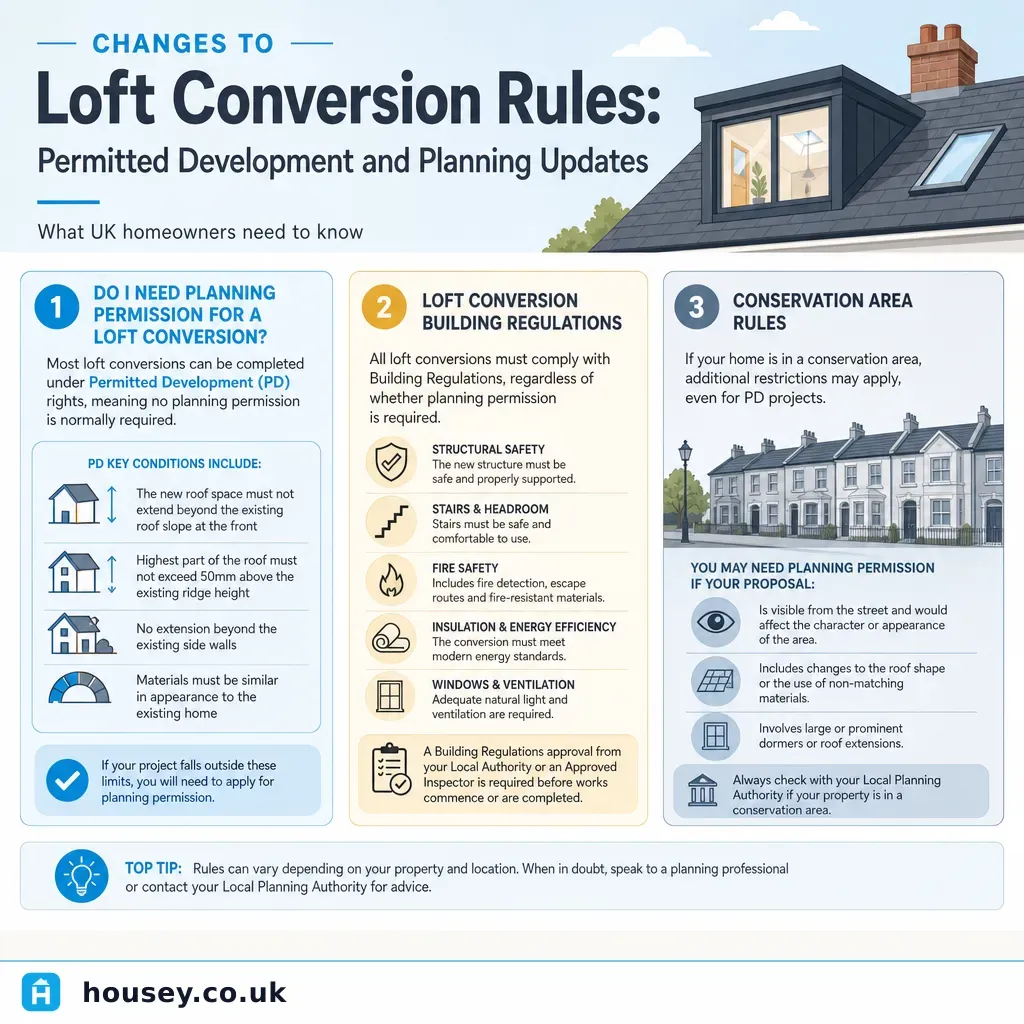
Changes to Loft Conversion Rules: Permitted Development and Planning Updates
In England, most loft conversions on standard houses qualify as Permitted Development under Class B of the GPDO 2015, allowing up to 40 cubic metres (terraced) or 50 cubic metres (detached or semi-detached) without a planning application — if conditions are met.
 Planning & Pre-Build
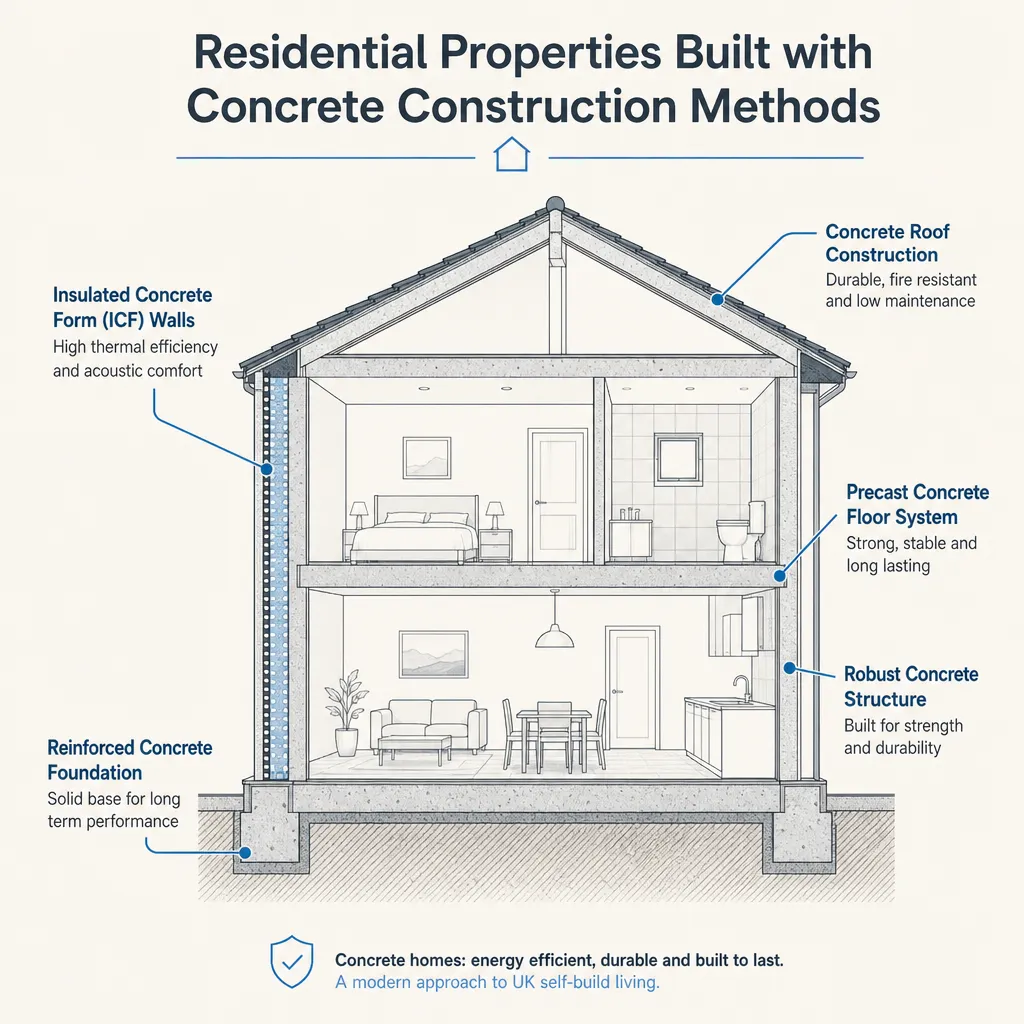
Residential Properties Built with Concrete Construction Methods
UK homes are built using several concrete methods: in-situ cast concrete, precast panel systems, insulating concrete formwork (ICF), and older non-traditional types such as Wimpey No-Fines and Laing Easiform.
 Planning & Pre-Build
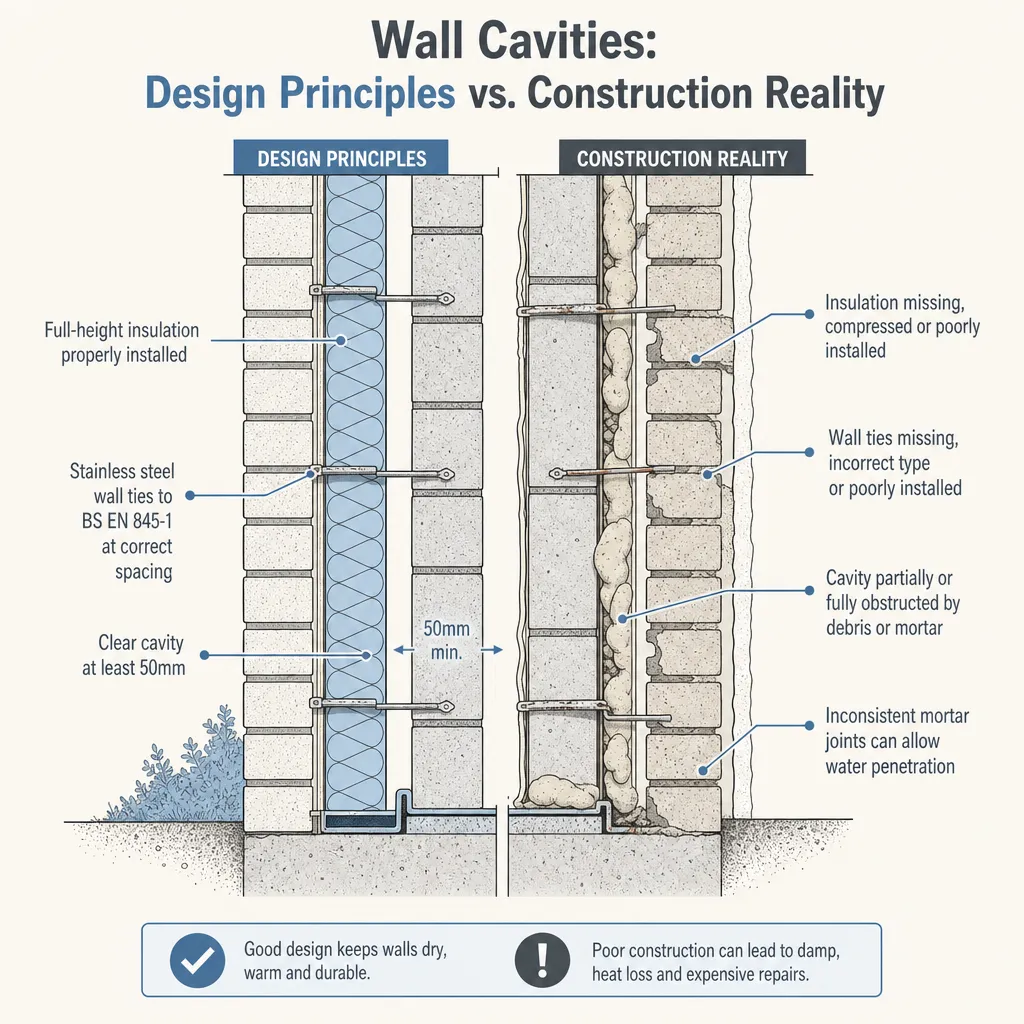
Wall Cavities: Design Principles vs. Construction Reality
A UK cavity wall is designed to resist weather, control heat loss, and structurally link two masonry leaves.
 Planning & Pre-Build
Home Improvements Not Requiring Planning Permission
Many common home improvements in England fall under Permitted Development Rights and do not require a planning application.