Shrub And Bush Removal From Your Garden
By Housey · Last reviewed 11th of May 2026
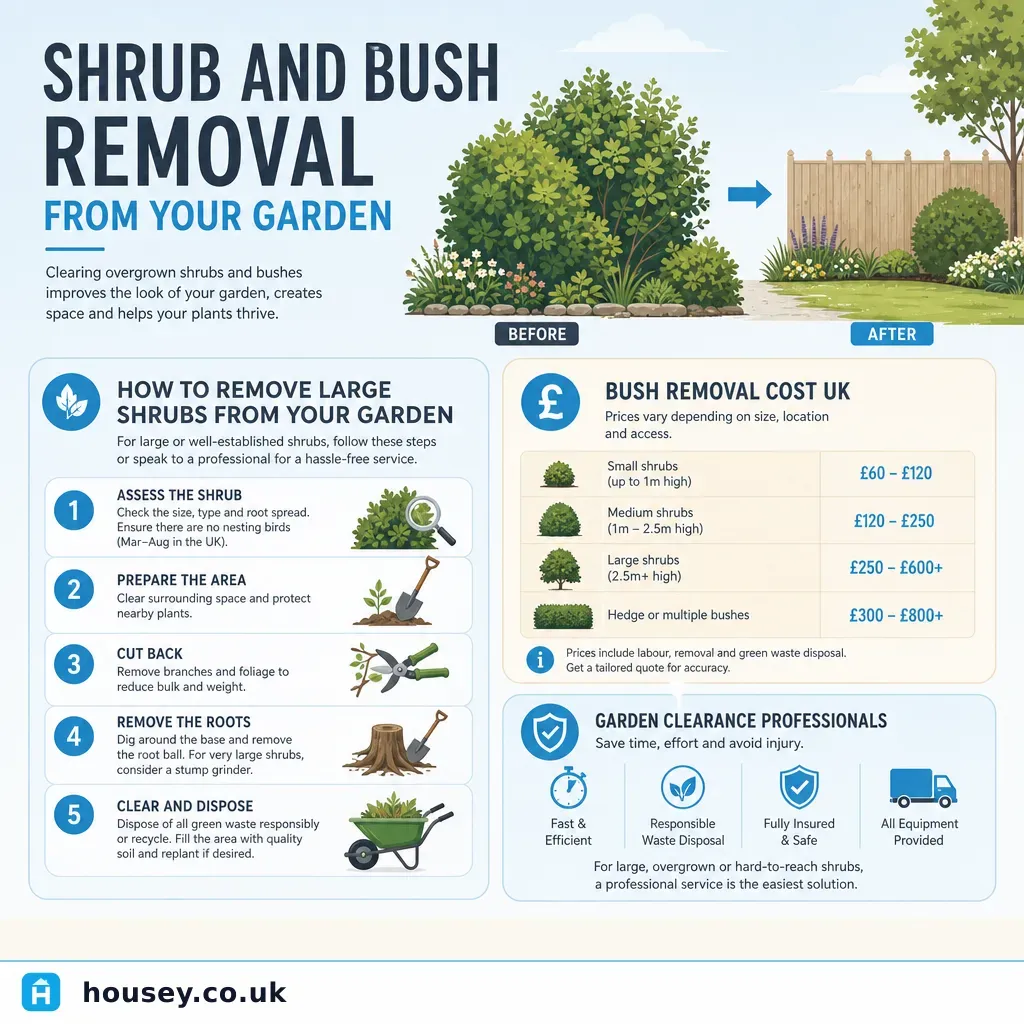
Shrub And Bush Removal From Your Garden
Clearing shrubs and bushes is one of the most common garden tasks that homeowners underestimate. Whether you are reclaiming an overgrown border, preparing ground for a landscaping project, or removing a specimen that has outgrown its space, the challenge varies enormously depending on what you are dealing with. Getting the approach right — including disposal, regulatory checks, and the correct choice of contractor — saves time, money, and potential legal complications.
Key points
- Shrubs with a stem diameter above approximately 50mm at the base often require mechanical removal using tools such as a mattock, stump grinder, or mini-digger.
- Invasive non-native species including Japanese knotweed and Himalayan balsam are controlled under the Wildlife and Countryside Act 1981 — disposing of them in general green waste is a criminal offence.
- Tree Preservation Orders (TPOs) and conservation area regulations can apply to larger shrubs and multi-stemmed trees even in private gardens — check with your local planning authority before removing anything substantial.
- Householders have a Duty of Care under the Environmental Protection Act 1990 to ensure large volumes of garden waste are disposed of by a licensed waste carrier.
- Root systems of large shrubs can extend well beyond the canopy; excavating close to foundations, buried services, or boundary walls without a plan risks structural damage or utility strikes.
DIY or hire a professional?
The right approach depends on the shrub's size, root depth, the number being removed, and what is nearby.
- Choose DIY if the shrubs are small (stem diameter under 30mm), access is open, you have a clear disposal plan, and there are no overhead cables or underground services nearby.
- Hire a landscaper if you are clearing multiple large shrubs from a border, need the ground levelled and replanted afterwards, or want all waste removed and disposed of as part of the job.
- Hire a tree surgeon if a shrub has grown into a multi-stemmed tree-like specimen (particularly leylandii hedges or large rhododendrons), if it is close to a building or boundary structure, or if a TPO may apply.
- Contact your local planning authority if your property is in a conservation area or you believe the shrub may be subject to a TPO — removal may require prior notification or written consent.
- Use a specialist contractor if you suspect the plant is invasive, particularly Japanese knotweed, which requires licensed treatment and controlled waste disposal.
What shrub and bush removal involves
A professional garden clearance typically follows these stages:
- Site assessment — identifying the species, root depth, access constraints, and proximity to structures or underground services.
- Cutting back above-ground growth — stems and branches are cut in manageable sections to reduce bulk before excavation begins.
- Root excavation — depending on species and size, this may involve manual digging, a mattock, or a mini-digger for deeply rooted specimens such as bamboo, elder, or established buddleia.
- Stump removal — stumps can be ground down with a stump grinder, chemically treated, or fully dug out, depending on what is planned for the ground afterwards.
- Site clearance and disposal — material is chipped, bagged, or loaded for disposal by a licensed waste carrier. Always ask your contractor to confirm they hold a current waste carrier licence, verifiable on the Environment Agency public register.
For a single small shrub, steps two and three may take under an hour. A large leylandii hedge or mature rhododendron may take a full day with a crew.
How much does shrub removal cost?
Indicative UK costs, last reviewed 2026-05-11. Costs vary by region, access, plant size, and disposal requirements.
Job type | Approximate cost range |
|---|---|
Single small shrub (manual, no stump grinding) | £50–£150 |
Large single shrub or hedging section | £150–£400 |
Full garden clearance (multiple shrubs) | £300–£1,500+ |
Stump grinding (per stump) | £60–£200 |
Invasive species treatment and removal | £200–£2,000+ depending on scale |
Key cost drivers include plant size and root depth, site access, disposal and tipping fees, whether stump grinding is included, and species — invasive plants attract specialist handling costs under the Environmental Protection Act 1990.
What to check before shrub removal
Homeowner checklist
What to ask before accepting a quote
- What is included — cutting back, root excavation, stump removal, site clearance, and disposal?
- Can you provide your waste carrier licence number?
- What equipment will you use for stump removal, and what will the ground look like on completion?
- Are there additional costs if the root system is deeper or wider than expected?
- Is VAT included in the quoted price?
- What happens if you encounter buried utilities or unexpected obstructions during excavation?
When to get professional help
Hire a professional when:
- The shrub's stem is thicker than about 50mm at the base, or it has become a multi-stemmed specimen.
- The plant is within 3 metres of a building foundation, retaining wall, or boundary structure.
- You suspect Japanese knotweed, giant hogweed, or another invasive species — there are legal disposal obligations.
- Overhead cables or underground services are within the working area.
- You are in a conservation area or a TPO may apply.
- The ground slopes significantly or access requires specialist equipment.
How Housey can help
If you need shrubs and bushes cleared as part of a wider project, local landscapers on Housey can quote for full garden clearance and ground preparation. For large, multi-stemmed shrubs or anything close to structures where a TPO check is needed, qualified tree surgeons are better placed to handle the work safely and advise on any permissions required.
Frequently asked questions
Do I need permission to remove shrubs in my garden?
In most cases, no. However, if your property is in a conservation area or if a Tree Preservation Order applies to a large shrub or multi-stemmed specimen, you may need prior notification or consent from your local planning authority. Check via the council's online planning portal before removing anything substantial.
Can I put shrub cuttings in my green waste bin?
Small quantities of prunings usually go in a garden waste bin, but most local authorities limit material size (typically under 10cm diameter). Large volumes and whole shrubs generally need a skip, licensed waste carrier, or household waste recycling centre. Invasive species such as Japanese knotweed must never go in green waste — specialist disposal is a legal requirement.
How long does shrub removal take?
A single small shrub typically takes 30 minutes to a couple of hours. A large established shrub or section of mature hedging can take half a day with a two-person crew. Full garden clearance involving multiple large shrubs often spans a full day or more depending on scale, access, and whether stump grinding is included.
Will removing a shrub damage my lawn or patio?
Stump grinding leaves a shallow depression that can be backfilled with topsoil and turfed. Full root excavation disturbs a larger area. A professional contractor should level and reinstate the ground, but agree the expected finish standard before work begins to avoid surprises.
Sources and further reading
- Tree Preservation Orders and trees in conservation areas — GOV.UK
- Wildlife and Countryside Act 1981 — legislation.gov.uk
- Prevent the spread of invasive non-native plants — GOV.UK
- Duty of care for waste: code of practice — GOV.UK / Environment Agency
Useful next reads
 Improvement & Build
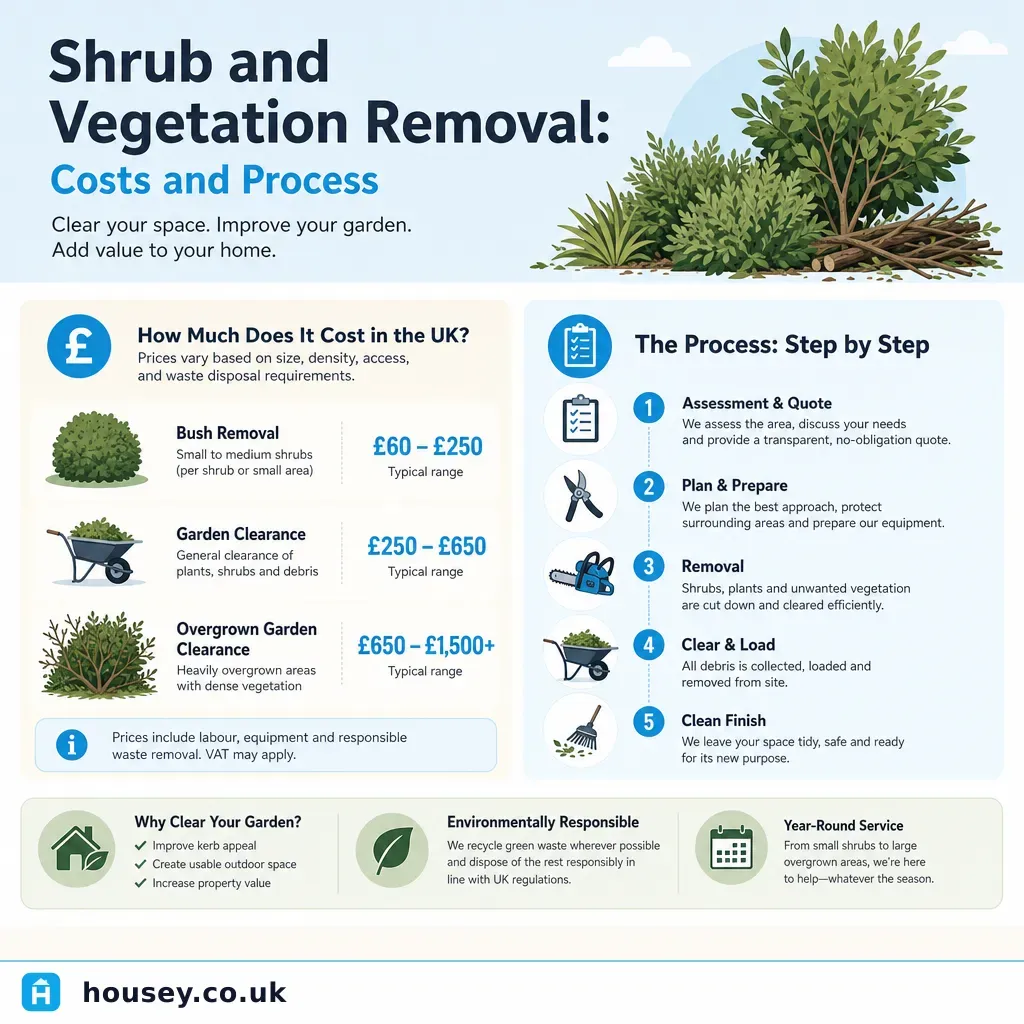
Shrub and Vegetation Removal: Costs and Process
Shrub and vegetation removal costs £50–£2,500 or more depending on area size, species involved, and whether stumps need grinding.
 Improvement & Build
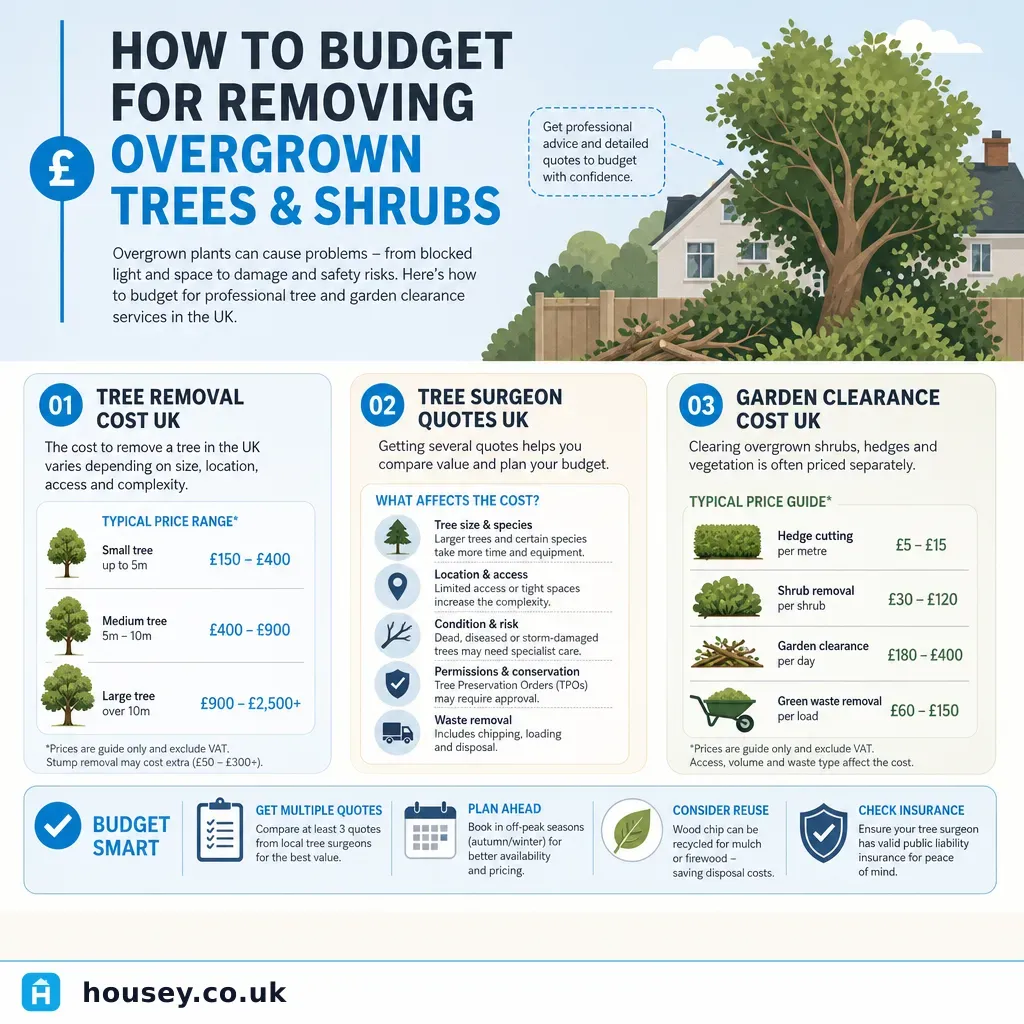
How to budget for removing overgrown trees and shrubs
Removing overgrown trees and shrubs in the UK typically costs between £200 and £2,500 depending on tree size, access, and disposal method.
 Improvement & Build
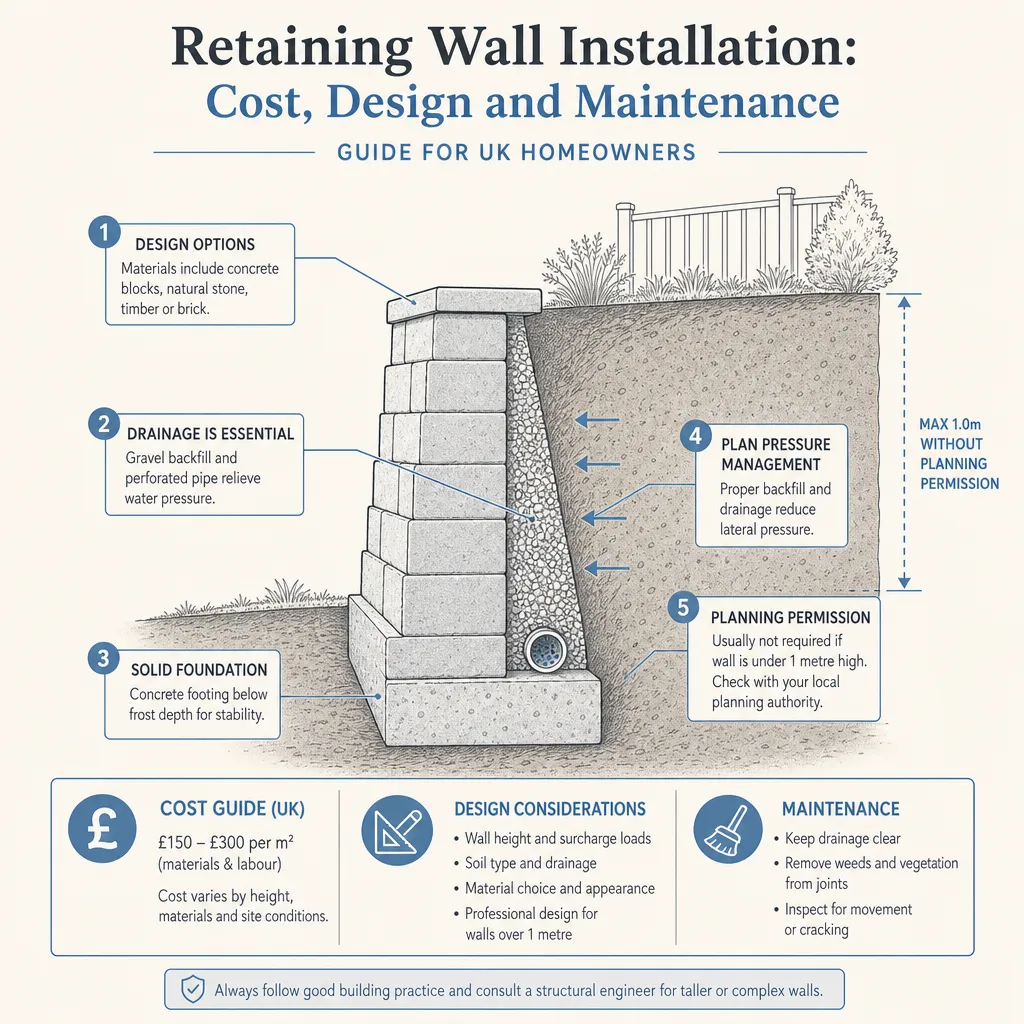
Retaining Wall Installation: Cost, Design and Maintenance
A retaining wall holds back soil on a sloped or banked site.
 Improvement & Build
Fixing Leaking Back Doors and Water Ingress
Most leaking back doors in UK homes fail at one of three points: the threshold or door sill joint, the frame-to-masonry mastic seal, or the door weatherstrip.
 Improvement & Build
Who Provides House Demolition Services
House demolition in the UK is carried out by specialist demolition contractors, often members of the National Federation of Demolition Contractors (NFDC).