Comparing skylights with solar tube lighting systems for natural illumination
By Housey · Last reviewed 1st of June 2026
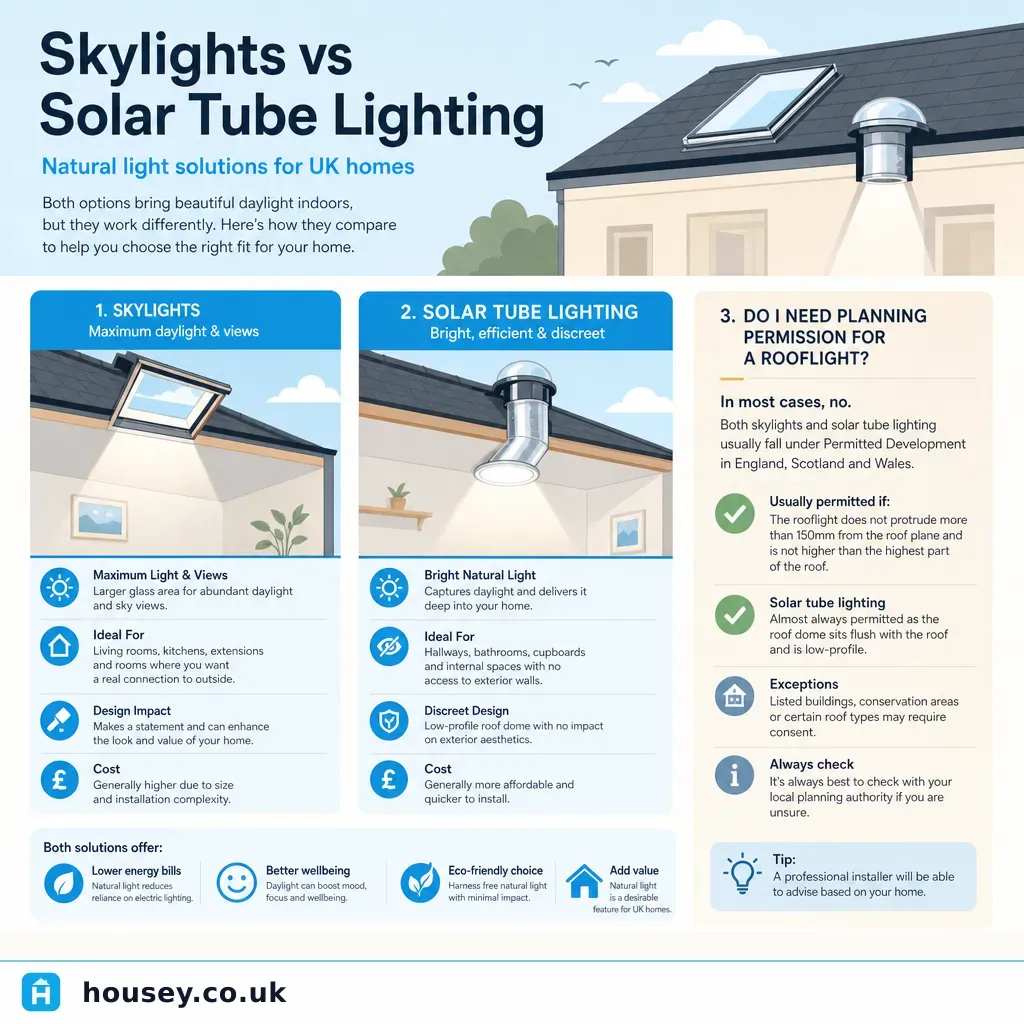
Comparing skylights with solar tube lighting systems for natural illumination
Dark rooms are a common challenge in UK homes — particularly north-facing extensions, internal bathrooms, and ground-floor rooms beneath upper storeys. When adding a conventional window isn't feasible, many homeowners turn to roof-based daylighting: either a traditional skylight (including rooflights and roof windows) or a solar tube system (also called a tubular daylighting device, or TDD). Choosing between them without understanding the practical differences can mean an expensive installation that fails to deliver the light you were expecting.
Key points
- Roof windows that protrude no more than 150mm above the existing roof slope usually fall within permitted development in England; solar tubes have an even smaller roof footprint and pose minimal planning risk — but listed buildings and conservation areas require consent regardless.
- Solar tubes can route daylight through a ceiling void up to approximately 6 metres from the roof dome to the ceiling diffuser, making them accessible for rooms that don't sit directly beneath the roof.
- A fixed flat-glass rooflight typically transmits around 70–90% of incident light; modern solar tubes using highly polished aluminium tubing achieve comparable lumen output per unit of roof aperture in many conditions.
- Openable skylights can contribute to Part F (Ventilation) Building Regulations compliance; solar tubes are sealed units and provide no ventilation.
- Indicative UK fitted costs: skylights typically £800–£2,500 per unit; solar tube systems typically £500–£1,200 — last reviewed 2026-06-01; costs vary significantly by product specification and roof type.
How skylights and solar tubes work
A skylight — including Velux-style roof windows, flat rooflights, and pitched glazed units — creates an opening in the roof plane glazed with toughened or laminated glass. Light enters directly, and openable versions provide ventilation as well as daylight.
A solar tube (or tubular daylighting device) uses a small dome mounted on the roof surface to capture daylight, which travels down a highly reflective metal tube — usually 250–550mm in diameter — to a circular diffuser fitted flush in the ceiling below. The tube can navigate around rafters and joists, making it viable even where the room doesn't sit directly beneath the roof covering.
UK products include Velux Sun Tunnels, Solatube, and ODL SOLAR. Larger tube diameters deliver more light but require more space in the ceiling void.
Comparing key factors
Factor | Skylight / rooflight | Solar tube (TDD) |
|---|---|---|
Light output | High — depends on unit size, orientation, and glazing specification | Moderate to high — depends on tube diameter and length |
Installation complexity | Higher — structural opening in roof required | Lower — small dome on roof, tube routed through ceiling void |
Typical installation time | 1–3 days | 3–6 hours |
Ventilation | Yes (openable types) | No — sealed unit |
Planning permission risk | Low under permitted development; higher in listed buildings and conservation areas | Very low — small roof footprint |
Suitable roof types | Pitched and flat (different product ranges) | Pitched most common; flat-roof adaptors available |
Best for | Living rooms, kitchens, extensions with direct roof access | Bathrooms, hallways, landings, rooms under a loft |
Indicative fitted cost | £800–£2,500+ | £500–£1,200 |
Contributes to Part F ventilation | Yes (openable types) | No |
Condensation risk | Low with modern sealed double- or triple-glazed units | Very low |
Indicative UK costs, last reviewed 2026-06-01. Costs vary by product, roof type, access, and region. Obtain at least three quotes.
Which room suits which option?
Living rooms and open-plan kitchens generally benefit most from a full skylight or rooflight. A larger glazed area provides more usable daylight and, with an openable unit, summer ventilation. South- or east-facing orientations maximise morning and daytime light; a north-facing rooflight gives consistent, glare-free illumination — useful for studios or home offices.
Internal bathrooms and windowless WCs are well-matched with solar tubes. A 250–350mm diameter tube typically delivers enough daylight to reduce reliance on artificial lighting for much of the day, with a minimal roof footprint and no structural alteration required.
Hallways and landings often sit below a loft space, making them natural candidates for solar tubes. The tube can be routed through the ceiling void without needing the loft to be cleared.
Rooms with a flat roof directly above can work with either system, though a solar tube on a flat roof requires a specific low-profile adaptor kit — check manufacturer compatibility before purchasing.
Which option should you choose?
- Choose a skylight or rooflight if you need maximum light output, want ventilation as well as light, the room sits directly under the roof slope, or you are already planning structural works that open up the roof.
- Choose a solar tube if the room doesn't sit directly under the roof, the roof aperture needs to be minimal (for example, in a conservation area), the budget is tighter, or a fast low-disruption installation is a priority.
- Consult your local planning authority if your property is listed, in a conservation area, or subject to an Article 4 direction — permitted development rights may be restricted under the Town and Country Planning (General Permitted Development) (England) Order 2015.
- Speak to an energy-efficiency consultant if you are combining daylighting improvements with insulation, ventilation, or heating upgrades, to ensure the works don't introduce moisture or thermal bridging problems.
Planning permission and Building Regulations
Most domestic rooflight and skylight installations fall within permitted development in England, provided they do not protrude more than 150mm above the existing roof slope and sit below the ridge height. However, permitted development rights are removed for listed buildings and may be restricted in conservation areas or where an Article 4 direction applies. Rooflights on flats and maisonettes are also generally excluded from permitted development. Always confirm your position with the local planning authority before ordering.
Building Regulations approval is generally required where a structural opening is made (Part A — Structure) and where the new glazing must meet thermal performance standards under Approved Document L. Solar tubes typically do not create a structural opening and often do not require Building Regulations approval, but confirm this with your installer based on the size and specification of the unit.
When to get professional help
All roof work involves working at height and should be carried out by a competent roofer or installer. Additionally, seek professional advice when:
- The roof structure needs any cutting or alteration — a structural engineer may need to confirm load capacity for larger rooflights.
- You are unsure whether permitted development applies to your property.
- The property is listed or in a conservation area.
- Multiple rooflights are planned across the roof slope.
- You notice dampness, rotten timbers, or damaged felt during the preliminary inspection — address these defects before fitting any glazing unit.
How Housey can help
If you are comparing natural lighting options or planning a daylighting upgrade, Housey can connect you with vetted window and door installers who carry out skylight and rooflight installations, and energy-efficiency consultants who can advise on how daylighting fits into a broader retrofit plan. Solar surveys can also help you understand your roof's sun exposure and orientation before committing to a product.
Frequently asked questions
Do solar tubes work on cloudy days?
Solar tubes capture diffuse daylight as well as direct sunlight, so they function on overcast days — which are frequent across much of the UK. Output is lower in winter and on north-facing roofs, but modern systems with highly polished aluminium tubing perform better in low-light conditions than older designs.
Do I need planning permission for a rooflight in England?
Most rooflights fall within permitted development in England, provided they do not protrude more than 150mm above the existing roof slope and are not higher than the ridge. Permitted development does not apply to listed buildings, and may be restricted in conservation areas or where an Article 4 direction has removed those rights. Check with your local planning authority if you are unsure.
Can a solar tube replace a bathroom extractor fan?
No. Solar tubes are sealed units and provide no ventilation. If your bathroom requires mechanical extraction under Part F of the Building Regulations, a separate extractor fan is still required. Many bathroom upgrades combine a solar tube for daylight with a discreet inline fan for ventilation.
How long does a solar tube installation take?
Most solar tube installations take between three and six hours for a competent installer. No significant structural work is involved, and the ceiling diffuser is fitted flush with existing plasterboard. This makes it considerably less disruptive than a full rooflight installation, which typically takes one to three days.
Are rooflights more energy-efficient than solar tubes?
Solar tubes have a negligible heat loss impact because the roof aperture is very small. Modern rooflights with triple glazing and low-emissivity coatings can achieve U-values below 1.0 W/m²K, so heat loss from a well-specified rooflight is manageable — but any glazed roof opening loses more heat than an insulated roof section. Orientation, specification, and size all matter. An energy-efficiency consultant can model the trade-off for your specific property.
Sources and further reading
- Permitted development rights for householders: technical guidance — GOV.UK
- Approved Document L: Conservation of fuel and power — GOV.UK
- Approved Document F: Ventilation — GOV.UK
- Home energy guidance — Energy Saving Trust
Useful next reads
 Energy & Retrofit
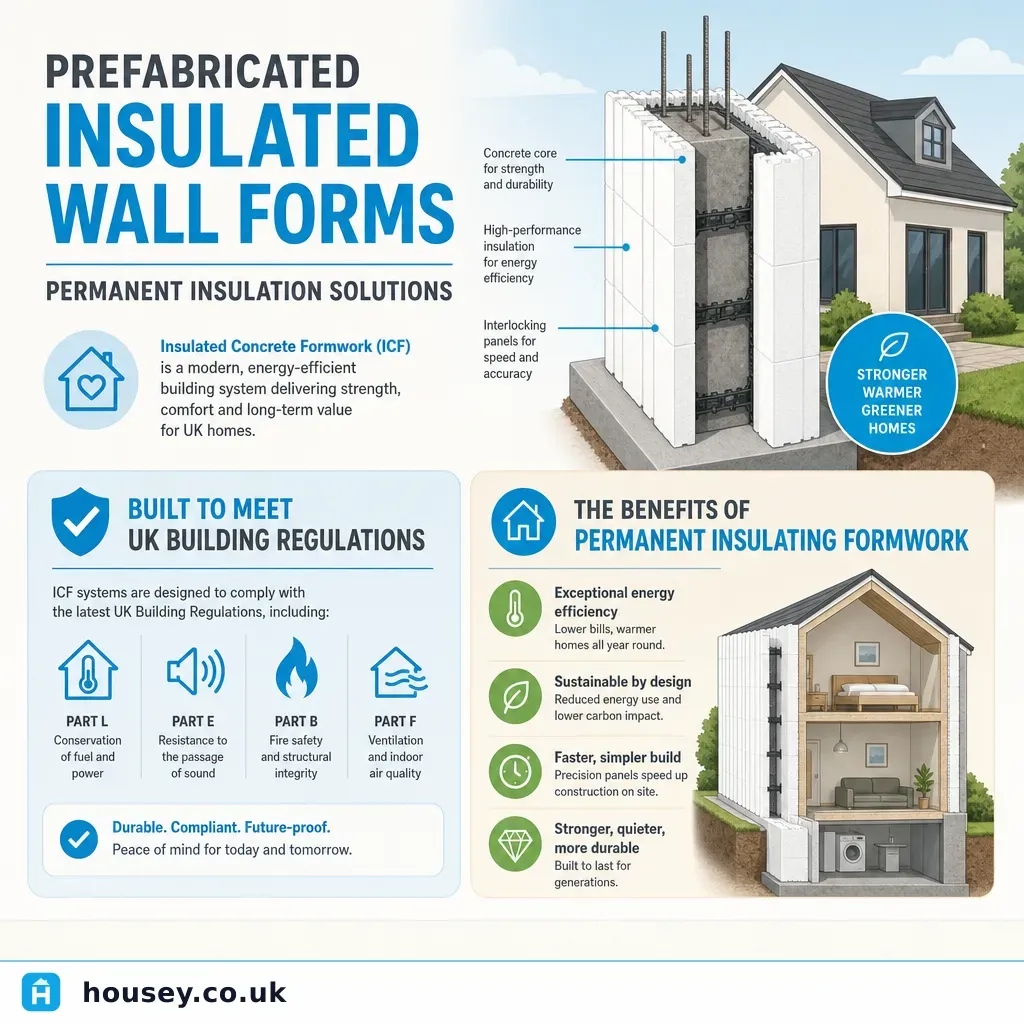
Prefabricated Insulated Wall Forms: Permanent Insulation Solutions
Prefabricated insulated wall forms — including ICF and SIPs systems — deliver high thermal performance by combining permanent insulation with structural concrete or timber in a single wall assembly.
 Energy & Retrofit
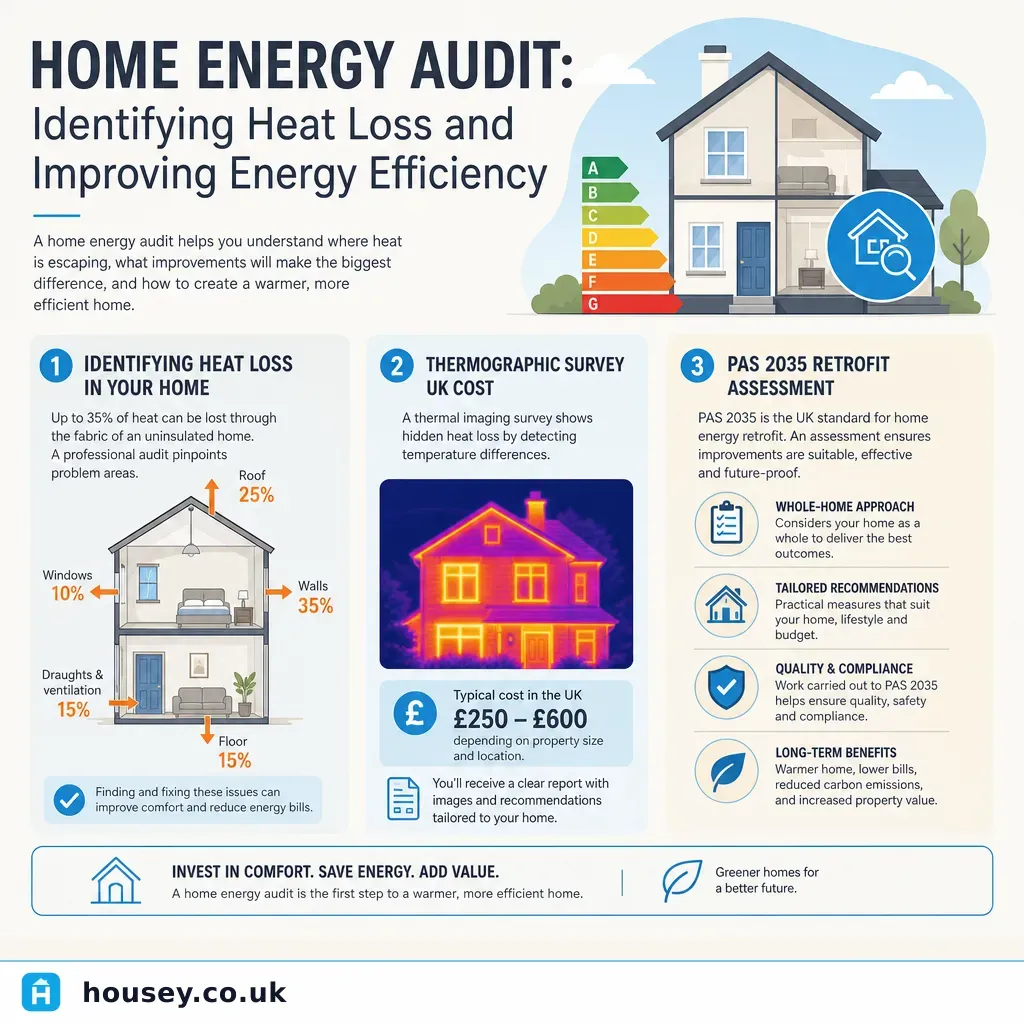
Home Energy Audit: Identifying Heat Loss and Improving Energy Efficiency
A home energy audit is a structured assessment of where your property loses heat and how efficiently it uses energy.
 Energy & Retrofit
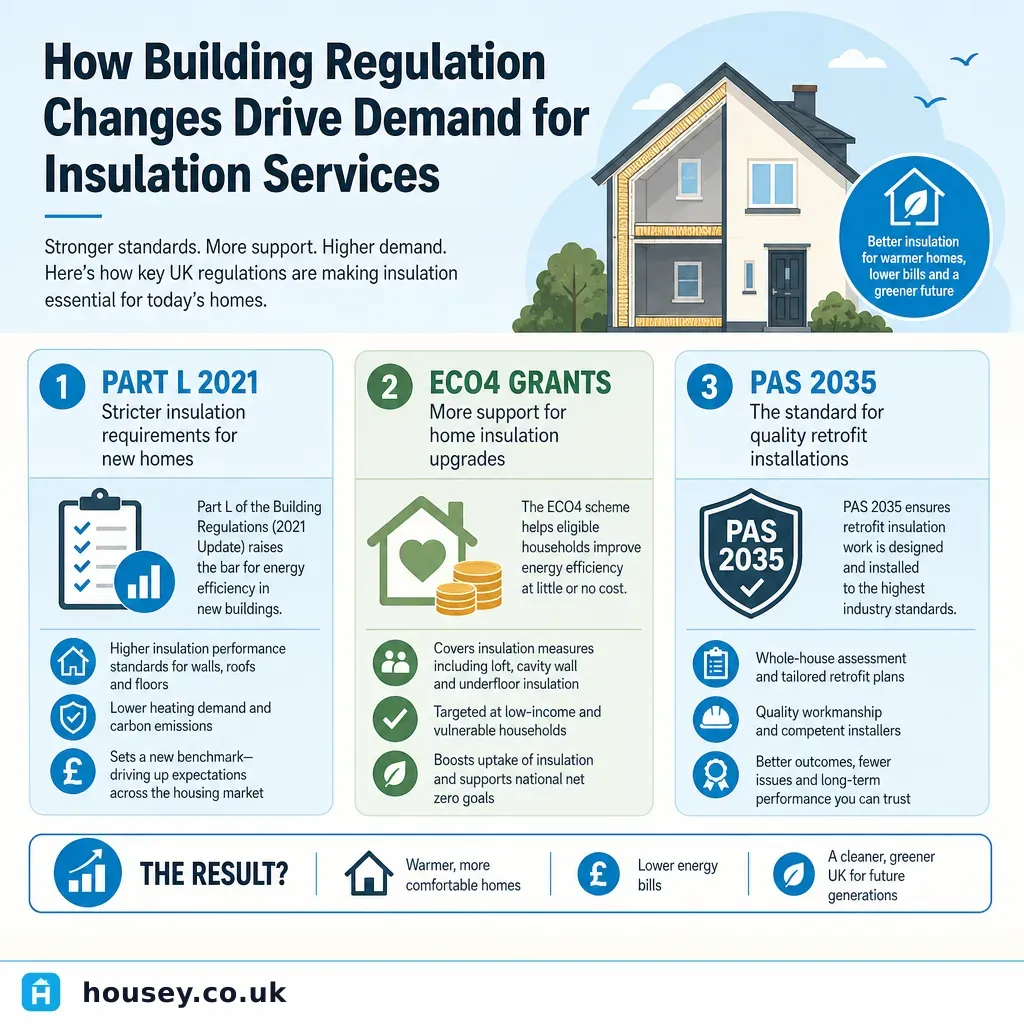
How Building Regulation Changes Drive Demand for Insulation Services
Building regulation changes — including 2021 updates to Approved Document L, ECO4 funding obligations, and proposed MEES tightening — are creating sustained demand for insulation services across the UK.
 Energy & Retrofit
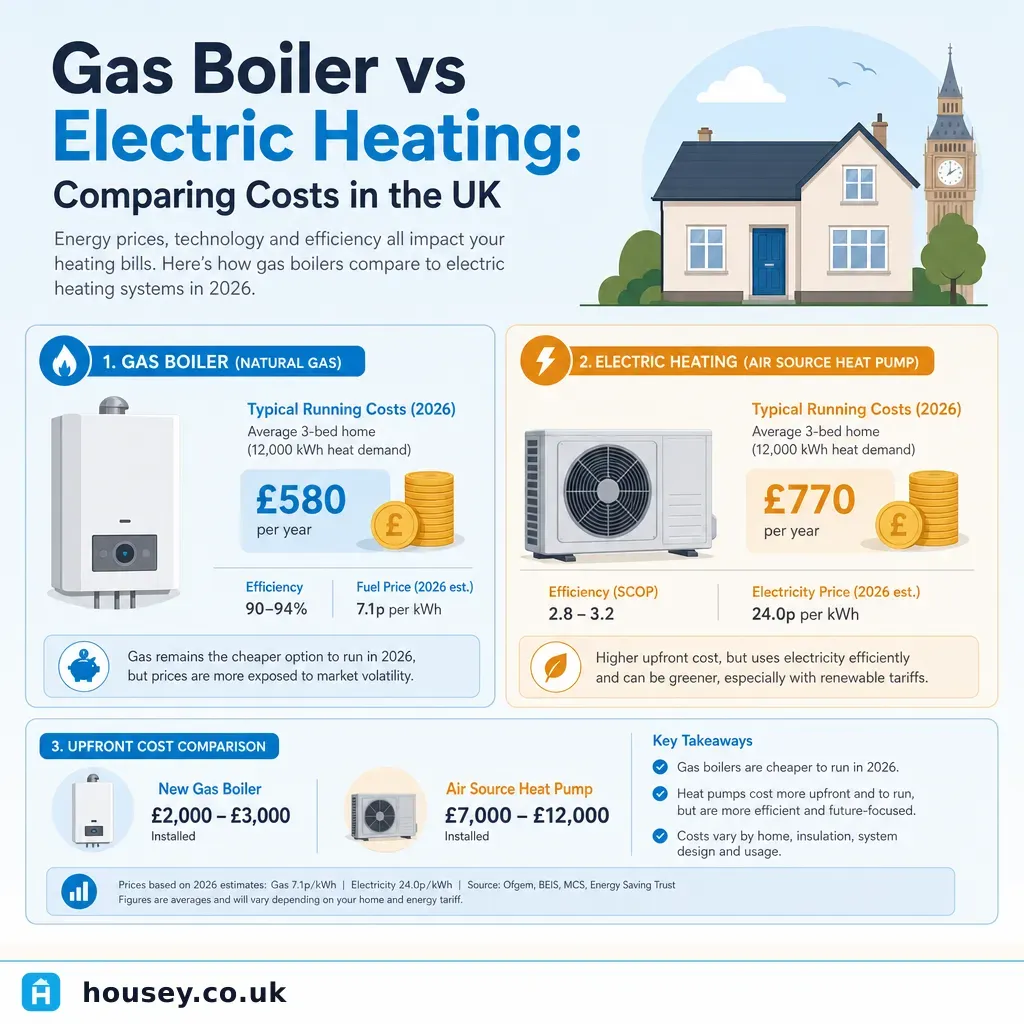
Gas Boiler vs Electric Heating: Comparing Costs in the UK
Gas boilers currently cost around 6.
 Energy & Retrofit
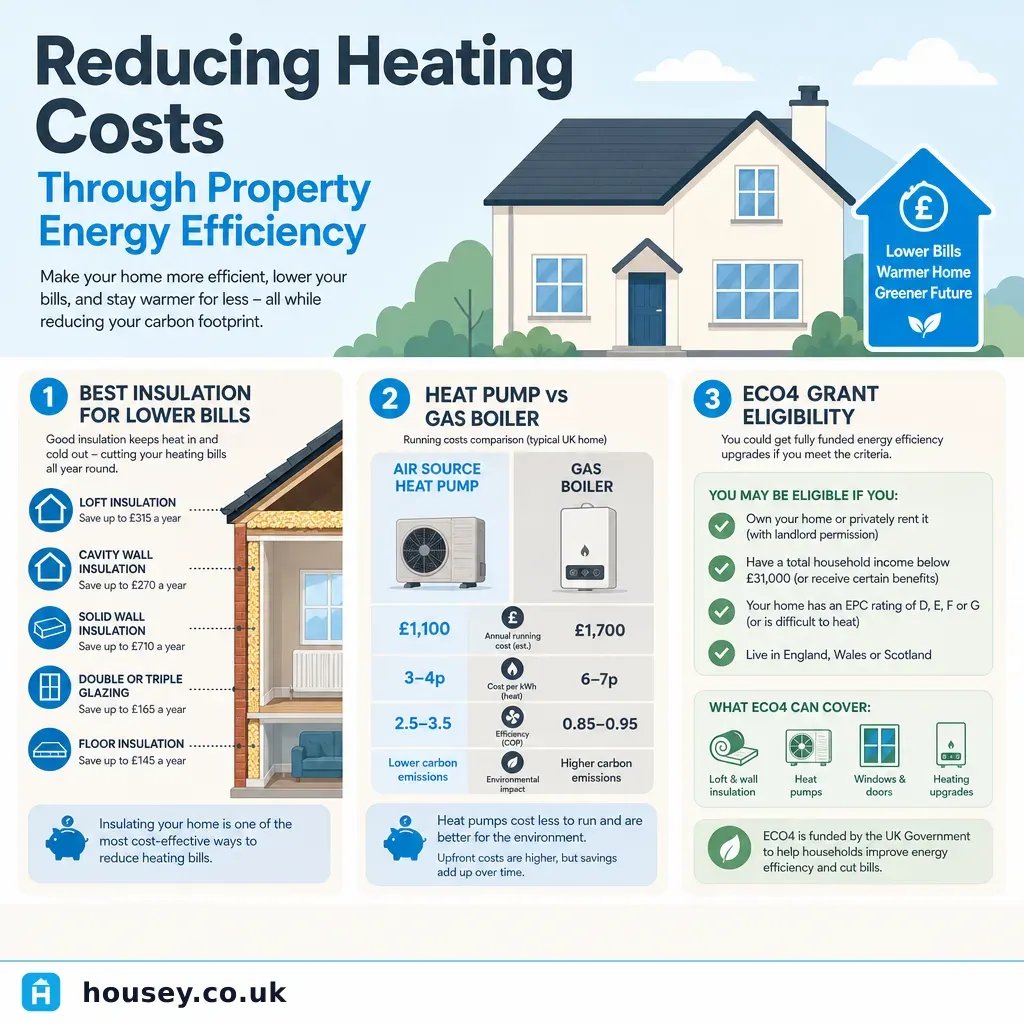
Reducing Heating Costs Through Property Energy Efficiency
Reducing heating costs starts with identifying where heat is lost — typically walls (30–35%), roof (20–25%), and windows.