Slab Door vs Pre-Hung Door: Which Interior Door Option Suits Your Home?
By Housey · Last reviewed 1st of June 2026
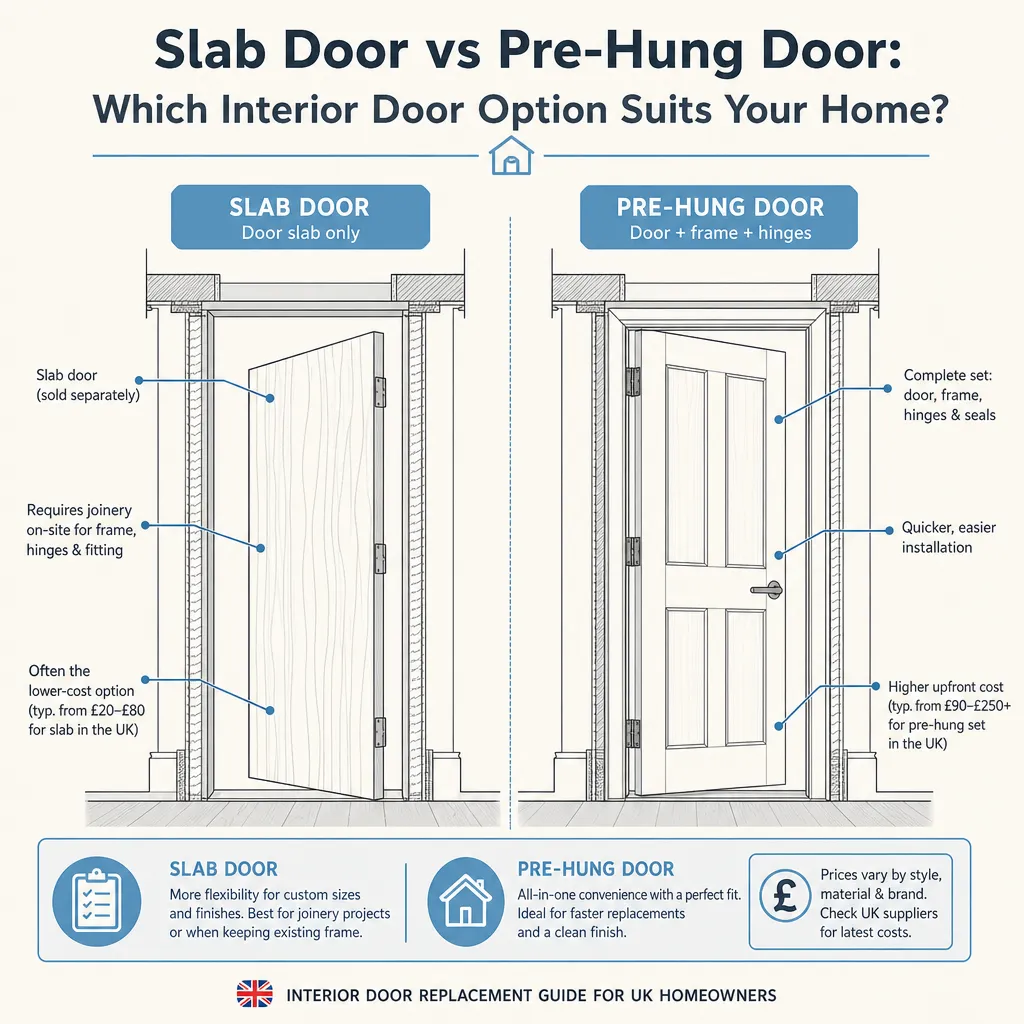
Slab Door vs Pre-Hung Door: Which Interior Door Option Suits Your Home?
Replacing an interior door in a UK home involves choosing between two supply formats: a slab door (door leaf only) or a pre-hung door set (door, frame, and hinges as a complete unit). The decision affects how much carpentry is needed on site, whether the existing frame can be reused, and — critically — whether the installation can meet Building Regulations where a fire door is required. Getting this choice wrong can mean a door that does not hang true, an unexpected bill for additional joinery, or a non-compliant fire door in a safety-critical location.
Key points
- A slab door is the door leaf only; it has no frame or hinges and must be fitted into an existing or separately supplied frame by a joiner on site.
- A pre-hung door set (also called a door lining set) arrives with the door leaf already mortised onto hinges within a complete frame assembly, ready to install into a rough opening.
- Under Building Regulations Part B (Fire Safety), an FD30 fire door is required between an integral garage and habitable rooms in a dwelling; a pre-hung FD30 door set is the most reliable way to achieve a fully certified assembly.
- Standard UK interior door heights are 1981 mm (6 ft 6 in) and 2040 mm (6 ft 8 in), with widths from 610 mm to 838 mm, as set out in BS 4787 for timber door sets.
- Part M of the Building Regulations requires a minimum 775 mm clear opening width for new dwellings and accessible extensions — check rough opening dimensions against the door and frame specification before purchasing.
What is a slab door?
A slab door is the door panel alone — no hinges, no frame, no door stop. A joiner will check the existing frame for square, plumb, and level; measure the rebate depth and clear opening; trim the slab to achieve correct clearances (typically 2–3 mm on hinge and latch sides, 6–10 mm at the bottom for floor coverings); cut hinge recesses; fit the ironmongery; and hang the door. Slab doors are available in hollow-core, solid-core, MDF, timber, glazed, and fire-rated variants. The unit cost is lower than a pre-hung set, and installation is straightforward where the existing frame is sound.
What is a pre-hung door?
A pre-hung door (or door lining set) is the door leaf already fitted onto hinges within a complete frame. The unit installs into a rough opening as a single assembly and typically includes the door leaf with hinges already mortised, frame or lining (head and two jambs), door stop, and sometimes architrave, threshold, and intumescent or smoke seals. Pre-hung sets reduce on-site carpentry because the door-to-frame relationship is factory-set. The unit cost is higher, and the frame dimensions must suit the rough opening.
Comparison: slab door vs pre-hung door set
| Slab door | Pre-hung door set |
|---|---|---|
Unit cost | Lower (door leaf only) | Higher (complete assembly) |
Installation labour | More on-site carpentry | Less on-site fitting |
Best for | Sound existing frame; like-for-like replacement | Damaged or absent frame; new opening; fire door requirement |
Fire door compliance | More complex — correct frame, hinges, and seals required separately | Simpler — pre-tested certified assembly available |
Typical total fitted cost (indicative, June 2026) | £130–£350 supply and fit | £250–£600+ supply and fit |
Indicative UK costs, last reviewed 2026-06-01. Costs vary by specification, material, fire rating, and region. Obtain at least two quotes.
Which option should you choose?
- Choose a slab door if your existing frame is solid, level, and plumb; you want a like-for-like replacement; no fire door is required; and you want to keep unit costs down.
- Choose a pre-hung door set if the existing frame is damaged, bowed, or out of square; you are creating a new opening; a certified FD30 fire door assembly is required; or you want a factory-finished unit with consistent tolerances.
- Check Building Regulations Part B if the door separates a garage from the house, forms part of an escape route, or is in a flat with fire separation requirements — the complete assembly, not just the leaf, must meet the relevant fire door standard.
- Check Part M if the door is in a new-build or accessible extension — the 775 mm minimum clear opening width requirement applies.
- Ask a qualified joiner or building control officer if you are unsure whether the existing frame is reusable or if any type of fire door is required.
Fire doors: why the assembly matters
Where Building Regulations require an FD30 fire door — typically between an integral garage and habitable rooms, or in HMOs and certain flats — the door leaf and the frame must form part of a tested and certified assembly.
A slab fire door leaf fitted into a non-tested frame with incorrectly specified hinges or missing intumescent seals will not reliably achieve FD30 performance, even if the leaf carries a fire-door label. The complete installation must match the specification under which the assembly was tested.
For fire door applications, a pre-hung FD30 door set certified under a recognised scheme such as BWF-CERTIFIRE or an equivalent UKAS-accredited body is the most auditable compliance route. Your installer should confirm that hinges, seals, and any required closer match the certification requirements exactly.
Homeowner checklist before buying an interior door
- Measure the opening accurately: height, width at top, middle, and bottom (openings vary, especially in older properties)
- Check the frame: is it plumb, level, and free from rot or damage?
- Confirm the door height required: 1981 mm, 2040 mm, or non-standard
- Confirm whether Building Regulations require a fire door in this location
- Check the floor covering height to determine threshold clearance needed
- Decide the swing direction — which side the hinges are on, and whether the door opens into or away from the room
- If fitting a slab, check whether existing hinge positions match; new slabs may need re-mortising if positions differ
When to get professional help
A competent joiner can install most interior slab or pre-hung doors. Seek professional advice where:
- The application requires a fire door — incorrect installation has direct fire safety implications
- The opening is structural and a wall has been altered — a structural engineer should already have signed off the opening
- The opening is non-standard and requires bespoke joinery
- You are replacing doors in an HMO, rental property, or flat with fire compliance obligations
How Housey can help
Housey connects homeowners with vetted local window and door installers who can advise on the right door format, assess whether an existing frame is reusable, and supply and fit doors to the correct standard — including certified fire-rated door sets where Building Regulations apply.
Frequently asked questions
Can I fit a slab door myself?
Fitting a slab door requires basic carpentry skills — measuring, planing, chiselling hinge recesses, and fitting ironmongery. An experienced DIYer can manage a like-for-like replacement in a sound frame. Fire doors should always be fitted by someone familiar with the compliance requirements, and a professional joiner will generally produce a better result.
Does changing an interior door require planning permission?
No. Internal alterations including door replacements are permitted development and do not require planning permission. Building Regulations may apply only where fire separation is required under Part B — but there is no need to notify the local planning authority for a standard interior door change.
What is the standard interior door size in the UK?
The most common UK interior door height is 1981 mm (6 ft 6 in). Standard widths are 610 mm, 686 mm, 762 mm, and 838 mm, as referenced in BS 4787. Non-standard openings — common in older and period properties — may require bespoke or trimmed doors.
How do I know if I need a fire door?
Under Building Regulations Part B, FD30 fire doors are required between integral garages and habitable rooms, in the common areas of HMOs, and between escape routes and accommodation in certain flats. If unsure, consult Approved Document B or speak to your local building control officer before purchasing.
Sources and further reading
- GOV.UK — Approved Document B: Fire Safety — GOV.UK
- GOV.UK — Approved Document M: Access to and use of buildings — GOV.UK
- BS 4787: Internal and external wood doorsets — BSI Group
- BWF-CERTIFIRE — Fire door certification — British Woodworking Federation
- Planning Portal — Internal works — Planning Portal
Useful next reads
 Improvement & Build
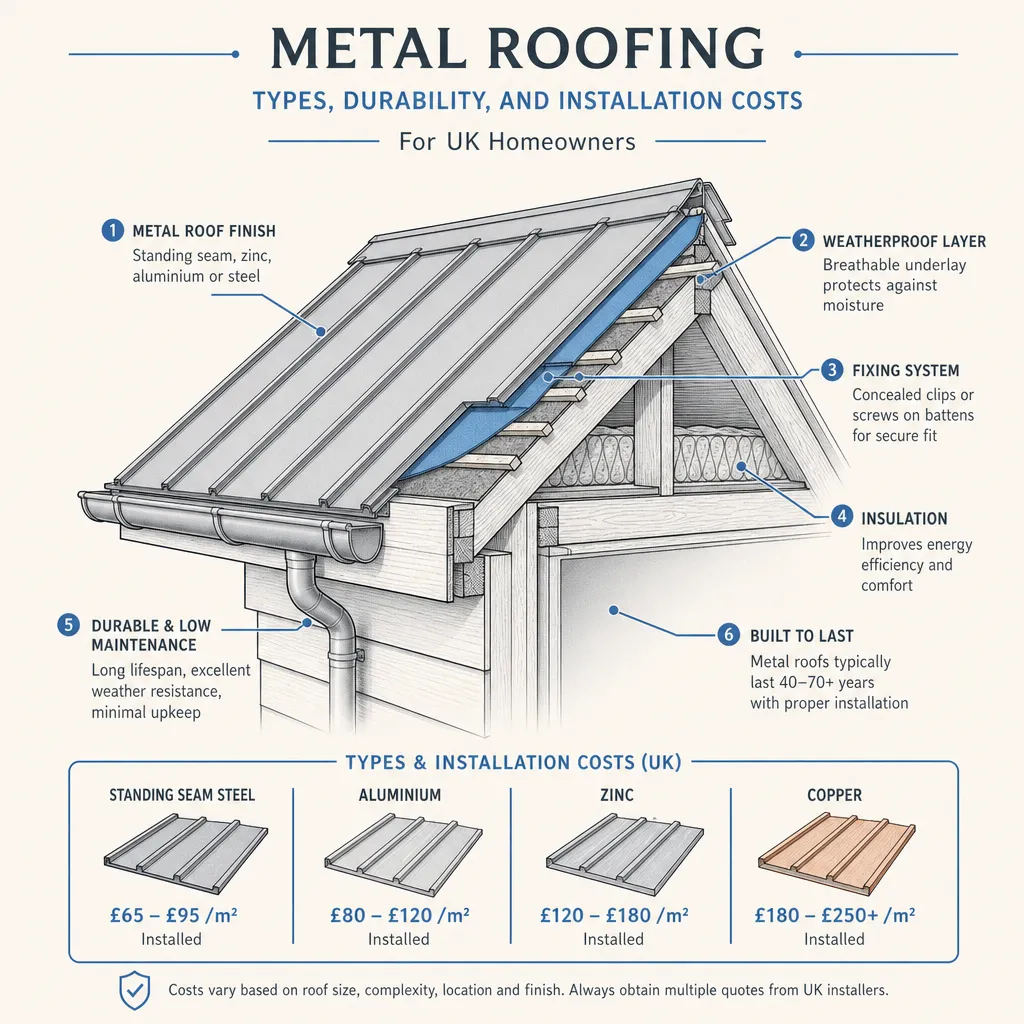
Metal Roofing: Types, Durability, and Installation Costs
Metal roofing in the UK includes standing seam, corrugated sheet, and metal tile systems in steel, aluminium, zinc, or copper.
 Improvement & Build
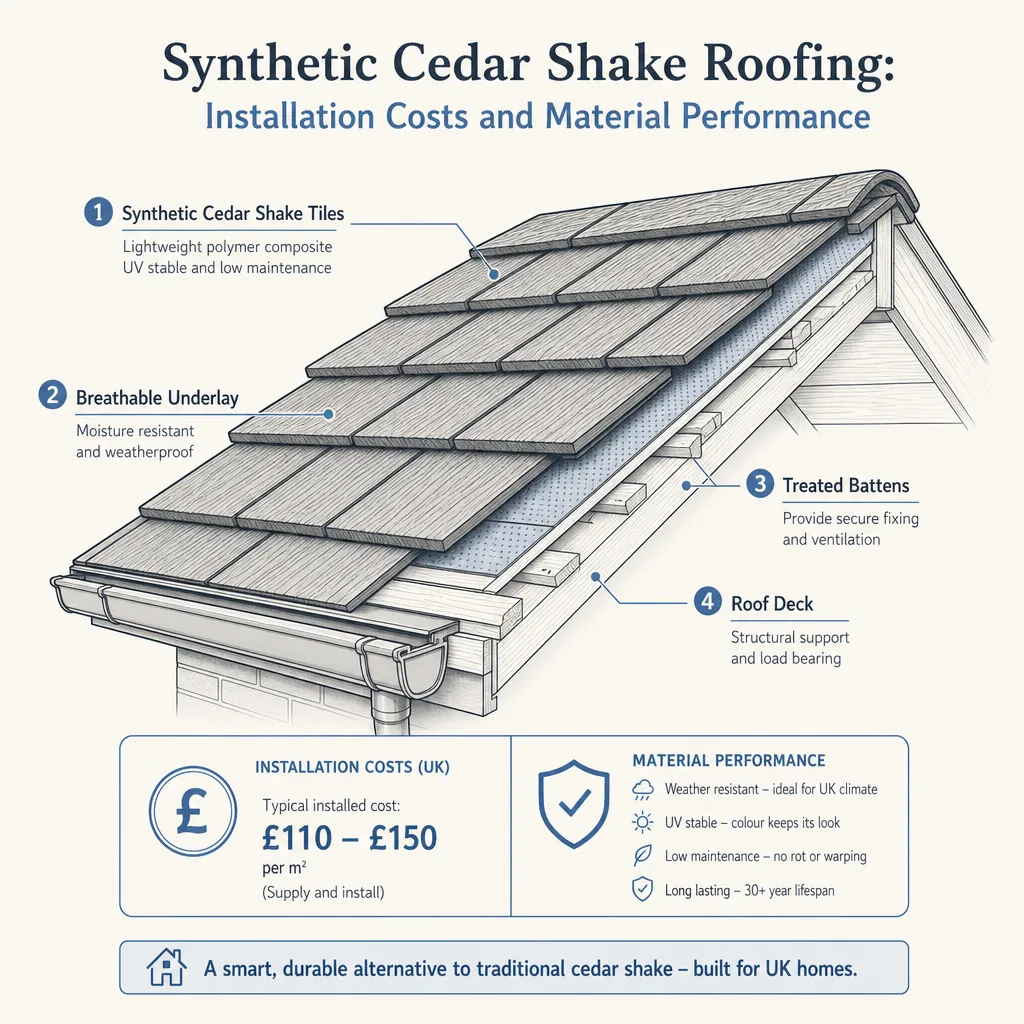
Synthetic Cedar Shake Roofing: Installation Costs and Material Performance
Synthetic cedar shake roofing uses polymer composite, rubber, or fibre-cement tiles to replicate the look of natural cedar wood shingles.
 Improvement & Build
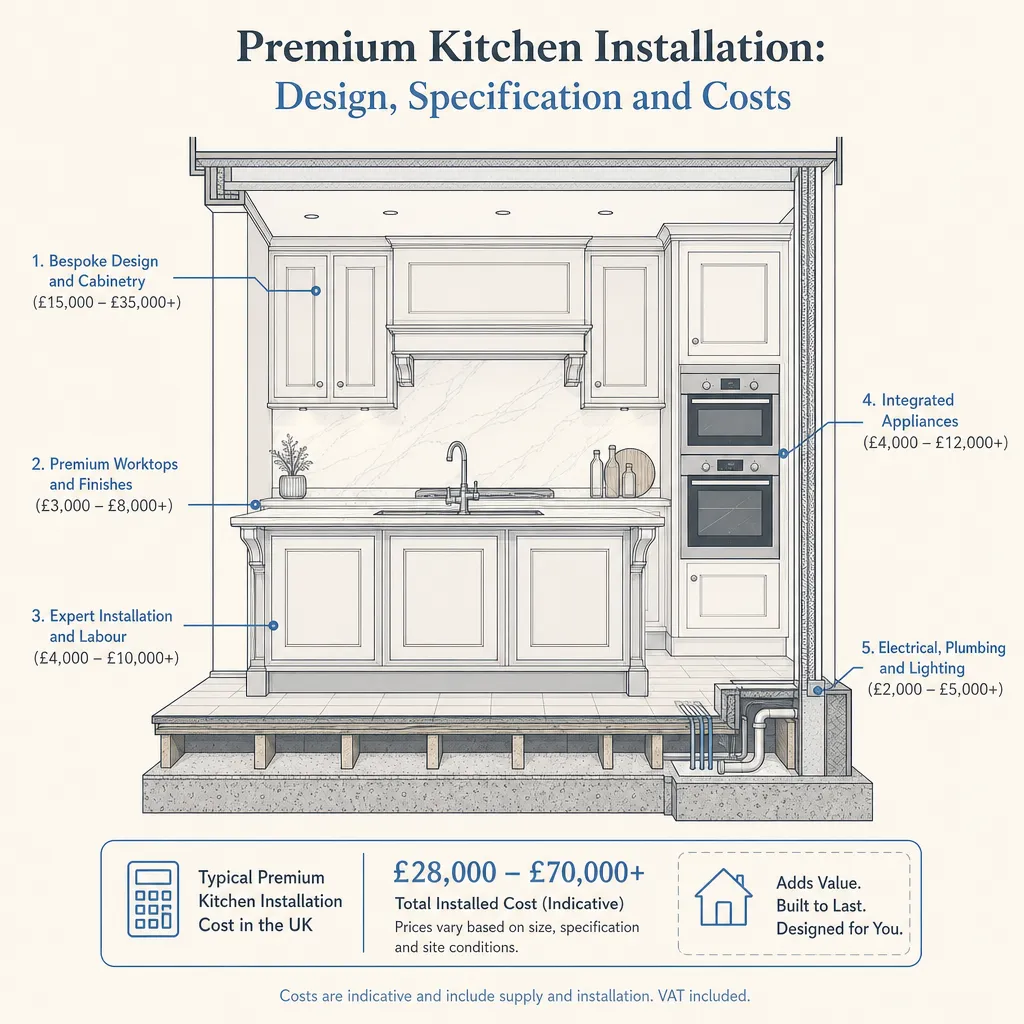
Premium Kitchen Installation: Design, Specification and Costs
A premium kitchen in the UK typically costs £20,000–£80,000 or more installed, depending on cabinetry specification, worktop material, appliance brands, and whether structural changes are needed.
 Improvement & Build
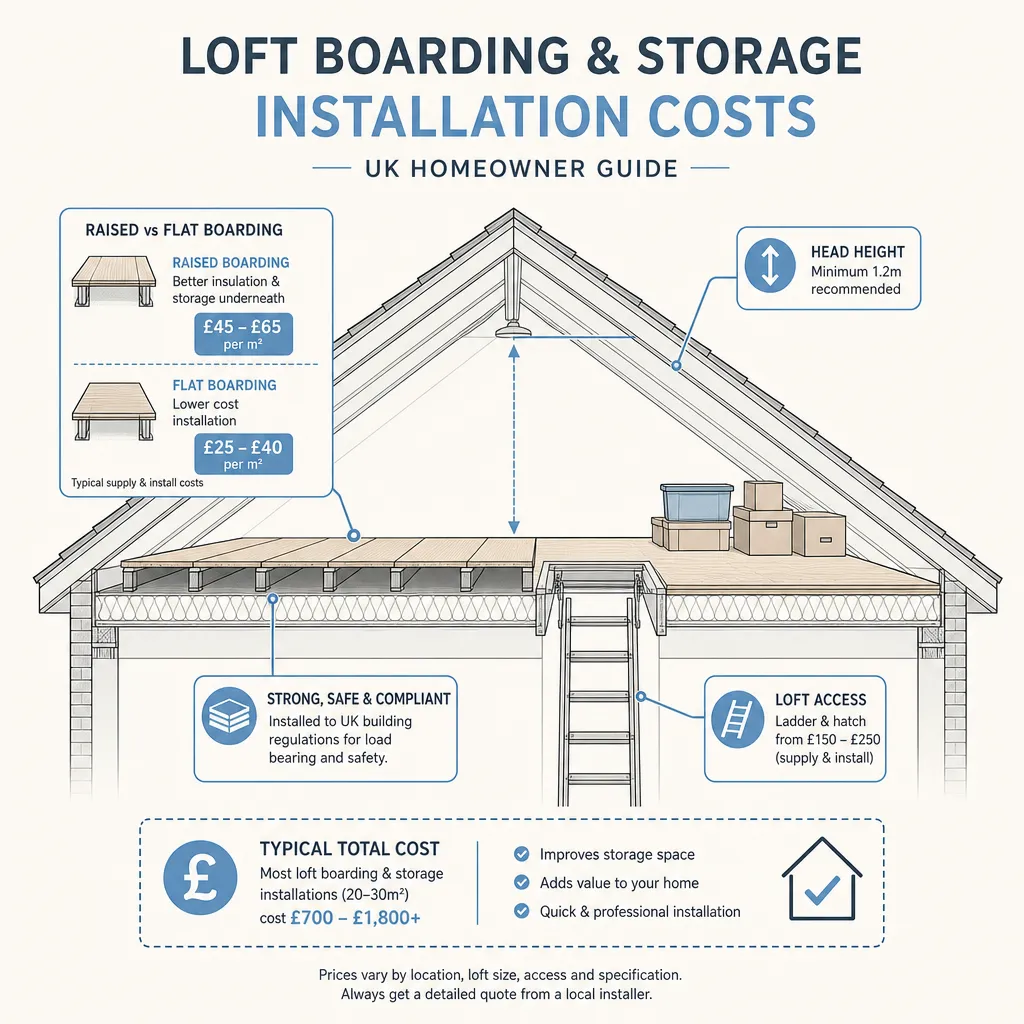
Loft Boarding and Storage Installation Costs
Basic loft boarding for an average semi-detached home costs £500–£1,500; a raised system that preserves insulation runs £800–£2,500.
 Improvement & Build
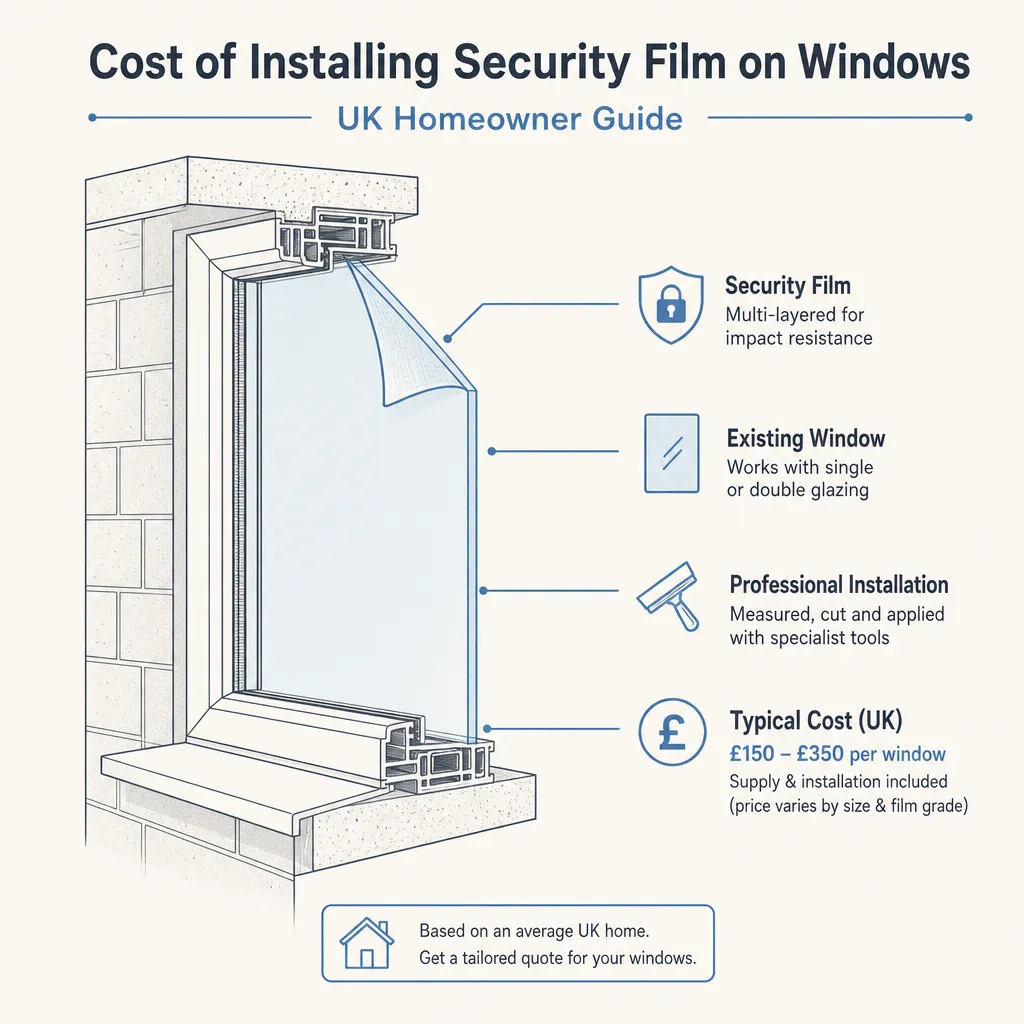
Cost of Installing Security Film on Windows
Security film for windows in the UK typically costs £25–£60 per m² for supply and professional installation, depending on film specification and window count.