Slate Roofing: Material Costs and Installation Pricing
By Housey · Last reviewed 10th of May 2026
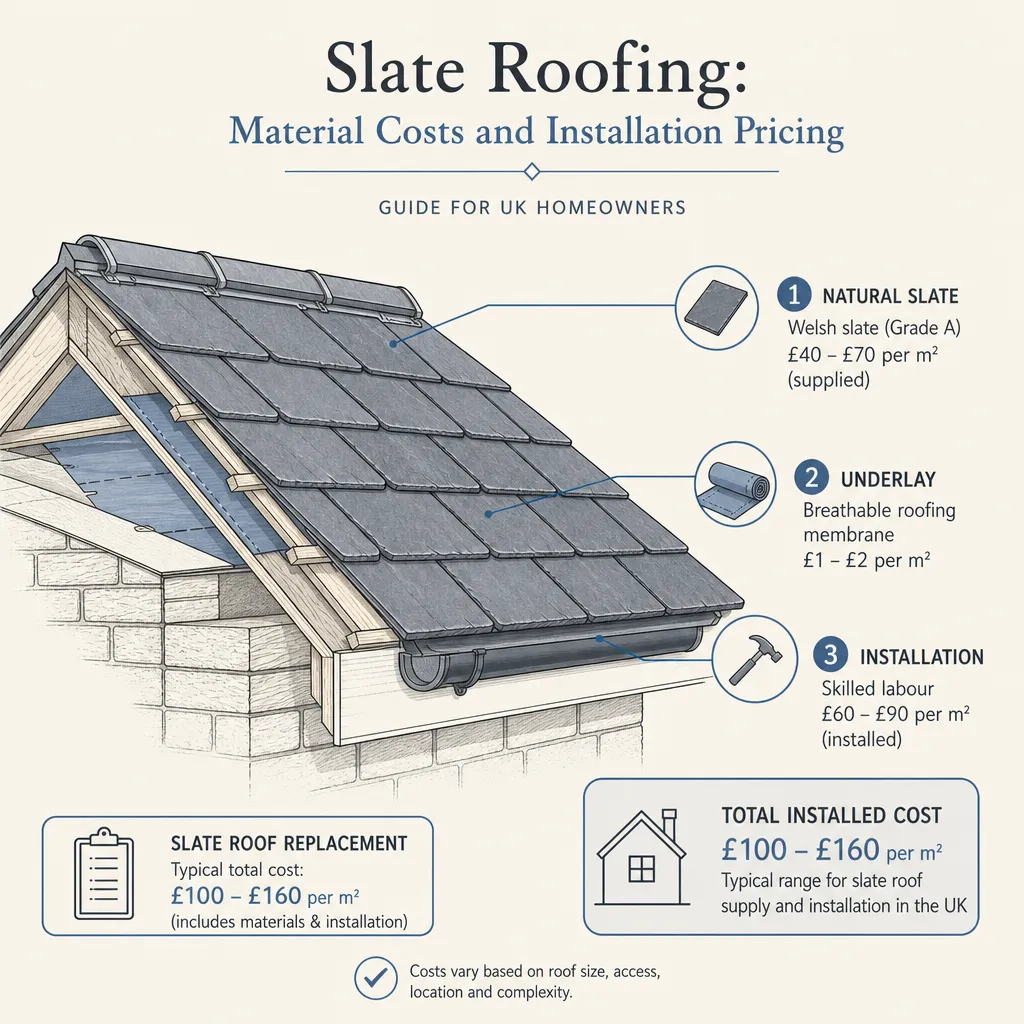
Slate Roofing: Material Costs and Installation Pricing
Choosing slate for a roof replacement is rarely a purely aesthetic decision. It touches planning requirements, building control, structural load, contractor availability, and long-term budget in ways that a like-for-like tile swap does not. Homeowners typically ask about slate when replacing a roof on a Victorian or Edwardian property, when a local planning authority or conservation officer specifies it, or when weighing the premium cost against the 80-to-150-year service life that good-quality natural slate can offer.
Key points
- Welsh slate is considered the heritage benchmark and may be specified by planning conditions on listed buildings or in conservation areas — always check with your local planning authority before ordering materials.
- Building Regulations Part L requires that re-roofing works covering more than 25% of a roof area meet current thermal performance standards, which may mean upgrading insulation at the same time.
- Natural slate weighs approximately 25–35 kg/m², which is heavier than many modern concrete tiles; a structural check is advisable for older roof frames before committing to natural slate.
- Spanish and Brazilian natural slates are widely used alternatives to Welsh slate, typically costing significantly less while still offering lifespans of 80 years or more with correct fixing to BS 5534.
- Synthetic fibre-cement slates are lighter and cheaper per m², but have shorter service lives of around 30–50 years and rarely satisfy heritage or conservation area requirements.
Natural, synthetic, or reclaimed slate: which suits your project?
Option | Approx. installed cost (per m²) | Typical lifespan | Heritage / conservation use | Weight (approx.) | Best for |
|---|---|---|---|---|---|
Welsh natural slate | £150–£220+ | 80–150 years | Usually acceptable | 25–35 kg/m² | Listed buildings, conservation areas, premium roofs |
Spanish / Brazilian natural slate | £90–£140 | 80–100+ years | Often acceptable — check with LPA | 25–35 kg/m² | Standard re-roofing, good-value natural slate |
Reclaimed Welsh / Westmorland slate | £100–£180 | Remaining life varies | Usually acceptable | 25–35 kg/m² | Conservation areas, matching existing roofscapes |
Fibre-cement synthetic slate | £50–£90 | 30–50 years | Rarely acceptable for heritage | 18–22 kg/m² | New builds, extensions, budget replacements |
Fibre-reinforced plastic (FRP) slate | £45–£80 | 25–40 years | Rarely acceptable | 8–12 kg/m² | Outbuildings, lightweight structures |
Indicative UK costs, last reviewed 2026-05-10. Costs vary by region, roof complexity, access, and material sourcing. VAT at 20% applies.
What drives slate roofing costs?
Material and labour costs for a slate roof are shaped by several factors that national price guides cannot capture at a per-property level.
Slate type and source. Welsh Penrhyn slate commands the highest price due to exceptional quality and limited supply. Spanish Pizarra and Brazilian natural slates are widely available and considerably cheaper without sacrificing durability if correctly fixed.
Roof area and pitch. Slate is typically priced and installed per m² of measured roof slope area. Steeply pitched roofs above 40° are slower to work and may require additional scaffolding lifts.
Access and scaffolding. Independent scaffold is required for safe working at roof level. Scaffolding hire typically adds £800–£2,500 to a domestic re-roofing project depending on size and duration.
Underlay and batten renewal. A full re-roofing with slate should include new breathable roofing underlay compliant with BS 5534 and treated softwood battens. Reusing old felt and battens under new slate is poor practice and likely to cause premature failure.
Structural repairs. Older properties may have rafter ends, ridge boards, or purlin ends that are rotten. These need addressing before slating begins or the covering cannot be correctly fixed.
Valley and detail work. Lead valleys, hips, ridges, and chimney flashings are time-consuming to execute well and add meaningfully to the labour component.
Building Regulations Part L. If more than 25% of the roof is being replaced, the project is notifiable and insulation performance must be upgraded. Building control notification and inspection add a modest fee but are legally required.
Typical project costs
These figures are for whole-roof replacement on a standard three-bedroom semi-detached house with an approximate roof slope area of 70–90 m². They are illustrative only — always obtain itemised quotes.
Project scope | Indicative total cost range |
|---|---|
Spanish or Brazilian slate re-roof (70 m²) | £9,000–£16,000 |
Welsh slate re-roof (70 m²) | £14,000–£22,000+ |
Fibre-cement slate re-roof (70 m²) | £5,500–£10,000 |
Partial re-slate (one slope, 30 m²) | £3,000–£8,000 |
Structural repairs added to re-roof | £1,000–£4,000 depending on extent |
Indicative UK costs, last reviewed 2026-05-10. Regional variation is significant — costs are typically higher in London and the South East.
What to ask before accepting a slate roofing quote
- Is the quote for natural or synthetic slate, and what is the country of origin?
- Does the price include new underlay, battens, and all flashings (lead valleys, ridge, hips, chimney)?
- Does it include scaffolding, skip hire, and disposal of the old roof covering?
- Is VAT included?
- Will the work be notified to building control under Part L if applicable?
- What workmanship warranty does the contractor provide, and for how long?
- Are they a member of a recognised trade body such as the National Federation of Roofing Contractors (NFRC)?
- What are the payment terms, and is a deposit required before work starts?
Planning and listed building considerations
Replacing a roof with a different material — for example, swapping concrete interlocking tiles for natural slate — may constitute a material change of appearance and could require planning permission in a conservation area. On a listed building, any roof replacement requires listed building consent in addition to any planning permission needed.
For non-listed properties outside conservation areas, replacing like-for-like (slate with slate of similar appearance) is usually Permitted Development. Check with your local planning authority before starting work, as permitted development rights can be removed by Article 4 directions in some areas.
If building control is involved, your contractor can usually serve as the agent for the Part L notification, but it is your responsibility as the homeowner to ensure the notification is made. A building control consultant can clarify compliance requirements and act as your agent where needed.
When to get professional help
- If the roof structure shows signs of movement, sagging, or rafter damage — a structural survey should precede any re-roofing work to avoid wasting money on a new covering over failing timbers.
- If you are in a conservation area or have a listed building — consult your local planning authority or a heritage specialist before instructing a roofer.
- If you are unsure whether your Part L obligations are triggered — a building control consultant can clarify before work starts and arrange the notification on your behalf.
- If more than one contractor's quote differs substantially in scope — ask each to clarify exactly what is and is not included before comparing prices.
How Housey can help
Housey connects homeowners with vetted experienced roofers who work with natural and synthetic slate across the UK. If your project involves planning conditions, listed building consent, or building control notification under Part L, Housey can also connect you with qualified building control consultants to ensure compliance from the outset.
Frequently asked questions
Is Welsh slate worth the extra cost?
For properties in conservation areas, listed buildings, or where planning conditions specify Welsh slate, the choice may not be yours. Where you have a free choice, Welsh slate's exceptional longevity of 80–150 years, its dimensional consistency, and its appearance can justify the premium over Spanish or Brazilian natural slate. The long-term cost per year of serviceable life is often competitive with cheaper options.
Does a new slate roof add value to a house?
A well-executed natural slate roof adds to a period property's appeal and may support the asking price at sale, but its principal financial benefit is avoiding premature re-roofing costs. A properly laid natural slate roof may outlast several generations of owners. Buyers' solicitors and surveyors tend to view natural slate positively as a durable and low-maintenance roof covering.
How do I match new slates to an existing roof?
Matching existing slates in colour, texture, size, and thickness is rarely straightforward. A roofer experienced in heritage work or reclaimed materials is better placed than a general contractor to source a match. Reclaimed Welsh or Westmorland slate can often be found through specialist salvage yards, but supply varies by region and season.
Do I need planning permission to replace a roof with slate?
On most houses outside conservation areas and not listed, replacing like-for-like is usually Permitted Development. If the original covering was not slate, a change of appearance may require planning permission. Permitted development rights can also be removed by Article 4 directions in some locations. Always check with your local planning authority before ordering materials or committing to a contractor.
Sources and further reading
- GOV.UK: Approved Document L — Conservation of fuel and power — Part L thermal performance requirements for re-roofing works
- National Federation of Roofing Contractors (NFRC) — Trade body for UK roofing contractors; member search available
- Historic England: Roofs — Guidance on historic roof repair and acceptable materials
- Planning Portal — Permitted Development rules and planning permission guidance for homeowners
- BSI: BS 5534:2014+A2:2018 — British Standard for slating and tiling for pitched roofs and vertical cladding
Useful next reads
 Improvement & Build
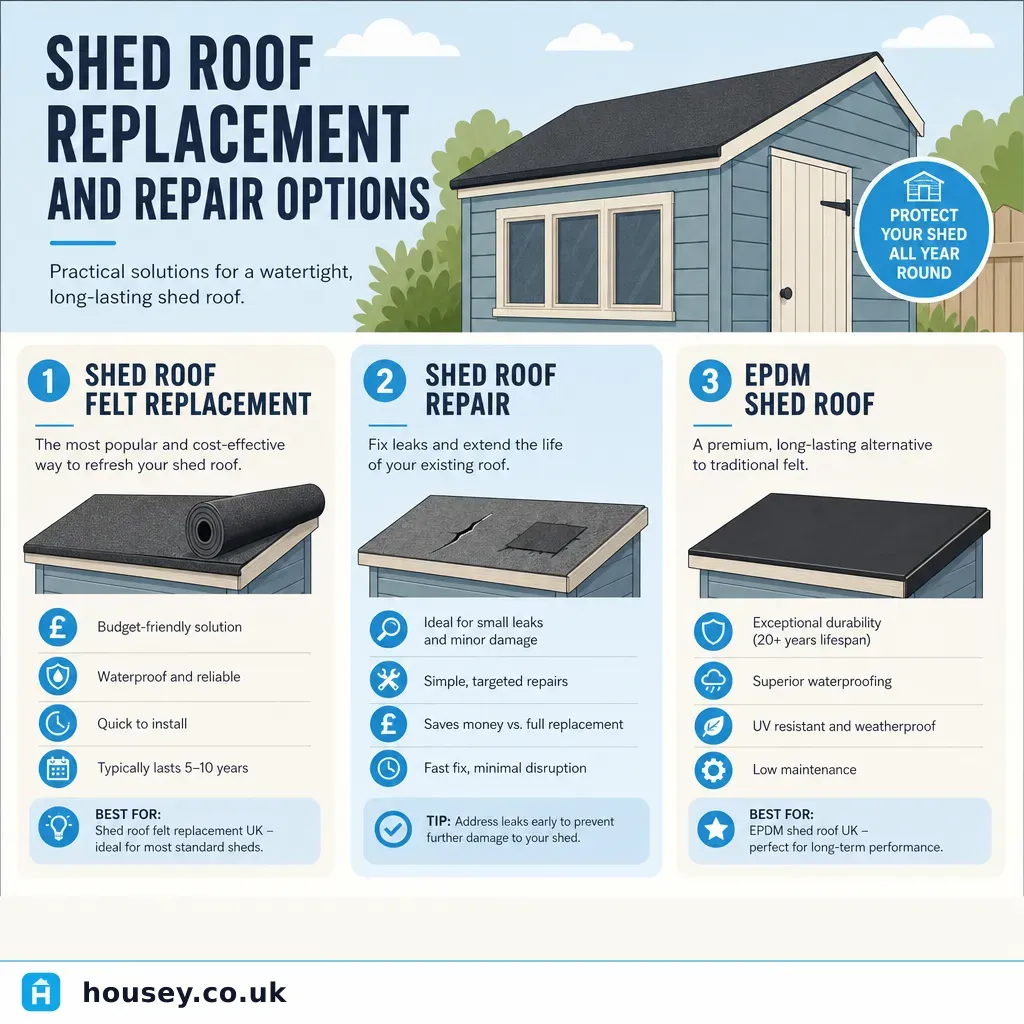
Shed Roof Replacement and Repair Options
Shed roofs in the UK are most commonly covered with mineral felt (lasting 5–15 years), EPDM rubber membrane (20–30 years), or corrugated bitumen sheets.
 Improvement & Build
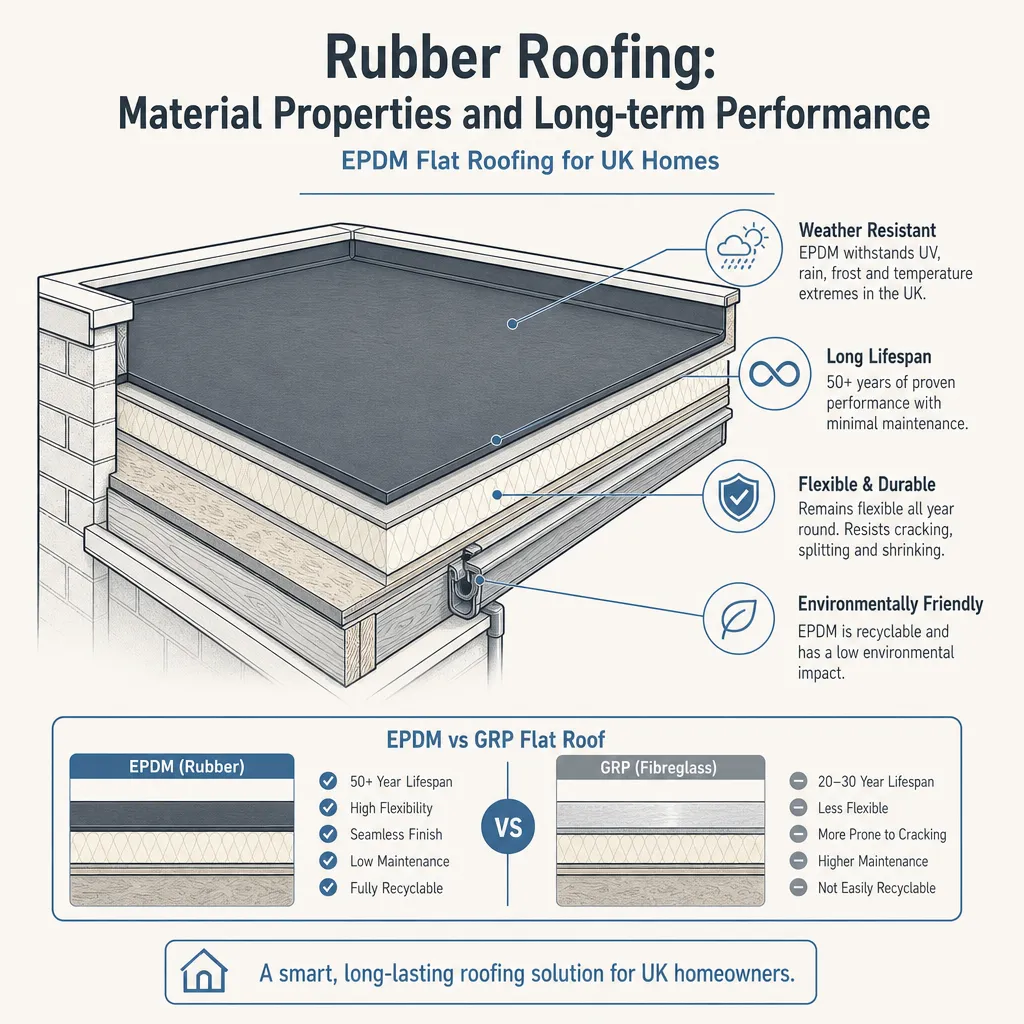
Rubber Roofing: Material Properties and Long-term Performance
EPDM rubber roofing is a synthetic rubber membrane used on UK flat roofs, available in large sheets that minimise seams.
 Improvement & Build
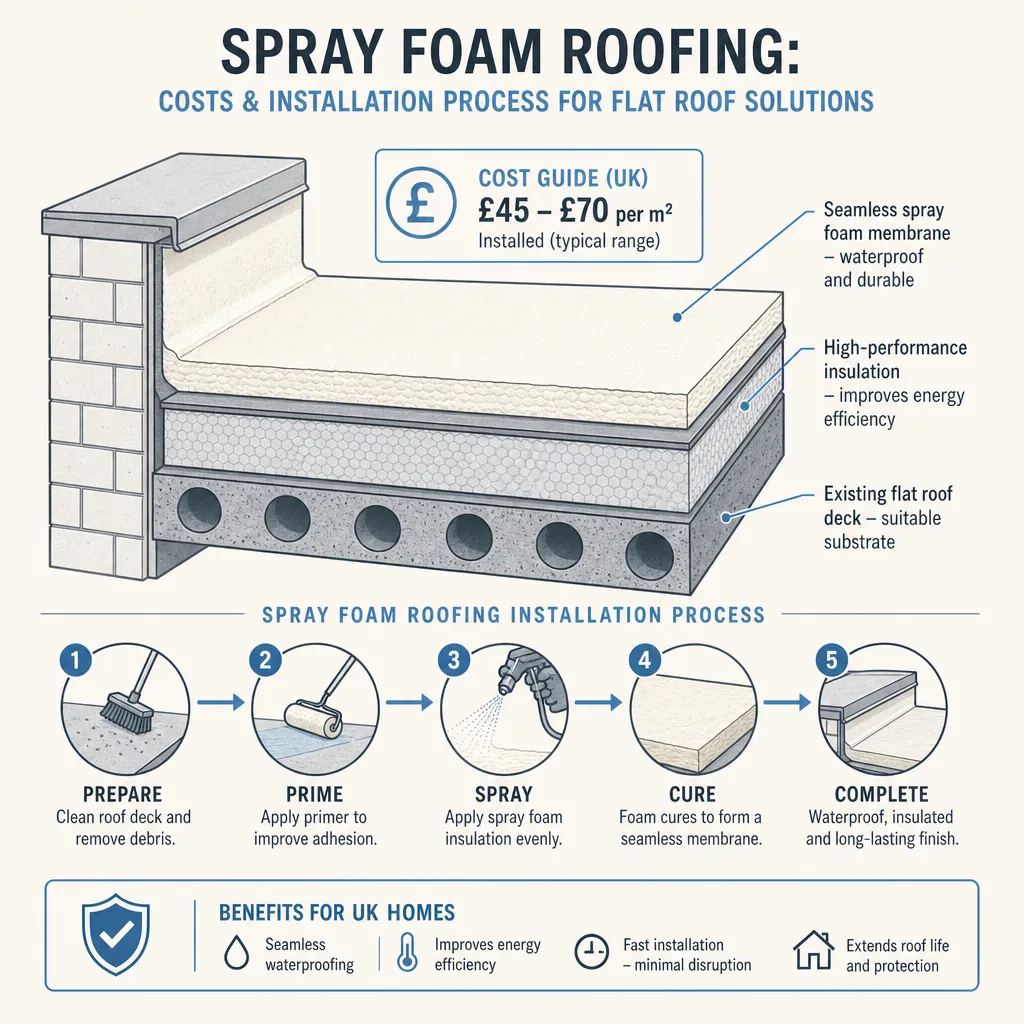
Spray foam roofing: costs and installation process for flat roof solutions
Spray foam roofing for a domestic flat roof in the UK typically costs between £70 and £120 per square metre including preparation, foam application, and UV-protective topcoat, though prices vary with roof size, access, existing substrate condition, and region.
 Improvement & Build
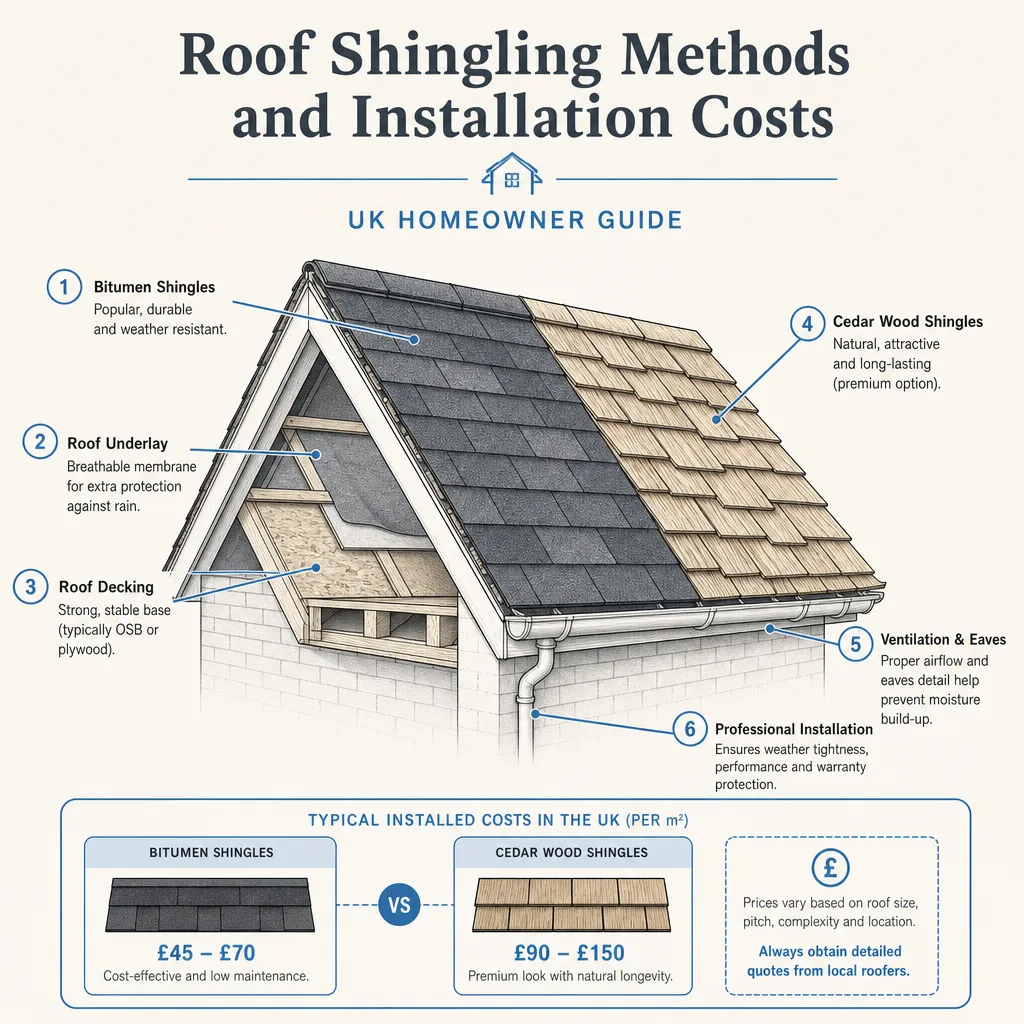
Roof Shingling Methods and Installation Costs
Roof shingles in the UK — most commonly bitumen strip or cedar wood — are used on low-pitch extensions, garden buildings, and outbuildings.
 Improvement & Build
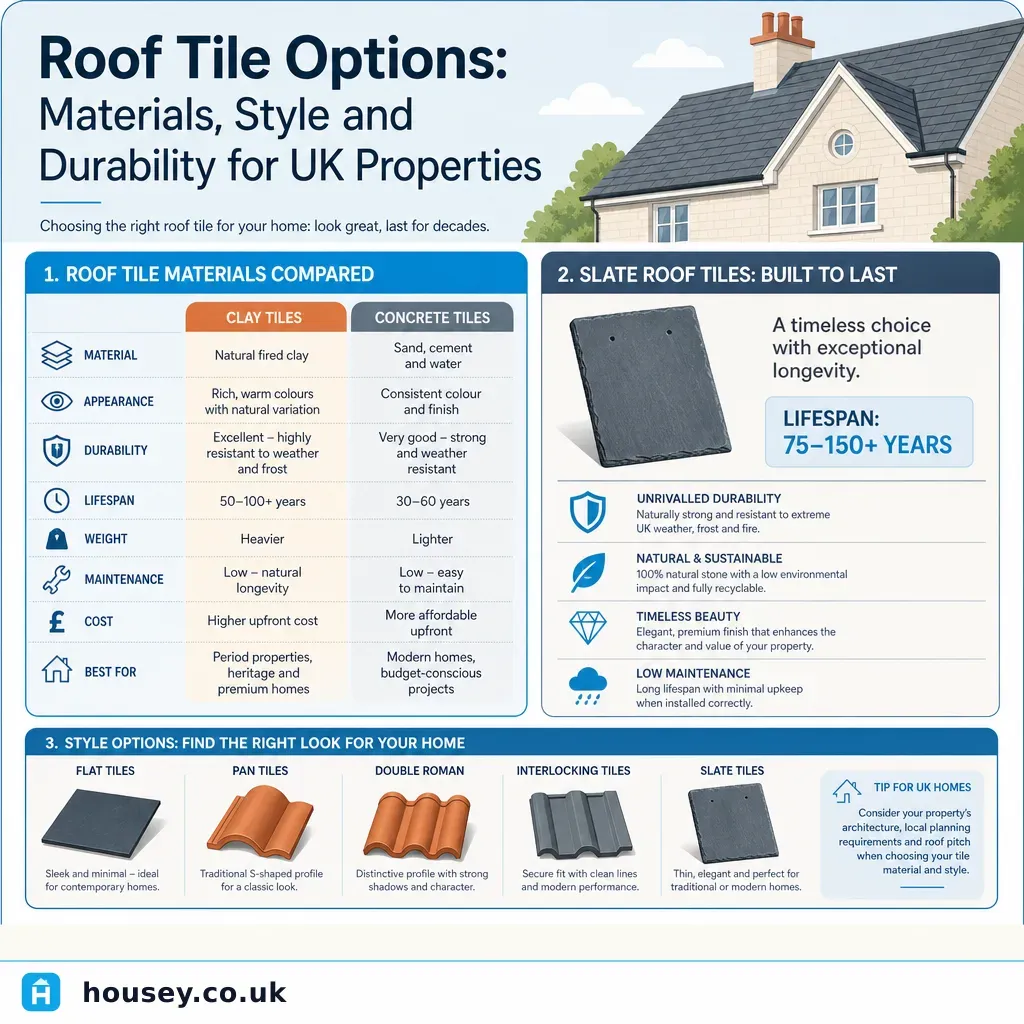
Roof Tile Options: Materials, Style and Durability for UK Properties
UK homeowners can choose from clay, concrete, natural slate, artificial slate, and fibre cement roof tiles.