Sliding glass door repair: pricing and restoration options
By Housey · Last reviewed 31st of May 2026
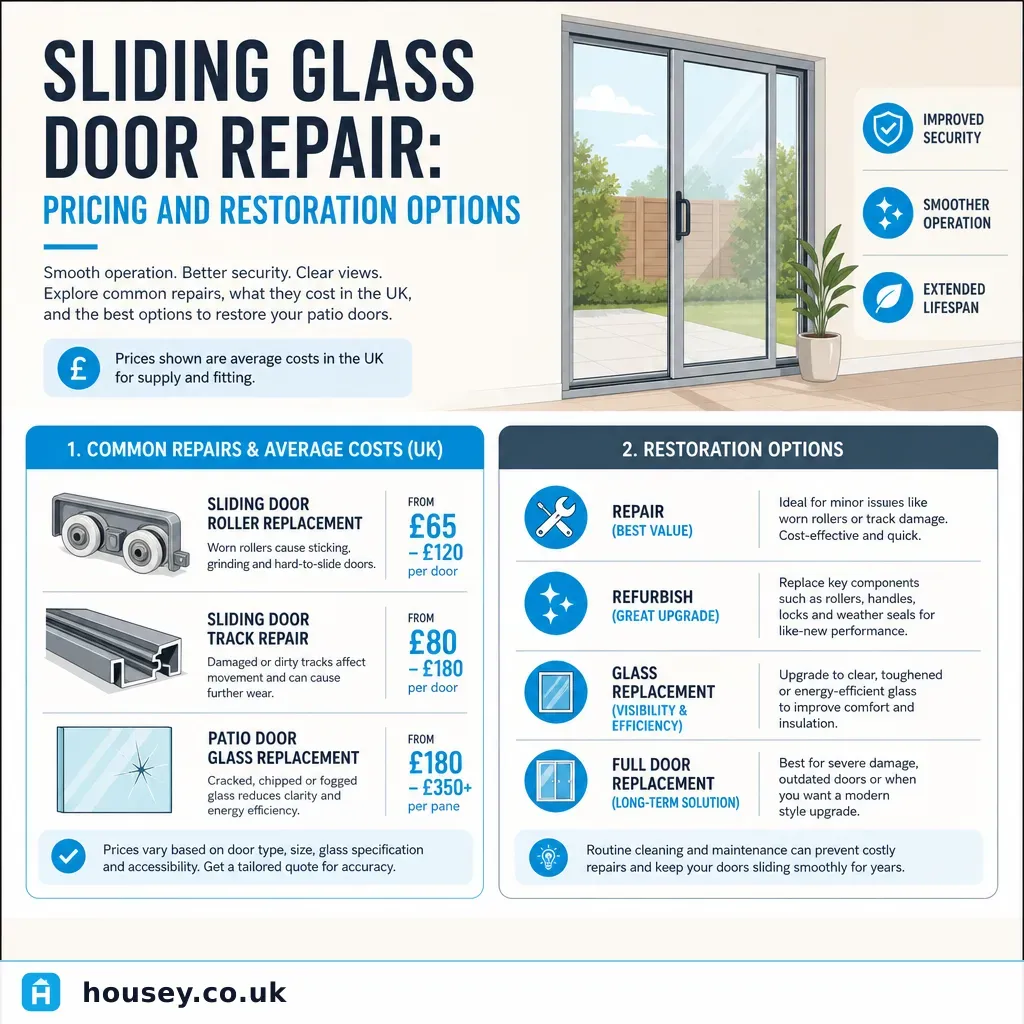
Sliding glass door repair: pricing and restoration options
Sliding glass doors — patio doors, bifolding variants, and large glazed panels — are among the harder-working components in a UK home, exposed to weather, daily use, and the seasonal expansion and contraction that comes with our climate. Problems typically emerge gradually: a door that once slid smoothly begins to drag, a sealed unit mists over, or a frame seal fails and draughts appear. Knowing what the fault is likely to cost, and whether repair or replacement makes better sense, helps you approach the work with realistic expectations and avoid being oversold an unnecessary full replacement.
Key points
- Roller and track replacement — the most common sliding door repair — typically costs £80–£200 in the UK (Indicative UK costs, last reviewed 2026-05-31).
- Replacing a double-glazed sealed unit in a sliding door is regulated work under Building Regulations Part L and Part N; use a FENSA- or Certass-registered installer to self-certify compliance.
- Misting between glass panes means the sealed unit has failed — no cleaning or DIY treatment can restore a broken hermetic seal; the unit must be replaced.
- uPVC frames can warp on south-facing elevations; aluminium frames may suffer failed thermal breaks in older profiles, causing cold-bridge condensation on the inner face.
- Properties in conservation areas or listed buildings may need consent from the local planning authority before like-for-like door or glazing replacement is carried out.
What sliding glass door repairs typically cost in the UK
The table below covers the most common repair scenarios. Costs vary by door size, region, glazing specification, and access difficulty.
Repair type | Indicative cost range (UK, 2026) | Typical duration | Common trigger |
|---|---|---|---|
Roller/wheel replacement | £80–£200 | 1–2 hours | Door drags, judders, or drops off track |
Track clean and realignment | £60–£150 | 1–2 hours | Door stiff but rollers appear intact |
Double-glazed sealed unit replacement | £150–£400+ | 2–4 hours | Misting between panes, cracked outer pane |
Single-glazed panel replacement | £100–£300 | 1–3 hours | Cracked or broken single pane |
Handle or lock mechanism | £50–£150 | 1 hour | Door won't latch or lock securely |
Weatherseal and draught strip | £60–£200 | 1–2 hours | Draughts or water ingress at frame edges |
Full door replacement (supply and fit) | £800–£3,000+ | Half to full day | Frame beyond repair or thermal upgrade needed |
Indicative UK costs, last reviewed 2026-05-31. Obtain at least two quotes; prices vary significantly by region and specification.
The most common faults explained
Rollers, wheels, and track problems
The bottom track rollers — sometimes called wheels or carriages — are the components that fail most often. Grit, debris, and years of use wear the nylon or steel wheels down, causing the door to drag, judder, or sit unevenly in the frame. Cleaning the track with a stiff brush and a mild degreaser is always worth trying first; a clean, lubricated track can restore smooth operation in mild cases. If the problem persists, a glazing specialist can assess whether the rollers need adjustment or replacement, and whether the track itself has corroded or deformed.
Failed double-glazed sealed units
A misted or fogged appearance between two panes of glass is the unmistakeable sign of a failed sealed unit. The hermetic seal holding the two panes together — with an insulating cavity of air or argon gas — has broken down, allowing moisture inside. There is no repair for this: only full replacement of the sealed unit will resolve it. Sealed unit replacement is regulated work under Building Regulations in England, Wales, and Scotland, specifically under Approved Document L (energy performance) and Approved Document N (glazing safety). Installers registered with FENSA or Certass can self-certify compliance and issue a certificate; without scheme registration, the work must be notified to your local building control authority.
Frame, weatherseal, and draught problems
uPVC sliding door frames can bow slightly over time, particularly on south-facing elevations where sustained UV exposure softens the material. Aluminium frames are more dimensionally stable, but older aluminium profiles sometimes lack effective thermal breaks, meaning the inner face of the frame stays cold and attracts condensation. Draught strips and compression seals deteriorate independently of the glass and can often be replaced at modest cost without touching the glazing panels.
Decision tree: repair or replace your sliding door?
Use this guide to decide which route makes most sense for your situation.
- Repair the rollers and track if the frame is structurally sound, the glass is intact, and the door is fewer than 20 years old.
- Replace the sealed unit only if the frame is in good condition but misting has appeared between the panes.
- Replace the full door if the frame is warped beyond adjustment, multiple components are failing simultaneously, or the door is more than 25 years old and thermal performance is a concern.
- Get a structural assessment first if the frame has visibly dropped, cracked in line with brickwork, or moved relative to the surrounding wall — this may indicate settlement rather than a glazing fault.
- Check with your local planning authority if the property is in a conservation area or is listed — even like-for-like replacement may require consent.
Homeowner checklist before calling a repairer
Work through this list before booking a specialist — it can save a call-out fee and helps you describe the problem accurately.
Red flags: when a repair quote is not enough
- A repairer quotes for glass replacement without discussing FENSA or building control notification — ask explicitly how regulatory compliance will be handled before work starts.
- The track is cracked or heavily corroded along most of its length — short-section patch repairs rarely last and a full track or door replacement is usually more cost-effective.
- The door frame has moved noticeably in relation to surrounding brickwork, the lintel, or the floor — this is a structural issue, not a glazing fault, and needs a chartered surveyor or structural engineer to assess before any repair is attempted.
- Water staining, softness, or deterioration in a timber sub-frame beneath a uPVC or aluminium surround — the sub-frame may need replacing before a new sealed unit is worth fitting.
When to get professional help
Most sliding door faults are straightforward for an experienced glazing tradesperson. Seek professional help promptly if:
- The glass is cracked or broken — handling loose or sharp glass is a safety risk
- The door cannot be secured closed — a security risk that may affect your home insurance
- There are signs of structural movement around the door opening
- You are uncertain about planning permission or listed building consent requirements
How Housey can help
Housey connects you with vetted window and door installers who can assess your sliding door, advise on repair versus replacement, and carry out glazing work to Building Regulations standards — including FENSA self-certification where required.
Frequently asked questions
How do I know if my sliding door needs repairing or replacing?
If the frame is structurally sound and only one or two components are failing — rollers, a weatherseal, or a single sealed unit — repair is usually better value. Replacement makes more sense when the frame is warped beyond adjustment, the thermal performance is poor, or several components are failing at once. A glazing specialist can provide a comparative quote for both routes.
Can I replace just the glass panel in a sliding door?
Yes. In most cases a failed or damaged sealed unit can be replaced without changing the frame, provided the frame is in good condition and the new unit matches the required dimensions and specification. The work must comply with Building Regulations Part L and Part N in England and Wales — use a FENSA- or Certass-registered installer to ensure the work is self-certified and you receive the necessary compliance certificate.
Do I need a FENSA certificate for sliding door glass replacement?
Replacing a sealed unit in England and Wales is notifiable work under Building Regulations. A FENSA-registered installer can self-certify compliance and issue a certificate. If your installer is not scheme-registered, you must notify your local building control authority and obtain a completion certificate. FENSA certificates are important when you sell the property, as conveyancers routinely ask for them.
How long does a sliding glass door repair usually take?
Most common repairs — roller replacement, a sealed unit swap, or a new lock mechanism — take one to three hours. Full door replacement typically takes half a day to a full day depending on the door width, weight, and the complexity of the surrounding brickwork or frame fixings.
Sources and further reading
- FENSA — competent person scheme for glazing — FENSA
- Building Regulations Approved Document L: Conservation of fuel and power — GOV.UK
- Building Regulations Approved Document N: Glazing safety — GOV.UK
- Glass and Glazing Federation: consumer guidance — Glass and Glazing Federation
- Certass — competent person scheme for glazing and doors — Certass
Useful next reads
 Improvement & Build
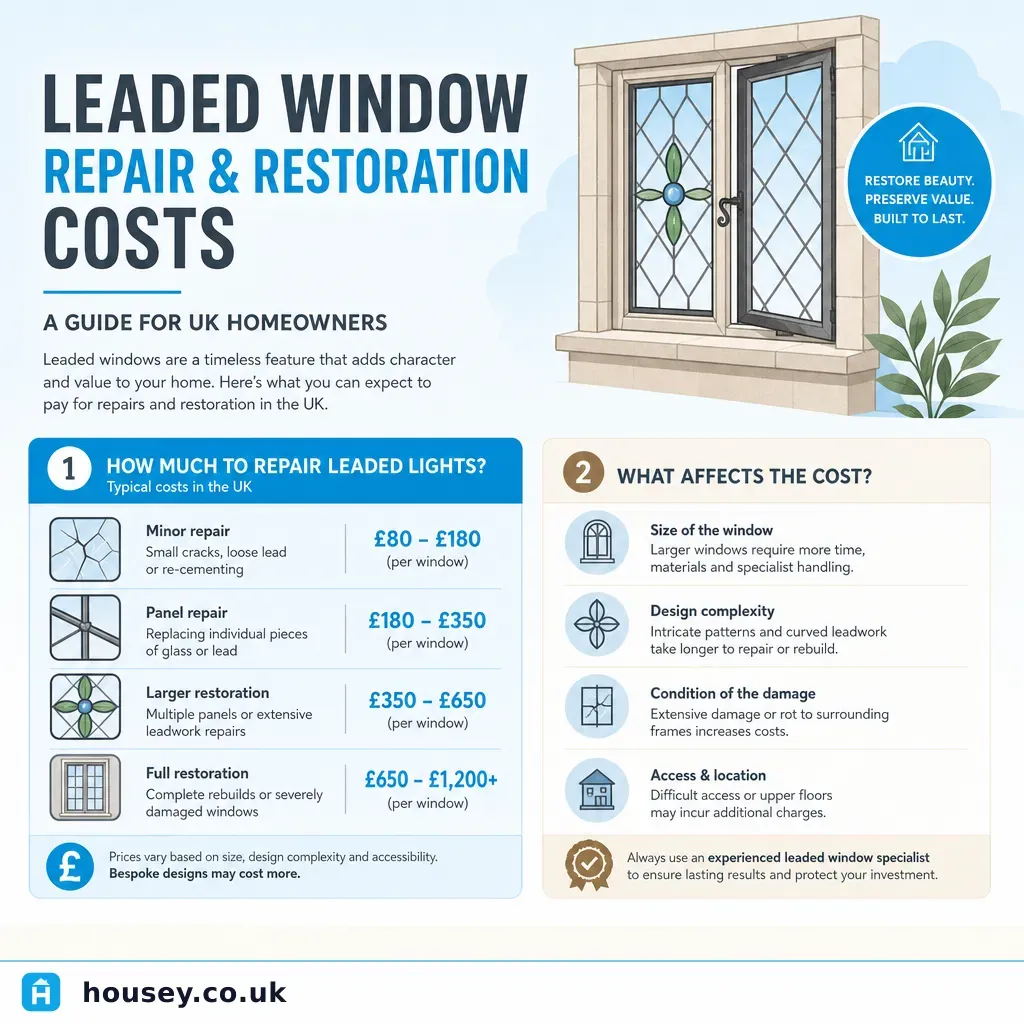
Leaded Window Repair and Restoration Costs
Leaded window repair in the UK typically costs £150–£600 for minor re-soldering or resealing, rising to £800–£2,500+ for full panel removal and restoration.
 Improvement & Build
Guide to Replacing Timber Sash Windows with Authentic Restoration
Restoring a timber sash window typically costs £150–£400 per window; full replacement costs £800–£2,500.
 Improvement & Build
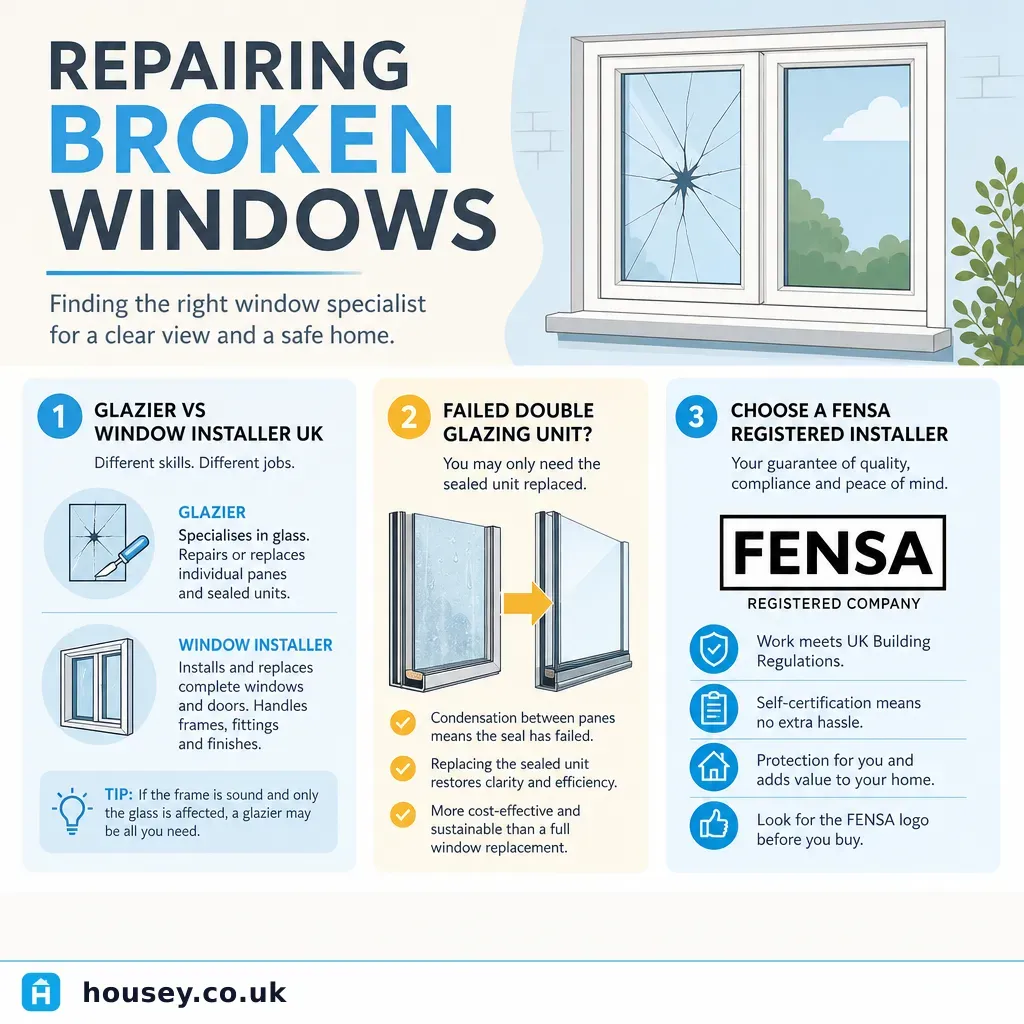
Repairing Broken Windows: Finding a Window Specialist
Repairing a broken window depends on the type of damage: a failed double-glazing unit (misted glass) needs the sealed unit replaced, cracked or broken glass needs a glazier, and frame damage may require a specialist joiner.
 Improvement & Build
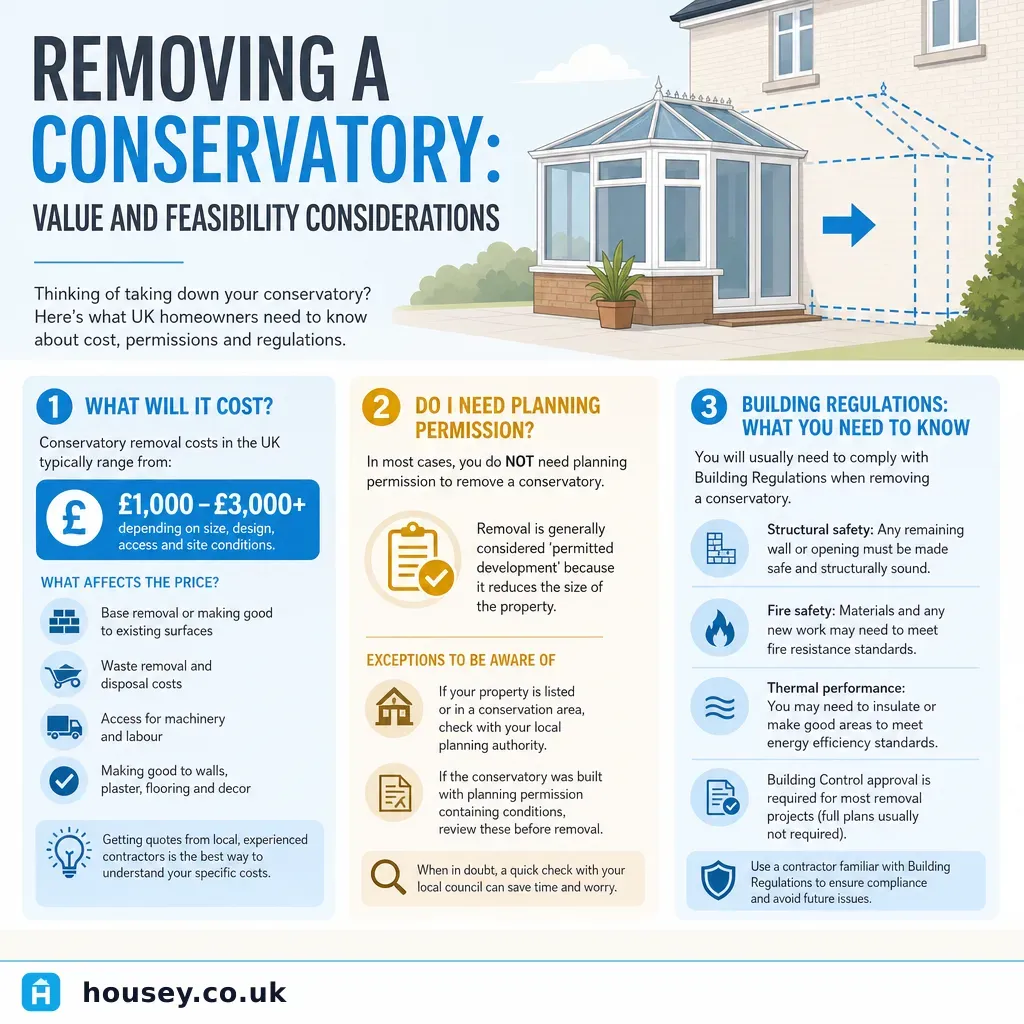
Removing a Conservatory: Value and Feasibility Considerations
Removing a conservatory in England usually does not need planning permission if the original structure was permitted development, but reinstating the original wall almost always requires a building regulations application covering structural, thermal, and moisture elements.
 Improvement & Build
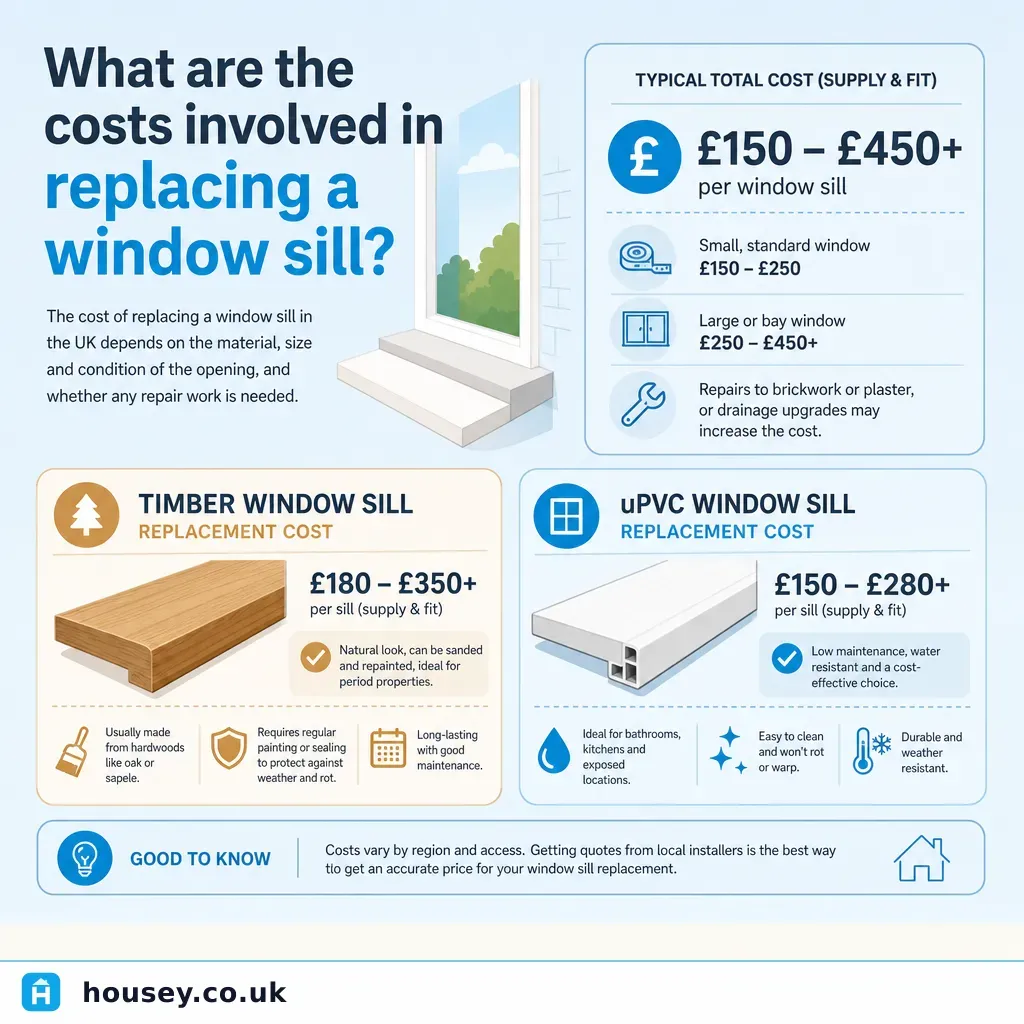
What are the costs involved in replacing a window sill?
Window sill replacement in the UK typically costs £100–£350 per window, depending on material, sill length, and access.