Smart Thermostat Installation and System Upgrade Costs
By Housey · Last reviewed 6th of May 2026
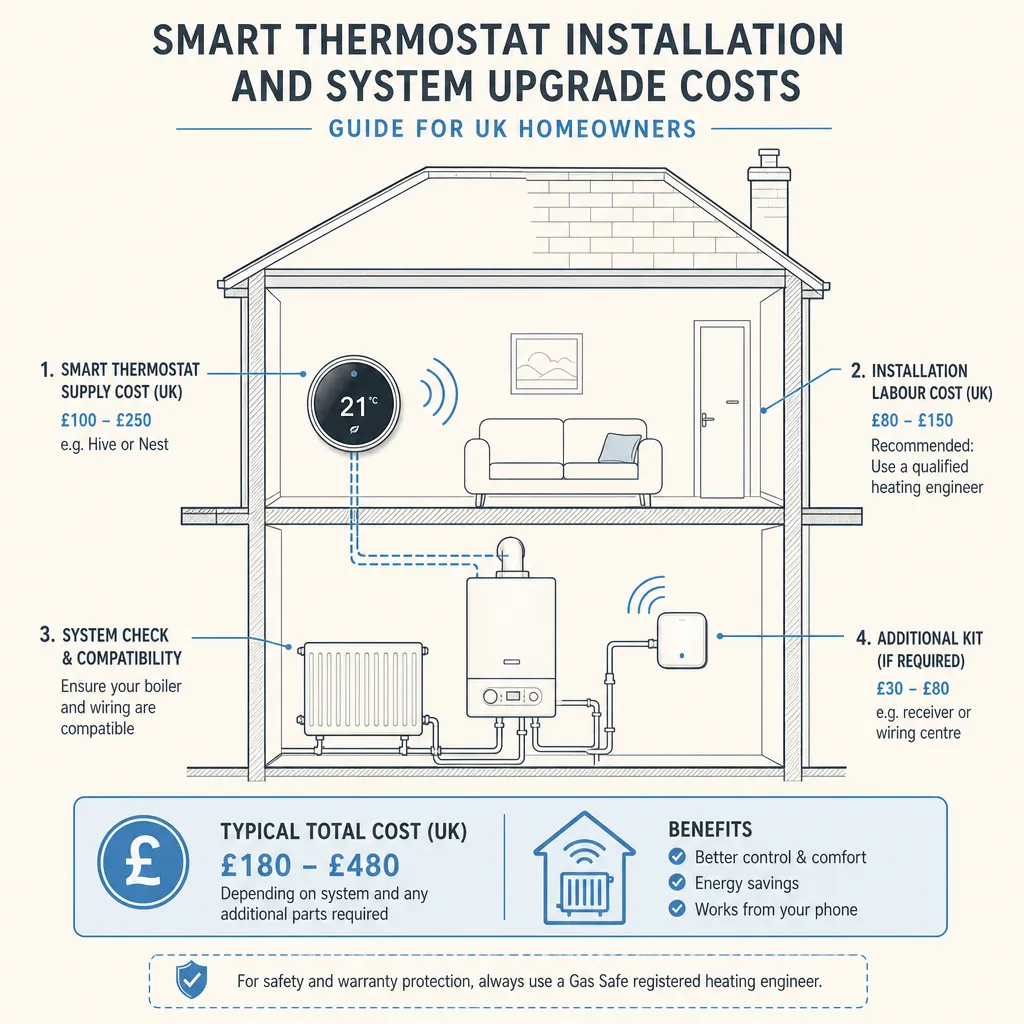
Smart Thermostat Installation and System Upgrade Costs
Most homeowners consider a smart thermostat when replacing an ageing programmer, upgrading a boiler, or looking for a practical way to reduce heating bills. The right device depends on your heating system type, your existing controls, and whether you need single-zone or room-by-room control — and the total installed cost is frequently underestimated when only the device price is considered.
Key points
- A smart thermostat device typically costs £80–£300 depending on the model; professional installation by a qualified heating engineer adds £80–£200, giving a total installed cost of £160–£400 for most single-zone systems (Indicative UK costs, last reviewed 2026-05-06).
- Homes with heat-only or system boilers and a separate hot water cylinder may need a multi-zone kit, raising total costs to £350–£530.
- Smart thermostat wiring involves low-voltage heating controls — Gas Safe registration is not required for this element, but a Gas Safe engineer must carry out any work on the boiler's gas connections or recommissioning.
- The Energy Saving Trust estimates that households actively using smart scheduling and set-back functions can reduce heating bills by 10–30%.
- Most UK gas boilers manufactured after 2000 are compatible with leading smart thermostats via a standard on/off relay; check the manufacturer's compatibility tool before purchasing, as older and non-standard systems vary widely.
What does a smart thermostat system include?
A complete smart thermostat system for a typical UK home comprises three main components: the thermostat unit mounted on the wall, a wireless receiver connected to the boiler's control terminals, and a bridge or hub that links to your broadband router for remote app control. On some systems — notably Google Nest on OpenTherm-compatible boilers and certain Tado configurations — the thermostat communicates directly with the boiler via the OpenTherm protocol, enabling modulating control rather than simple on/off switching. This can improve efficiency and comfort.
Optional smart thermostatic radiator valves (TRVs) add room-by-room temperature control and are purchased and fitted separately. They are particularly useful in homes where some rooms are used infrequently or have very different heating requirements from the rest of the house.
How much does smart thermostat installation cost in the UK?
Indicative UK costs, last reviewed 2026-05-06. Obtain at least three quotes for your specific property and heating system type.
Smart thermostat option | Typical device cost | Typical installation cost | Total indicative range |
|---|---|---|---|
Hive Active Heating 2 (single zone) | £130–£180 | £100–£180 | £230–£360 |
Google Nest Learning Thermostat | £180–£220 | £100–£180 | £280–£400 |
Tado Wireless Smart Thermostat Starter Kit | £140–£180 | £100–£180 | £240–£360 |
Honeywell Home T6R | £80–£130 | £80–£160 | £160–£290 |
Drayton Wiser Multi-Zone Kit (2 zones) | £200–£280 | £150–£250 | £350–£530 |
Smart TRVs (per radiator, fitted) | £40–£80 per unit | £20–£50 per unit | Varies by room count |
Sources: manufacturer RRPs and retailer pricing, May 2026; Checkatrade installer cost data.
Why costs vary
- Heating system type: combi boilers are the simplest and cheapest to upgrade; heat-only or system boilers with separate cylinders require a multi-channel receiver, adding to both device and labour costs.
- Existing controls: if your current programmer is wired directly to the boiler, a wireless receiver unit is needed; if you already have a wireless programmer, installation may be more straightforward.
- Engineer rates: heating engineers typically charge £50–£100 per hour in most of England and Wales, rising to £80–£130 per hour in London.
- Additional work: boiler firmware updates for OpenTherm compatibility, or wiring extension runs, add time and cost to the job.
Which smart thermostat is right for your heating system?
Use this decision guide before requesting quotes:
- Choose a single-zone wireless smart thermostat (Hive, Nest, Tado) if you have a standard combi boiler with one heating zone and an existing room thermostat or plug-in programmer — these are the simplest and most cost-effective to install.
- Choose a multi-zone kit (Drayton Wiser, Hive multi-zone, Tado extension kit) if you have separate heating and hot water circuits, or if you want independent room control via smart TRVs.
- Choose a wired smart thermostat (Honeywell T6R, wired Nest installation) if you prefer battery-free operation or if a heating engineer advises a wired connection for reliability in your particular property.
- Ask a heating engineer to assess first if your boiler is pre-2000, you have a gravity-fed system with a header tank in the loft, or your current controls appear non-standard — compatibility and wiring can be more complex than expected.
- Check compatibility before purchasing using the manufacturer's online tool; Hive, Tado, and Nest all provide free compatibility checkers where you enter your boiler model and current zone configuration.
Comparing popular UK smart thermostats
Product | Best for | Multi-zone support | OpenTherm support | Self-install option |
|---|---|---|---|---|
Google Nest Learning Thermostat | Auto-learning, OpenTherm-capable boilers | Via Nest Temperature Sensor | Yes (selected boilers) | Yes |
Hive Active Heating 2 | Straightforward single-zone combi setup | Yes (Hive multi-zone add-on) | No | No — engineer install required |
Tado Wireless Starter Kit | Geofencing, travel-heavy households | Yes (extension kit) | Yes | Yes |
Honeywell Home T6R | Budget-conscious, simple single-zone use | No | No | No |
Drayton Wiser | Room-by-room control with smart TRVs | Yes | No | Partial |
Can I install a smart thermostat myself?
Some products — notably Google Nest and Tado — are marketed as DIY-installable, and technically confident homeowners can fit them without a professional if the existing wiring is clearly labelled and accessible, the heating system is a standard UK combi boiler, no new wiring runs are required, and the work does not involve opening or modifying the boiler itself.
However, any wiring that connects to live control terminals — including the boiler's own heating and hot water terminals — should be treated as electrical work. If you are not confident reading wiring diagrams and working safely with low-voltage heating controls, use a qualified heating engineer or an NICEIC/NAPIT-registered electrician. Some device warranties may require professional installation as a condition of cover.
For most households, professional installation costs one to two hours of a heating engineer's time and is the lower-risk option.
What to ask before accepting an installation quote
Use this checklist when comparing quotes from heating engineers:
- Does the quote include the device cost, or is it labour only?
- Which specific model are you recommending, and why is it suitable for my boiler and zone configuration?
- Will any additional wiring, receiver work, or boiler firmware update be needed?
- Are you qualified to work on heating controls — Gas Safe registered or NICEIC/NAPIT registered?
- What warranty applies to the device and the installation labour separately?
- Will you demonstrate the app setup, scheduling, and set-back settings before leaving?
- Are there any known compatibility issues with my boiler model?
- Is VAT included in the quoted price?
When to get professional help
Always use a qualified professional if:
- Your heating system includes a gas boiler and any work is required at the boiler's wiring terminals — a Gas Safe registered engineer is the appropriate choice for this element.
- Your home has an older gravity-fed or S-plan/Y-plan system — compatibility and wiring are more involved than a standard combi boiler setup.
- You are unsure whether your boiler supports OpenTherm or requires a firmware update.
- You are adding smart TRVs to a system with a bypass valve — incorrect TRV configuration can cause boiler short-cycling and reduce boiler lifespan.
How Housey can help
Housey connects homeowners with qualified heating engineers and energy-efficiency professionals across the UK. Describe your smart heating upgrade on Housey to compare quotes from local, vetted installers who can confirm compatibility and recommend the right product for your system.
Frequently asked questions
Does a smart thermostat work with any boiler?
Most UK gas boilers manufactured after 2000 are compatible with leading smart thermostats via a standard on/off relay connection. OpenTherm modulating control is more selective — check the manufacturer's compatibility tool for your specific boiler model. Older gravity-fed systems, electric storage heaters, and underfloor heating may need specific products or may not be fully compatible without additional equipment.
How much can a smart thermostat save on heating bills?
The Energy Saving Trust estimates savings of 10–30% for households that actively use smart scheduling and temperature set-back features. Savings are lower if you already have a well-programmed standard programmer and higher if you currently heat unused rooms or leave heating running throughout the day. Adding smart TRVs for room-by-room control typically increases savings further.
Does a heating engineer need to be Gas Safe registered to install a smart thermostat?
The thermostat and receiver wiring involves low-voltage controls rather than gas pipework, so Gas Safe registration is not a legal requirement for that element alone. However, if any work involves the boiler's gas connections or requires recommissioning the boiler, a Gas Safe registered engineer must carry out that element. A competent heating engineer or NICEIC/NAPIT electrician is appropriate for standard smart thermostat installation.
How long does smart thermostat installation take?
A single-zone smart thermostat replacement typically takes one to two hours for a heating engineer. A multi-zone system with a new receiver and additional wiring may take two to three hours. Fitting smart TRVs across multiple radiators in a larger house can take a full day depending on room count and accessibility.
Will a smart thermostat work without Wi-Fi?
Most smart thermostats continue to control your heating using the last programmed schedule if your broadband goes down. Remote app control — adjusting temperature away from home, reviewing energy use, or changing schedules remotely — requires a live internet connection. The thermostat's physical controls remain functional regardless of connectivity.
Sources and further reading
- Thermostats and Heating Controls — Energy Saving Trust
- Who Can Do Gas Work? — Gas Safe Register
- Find an NICEIC Registered Contractor — NICEIC
- Smart Thermostat Installation Cost Guide — Checkatrade
- Energy Efficiency for Household Consumers — Ofgem
Useful next reads
 Energy & Retrofit
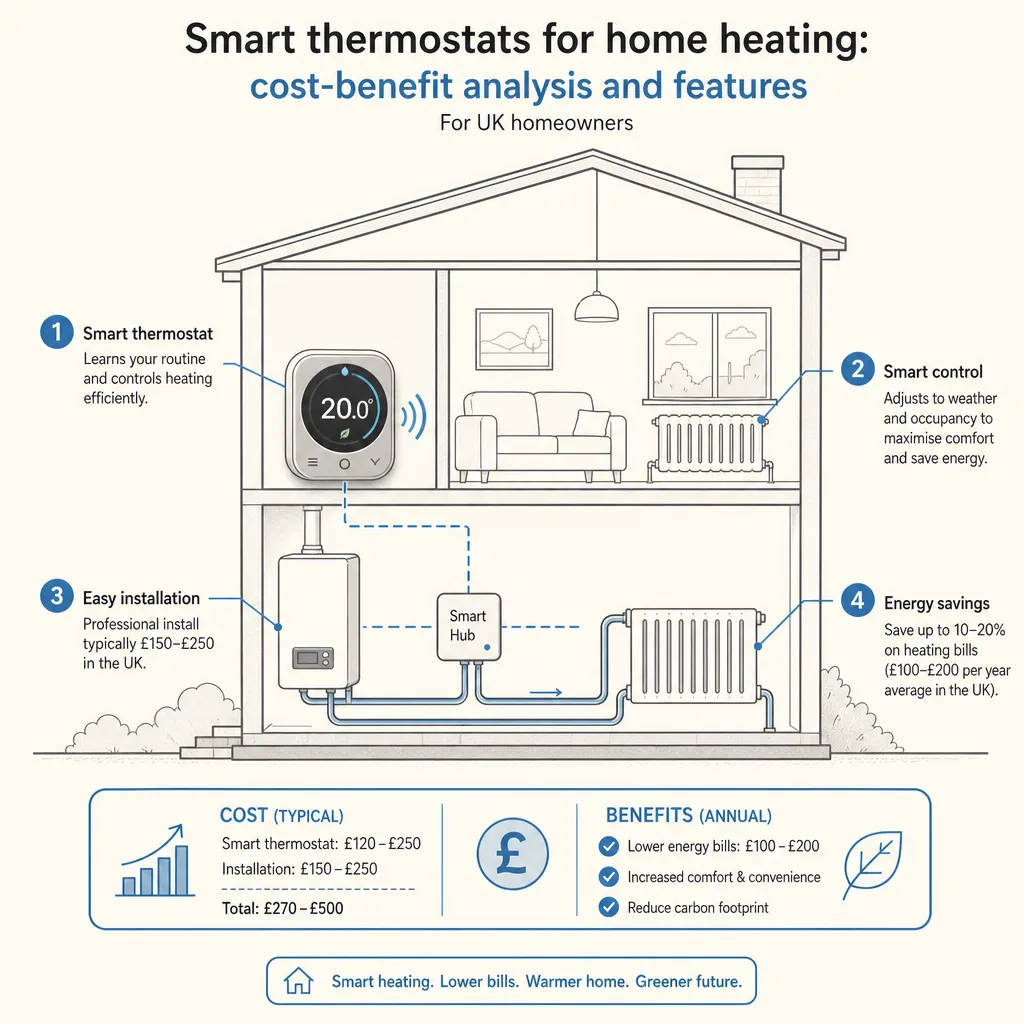
Smart thermostats for home heating: cost-benefit analysis and features
A smart thermostat typically costs £150–£350 installed and can reduce heating bills by 15–25% annually, according to the Energy Saving Trust.
 Energy & Retrofit
Smart Home Technology That Saves Energy: A Practical Approach To Reducing Bills
Smart home technology can reduce household energy bills by automating heating, lighting, and appliances to run only when needed.
 Energy & Retrofit
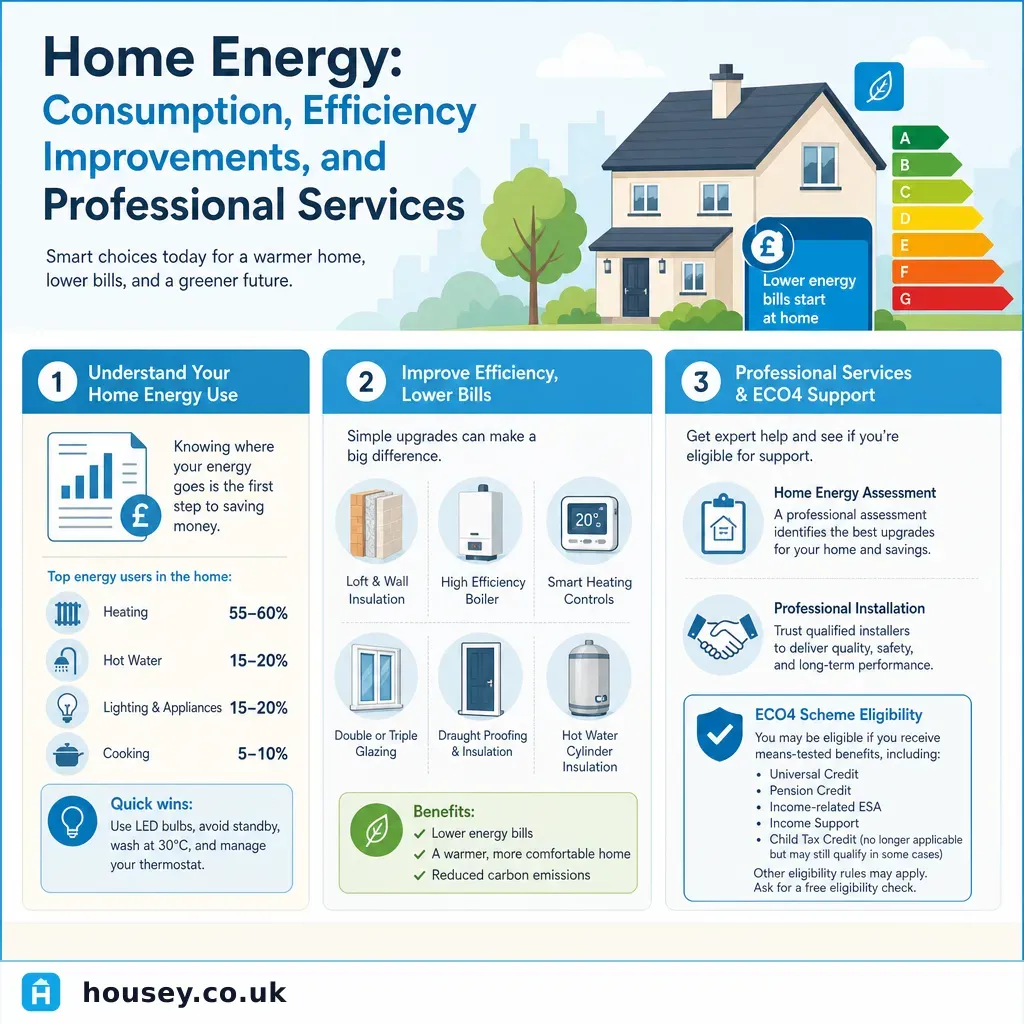
Home Energy: Consumption, Efficiency Improvements, and Professional Services
Most UK homes can cut energy use by 20–40% through insulation, upgraded heating controls, and appliance improvements.
 Energy & Retrofit
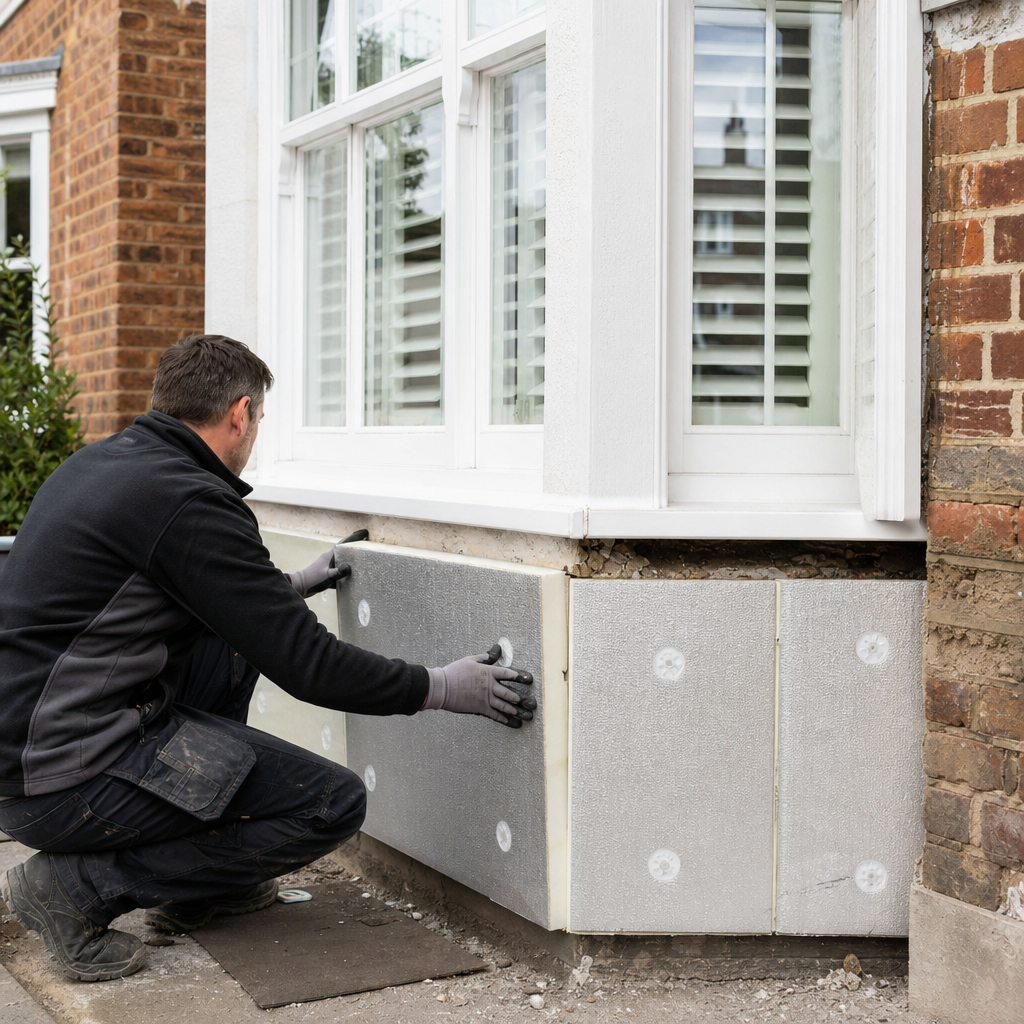
Insulating Solid Masonry Walls Under Bay Windows: Technical Guidance
Insulating solid masonry walls under bay windows requires specialist detailing at angled wall faces, window reveals, and the bay floor and ceiling junctions.
 Energy & Retrofit
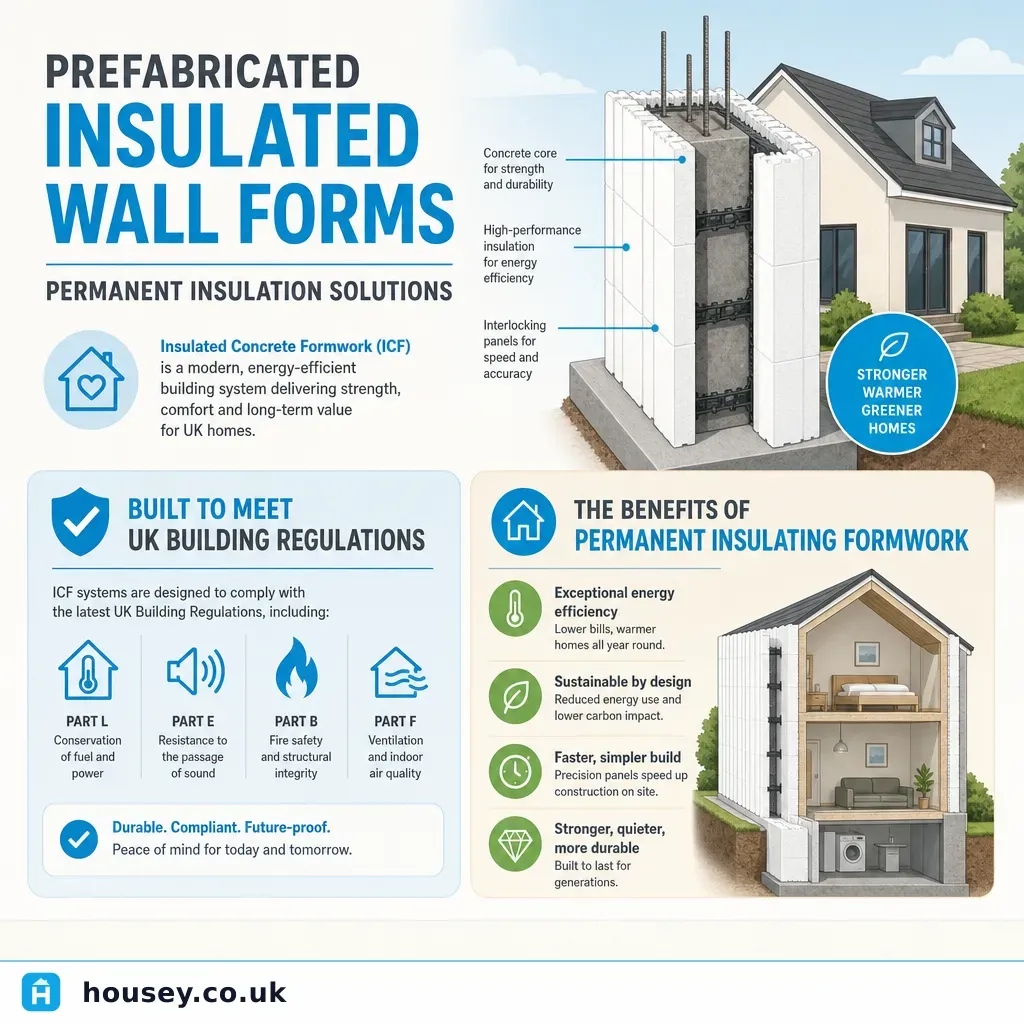
Prefabricated Insulated Wall Forms: Permanent Insulation Solutions
Prefabricated insulated wall forms — including ICF and SIPs systems — deliver high thermal performance by combining permanent insulation with structural concrete or timber in a single wall assembly.