Smart thermostats for home heating: cost-benefit analysis and features
By Housey · Last reviewed 31st of May 2026
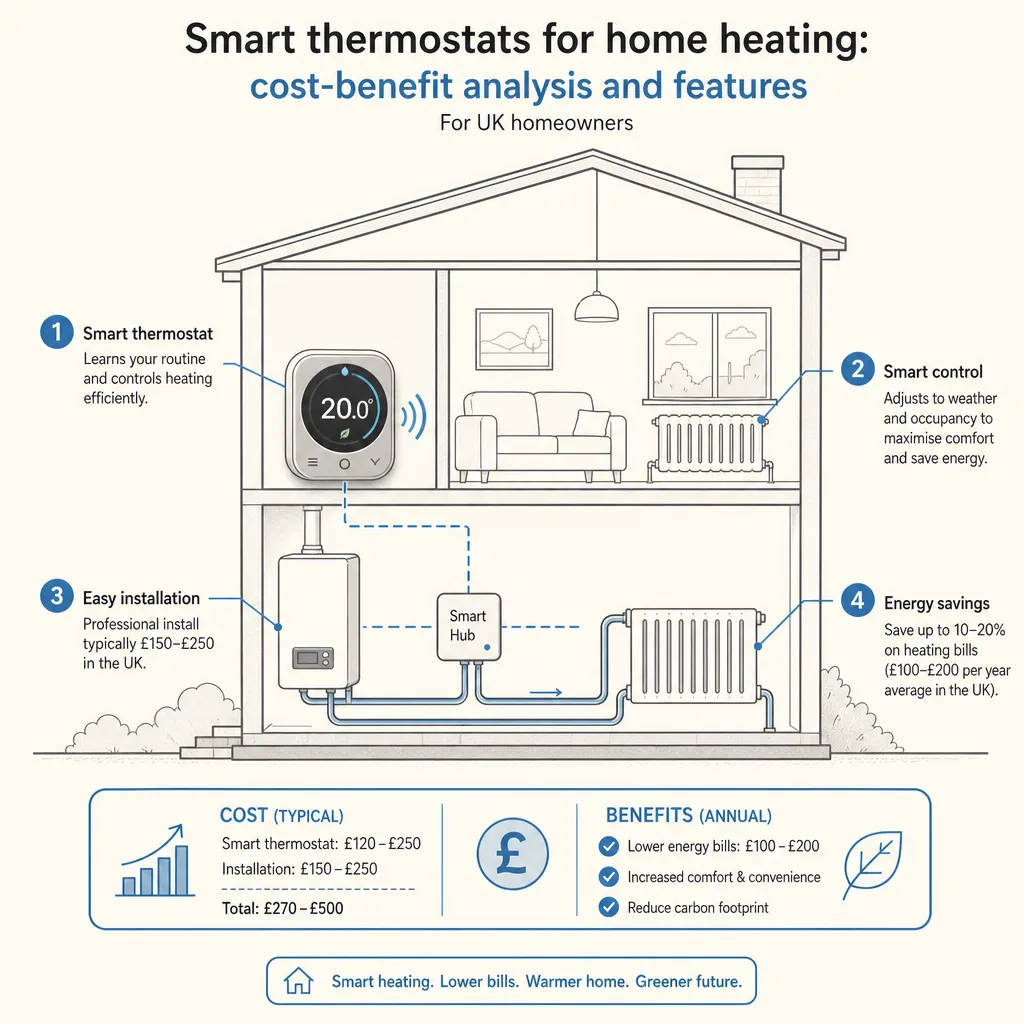
Smart thermostats for home heating: cost-benefit analysis and features
Heating accounts for around 55% of the average UK household's energy bill, making it the single largest category where control improvements are regularly discussed. Smart thermostats tend to arise as a consideration when a homeowner replaces a boiler, reviews their energy tariff, or begins a wider home efficiency review. For properties ranging from a 1930s semi to a 1990s estate house, understanding what a smart thermostat actually delivers — and where the limits of those claims lie — matters before committing to a purchase.
Key points
- The Energy Saving Trust estimates that effective heating controls, including smart thermostats, can reduce heating bills by 15–25% for households currently using basic or no time controls.
- Smart thermostat devices typically cost £130–£280, with professional installation adding £50–£150 depending on system complexity.
- Most UK smart thermostats (Hive, Tado, Google Nest, Drayton Wiser) require boiler compatibility — always use the manufacturer's online checker before purchasing.
- Adding smart thermostatic radiator valves (TRVs) to individual radiators extends room-by-room control but increases total installed cost to £350–£700 or more.
- Under Building Regulations Approved Document L, new or replacement heating systems must include time and temperature controls — a smart thermostat satisfies this requirement.
What is a smart thermostat and how does it differ from a standard one?
A smart thermostat connects to your home Wi-Fi and allows heating to be controlled via a smartphone app, a voice assistant, or automated geofencing. Unlike a standard programmable thermostat, which runs a fixed schedule regardless of whether anyone is home, a smart thermostat can:
- Adjust automatically based on your phone's location (geofencing)
- Learn your routine over time (learning thermostats such as Google Nest Learning)
- Integrate with smart home platforms including Matter, HomeKit, and Amazon Alexa
- Provide energy reports showing daily and weekly usage patterns
- Control individual rooms when paired with smart TRVs
Many UK households have a programmable thermostat that is never correctly configured. The default factory schedule often heats an empty property during the day — a problem smart thermostats are designed to eliminate through automatic presence detection.
Smart thermostat costs
Indicative UK costs, last reviewed 2026-05-31. Costs vary by property and installer; obtain at least two written quotes.
Item | Typical UK cost range |
|---|---|
Mid-range device (Hive, Tado, Honeywell T6R) | £130–£200 |
Premium device (Google Nest Learning) | £180–£280 |
Professional installation | £50–£150 |
Smart TRV set (6 radiators) | £150–£350 |
Thermostat-only installed total | £180–£350 |
Full system with smart TRVs installed | £350–£700+ |
Installation involving the boiler's wiring should be carried out by a Gas Safe registered engineer, or a qualified electrician where the work is purely electrical. Some devices can be self-installed if the wiring is a straightforward two-wire replacement, but professional installation reduces the risk of voiding your boiler's manufacturer warranty.
What savings can you realistically expect?
Savings vary considerably depending on starting conditions:
- Households with no existing time controls tend to see the largest proportional savings — potentially 20–25% off heating bills.
- Households already running a well-set programmable timer may see more modest improvements of 5–15%.
- Irregular-occupancy homes benefit most from geofencing, which prevents heating an empty property.
- Time-of-use tariff users (Octopus Agile, Intelligent Octopus) can programme smart thermostats to favour cheaper overnight periods.
For a typical UK semi-detached home spending £1,100 per year on gas heating, a 20% saving represents £220 per year. At an installed cost of £250, payback is roughly 14 months. The Energy Saving Trust's savings estimates assume the thermostat replaces minimal or no existing controls.
Which smart thermostat suits your home?
Model | Best for | Not ideal for | Boiler compatibility | Standout feature |
|---|---|---|---|---|
Hive Active Heating | Simple install, British Gas customers | Complex multi-zone systems | Most combi and system boilers | UK-designed, broad compatibility |
Tado Starter Kit | Radiator-level control via TRVs | Households wanting simplicity | Most combi and system boilers | Geofencing, room-by-room reports |
Google Nest Learning | Self-learning, Google Home users | Listed buildings (aesthetics) | Most combi and system boilers | Auto-schedule learning |
Drayton Wiser | OpenTherm boiler optimisation | Non-OpenTherm boilers | OpenTherm-compatible boilers | Modulating control |
Honeywell Home T6R | Budget-conscious households | Advanced smart home integrations | Most combi and system boilers | Lower upfront cost |
Which option should you choose?
- Choose a basic smart thermostat if you have a single-zone system with a combi boiler and mainly want app scheduling and remote control.
- Choose smart TRVs alongside your thermostat if different rooms have very different heating needs, or if you regularly heat unused rooms.
- Choose an OpenTherm-compatible model (Drayton Wiser or Google Nest) if your boiler supports OpenTherm — modulating control can improve efficiency compared to simple on/off switching.
- Ask a Gas Safe engineer if your boiler is a regular (heat-only) boiler with a cylinder, is older than 15 years, or you are unsure of your wiring configuration — these situations need professional assessment.
- Check with your local planning authority if the property is listed or in a conservation area before any visible external installation.
Smart thermostat installation checklist
Before instructing an installer, have the following to hand:
When to get professional help
Consult a Gas Safe registered engineer or qualified electrician if:
- Your boiler is a regular (heat-only) boiler with a hot water cylinder and a separate programmer — wiring configurations can be complex
- You have a heat pump, underfloor heating, or a district heating system — controls differ significantly from gas boiler systems
- Your existing thermostat has more than two wires and you are unsure of the layout
- Your boiler manufacturer requires professional installation of accessories as a warranty condition
- Your system is more than 15 years old and has not been recently serviced
A smart thermostat does not replace an annual Gas Safe boiler service, which remains a safety and warranty requirement irrespective of the controls fitted.
How Housey can help
If you want to assess whether a smart thermostat fits into a broader energy improvement programme, our energy-efficiency consultants can review your heating system alongside insulation and ventilation. Where moisture or condensation is a concern — particularly in homes being made more airtight — a ventilation and condensation assessment can identify any risks before works begin.
Frequently asked questions
Do smart thermostats work with all boilers?
Not always. Most models are compatible with standard combi and system boilers manufactured after approximately 2000, but some older heat-only boilers, boilers with proprietary bus systems, or certain combination boilers require an additional wiring module. Always check the manufacturer's compatibility tool using your boiler's make and model before purchasing.
Can I get a grant for a smart thermostat in the UK?
Smart thermostats are not currently a standalone funded measure under ECO4 or the Great British Insulation Scheme. They may occasionally be included as part of a broader funded package delivered by energy suppliers. Check GOV.UK's energy-saving guidance and your current energy supplier for any available offers.
Will a smart thermostat work if my broadband goes down?
Most smart thermostats retain their last programmed schedule in local memory and continue heating according to that schedule during a broadband outage. Remote app control, geofencing, and energy reports all require an active internet connection. Your heating continues on its stored programme, but settings cannot be changed remotely until connectivity is restored.
Does fitting a smart thermostat affect my boiler warranty?
It may do. Some boiler manufacturers specify in their warranty terms that heating controls must be installed by a qualified professional. Check your boiler's warranty documentation before self-installing, and retain a record of the installation — including the installer's details and photographs — to support any future warranty claim.
Sources and further reading
- Thermostats and heating controls — Energy Saving Trust
- Approved Document L: Conservation of fuel and power — HM Government
- Gas Safe Register — Find a registered engineer — Gas Safe Register
- ECO4: Energy Company Obligation — HM Government
Useful next reads
 Energy & Retrofit
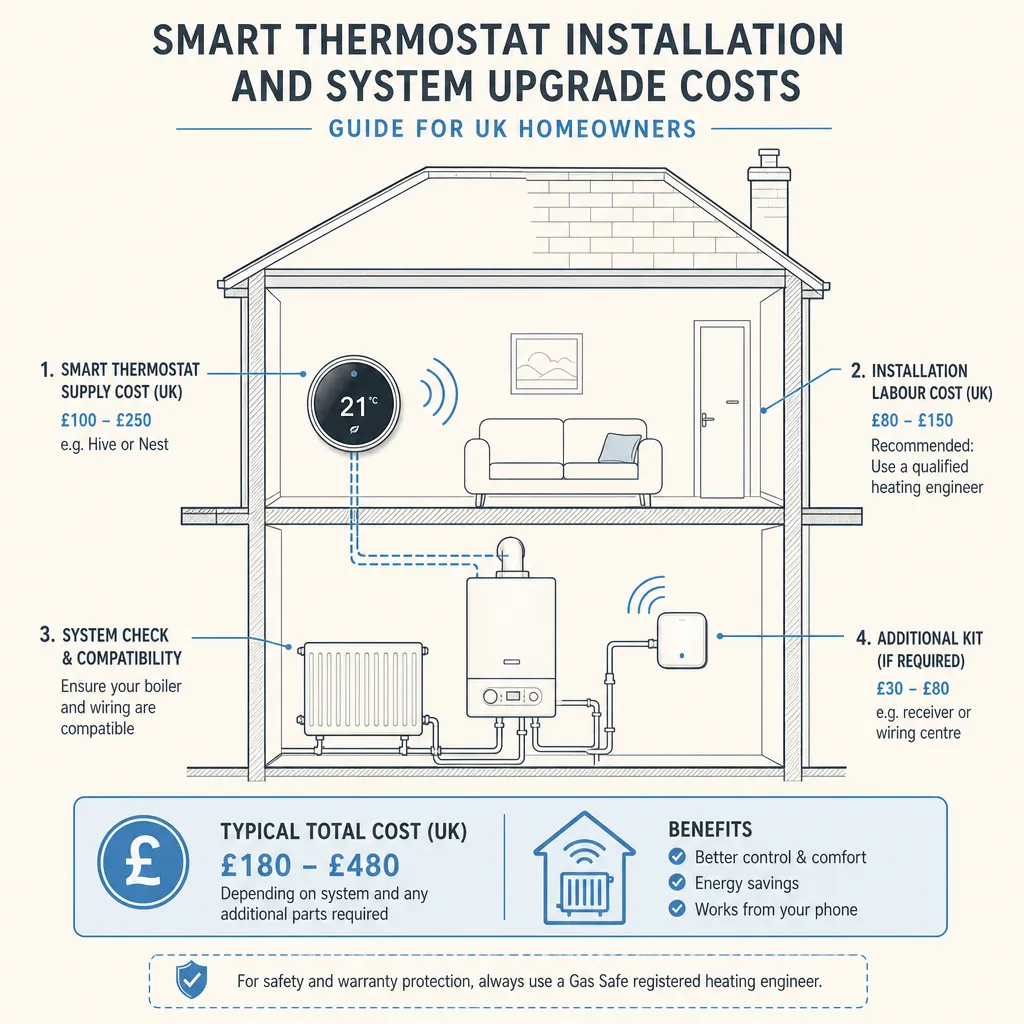
Smart Thermostat Installation and System Upgrade Costs
A smart thermostat for a typical UK home costs £160–£400 fully installed, covering the device and a heating engineer's labour.
 Energy & Retrofit
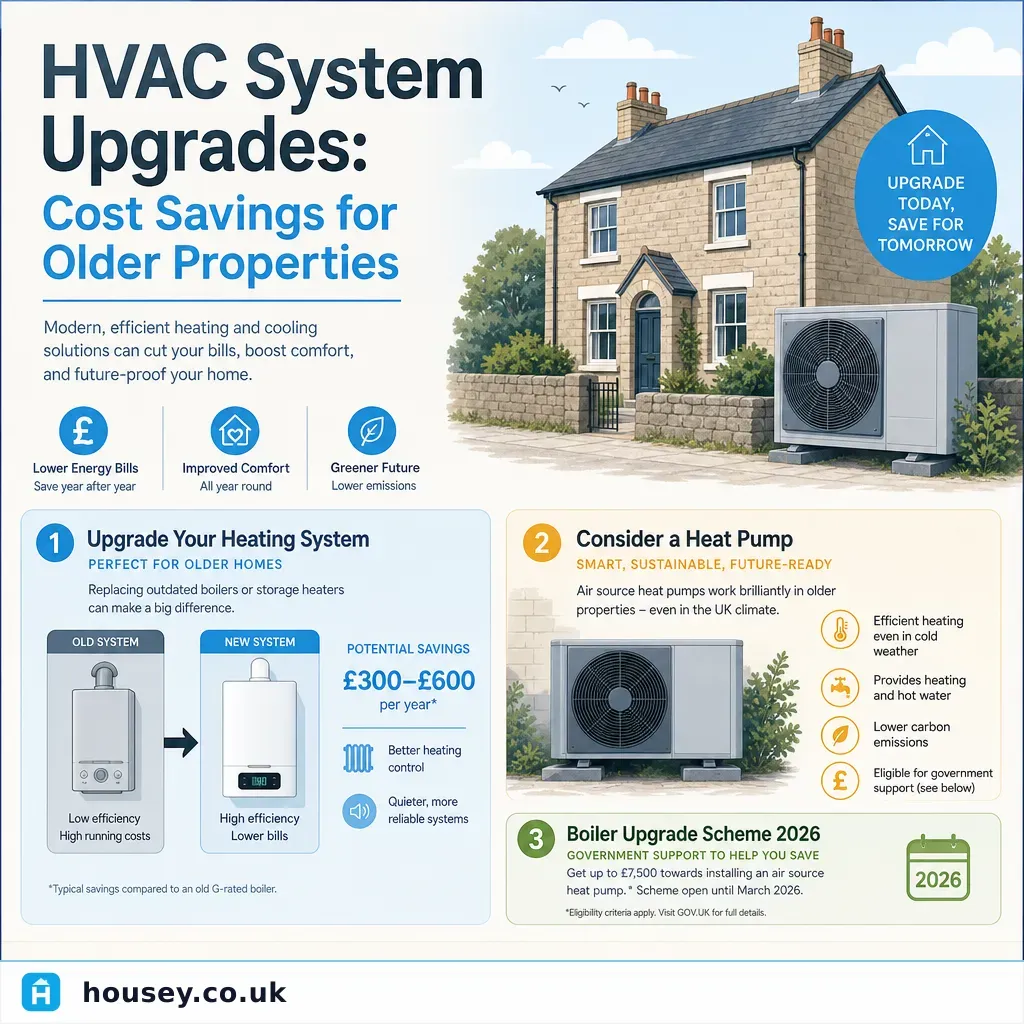
HVAC System Upgrades: Cost Savings for Older Properties
Upgrading heating and ventilation systems in an older UK home can significantly reduce energy bills, but the best approach depends on the property's insulation, construction, and heat demand.
 Energy & Retrofit
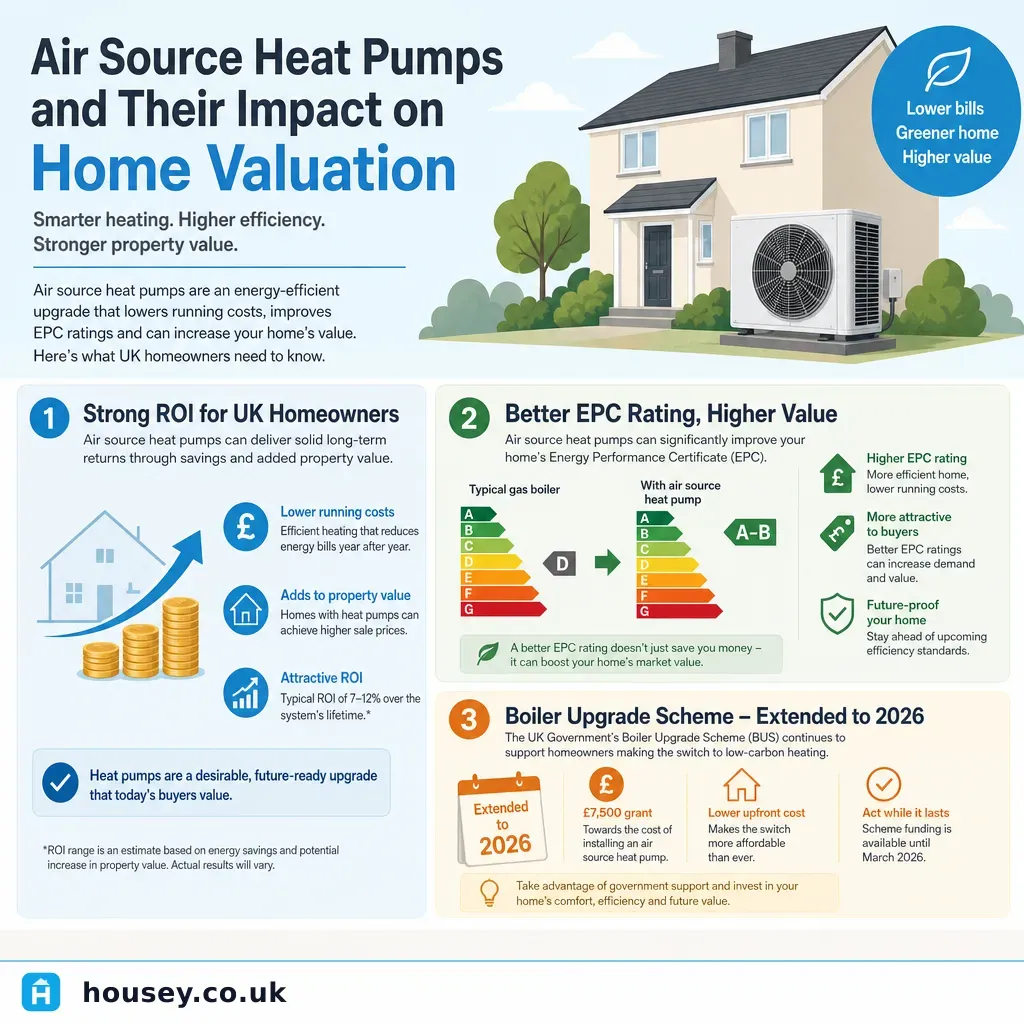
Air Source Heat Pumps and Their Impact on Home Valuation
An air source heat pump can improve your home's EPC rating, which may positively influence its market value — particularly as mortgage lenders and buyers increasingly factor in energy performance.
 Energy & Retrofit
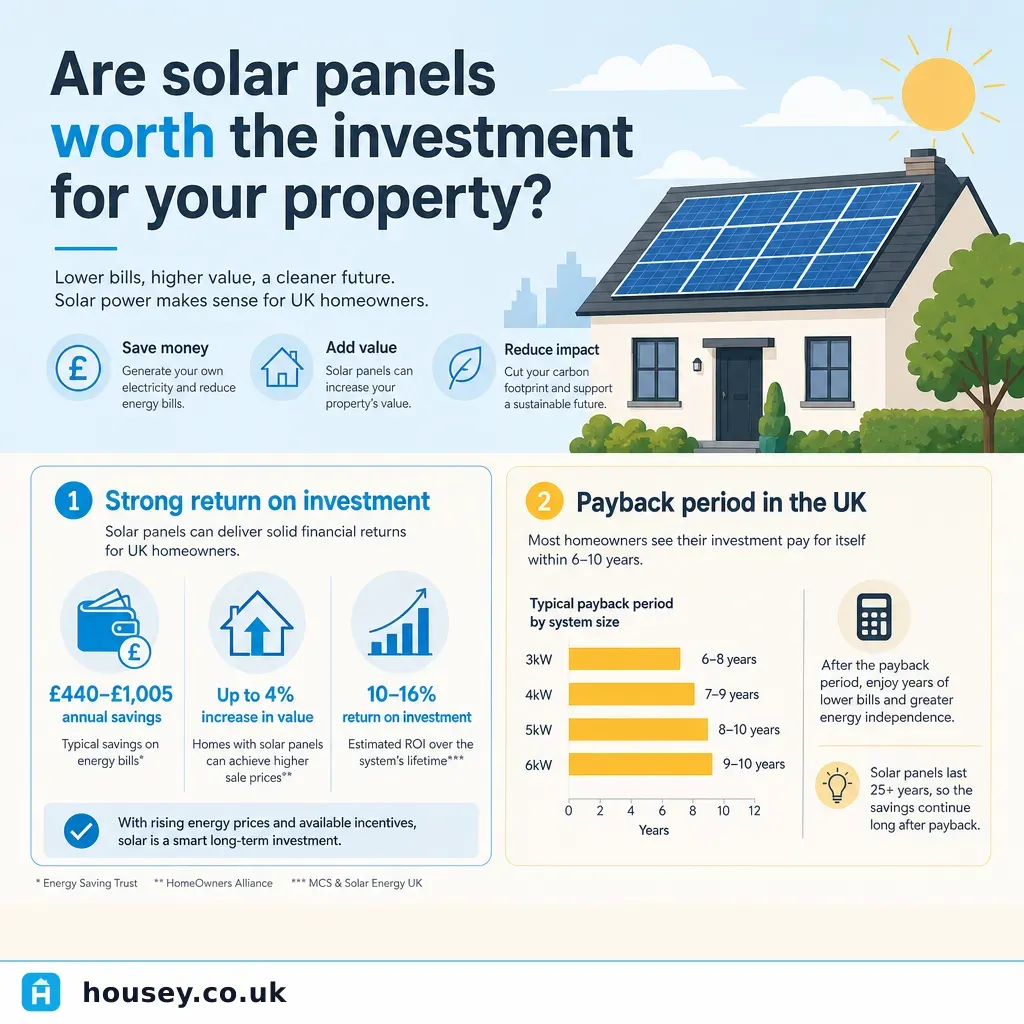
Are solar panels worth the investment for your property?
Solar panels can be a worthwhile investment for many UK homeowners, with typical payback periods of 10–15 years and ongoing income from the Smart Export Guarantee.
 Energy & Retrofit
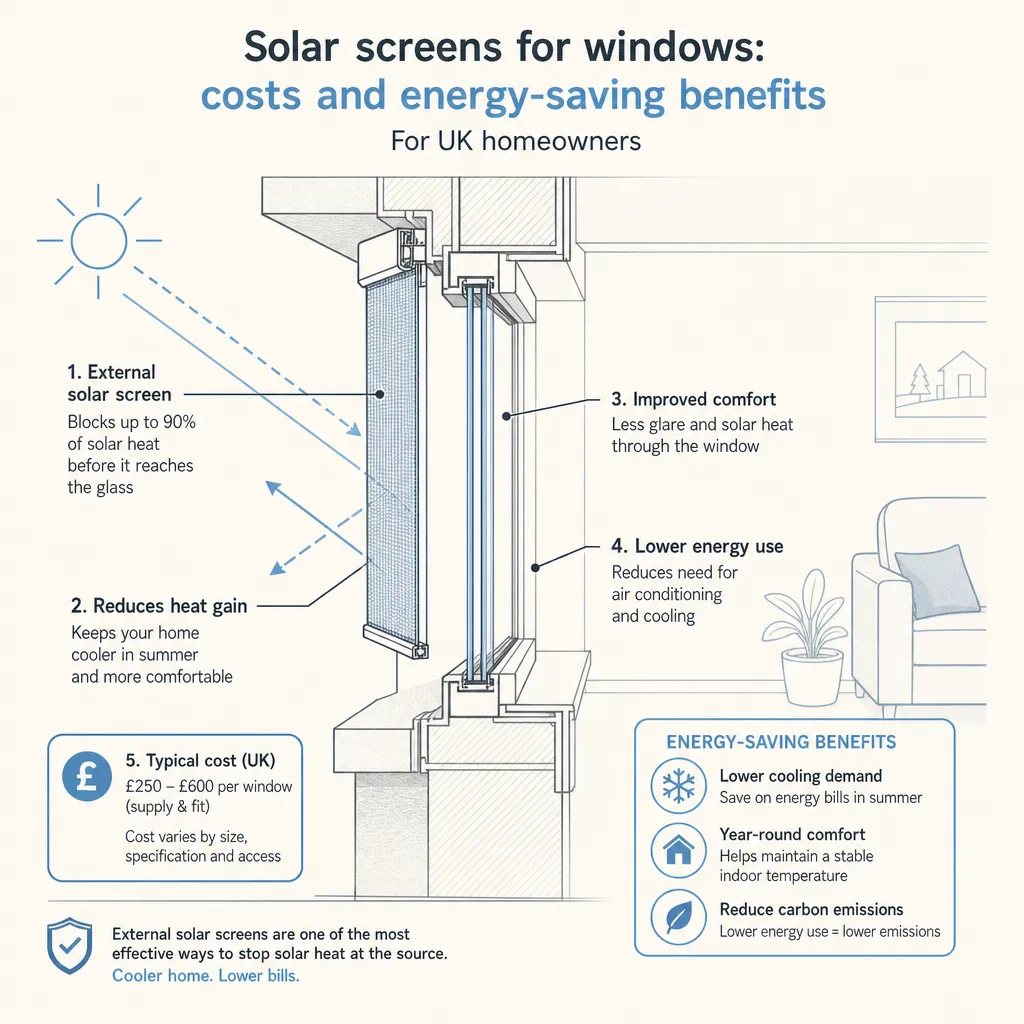
Solar screens for windows: costs and energy-saving benefits
Solar screens for windows are shading systems — external mesh screens, solar control film, or fixed louvres — that reduce solar heat gain and glare.