Solar screens for windows: costs and energy-saving benefits
By Housey · Last reviewed 12th of May 2026
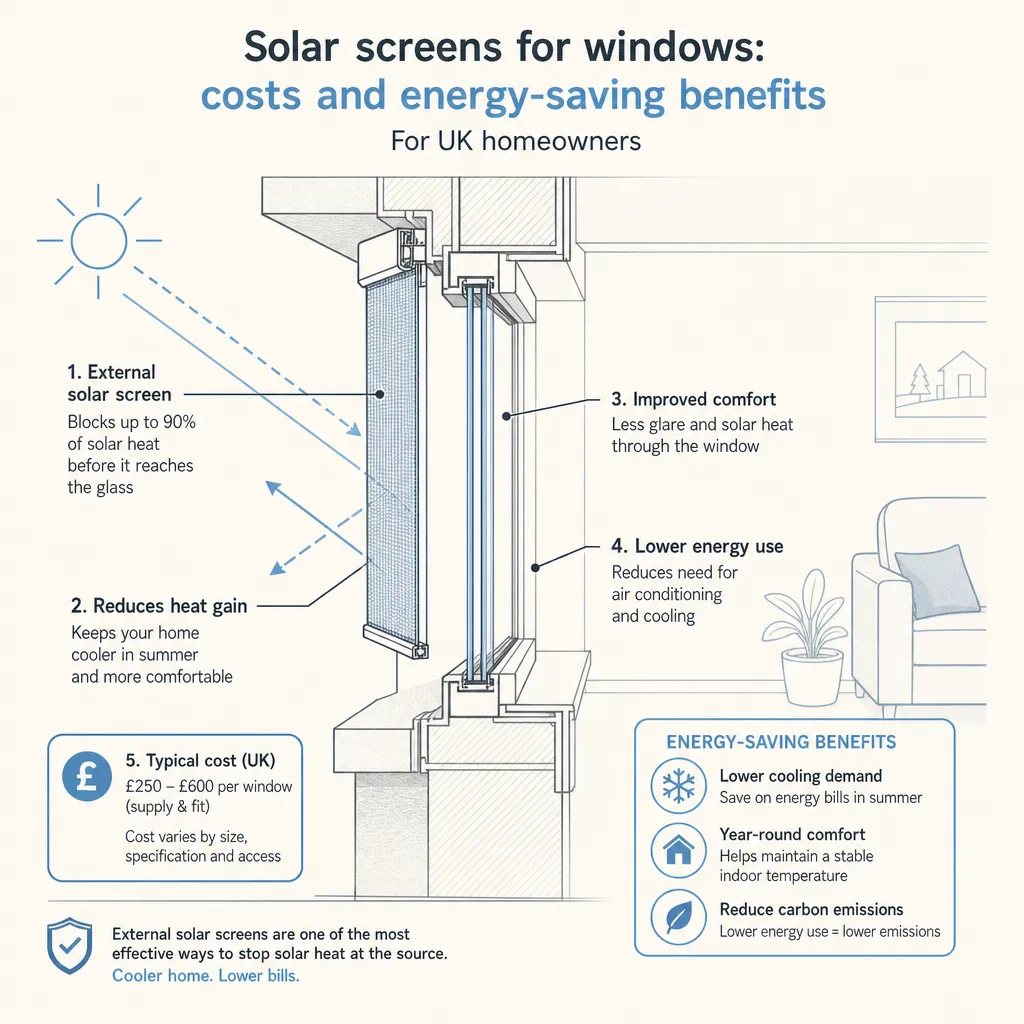
Solar screens for windows: costs and energy-saving benefits
South- and west-facing rooms in UK homes can overheat during summer months, particularly in properties with large glazed areas, south-facing conservatories, or single-aspect flats. Solar screens — whether external mesh roller blinds, solar control window film, or fixed external louvres — offer a targeted way to reduce solar heat gain, cut glare, and lower reliance on electric fans or air conditioning. Window shading is often an underutilised retrofit measure compared with insulation or glazing upgrades, yet it can meaningfully improve summer thermal comfort without major building work.
Key points
- Solar control window film can reduce solar heat gain through a standard double-glazed window by 40–80% depending on the film's solar heat gain coefficient (SHGC) and visible light transmission (VLT) rating.
- External roller solar screens typically cost £150–£400 per window installed; solar control window film typically costs £25–£80 per m² professionally applied. (Indicative UK costs, last reviewed 2026-05-12.)
- External shading intercepts solar radiation before it enters the glass and is significantly more effective at reducing heat gain than internal blinds or film applied to the inner pane surface.
- Fitting external solar screens to windows on listed buildings or in conservation areas may require consent — check with your local planning authority before proceeding with any external alteration.
- Leasehold properties, including flats and maisonettes, may require landlord or management company consent before any external solar screen or louvre is installed.
What are solar screens?
The term covers several distinct product types:
- Solar control window film: A thin polyester laminate applied directly to the interior glass surface, reducing visible light transmission and infrared or UV heat gain. Available in reflective, neutral, and tinted variants to suit different aesthetics and planning contexts.
- External roller solar screens: Fabric mesh screens in a cassette roller system mounted above or within the window reveal, operated manually or via electric motor. Fabric openness typically ranges from 1% (very low light transmission, high heat rejection) to 10% (more light, less heat rejection).
- Fixed external louvres or brise-soleil: Horizontal or angled blades mounted on the façade, designed to block high summer sun angles while admitting lower winter sun. More common in new-build and commercial projects, but increasingly used on domestic extensions and large-glazed areas.
- Retractable awnings: Canopy-style external shading for windows and glazed doors; effective for outdoor comfort and can reduce internal heat gain through large openings.
How much do solar screens cost in the UK?
Product type | Typical installed cost | DIY possible? | Typical lifespan |
|---|---|---|---|
Solar control window film | £25–£80 per m² (professional) | Yes — DIY kits £5–£20 per m² | 10–20 years (professional grade) |
External roller solar screen (manual) | £150–£400 per window | Specialist fitting recommended | 10–15 years |
Motorised external solar screen | £400–£900 per window | No | 10–15 years |
Fixed external louvres | £300–£800+ per window (made-to-measure) | No | 25+ years |
Retractable awning | £600–£2,500 (large opening) | No | 10–20 years |
Indicative UK costs, last reviewed 2026-05-12. Costs vary significantly by supplier, window size, property type, and access conditions. Obtain multiple quotes before committing to any product or installer.
Energy-saving benefits: what to expect
Solar screens reduce the need for active cooling — electric fans, portable air conditioning units, or whole-house cooling systems. In a UK context, this matters most between May and September, and is most significant in south- or west-facing rooms with large windows or glazed roof structures.
What the evidence indicates:
- External roller solar screens with a 3% openness fabric can reduce solar heat gain through double glazing by around 70–85%, according to product testing data published by fabric manufacturers.
- Solar control window film reduces solar heat gain by 40–75% and UV transmission by up to 99% depending on specification. The Energy Saving Trust notes that window film can help reduce summer overheating in susceptible rooms, though it is not a substitute for improved glazing in poorly performing windows.
- CIBSE TM59 provides a standard methodology for assessing overheating risk in UK homes; for properties identified as at risk, passive external solar shading is among the interventions recommended before active cooling is considered.
What solar screens do not do:
- They do not significantly improve winter thermal insulation — most window film and external screens have negligible impact on U-values.
- Internal blinds and curtains are considerably less effective at blocking heat than external screens, because solar radiation passes through the glass before being intercepted.
- They do not replace the need for adequate natural ventilation — opening windows during cooler periods remains important for maintaining comfortable indoor temperatures.
Comparing solar screen options
Option | Best for | Not ideal for | Main limitation |
|---|---|---|---|
Solar control film | Cost-conscious retrofits, rented properties, conservation-area settings (neutral film) | North-facing rooms (minimal benefit), very old single glazing (adhesion issues) | Less effective than external shading; may noticeably darken the room |
External roller solar screen | South/west-facing rooms needing flexible, retractable shading | Properties where external mounting is restricted (leasehold, listed buildings) | Requires external fixings; periodic fabric and mechanism maintenance |
Fixed external louvres | New extensions or significant renovation projects | Retrofitting to existing windows without facade work | Higher cost; planning implications for some properties |
Retractable awning | Ground-floor glazed doors and large south-facing windows | Upper floors without structural fixing points | Primarily for exterior comfort; limited internal heat reduction |
Planning and installation considerations
Permitted development: External solar screens fitted as window accessories are generally treated as minor alterations and do not require planning permission for most houses under the Town and Country Planning (General Permitted Development) Order 2015. However:
- Properties in conservation areas or that are listed buildings may need listed building consent or conservation area consent for any external alteration — even relatively minor ones such as fixing brackets. Check with your local planning authority.
- Leasehold properties (flats, maisonettes) typically require landlord or management company consent before external alterations are made, including fixed screens or louvres.
Installation: Solar control film can be applied by a confident homeowner using a DIY kit, though professional application produces a cleaner result and typically carries a longer warranty. External roller screens and fixed louvres should be fitted by specialist installers — correct anchoring into reveals or lintels matters for both performance and long-term safety.
What to ask before accepting a quote
- What is the solar heat gain coefficient (SHGC) and visible light transmission (VLT) of the specified product?
- Is this an external or internal application, and how does that affect actual heat-reduction performance?
- What warranty covers the fabric or film separately from the operating mechanism or frame?
- How will fixing points be sealed to prevent water ingress at the penetrations?
- Is VAT included in the quoted price?
- What routine maintenance does the product require, and is a servicing arrangement available?
- Is planning consent, landlord approval, or management company sign-off required for this property?
When to get professional help
For most domestic solar screen installations, a specialist supplier or window installer can advise on product selection and fit the screens without further professional involvement. Consider involving an energy-efficiency consultant if:
- Overheating affects multiple rooms and you want to prioritise where shading investment will deliver the greatest impact.
- You are planning a wider retrofit and need to understand how solar shading interacts with ventilation strategy, glazing U-values, and overall thermal performance under PAS 2035 or similar frameworks.
- Your property has complex glazing — large rooflights, curtain walling, or an atrium — that may need a more tailored shading strategy.
How Housey can help
If you are unsure which window shading approach best suits your property, Housey connects you with energy-efficiency consultants who can review your home's thermal performance and identify priority interventions, as well as experienced window and door installers who can advise on and fit external solar screens, louvres, and solar control glazing upgrades.
Frequently asked questions
Do solar screens on windows really work in the UK?
Yes, particularly for south- and west-facing rooms that overheat in summer. External roller screens can reduce solar heat gain by 70–85% on affected windows. Solar control film is somewhat less effective but still meaningful. The benefit is most noticeable in rooms that currently become uncomfortably warm on sunny days or that rely on electric fans during warm weather.
Can I fit solar screens on a listed building or in a conservation area?
You may need listed building consent or conservation area consent for external solar screen or louvre installations. Neutral, low-reflectance solar control window film is often the most acceptable option in conservation settings as it does not alter the external appearance significantly. Always check with your local planning authority or a conservation officer before proceeding with any external alteration.
Will solar window screens reduce my energy bills?
They can reduce the need for electric fans or air conditioning during summer. However, UK homes do not traditionally rely heavily on active cooling, so bill savings may be modest. The primary benefit is thermal comfort rather than large bill reductions — though in homes with heat pumps or cooling systems running in summer, the saving can be more tangible.
How long does solar control window film last?
Professionally applied solar control film typically lasts 10–20 years on interior surfaces with normal cleaning. Avoid abrasive cleaners. Quality film from recognised brands usually comes with a manufacturer's warranty — ask for warranty terms before accepting a professional quote. DIY-applied films may last 5–10 years depending on product quality and application care.
Sources and further reading
- Energy Saving Trust: home overheating advice — Energy Saving Trust
- CIBSE TM59: Design methodology for the assessment of overheating risk in homes — CIBSE
- Permitted development rights for householders: technical guidance — GOV.UK
- Planning Portal: listed buildings and conservation areas — Planning Portal
Useful next reads
 Energy & Retrofit
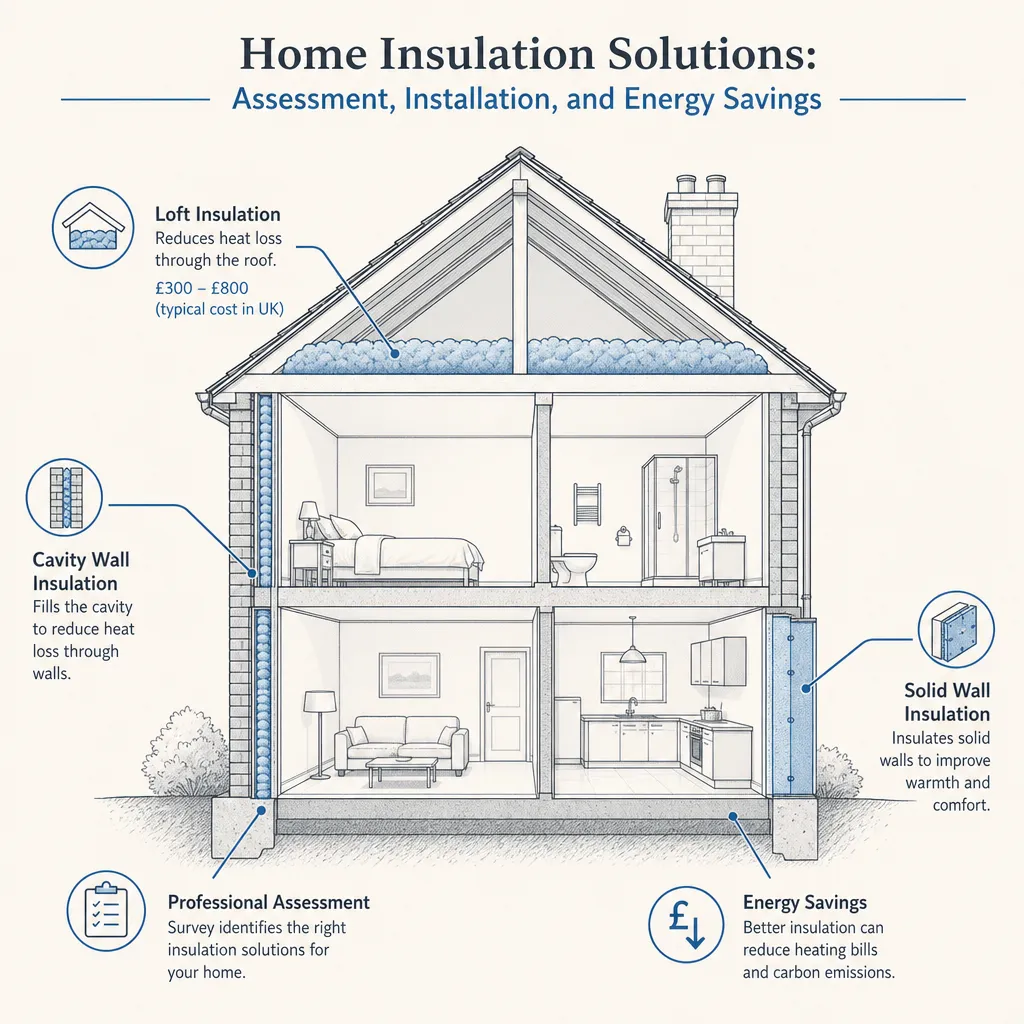
Home Insulation Solutions: Assessment, Installation, and Energy Savings
Home insulation in the UK covers loft, cavity wall, solid wall, and floor insulation.
 Energy & Retrofit
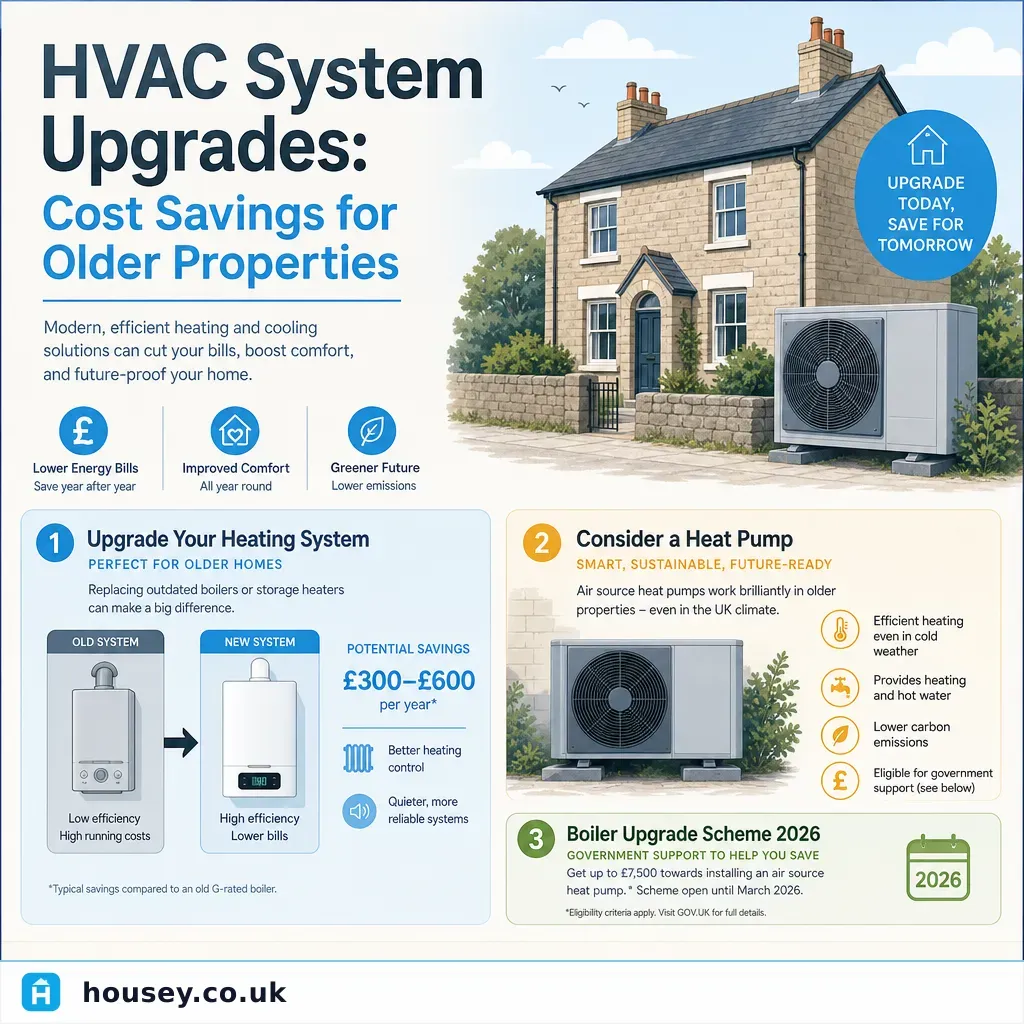
HVAC System Upgrades: Cost Savings for Older Properties
Upgrading heating and ventilation systems in an older UK home can significantly reduce energy bills, but the best approach depends on the property's insulation, construction, and heat demand.
 Energy & Retrofit
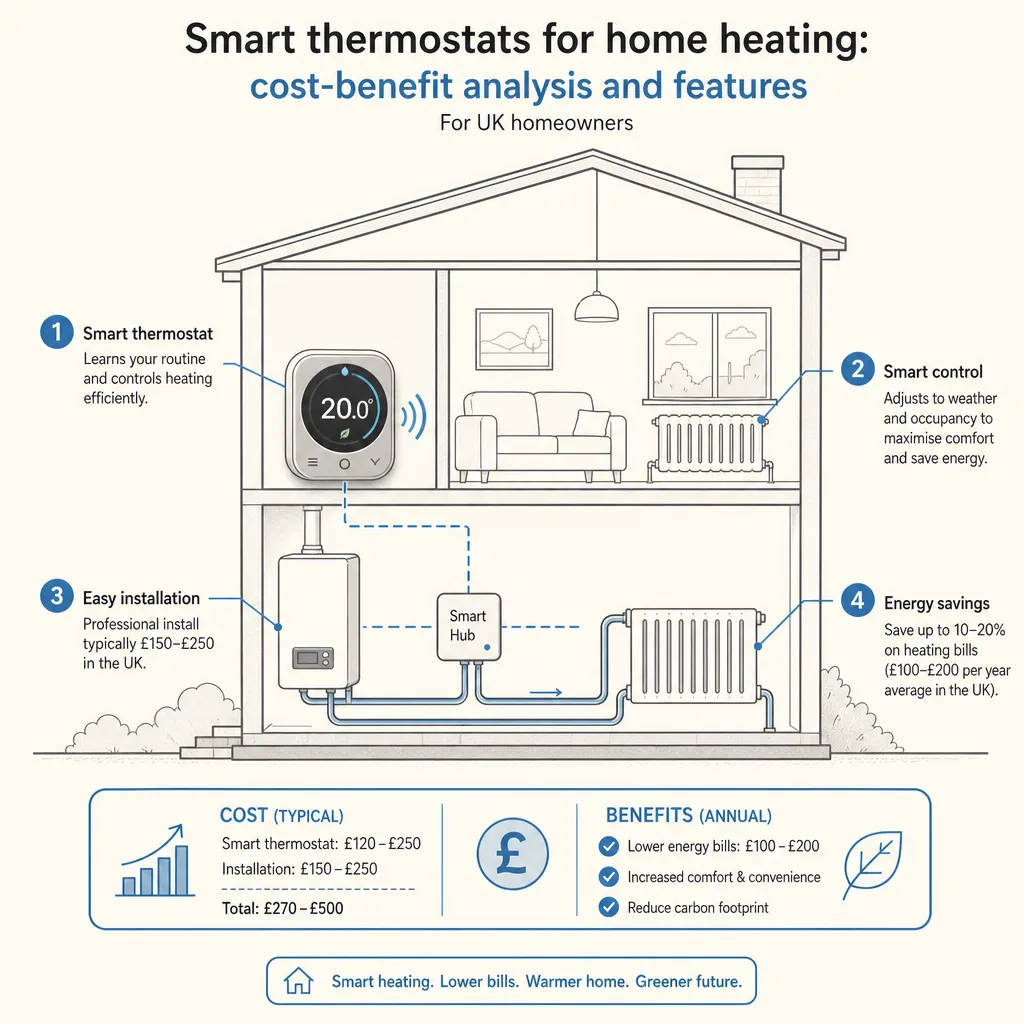
Smart thermostats for home heating: cost-benefit analysis and features
A smart thermostat typically costs £150–£350 installed and can reduce heating bills by 15–25% annually, according to the Energy Saving Trust.
 Energy & Retrofit
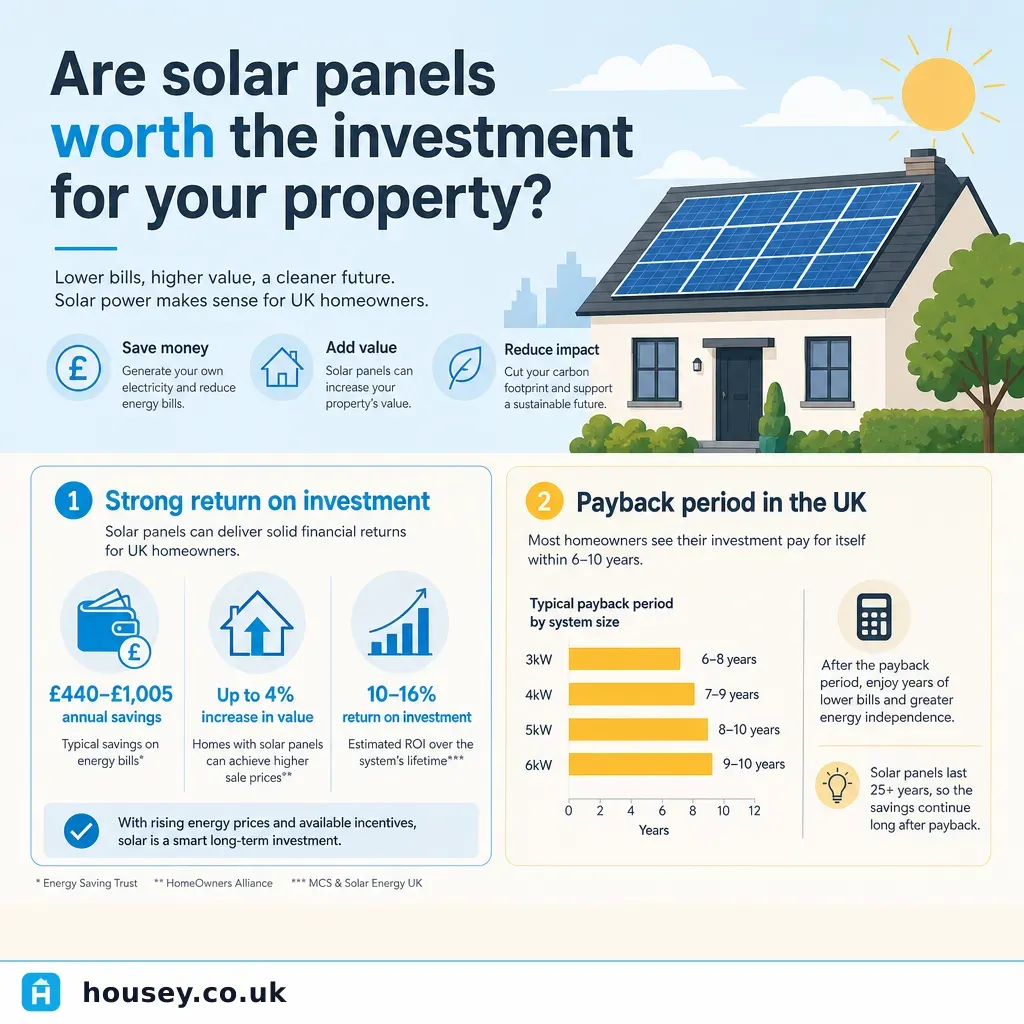
Are solar panels worth the investment for your property?
Solar panels can be a worthwhile investment for many UK homeowners, with typical payback periods of 10–15 years and ongoing income from the Smart Export Guarantee.
 Energy & Retrofit
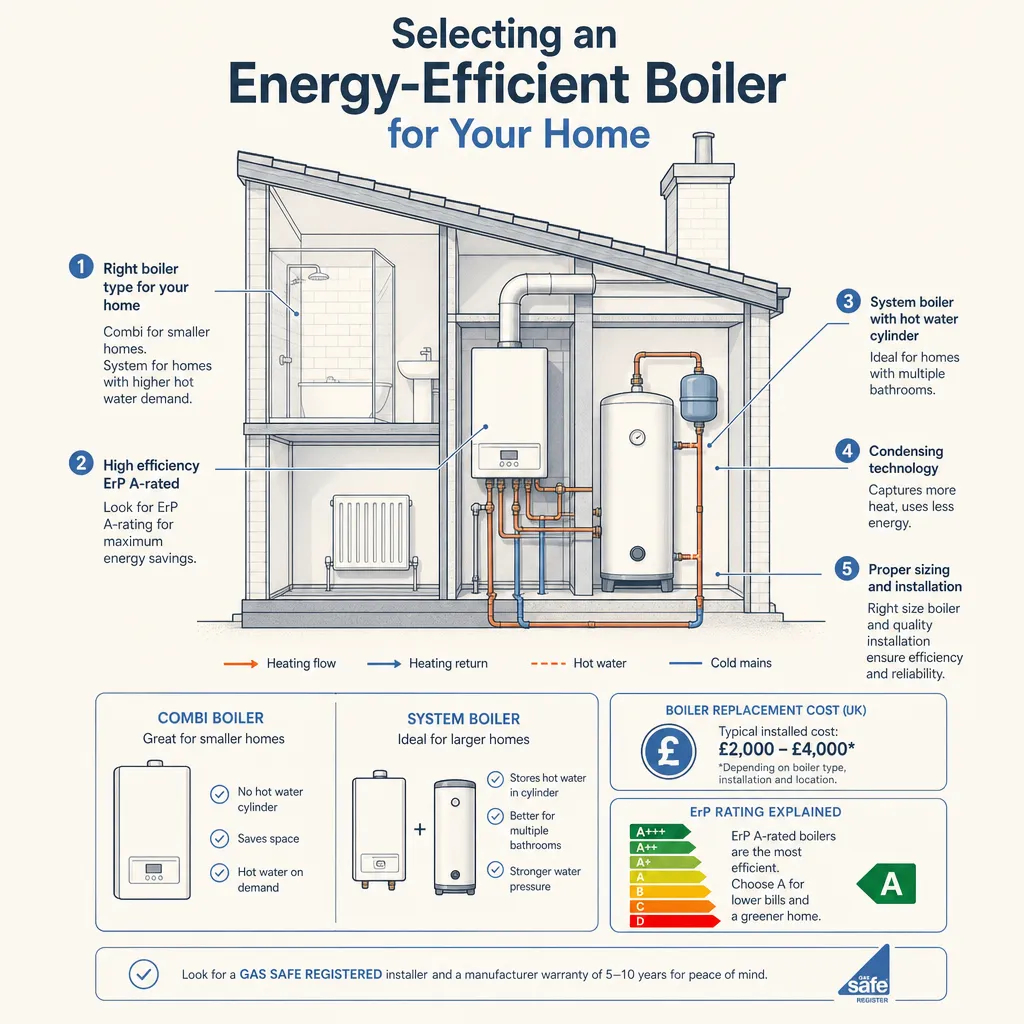
Selecting an Energy-Efficient Boiler for Your Home
For most UK homes, an A-rated condensing combi boiler is the most efficient and space-saving replacement.