Solar Battery Storage: Surplus Power Management and System Operation
By Housey · Last reviewed 31st of May 2026
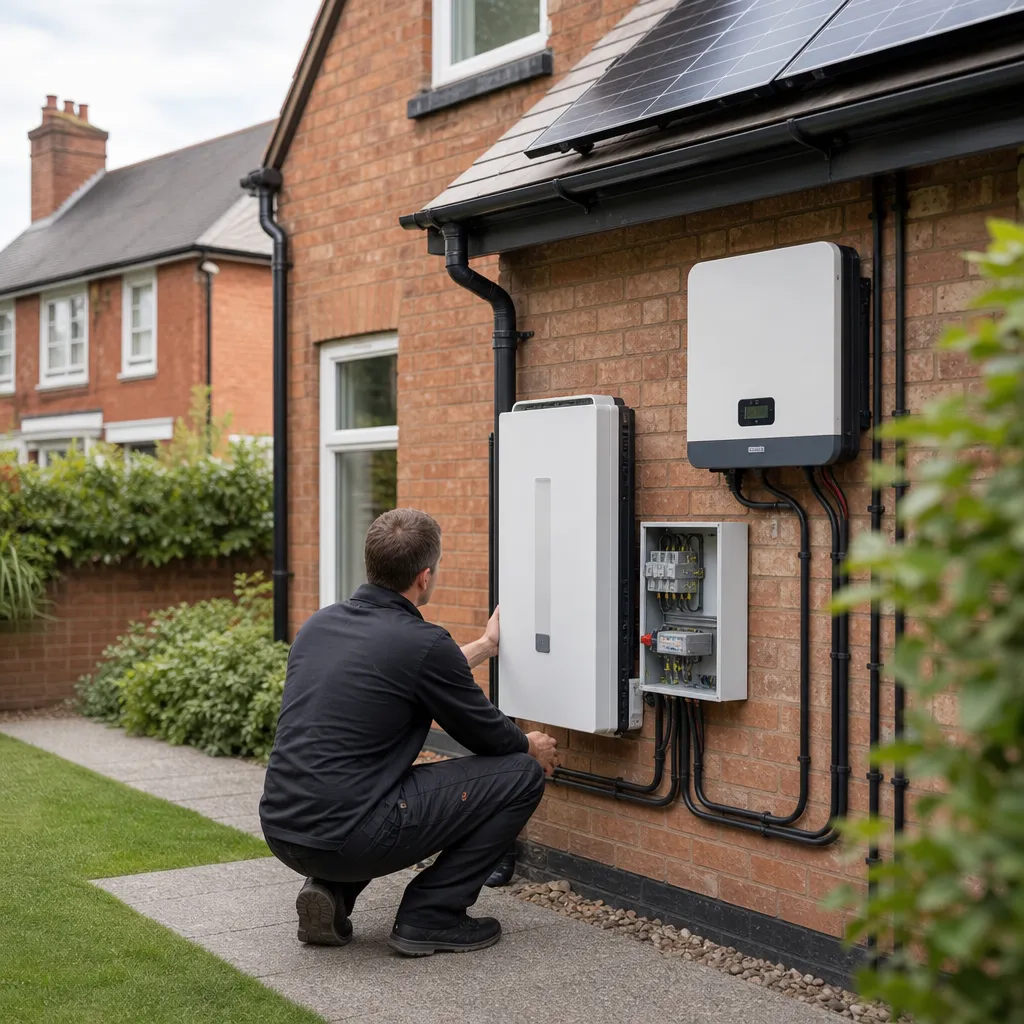
Solar Battery Storage: Surplus Power Management and System Operation
Solar battery storage is one of the fastest-growing additions to UK home energy systems, particularly as electricity prices have remained volatile and time-of-use tariffs have become more widely available. For homeowners already generating their own power — or planning to — battery storage changes how surplus electricity is handled, from a simple grid export into a managed, flexible household resource. The question is not just whether to add a battery, but how these systems actually work and what realistic expectations look like.
Key points
- A solar battery stores excess generation that would otherwise be exported to the grid, allowing it to be used when panels are not producing — typically evenings and overcast days.
- Most home battery systems in the UK have usable capacities of 5–15 kWh; a typical 3-bedroom household uses roughly 8–10 kWh per day.
- Smart Export Guarantee (SEG) payments apply to surplus electricity exported to the grid; adding a battery reduces export volume but increases self-consumption.
- MCS (Microgeneration Certification Scheme) certification of both the product and the installer is required for systems claiming government-backed incentives; the MCS database lists accredited installers.
- Battery management systems (BMS) protect cells from overcharge, deep discharge, and thermal events — a functioning BMS is essential for safe, long-term operation.
How solar battery storage works
A solar panel array generates DC electricity, which an inverter converts to AC for household use. When generation exceeds demand, surplus power has three possible destinations:
- Charged into the battery — stored for later use
- Exported to the grid — eligible for Smart Export Guarantee payments
- Both — the battery management system prioritises charging to a set threshold, then exports any remainder
When panels are not generating (night, heavy cloud), the battery discharges to supply the home. Once depleted, the home draws from the grid as normal.
A hybrid inverter manages solar, battery, and grid connections in a single unit. Retrofitting a battery to an existing solar installation may require an additional AC-coupled battery inverter — a qualified installer can advise which configuration suits your system.
Understanding surplus power management
How the system decides when to charge and export
Most modern battery systems use a combination of:
- Self-consumption mode: prioritise charging the battery; export only when full
- Time-of-use (TOU) optimisation: charge from the grid during cheap off-peak periods (such as overnight on Octopus Agile or Go tariffs) and discharge during peak periods — reducing grid import costs even without solar
- Grid export limiting: some Distribution Network Operators (DNOs) require export to be capped at a set kW threshold; the inverter enforces this automatically
Smart Export Guarantee
Under the Smart Export Guarantee, licensed energy suppliers with over 150,000 customers must offer a tariff for exported solar electricity. SEG rates vary by supplier; as of 2025, typical rates range from approximately 4p to 15p per kWh. Adding a battery reduces exported volume, so compare the value of export payments against the saving from increased self-consumption when deciding on battery size.
Battery types used in UK homes
Battery technology | Typical cycle life | Thermal safety | Best for | Notes |
|---|---|---|---|---|
Lithium iron phosphate (LFP) | 3,000–6,000 cycles | High — no thermal runaway risk | Most UK homes | Dominant technology in new installs |
Nickel manganese cobalt (NMC) | 1,500–3,000 cycles | Moderate | Higher energy density applications | Requires robust BMS; less common in UK residential |
Lead-acid (AGM/gel) | 500–1,200 cycles | Good | Off-grid or budget retrofits | Heavy and less efficient; rarely recommended for new grid-tied installs |
Most new UK residential battery installations use LFP chemistry for its safety profile and cycle life.
System sizing: what affects how much storage you need
Sizing a battery correctly requires a site assessment. Key factors include:
- Daily household consumption: typically 8–10 kWh for a 3-bedroom home, but varies significantly with occupancy and whether the home has electric heating or an EV
- Solar array output: a 4 kWp array in southern England generates roughly 3,400–3,800 kWh per year; summer daily peaks can exceed 20 kWh
- Usage patterns: households with high daytime demand (home workers, daytime EV charging) may see less benefit from storage than those with evening-heavy demand
- Tariff strategy: if planning to charge from the grid overnight using a TOU tariff, a larger battery may improve returns
A qualified MCS-accredited installer should assess your property before recommending a battery size. Online calculators can give a rough indication but should not replace a proper site survey.
What not to assume about solar battery storage
Common misunderstandings that can lead to disappointment or poor purchasing decisions:
- Do not assume a battery takes you off-grid: most UK home batteries are grid-tied; they supplement grid supply rather than replace it. True off-grid operation requires substantially larger storage and careful system design.
- Do not assume the battery charges only from solar: many systems can also charge from the grid — useful for TOU tariff optimisation — but this affects the economics and SEG eligibility if grid-charged power is later exported.
- Do not assume all batteries include backup power: most standard grid-tied systems do not supply power during a grid outage unless they include a specific islanding or backup function. Check this explicitly before purchasing.
- Do not assume stated capacity equals usable capacity: usable capacity is typically 90–95% of stated capacity for LFP, and depth-of-discharge settings also affect long-term battery longevity.
- Do not assume installation qualifies for incentives automatically: MCS certification of both the product and the installer is required for SEG eligibility and funded schemes.
Monitoring and maintaining your battery system
Most modern battery systems include an app or web portal for monitoring:
- State of charge (%)
- Daily and monthly generation, consumption, and export figures
- Battery health indicators
- Charge and discharge history
Maintenance checklist:
Do not attempt to open, repair, or modify battery units. Internal work must be carried out by a qualified electrician or the system manufacturer's service team.
When to get professional help
Contact an MCS-accredited installer or qualified electrician if:
- Unexpected alarms or error codes appear in the monitoring app
- The battery is not charging or discharging as expected over several consecutive days
- There are signs of physical damage, swelling, unusual heat, or smell from the unit
- The inverter is tripping the consumer unit or displaying persistent faults
- You are considering adding more solar panels, a second battery, or an EV charger — changes require re-assessment of the whole system
How Housey can help
Housey connects you with MCS-accredited professionals for both solar surveys — to assess suitability and size a system correctly — and battery storage installers for supply and installation. Request quotes from vetted local professionals and compare them in one place.
Frequently asked questions
Does adding a battery reduce my Smart Export Guarantee payments?
Yes. A battery increases self-consumption, reducing the volume of electricity exported to the grid. Your Smart Export Guarantee payments will fall as a result. Whether the saving from self-consumption outweighs the loss of export income depends on your tariff rates and usage patterns — an MCS-accredited installer can model this for your specific property.
Can I add a battery to an existing solar installation?
In most cases, yes — but compatibility depends on the inverter type and age. Older string inverters may require an additional AC-coupled battery inverter, which adds to the total cost. A site survey by an MCS-accredited installer will confirm what is technically feasible, the likely configuration, and the overall cost involved.
How long does a home battery last?
Most LFP batteries are warranted for 10 years or a specified number of cycles, often 4,000–6,000. Calendar life frequently exceeds the warranty period if the system operates within its design parameters and the battery management system remains functional. Retain installation documentation and the warranty certificate throughout ownership.
Is battery storage subject to VAT relief?
Battery storage installed alongside solar panels, or as a standalone retrofit to an existing solar system, qualified for 0% VAT under the Energy-Saving Materials relief as of 2024–25. VAT rules can change; check current GOV.UK guidance on VAT relief for energy-saving materials before purchasing to confirm the position at the time of installation.
Sources and further reading
- Smart Export Guarantee (SEG) guidance — GOV.UK
- VAT relief on energy-saving materials — GOV.UK
- MCS Certification — find an accredited installer — Microgeneration Certification Scheme
- Solar panels guide — Energy Saving Trust
Useful next reads
 Energy & Retrofit
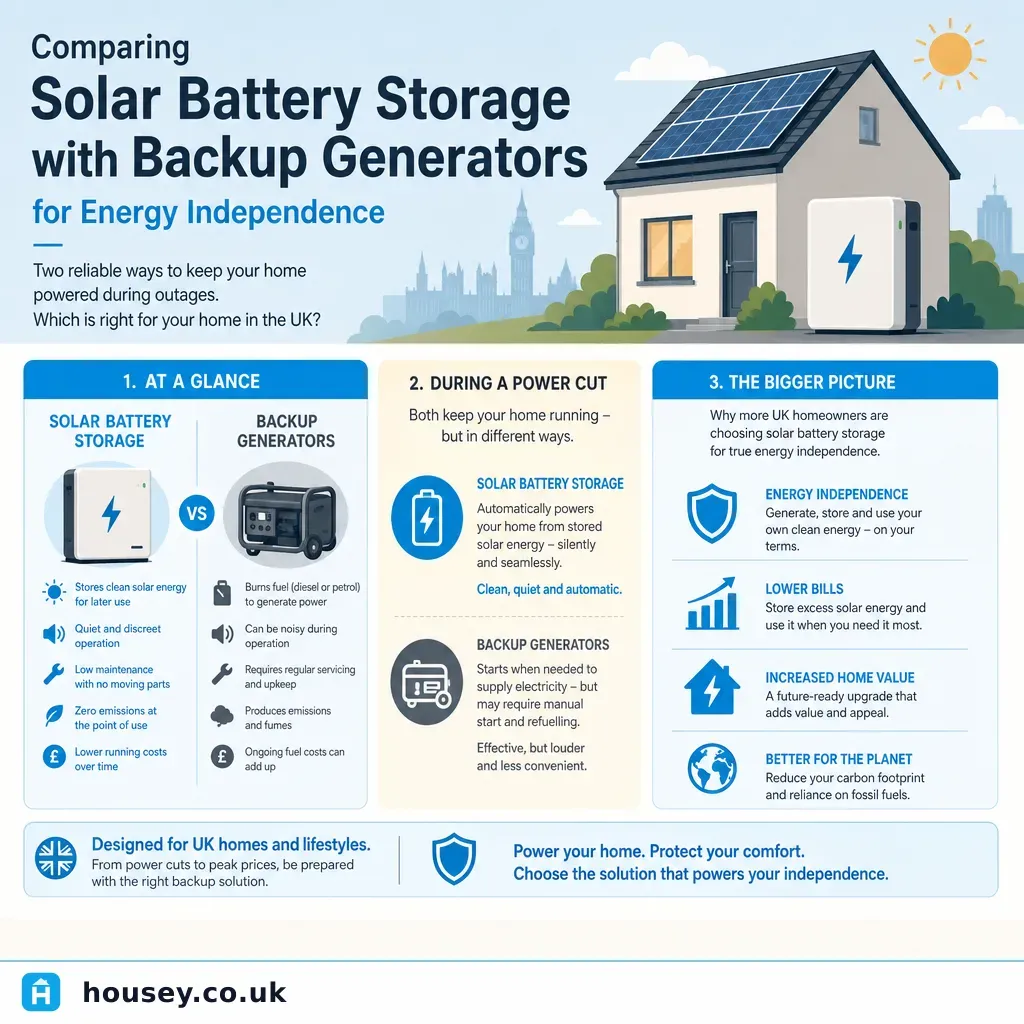
Comparing Solar Battery Storage with Backup Generators for Energy Independence
Solar battery storage and backup generators both offer energy resilience but work very differently.
 Energy & Retrofit
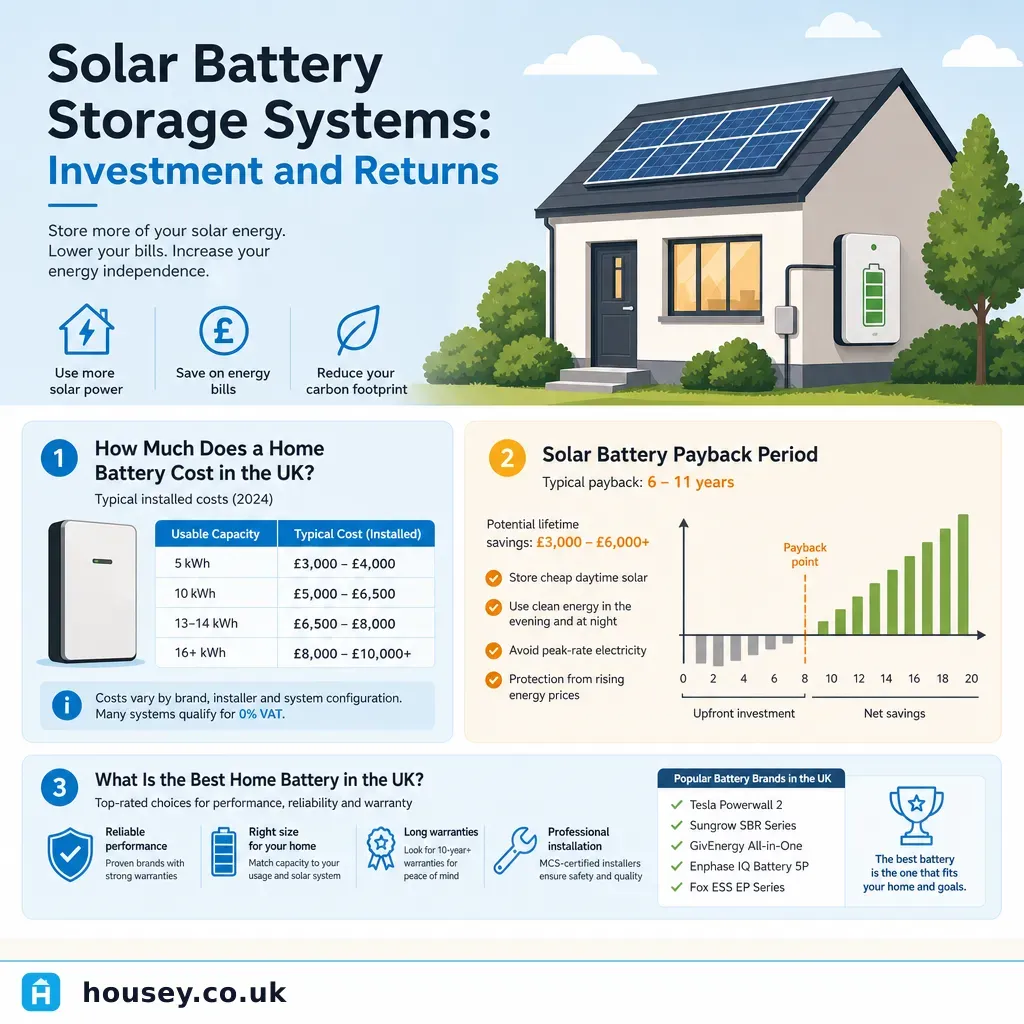
Solar Battery Storage Systems: Investment and Returns
A home battery storage system stores surplus solar energy for use in the evening, reducing grid electricity imports.
 Energy & Retrofit
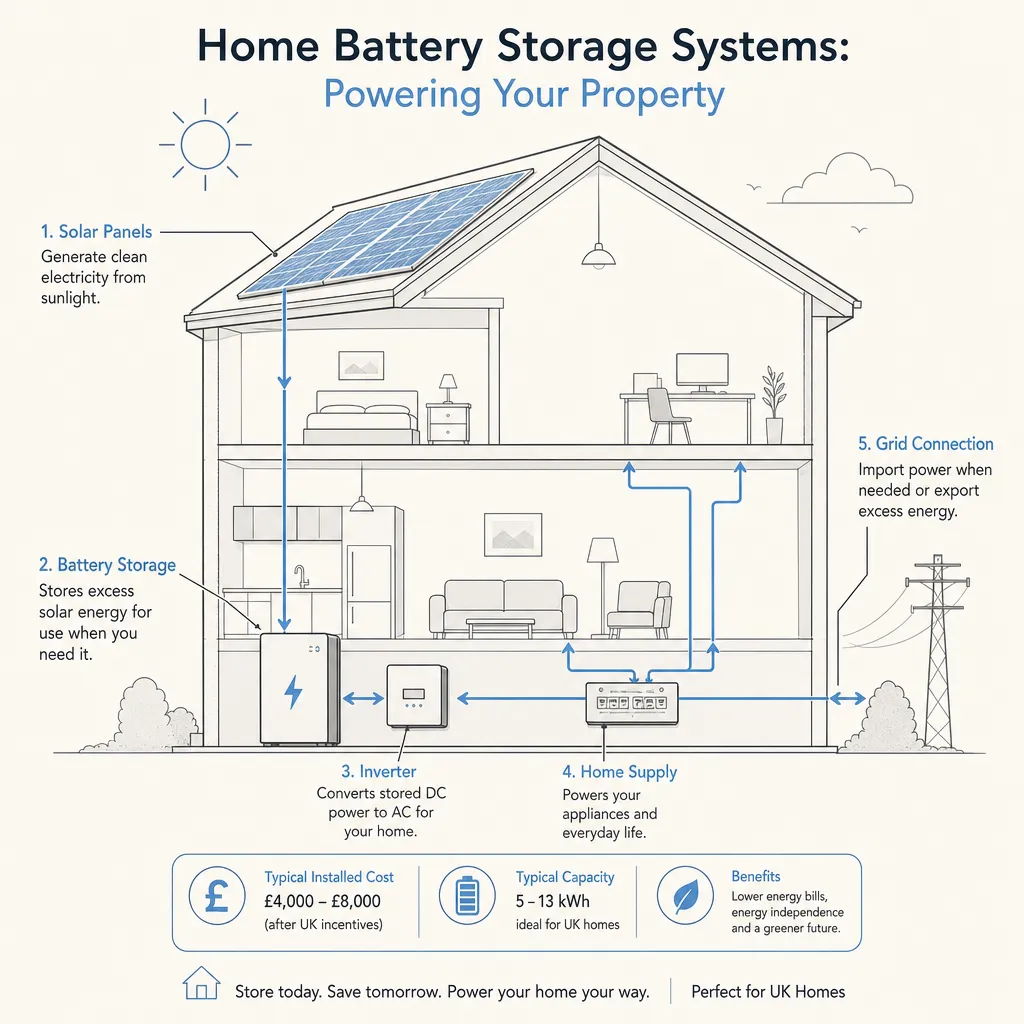
Home Battery Storage Systems: Powering Your Property
Home battery storage systems store electricity from solar panels or the grid — typically 5 to 15 kWh capacity — for use when generation is low or tariffs are high.
 Energy & Retrofit
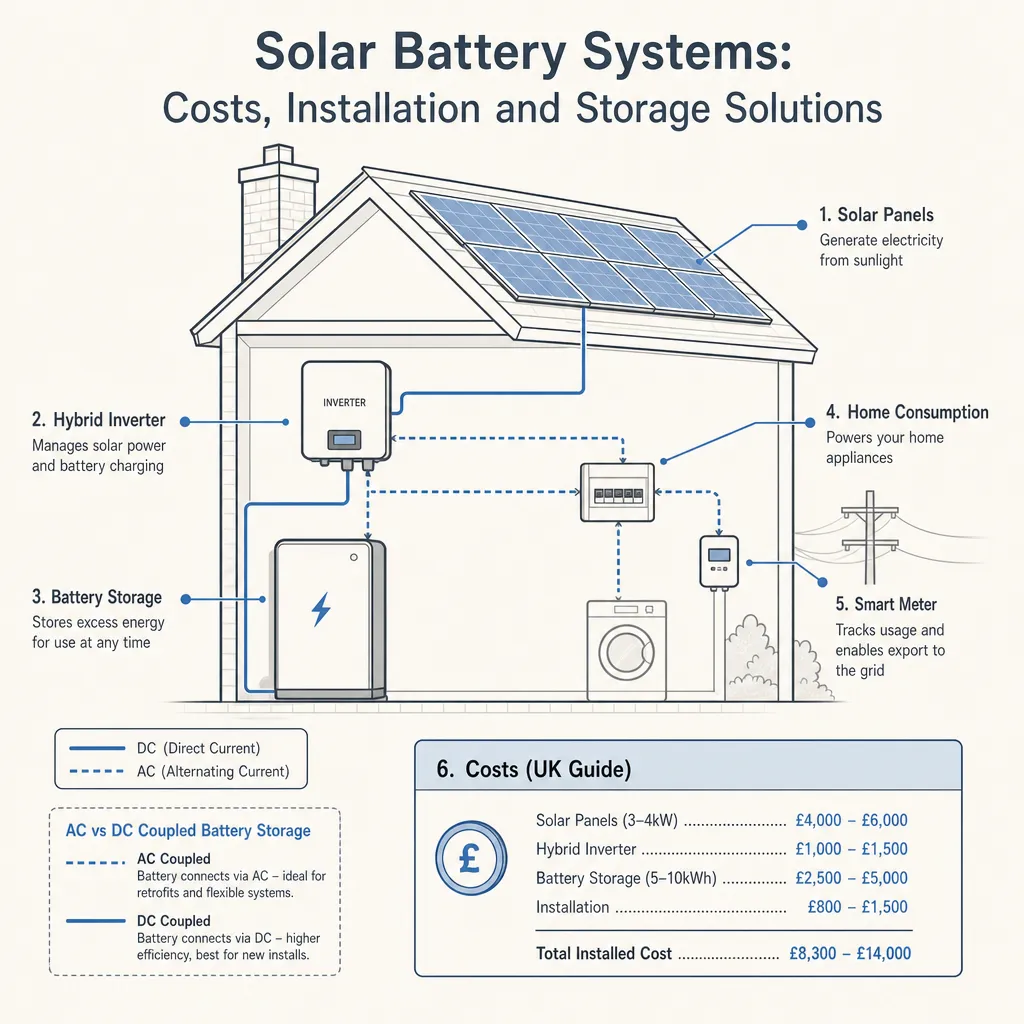
Solar Battery Systems: Costs, Installation and Storage Solutions
Solar battery systems in the UK typically cost £3,000–£8,000 installed for a 5–10 kWh system, though prices vary by brand, capacity, and coupling method.
 Energy & Retrofit
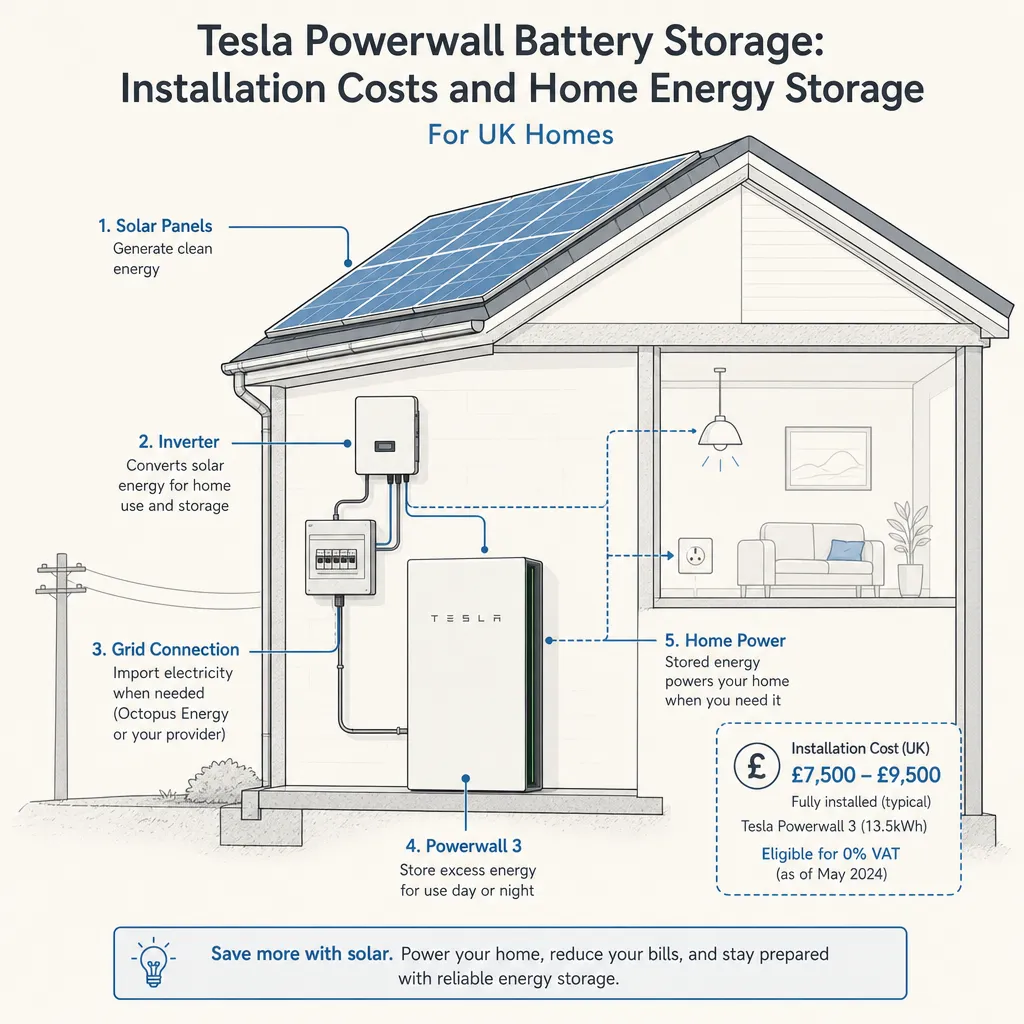
Tesla Powerwall Battery Storage: Installation Costs and Home Energy Storage
The Tesla Powerwall 3 typically costs £8,000–£12,000 installed in the UK, including the required gateway unit.