Comparing Solar Battery Storage with Backup Generators for Energy Independence
By Housey · Last reviewed 31st of May 2026
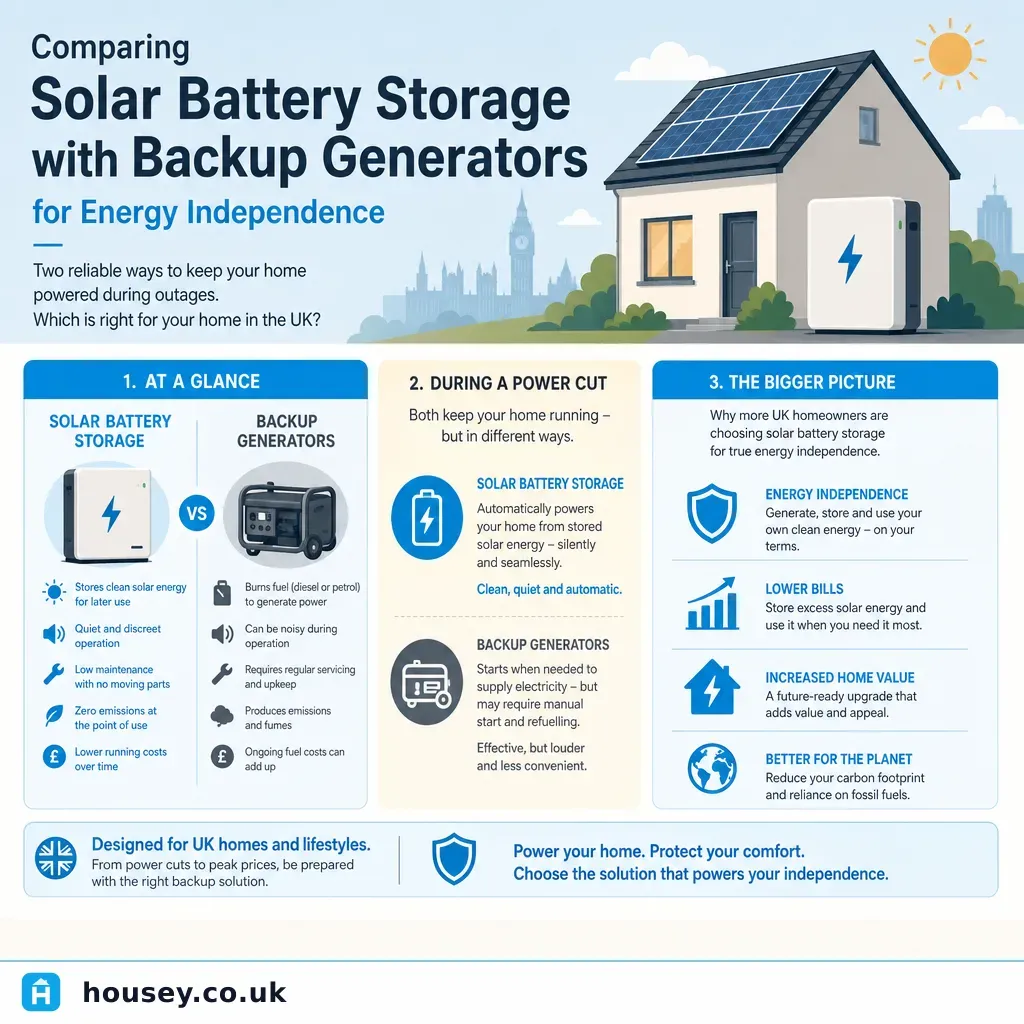
Comparing Solar Battery Storage with Backup Generators for Energy Independence
The choice between solar battery storage and a backup generator has become one of the more consequential decisions for UK homeowners investing in energy resilience. Both technologies address the same broad goal — having power when the grid cannot supply it, or reducing dependence on costly imported electricity — but they operate on fundamentally different principles and suit very different household situations. Getting the wrong one means spending thousands on equipment that does not match how your home actually uses energy.
Key points
- Home solar batteries store surplus photovoltaic (PV) electricity for use at night or during grid interruptions; petrol, diesel, or LPG generators produce electricity on demand but consume fuel each time they run
- Indicative installed costs: home battery storage £3,000–£8,000+ for a 5–10 kWh system; standby generators £500–£3,000 to purchase plus ongoing fuel and annual servicing (Indicative UK costs, last reviewed 2026-05-31)
- Battery storage qualifies for 0% VAT under the Energy-Saving Materials relief when supplied and installed by a VAT-registered installer in Great Britain
- Carbon monoxide from generator exhaust is a potentially fatal hazard — HSE guidance requires generators to be operated outdoors at all times, well clear of windows, doors, and air intakes
- The Smart Export Guarantee (SEG) pays eligible homeowners for electricity exported to the grid; self-consuming that surplus via a battery is often more financially beneficial when import tariffs substantially exceed export rates
How solar batteries and generators compare
Feature | Solar battery storage | Backup generator |
|---|---|---|
Primary function | Store surplus PV electricity for use at night or during outages | Generate electricity on demand from fuel |
Energy source | Solar PV surplus or off-peak grid on time-of-use tariffs | Petrol, diesel, LPG, or natural gas |
Running costs | Near-zero; battery capacity degrades over 10–15 years | Fuel per hour of use plus annual servicing |
Noise | Silent | Considerable noise during operation |
Emissions at point of use | None | CO₂ and exhaust fumes; CO risk if operated near enclosed spaces |
Response to a power cut | Automatic with a backup-enabled hybrid inverter | Manual start, or auto-start on higher-specification standby models |
0% VAT eligible? | Yes (Energy-Saving Materials relief) | No |
Typical upfront cost | £3,000–£8,000+ installed | £500–£3,000+ to purchase; more for permanently installed standby units |
Best suited to | Solar PV owners reducing daily grid import | High-load emergency backup or properties without solar panels |
(Indicative UK costs, last reviewed 2026-05-31)
Which option suits your situation?
- Choose solar battery storage if you have, or are planning, solar PV panels and your primary goal is to reduce daily grid import and electricity bills over the long term.
- Choose a generator if you need to power high-demand appliances — an electric range, large water pump, or workshop machinery — during outages and you do not have solar PV.
- Consider both if you have critical loads such as medical equipment, sump pumps, or home office infrastructure that cannot tolerate interruption regardless of sunlight levels or outage length.
- Ask an MCS-certified installer if you are unsure whether your existing solar inverter supports battery backup mode, or which system size matches your daily consumption profile.
- Check your local planning authority if your property is listed or in a conservation area before installing any external generator housing, fuel tank, or plant.
Costs and long-term value
Solar battery storage — indicative UK costs, last reviewed 2026-05-31:
A 5 kWh home battery, sufficient to cover evening demand in a smaller property after a reasonably sunny day, typically costs £3,000–£5,000 installed. A 10 kWh system, better suited to a family home or households wanting meaningful outage cover, usually costs £5,000–£8,000+. Prices vary by brand — GivEnergy, Tesla Powerwall, Sungrow, BYD, and others — whether AC or DC coupling to existing panels is needed, and local installer rates.
The financial return depends on the spread between your import tariff and your SEG export rate, and how much grid electricity you would otherwise import in the evenings and early mornings. Households on a time-of-use tariff such as Octopus Agile can also charge batteries overnight at lower rates, improving payback. The Energy Saving Trust notes that battery storage works best when combined with a solar PV system that generates a meaningful surplus.
Backup generators — indicative UK costs, last reviewed 2026-05-31:
A portable petrol generator (2–7 kW) typically costs £300–£1,500 to purchase. A permanently installed standby unit with an automatic transfer switch and fuel tank usually costs £2,500–£8,000+ installed. Annual servicing runs approximately £100–£300, and fuel costs depend entirely on how often the generator runs. Unlike a battery, a generator provides no ongoing financial return between outage events — it is purely a resilience cost.
Environmental and planning considerations
Solar batteries produce no direct emissions during operation. Lithium iron phosphate (LFP) chemistry — now the standard across most home storage products — offers better thermal stability and longer cycle life than earlier lithium nickel manganese cobalt oxide (NMC) chemistries, and carries a lower risk of thermal runaway.
Generators carry two significant risks: exhaust emissions (CO₂) and the acute hazard of carbon monoxide (CO). The Health and Safety Executive is explicit that generators must be operated outdoors at all times, with exhaust directed well away from windows, doors, and ventilation openings. Fitting a CO alarm is advisable in any home where a generator is used regularly.
For planning purposes, internal battery storage installations typically fall within permitted development rights. External generator housings or permanent fuel tanks may need planning consent, particularly in conservation areas or on listed buildings. Always verify with your local planning authority before any permanent external installation.
When to get professional help
Contact a qualified professional if any of the following apply:
- You want your battery to provide backup power during a grid outage — inverter configuration for this is not standard on all systems and must be done correctly for safety
- You plan to connect a generator to your household wiring, which requires a properly rated changeover or automatic transfer switch installed by a registered electrician (NICEIC or NAPIT)
- Your property is listed or in a conservation area and you are uncertain about consent requirements for any external installation
- You want to optimise savings using a time-of-use tariff combined with battery storage — tariff selection and inverter charge scheduling are technical decisions best supported by an experienced installer
How Housey can help
Housey connects UK homeowners with qualified professionals at every stage of this decision. If you are ready to explore storage options, find accredited battery storage installers who can assess your existing PV system and recommend the right capacity and chemistry. If you are still at the planning stage, a solar survey will establish your generation profile and identify the most effective path to energy independence.
Frequently asked questions
Can I add a battery to my existing solar PV system?
Yes, in most cases. The method — AC or DC coupling — depends on your existing inverter. AC coupling adds a separate battery inverter and works with almost any solar system. DC coupling is more efficient but requires a compatible hybrid inverter. A qualified installer can assess your existing setup and recommend the most appropriate approach for your property.
Will a home battery provide power during a power cut?
Only if the system is configured with a backup or islanding function. Standard grid-tied batteries shut down automatically during a power cut for safety reasons. Backup capability requires a compatible hybrid inverter and specific wiring. Confirm this requirement explicitly with your installer before purchasing — not all standard installations include it as standard.
Is a solar battery quieter than a generator?
Yes, entirely. A home battery operates silently at all times during charging and discharging. Generators produce significant noise when running, which can be a practical issue in residential areas, dense suburban streets, or properties subject to noise covenants. Silent operation is one of the most tangible day-to-day differences between the two technologies.
Are there any UK government grants for home battery storage?
As of mid-2026, there is no standalone national grant specifically for home battery storage in Great Britain. The 0% VAT rate on eligible installations does reduce upfront costs. Some local authority and energy supplier-led schemes exist — check GOV.UK and your local council for the latest support available in your area.
Sources and further reading
- VAT Notice 708-6: Energy-Saving Materials — HMRC
- Smart Export Guarantee guidance — Ofgem
- Generator safety: carbon monoxide risks (INDG261) — Health and Safety Executive
- Battery storage for households — Energy Saving Trust
- MCS: find certified battery storage installers — Microgeneration Certification Scheme
Useful next reads
 Energy & Retrofit
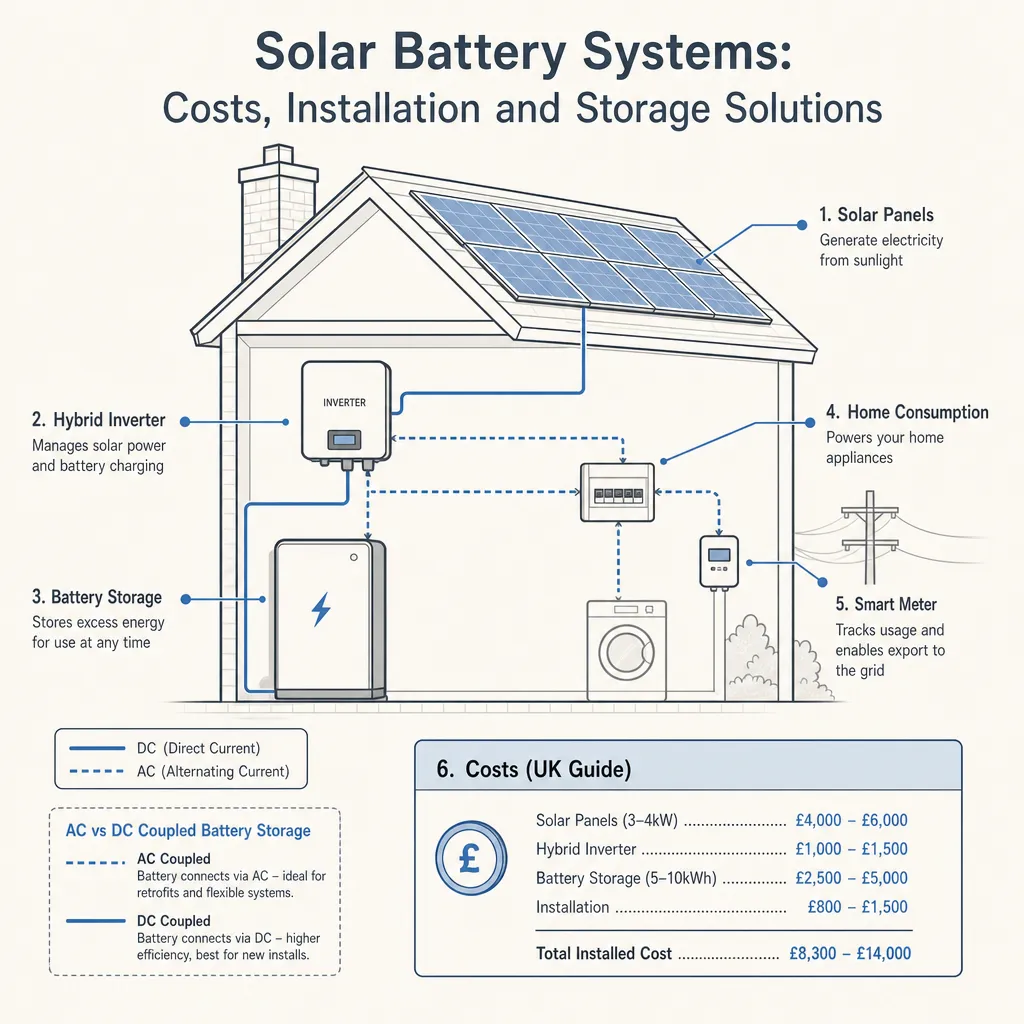
Solar Battery Systems: Costs, Installation and Storage Solutions
Solar battery systems in the UK typically cost £3,000–£8,000 installed for a 5–10 kWh system, though prices vary by brand, capacity, and coupling method.
 Energy & Retrofit
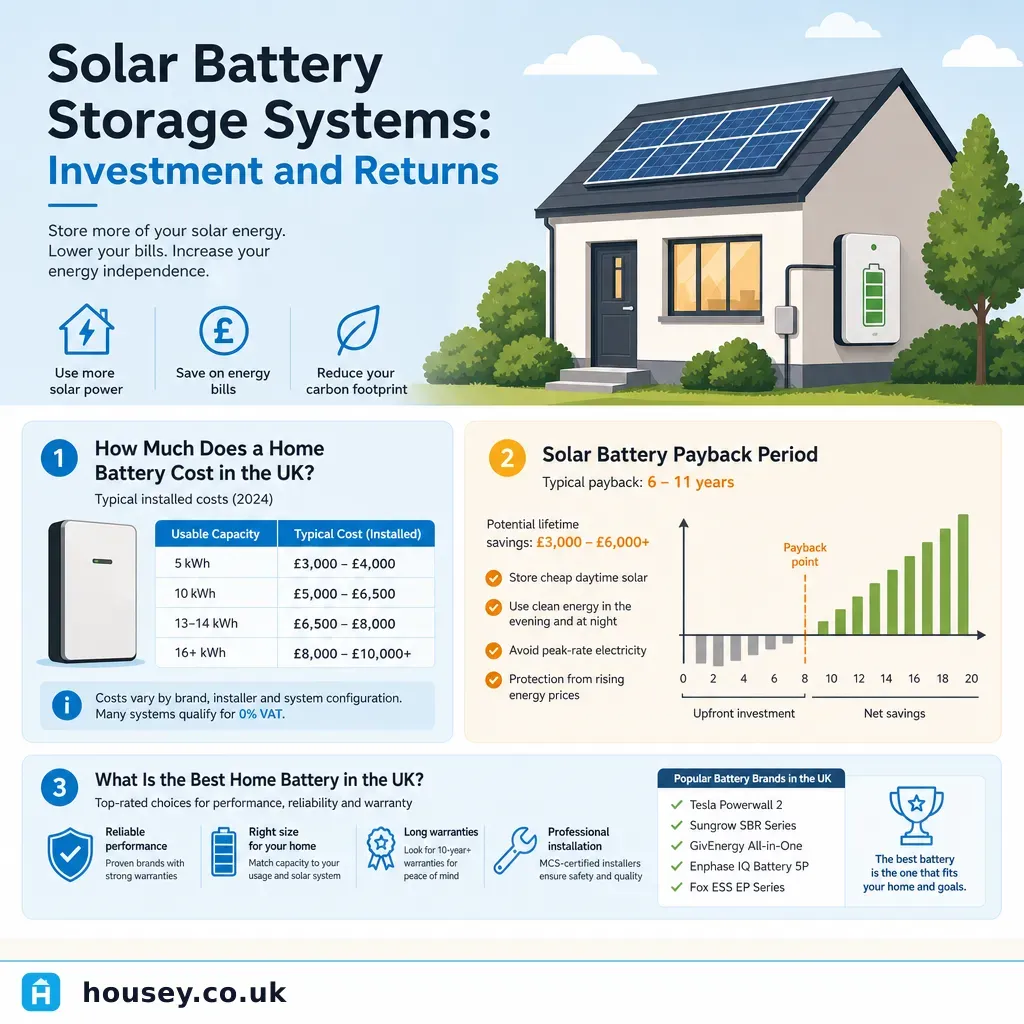
Solar Battery Storage Systems: Investment and Returns
A home battery storage system stores surplus solar energy for use in the evening, reducing grid electricity imports.
 Energy & Retrofit
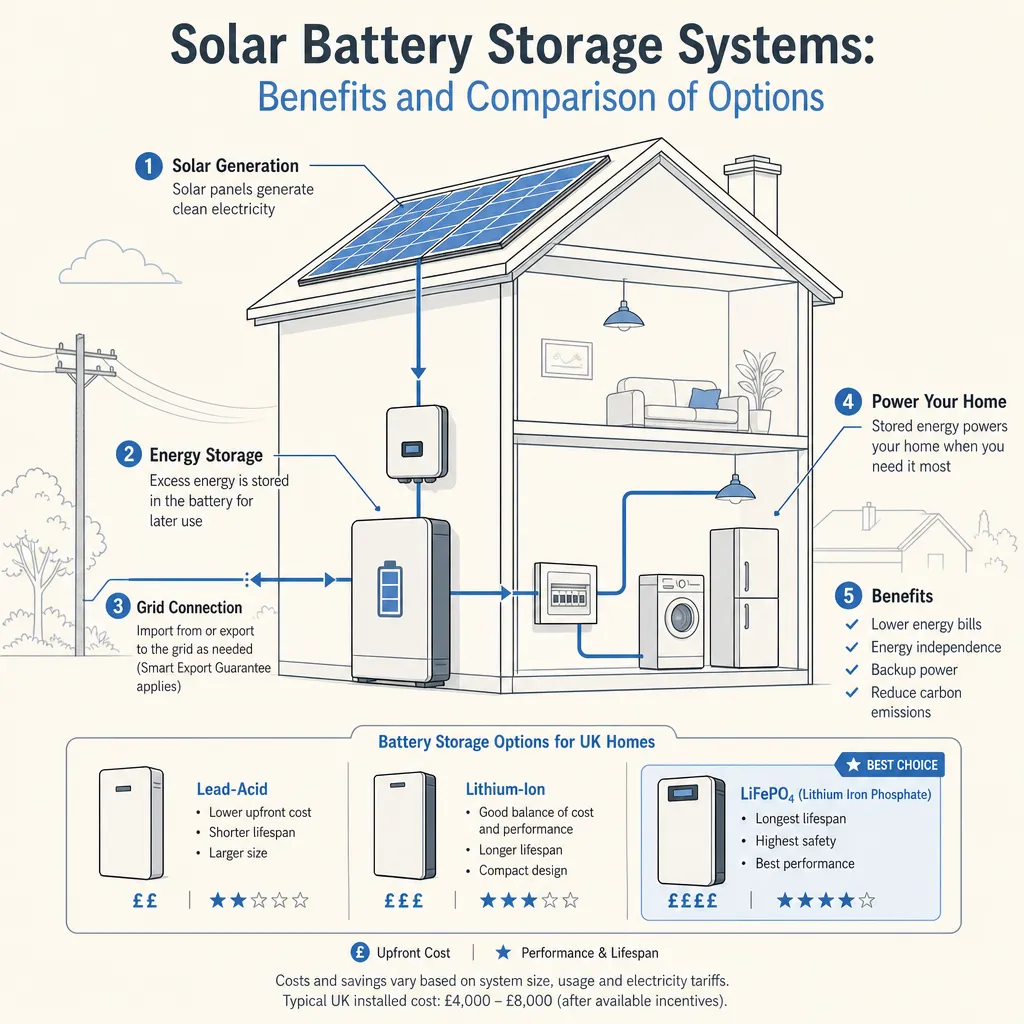
Solar Battery Storage Systems: Benefits and Comparison of Options
A solar battery storage system captures surplus electricity from your solar panels and stores it for use in the evenings, overnight, or on cloudy days.
 Energy & Retrofit
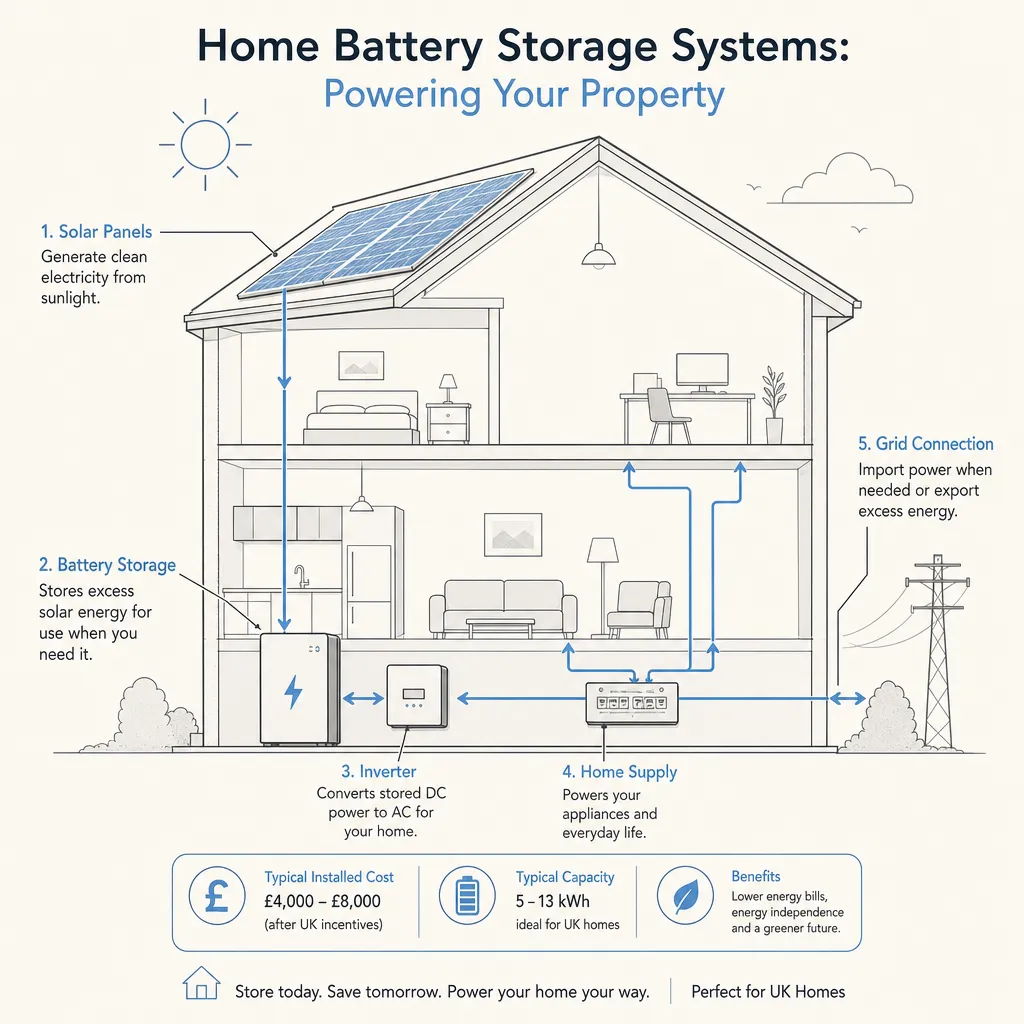
Home Battery Storage Systems: Powering Your Property
Home battery storage systems store electricity from solar panels or the grid — typically 5 to 15 kWh capacity — for use when generation is low or tariffs are high.
 Energy & Retrofit
Solar Battery Storage: Surplus Power Management and System Operation
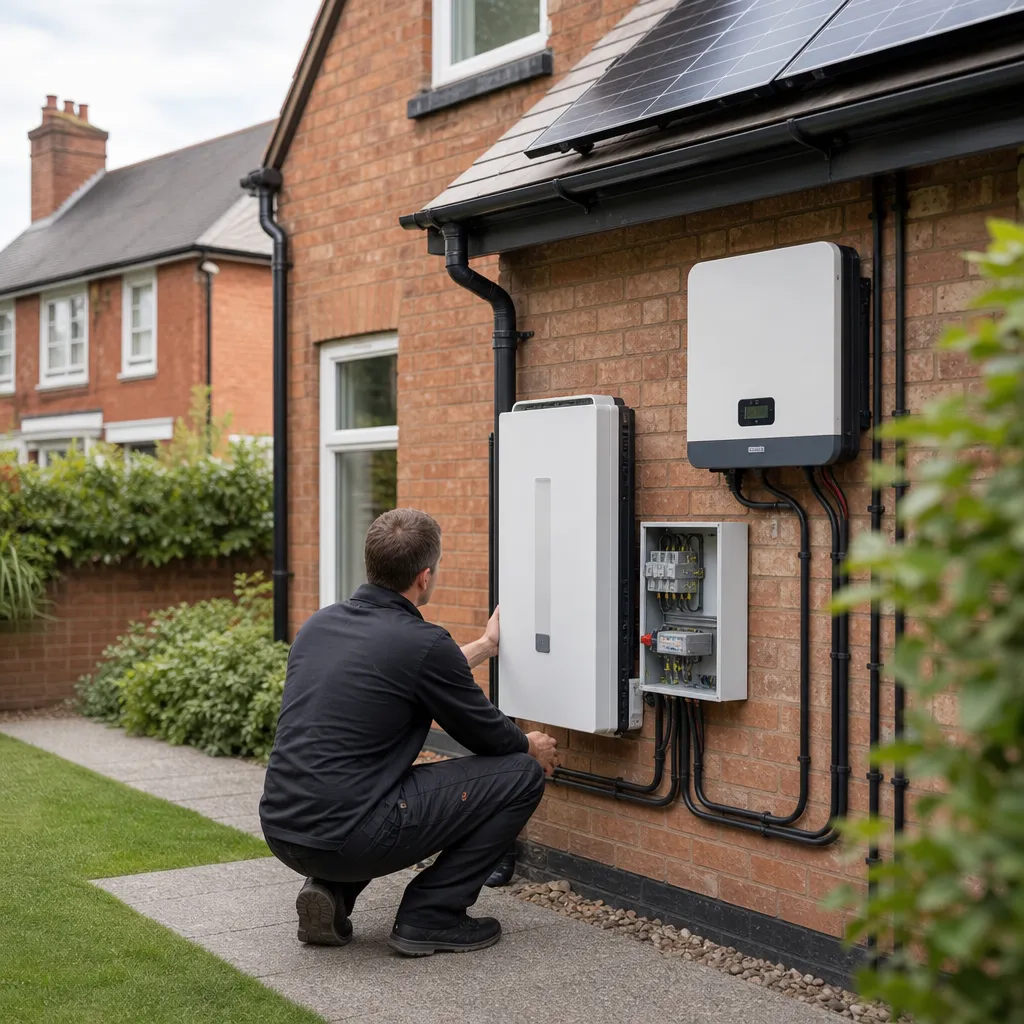
A solar battery stores surplus electricity from your panels during the day and releases it when generation has stopped — typically evenings and overnight.