Solar Energy for Your Home: Evaluating Costs, Benefits, and Installation
By Housey · Last reviewed 7th of May 2026
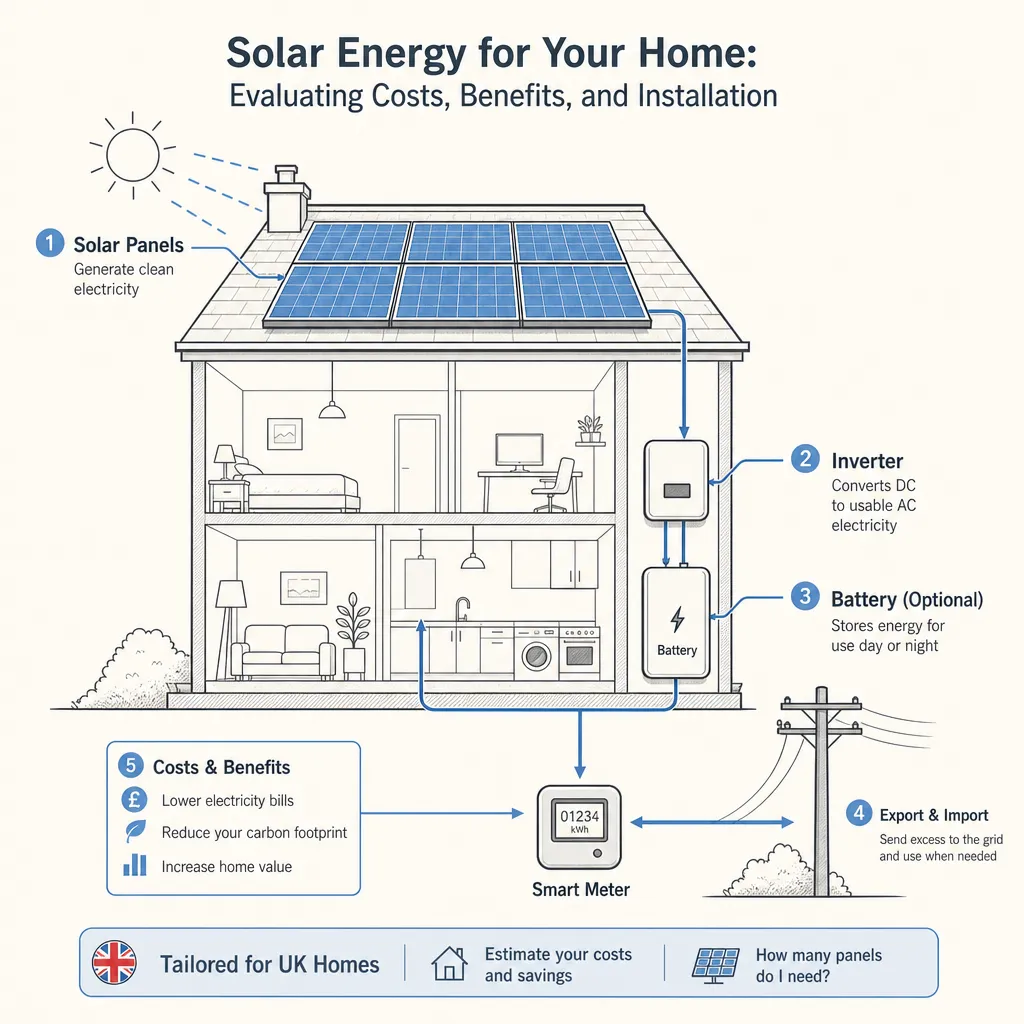
Solar Energy for Your Home: Evaluating Costs, Benefits, and Installation
Homeowners typically start researching solar panels when energy bills rise, when a neighbour's system catches their eye, or when planning a wider energy retrofit. In the UK, solar photovoltaic (PV) technology has matured considerably — installed costs have fallen sharply over the past decade — but whether a system makes financial sense for your property depends on roof orientation, pitch, shading, household electricity consumption, and your appetite for the upfront investment.
Key points
- A typical UK solar PV system of 3–4 kWp costs approximately £5,000–£8,000 fully installed (Indicative UK costs, last reviewed 2026-05-07; figures vary by region, installer, and specification).
- South-facing roofs at a 30–40° pitch generate the most electricity in the UK; east- or west-facing arrays generate roughly 15–20% less, and north-facing roofs are rarely viable for solar PV.
- The Smart Export Guarantee (SEG), administered by Ofgem, requires electricity suppliers with 150,000 or more domestic customers to offer a payment for surplus electricity exported to the grid.
- MCS (Microgeneration Certification Scheme) certification is required for the installation to qualify for SEG payments and to satisfy most mortgage lenders and home insurers.
- Building Regulations notification under Part P (electrical safety) is required for solar PV installation; in most cases your installer handles this through a competent person scheme.
Is solar energy worth it for UK homes?
The financial case depends on four main variables: how much electricity your system generates, how much of that you use directly (self-consumption), what you pay for grid electricity, and what you receive for surplus exports under the SEG.
Estimated annual generation for a south-facing system (mainland UK):
System size (kWp) | Estimated annual generation | Typical household suitability |
|---|---|---|
2 kWp | ~1,700–1,900 kWh | Small flat or very low-consumption home |
3 kWp | ~2,600–2,900 kWh | 2–3 bedroom home, moderate consumption |
4 kWp | ~3,400–3,800 kWh | 3–4 bedroom home, average consumption |
6 kWp | ~5,000–5,700 kWh | Larger home, EV owner, or high consumption |
Figures are indicative estimates; generation in northern Scotland will be lower and southern England higher. Source: Energy Saving Trust.
A typical UK household uses approximately 2,700–3,100 kWh of electricity per year (Ofgem, 2025 typical domestic consumption values). A well-sized solar system can cover 40–60% of annual electricity use; adding battery storage can increase self-consumption further.
Understanding the costs of solar installation
What drives the price?
A residential solar PV installation includes panels, inverter, mounting hardware, cabling, monitoring equipment, and labour. Key cost drivers include:
- Panel type: Standard monocrystalline panels are the norm; higher-efficiency panels cost more but may suit smaller roofs where space is limited.
- Inverter choice: String inverters suit unshaded roofs; microinverters or power optimisers improve output on partially shaded arrays at higher cost.
- Roof type and access: Specialist fixings for slate, clay pantile, or flat roofs add cost; scaffolding requirements vary by roof height and configuration.
- Location: Labour costs vary across the UK; urban areas in the south-east often carry higher day rates.
Indicative UK costs, last reviewed 2026-05-07. Always obtain at least three quotes; prices vary significantly by installer and specification.
Worked example: 3-bed semi in the Midlands
A 1980s three-bedroom semi-detached house in Coventry with a south-facing roof at approximately 35° pitch installs a 3.6 kWp system (nine 400 W monocrystalline panels) with a string inverter and monitoring app.
Item | Detail |
|---|---|
Installed cost | ~£6,200 (indicative, 2026) |
Estimated annual generation | ~3,100 kWh |
Self-consumption without battery | ~1,400 kWh (45%) |
Annual saving on imports at 28p/kWh | ~£392 |
Annual SEG income (~1,700 kWh at 6p/kWh) | ~£102 |
Combined annual benefit | ~£494 |
Simple payback estimate | ~12–13 years |
Adding a 5 kWh battery could increase self-consumption to 60–70%, improving the annual benefit to approximately £550–£650, but at an additional installed cost of roughly £2,500–£5,000.
This scenario uses indicative figures only. Actual results depend on your electricity tariff, consumption patterns, shading, and system performance. Obtain a professional assessment before making investment decisions.
What happens during solar PV installation?
A typical residential solar PV installation in the UK follows this sequence:
- Initial assessment — Installer visits to evaluate roof condition, orientation, shading, and structural suitability. A solar survey may be recommended if the roof has not been recently inspected or shows signs of wear.
- System design — Installer proposes system size, panel layout, inverter type, and a generation estimate.
- Scaffolding — Usually erected the day before panel installation.
- Panel installation — Typically one to two days for a standard domestic system.
- Electrical connection — Inverter installed, system connected to the consumer unit, generation and export metering configured.
- Notification and certification — Installer notifies building control via a competent person scheme (Part P); MCS certificate issued to the homeowner.
- SEG registration — Homeowner applies to their electricity supplier to register for Smart Export Guarantee payments.
What to ask before accepting a solar quote
Before instructing an installer, ask:
- Is the installer MCS-accredited for solar PV, and can they provide their MCS certificate number?
- Who carries out the roof work and electrical connection — is it in-house or subcontracted?
- What inverter brand and model is included, and why is it suited to my roof's shading and orientation?
- Does the quote include scaffolding, monitoring equipment, and VAT?
- What MCS documentation and building control notification will I receive at completion?
- What happens if roof issues are found once scaffolding is erected?
- What warranties apply to the panels (typically 25 years on performance), inverter (typically 5–12 years), and workmanship?
- Is the company registered with TrustMark or another recognised trade body?
Solar panels and planning permission
Most residential solar PV installations in England are permitted development and do not require a planning application, provided the installation does not protrude more than 200 mm from the roof plane. However, permitted development rights may be restricted if:
- The property is a listed building.
- The property is in a conservation area, an Area of Outstanding Natural Beauty, or a World Heritage Site — panels on front-facing roof slopes visible from a highway may not be permitted.
- The local planning authority has issued an Article 4 Direction removing certain permitted development rights.
Rules in Wales, Scotland, and Northern Ireland differ from those in England. Always confirm the position with your local planning authority if your property has any designations, or consult the GOV.UK permitted development guidance before proceeding.
When to get professional help
All design, installation, and electrical connection for solar PV must be carried out by a qualified, MCS-accredited installer. Do not attempt to install solar panels yourself — the electrical work requires Part P compliance and MCS certification.
Additionally, seek professional advice before proceeding if:
- Your roof is more than 15 years old or shows visible deterioration — solar panels add structural load and wind uplift, and a roof condition check may be advisable first.
- There is significant shading from trees, chimneys, or neighbouring buildings that a standard installer visit may not fully account for.
- Your property is listed or in a conservation area — confirm permitted development status before ordering equipment.
- You are a landlord — EPC requirements, tenant notification obligations, and any lease restrictions may all apply.
How Housey can help
Housey connects UK homeowners with vetted, MCS-accredited professionals for every stage of the solar journey. If you want to assess whether your roof is suitable before committing to a full installation, a solar survey is a practical starting point — covering roof condition, orientation, shading, and structural suitability.
Frequently asked questions
Do solar panels work on cloudy days in the UK?
Yes — solar PV panels generate electricity from daylight, not direct sunlight. Output reduces on overcast days (typically by 40–70% compared with full sun), but a well-sized UK system will still generate useful electricity throughout the year, including during winter months when daily generation is lower.
How long do solar panels last?
Most solar panels carry a 25-year performance warranty guaranteeing at least 80% of original output at end of the warranty period. Physical lifespan is often longer. Inverters typically last 10–15 years and may need replacement during the panel lifetime — factor this into your whole-life cost assessment.
Can I sell my solar electricity back to the grid?
Yes, through the Smart Export Guarantee (SEG). Electricity suppliers with 150,000 or more domestic customers must offer an export tariff. Rates vary by supplier — some offer fixed rates, others variable or time-of-use tariffs. You apply to your own supplier after your MCS certificate is issued on completion of installation.
Do solar panels add value to my home?
Evidence on property value uplift is mixed. An MCS-certified system owned outright, with remaining warranty and documented SEG income, is generally straightforward for buyers and lenders. Lease-based systems — where panels are owned by a third party — have historically caused complications at sale and during conveyancing.
Will solar panels affect my home insurance?
Inform your home insurer before installation. Most standard policies cover solar panels as part of the building structure, but confirm that your sum insured reflects the added rebuild cost and that the installation is noted on your policy. Check whether any exclusions or limits on roof-mounted equipment apply in your policy wording.
Sources and further reading
- Solar panels: guidance for homeowners — Energy Saving Trust
- Smart Export Guarantee (SEG) — Ofgem
- Permitted development rights for solar panels — GOV.UK
- MCS accreditation register — Microgeneration Certification Scheme
- Building Regulations Approved Document P: electrical safety — GOV.UK
Useful next reads
 Energy & Retrofit
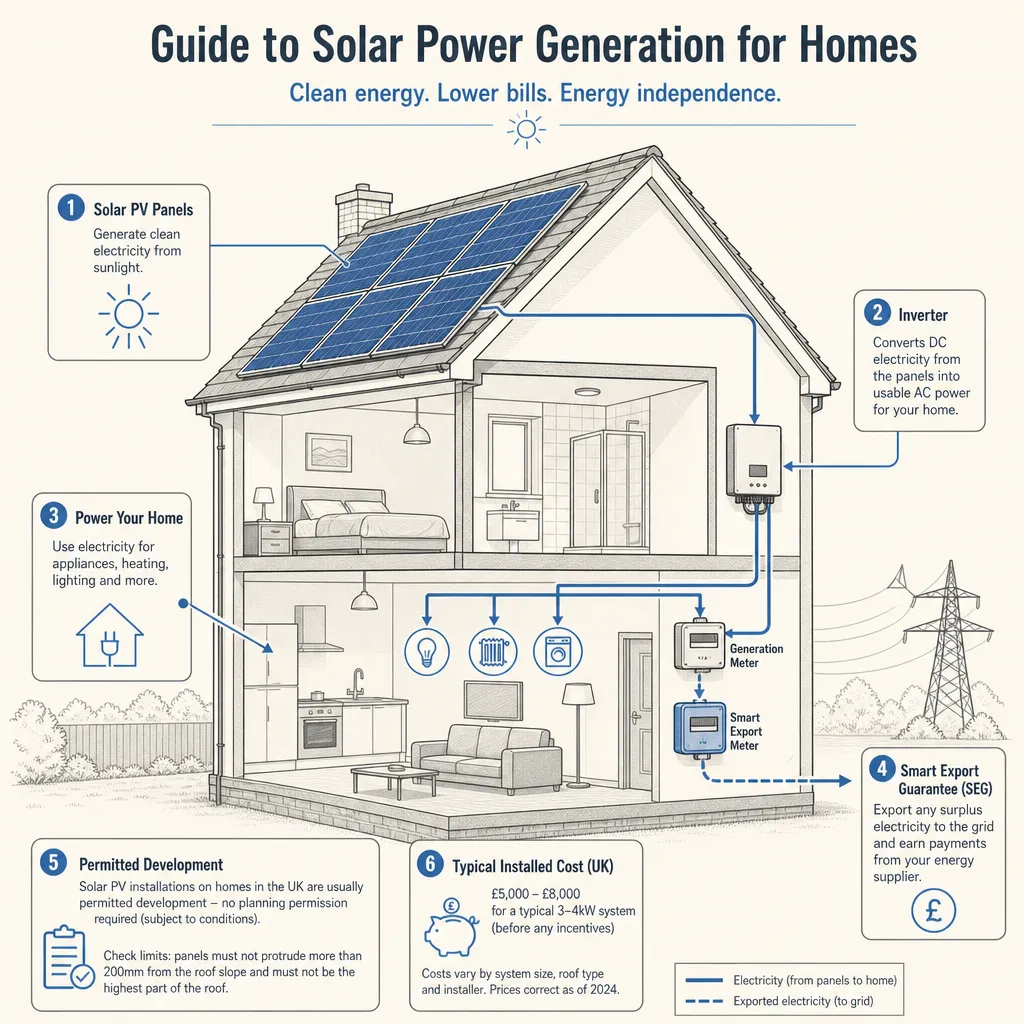
Guide to Solar Power Generation for Homes
Solar photovoltaic (PV) panels convert daylight into electricity and export surplus to the grid via the Smart Export Guarantee (SEG).
 Energy & Retrofit
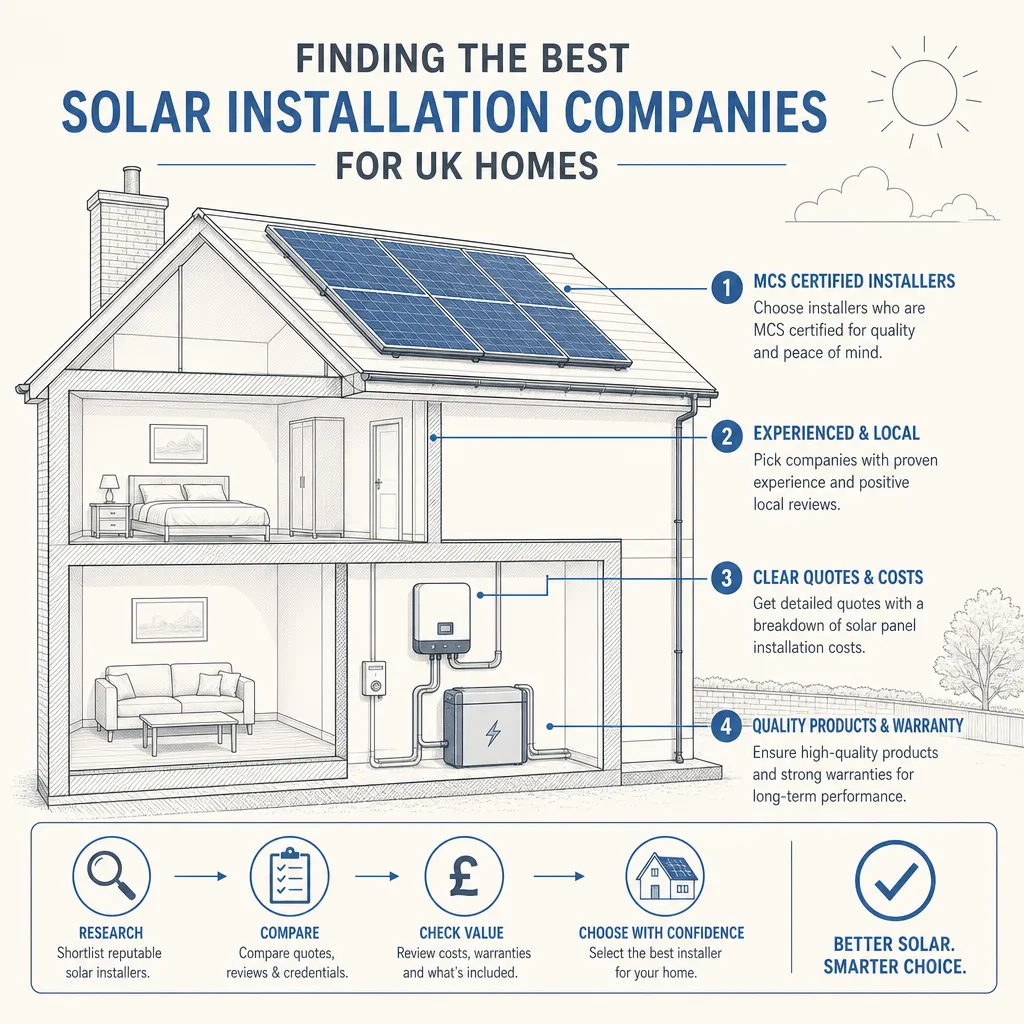
Finding the Best Solar Installation Companies for UK Homes
To find a reliable solar installation company in the UK, look for MCS (Microgeneration Certification Scheme) certification — required for Smart Export Guarantee eligibility — plus NICEIC or NAPIT electrical registration.
 Energy & Retrofit
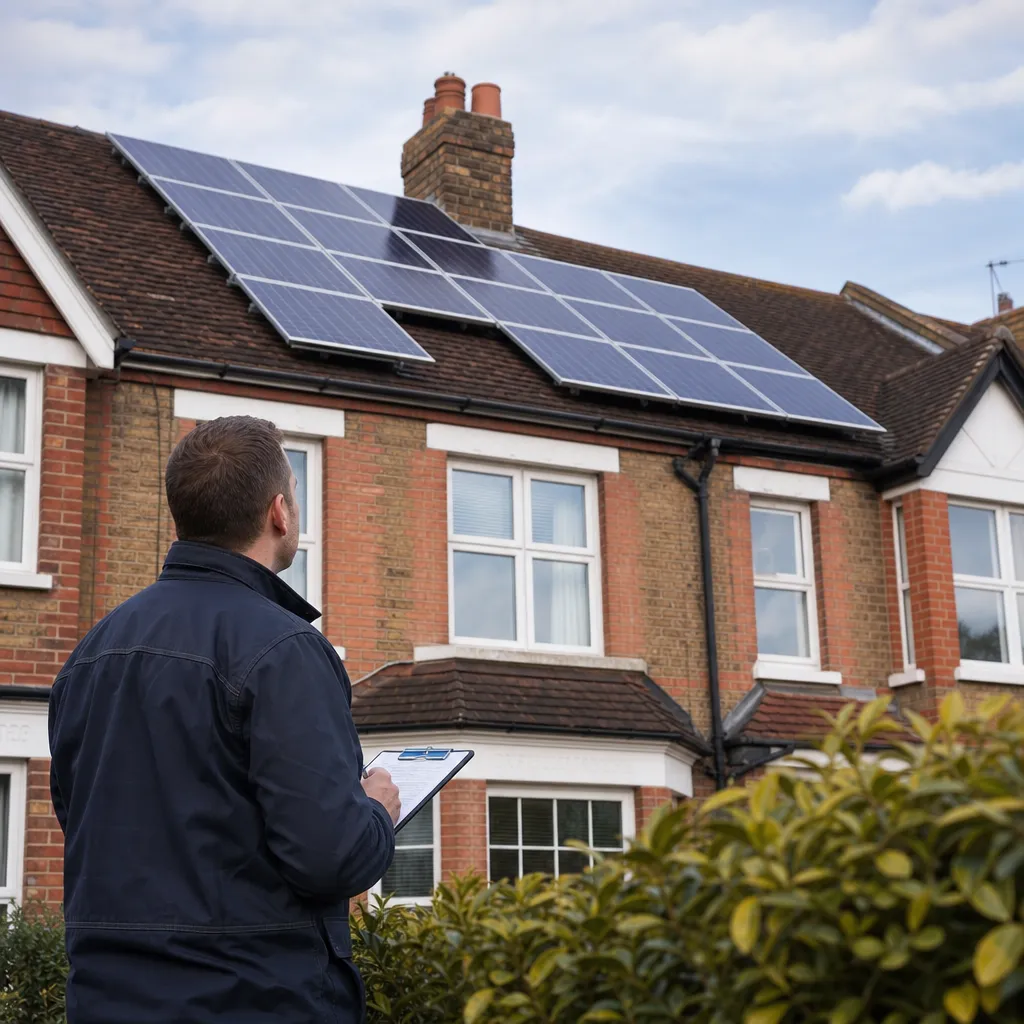
Solar Panel Leasing vs. Ownership: Comparing Your Options
In the UK, owning your solar panels — whether purchased outright or via a loan — entitles you to all income under the Smart Export Guarantee (SEG).
 Energy & Retrofit
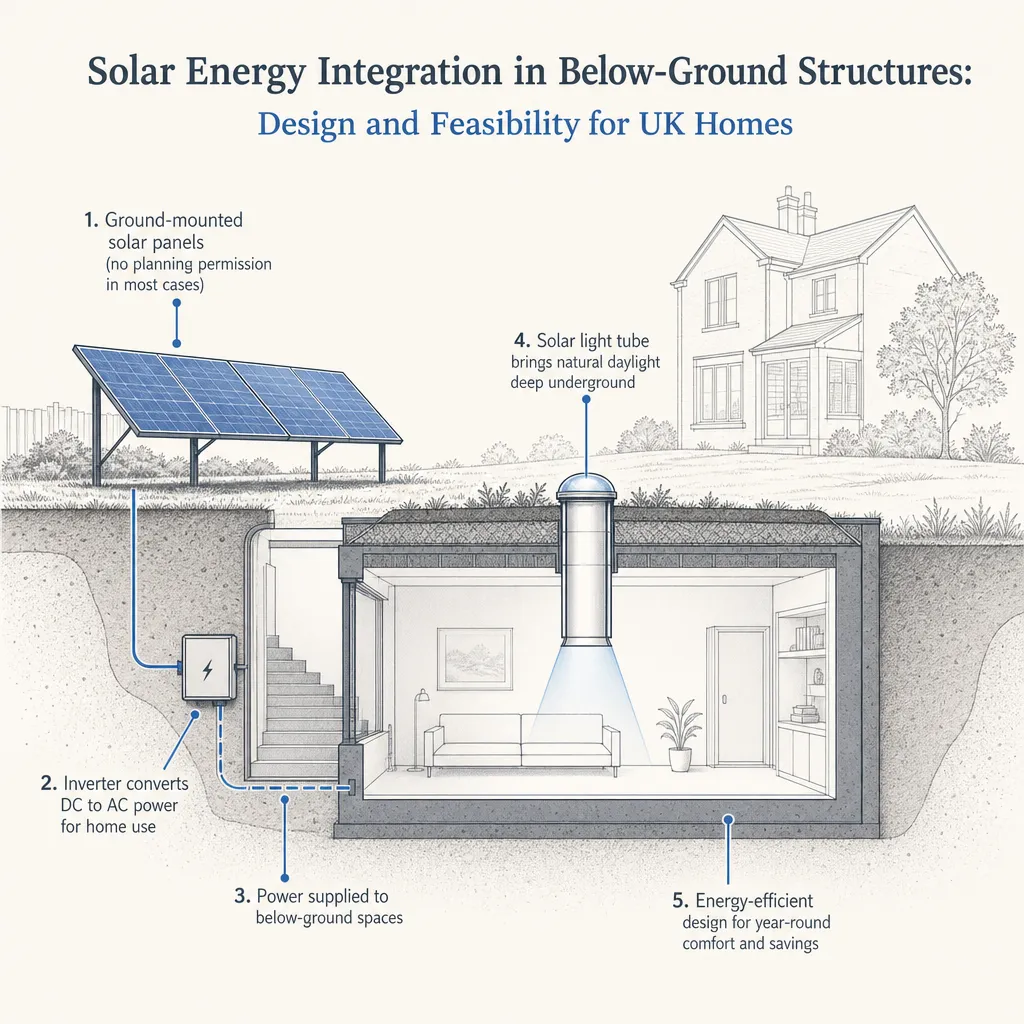
Solar Energy Integration in Below-Ground Structures: Design and Feasibility
Below-ground structures cannot host solar panels on their own roofs but can use surface-mounted panels connected via cable runs, solar light tubes for daylighting, and battery storage.
 Energy & Retrofit
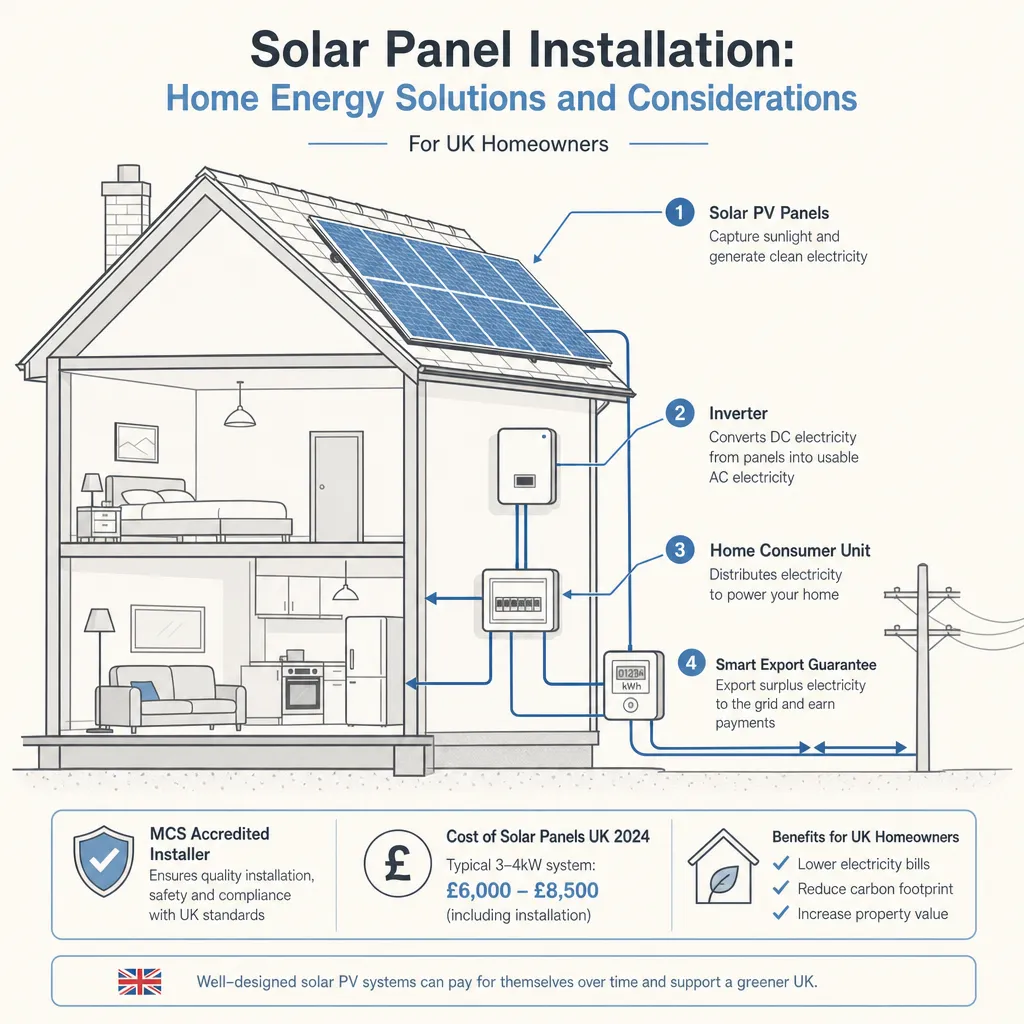
Solar Panel Installation: Home Energy Solutions and Considerations
A typical 4 kWp solar PV system costs £6,000–£9,000 installed and generates around 3,400–3,800 kWh per year on a south-facing roof in southern England.