Solar Panel Installation and Survey Services
By Housey · Last reviewed 31st of May 2026
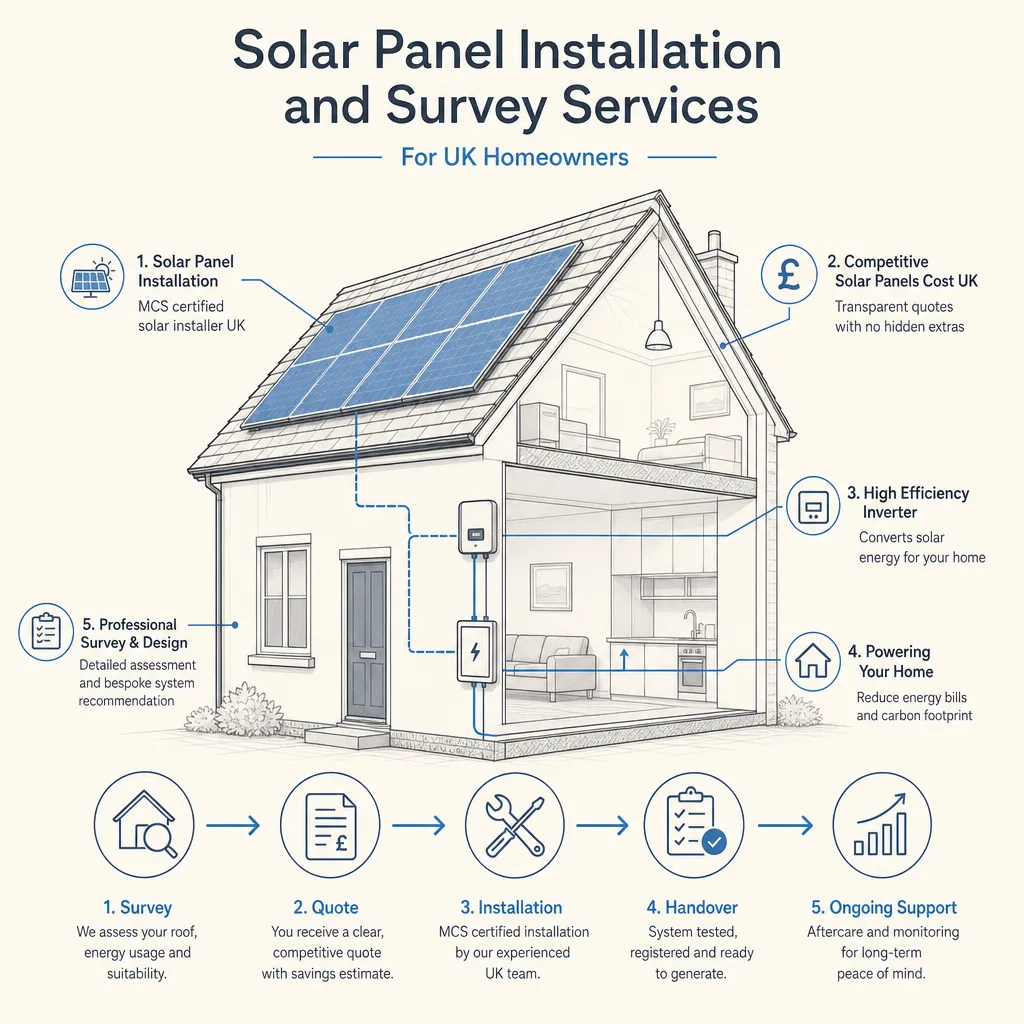
Solar Panel Installation and Survey Services
Roof-mounted solar photovoltaic (PV) systems have become one of the most common energy upgrades in UK homes, particularly as electricity prices and energy security concerns have risen. Whether you are considering solar for the first time or comparing quotes from installers, understanding the full process — from initial roof survey through to grid connection and the Smart Export Guarantee — helps you ask the right questions and avoid common pitfalls.
Key points
- Solar PV installers must hold MCS (Microgeneration Certification Scheme) certification for their work to qualify for the Smart Export Guarantee (SEG) and most grid-connection agreements.
- Most domestic systems are between 3 and 5 kilowatt-peak (kWp), typically requiring 8–13 panels depending on panel wattage and available roof space.
- You must notify your Distribution Network Operator (DNO) before connecting a system — for systems up to 3.68 kW, this is usually a G98 notification rather than a full G99 application, which can take 4–11 weeks.
- Roof-mounted solar panels are usually permitted development in England, but listed buildings, conservation areas, and some flat-roof configurations require planning permission or consent.
- The Smart Export Guarantee (SEG) pays you for surplus electricity exported to the grid; rates are set by licensed energy suppliers and vary significantly between providers, so comparing tariffs is worthwhile.
What a solar survey involves
Before any panels are installed, a reputable MCS-accredited installer will carry out a pre-installation survey. This typically assesses:
- Roof orientation and pitch — south-facing roofs at 30–40° are optimal, but east- or west-facing roofs can still generate worthwhile energy.
- Roof condition and load-bearing capacity — the roof must be structurally sound; the survey should flag any remedial work needed before installation proceeds.
- Shading analysis — nearby trees, chimney stacks, or neighbouring buildings that cause shading reduce output and may affect system design.
- Existing electrical installation — the installer will check your consumer unit, available space for an inverter, and cable routes.
- Asbestos considerations — older properties may have asbestos-containing materials in the roof structure; a specialist asbestos survey may be needed before roof work begins.
A professional solar survey produces a site-specific report and system design, which forms the basis of your installation quote and helps you compare proposals from different installers on a like-for-like basis.
Choosing the right system size
System size depends on your electricity consumption, roof space, budget, and whether you plan to add battery storage or an electric vehicle charger.
System size | Typical panels | Estimated annual generation* | Best for |
|---|---|---|---|
2 kWp | 5–6 panels | ~1,700 kWh | Small flat or low-consumption household |
3 kWp | 8–9 panels | ~2,550 kWh | Average 2–3 bedroom home |
4 kWp | 10–11 panels | ~3,400 kWh | Family home with EV or higher electricity usage |
5 kWp | 13–14 panels | ~4,250 kWh | Large home or system with battery storage |
*Indicative figures for a south-facing roof in England. Actual generation varies by location, shading, and irradiance. The Energy Saving Trust solar calculator provides location-specific estimates.
How the installation process works
A standard domestic solar PV installation follows this sequence:
- Pre-installation survey — site assessment, system design, and DNO notification prepared.
- DNO application — for systems over 3.68 kW, a G99 application to the Distribution Network Operator (such as UK Power Networks or National Grid Electricity Distribution) is required before work starts; allow 4–11 weeks.
- Scaffolding erected — typically in place for 1–2 days.
- Roof mounting and panel installation — brackets fixed to rafters, rails fitted, panels mounted and secured.
- Electrical connection — inverter installed, cabling run to consumer unit, generation meter fitted.
- Commissioning and handover — system tested, MCS certificate issued, documentation handed over.
- SEG application — you apply directly to your chosen SEG-licensed energy supplier after installation is complete.
Permitted development and planning permission
In England, roof-mounted solar panels are usually permitted development under the Town and Country Planning (General Permitted Development) Order 2015, provided the panels do not protrude more than 200 mm from the roof plane and do not exceed the highest point of the roof. Key exceptions include:
- Listed buildings — permitted development rights do not apply; listed building consent is required before any works.
- Conservation areas — panels on a roof slope or wall that faces a highway may require a planning application.
- Article 4 directions — some local planning authorities have removed permitted development rights in specific streets or areas.
Rules in Scotland, Wales, and Northern Ireland differ from those in England. Check with your local planning authority before committing to installation if your property could be affected by any of these restrictions.
Homeowner checklist before getting solar quotes
When to get professional help
Connecting solar PV to your consumer unit is notifiable electrical work under Part P of the Building Regulations and must not be carried out as DIY — a professional MCS-accredited installer is required for all electrical connection work.
Seek specialist advice promptly if:
- Your roof shows signs of sagging, cracked tiles, or damaged rafters before installation begins.
- Your property was built before 1985 and you have not had an asbestos survey carried out.
- An installer cannot provide an MCS certificate number or DNO notification confirmation in writing.
- Your property is listed or in a conservation area and the planning position is unclear.
- You are a leaseholder — freeholder or managing agent consent may be required before installation proceeds.
How Housey can help
Housey connects you with qualified professionals for every stage of the solar process. If you want an independent view of your roof's solar potential before committing to an installation quote, you can arrange a professional solar survey through Housey — giving you a site-specific assessment, system design recommendations, and a solid basis for comparing installer proposals fairly.
Frequently asked questions
Do I need planning permission for solar panels in the UK?
In most cases, roof-mounted solar panels in England are permitted development — no planning application is required. Exceptions include listed buildings (where listed building consent is needed), conservation areas where panels face a highway, and locations covered by Article 4 directions. Scotland, Wales, and Northern Ireland have separate permitted development rules. Always check with your local planning authority if your property type is in doubt.
What is the Smart Export Guarantee (SEG)?
The Smart Export Guarantee requires licensed electricity suppliers with more than 150,000 customers to offer a tariff for surplus solar electricity exported to the grid. Rates are set by each supplier and vary, so comparing SEG tariffs before choosing a supplier is worthwhile. To qualify, your installation must be MCS-certified and your home needs a smart meter capable of half-hourly export readings. Full details are available from Ofgem.
How long do solar panels last?
Most solar panels carry a 25-year performance warranty guaranteeing at least 80–85% of rated output at year 25. Inverters typically last 10–15 years and should be factored into long-term running costs. Gradual degradation of around 0.5% per year is typical for quality modules, meaning panels rarely fail outright but do slowly reduce in output over their lifetime.
What does a solar survey cover?
A solar survey assesses roof orientation, pitch, condition, shading, and structural suitability, and reviews your existing electrical installation. It produces a site-specific system design and generation estimate. Arranging an independent solar survey before accepting installation quotes helps you compare installer proposals on a like-for-like basis and understand what your roof can realistically generate.
Sources and further reading
- Permitted development rights for householders — GOV.UK — GOV.UK
- Smart Export Guarantee (SEG) — Ofgem — Ofgem
- Solar panels — Energy Saving Trust — Energy Saving Trust
- MCS certified installer database — MCS — Microgeneration Certification Scheme
Useful next reads
 Energy & Retrofit
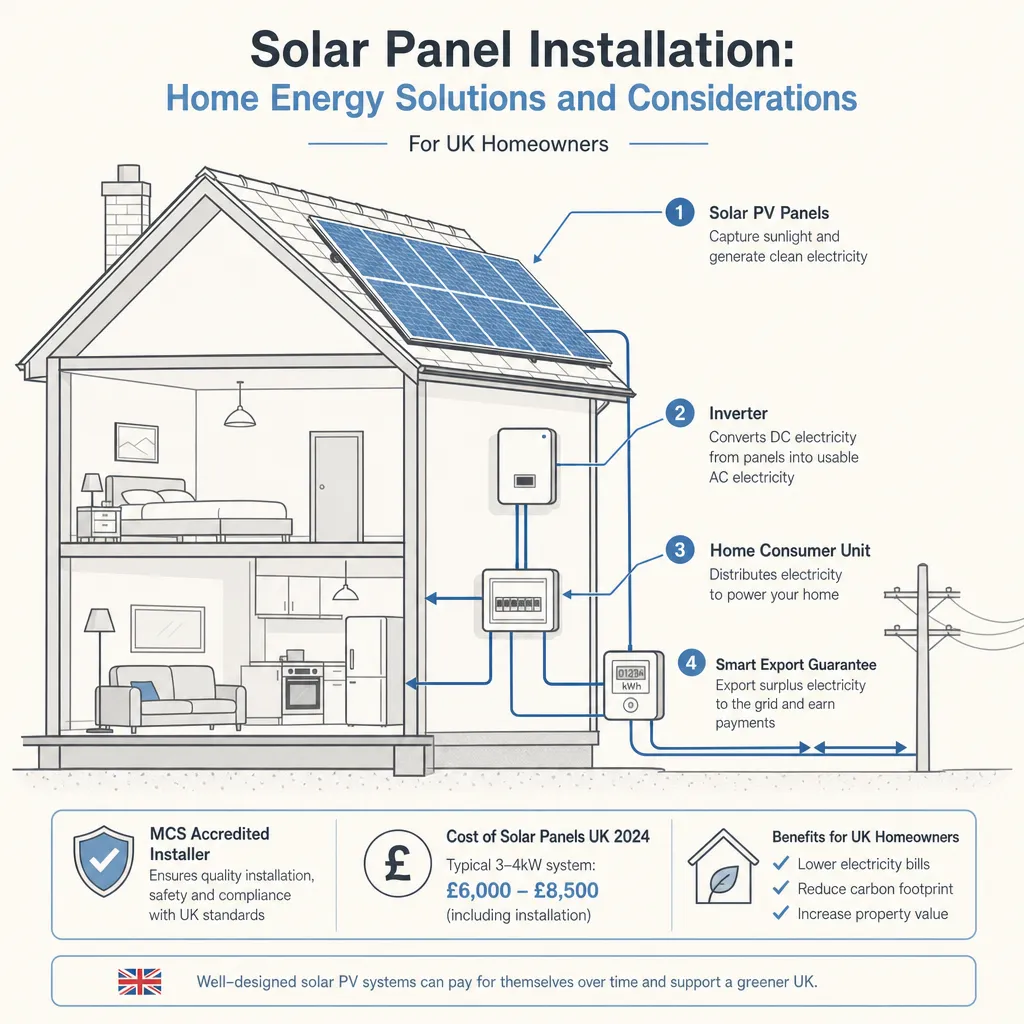
Solar Panel Installation: Home Energy Solutions and Considerations
A typical 4 kWp solar PV system costs £6,000–£9,000 installed and generates around 3,400–3,800 kWh per year on a south-facing roof in southern England.
 Energy & Retrofit
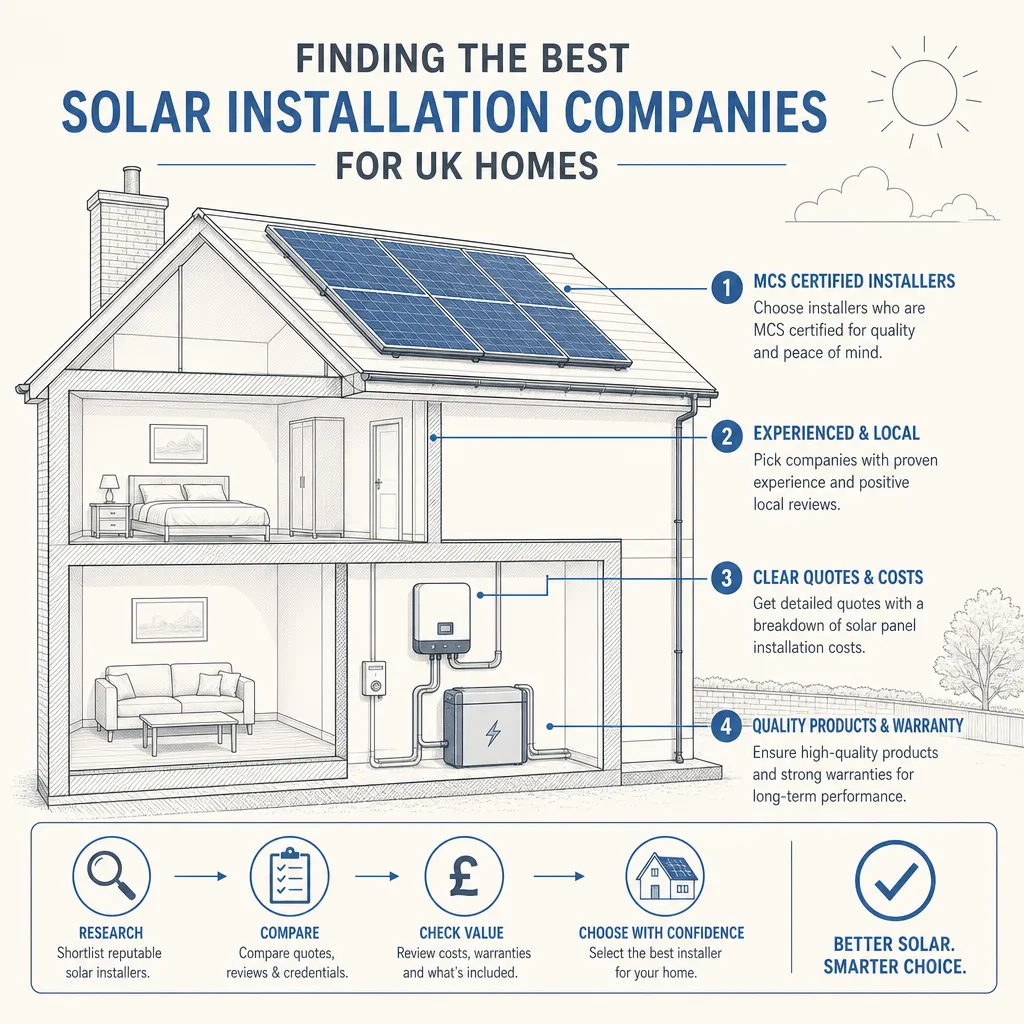
Finding the Best Solar Installation Companies for UK Homes
To find a reliable solar installation company in the UK, look for MCS (Microgeneration Certification Scheme) certification — required for Smart Export Guarantee eligibility — plus NICEIC or NAPIT electrical registration.
 Energy & Retrofit
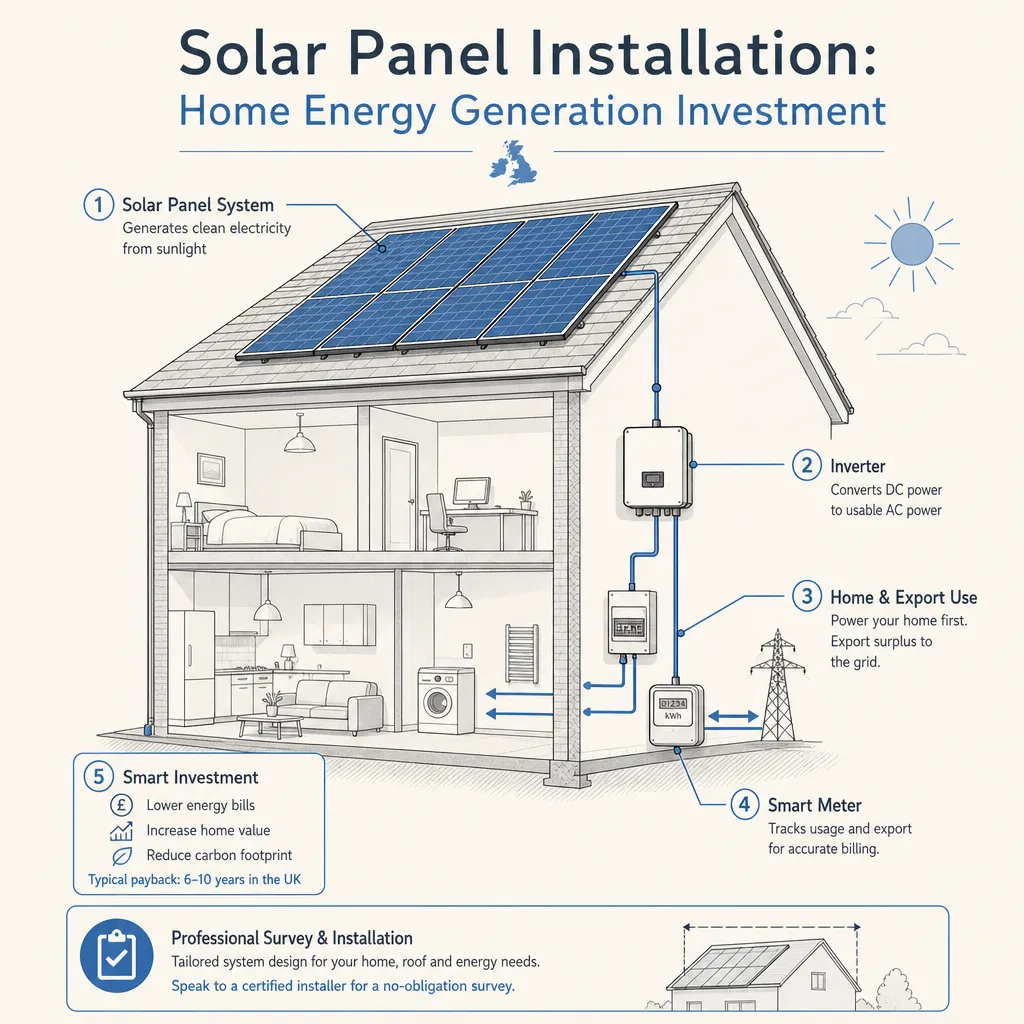
Solar Panel Installation: Home Energy Generation Investment
Solar panel installation in the UK typically costs £5,000–£9,000 for a 3–4 kWp system.
 Energy & Retrofit
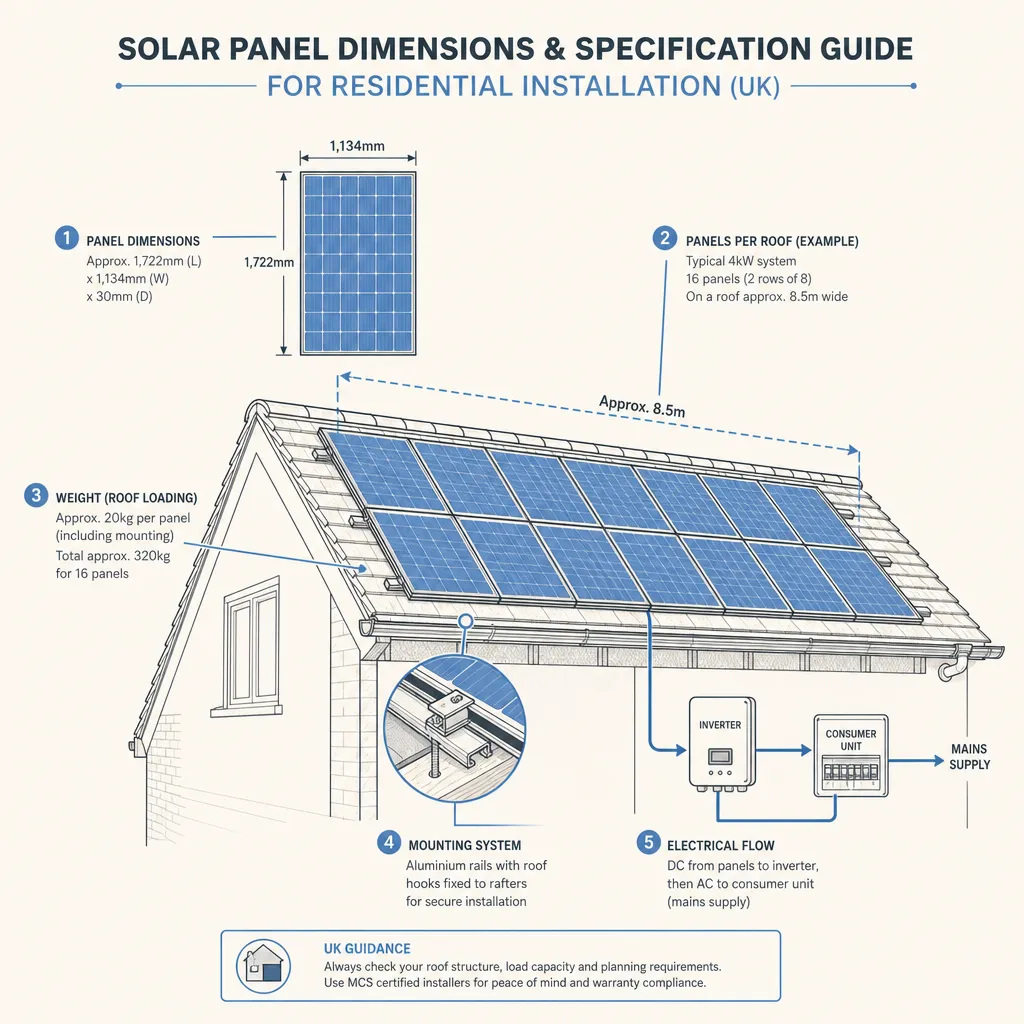
Solar Panel Dimensions and Specification Guide for Residential Installation
A standard residential solar panel measures approximately 1700–1800mm × 1000–1050mm, weighs 18–22 kg, and produces 380–450 W.
 Energy & Retrofit
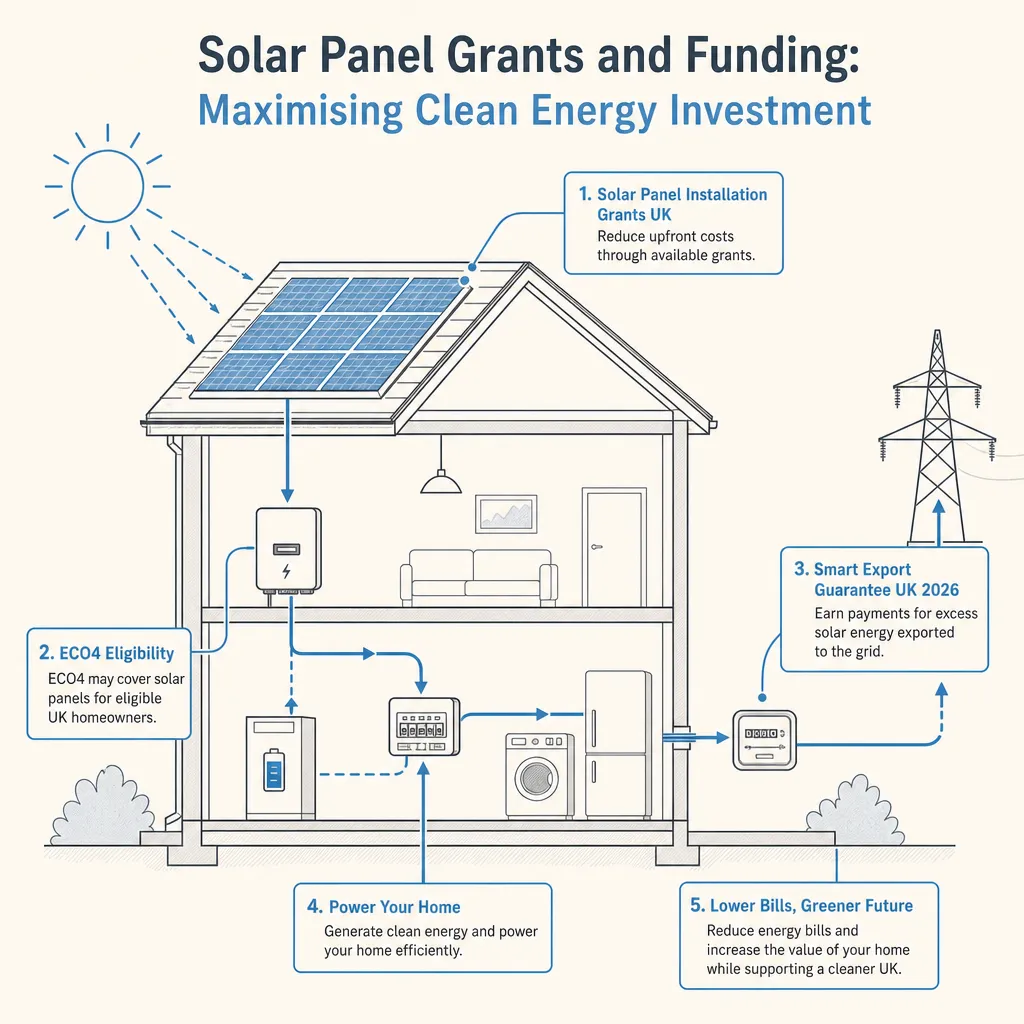
Solar Panel Grants and Funding: Maximising Clean Energy Investment
Several UK solar funding schemes are currently open: the Smart Export Guarantee pays homeowners for surplus electricity exported to the grid, ECO4 can fund free or subsidised panels for eligible low-income households, and 0% VAT on installation applies until at least March 2027.