What to Expect When Installing a Solar Panel System
By Housey · Last reviewed 6th of May 2026
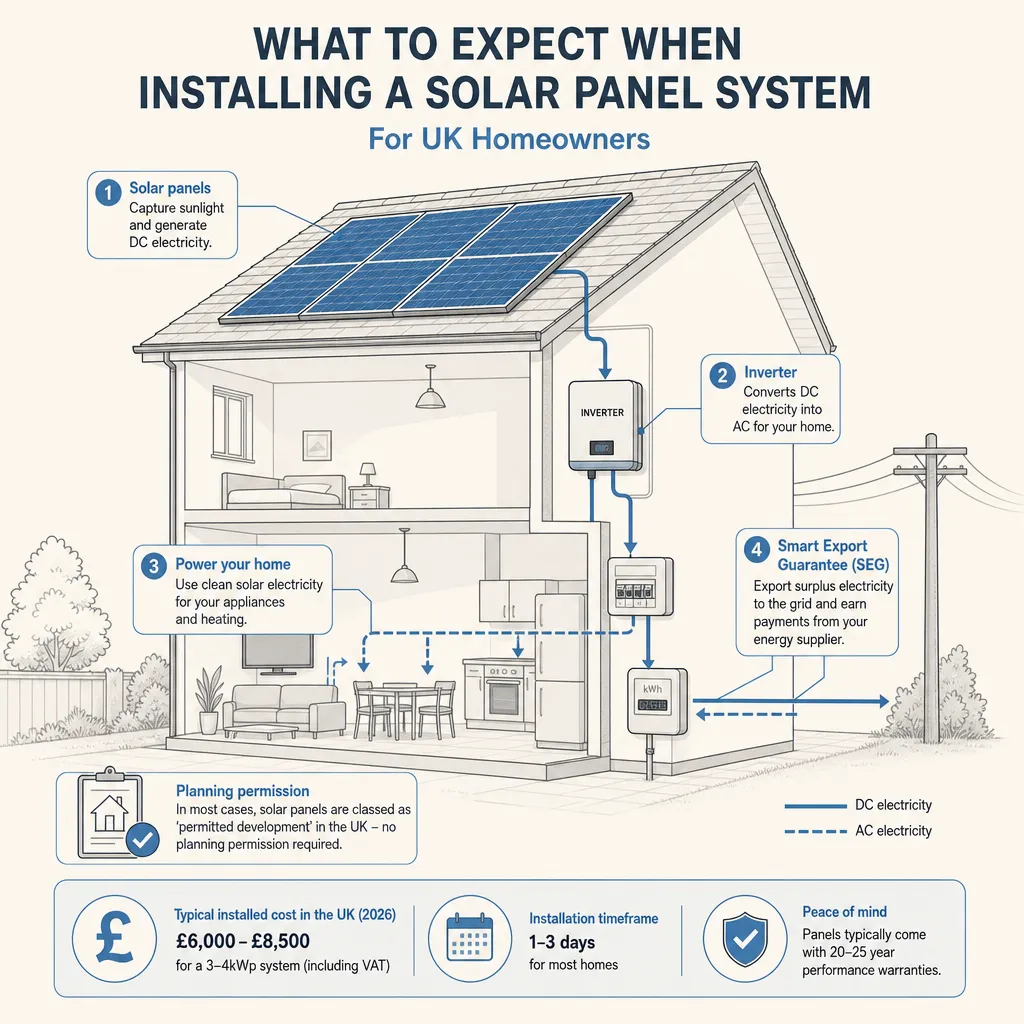
What to Expect When Installing a Solar Panel System
For many UK homeowners, solar panels represent one of the most significant energy investments they will make — and the process from first inquiry to working system involves more stages than simply booking a tradesperson. Regulatory requirements, roof suitability, grid connection notifications, and the Smart Export Guarantee all have to be navigated in sequence, and the quality of your installer and equipment choices will affect both generation performance and your ability to claim export payments for decades to come.
Key points
- Only MCS (Microgeneration Certification Scheme) certified systems and installers qualify for the Smart Export Guarantee (SEG), which replaced the Feed-in Tariff closed to new applicants in April 2019.
- Most residential solar installations in England are permitted development under Schedule 2, Part 14 of the Town and Country Planning (General Permitted Development) (England) Order 2015 — no planning application required — but listed buildings are always excluded.
- A typical 4kWp south-facing system costs £5,500–£8,000 installed; 0% VAT applies to domestic residential solar panel installations (confirmed to 2027).
- Systems above 3.68kW single-phase export capacity require a G99 grid connection application to the District Network Operator (DNO) before installation, which can take several weeks.
- Quality solar panels carry a 25-year performance warranty, typically guaranteeing at least 80–85% of rated output at year 25; inverters usually need replacing once during this period.
Step 1: Assessing whether your home is suitable
A site survey by a qualified installer is the essential first step. It covers:
- Roof orientation and pitch: South-facing roofs at 30–40° pitch generate the most energy in the UK. East- or west-facing roofs produce approximately 15–20% less. North-facing roofs are generally unsuitable.
- Shading analysis: Chimneys, neighbouring properties, dormer windows, and nearby trees can all reduce generation. String inverters are particularly sensitive to partial shading; micro-inverters or DC optimisers may mitigate the effect.
- Roof structural condition: Panels add approximately 10–12 kg/m². If your roof is older or its condition is uncertain, a professional inspection — and possibly a structural engineering assessment — should be arranged before any work begins.
- Available roof area: A 4kWp system typically needs 20–28 m² of usable, unshaded roof space.
- Electrical infrastructure: Your installer will check whether your consumer unit can accommodate the additional generation circuit safely.
You can commission an independent solar survey through Housey before appointing an installer, giving you an unbiased view of generation potential and system sizing.
Planning permission and permitted development rules
In England, solar panels on a residential dwelling are usually permitted development, subject to these conditions:
- Panels must not protrude more than 200mm beyond the plane of the roof slope.
- On a building within a conservation area or World Heritage Site, panels must not be installed on the principal elevation or a side elevation facing a highway.
- Panels on listed buildings are never permitted development — Listed Building Consent must be obtained from your local planning authority.
Rules differ in Scotland, Wales, and Northern Ireland. Always verify with your local planning authority before instructing an installer if your property is in a designated area. An energy-efficiency consultant familiar with local authority requirements can advise on whether consent is needed.
The installation process: what happens on the day
A typical residential solar installation follows this sequence:
- Pre-installation checks (1–2 weeks before): Installer confirms measurements, electrical capacity, and equipment specification. G99 or G98 grid connection notification submitted to your DNO if the system is above 3.68kW export.
- Scaffolding erection: Usually erected the morning of, or the day before, installation. Scaffold typically remains for 1–3 days.
- Panel mounting: Roof anchors are fixed through the felt and into the rafters. Mounting rails are attached, then panels are clamped to the rails.
- Electrical cabling: DC cabling runs from the panels to the inverter (usually in the loft or a utility room). An AC connection is made to the consumer unit by a Part P registered electrician.
- Inverter commissioning: The installer configures and activates the inverter and confirms generation is live.
- MCS certificate and handover documentation: Your installer issues an MCS certificate, which is required for your SEG application and should be notified to your buildings insurer.
- DNO notification confirmation: For G98 systems (under 3.68kW), this is a simple notification; G99 systems require prior approval.
Most standard domestic installations complete in one full day. Larger systems or those with battery storage may need two days.
Costs and what drives them
Indicative UK costs, last reviewed 2026-05-06. Quotes vary by installer, region, roof complexity, and equipment specification.
System size | Typical panels | Estimated annual generation | Indicative installed cost |
|---|---|---|---|
3kWp | 6–8 panels | ~2,700 kWh | £4,500–£6,500 |
4kWp | 8–10 panels | ~3,600 kWh | £5,500–£8,000 |
6kWp | 12–15 panels | ~5,200 kWh | £7,500–£10,500 |
4kWp + 9.5kWh battery | 8–10 panels + storage | ~3,600 kWh | £9,500–£14,000 |
Key cost drivers: system size; panel and inverter brand (tier 1 vs budget); roof complexity (hipped roofs, multiple orientations, access difficulties); battery storage addition; scaffolding requirements; cabling distance from roof to consumer unit.
The Smart Export Guarantee: earning from your panels
The Smart Export Guarantee (SEG) was made mandatory for licensed electricity suppliers with 150,000 or more domestic customers from January 2020 under the Energy Act 2013. It replaced the Feed-in Tariff (FIT), which closed to new applicants in April 2019.
Under the SEG:
- You register with an SEG licensee (your own energy supplier or another) and receive a payment per kWh of surplus electricity exported to the grid.
- Export rates are set by individual suppliers and vary — compare current rates via Ofgem's SEG register or the Energy Saving Trust website before choosing a licensee.
- Your system must be MCS-certified and you must have a smart meter capable of recording half-hourly export data.
- The SEG does not guarantee a fixed rate or a guaranteed financial return — it is subject to supplier tariff changes.
Which system size should you choose?
- Choose 3kWp if you are a 1–2 person household, have limited usable roof area, or want a lower upfront cost.
- Choose 4kWp if you are a standard family household with typical daytime electricity use — this is the most common UK domestic system size.
- Choose 6kWp or larger if you have an electric vehicle, work from home throughout the week, or have a heat pump, all of which substantially increase daytime electricity demand.
- Add battery storage if most of your electricity consumption is in the evening and you want to maximise self-consumption rather than export.
- Ask an independent professional if your roof faces east-west, is partially shaded, or your property is in a designated area — a solar survey or energy-efficiency consultant can model generation accurately before you commit.
Maintenance and lifespan
Solar panels are relatively low-maintenance, but some ongoing attention is needed:
- Annual visual check: Look for cracked panels, loose fixings, or heavy debris accumulation. Carry out or commission a visual inspection from ground level annually.
- Cleaning: UK rainfall keeps most panels sufficiently clean, but panels at a low pitch on dusty sites may benefit from professional cleaning every 1–2 years.
- Inverter replacement: String inverters typically last 10–15 years and may need replacing once during the system's lifetime. Budget £500–£1,500 for a replacement unit and installation.
- Generation monitoring: Most modern inverters offer app-based monitoring. Unexplained drops in output — below normal seasonal variation — may indicate a panel fault, inverter issue, or shading obstruction.
- Performance warranty: Quality panels typically guarantee no less than 80–85% of rated output at year 25.
When to get professional help
- If your roof is more than 15–20 years old, or you have any doubt about its structural condition, arrange a roof inspection before committing to installation.
- If your property is listed or in a conservation area, seek planning advice before instructing an installer — proceeding without consent can result in an enforcement notice.
- If your consumer unit is old, lacks spare capacity, or has not been inspected recently, a registered electrician should assess it before solar works begin.
- If installer quotes vary significantly in system size, equipment specification, or price, an independent solar survey can provide a benchmark against which to compare proposals.
How Housey can help
Housey connects you with qualified professionals at every stage of your solar project. You can commission an independent solar survey to assess suitability and system sizing before committing to an installer, or speak to an energy-efficiency consultant to understand how solar fits within a broader home energy strategy including insulation, heat pumps, or EV charging.
Frequently asked questions
Do solar panels need planning permission in the UK?
In England, most residential solar installations are permitted development and do not require a planning application, provided panels do not protrude more than 200mm beyond the roof plane. Listed buildings are always excluded from permitted development — Listed Building Consent is required. Rules differ in Scotland, Wales, and Northern Ireland, so check with your local planning authority if you are uncertain about your property's status.
How long does a solar panel installation take?
A standard domestic installation of 8–10 panels typically completes in one full day. Larger systems, those including battery storage, or properties with complex roof layouts may require two days. Scaffolding erection and removal usually adds a further half-day to a full day on either side of the installation itself.
What is the Smart Export Guarantee and how much can I earn?
The Smart Export Guarantee (SEG) pays you a rate per kWh of surplus electricity you export to the grid. Rates are set by individual licensed energy suppliers and vary — compare current SEG rates on the Ofgem or Energy Saving Trust websites before registering. To qualify, your system must be MCS-certified and you typically need a smart meter capable of recording half-hourly export data.
Do solar panels work well in the UK's cloudy climate?
Yes. Solar panels generate electricity from daylight, not direct sunlight alone, so they produce power even on overcast days, though output is lower than in bright conditions. The UK receives sufficient solar irradiance for residential solar to be financially viable across most regions. The south of England typically generates around 10–15% more annual electricity than Scotland.
What happens to solar panels when I sell my house?
Panels are generally treated as fixtures and pass to the new owner on completion. You should notify your MCS certification body of the ownership change and inform your energy supplier. The new owner can register with an SEG licensee in their own name. Clarify panel ownership, remaining warranties, and any associated obligations in your conveyancing documentation.
Sources and further reading
- Smart Export Guarantee (SEG) — Department for Energy Security and Net Zero / GOV.UK
- Permitted development: renewable and low carbon energy — Ministry of Housing, Communities and Local Government / GOV.UK
- MCS certification scheme — Microgeneration Certification Scheme (MCS)
- Solar panels — Energy Saving Trust
- Approved Document P: Electrical safety in dwellings — GOV.UK
Useful next reads
 Energy & Retrofit
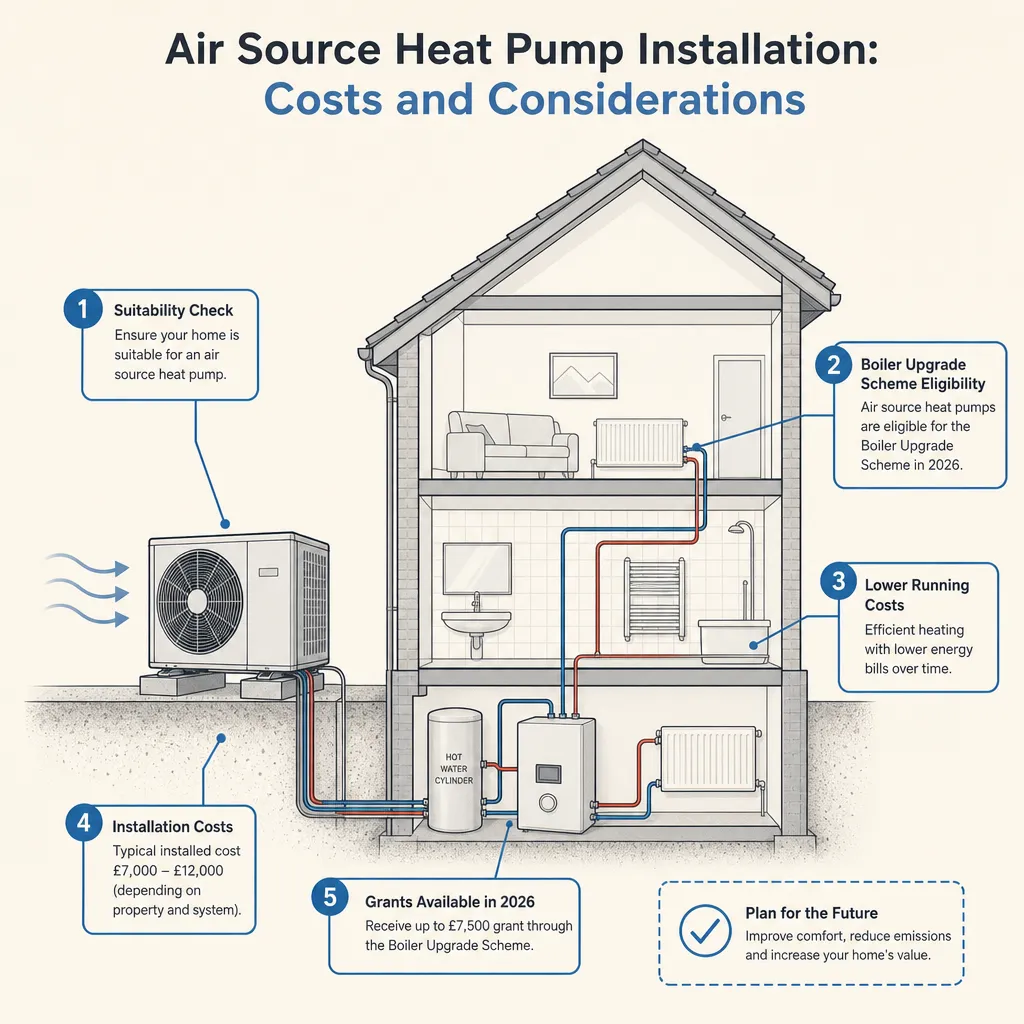
Air Source Heat Pump Installation: Costs and Considerations
Air source heat pump installation in the UK typically costs £8,000–£15,000 before the £7,500 Boiler Upgrade Scheme grant, available through MCS-certified installers in England and Wales.
 Energy & Retrofit
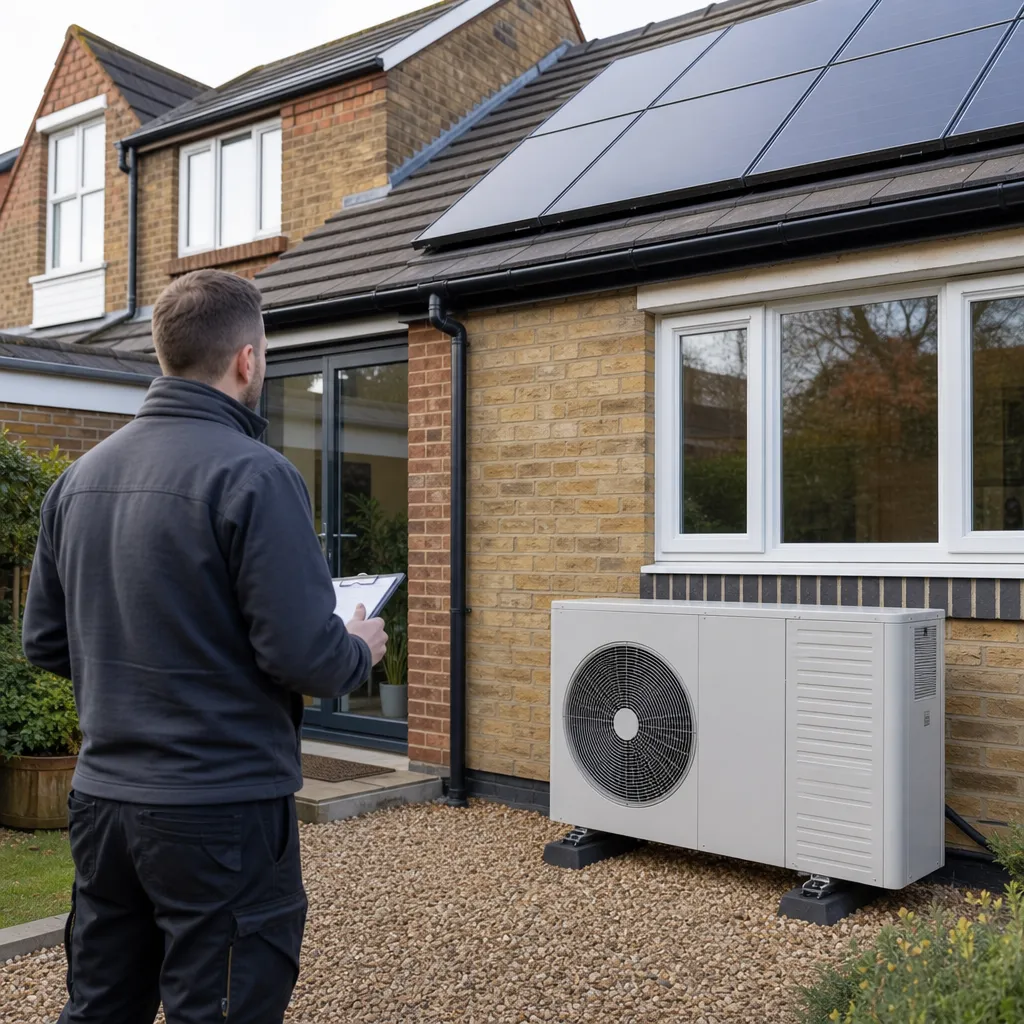
Renewable Energy Systems and Property Value: Solar Panels and Heat Pumps
Solar panels can add a modest 1–4% to UK property values in the right conditions, particularly when they improve the EPC rating.
 Energy & Retrofit
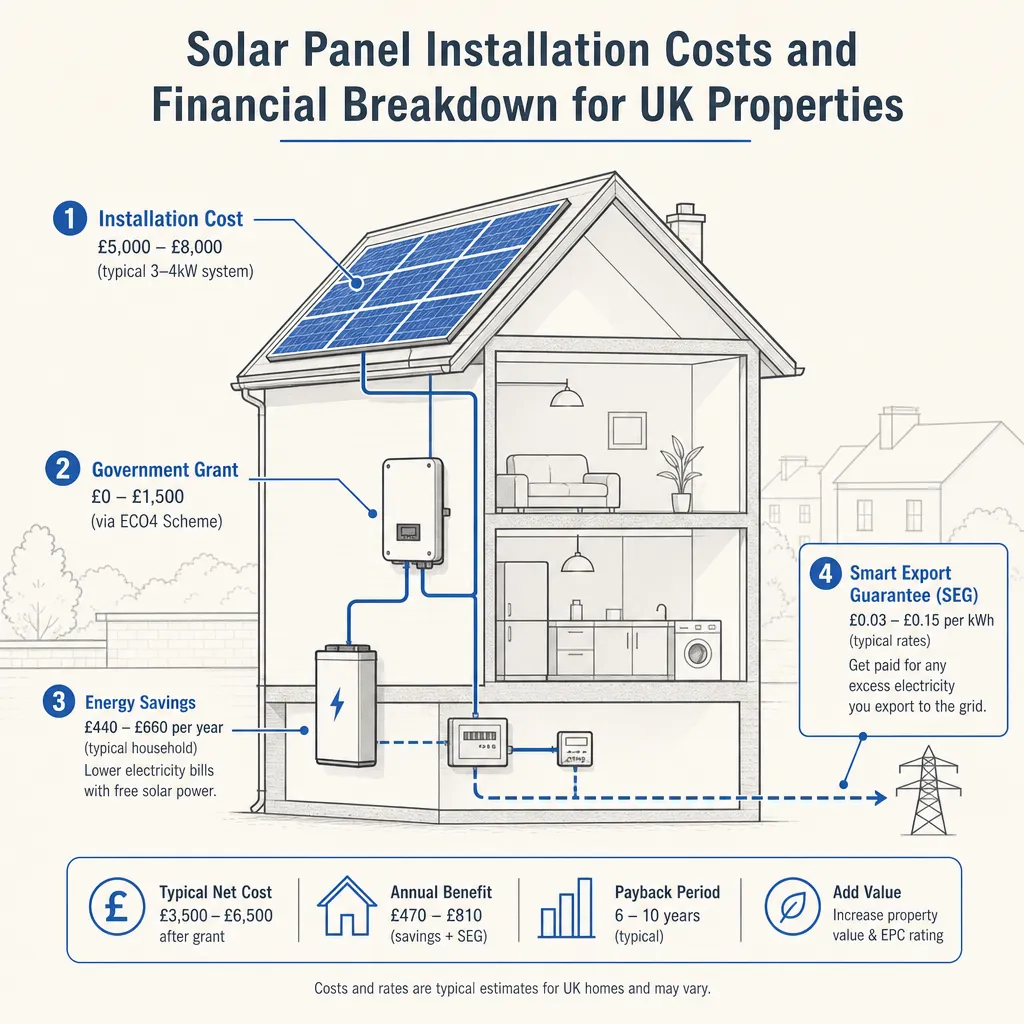
Solar Panel Installation Costs and Financial Breakdown for UK Properties
A typical domestic solar panel system (3.
 Energy & Retrofit
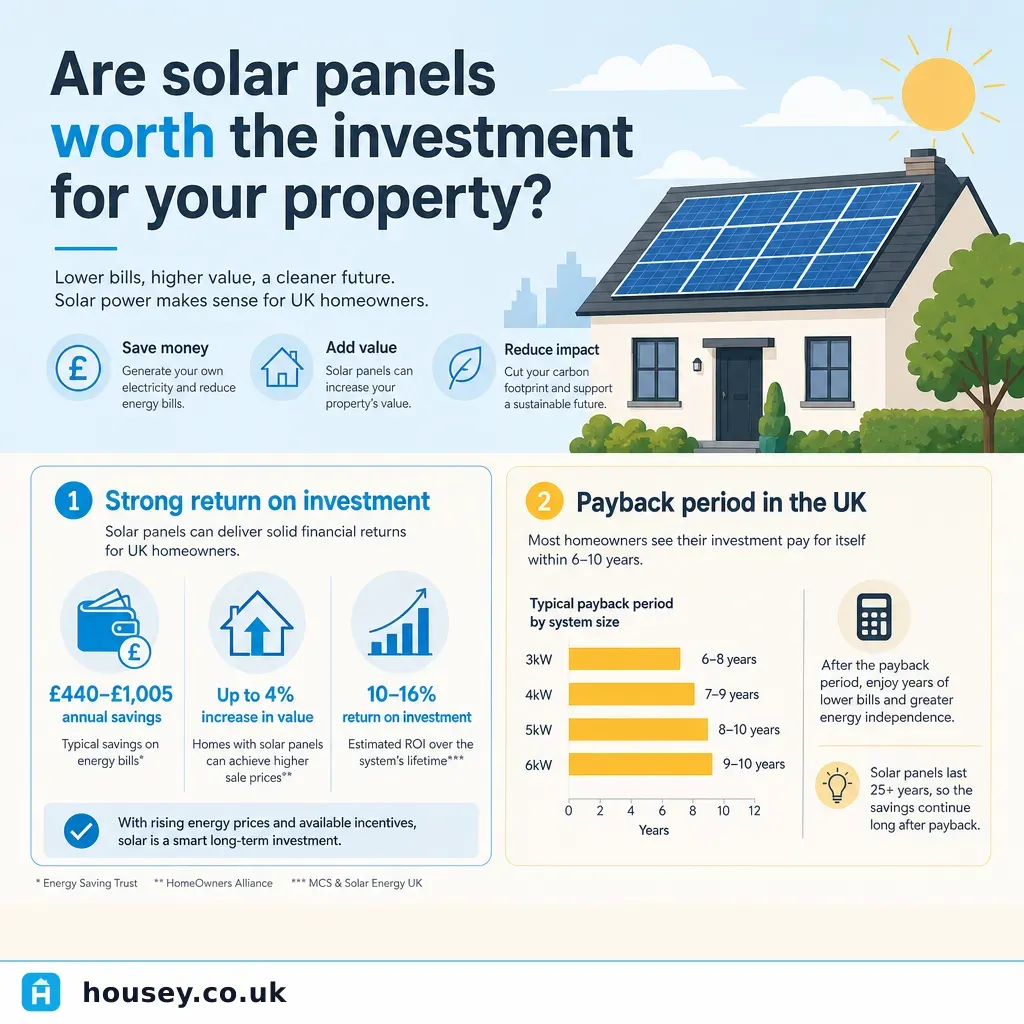
Are solar panels worth the investment for your property?
Solar panels can be a worthwhile investment for many UK homeowners, with typical payback periods of 10–15 years and ongoing income from the Smart Export Guarantee.
 Energy & Retrofit
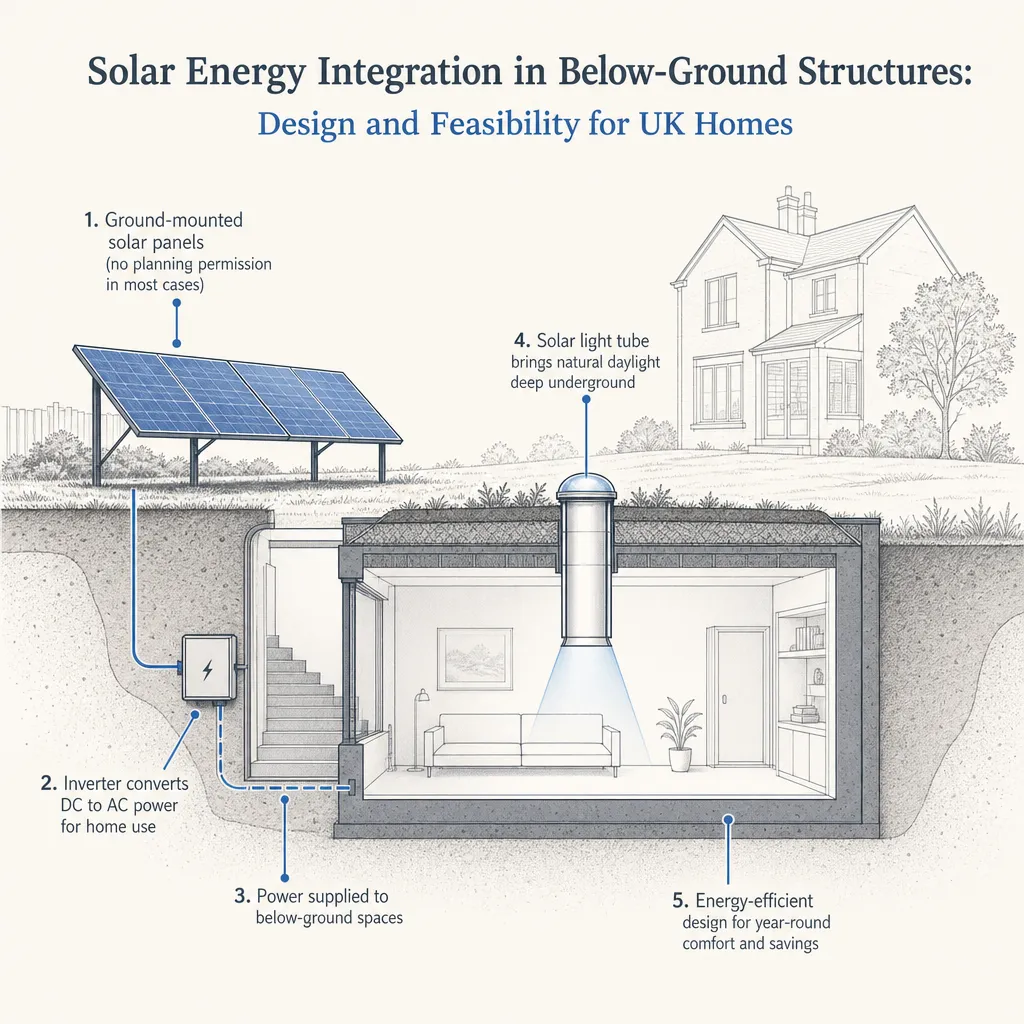
Solar Energy Integration in Below-Ground Structures: Design and Feasibility
Below-ground structures cannot host solar panels on their own roofs but can use surface-mounted panels connected via cable runs, solar light tubes for daylighting, and battery storage.