Solar panel placement: comparing ground-mounted versus roof installation
By Housey · Last reviewed 12th of May 2026
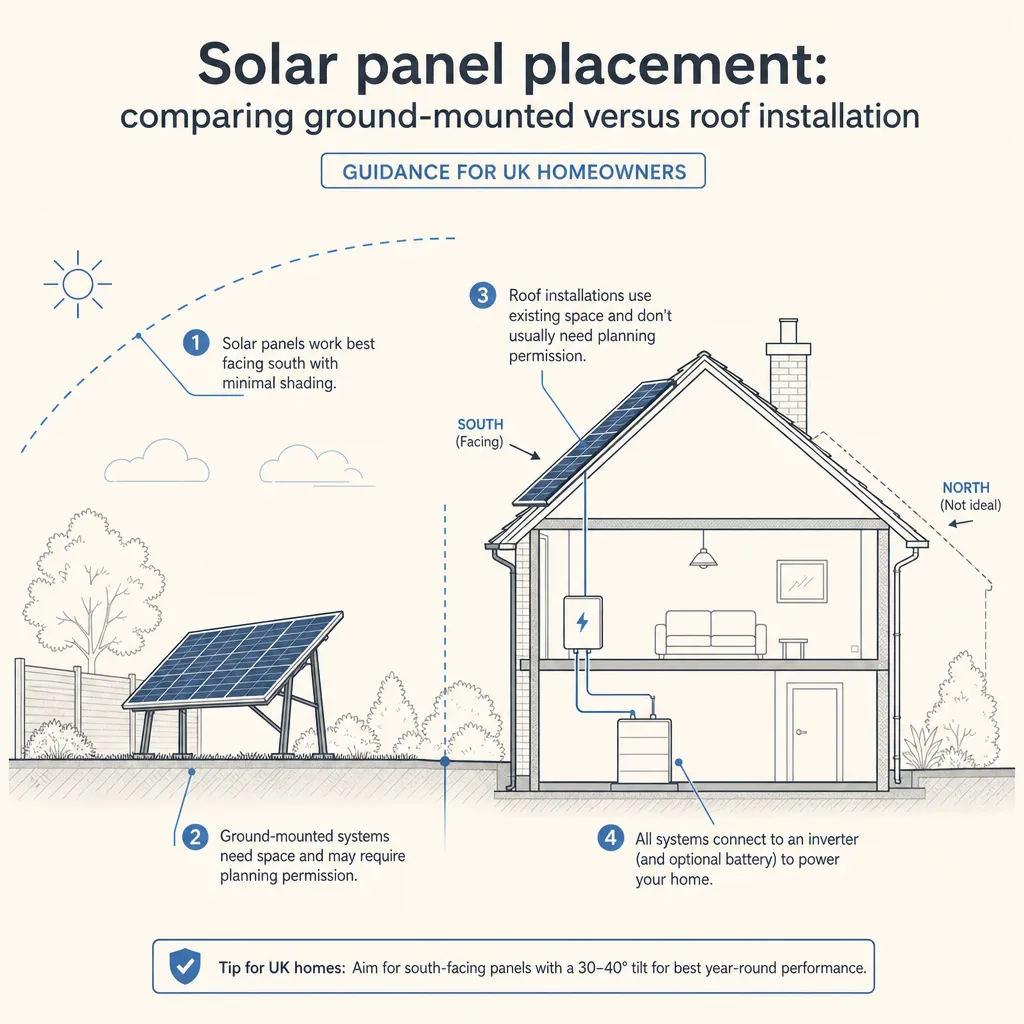
Solar panel placement: comparing ground-mounted versus roof installation
Choosing where to site a solar photovoltaic (PV) system is one of the first practical decisions a homeowner faces once they have committed to going solar. Most UK installations mount panels directly on a pitched roof, but properties with shaded, north-facing, or structurally compromised roofs may benefit from ground-mounted alternatives. Getting placement right affects energy yield, installation cost, and whether planning permission is required.
Key points
- South-facing roof pitches between 30° and 40° typically achieve the highest annual yield in the UK; south-east and south-west orientations perform only slightly worse, losing around 15–20% of potential output.
- Ground-mounted arrays in England are usually classed as permitted development for residential properties, provided they meet size and setback conditions under the Town and Country Planning (General Permitted Development) Order 2015 (as amended).
- Roof-mounted systems are generally £500–£1,500 cheaper to install per system than equivalent ground-mounted setups, primarily due to reduced groundwork and racking infrastructure costs. (Indicative UK costs, last reviewed 2026-05-12.)
- MCS (Microgeneration Certification Scheme) accreditation is required for both installation types if you intend to export surplus electricity under the Smart Export Guarantee (SEG).
- A structural assessment is recommended before mounting panels on roofs older than 20 years or those with visible defects, heavy moss, or slipped tiles.
Roof-mounted solar panels: what affects suitability
Roof-mounted panels attach to racking systems fixed to roof rafters or battens. In the UK, most domestic installations use on-roof mounting — lower cost and simpler to install than in-roof integrated systems, though the latter provides a neater aesthetic on visible roof slopes.
Key factors that affect roof suitability:
- Orientation and pitch: South-facing roofs at 30°–40° pitch optimise annual yield. East or west-facing roofs typically lose around 25–30% of potential output, and north-facing roofs are generally not viable for main arrays.
- Shading: Nearby trees, chimneys, or adjoining buildings can significantly reduce output. Partial shading on even a few cells can affect an entire string of panels unless microinverters or DC optimisers are specified.
- Roof condition: Panels are typically warranted for 25 years. Installing them on a roof that will need re-covering in five years means costly removal and reinstallation. A pre-installation roof inspection is worthwhile for any roof over 15 years old.
- Load-bearing capacity: Most UK roofs can accommodate standard panels (roughly 11–13 kg/m²), but flat roofs or those with unusual construction may need a structural assessment before work proceeds.
- Listed buildings and conservation areas: Roof-mounted panels on listed buildings require listed building consent. Properties in conservation areas face additional permitted development restrictions under the GPDO — check with your local planning authority.
Ground-mounted solar panels: advantages and limitations
Ground-mounted systems use steel or aluminium frames anchored into the ground with concrete footings, screw piles, or ballasted frames on flat land. They offer greater flexibility over tilt angle, orientation, and row spacing than any roof installation.
Advantages:
- Panels can be angled and oriented optimally regardless of house orientation or roof pitch.
- Easier to clean and maintain — no roof access or scaffolding needed.
- No structural load imposed on the building.
- Can be positioned well away from shading sources.
Limitations:
- Require sufficient clear land — typically 5–10 m² of ground per kWp installed, with additional space between rows to avoid inter-row shading.
- Cabling from the array to the consumer unit is often longer, and armoured cable is required where it crosses gardens or paths.
- Groundwork, concrete, and racking infrastructure increase upfront cost compared with roof mounting.
- May require planning permission if the array would sit in front of the principal elevation or the property is in a designated area.
Planning rules for ground-mounted systems in England:
Under Class A of Part 14 of the GPDO, a domestic ground-mounted solar installation is permitted development if it does not exceed 9 m² of panel surface area, does not exceed 4 m in height, sits at least 5 m from the property boundary, is not in front of the principal elevation, and the property is not listed or in a World Heritage Site. Rules differ in Scotland, Wales, and Northern Ireland — check with your local planning authority or review the GOV.UK technical guidance on permitted development before starting work.
Comparing roof-mounted and ground-mounted systems
Factor | Roof-mounted | Ground-mounted |
|---|---|---|
Typical installed cost (3–4 kWp) | £5,000–£8,000 | £6,500–£10,000 |
Orientation flexibility | Limited to roof pitch and facing | Fully adjustable |
Land or space needed | None (uses existing roof) | 15–40 m² clear ground typical for 3–4 kWp |
Maintenance access | Requires scaffolding or specialist access | Ground level — considerably easier |
Planning permission | Usually not required (PD rules apply) | Usually PD within limits; verify GPDO conditions |
Structural impact on building | Minor roof penetrations; weight load | None |
Shading risk | Depends on roof surroundings | Can be sited to minimise shading |
Best for | Most UK homes with a suitable south-facing roof | Homes with poor, shaded, or north-facing roofs, or large gardens |
Indicative UK costs, last reviewed 2026-05-12. Costs vary by installer, region, and system specification. Always obtain multiple quotes from MCS-accredited installers.
Which option should you choose?
- Choose roof-mounted if your roof faces south to south-west or south-east, is in reasonable condition, has a pitch between 30° and 45°, and has minimal shading. This is the lower-cost, lower-complexity option for most UK homes.
- Choose ground-mounted if your roof is north-facing, heavily shaded, flat and unsuitable for ballasted mounting, or structurally compromised — or if you have a large garden and want full control over panel angle and orientation.
- Consider a split array if your home has multiple roof faces — east-facing panels on the front elevation and west-facing on the rear can smooth the generation curve across the day.
- Consult a solar surveyor if your property is listed, in a conservation area, or your roof includes asbestos cement tiles or unusual construction materials — a professional assessment will identify constraints before you commit.
- Verify planning rules with your local planning authority if you are in a designated area or if the proposed ground array would exceed GPDO permitted development limits.
When to get professional help
A professional solar assessment is advisable before committing to either option in the following situations:
- Your roof is more than 20 years old or has visible damage, heavy moss, or slipped tiles.
- You are uncertain whether your roof structure can carry additional load.
- There are signs of asbestos cement tiles or corrugated roofing sheets on older garages or extensions — do not disturb these materials; arrange a professional survey first.
- Your property is listed, in a conservation area, article 4 direction area, or Area of Outstanding Natural Beauty.
- Shading is complex and difficult to assess without specialist tools or software.
- You want to combine a ground array with battery storage and require integrated electrical design input.
How Housey can help
Housey connects you with qualified professionals who can assess your roof, land, and local planning constraints before you commit to a system. Booking a solar survey gives you a site-specific recommendation covering orientation, shading, structural considerations, and expected yield — helping you make the right placement decision with confidence.
Frequently asked questions
Do ground-mounted solar panels need planning permission in the UK?
In England, small ground-mounted domestic solar installations are usually permitted development under the GPDO, provided the array is no larger than 9 m², no taller than 4 m, at least 5 m from the boundary, and not in front of the principal elevation. Listed buildings and World Heritage Sites are excluded. Rules differ in Scotland, Wales, and Northern Ireland — always check with your local planning authority.
Can I install solar panels on a north-facing roof?
A north-facing roof is generally not suitable for solar PV in the UK — output would be significantly reduced and the economics rarely work. If your main roof is north-facing, a ground-mounted array in the garden or split east/west roof arrays on rear or side elevations are more practical alternatives. A solar surveyor can model expected generation for each scenario.
Is a ground-mounted solar system more expensive than roof-mounted?
Typically, yes. Groundwork, footings, and longer cable runs add cost over a comparable roof-mounted system. Indicative UK costs for a 3–4 kWp roof-mounted system range from £5,000–£8,000, while equivalent ground-mounted systems often run £6,500–£10,000. Get multiple quotes from MCS-accredited installers to compare. (Indicative UK costs, last reviewed 2026-05-12.)
Does panel placement affect eligibility for the Smart Export Guarantee?
No — the Smart Export Guarantee (SEG) is available for eligible systems regardless of whether panels are roof- or ground-mounted, provided the installation is carried out by an MCS-accredited contractor and the total system capacity is under 5 MW. Export tariffs are set by licensed energy suppliers — compare current rates via Ofgem.
Sources and further reading
- Permitted development rights for householders: technical guidance — GOV.UK
- Smart Export Guarantee — Ofgem
- Find a certified MCS installer — Microgeneration Certification Scheme
- Energy Saving Trust: solar panels — Energy Saving Trust
Useful next reads
 Energy & Retrofit
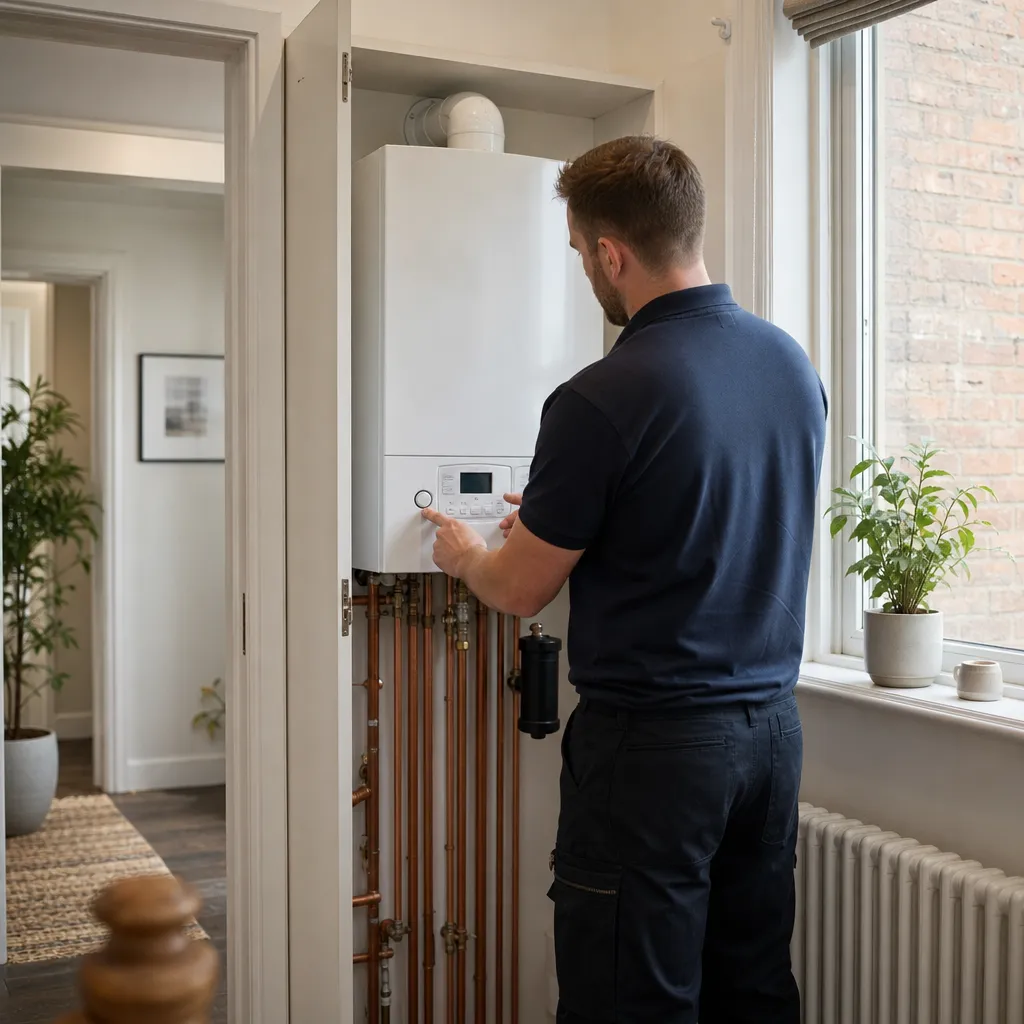
Optimising Heating Systems for Energy Efficiency
Optimising a UK heating system usually involves improving controls such as smart thermostats and thermostatic radiator valves, ensuring the boiler or heat pump is correctly sized, and upgrading radiators or pipework where needed.
 Energy & Retrofit
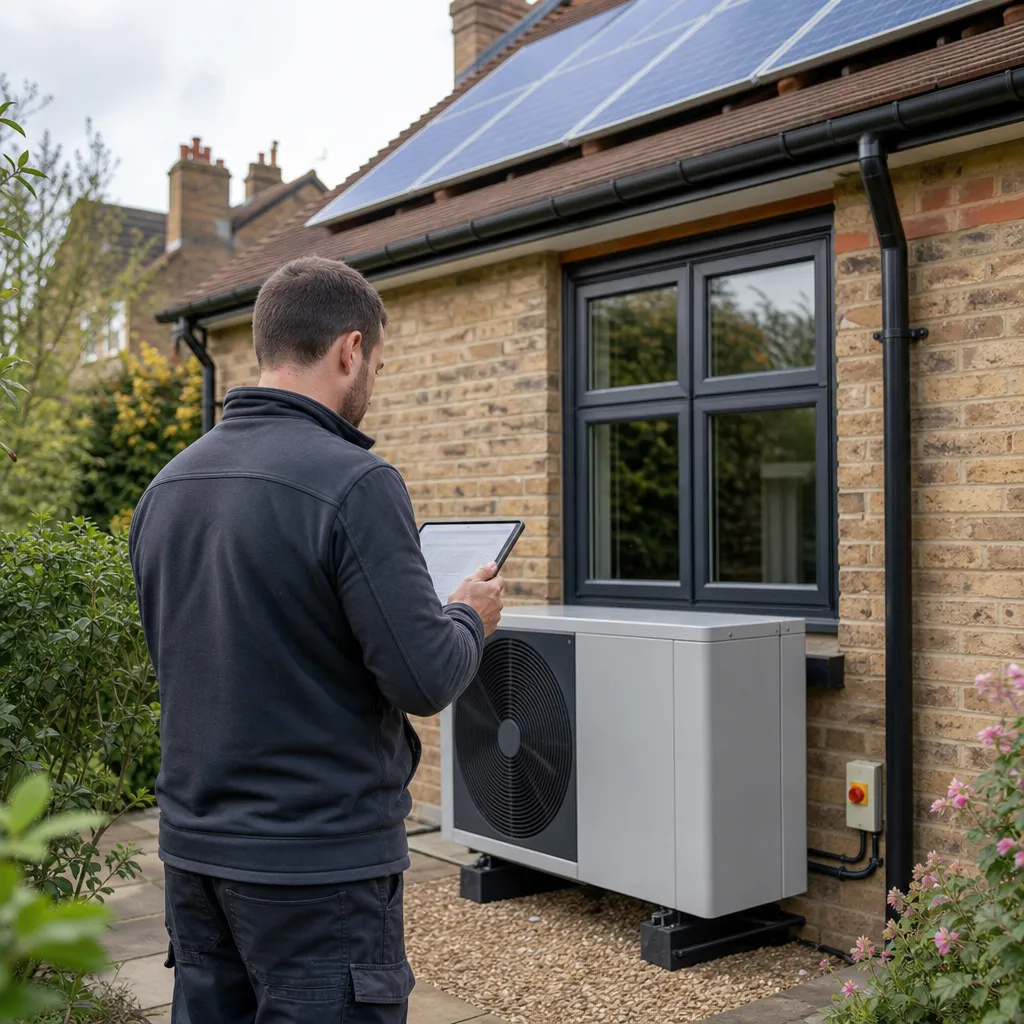
Finding a Renewable Energy Specialist for Your Home
Look for MCS-certified installers registered with TrustMark for any grant-funded work.
 Energy & Retrofit
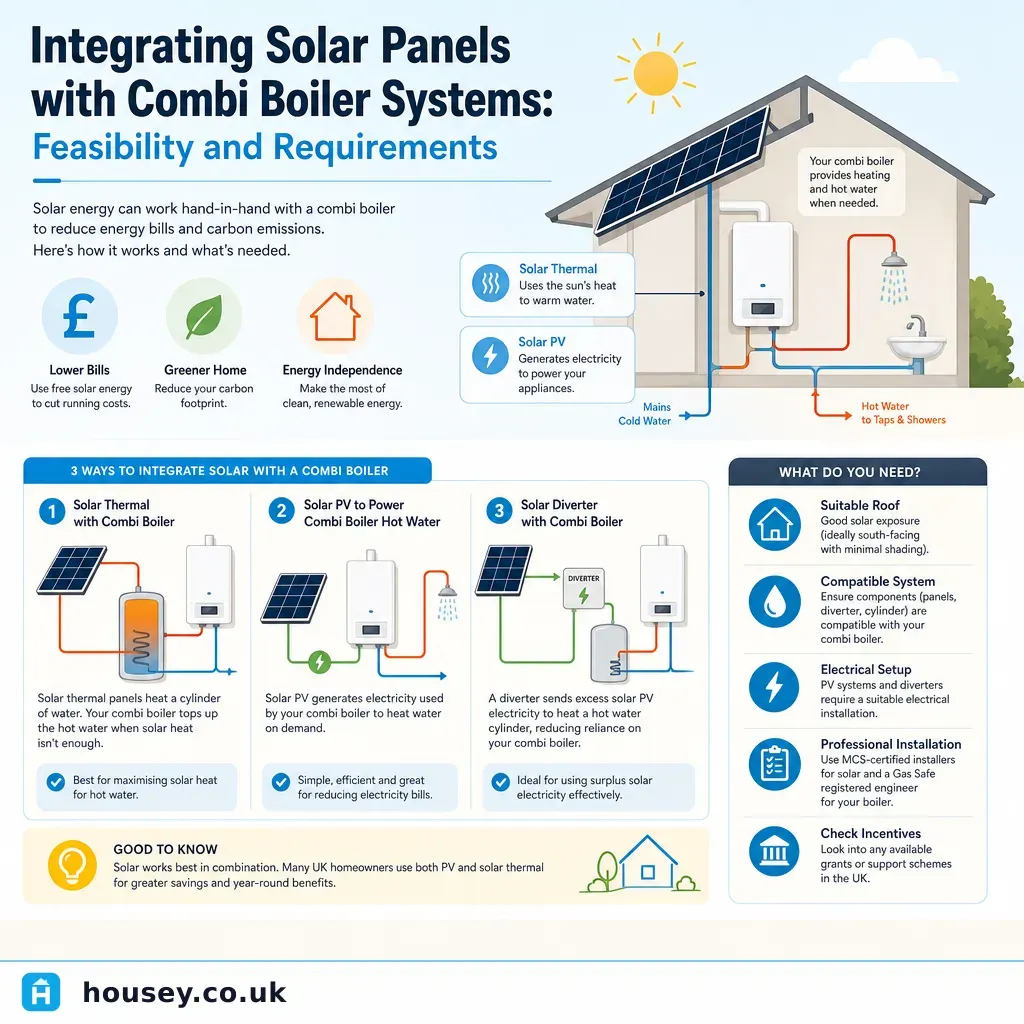
Integrating Solar Panels with Combi Boiler Systems: Feasibility and Requirements
Combi boilers heat water on demand without a hot water storage cylinder, making direct solar thermal integration impractical.
 Energy & Retrofit
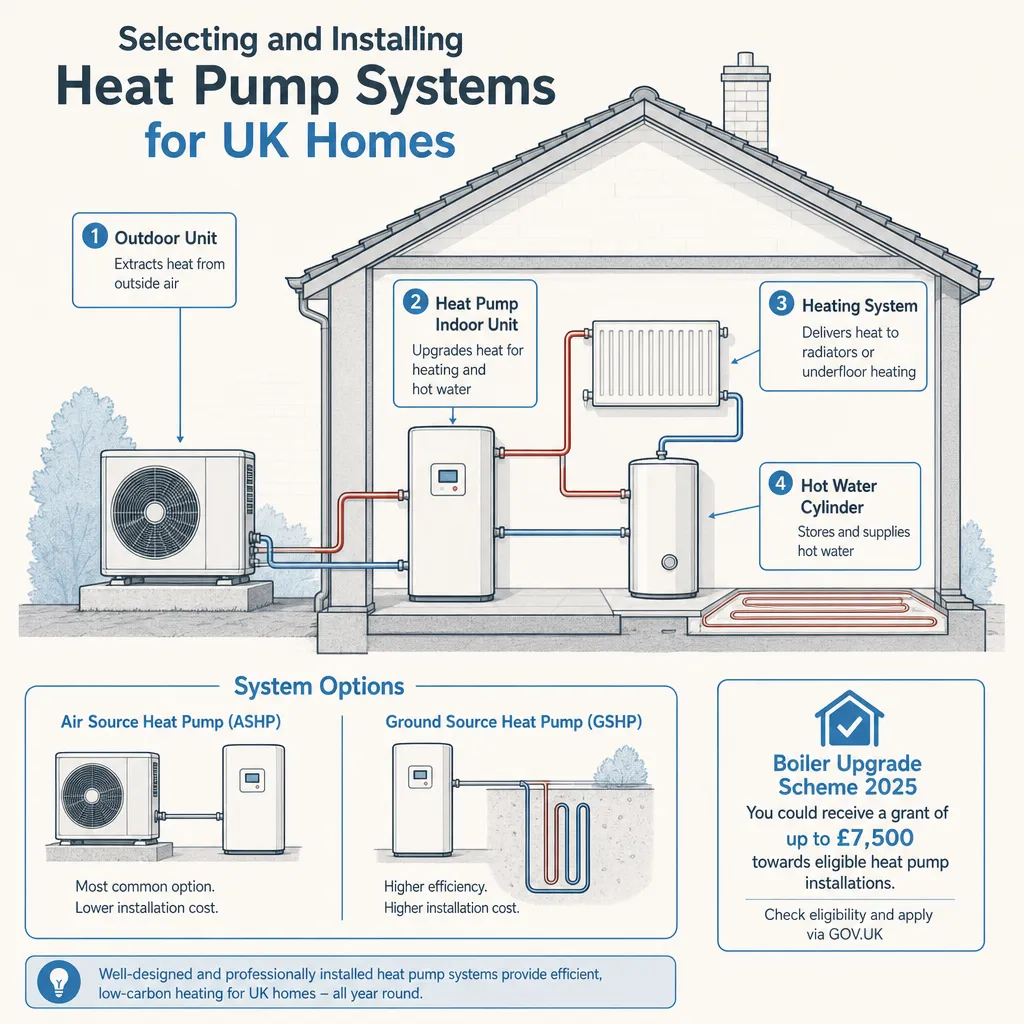
Selecting and Installing Heat Pump Systems for UK Homes
Selecting a heat pump for a UK home requires a site-specific heat loss calculation, an assessment of existing heat emitters, and a check on fabric insulation before any system is chosen.
 Energy & Retrofit
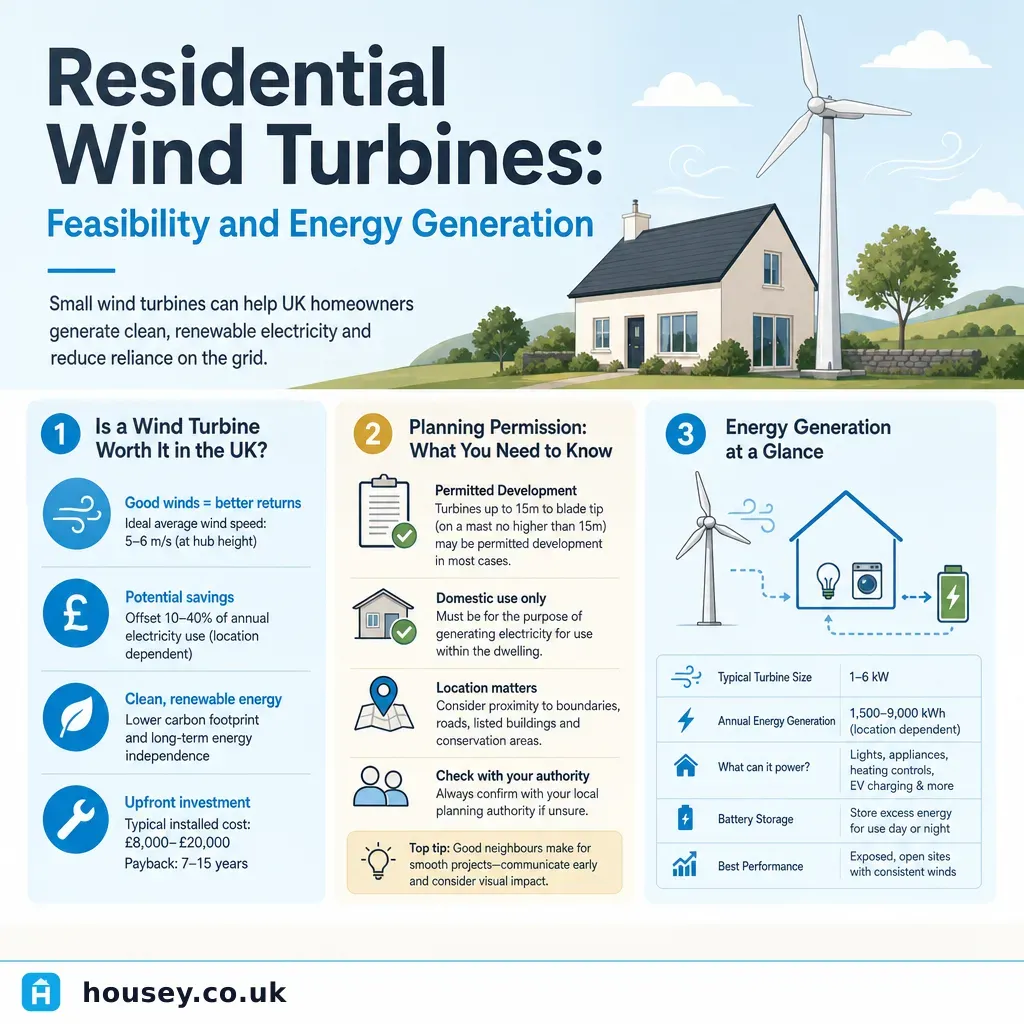
Residential Wind Turbines: Feasibility and Energy Generation
Whether a residential wind turbine is feasible depends largely on your site's average wind speed — most UK homes need at least 5–6 m/s to generate useful electricity.