Solar Panel Removal and Decommissioning
By Housey · Last reviewed 31st of May 2026
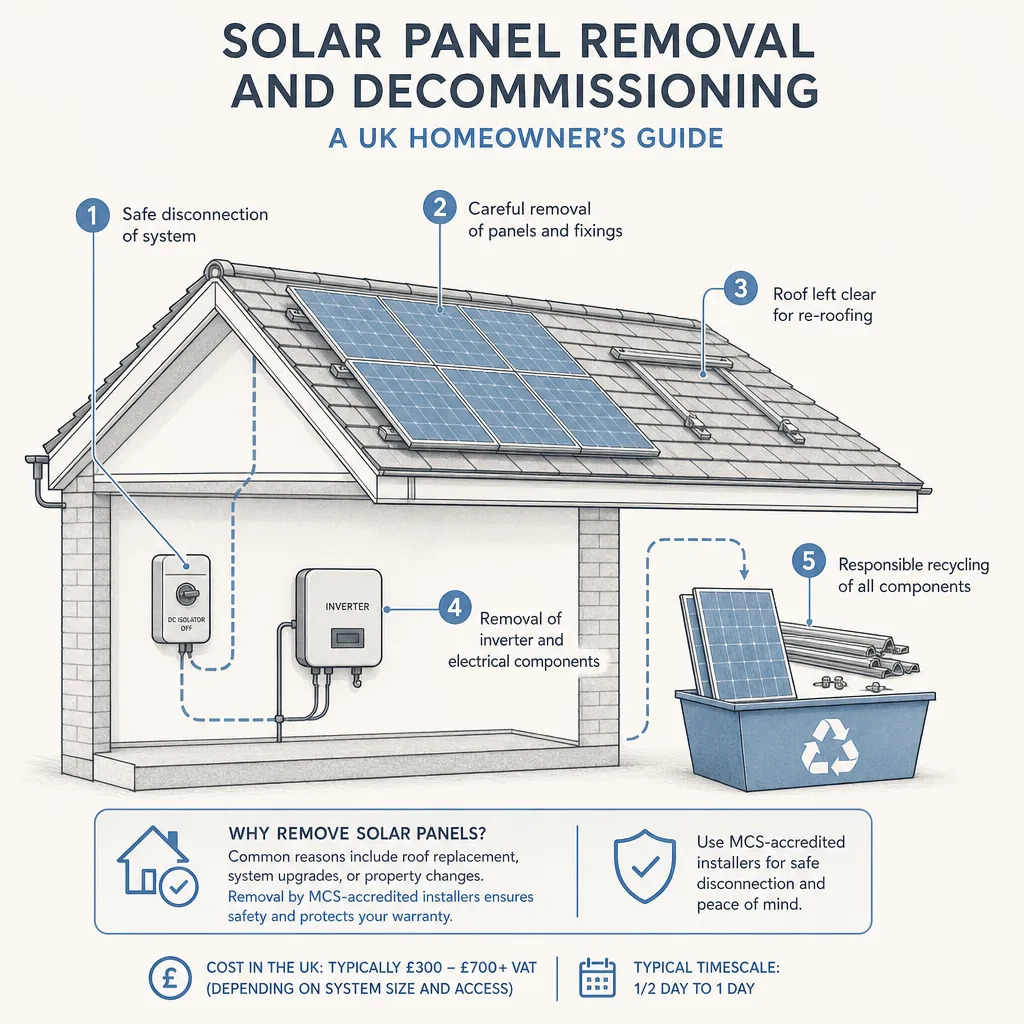
Solar Panel Removal and Decommissioning
Solar PV panels installed under the Feed-in Tariff scheme in the early 2010s are now approaching 15 years old, and an increasing number of UK homeowners are facing removal decisions — whether the roof beneath needs attention, the system is ready for an upgrade, or the property is changing hands. What many discover is that decommissioning a solar PV system involves regulatory, safety, and contractual considerations that go well beyond a straightforward roofing job.
Key points
- Solar PV DC cabling carries live voltage whenever daylight hits the panels, even with the inverter switched off; electrical disconnection must be carried out by a qualified electrician or MCS-accredited installer before any physical removal begins.
- Solar panels are classified as Waste Electrical and Electronic Equipment (WEEE) and cannot be disposed of in a general skip; a registered WEEE treatment facility must handle them.
- If your system is registered under the legacy Feed-in Tariff (FiT) scheme, you must notify Ofgem and your FiT licensee before decommissioning; unnotified removal may breach your FiT agreement.
- Removing solar panels from a listed building or within a conservation area may require prior approval from the local planning authority even if the original installation was permitted development.
- Panels removed for a roof replacement can usually be reinstalled, but should be professionally performance-tested before reconnection to confirm output has not degraded during removal and storage.
Why homeowners remove solar panels
The most common reasons for solar panel removal in the UK include:
- Roof replacement or repair: felt, battens, and tiles beneath a PV array cannot be accessed without first lifting the panels.
- System upgrade: replacing an older, lower-efficiency array with newer panels to improve yield or add battery storage compatibility.
- Full decommissioning: the system has reached end of life, the homeowner no longer wants it, or a third-party lease or rent-a-roof agreement has expired.
- Property sale: a buyer has declined to take on the system, or a solicitor has flagged an unresolved lease or ownership query that needs resolving before exchange.
- Structural concern: a survey has identified that the roof cannot safely carry the panel load, particularly on older properties where panels were added without a structural assessment.
Removal, reinstatement, or decommissioning: which applies to you?
Option | Best for | Key considerations | Main risk if not managed |
|---|---|---|---|
Removal and reinstatement | Roof repair or replacement | Panels need professional performance testing before reconnection | Undetected degradation; reconnection errors |
Full decommissioning | End of life; owner does not want the system | Must notify FiT licensee and DNO; WEEE disposal required | Breach of FiT agreement; unlawful waste disposal |
Partial removal | Minor roof repair not beneath the array | Roofer must be made aware of live DC cables at all times | Electrical risk to roofer; accidental wiring damage |
Removal and sale of panels | Functioning older panels no longer wanted | Buyer should commission an independent performance test; no WEEE route needed if reused | Liability if panels underperform after transfer |
Who should carry out the work?
Electrical disconnection and reconnection must be performed by a qualified electrician. For grid-connected systems, an MCS-accredited installer is strongly recommended, as they understand the specific requirements of solar PV wiring, DC isolators, and inverter disconnection sequences. DC cables between panels and the inverter carry voltage whenever daylight falls on the panels — there is no safely isolatable state on a bright day without the correct equipment and training.
Physical removal (once the system has been electrically isolated) is carried out by the installer or a roofing contractor working alongside the electrician. A roofer should never disconnect electrical components — this must always be done first by a competent person.
WEEE disposal is the joint responsibility of the contractor and the homeowner. A reputable installer will arrange collection by a registered WEEE treatment facility and provide a WEEE transfer note as evidence of lawful disposal. Retain this document.
Distribution Network Operator (DNO) notification is required for grid-connected systems. Your installer should handle this, but confirm it is included in the agreed scope of works before instructing them.
What to ask before accepting a quote
- Is the contractor MCS-accredited, or are they working with an MCS-accredited electrician for disconnection?
- Will they notify the DNO and energy supplier, or is that the homeowner's responsibility?
- Does the quoted price include electrical disconnection, physical removal, WEEE disposal, and roof making-good?
- If panels are being reinstated, will they carry out a performance test before reconnection?
- Do they hold adequate public liability insurance for roof-level work?
- Is VAT included in the quoted price?
- Will they provide a WEEE transfer note as evidence of lawful disposal?
Feed-in Tariff and Smart Export Guarantee: what removal means
If your system is registered under the legacy Feed-in Tariff (FiT) scheme — closed to new applicants in April 2019 but still paying existing participants — removing or decommissioning the system will affect your payments. Ofgem guidance requires notification to your FiT licensee of any change to the system. The specific consequences depend on whether you reinstall a comparable system or decommission entirely; contact your FiT licensee before instructing any works.
If you are currently receiving Smart Export Guarantee (SEG) export payments, notify your energy supplier when the system is disconnected; export payments will cease from the date of disconnection.
Document preparation checklist
Before instructing a solar panel removal contractor, gather the following:
When to get professional help
All solar panel removal involves live electrical risk and working at height — neither element is appropriate for DIY work under any circumstances. If you are uncertain whether your panels are owned outright or subject to a lease, check the property deeds and original installation documentation before instructing anyone. If the property is listed or in a conservation area, contact your local planning authority before works commence, as the Planning Portal guidance on solar panels explains that listed building consent or prior approval may be required even for removal.
How Housey can help
If you are considering whether to remove, upgrade, or retain your existing solar installation, a solar survey gives you an independent assessment of your panels' current condition and likely remaining output. Housey connects homeowners with qualified solar assessors across the UK so you can make an informed decision before committing to removal or reinvestment.
Frequently asked questions
Do I need planning permission to remove solar panels?
Planning permission is not usually required to remove solar panels from a standard domestic property. However, if your home is a listed building or in a conservation area, the original installation may have required listed building consent or prior approval — the same controls may apply to removal. Check with your local planning authority before instructing any works.
Can I remove solar panels myself?
Solar PV cabling carries live DC voltage whenever daylight hits the panels, even with the inverter switched off. Electrical disconnection must be carried out by a qualified, competent electrician. Physical removal at roof height without proper access equipment also carries serious injury risk. This is not appropriate DIY work under any circumstances.
How much does solar panel removal cost?
Costs depend on system size, roof pitch, ease of access, and whether panels are being stored for reinstatement or disposed of. Indicative UK costs, last reviewed 2026-05-31: obtain at least two or three quotes from MCS-accredited installers; prices vary considerably by region and system complexity. If panels are to be reinstated after a re-roof, confirm reinstallation is included in the quoted scope.
What happens to old solar panels — can they go in a skip?
No. Solar panels are classified as Waste Electrical and Electronic Equipment (WEEE) and cannot be disposed of as general waste or in a standard skip. Your removal contractor should arrange collection by a registered WEEE treatment facility and provide a WEEE transfer note as proof of lawful disposal. Keep this document.
Will removing my solar panels affect my Feed-in Tariff payments?
Yes. If your system is registered under the FiT scheme, you must notify Ofgem and your FiT licensee before decommissioning. The impact on payments depends on whether you reinstall a comparable system or decommission entirely. Contact your licensee before instructing work — disconnecting without prior notification may breach your FiT agreement terms.
Sources and further reading
- Feed-in Tariff scheme: guidance for generators — Ofgem
- Smart Export Guarantee — Ofgem
- MCS: find an accredited installer — Microgeneration Certification Scheme
- Electrical and electronic equipment (EEE): producer responsibility — GOV.UK
- Solar panels: planning permission — Planning Portal
Useful next reads
 Energy & Retrofit
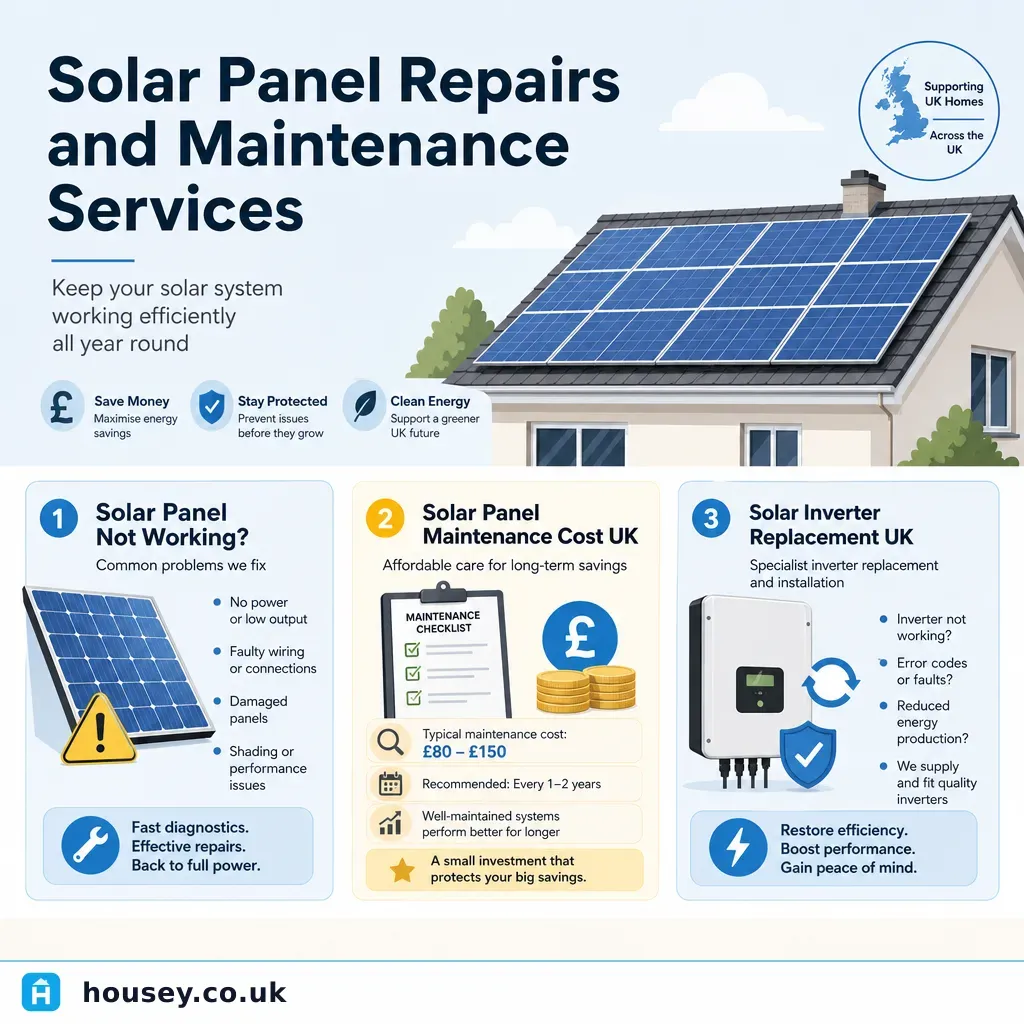
Solar Panel Repairs and Maintenance Services
Solar panels typically need a professional inspection every one to two years and reactive repairs when output drops unexpectedly.
 Energy & Retrofit
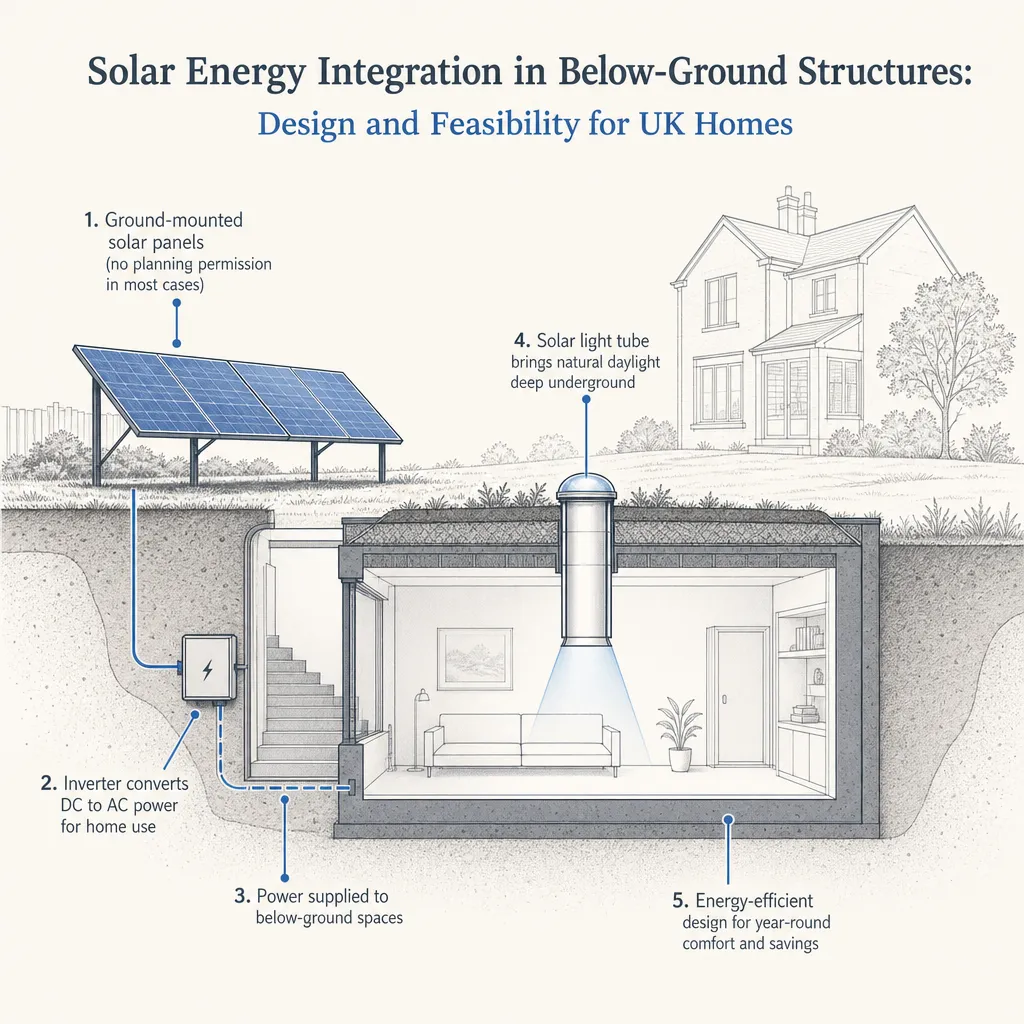
Solar Energy Integration in Below-Ground Structures: Design and Feasibility
Below-ground structures cannot host solar panels on their own roofs but can use surface-mounted panels connected via cable runs, solar light tubes for daylighting, and battery storage.
 Energy & Retrofit
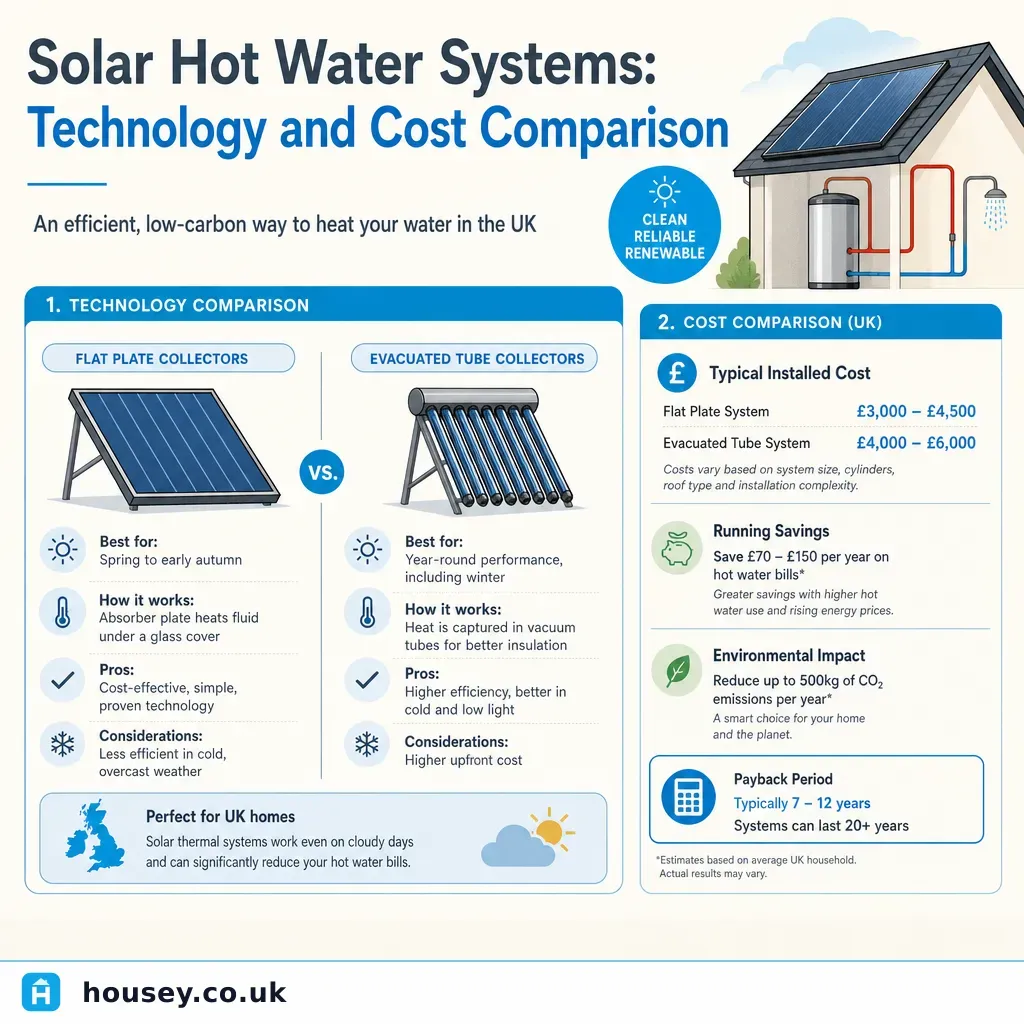
Solar Hot Water Systems: Technology and Cost Comparison
Solar thermal systems use roof-mounted collectors to heat domestic hot water via a glycol circuit and twin-coil cylinder.
 Energy & Retrofit
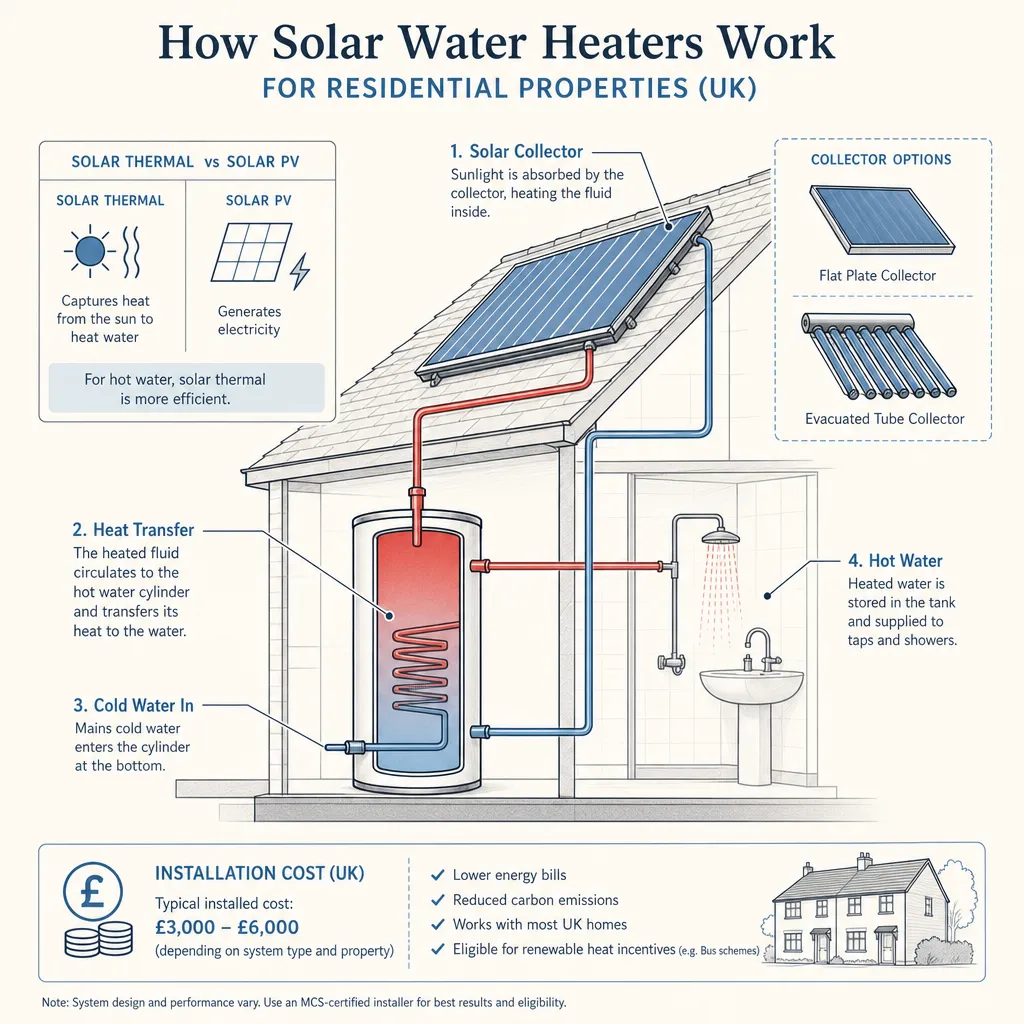
How Solar Water Heaters Work for Residential Properties
Solar water heaters use roof-mounted collectors to capture heat from sunlight and transfer it to a hot water cylinder via a fluid circuit.
 Energy & Retrofit
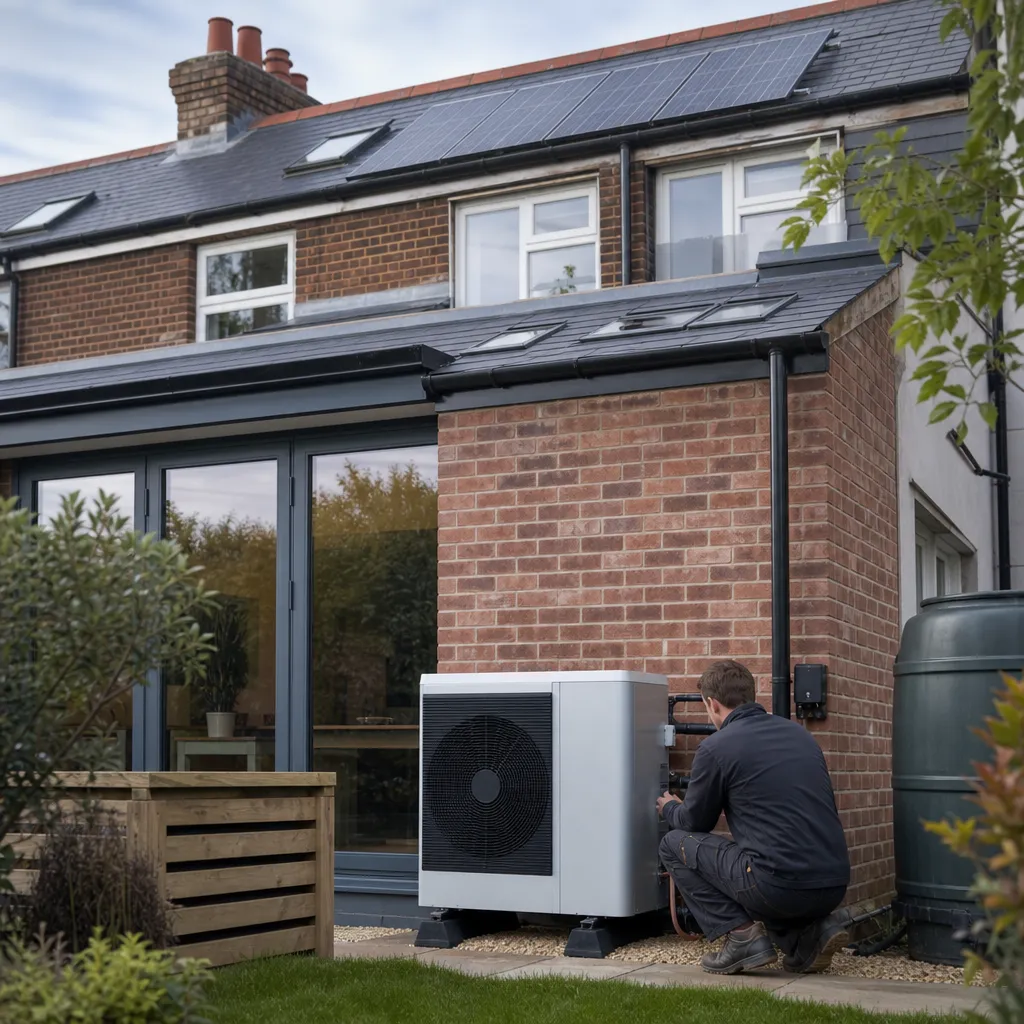
Renewable Energy Technologies for Homes
UK homes can choose from solar photovoltaic panels, air source heat pumps, ground source heat pumps, and battery storage as the main residential renewable technologies.