Solar panel removal: costs and process for decommissioning systems
By Housey · Last reviewed 12th of May 2026
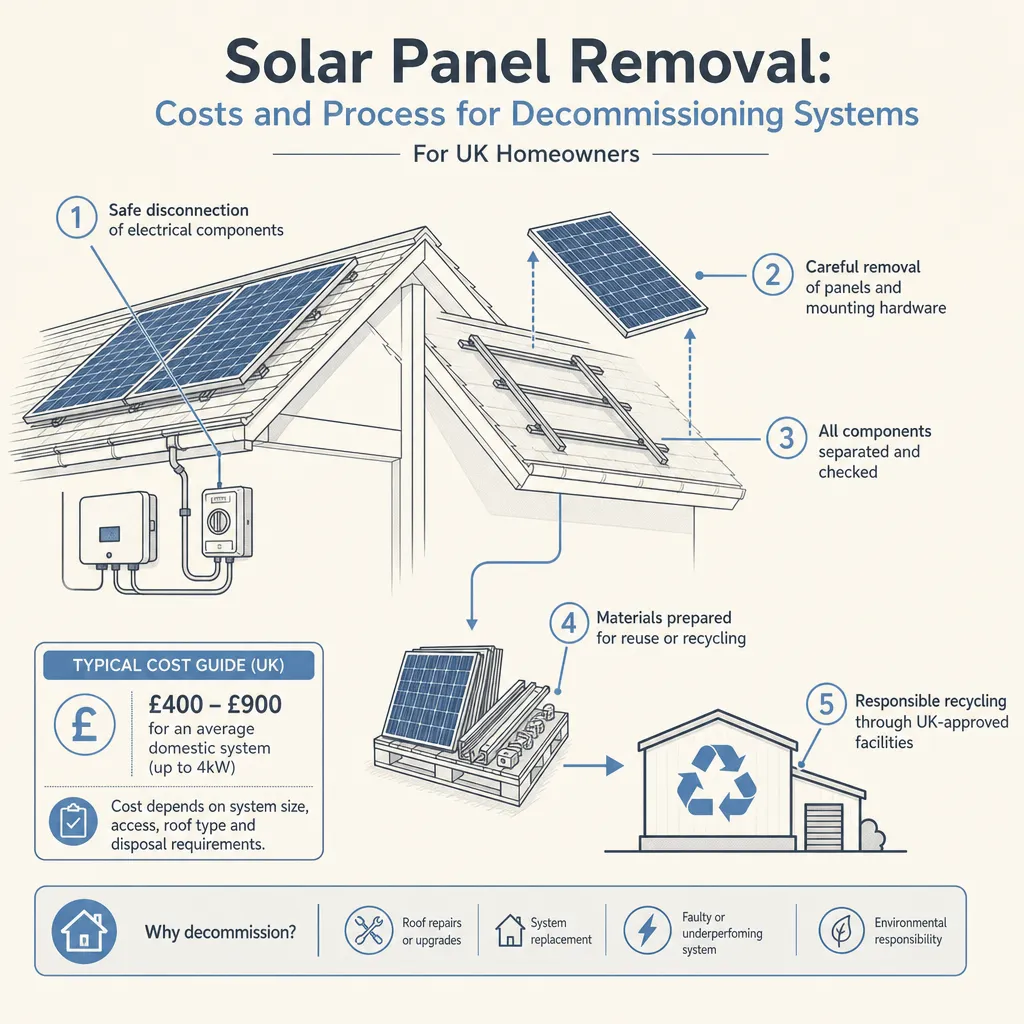
Solar panel removal: costs and process for decommissioning systems
Solar panels are occasionally removed for reasons that have nothing to do with system failure. Roof re-covering or structural repairs are the most common trigger, but homeowners also decommission arrays when selling a property subject to a shared-ownership lease restriction, upgrading to a newer roof-integrated system, or dealing with an early Feed-in Tariff installation that has reached the end of its practical life. Removal is more involved than many homeowners expect, and the costs, regulatory obligations, and disposal requirements are not widely understood.
Key points
- Solar panels are classified as Waste Electrical and Electronic Equipment (WEEE) under the Waste Electrical and Electronic Equipment Regulations 2013; they cannot go into general waste and must be handled by a licensed contractor or returned through an authorised WEEE scheme.
- The DC side of a solar system remains live whenever daylight reaches the panels and cannot be fully isolated by the consumer; a qualified electrician must carry out all disconnection work.
- If your panels were installed under the Feed-in Tariff scheme, notify your FiT licensee before removal — the tariff is tied to the generating system, and removing it without notification may breach your agreement.
- Reinstallation on the same or a new roof is treated as a new installation for MCS purposes; a new MCS certificate is required to retain eligibility for the Smart Export Guarantee.
- Roof penetrations left by mounting brackets must be made good promptly to prevent water ingress; confirm in writing whether this is included in the removal quote before work begins.
Why would you remove solar panels?
The most common reasons UK homeowners arrange solar panel removal are:
- Roof replacement or major repair — battens, underlays, or structural timbers beneath the array need attention before the roof covering can be renewed
- System upgrade — replacing a first-generation system with higher-efficiency panels, or reconfiguring the installation for battery storage with different mounting requirements
- Property sale or lease issues — some shared-ownership or flat lease agreements restrict roof-mounted equipment
- Damaged array — storm damage, fire damage, or extensive micro-cracking making the array unsafe or uneconomical to repair
- End of life — systems installed in the early Feed-in Tariff era (2010–2015) are now reaching an age where panels, inverters, and wiring may need comprehensive assessment or full replacement
What does solar panel removal involve?
Removing a solar array is not simply a matter of unbolting panels. A safe, compliant removal involves several distinct stages:
- Electrical isolation — a qualified electrician isolates the system at the inverter and consumer unit. The DC side cannot be fully isolated while panels face daylight, so appropriate procedures and protective equipment are used throughout.
- DC wiring disconnection — MC4 connectors and string wiring are disconnected by a competent person familiar with solar PV systems.
- Panel removal — panels are carefully unclipped or unbolted from the mounting rails and lowered from the roof safely.
- Mounting rail and bracket removal — rails, clamps, and roof hooks are removed.
- Roof penetration repair — holes and slots left by fixings are made good with appropriate flashing, sealant, or tile replacement.
- Inverter and isolator removal — the inverter, DC isolator, AC isolator, and generation meter are removed from the internal installation.
- WEEE-compliant disposal — panels and electrical equipment are taken to an authorised WEEE facility or collected by a registered scheme.
How much does solar panel removal cost in the UK?
Costs vary depending on system size, roof pitch and complexity, internal wiring extent, and whether panels are being stored for reinstallation or fully disposed of.
Indicative UK costs, last reviewed 2026-05-12:
Scenario | Indicative cost range |
|---|---|
Removal only — 4 kWp, standard pitched roof, disposal included | £400–£800 |
Removal and storage for reinstallation (panels and inverter retained) | £300–£600 |
Removal, roof repair or tile replacement, and reinstatement | £600–£1,500 depending on roof work scope |
Full decommission including inverter, wiring removal, and consumer unit make-good | £600–£1,200 |
Always obtain at least three itemised quotes. A quote that excludes scaffolding may appear lower but is not directly comparable to one that includes it.
Worked scenario: Victorian terrace roof re-cover in Bristol
A homeowner with a 3.6 kWp system on the south-facing rear slope of a Victorian terrace needs to re-cover the roof with new natural slates.
- The solar installer quotes £550 to remove 9 panels, all DC wiring, and mounting rails, making good 12 roof penetrations with lead flashing.
- The inverter and generation meter are removed and stored — the homeowner intends to have the system reinstalled once re-slating is complete.
- The FiT licensee is notified in advance; FiT payments are suspended for the removal period.
- After re-slating, the same installer quotes £420 for reinstallation and recommissioning, plus issuing a new MCS commissioning sheet.
- Total cost across both stages: approximately £970.
This scenario is illustrative based on typical UK pricing; actual costs will vary by location, system size, installer, and roof conditions.
What not to assume about solar panel removal
Common assumption | Reality |
|---|---|
I can take the panels down myself | The DC side is live in daylight. This is not safe DIY work — a qualified electrician is required. |
Removal is covered by buildings insurance | Usually only if caused by an insured event such as storm or fire. Planned removal is normally the homeowner's cost. |
I can skip the WEEE disposal process | Solar panels contain cadmium, lead, and silicon compounds. Fly-tipping carries criminal penalties under the Environmental Protection Act 1990. |
Unused mounting brackets can stay in the roof | Unsealed penetrations are a route for water ingress. All holes must be made weathertight before the scaffold comes down. |
FiT payments continue automatically during removal | FiT tariffs are tied to the generating system; notify your supplier before starting work and check your agreement for suspension conditions. |
Reinstallation does not need new certification | A reinstalled system is treated as a new installation for MCS purposes; a new certificate is required for SEG eligibility. |
WEEE disposal and recycling
Solar panels are classified as WEEE under the Waste Electrical and Electronic Equipment Regulations 2013 (as amended). Your removal contractor should provide a WEEE transfer note confirming compliant disposal or recycling. Reputable solar recyclers can recover approximately 85–90% of a panel's material by weight, including glass, aluminium frames, and silicon.
If your contractor cannot handle WEEE disposal directly, your local authority household waste recycling centre may accept them, or search the Environment Agency's waste carrier register for a licensed collector in your area.
Document checklist: what to locate before arranging removal
- Original MCS installation certificate
- Feed-in Tariff or Smart Export Guarantee agreement and account reference
- Inverter installation manual and commissioning report
- Any planning permission or permitted development notification for the original installation
- Buildings insurance schedule (to check whether removal is covered by your policy)
- Roof warranty documentation, where relevant — removal may affect an existing guarantee
When to get professional help
Solar panel removal should always involve a qualified electrician with solar PV experience. Do not attempt to disconnect DC wiring or work on the roof yourself. Obtain quotes only from contractors who can demonstrate appropriate electrical qualifications — NICEIC or NAPIT registration is a reliable indicator — and who can provide WEEE transfer documentation on completion. If your system includes a battery storage unit, confirm the contractor's experience with battery systems before proceeding, as additional safety procedures apply.
How Housey can help
If you are unsure about your system's condition before removal, or need an independent assessment to inform a removal or upgrade decision, Housey's solar surveys service connects you with qualified professionals who can advise on the safest and most cost-effective approach.
Frequently asked questions
Can I remove solar panels myself?
No. The DC side of a solar system remains live whenever daylight reaches the panels and cannot be safely isolated without appropriate training and equipment. Always use a qualified electrician with solar PV experience and NICEIC or NAPIT registration to carry out any removal work.
Will removing solar panels damage my roof?
Careful removal by an experienced installer should leave the roof watertight, but some localised work — replacing tiles or re-sealing roof penetrations — is usually needed. Agree in writing what making good includes before work begins, and ask whether tile or flashing costs are included in the quote.
What happens to solar panels when they are disposed of?
Solar panels are classified as WEEE and must be taken to an authorised facility. Many can be recycled at rates of around 85 to 90 per cent by weight, recovering glass, aluminium frames, and silicon. Your contractor should provide a WEEE transfer note confirming compliant disposal.
Do I need to tell anyone before I remove my solar panels?
Yes, if your system is registered under the Feed-in Tariff or Smart Export Guarantee, notify your energy supplier or FiT licensee before removal. If planning permission was granted for the original installation — for example, in a conservation area — check whether removal also requires notification.
How long does solar panel removal take?
Removing a standard 4 kWp domestic array typically takes half a day to a full day for the roof work, with inverter and wiring removal adding further time inside the property. If scaffolding needs to be erected and struck separately, allow additional time and budget for that stage.
Sources and further reading
- GOV.UK — feed-in tariff scheme — GOV.UK
- GOV.UK — WEEE regulations guidance — Environment Agency / GOV.UK
- MCS — microgeneration certification scheme — MCS
- NICEIC — find a registered electrician — NICEIC
- HSE — working at height regulations — Health and Safety Executive
- Energy Saving Trust — solar panels — Energy Saving Trust
Useful next reads
 Energy & Retrofit
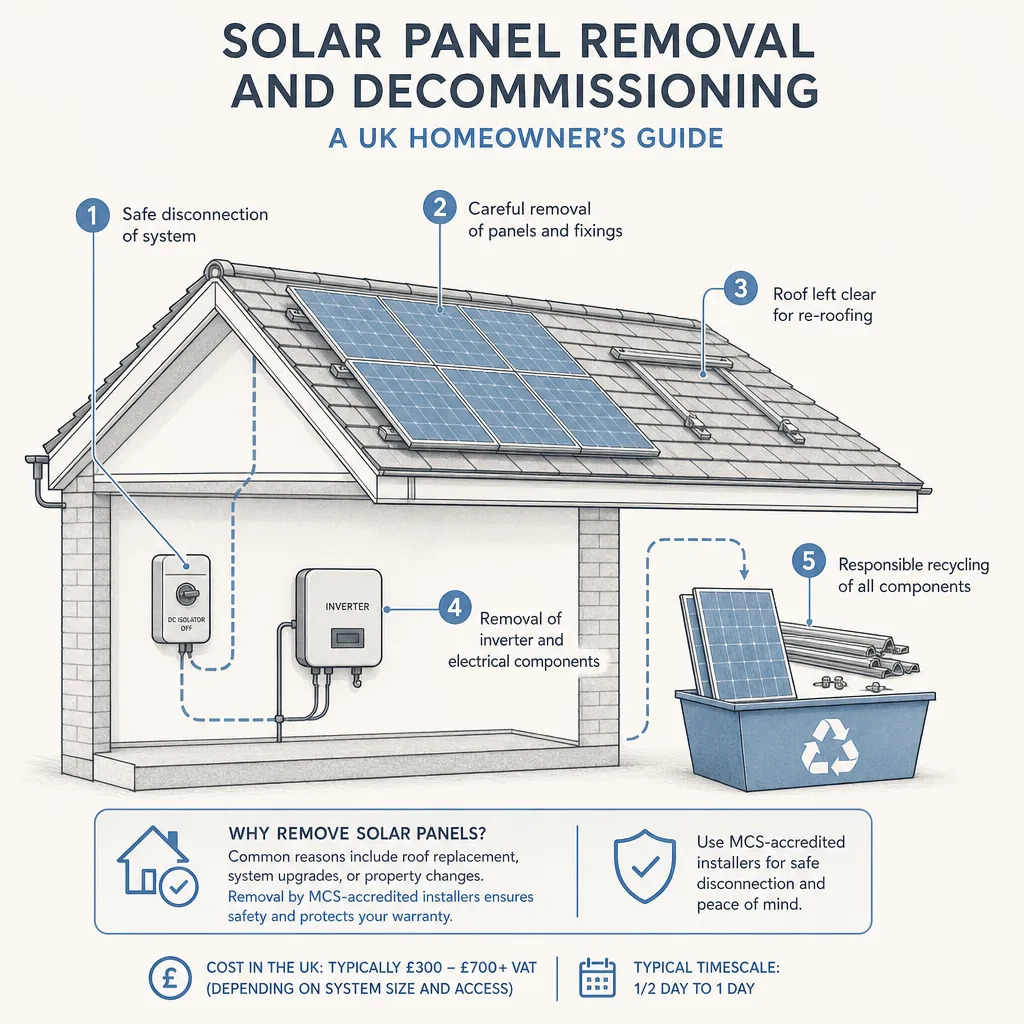
Solar Panel Removal and Decommissioning
Solar panel removal requires a qualified electrician or MCS-accredited installer to isolate and disconnect live DC cabling before any physical work begins — the cables carry voltage whenever daylight hits the panels, even with the inverter off.
 Energy & Retrofit
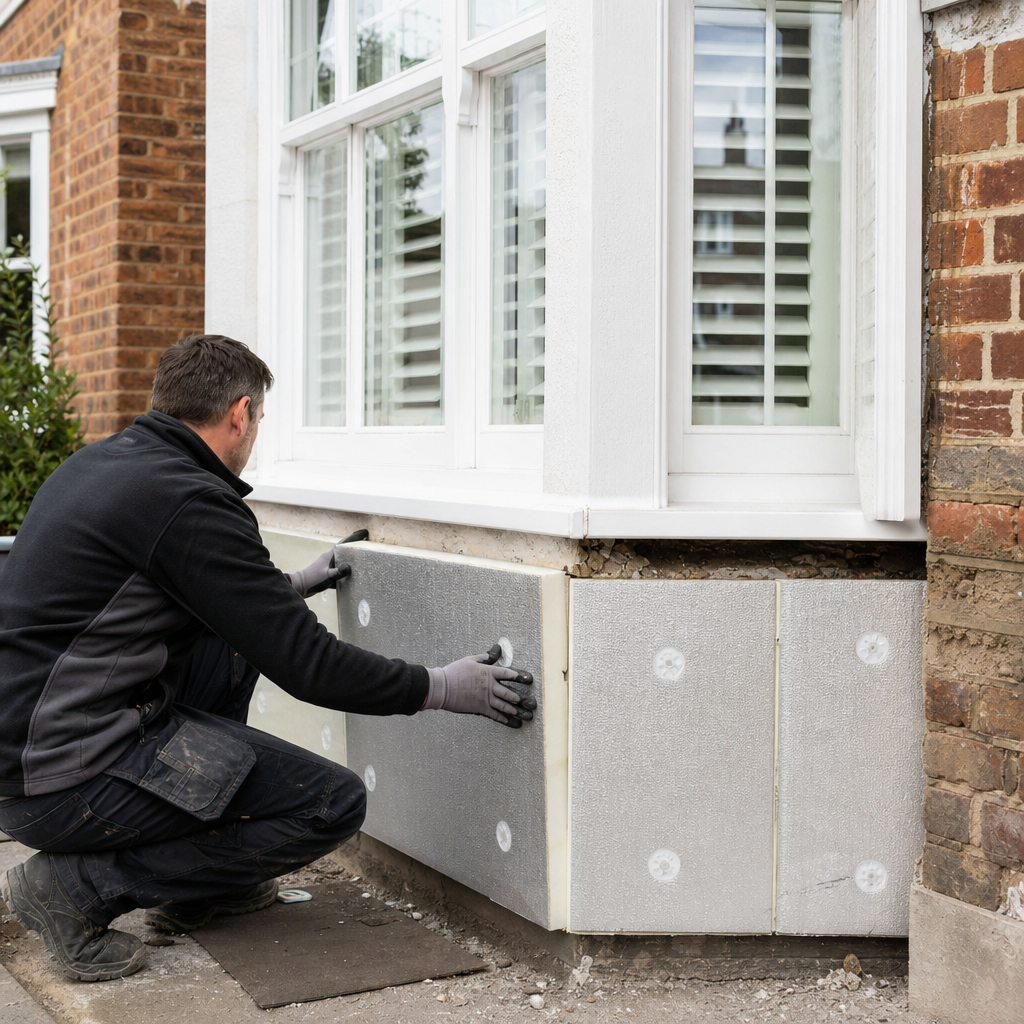
Insulating Solid Masonry Walls Under Bay Windows: Technical Guidance
Insulating solid masonry walls under bay windows requires specialist detailing at angled wall faces, window reveals, and the bay floor and ceiling junctions.
 Energy & Retrofit
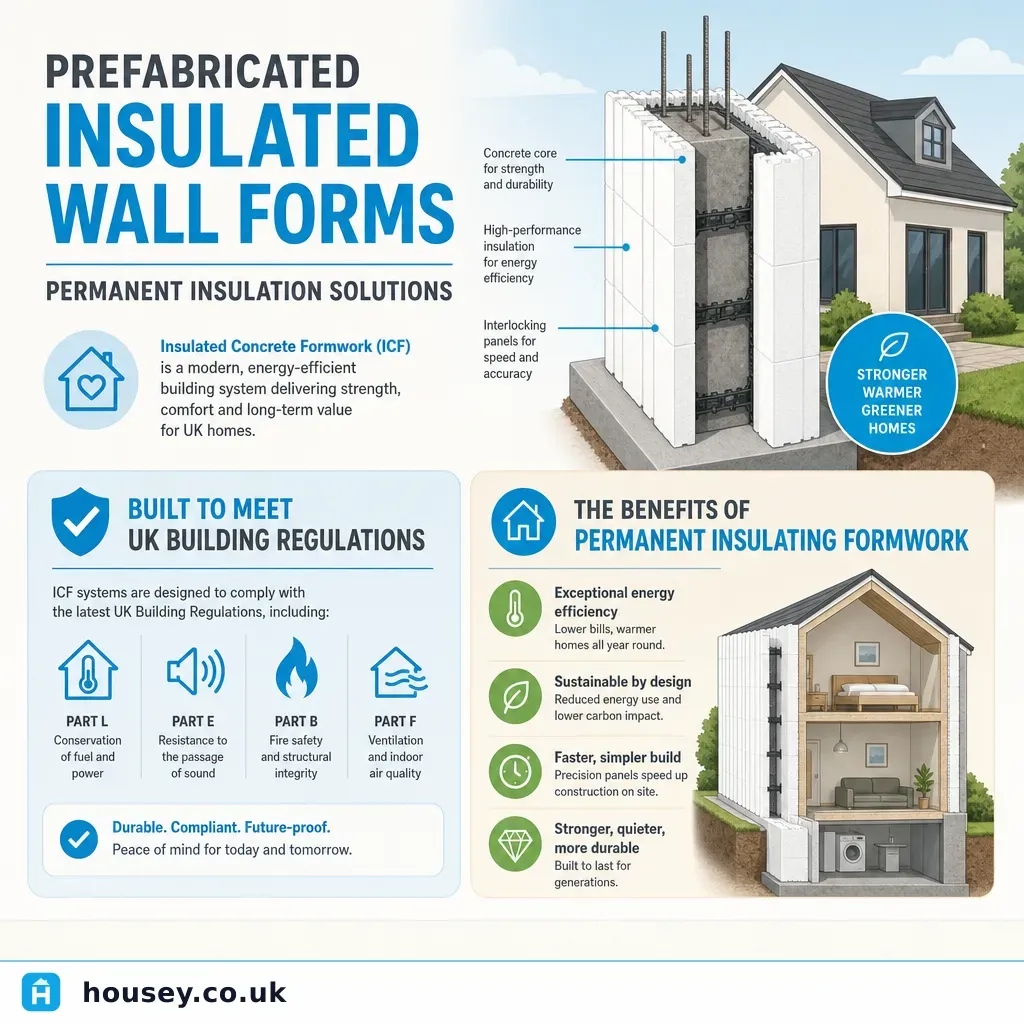
Prefabricated Insulated Wall Forms: Permanent Insulation Solutions
Prefabricated insulated wall forms — including ICF and SIPs systems — deliver high thermal performance by combining permanent insulation with structural concrete or timber in a single wall assembly.
 Energy & Retrofit
Home Efficiency Improvements for Reducing Energy Bills
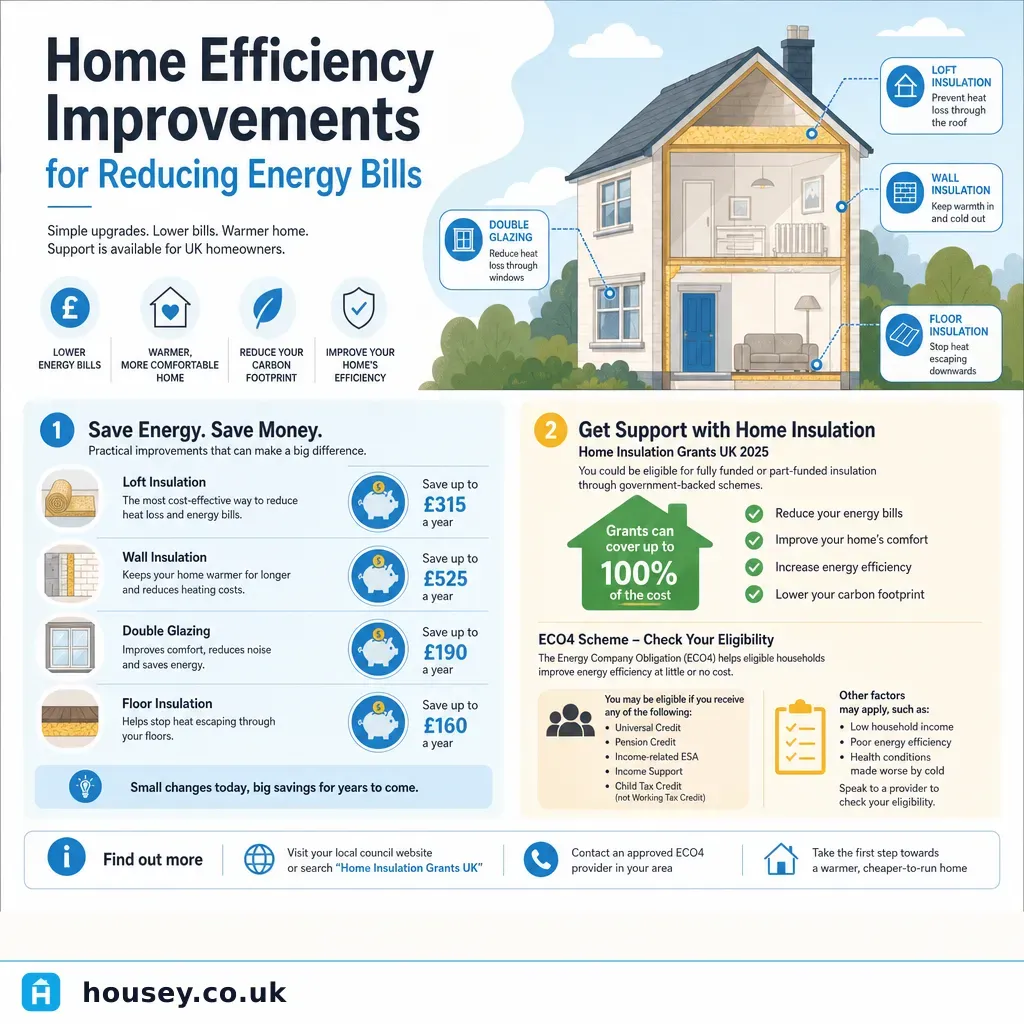
The most cost-effective UK home efficiency improvements are usually loft insulation, cavity wall insulation, draught-proofing, and upgrading heating controls.
 Energy & Retrofit
Solar Energy Integration in Below-Ground Structures: Design and Feasibility
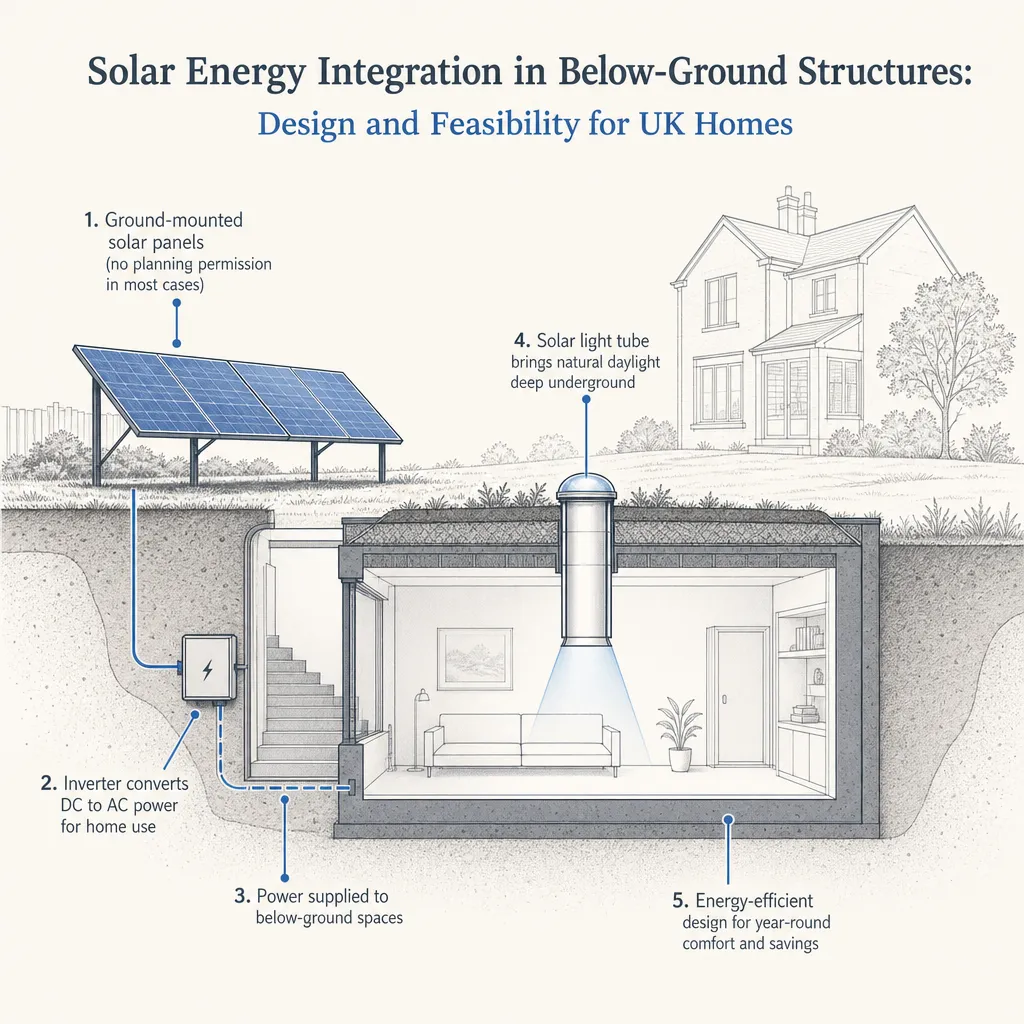
Below-ground structures cannot host solar panels on their own roofs but can use surface-mounted panels connected via cable runs, solar light tubes for daylighting, and battery storage.