Solar Panel Upkeep and Maintenance Guide
By Housey · Last reviewed 10th of May 2026
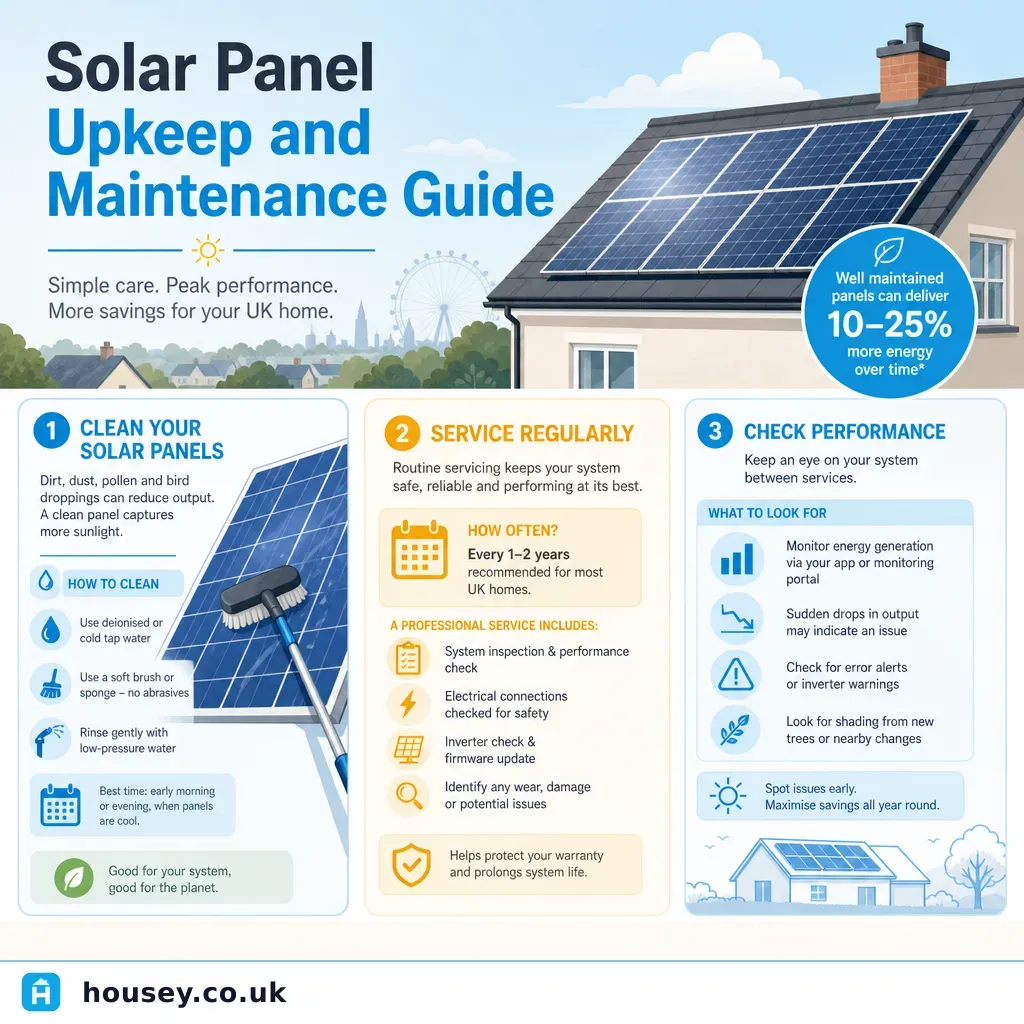
Solar Panel Upkeep and Maintenance Guide
Solar PV systems have very few moving parts, which makes them unusually low-maintenance compared with most home technologies — but they are not zero-maintenance. Questions about upkeep typically arise once panels have been installed for a year or two, when homeowners notice a dip in output, receive an alert from their inverter, or simply wonder whether they are getting the most from their investment. With the average UK domestic solar installation generating between 2,900 and 4,200 kWh per year depending on location and system size, even modest improvements in maintenance discipline can translate into meaningful generation gains.
Key points
- Most solar PV panel and inverter warranties require evidence of reasonable maintenance to remain valid — check your documentation before carrying out any work on the system.
- The Smart Export Guarantee (SEG), administered by Ofgem, requires a functioning, MCS-certified system; unresolved faults can affect your eligibility for export payments.
- UK rainfall removes light dust from panels in many regions, but bird droppings, moss, and organic debris require active cleaning and are not shifted by rain alone.
- Inverters — the component that converts DC electricity from panels into AC for household use — typically last 10–15 years and may need replacing within a 25-year panel lifespan.
- Monitoring generation via a dedicated app or inverter display is the simplest early-warning tool available to homeowners at no additional cost.
How solar panels degrade over time
Solar panels are rated to lose a small percentage of output each year — typically 0.5–0.8% annually according to manufacturer specifications, meaning a system might produce around 80–85% of its original rated output after 25 years. This natural degradation is entirely distinct from avoidable performance losses caused by soiling, shading from new tree growth, loose connections, or inverter faults.
UK weather does much of the cleaning work for lightly dusty panels, but it cannot remove:
- Bird droppings, which block individual cells and cause localised hotspots that can accelerate cell degradation over time.
- Moss and lichen, particularly on north-facing or shaded panel sections, which hold moisture and can damage surface coatings.
- Leaf debris accumulating along lower frame edges, especially in autumn.
How often should you clean solar panels?
Situation | Recommended frequency | Notes |
|---|---|---|
Urban or coastal property (airborne particles, salt spray) | Every 6–12 months | Soft water and a soft brush; avoid high-pressure washers |
Rural property with regular rainfall | Annual check; clean only if visibly soiled | Hose from ground level if safe |
Roof with significant bird activity | Every 3–6 months | Specialist long-handled brush or professional clean |
Panels with visible moss or lichen | Once with treatment product, then annually | Professional clean recommended |
Safety note: Do not attempt roof-level cleaning without professional equipment and training. Working at height above 2 m carries significant risk and should be left to a trained professional.
Annual solar panel maintenance checklist
Work through this checklist each year — ideally in spring, when output can be reliably compared against previous seasons.
What a professional solar inspection covers
A solar survey or system health check from a qualified MCS-registered installer typically includes performance data analysis, inverter diagnostics, junction box and cabling inspection, mounting structure assessment, and a written condition report with recommendations. This differs from a roof or structural survey, which assesses the roof itself rather than the solar installation.
If your system is approaching its inverter's expected replacement age, or if output has dropped without an obvious cause, a professional inspection is a sensible step before committing to repairs or replacements. Request itemised quotes from at least two MCS-registered companies; costs vary by region and the scope of diagnostics required.
When to get professional help
Routine visual checks and app monitoring will identify most issues early. Arrange a professional inspection if you observe any of the following:
- Unexplained generation drop of 15–20% or more compared with previous years, not explained by weather or seasonal variation.
- Persistent inverter fault codes or the unit failing to restart after a power outage.
- Physical damage to panels — cracked glass, discolouration, or burn marks visible on a panel surface.
- Roof movement or loose mounting hardware observed from ground level or the loft space.
- System approaching inverter replacement age — typically 10–15 years post-installation.
- Water ingress in the loft near cable penetrations or mounting points.
All electrical work on a solar PV system must be carried out by a qualified electrician. Do not attempt to open inverter units or modify DC wiring yourself.
How Housey can help
If your system's output seems lower than expected, or you want an independent assessment before a warranty expires, a solar survey provides a detailed evaluation of your installation's condition and performance. Housey connects you with qualified local professionals who can carry out solar inspections and advise on any remedial work required.
Frequently asked questions
How often should solar panels be cleaned in the UK?
In most UK locations, annual cleaning is sufficient for lightly soiled panels. Urban areas, properties near trees, and roofs with heavy bird activity may benefit from cleaning every six months. Rainfall removes light dust in many parts of the UK, but bird droppings and moss require active removal. Always prioritise safety and clean from ground level where possible.
Do solar panels need a professional service every year?
Not necessarily. For most systems in good working order, annual self-monitoring via the inverter app plus a visual ground-level check is adequate. A professional inspection every three to five years — or sooner if you notice a performance drop — is a sensible precaution, particularly as the system ages or approaches the end of its inverter's expected lifespan.
What are the signs that my solar panels need attention?
Key signs include unexplained drops in generation visible on your inverter or app, persistent fault codes, visible soiling or physical damage on a panel, and inverter warning lights. Compare monthly generation against the same month in previous years — a consistent shortfall of 15 to 20 per cent or more warrants investigation by a qualified MCS-registered installer.
Can I clean my solar panels myself?
Light cleaning with a soft brush and clean water is generally safe if you can reach panels from ground level using an extension pole. Avoid abrasive materials or high-pressure washers, which can damage panel surface coatings. For any roof-level access, use a professional — working at height above 2 m carries serious risk without proper training and equipment.
Sources and further reading
- Solar panels — Energy Saving Trust
- Smart Export Guarantee (SEG) — Ofgem
- Find an MCS certified installer — Microgeneration Certification Scheme
- Generate your own electricity (solar panels) — GOV.UK
Useful next reads
 Energy & Retrofit
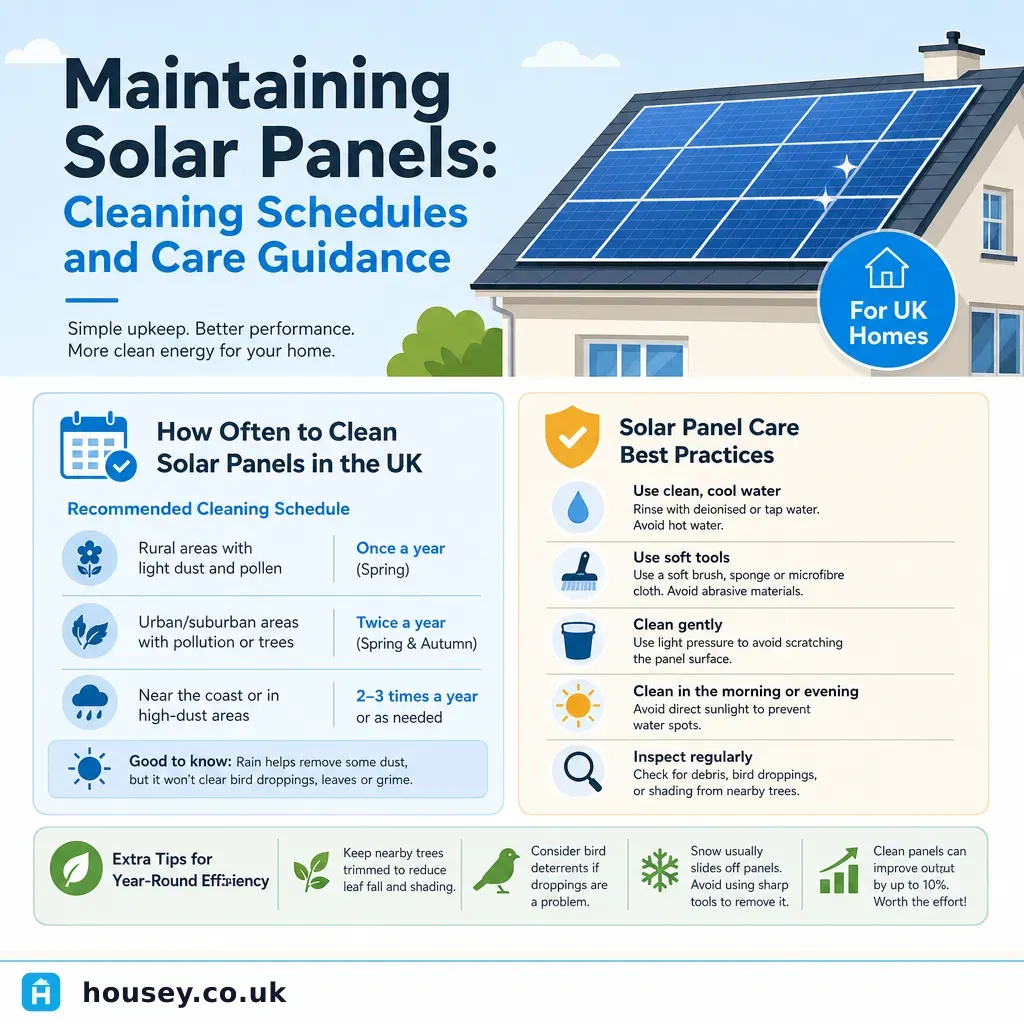
Maintaining solar panels: cleaning schedules and care guidance
Most UK solar panels need cleaning once or twice a year, typically in late winter and late summer.
 Energy & Retrofit
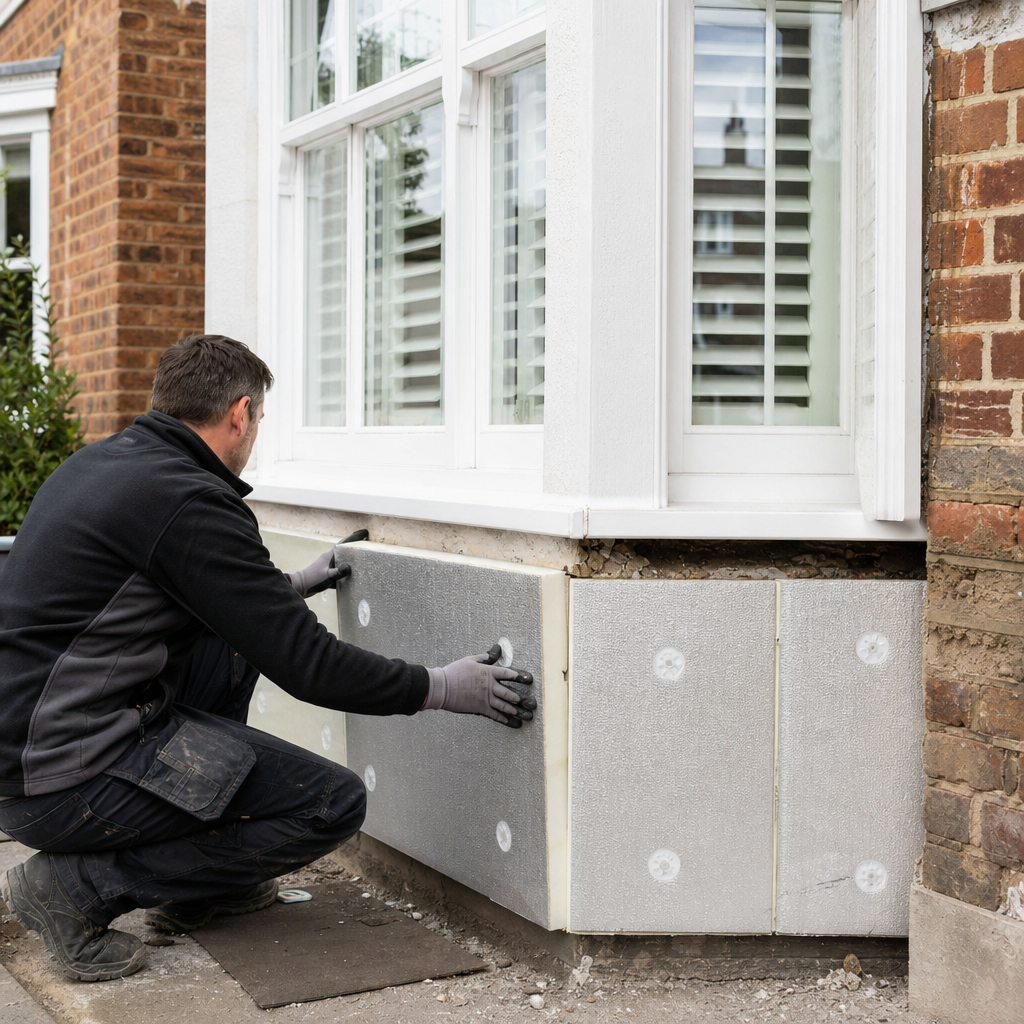
Insulating Solid Masonry Walls Under Bay Windows: Technical Guidance
Insulating solid masonry walls under bay windows requires specialist detailing at angled wall faces, window reveals, and the bay floor and ceiling junctions.
 Energy & Retrofit
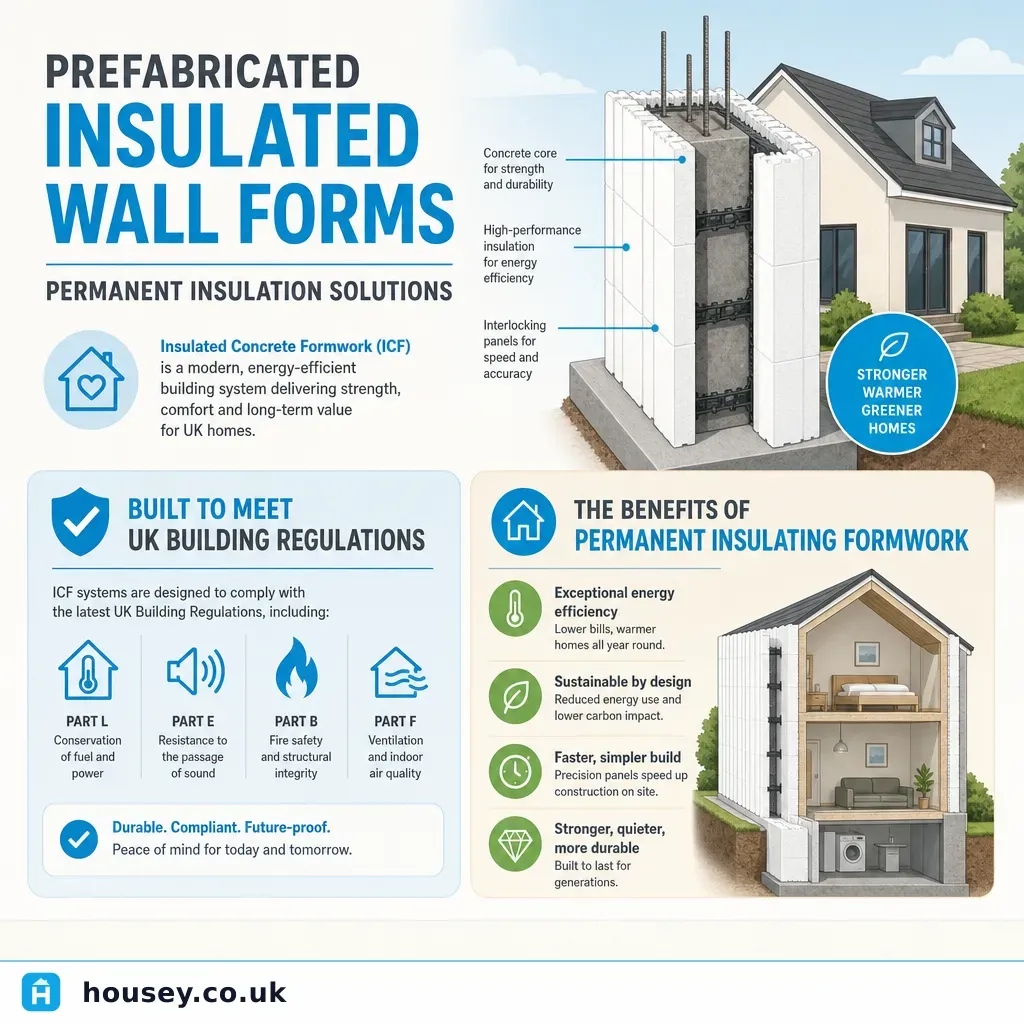
Prefabricated Insulated Wall Forms: Permanent Insulation Solutions
Prefabricated insulated wall forms — including ICF and SIPs systems — deliver high thermal performance by combining permanent insulation with structural concrete or timber in a single wall assembly.
 Energy & Retrofit
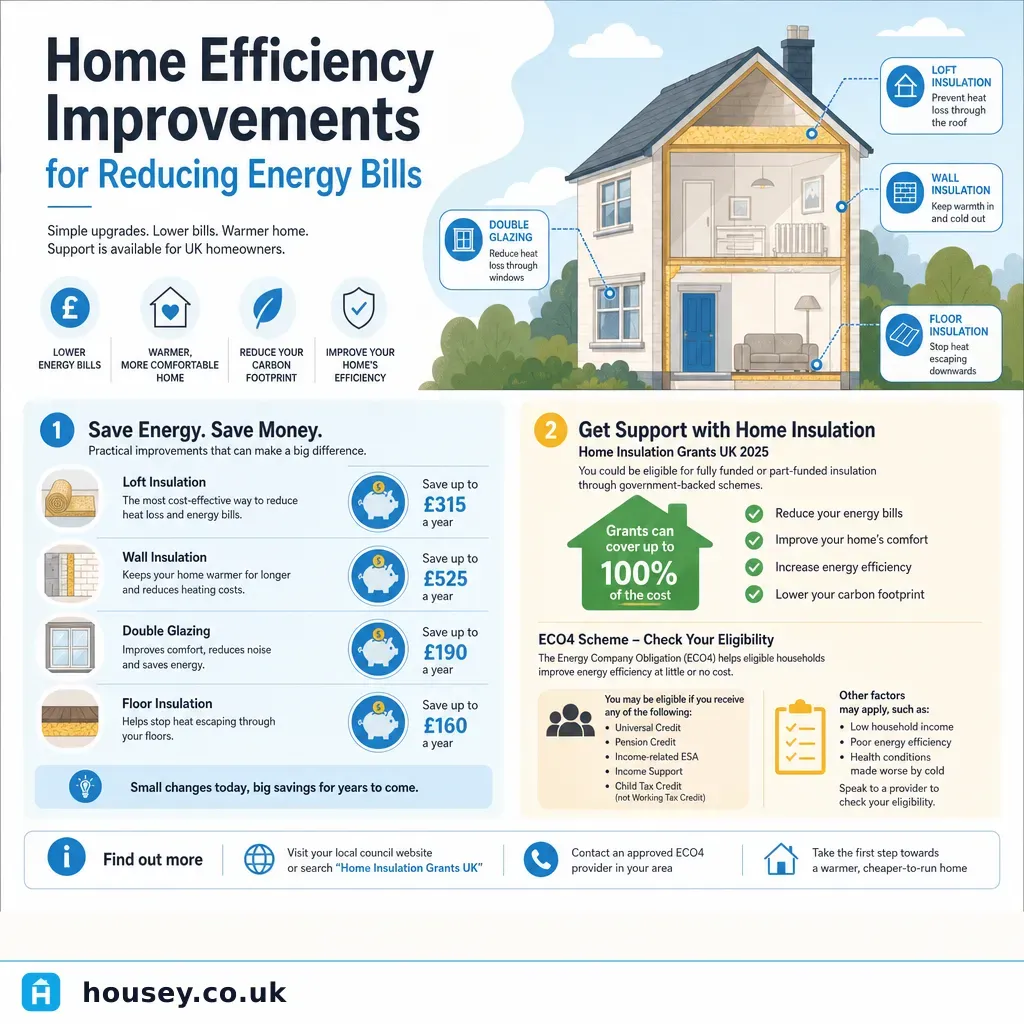
Home Efficiency Improvements for Reducing Energy Bills
The most cost-effective UK home efficiency improvements are usually loft insulation, cavity wall insulation, draught-proofing, and upgrading heating controls.
 Energy & Retrofit
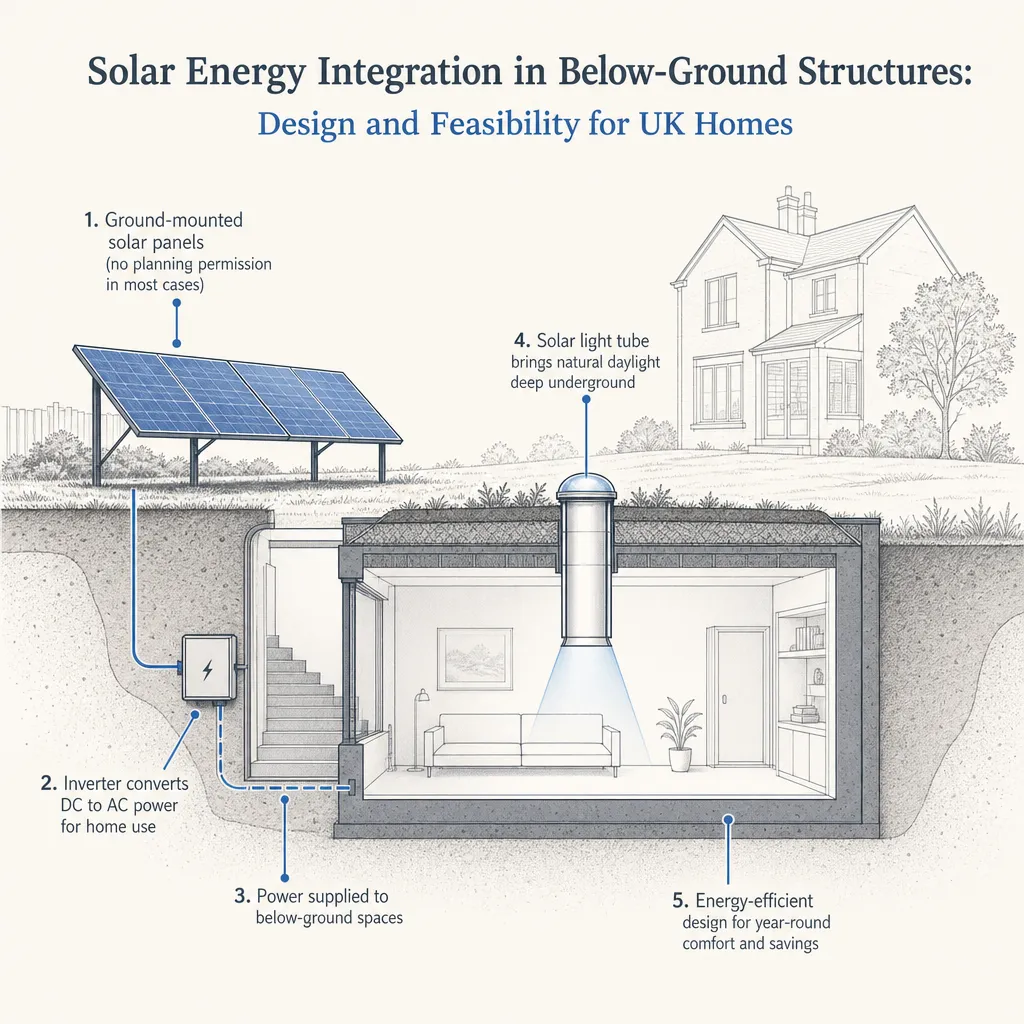
Solar Energy Integration in Below-Ground Structures: Design and Feasibility
Below-ground structures cannot host solar panels on their own roofs but can use surface-mounted panels connected via cable runs, solar light tubes for daylighting, and battery storage.