Solid surface countertops: costs, materials and kitchen installation options
By Housey · Last reviewed 12th of May 2026
Solid surface countertops: costs, materials and kitchen installation options
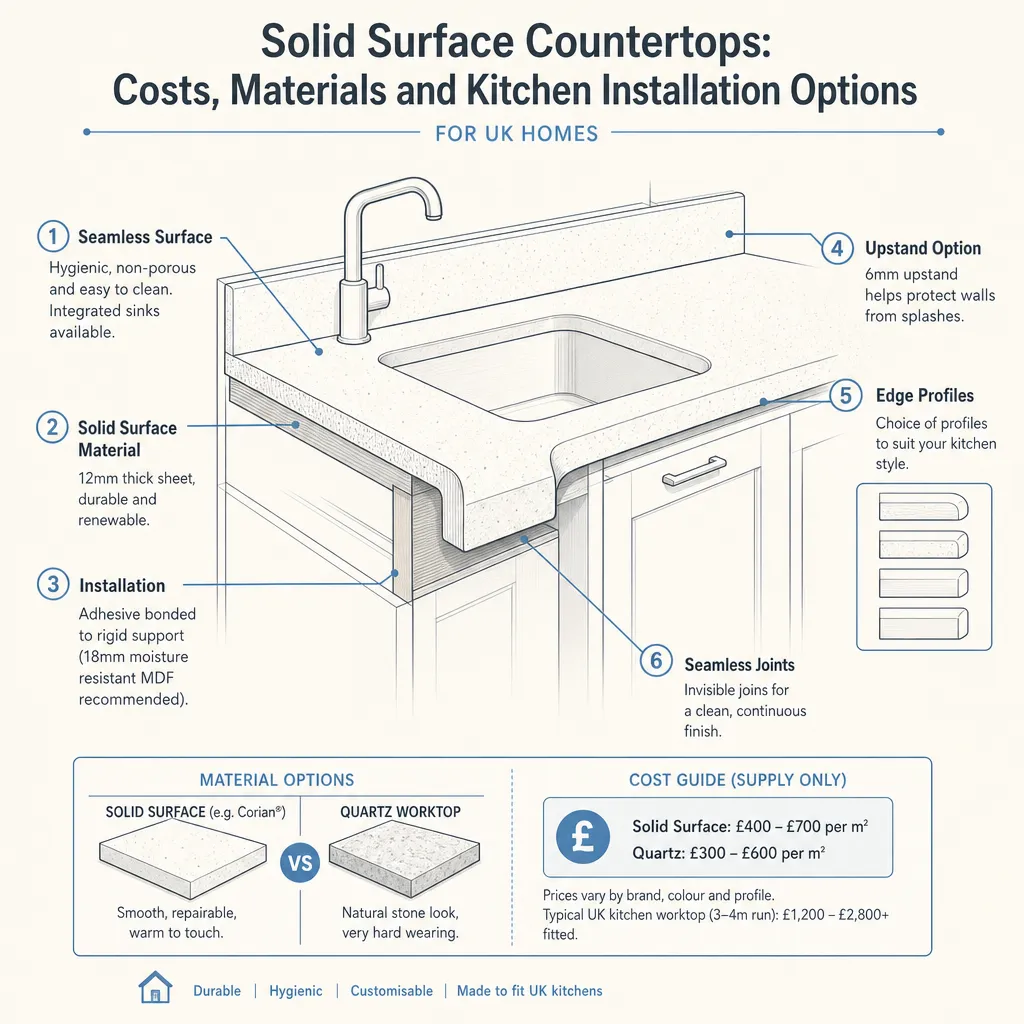
Kitchen renovations often hinge on worktop choice — the surface you select affects how your kitchen looks, performs, and holds up over years of daily use. Solid surface material sits in a mid-to-premium price bracket and is frequently shortlisted alongside quartz and granite, yet its particular properties — seamless joins, repairability, and non-porous composition — make it a genuinely distinct option for many UK homes. Understanding what it offers, what it costs, and how it is installed helps homeowners make a better-informed decision before committing to what can be a significant spend.
Key points
- Solid surface worktops (brands include Corian, Hi-Macs, and Staron) are a blend of acrylic or polyester resin and mineral filler — not natural stone, not laminate.
- UK installed costs typically range from £200 to £600+ per linear metre, depending on brand, edge profile, and kitchen complexity (Indicative UK costs, last reviewed 2026-05-12).
- Unlike natural stone, solid surface can be sanded and buffed to repair surface scratches, minor burns, and abrasions without full replacement.
- Solid surface is not heat-resistant: sustained contact with hot pans causes permanent marking — trivets and pan stands are essential near hobs.
- Worktop-only replacement does not normally require building control sign-off, but a full kitchen refit involving structural, drainage, or electrical changes may require Building Regulations notification.
What is solid surface and how does it differ from other worktop materials?
Solid surface is a manufactured composite made from acrylic or polyester resin combined with mineral fillers (typically aluminium trihydrate). The result is a dense, non-porous slab that can be fabricated in near-invisible joined sections, thermoformed into curved shapes, and integrated with undermount sinks to create a continuous, crevice-free surface.
The solid descriptor matters: unlike laminate, the colour and texture run through the full thickness, so minor surface damage can be repaired by sanding and re-polishing rather than replacing the entire worktop.
Material and worktop type comparison
Material | Approx. installed cost (per lin. m) | Heat resistance | Repairability | Seamless joins | Maintenance |
|---|---|---|---|---|---|
Solid surface (e.g. Corian) | £200–£600+ | Low — trivets essential | High — sand and buff | Yes | Wipe clean; occasional re-polish |
Quartz composite | £300–£700+ | Moderate — avoid prolonged heat | Low — chips difficult to repair | No | Wipe clean; minimal |
Granite (natural stone) | £300–£800+ | High | Low — cracks hard to repair | No | Seal periodically |
Laminate | £50–£200 | Low — edges and joins vulnerable | Very low | No | Wipe clean; avoid water ingress at joins |
Timber (hardwood) | £200–£500 | Moderate | Moderate — sand and re-oil | Yes with correct grade | Oil regularly; avoid standing water |
Indicative UK costs, last reviewed 2026-05-12. Prices vary by supplier, edge profile, cutouts, and region.
What does solid surface installation involve in the UK?
Solid surface worktops are fabricated and installed by specialist fabricators, not general joiners. The process typically runs as follows:
- Template: A fabricator visits to measure and template the kitchen — usually after base units are fitted and levelled.
- Fabrication: Sections are cut and seams bonded at the factory or workshop, then dry-fitted.
- Installation: The fabricated worktop is delivered in sections, bonded with colour-matched adhesive, and sanded flush at joins. Undermount sinks are bonded and polished.
- Finishing: Edge profiles (square, bullnose, ogee, bevelled) are routed and polished on-site or in the factory.
Allow 2–5 working days from template to installation for most kitchen projects, though lead times vary by fabricator and order volume.
Homeowner installation checklist
Use this before your fabricator visits:
Which solid surface brand should I choose?
The three brands most commonly available through UK fabricators are:
- Corian (Trinseo): the original solid surface material, available since the 1960s. Extensive colour range; widely sourced through accredited fabricators. 10-year residential warranty through accredited installers.
- Hi-Macs (LG Hausys): acrylic-based; wide palette including translucent options for backlit installations.
- Staron (Samsung): polyester-acrylic blend; competitive price point; available in satin and gloss finishes.
All three require installation by brand-accredited fabricators for warranties to remain valid — confirm fabricator accreditation before ordering.
When to get professional help
Solid surface worktop installation is specialist work. Attempting to fit or join sections without the correct tooling and adhesives will result in visible seams, potential cracking, and voided warranties. Always use an accredited fabricator.
Contact a professional if:
- You notice the worktop flexing or an existing solid surface join opening up — this may indicate inadequate support rails or movement in the unit beneath.
- A large area has been heat-damaged — repair may be possible for small zones, but extensive damage usually requires section replacement by a trained fabricator.
- You are integrating new worktops as part of a structural kitchen redesign involving wall removal, drainage relocation, or a freestanding island unit.
How Housey can help
If your worktop project forms part of a broader kitchen renovation or home improvement, Housey can connect you with design-and-build firms who manage materials specification and installation end-to-end, or with extension builders if the kitchen is part of a larger home improvement project.
Frequently asked questions
Can solid surface worktops be used in bathrooms as well as kitchens?
Yes. Solid surface is widely used for bathroom vanity tops, shower trays, and wall panels precisely because it is non-porous and seamlessly joined. The same fabricators who work on kitchen worktops usually cover bathroom applications. Ensure the product is specified for wet-area use if it will be in prolonged contact with water.
How long does solid surface last?
With normal domestic use — avoiding direct contact with hot pans and sharp impact — solid surface worktops can last 20 years or more. The repairability of the surface means that minor wear does not require replacement. Manufacturer warranties through accredited fabricators are typically 10 years.
Is solid surface eco-friendly?
Solid surface is manufactured from synthetic materials and is not biodegradable. Some brands offer products with recycled content or reduced VOC formulations. If environmental credentials matter to your project, ask your fabricator for relevant product data sheets and check whether the brand holds any third-party environmental certifications.
Do I need planning permission or building regulations approval to replace my worktops?
Worktop replacement on its own does not require planning permission or building control sign-off. However, if the kitchen refit involves structural alterations (removing a wall), changes to drainage, new electrical circuits, or new gas connections, those specific works will require compliance with Building Regulations. Check GOV.UK guidance on building regulations if your project goes beyond worktop replacement alone.
Sources and further reading
- Building Regulations: overview — GOV.UK
- Kitchen worktops explained — Which?
- Corian product information and warranty — Trinseo / Corian UK
Useful next reads
 Improvement & Build
Pond Liners: Materials and Installation for Garden Water Features
Garden pond liners come in four main types: EPDM rubber, butyl rubber, PVC, and preformed fibreglass.
 Improvement & Build
Aluminium Windows: Benefits, Specifications, and Installation Costs
Aluminium windows typically cost £600–£1,800 per window installed in the UK, depending on size and specification.
 Improvement & Build
Kitchen Refurbishment and Installation Costs
A kitchen refurbishment in the UK typically costs between £3,000 and £40,000 or more, depending on whether you are replacing units only or carrying out a full design-and-build project.
 Improvement & Build
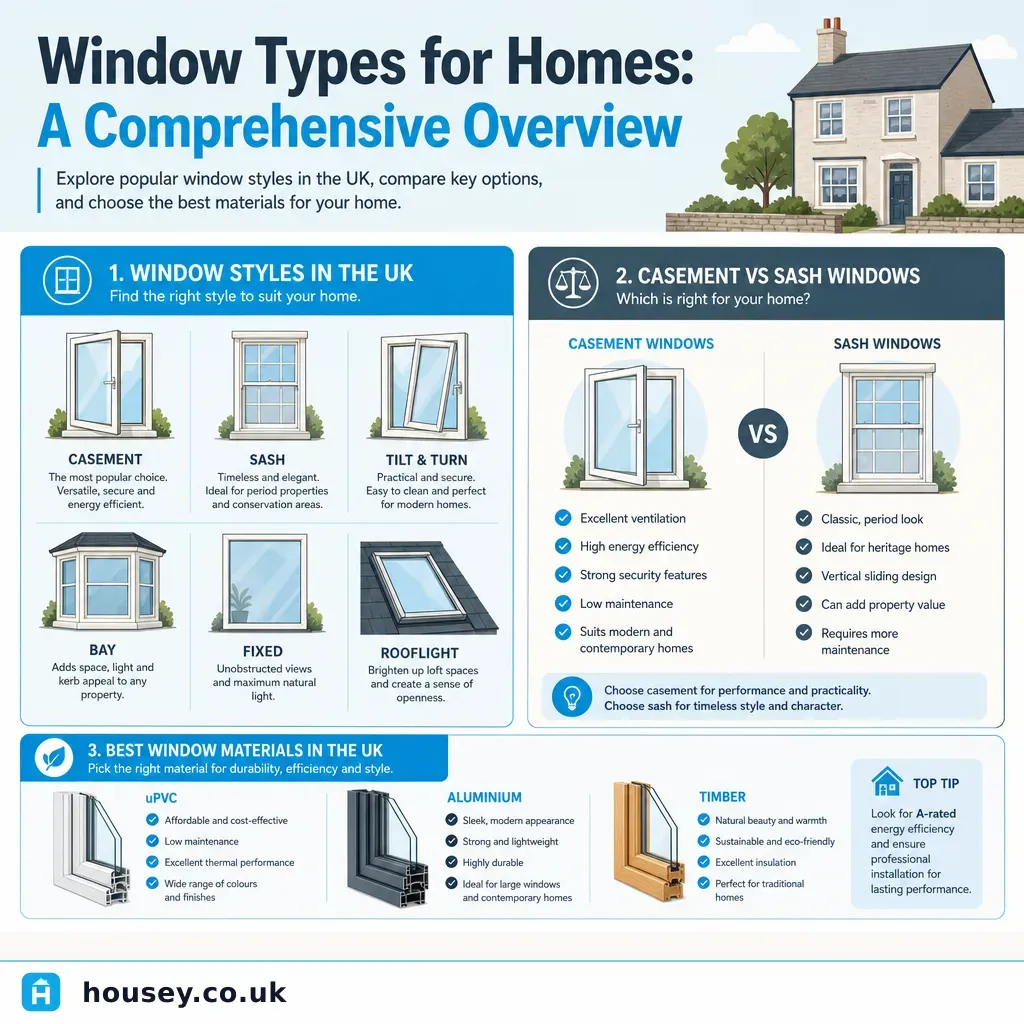
Window Types for Homes: A Comprehensive Overview
UK homes use several main window styles: casement (outward-swinging), sash (vertically sliding), tilt-and-turn, fixed light, and bay or bow.
 Improvement & Build
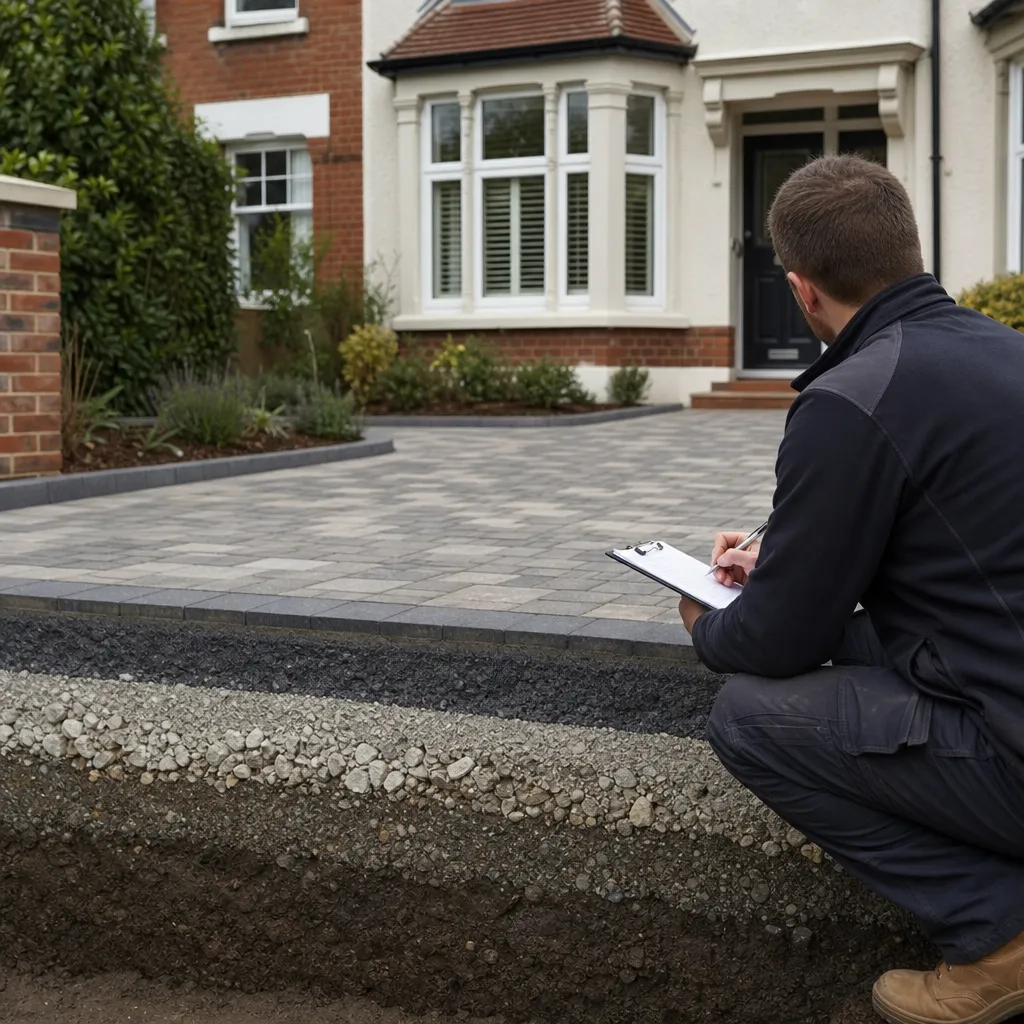
Driveway Thickness: Achieving the Right Specification for Residential Properties
The correct thickness for a residential driveway depends on the surface material and the traffic it will carry.