Soundproof fencing: reducing noise and creating peaceful outdoor spaces
By Housey · Last reviewed 12th of May 2026
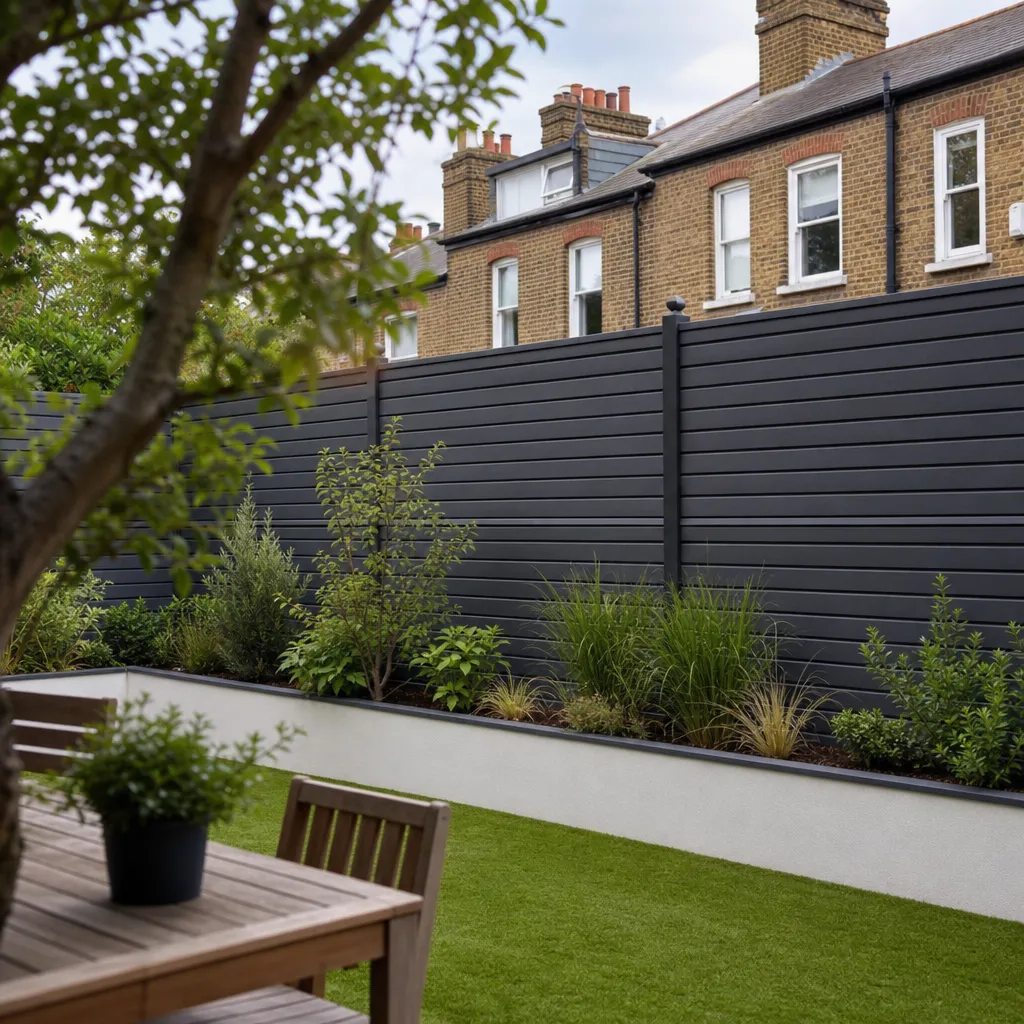
Soundproof fencing: reducing noise and creating peaceful outdoor spaces
Noise from roads, neighbours, construction, or commercial premises is one of the most commonly cited reasons UK homeowners seek to improve their garden environment. Fencing is a frequently considered solution, but it is important to set realistic expectations: no garden fence eliminates sound entirely, and the physics of noise — particularly low-frequency rumble from heavy traffic — means that even well-specified acoustic barriers deliver modest measured reductions. Understanding what different fence types actually achieve, and where planning constraints apply, helps homeowners invest where it matters most.
Key points
- A 1.8m solid fence can reduce airborne sound by approximately 5–10 dB in typical residential conditions — broadly equivalent to halving the perceived loudness of moderate traffic noise.
- Gaps, holes, and unsealed base lines are the single biggest cause of acoustic fence underperformance: sound exploits any opening in a barrier.
- Under permitted development rights in England, a fence at the boundary of a dwelling house can be up to 2m without planning permission — taller barriers, or any fence over 1m adjoining a highway, require a planning application.
- Acoustic fence panels certified to BS EN 1793 (the European standard for road traffic noise barriers) provide independently verified sound-reduction data; uncertified products labelled as acoustic may not deliver claimed performance.
- A combination of a solid fence and a dense planted hedge typically outperforms either element alone, because the hedge absorbs mid-to-high frequency sound that diffracts over the fence top.
Which type of soundproof fencing works best?
Fence type comparison
Fence type | How it works | Typical noise reduction | Planning considerations | Approx. UK cost (per m²) |
|---|---|---|---|---|
Acoustic timber panel (mineral wool core) | Dense outer boards and mineral wool absorber reduce both transmission and reflection | 5–12 dB | Standard permitted development up to 2m | £60–£120 |
Mass-loaded vinyl (MLV) barrier | Heavy, flexible membrane added to an existing fence structure increases mass | 4–8 dB | May need reinforced posts; check local authority on aesthetics | £20–£50 (material only) |
Concrete block or acoustic masonry wall | High mass blocks sound transmission; highly durable | 8–15 dB | Wall over 1m on a highway boundary, or over 2m elsewhere, typically needs planning permission | £150–£300 |
Close-board timber fence (standard) | Solid boards with no gaps outperform featherboard or palisade styles | 3–6 dB | Standard permitted development | £30–£70 |
Living willow or bamboo screen | Absorbs sound energy; becomes denser as it grows | 1–4 dB (screen alone) | No planning restriction for plants | £10–£40 per plant |
Combined solid fence plus planted hedge | Fence reduces transmission; hedge absorbs diffracted sound above fence | 8–15 dB combined | Fence must comply with height rules | Varies |
Indicative UK costs, last reviewed 2026-05-12. Prices exclude labour and groundworks. Quotes vary significantly by region and site conditions.
Do I need planning permission for a taller noise fence?
Under permitted development rights in England, a fence, gate, or wall at the boundary of a dwelling house can be up to:
- 2 metres in most locations without planning permission
- 1 metre if the boundary adjoins a highway (road, path, or publicly used verge)
Higher barriers — sometimes needed for noise alongside busy A-roads or motorways — will typically require a planning application. Conservation areas, Article 4 directions, and listed building curtilages all remove or restrict permitted development rights for fencing. Always check with your local planning authority before installing anything over 2m, particularly if the property has already had extensions or other works that may have used the available permitted development allowance.
If the noise originates from a neighbouring property and constitutes a statutory nuisance under the Environmental Protection Act 1990, your local council's environmental health team can investigate independently of any fencing solution.
Which option should you choose?
- Choose acoustic timber panels if you want a finished-looking boundary fence that reduces road or neighbour noise without complex groundworks or planning applications, and are happy to repaint or restain every few years.
- Choose a concrete or masonry wall if maximum noise reduction is the priority and you are willing to apply for planning permission where needed — this is the highest-performing permanent solution.
- Add mass-loaded vinyl to an existing fence if you want to upgrade a structurally sound current fence without full replacement, particularly where the panels are intact but under-performing acoustically.
- Plant a dense hedge alongside a solid fence if you can accommodate 600mm–1m of additional depth at the boundary and want long-term combined noise reduction that also improves biodiversity and privacy.
- Ask your local planning authority before installing anything over 2m, before any fence within 1m of a highway, or if your property is in a conservation area or has listed building status.
What makes acoustic fencing underperform?
The most common reasons an acoustic fence delivers less noise reduction than expected:
Gaps at the base. Sound travels through the gap between a fence board and the ground as readily as through open air. Gravel boards, concrete base rails, or buried boarding are essential — neglecting ground-level sealing is the single most common installation error.
Post gaps. Solid posts create small but acoustically significant openings where they meet boards. Acoustic-grade fencing uses rubber or neoprene gaskets around posts and fixings to close these pathways.
Height relative to the noise source. A 1.8m fence offers meaningful reduction for ground-level sources nearby. Traffic on an elevated road, lorries, or noise from first-floor windows transmits over the top more easily. Increasing height helps but runs into planning constraints.
Fence length and sound flanking. Sound diffracts around fence ends and through boundary gaps such as gates and driveways. A fence that runs the full boundary length outperforms a short run by a considerable margin.
When to get professional help
Contact a specialist if:
- You are near a motorway, A-road, or railway and require noise attenuation beyond what standard permitted development allows — acoustic engineers and planning consultants can design and seek approval for higher barriers.
- The fence will be structural or high-mass masonry and requires groundworks design.
- The noise originates from a commercial or industrial source, which may be subject to planning conditions on the operator's premises or may constitute a statutory nuisance — contact your local council's environmental health team.
- You want independently verified performance data and a BS EN 1793-certified product specification.
How Housey can help
Whether you need a bespoke acoustic fence designed to suit your garden layout or want professional advice on a combined fence-and-planting scheme, Housey can connect you with landscapers experienced in boundary treatments and with garden designers for outdoor schemes who can specify materials, plants, and layout as part of a wider garden design.
Frequently asked questions
Does acoustic fencing really work?
Solid acoustic fencing reduces noise noticeably for most garden situations — a well-installed 1.8m panel fence can deliver 5–10 dB of reduction, which most people perceive as a meaningful improvement. Low-frequency noise from heavy lorries or music bass is harder to attenuate at garden scale and may require a professional acoustic assessment if it significantly affects garden use.
How tall does a fence need to be to block noise?
Taller fences perform better, but gains are not linear. A fence needs to break the line of sight between the noise source and the listener to offer meaningful reduction. For most UK residential situations, 1.8–2m is the practical limit under permitted development. Barriers above 2m require planning permission and may not be approved in all locations.
Can I build a fence higher than 2m without planning permission?
In most cases in England, a fence over 2m at the boundary requires planning permission. Rules differ in Scotland, Wales, and Northern Ireland. Walls or fences over 1m adjoining a highway also require permission. Always check with your local planning authority before building above the 2m threshold, especially in conservation areas or listed building curtilages.
Is a hedge better than a fence for noise reduction?
A dense, evergreen hedge such as Leyland cypress, laurel, or hornbeam provides noise reduction through sound absorption, but less than a solid fence of equivalent height. The combination of a solid fence backed by a planted hedge typically outperforms either element alone. Hedges also improve biodiversity and soften the visual impact of a solid boundary.
Sources and further reading
- Planning permission: fences, gates and garden walls — Planning Portal
- Statutory nuisance: guidance — GOV.UK
- Noise nuisance: your rights — Citizens Advice
- BS EN 1793: Road traffic noise reducing devices — BSI Group
Useful next reads
 Improvement & Build
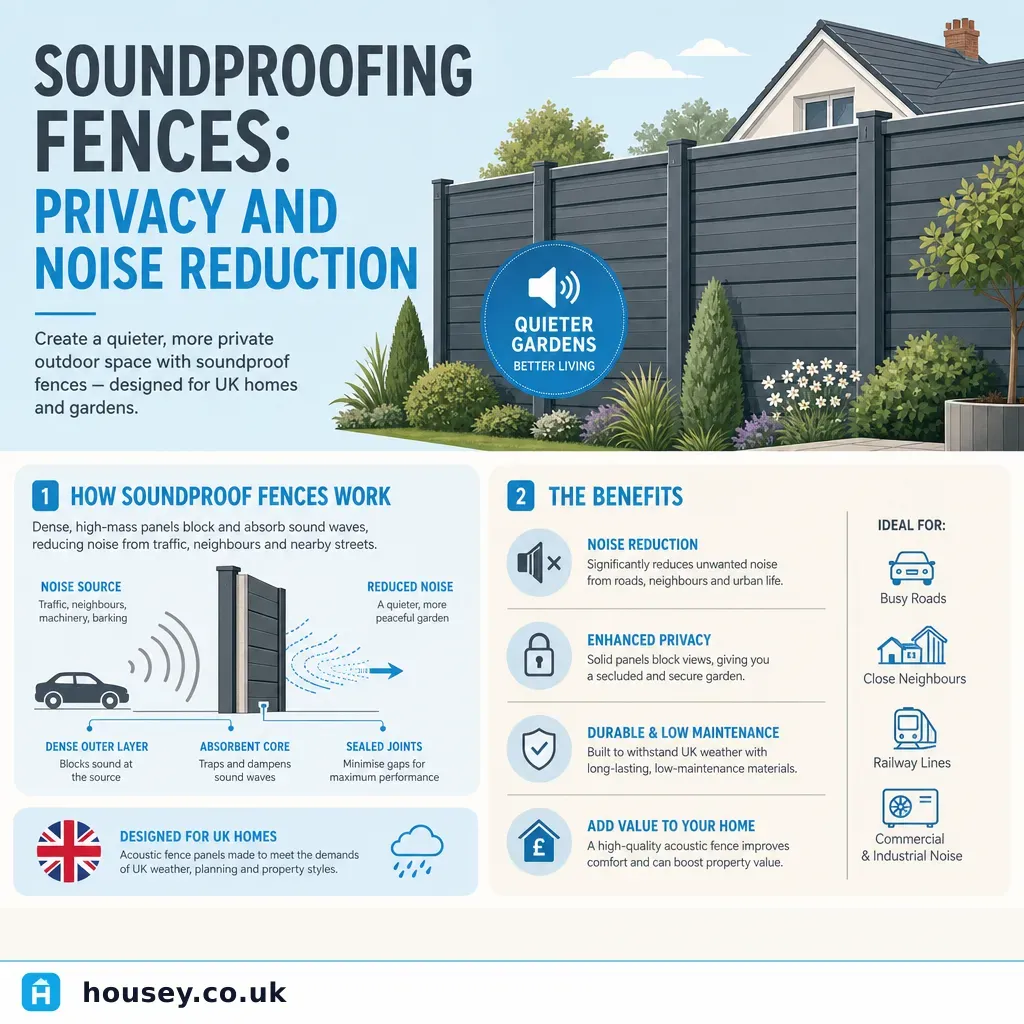
Soundproofing Fences: Privacy and Noise Reduction
An acoustic garden fence can reduce noise by 5 to 15 dB using dense, gap-free materials such as close-board timber, acoustic composite panels, or mass-loaded vinyl.
 Improvement & Build
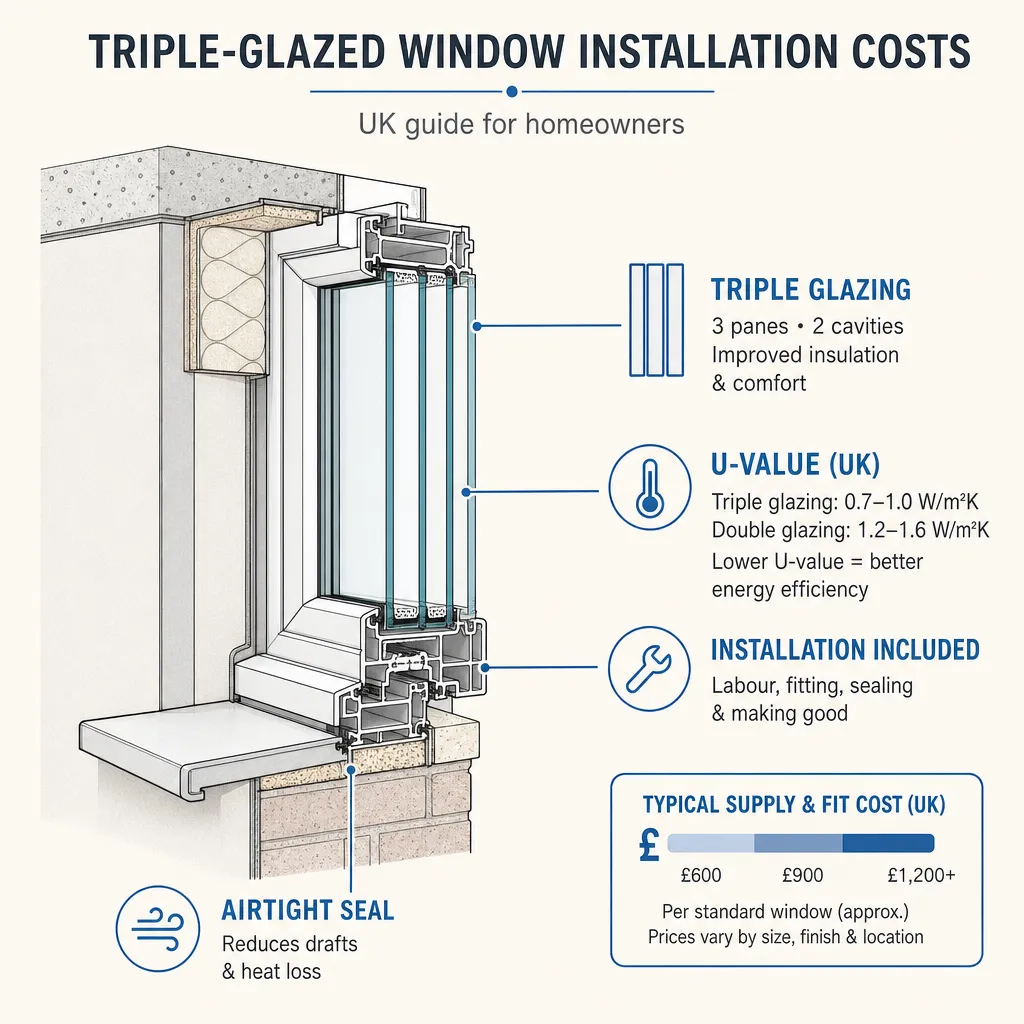
Triple-Glazed Window Installation Costs
Triple-glazed window installation in the UK typically costs £800–£1,800 per window, depending on size, frame material, and glazing specification.
 Improvement & Build
Installing a Fire Pit: Garden Features and Outdoor Space Design
Installing a garden fire pit in the UK is generally permitted, but Smoke Control Area rules prohibit open wood-burning in most towns and cities.
 Improvement & Build
Seasonal Garden Transformations and Outdoor Design Ideas
A successful garden transformation in the UK works with the seasons rather than against them — establishing structure and hard landscaping in autumn or winter, planting in spring, and enjoying the results through summer.
 Improvement & Build
Designing an outdoor kitchen for entertaining and garden living
An outdoor kitchen in a UK garden needs a stable, level base — typically a concrete slab or quality paving — with weather-rated materials such as stainless steel grade 316 or frost-rated porcelain.