Soundproofing Fences: Privacy and Noise Reduction
By Housey · Last reviewed 10th of May 2026
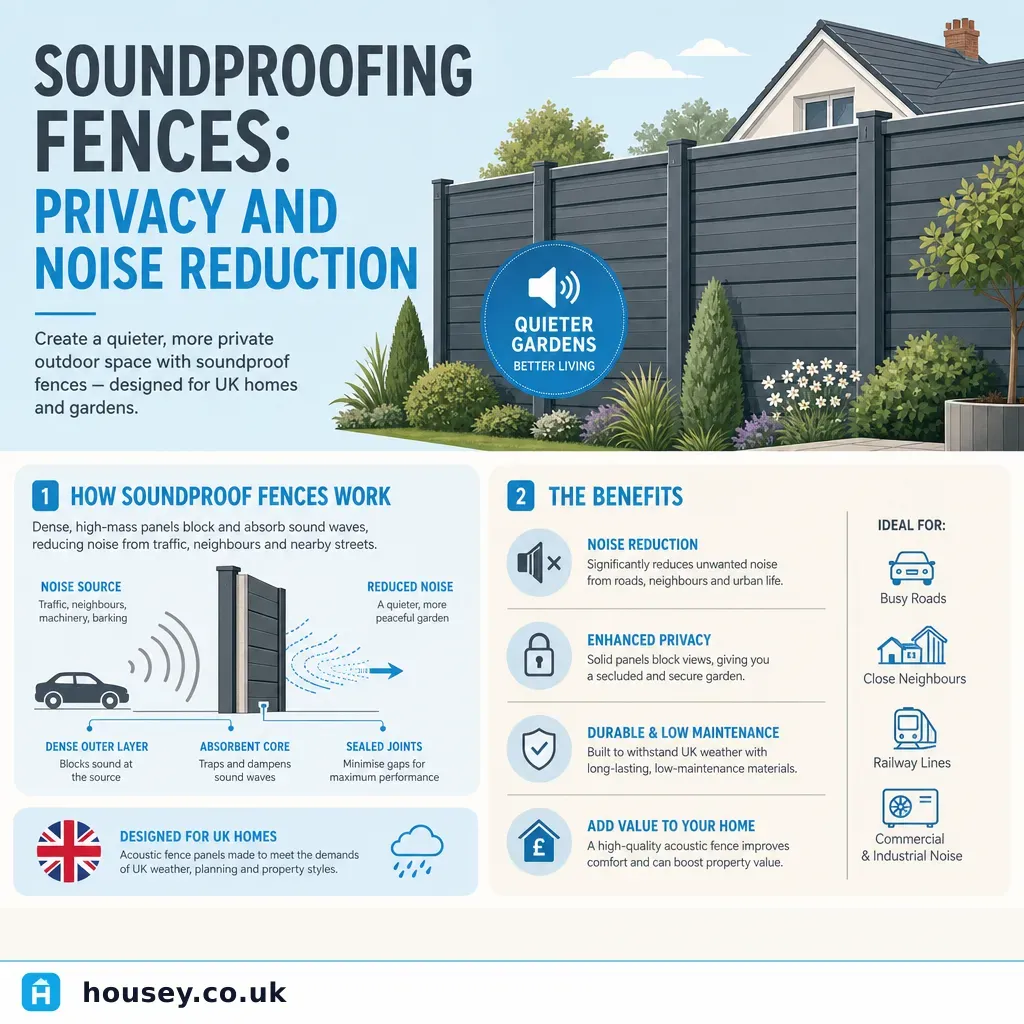
Soundproofing Fences: Privacy and Noise Reduction
Road traffic, neighbouring properties, commercial activity, and general urban noise are among the most common complaints UK homeowners make about their outdoor spaces. A well-specified acoustic fence or barrier can meaningfully reduce the amount of sound reaching a garden, patio, or seating area — though the degree of improvement depends on the noise source, the fence specification, and the site geometry. Understanding what is and is not achievable helps set realistic expectations before you invest, and avoids costly mistakes with materials that look the part but do little to reduce noise.
Key points
- Solid, dense, gap-free construction is the most important factor in acoustic fence performance — sound travels through any gap, however small, and even a 1% open area can reduce performance by 10 dB or more.
- Acoustic barriers are most effective against noise sources at or near ground level (traffic, pedestrian activity); noise arriving from above — aircraft, elevated roads — bypasses low barriers entirely.
- Under the Town and Country Planning (General Permitted Development) (England) Order 2015, garden fences up to 1 m adjacent to a highway, or up to 2 m elsewhere, generally do not require planning permission in England.
- A fence above 2 m (or above 1 m adjacent to a highway used by vehicles) requires a planning application; conservation areas, listed buildings, and Article 4 directions may impose further restrictions.
- Mass-loaded vinyl (MLV), acoustic composite panels, and dense tongue-and-groove close-board timber are among the better-performing materials; open-weave trellis and slatted designs offer little acoustic benefit.
How acoustic fencing works
Sound is a pressure wave that can be reflected, absorbed, or diffracted around obstacles. A fence reduces noise by combining three mechanisms:
- Reflection — hard, dense surfaces bounce sound waves back towards the source.
- Absorption — materials with internal mass or structure (such as mineral wool-filled panels) convert some sound energy to heat rather than transmitting it.
- Diffraction barrier effect — taller barriers force sound to travel over a longer path, reducing intensity at the receiver on the sheltered side.
No garden fence provides soundproofing in the acoustic engineering sense of the word. Domestic acoustic barriers typically achieve a noise reduction of 5–15 dB in favourable conditions — enough to be perceptibly quieter (a 10 dB reduction is generally perceived as roughly halving the apparent loudness). Greater reductions require significantly taller, heavier, or more engineered structures.
What fencing cannot do
- It cannot block noise that arrives substantially from above — aircraft noise, elevated motorways, or roof-mounted HVAC equipment on nearby commercial buildings.
- It cannot effectively attenuate very low-frequency noise (bass from music, heavy goods vehicles) because low frequencies diffract around barriers more readily than high frequencies.
- A fence with gaps, holes, or poorly sealed post footings will underperform regardless of the material used.
Material comparison
Material | Acoustic performance | Durability | Indicative cost per m² | Notes |
|---|---|---|---|---|
Tongue-and-groove close-board timber (100 mm+) | Moderate | 15–25 years with preservative treatment | £40–£80 | Most common UK choice; gap-free installation essential |
Acoustic composite panels (e.g., purpose-made recycled-fill boards) | Good | 25+ years | £80–£150 | Purpose-designed; often recycled plastic or mineral fill |
Mass-loaded vinyl (MLV) overlay | Good as a supplement | 10–20 years | £15–£35 material only | Can be added to an existing fence structure |
Concrete or masonry wall | Very good | 40+ years | £150–£350 | Highest mass; planning implications above 2 m |
Stacked timber sleepers | Good–very good | 20–30 years | £60–£120 | High mass; requires substantial post foundations |
Open-weave trellis or slatted panels | Poor | Varies | — | Decorative only; negligible acoustic benefit |
Mature dense hedging (yew, laurel) | Low–moderate | Ongoing maintenance | Variable | Slow to establish; useful as a supplement |
Indicative UK costs, last reviewed 2026-05-10. Costs vary by supplier, region, and installation complexity. Obtain at least two or three quotes from installers.
Planning permission and height limits
In England, the Town and Country Planning (General Permitted Development) (England) Order 2015 sets out the following baseline rules:
- Up to 1 m — no planning permission required for a fence adjacent to a highway used by vehicles.
- Up to 2 m — no planning permission required for a fence elsewhere (e.g., rear garden boundary, side boundary not adjoining a vehicular road).
- Over 2 m — planning permission is required regardless of position.
To achieve meaningful noise reduction against road traffic, a fence height of 1.8–2.4 m is typically required. A 2 m rear fence therefore sits at the maximum permitted development limit — useful acoustically, and achievable without a planning application on most residential boundaries.
Additional restrictions apply where:
- The property is listed, or the fence is within the curtilage of a listed building.
- The property is in a conservation area and the fence fronts a road or open area accessible to the public.
- An Article 4 direction has removed some or all permitted development rights in the area.
- A planning condition on the original or subsequent planning permission limits boundary treatment height.
Always check with your local planning authority before installing any fence above 2 m.
Site factors that affect acoustic performance
Even a well-specified fence will underperform if site conditions work against it:
- Distance from the noise source: barriers are most effective when positioned close to the noise source or close to the receiver — not in the middle of an open space.
- Ground surface: hard surfaces (concrete, paving) behind the fence reflect sound back under and around it. Soft landscaping — grass, planting beds, gravel — on the garden side helps absorb reflected sound.
- Line of sight: for maximum effect, the top of the fence should break the direct line of sight between the noise source and your main sitting area. If you can see the noise source over the fence, it can still reach you directly.
- Continuity of the fence line: a gate in an acoustic fence is a significant weak point. Purpose-specified acoustic gates with overlapping or brush-sealed edges are available but add cost; a standard timber gate will reduce overall performance considerably.
Homeowner checklist: planning your acoustic fence
When to get professional help
Most acoustic fencing up to 2 m can be planned and installed by a competent fencing contractor or experienced landscaper. Seek professional input if:
- You need a fence above 2 m — planning permission is required, and structural assessment of posts and foundations is advisable.
- Your boundary is adjacent to a highway or public right of way, where highway authority consultation may apply.
- You are dealing with significant road or industrial noise and want an independent assessment of what is realistically achievable before committing to specification and cost.
- Your property is listed or in a conservation area where boundary treatment may be subject to additional consent requirements.
- You want to combine acoustic fencing with wider garden design — planting, paving, seating, or pergola structures — for a coherent result.
A professional landscaper can advise on material choice, installation detail, and ground-level treatment, while a garden designer can develop an integrated scheme that combines acoustic performance with visual character.
How Housey can help
Housey connects you with experienced landscapers and garden designers who can advise on acoustic fencing specifications, planning requirements, and integrated garden schemes. Use Housey to compare quotes from vetted local professionals before committing to a design or material specification.
Frequently asked questions
What height fence is most effective for noise reduction?
The taller the fence, the greater the acoustic shadow it creates. For road traffic noise at ground level, a fence of 1.8–2.4 m provides a meaningful improvement over a standard 1.2–1.5 m fence. Above about 3 m, diminishing returns set in for most domestic situations. Remember that heights above 2 m require planning permission in England, and above 1 m adjacent to a highway used by vehicles.
Does a double fence perform better than a single fence?
Two fences with an air gap between them — particularly if the cavity contains absorbent material such as mineral wool — can improve performance over a single fence of the same total mass. In practice, the space required and added cost usually make a single well-specified heavy fence more practical for domestic gardens. Maximising the mass and continuity of a single fence is often more efficient.
Can I soundproof an existing fence?
Yes, to a degree. Adding mass-loaded vinyl to the face of an existing fence, sealing gaps, and ensuring the base is tight to the ground can all improve performance. However, a lightweight slatted or open-weave fence will never perform as well as a purpose-specified acoustic fence regardless of additions, because the structure lacks the mass needed for reflection and gaps allow direct sound transmission.
Does hedging help with noise reduction?
Mature dense hedging — such as yew, laurel, or western red cedar — provides modest noise reduction of around 3–5 dB for a 2 m dense hedge. More usefully, planting diffuses and scatters noise, reducing perceived harshness. Hedges complement a hard acoustic fence well when planted on the garden side, though they are slower to establish and require ongoing maintenance compared with a fence.
Do I need planning permission for a 2 m fence in England?
A fence exactly 2 m tall on a boundary not adjacent to a highway used by vehicles does not require planning permission under permitted development rights in England, provided no Article 4 direction or planning condition applies. A fence of 1 m or less is permitted adjacent to a highway. Anything above these heights requires a planning application. Always confirm with your local planning authority if you are uncertain.
Sources and further reading
- Fences, gates and garden walls: permitted development — Planning Portal
- Noise nuisance: planning practice guidance — GOV.UK
- Town and Country Planning (General Permitted Development) (England) Order 2015 — legislation.gov.uk
- Noise nuisances: how councils deal with complaints — GOV.UK
Useful next reads
 Improvement & Build
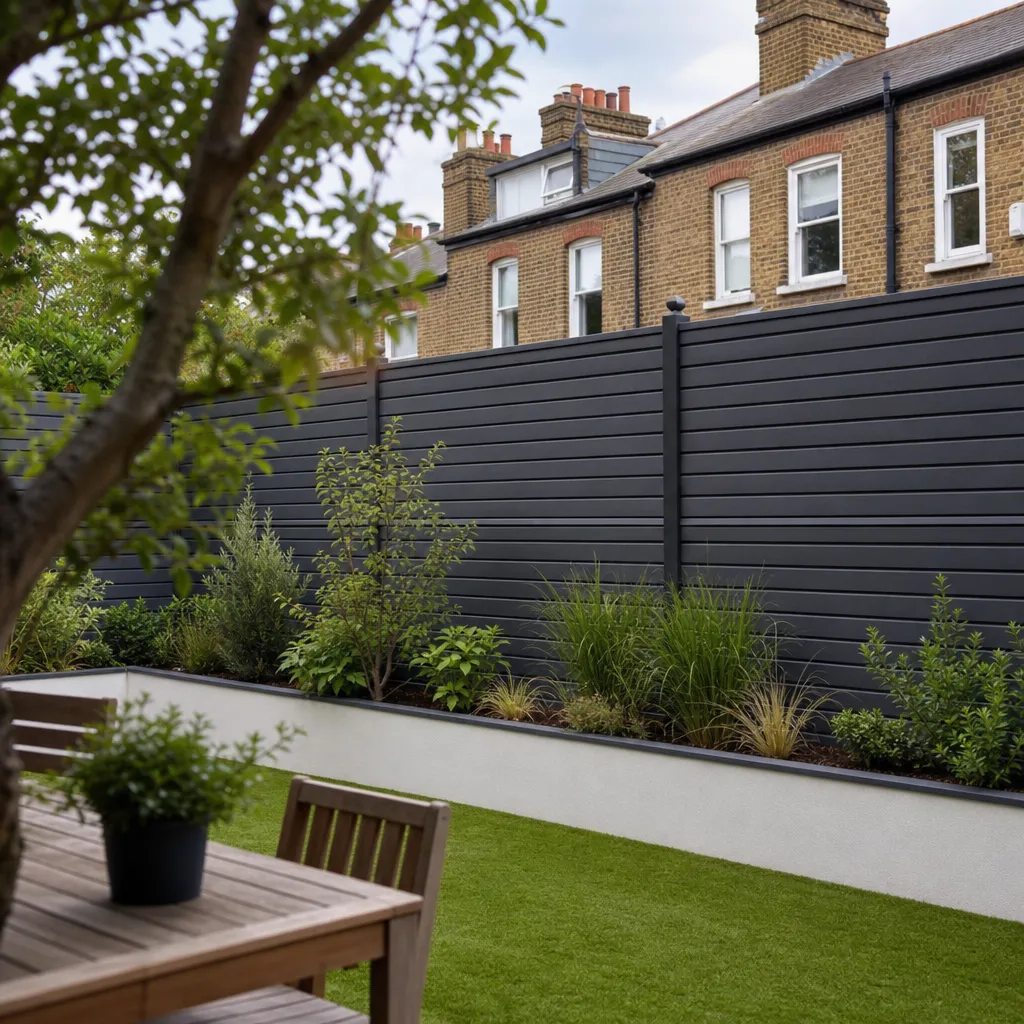
Soundproof fencing: reducing noise and creating peaceful outdoor spaces
No fence completely blocks sound, but a solid, dense, well-sealed fence of 1.
 Improvement & Build
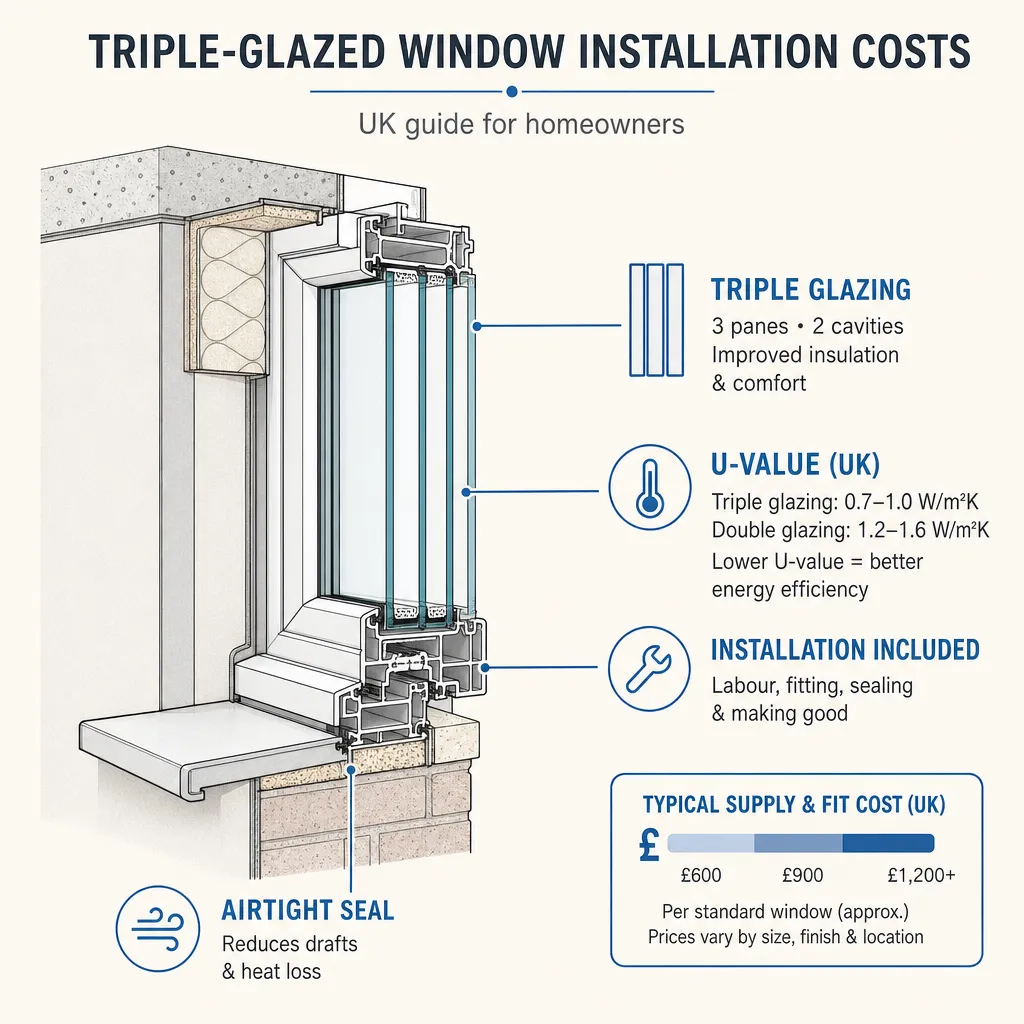
Triple-Glazed Window Installation Costs
Triple-glazed window installation in the UK typically costs £800–£1,800 per window, depending on size, frame material, and glazing specification.
 Improvement & Build
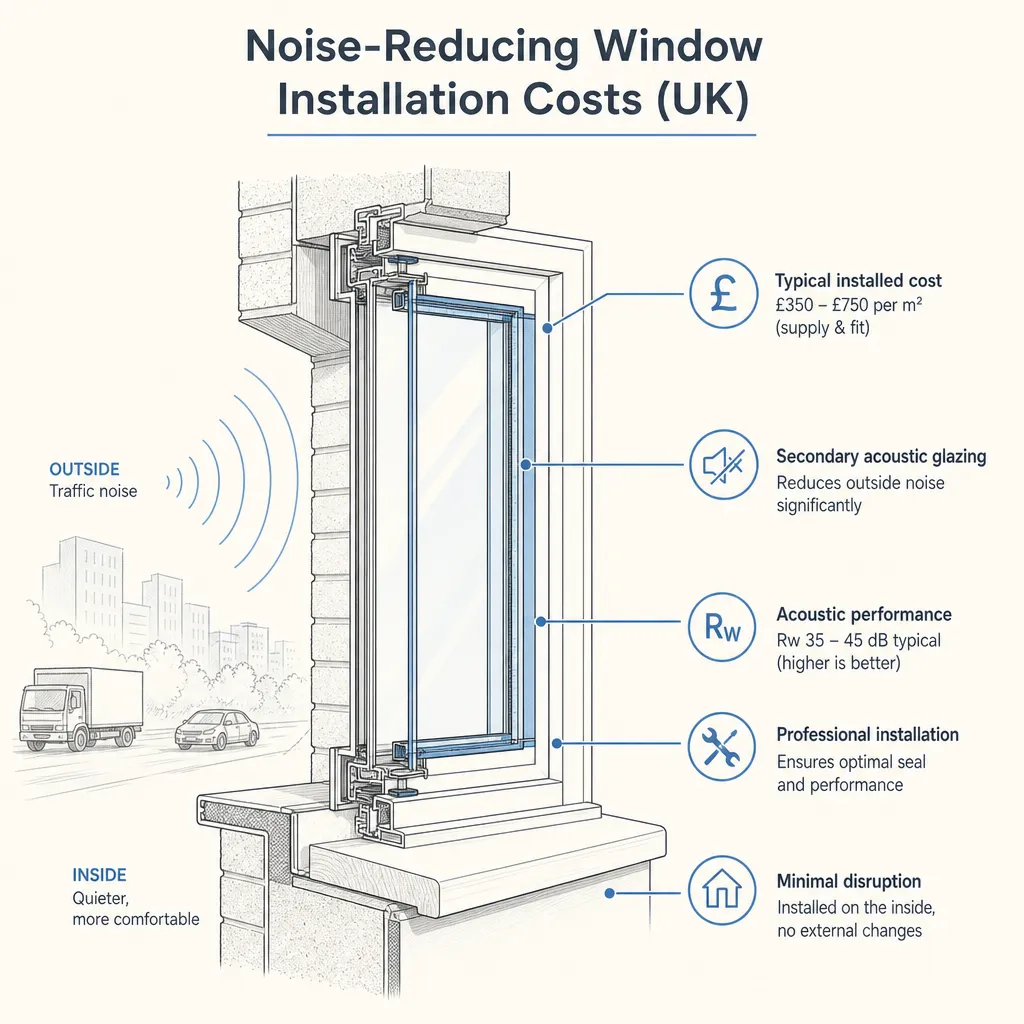
Noise-Reducing Window Installation Costs
Noise-reducing window installation in the UK typically costs £400–£1,500 per window depending on glazing specification, frame material, and property type.
 Improvement & Build
Home Soundproofing: Noise Reduction Strategies for Living Spaces
Sound travels through homes via direct paths — walls and floors — and indirect flanking paths via the structure.
 Improvement & Build
Soundproofing a Room: Acoustic Treatment Options and DIY vs Professional Solutions
Effective room soundproofing relies on four principles — mass, decoupling, absorption, and damping.