Soundproofing a Room: Acoustic Treatment Options and DIY vs Professional Solutions
By Housey · Last reviewed 18th of May 2026
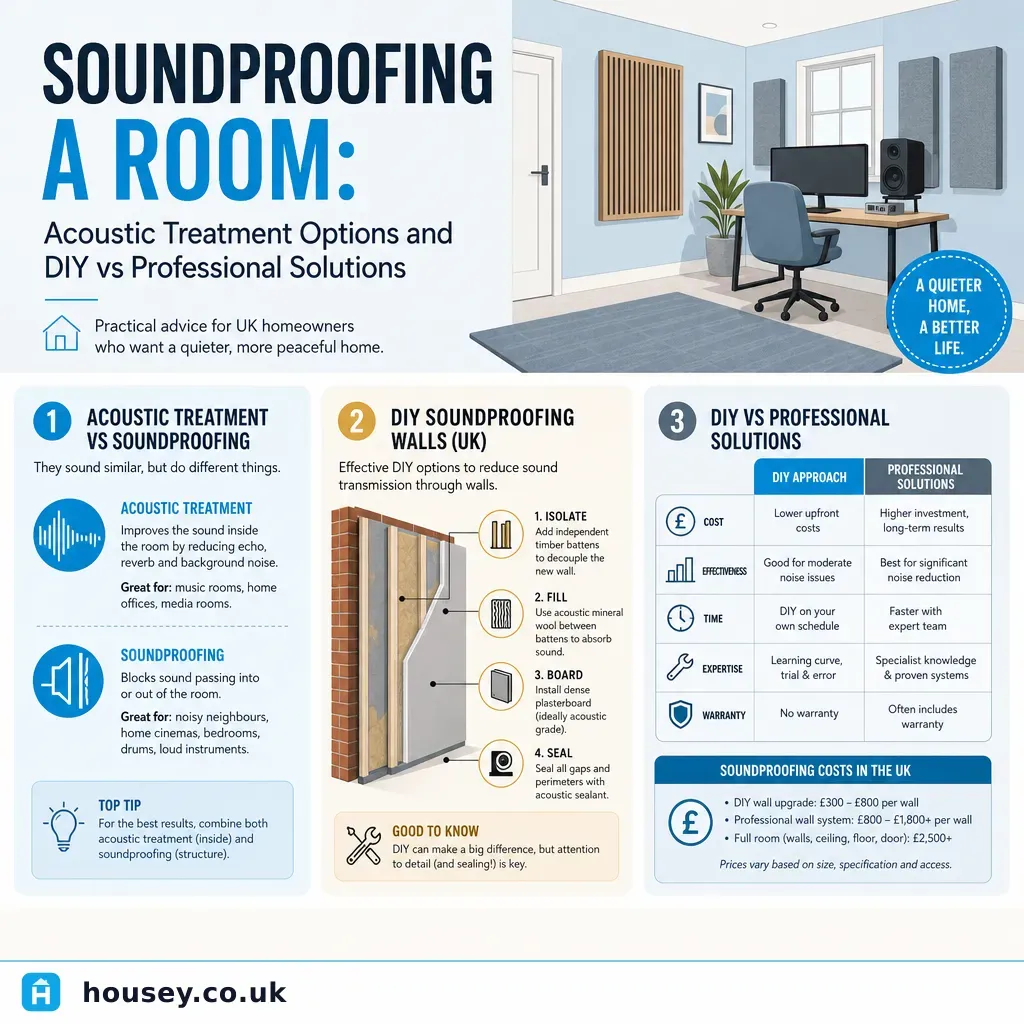
Soundproofing a Room: Acoustic Treatment Options and DIY vs Professional Solutions
Noise is one of the most common complaints among UK homeowners, and improving a room's acoustic performance is a frequent motivation for renovation. Whether you are dealing with a home office disrupted by household noise, a bedroom wall shared with noisy neighbours, or a music room whose sound travels freely through the house, the first practical step is understanding what type of problem you have — and what type of solution can realistically help.
Key points
- Soundproofing (reducing sound transmission between spaces) and acoustic treatment (controlling reverb and echo within a room) are different problems requiring different solutions
- Sound travels via two main routes: airborne (voices, TV, and music through walls and ceilings) and impact (footsteps and vibration through floors and structural elements)
- Building Regulations Approved Document E sets minimum standards for sound insulation in new-build dwellings and material change of use conversions in England and Wales
- The four principles of effective soundproofing are mass, decoupling, absorption, and damping — most DIY solutions address only one or two of these
- Professional acoustic installers who are members of the Institute of Acoustics (IOA) can specify and independently measure performance for complex or noise-sensitive situations
Understanding the problem: airborne vs impact noise
Identifying which type of noise you are dealing with is the essential first step, as each requires a different approach.
Airborne noise travels as sound waves through air and then through building elements — walls, floors, ceilings, windows, and doors. Sources include voices, television, music, and street traffic. The key performance metric is the Sound Reduction Index (Rw), measured in decibels (dB).
Impact noise is generated by physical contact — footsteps on a hard floor above, vibrating appliances, or a door slamming — and travels through the building structure as vibration before radiating as sound in adjacent spaces. The relevant metric is Impact Sound Pressure Level (LnT,w).
Many domestic noise problems involve both types. Treating only the wall (airborne path) while ignoring impact noise from the floor above often produces disappointing results.
Acoustic treatment vs soundproofing: what is the difference?
These terms are frequently confused, but they describe fundamentally different goals:
Goal | Term | What it does | Typical products |
|---|---|---|---|
Reduce sound entering or leaving a room | Soundproofing | Blocks or absorbs sound transmission through walls, floors, and ceilings | Mass-loaded vinyl, acoustic board, resilient bars, dense mineral wool insulation |
Improve sound quality within a room | Acoustic treatment | Controls reverb, echo, and standing waves | Acoustic foam panels, fabric-wrapped mineral wool frames, bass traps, diffusers |
A recording studio needs both. A bedroom affected by neighbour noise needs soundproofing. A home studio with too much echo needs acoustic treatment. Getting the diagnosis right avoids spending money on the wrong solution.
DIY vs professional soundproofing: a comparison
Approach | Best for | Limitations | Indicative UK cost range |
|---|---|---|---|
DIY acoustic foam panels | Reducing echo in a home studio or podcast room | No meaningful reduction of noise between rooms | £50–£300 in materials |
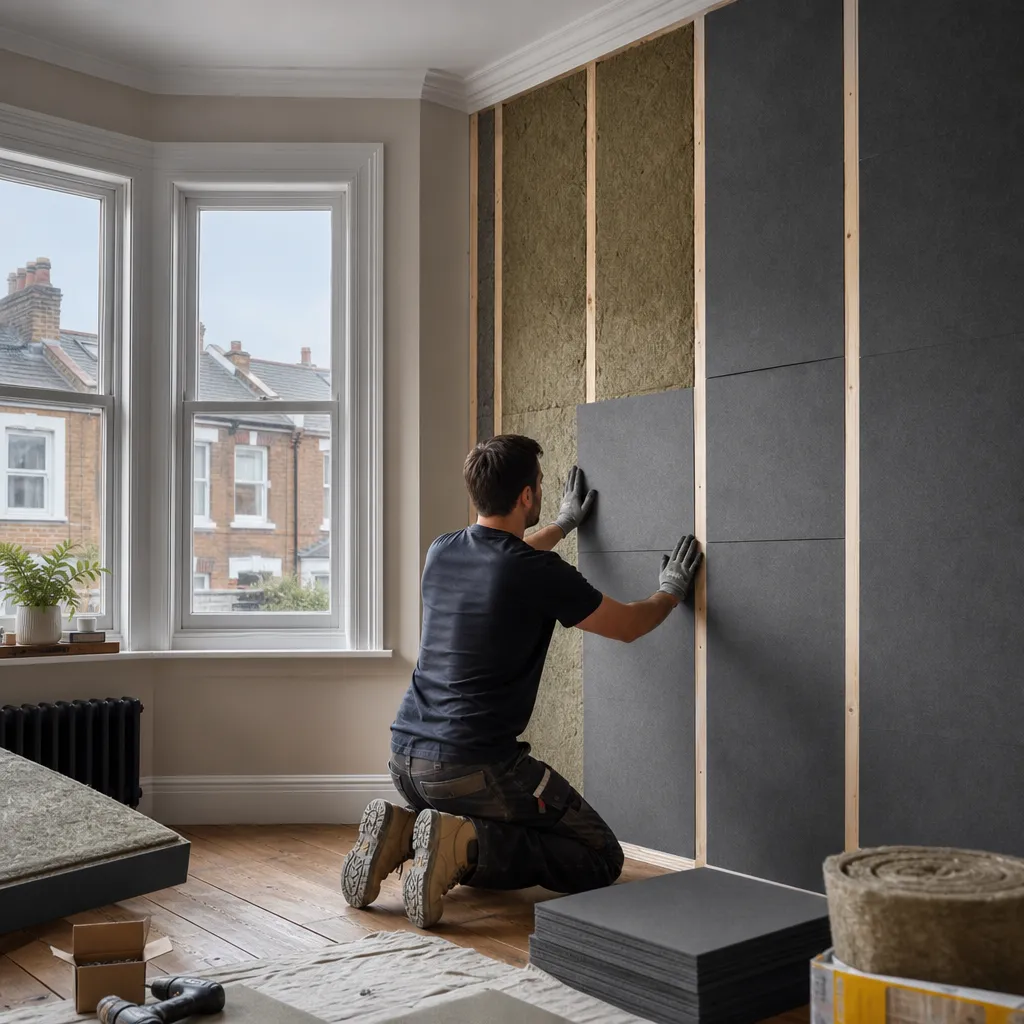
DIY resilient bar and acoustic board | Improving party wall or ceiling isolation on a limited budget | Requires boarding skills; solid bridges degrade performance | £500–£2,000 in materials for an average room |
Professional acoustic partition (isolation clips, dense fill, decoupled board) | Bedrooms with significant noise problems, home cinemas | Reduces room size; higher cost | £1,500–£5,000+ installed |
Professional floating floor system | Impact noise from a floor above | Significant disruption; reduces floor-to-ceiling height | £2,000–£8,000+ depending on floor area |
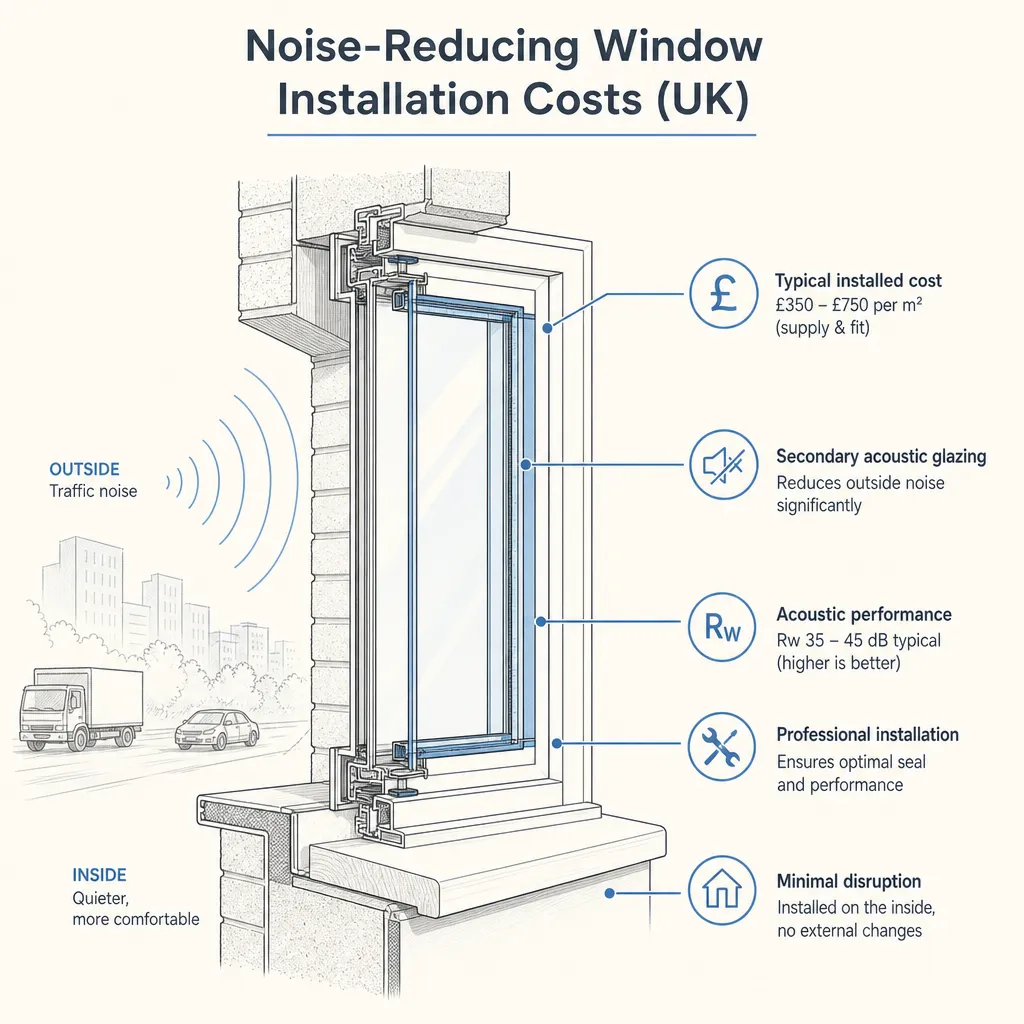
Professionally fitted secondary glazing | Airborne noise from street traffic through windows | Does not address flanking paths or structural noise | £300–£900 per window installed |
Indicative UK costs, last reviewed 2026-05-18. Costs vary significantly by region, existing construction type, and the degree of sound reduction required.
Decision tree: which solution suits your situation?
- Choose acoustic treatment if the problem is echo, reverb, or poor sound quality within the room itself — not noise from outside or adjacent rooms
- Choose DIY soundproofing if the noise is moderate, you have boarding and fitting skills, and the room is a secondary space such as a spare bedroom or home office
- Commission professional soundproofing if you need significant noise reduction, the room is used for music or recording, or the existing construction is complex
- Commission an acoustic assessment first if noise is severe, involves a party wall dispute with a neighbour, or if you are planning a material change of use such as creating a home recording studio used commercially
- Check planning permission if works involve a material change of use, or if you are a landlord in a licensed HMO where Building Regulations Part E may apply
The four principles of effective soundproofing
Professional soundproofing systems combine four approaches. Understanding these helps you evaluate any proposed solution or contractor quote:
- Mass — heavier, denser materials (concrete, acoustic plasterboard, mass-loaded vinyl) are harder for sound to vibrate through
- Decoupling — isolating structures from each other using resilient bars, neoprene isolation clips, or floating floor mounts prevents vibration transferring between surfaces
- Absorption — filling cavities with dense acoustic mineral wool such as Knauf Earthwool Acoustic or Rockwool RW3 absorbs sound energy that would otherwise resonate in the air gap
- Damping — applying compounds such as acoustic damping paste between layers of board converts sound vibration into heat
DIY solutions typically achieve mass only. Professional systems combine all four, which explains why the performance difference between DIY and professional installations is often substantial.
Homeowner checklist: before you begin soundproofing works
When to get professional help
Consider engaging a professional acoustic installer or consultant when:
- DIY measures have not made a meaningful difference and the noise is affecting sleep or quality of life
- You need to demonstrate compliance with Building Regulations Approved Document E (for a conversion or a leasehold obligation)
- You are in a dispute with a neighbour over noise — an acoustic measurement report from a qualified professional can provide objective evidence
- You are planning a home extension or conversion and want to specify acoustic performance as part of the construction specification
- The room will be used for music, recording, or professional audio work where performance thresholds are critical
The Institute of Acoustics (IOA) maintains a directory of member consultants at ioa.org.uk.
How Housey can help
For soundproofing work that forms part of a larger build — a home cinema within an extension, a music room in a loft conversion, or an acoustically specified new floor — Housey can connect you with experienced extension builders who coordinate acoustic work alongside structural and finishing trades. Request and compare quotes through the Housey platform.
Frequently asked questions
Does soundproofing a room require planning permission?
Internal soundproofing works to an existing residential room do not usually require planning permission. However, if the work involves a material change of use — for example, converting a space into a commercial recording studio — planning permission may be needed. Building Regulations Approved Document E applies to new dwellings and conversions; always check with your local planning authority if you are unsure about the scope of your project.
How much noise reduction can I realistically expect from DIY soundproofing?
DIY resilient bar and acoustic board on an existing plasterboard wall can achieve 5–15 dB of additional sound reduction — noticeable, but unlikely to make loud noise inaudible. Professional isolation clip systems can achieve 15–25 dB or more on top of the base wall performance. For context, a 10 dB reduction is perceived as roughly halving the loudness of a sound.
Can I soundproof a room in a leasehold flat?
Yes, but check your lease first. Most residential leases require freeholder or management company consent before alterations to floors, walls, or ceilings. If your building has a residents' management company, contact them before starting work. Where works involve a shared party wall or ceiling, the Party Wall etc. Act 1996 may also apply.
What is the difference between acoustic foam and proper soundproofing?
Acoustic foam panels reduce echo and reverberation within a room but have minimal effect on sound transmission between rooms — they are too light and thin to provide meaningful mass or decoupling. If your goal is to prevent noise passing through walls to a neighbouring room, you need a mass-and-decoupling solution rather than acoustic foam panels.
Sources and further reading
- Building Regulations Approved Document E: Resistance to the Passage of Sound — Ministry of Housing, Communities & Local Government
- Institute of Acoustics: member directory — Institute of Acoustics
- Acoustic insulation for homes — Rockwool
- Party Wall etc. Act 1996 guidance — GOV.UK
Useful next reads
 Improvement & Build
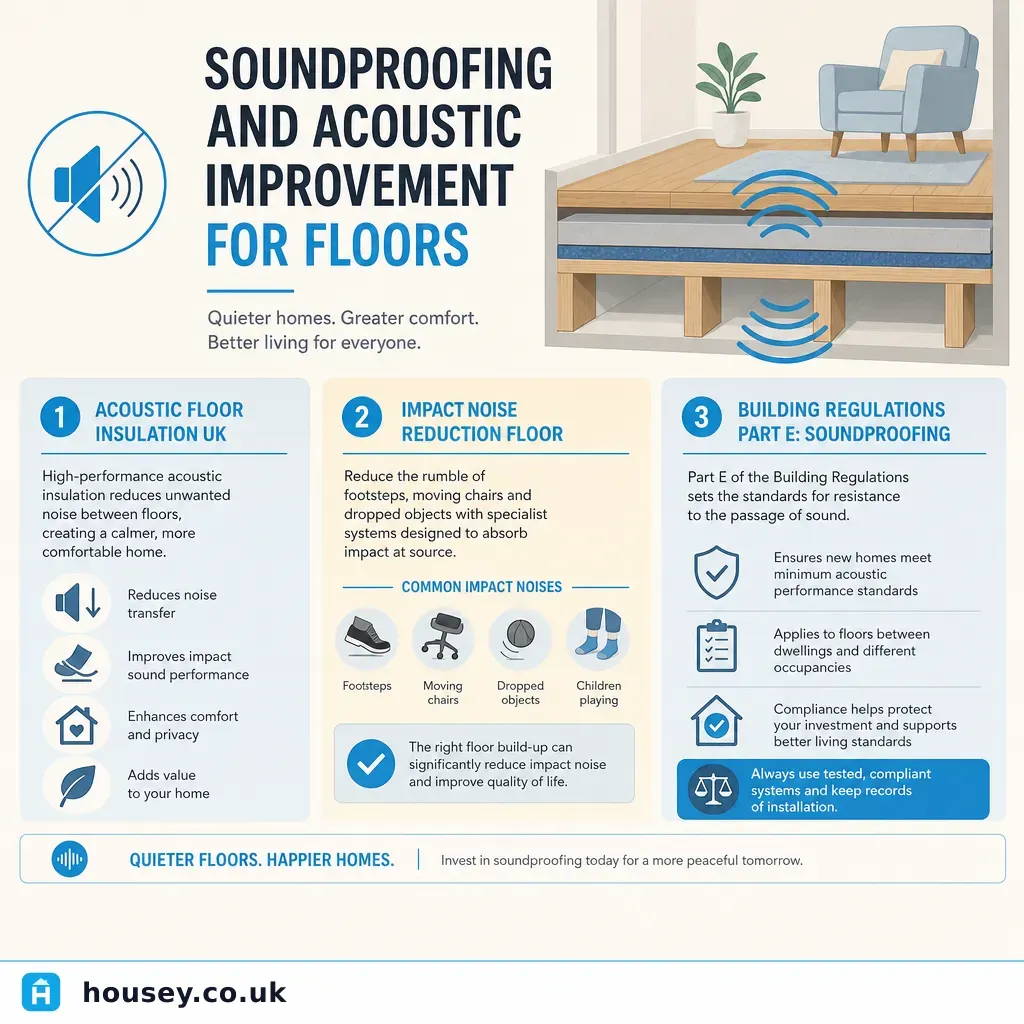
Soundproofing and Acoustic Improvement for Floors
Floor soundproofing requires different treatments for airborne noise (voices, music) and impact noise (footsteps).
 Improvement & Build
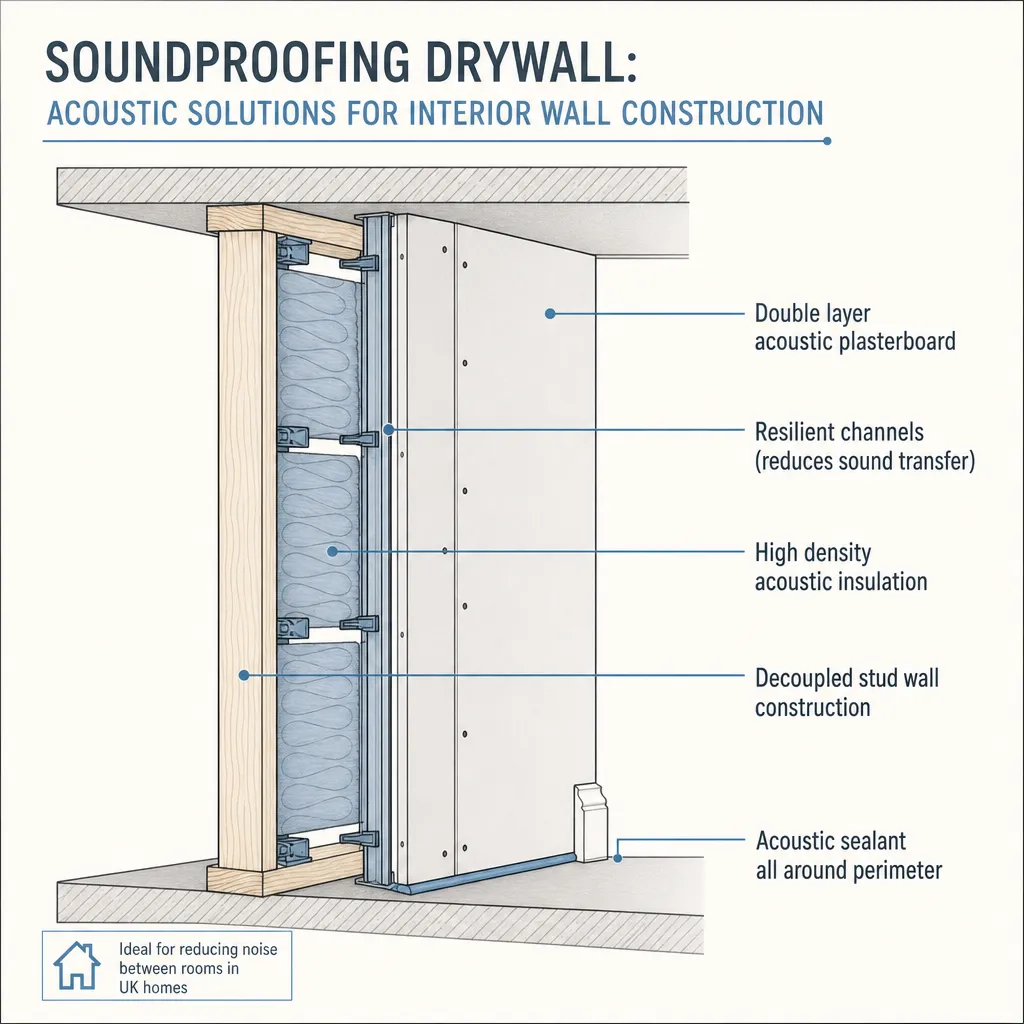
Soundproofing drywall: acoustic solutions for interior wall construction
Soundproofing drywall in UK homes typically combines acoustic plasterboard, resilient bar fixings, and mineral wool cavity fill to reduce airborne and structure-borne noise.
 Improvement & Build
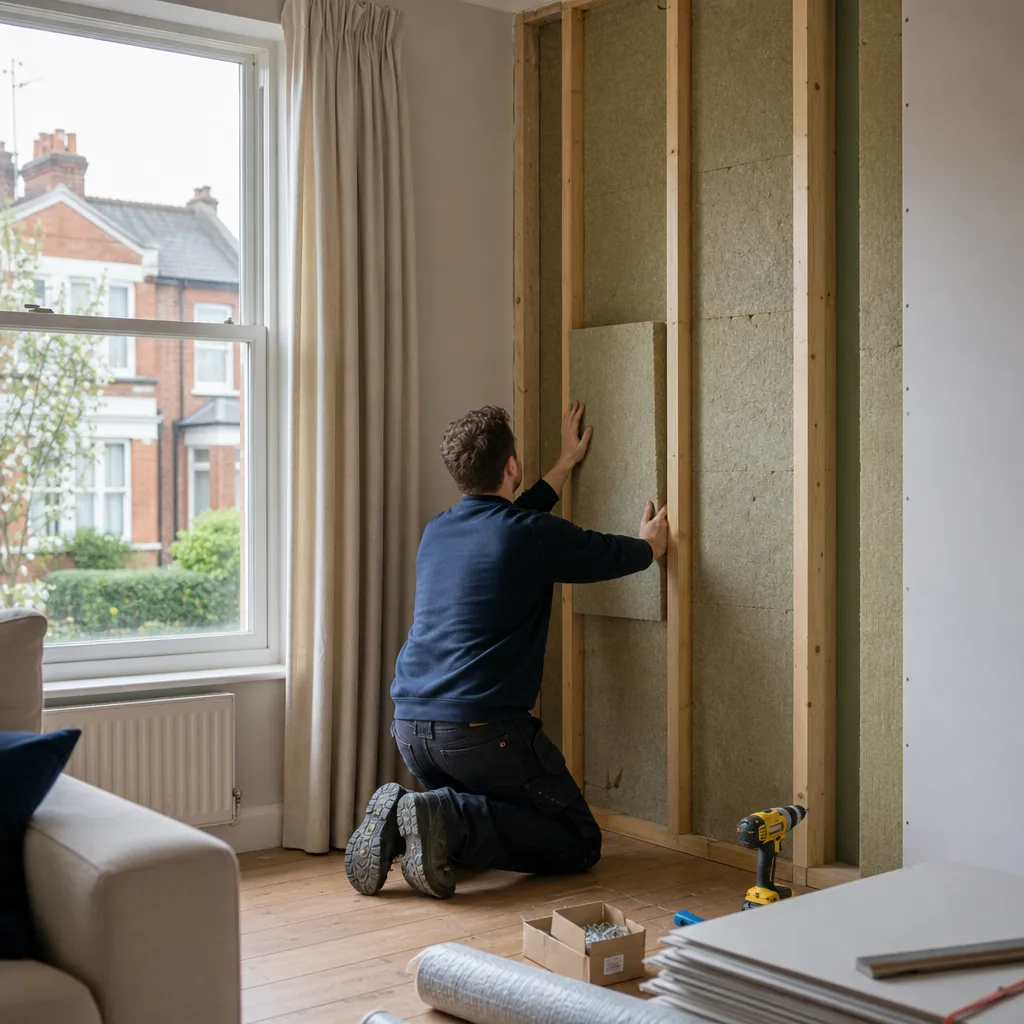
Home Soundproofing: Noise Reduction Strategies for Living Spaces
Sound travels through homes via direct paths — walls and floors — and indirect flanking paths via the structure.
 Improvement & Build
Noise-Reducing Window Installation Costs
Noise-reducing window installation in the UK typically costs £400–£1,500 per window depending on glazing specification, frame material, and property type.
 Improvement & Build
Soundproofing Materials and Acoustic Treatments for UK Homes
Effective soundproofing in UK homes combines three principles: mass (adding weight with acoustic plasterboard or mass-loaded vinyl), decoupling (breaking the vibration path with resilient bars or an independent frame), and absorption (filling cavities with dense mineral wool).