Soy-based foam insulation: renewable insulation materials and energy savings
By Housey · Last reviewed 12th of May 2026
Soy-based foam insulation: renewable insulation materials and energy savings
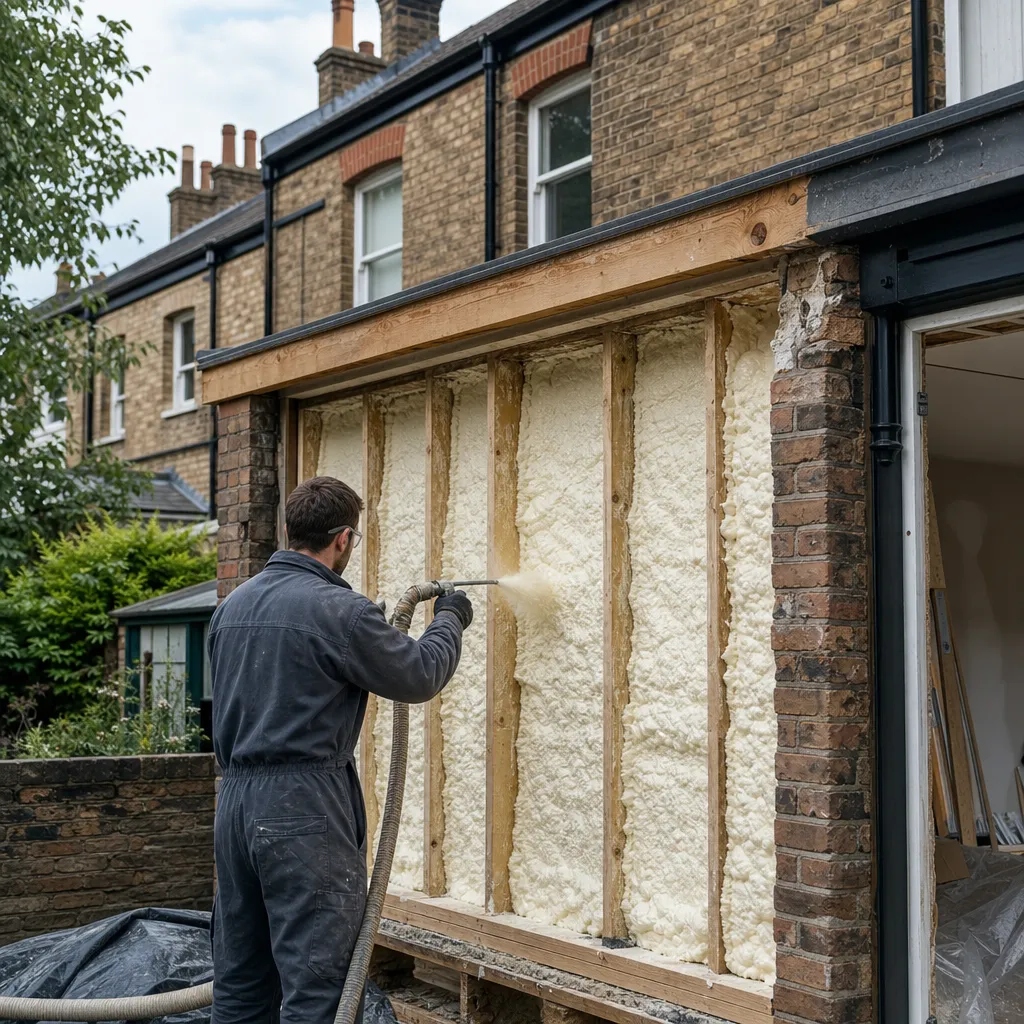
Bio-based building materials are gaining ground in UK retrofit discussions as homeowners look beyond thermal performance to embodied carbon and sustainability credentials. Soy-based foam insulation — made with polyols partly derived from soybean oil — is one option that comes up, particularly for homeowners researching spray foam alternatives with a lower carbon footprint. In the UK, availability remains more limited than in North America, and the product shares all of the regulatory, mortgage, and moisture risk considerations that apply to conventional spray polyurethane foam.
Key points
- Soy-based foam insulation replaces a proportion (typically 10–50%) of petroleum-derived polyols with bio-derived polyols extracted from soybean oil, reducing fossil feedstock use compared with conventional spray polyurethane foam (SPF).
- Spray foam of any type applied to roof timbers can affect mortgage lendability — the Building Societies Association advises lenders to seek specialist inspection on properties where spray foam has been installed.
- PAS 2035:2023 requires that retrofit insulation works are preceded by a whole-house assessment to manage moisture, ventilation, and structural risk, regardless of the material used.
- Open-cell soy foam is vapour-permeable with a thermal conductivity of approximately 0.038–0.042 W/mK; closed-cell variants are vapour-impermeable and achieve approximately 0.022–0.028 W/mK.
- TrustMark registration and compliance with PAS 2035 are required for insulation works funded under ECO4 or the Great British Insulation Scheme.
What is soy-based foam insulation?
Spray polyurethane foam (SPF) is produced from two reactive components: a polyol and an isocyanate. In conventional SPF, the polyol is derived entirely from petroleum. Soy-based foam replaces some or all of that petroleum polyol with polyols extracted from soybean oil — a renewable agricultural feedstock.
The proportion of bio content varies by product. Some products carry certification from bio-content programmes, though UK and European standards for bio-content labelling are less uniform than North American equivalents (such as the USDA BioPreferred scheme). Performance characteristics — thermal conductivity, compressive strength, and moisture behaviour — are broadly similar to conventional SPF of the same cell type.
The bio-derived content reduces fossil feedstock reliance and may lower embodied carbon, depending on the product and how the soy is sourced and processed. However, installation method, application conditions, blowing agent specification, and long-term in-use moisture behaviour are largely unchanged from conventional spray foam.
Open-cell versus closed-cell soy foam
Property | Open-cell soy foam | Closed-cell soy foam |
|---|---|---|
Thermal conductivity | ~0.038–0.042 W/mK | ~0.022–0.028 W/mK |
Vapour permeability | High (breathable) | Low (acts as vapour barrier) |
Density | Low (~9–12 kg/m³) | High (~30–40 kg/m³) |
Moisture risk in retrofit | Lower, but ventilation still required | Higher — can trap moisture behind the foam |
Typical UK applications | Internal stud walls, suspended floors | Flat roofs, below-slab (specialist use) |
Mortgage risk in roof space | High — applies to all spray foam types | High — applies to all spray foam types |
Indicative UK installed costs: open-cell £20–£40/m²; closed-cell £35–£70/m². Figures vary significantly by depth, access, and location. Indicative UK costs, last reviewed 2026-05-12.
Energy savings potential
Thermal performance depends on the U-value achieved, not the bio content of the insulation material. Under Approved Document L1B (existing dwellings, England), notional target U-values for upgraded existing fabric are: walls 0.28 W/m²K (or better if practicable) and roofs 0.16 W/m²K. Any insulation material that achieves these values in a compliant installation delivers comparable in-use energy savings.
The Energy Saving Trust and the Department for Energy Security and Net Zero (DESNZ) publish indicative space heating savings by property type and insulation measure. For bio-based foam specifically, the sustainability advantage lies primarily in the production phase — reduced embodied carbon — rather than any additional in-use energy saving compared with conventional SPF achieving the same U-value.
UK availability and certification
Soy-based spray foam products are significantly more common in North American markets than in the UK. Before specifying any spray foam product in a UK retrofit project, confirm:
- Whether the product holds a BBA (British Board of Agrément) Certificate or KIWA BDA agrément assessment — the standard UK technical approvals for insulation products
- Whether the installer is appropriately qualified and, for funded works, TrustMark-registered under the appropriate PAS 2030 category
- Whether the product and installer meet the eligibility criteria for any grant scheme you are applying under, as these are updated periodically
What not to assume
Do not assume bio-based means moisture-safe. Open-cell foam is vapour-permeable, which may help in some configurations, but it does not make spray foam automatically safe in all retrofit contexts. Closed-cell foam can trap moisture behind it, risking condensation, timber decay, and mould growth in roof structures. A whole-building moisture risk assessment is essential before specifying any spray foam in an existing roof.
Do not assume spray foam is reversible. Spray foam bonds directly to the substrate. In roof spaces, removal typically causes damage to rafters and sarking boards and can make re-roofing significantly more expensive. This applies to bio-based formulations in the same way as conventional SPF.
Do not assume your mortgage lender will accept it. The Building Societies Association guidance means many mainstream UK lenders treat properties with spray foam in the roof space as requiring specialist inspection, regardless of the foam's bio content. This applies to purchases and remortgages and may affect your ability to sell the property in future.
Do not assume spray foam qualifies for grant funding. Spray foam is not currently listed as an eligible measure under ECO4 or the Great British Insulation Scheme as of 2026. Verify current scheme rules before making any investment decision based on anticipated grant support.
Homeowner checklist before enquiring about soy foam insulation
Important limitations
This article provides general information about soy-based foam insulation as a product category. It is not a substitute for professional assessment of your specific property. Mortgage acceptability, grant funding eligibility, moisture risk, and Building Regulations compliance all depend on your property's construction type, tenure, age, and condition. A qualified Retrofit Coordinator under PAS 2035 or an independent energy assessor should assess your home before you commission any spray foam installation.
When this becomes urgent
- If spray foam has already been installed in your roof space and you are attempting to remortgage or sell, seek specialist surveying advice promptly — many lenders require an independent inspection report before they will lend.
- If you notice visible moisture, staining, or mould developing near any foam insulation, stop further works immediately and arrange a damp and condensation survey.
- If you detect persistent chemical odours after a recent spray foam installation, ensure adequate ventilation and contact the installer; if concerns persist, contact the Health and Safety Executive.
What to ask a qualified professional
- Does this property's construction type make spray foam installation high-risk for moisture and condensation, and if so which cell type, if any, is preferable?
- Which soy-based or bio-based foam products currently hold BBA certification and are eligible under active funding schemes?
- How does this insulation affect the Standard Assessment Procedure (SAP) calculation used for EPCs?
- What does removal look like in practice if I need to re-roof or sell the property in the future?
- Are there alternative bio-based materials — hemp, wood fibre, recycled cellulose — that achieve comparable U-values without the mortgage implications?
- What ventilation changes will be required after installation to manage moisture risk in this specific property?
When to get professional help
Always involve a qualified professional for spray foam insulation, including bio-based variants. Installation involves pressurised chemical application and in UK retrofit contexts must be preceded by a whole-house assessment. For any funded scheme, a Retrofit Coordinator registered under PAS 2035 should oversee and coordinate the process.
How Housey can help
Our insulation assessments can help you understand your property's existing thermal performance and identify the most suitable insulation approach before any works begin. Energy-efficiency consultants can advise on bio-based and conventional options in the context of your wider retrofit plan, and our insulation installers can provide itemised quotes for accredited, PAS 2030-compliant installation.
Frequently asked questions
Is soy-based foam insulation available from UK installers?
Soy-based foam is primarily a North American product category. Some European bio-derived SPF variants are available in the UK, but availability is more limited than for conventional spray foam or mineral wool. Ask installers specifically whether products they use hold BBA or KIWA BDA certification and what bio-content percentage they carry.
Does soy foam insulation affect my mortgage?
The mortgage issue with spray foam applies to all spray foam applied to roof timbers, regardless of bio content. Many UK mortgage lenders follow Building Societies Association guidance and treat properties with roof-space spray foam as requiring specialist inspection. Check with your lender before proceeding with any spray foam installation in a roof space.
What UK grants are available for insulation?
ECO4 and the Great British Insulation Scheme specify eligible insulation measures by application type — loft, cavity, solid wall — rather than by material. Spray foam is not currently listed as an eligible measure under either scheme. Check current Ofgem guidance and scheme rules, as eligible measures are periodically updated. Information correct to 2026-05-12.
How does soy foam compare with mineral wool insulation?
Closed-cell soy foam achieves higher thermal resistance per unit thickness than mineral wool and acts as an air and vapour barrier. Open-cell soy foam is broadly comparable to mineral wool at similar thicknesses. However, mineral wool does not carry mortgage risk, is easier to remove, and is more widely certified for UK applications. For most UK retrofit contexts, mineral wool or rigid board is the lower-risk choice.
Sources and further reading
- Approved Document L1B: Conservation of fuel and power in existing dwellings — GOV.UK
- PAS 2035:2023 — Retrofitting dwellings for improved energy efficiency — BSI Group
- Building Societies Association — guidance on spray foam insulation — Building Societies Association
- Energy Saving Trust — insulation guidance for UK homes — Energy Saving Trust
- TrustMark — registered retrofit contractors — TrustMark
Useful next reads
 Energy & Retrofit
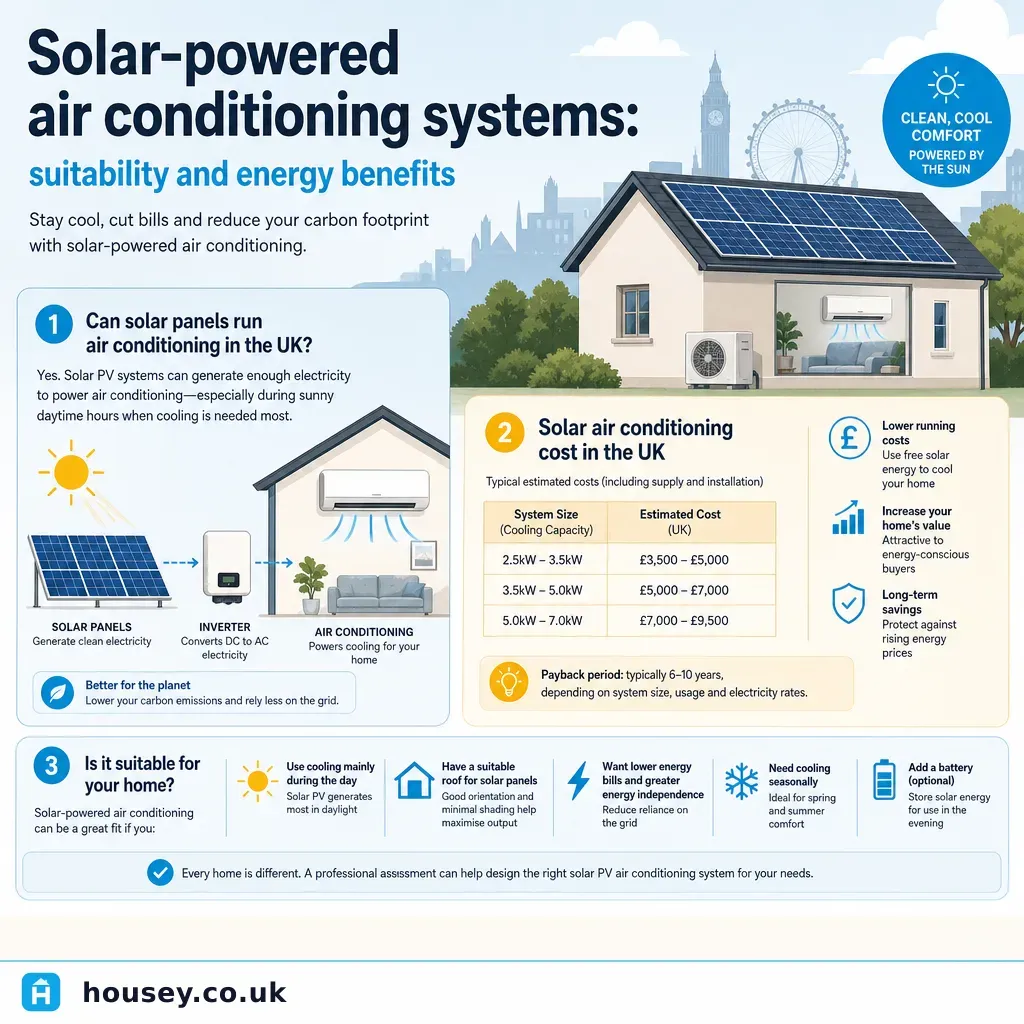
Solar-powered air conditioning systems: suitability and energy benefits
Solar-powered air conditioning pairs photovoltaic panels with an inverter-driven air conditioning unit to cool a home using renewable electricity.
 Energy & Retrofit
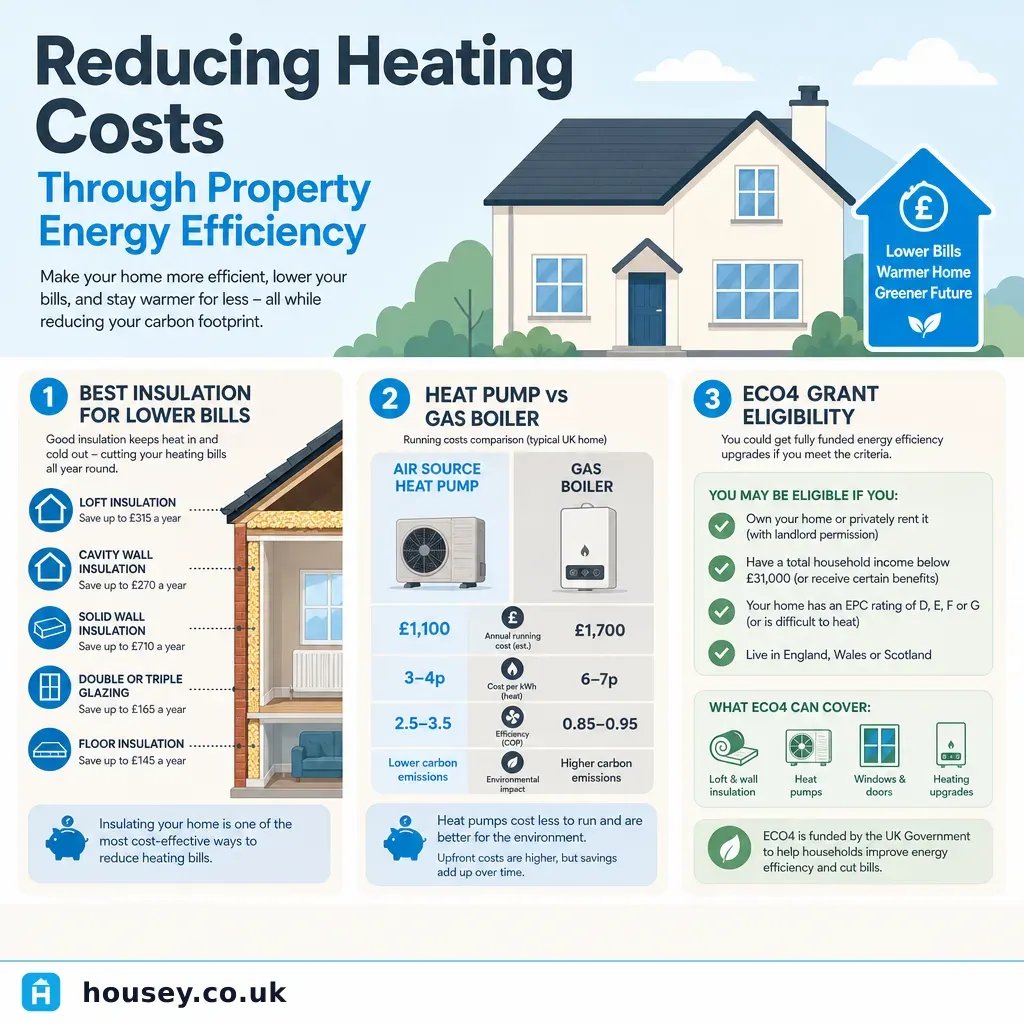
Reducing Heating Costs Through Property Energy Efficiency
Reducing heating costs starts with identifying where heat is lost — typically walls (30–35%), roof (20–25%), and windows.
 Energy & Retrofit
Switching From Gas Heating to Heat Pump Technology: Installation Guide
Switching from gas to a heat pump requires a heat loss calculation, correctly sized equipment, and often radiator upgrades before installation.
 Energy & Retrofit
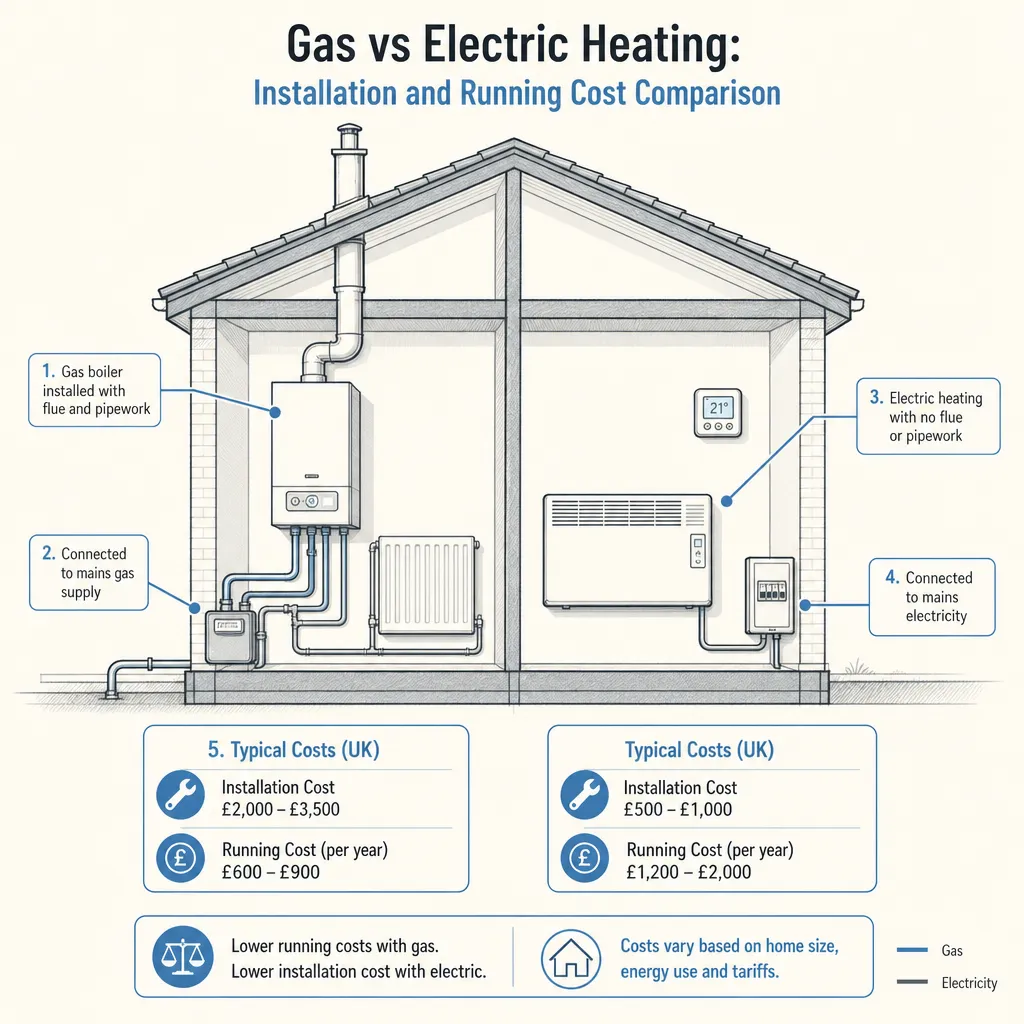
Gas vs Electric Heating: Installation and Running Cost Comparison
Gas central heating usually has lower running costs per kWh than direct electric heating in the UK, though heat pumps can change that equation.
 Energy & Retrofit
Understanding Heat Pumps: Technology and Suitability for UK Homes
Heat pumps extract heat from the air or ground and transfer it indoors, typically achieving efficiencies of 250–400% compared to a conventional boiler's near 100%.