Specialist Roof Materials: Zinc and Premium Roofing Solutions
By Housey · Last reviewed 24th of May 2026
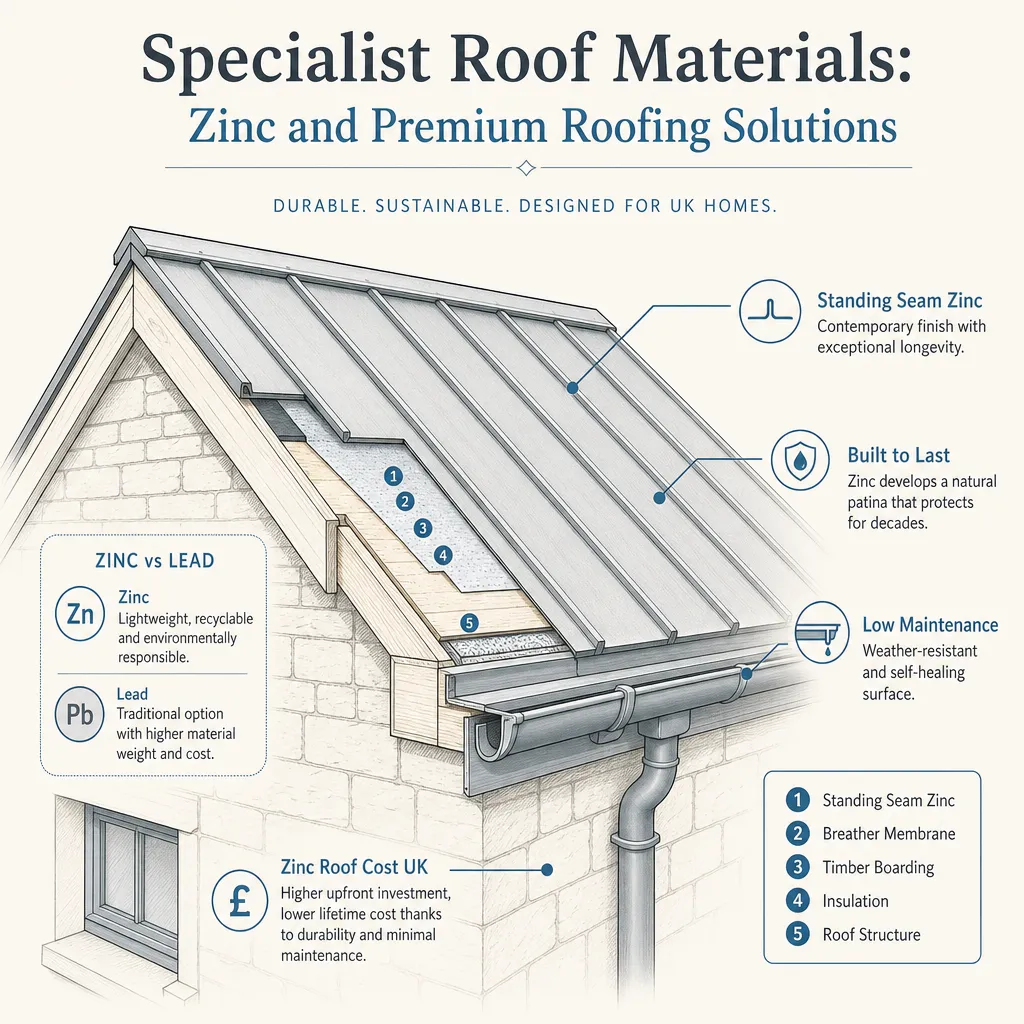
Specialist Roof Materials: Zinc and Premium Roofing Solutions
For homeowners planning a new roof, extension covering, or flat-roof replacement, the choice of material goes well beyond the standard concrete tile. Zinc, copper, and other premium metalwork have grown in popularity for both contemporary new builds and sympathetic heritage repairs, and understanding their properties helps you brief a roofing contractor with confidence and avoid costly specification mistakes.
Key points
- Titanium-zinc (Ti-Zn) roofing carries a manufacturer-stated service life of 60–100 years or more, making it one of the longest-lasting roof materials currently specified on UK homes.
- Zinc expands and contracts significantly with temperature change — standing seam and secret-fix clip systems are required to accommodate thermal movement without causing joint failure.
- Pre-weathered zinc finishes (such as VMZINC Quartz-Zinc) achieve a mature blue-grey patina from installation day, avoiding the bright silver appearance of natural unweathered zinc.
- Zinc roofing in the UK should conform to BS EN 988, the standard covering zinc and zinc alloy strip and sheet for building applications.
- Specialist metalwork contractors — not general roofers — are required for zinc installation; incorrect fixing or bimetallic contact with copper or uncoated steel can cause premature failure.
What makes zinc a premium roofing choice
Zinc is a naturally occurring metal. When alloyed with small amounts of titanium and copper, it produces a roofing material of exceptional durability and visual distinction.
Self-healing patina: Zinc reacts with moisture and carbon dioxide to form zinc carbonate — a pale grey, matte surface layer that actively protects the metal from further corrosion. Minor surface scratches oxidise and seal naturally over time, without any maintenance intervention.
Longevity and low maintenance: A correctly installed zinc roof typically outlasts a standard building warranty and requires little attention beyond keeping gutters clear and checking flashings every five to ten years.
Lightweight construction: Zinc weighs approximately 7 kg/m² at standard roofing thicknesses (0.65–0.8 mm), considerably less than concrete tiles (approximately 40–55 kg/m²). This reduced loading can be decisive on lightweight extension structures and flat-roof conversions where structural capacity is limited.
Aesthetic range: Natural zinc weathers from bright silver to blue-grey over five to fifteen years. Pre-weathered products allow immediate visual integration with surrounding materials — a consideration that matters on extensions to Victorian terraces, 1930s semis, and other older properties where a bright metallic roof would jar.
Zinc versus other premium roof materials
Material | Typical service life | Weight (kg/m²) | Indicative installed cost | Best for | Main limitation |
|---|---|---|---|---|---|
Titanium-zinc | 60–100+ years | ~7 | £80–£150/m² | Contemporary extensions, flat/low-pitch roofs, dormer cheeks | Thermal movement; specialist installation required |
Copper | 100+ years | ~8 | £100–£200/m² | Heritage buildings, cupolas, small accent roofs | High cost; weathers to verdigris |
Lead (Code 4–6) | 50–100 years | 20–34 | £80–£120/m² | Flashings, valleys, heritage repairs | Heavy; Lead Sheet Association best-practice installation required |
Natural slate | 80–150 years | 25–30 | £60–£120/m² | Traditional pitched roofs, conservation areas | Weight; quality varies significantly by source |
Sedum/green roof | 30–50 years (membrane) | 60–150+ saturated | £50–£100/m² | Flat roofs, biodiversity net gain planning conditions | Structural loading; specialist drainage and membrane design |
Indicative UK costs, last reviewed 2026-05-24. Costs vary significantly by location, roof complexity, access, and specification. Always obtain at least three written quotes.
Where zinc is typically used on UK homes
- Flat and low-pitch roofs: Zinc's waterproofing performance makes it well suited to flat roofs on extensions and outbuildings, where its service life far exceeds that of felt or many standard single-ply membranes.
- Standing seam cladding: Standing seam zinc panels are used on contemporary house extensions and garden room walls, often specified by architects to unify roof and wall elevations in a single material system.
- Dormers and dormer cheeks: On loft conversions, zinc dormers are a practical choice to avoid the ongoing maintenance demands of painted render or tile-hanging over a timber frame substructure.
- Flashings and details: Zinc is used as an alternative to lead for abutment flashings, parapet cappings, and valley gutters, though lead remains more common in conservation areas and on listed buildings.
- Heritage repair: On some listed buildings, zinc is specified as a replacement for earlier metalwork. Always confirm material suitability with a heritage specialist and your local planning authority or conservation officer before committing to a specification.
Installation requirements
Zinc is not a material for a general tiling contractor. Correct installation requires several specific conditions:
- Manufacturer-recognised training: Look for installers who have completed VMZINC, Rheinzink, or equivalent manufacturer training programmes and can show evidence of current certification.
- Correct underlay and air gap: Zinc should not be installed directly against incompatible substrates. A breather membrane and ventilated air gap beneath the zinc prevent condensation forming on the underside, which would accelerate corrosion from below.
- Thermal expansion allowance: Standing seam clips come in fixed and sliding types. Using only fixed clips prevents the zinc sheet from expanding freely, creating seam stress and eventual joint failure at the most exposed points.
- Bimetallic compatibility: Zinc must not be in direct contact with copper or uncoated iron and steel. Incompatible metals create galvanic corrosion at the junction. Use compatible fixings and separating materials at all interfaces.
What to ask a zinc roofing contractor
Before accepting a quote for zinc or other premium metalwork roofing:
- What brand of zinc do you specify, and does it conform to BS EN 988?
- Can you provide evidence of manufacturer training or metalwork contractor accreditation?
- What underlay system and ventilation detail will you use beneath the zinc?
- How will thermal movement be accommodated — fixed clips, sliding clips, or a floating system?
- What gauge (thickness) of zinc are you quoting, and what is the reason for that choice?
- Is a full written specification and fixing detail drawing available before work starts?
- What workmanship warranty do you offer, and is it backed by an insurance-backed guarantee?
- Are all fixings, sealants, and abutment materials bimetallic-compatible with zinc?
When to get professional help
Consult a specialist before finalising a zinc or premium metalwork specification:
- A RIBA-registered architect or chartered designer if the project involves a planning application, listed building consent, or a contemporary extension where material specification is part of a wider design brief.
- A structural engineer if you are replacing a heavier existing roof covering with zinc — the weight reduction may affect fixing and wind-uplift calculations, particularly on exposed or high-level sites.
- A heritage consultant or local conservation officer if the property is listed or in a conservation area — material changes may require consent even for like-for-like replacement.
- A specialist metalwork contractor (not a general roofer) for all zinc installation, detailing, and flashings work.
How Housey can help
Housey connects homeowners with specialist roofers experienced in zinc and premium metalwork for projects ranging from flat-roof extensions to complex heritage details. Request quotes from verified local contractors and compare experience, accreditation, and price before making any commitment.
Frequently asked questions
Does zinc roofing require planning permission?
In most cases, replacing a roof covering with a similar material is permitted development for houses. However, if the change of material significantly alters the appearance of the roof, or the property is listed, in a conservation area, or subject to an Article 4 Direction, planning permission or listed building consent may be required. Always check with your local planning authority before proceeding.
How long does zinc roofing last?
Titanium-zinc roof systems typically carry manufacturer guarantees of 30–50 years on workmanship and materials, with a stated service life of 60–100 years or more when correctly installed and maintained. Longevity depends on installation quality, underlay and ventilation design, and local atmospheric conditions.
Can zinc be installed on a pitched roof?
Yes. Zinc is used on flat, low-pitch, steep-pitch, and vertical cladding applications. Standing seam zinc is suitable for pitches from as low as 3° with appropriate seam and lap detailing. The installation system and seam type vary by pitch and exposure; always confirm the specification with your installer.
What maintenance does a zinc roof need?
Very little, when correctly installed. Recommended checks every five to ten years include clearing debris from gutters and valley gutters, checking flashings and sealants at junctions with walls and penetrations, and inspecting bimetallic contact points for signs of corrosion. Avoid walking on zinc panels without protective boards.
Is zinc more expensive than lead roofing?
Installed costs for zinc and lead are broadly comparable for flashings and flat-roof work. Lead's considerable weight means scaffolding and structural loading can add cost on some projects. For large flat areas, zinc often comes in at a similar or slightly lower per-square-metre rate. Always compare quotes on a like-for-like specification basis.
Sources and further reading
- BS EN 988: zinc and zinc alloys — specification for rolled flat products for building — BSI Group
- VMZINC technical and installation documentation — VMZINC UK
- Lead Sheet Association: Manual for Lead Sheet — Lead Sheet Association
- Planning Portal: do I need permission for roof works? — Planning Portal
- Historic England: roofing materials in conservation areas and listed buildings — Historic England
Useful next reads
 Improvement & Build
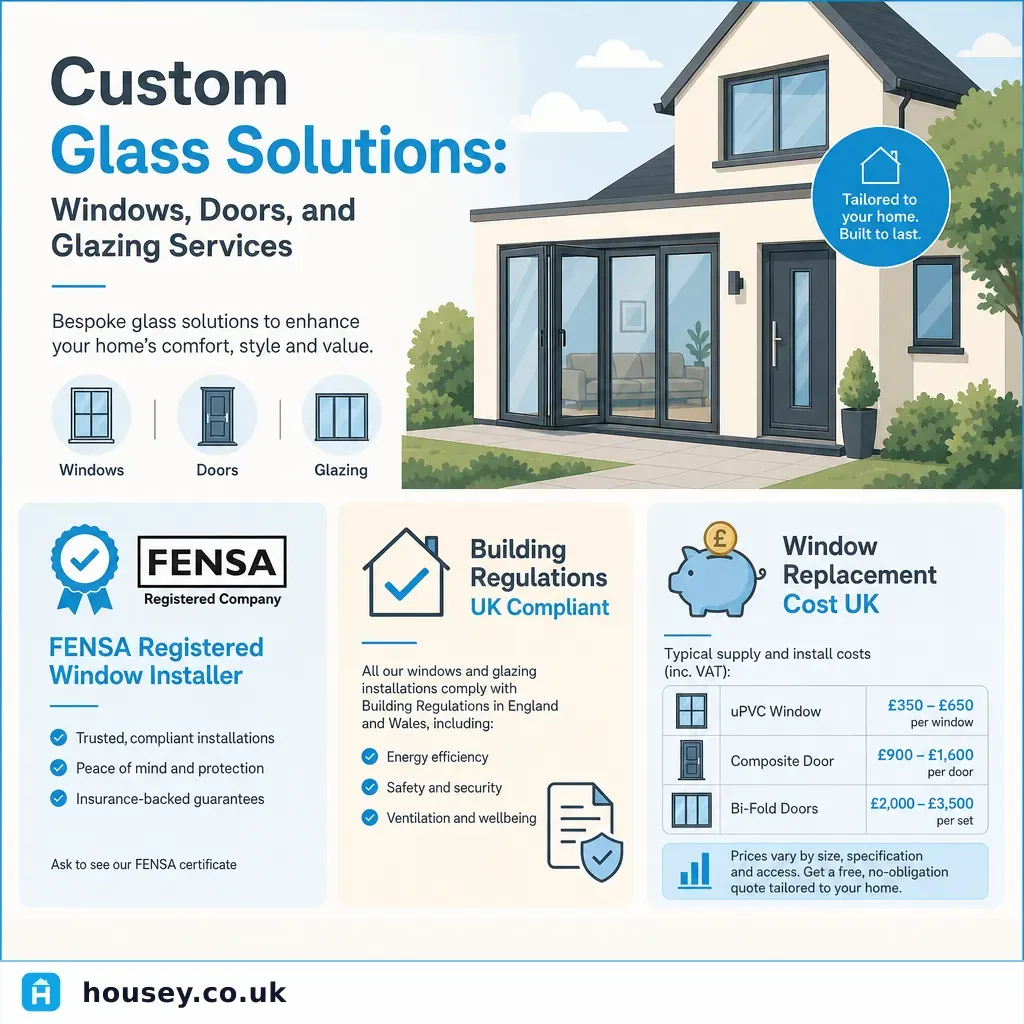
Custom Glass Solutions: Windows, Doors, and Glazing Services
Replacement windows and doors in England and Wales must comply with Building Regulations Approved Document L (2022), requiring a whole-window U-value of 1.
 Improvement & Build
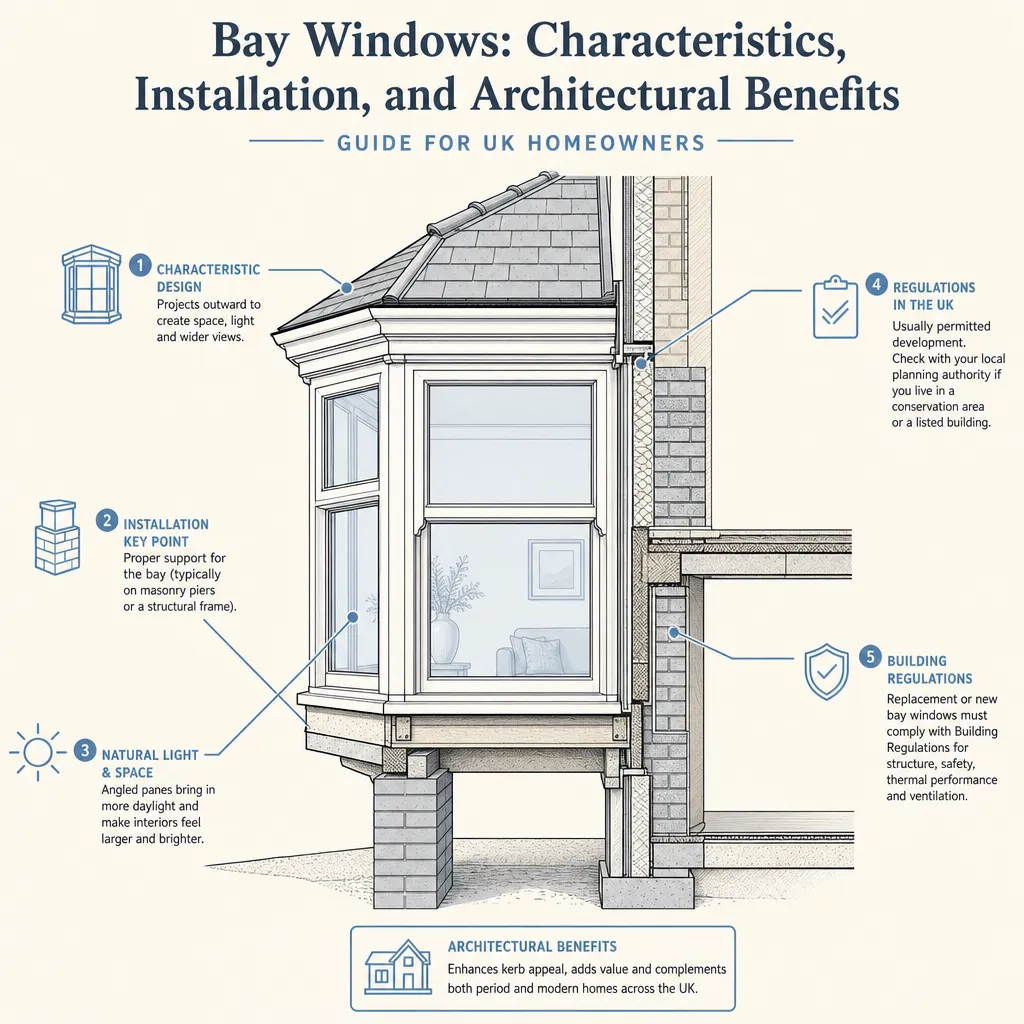
Bay Windows: Characteristics, Installation, and Architectural Benefits
Bay windows project outward from the main wall, adding floor space, natural light, and architectural character.
 Improvement & Build
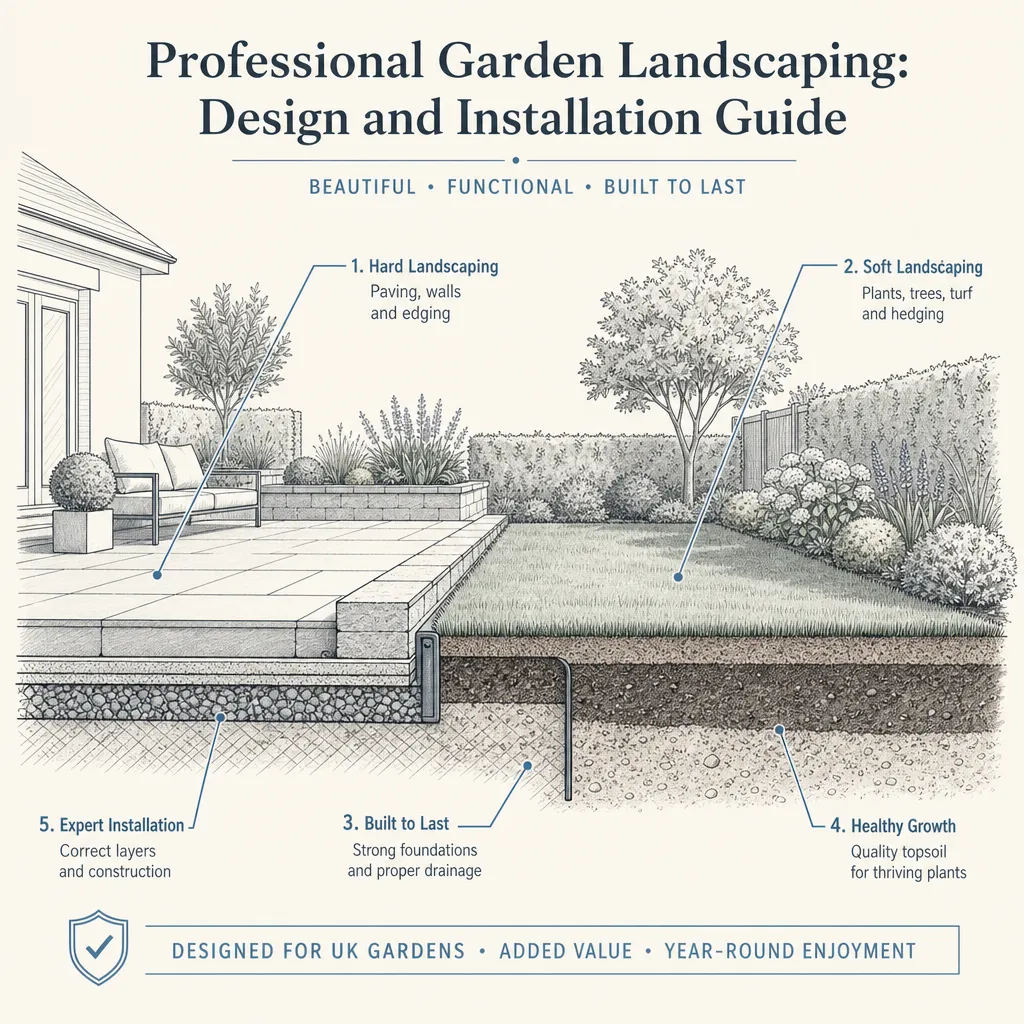
Professional Garden Landscaping: Design and Installation Guide
Professional garden landscaping covers hard elements (patios, walls, drainage) and soft elements (planting, lawn, trees).
 Improvement & Build
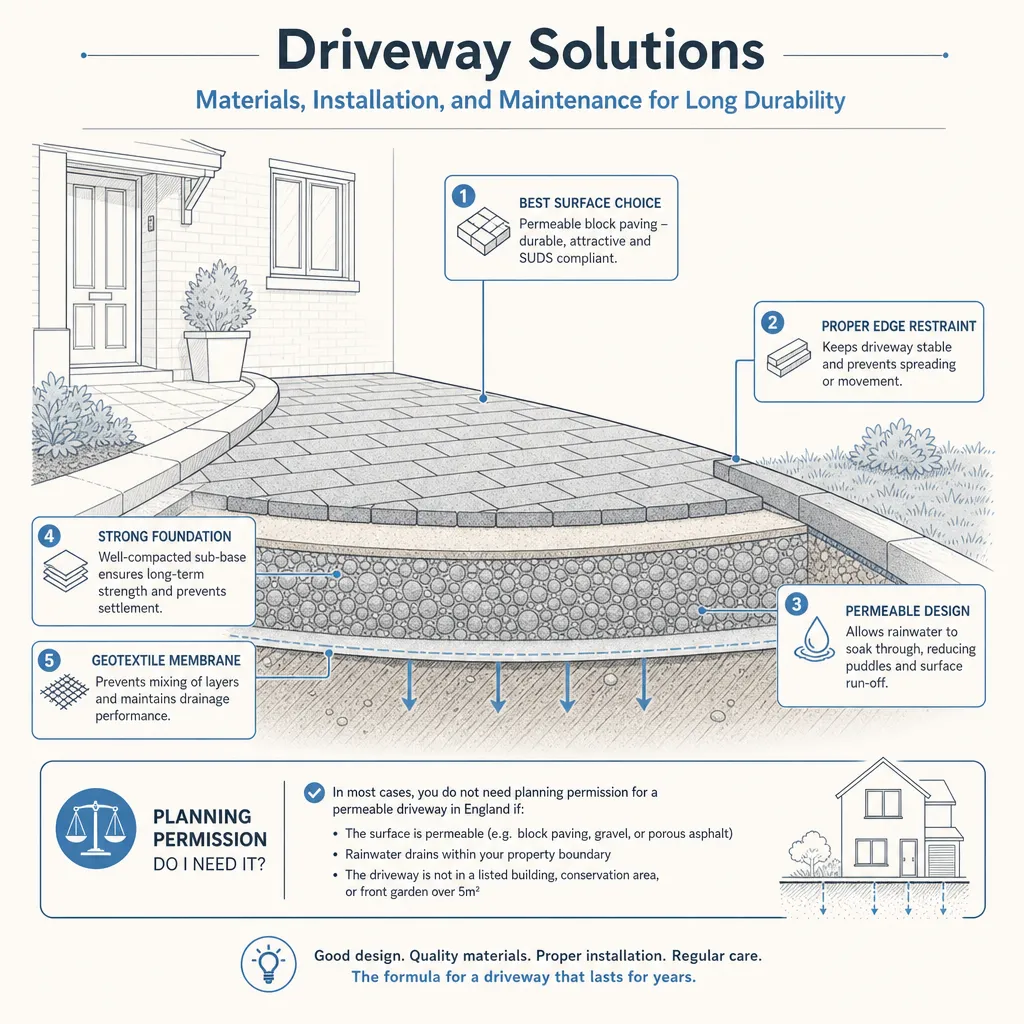
Driveway Solutions: Materials, Installation, and Maintenance for Long Durability
In England, driveways over 5 square metres need planning permission unless they use a permeable surface or drain to a lawn or border.
 Improvement & Build
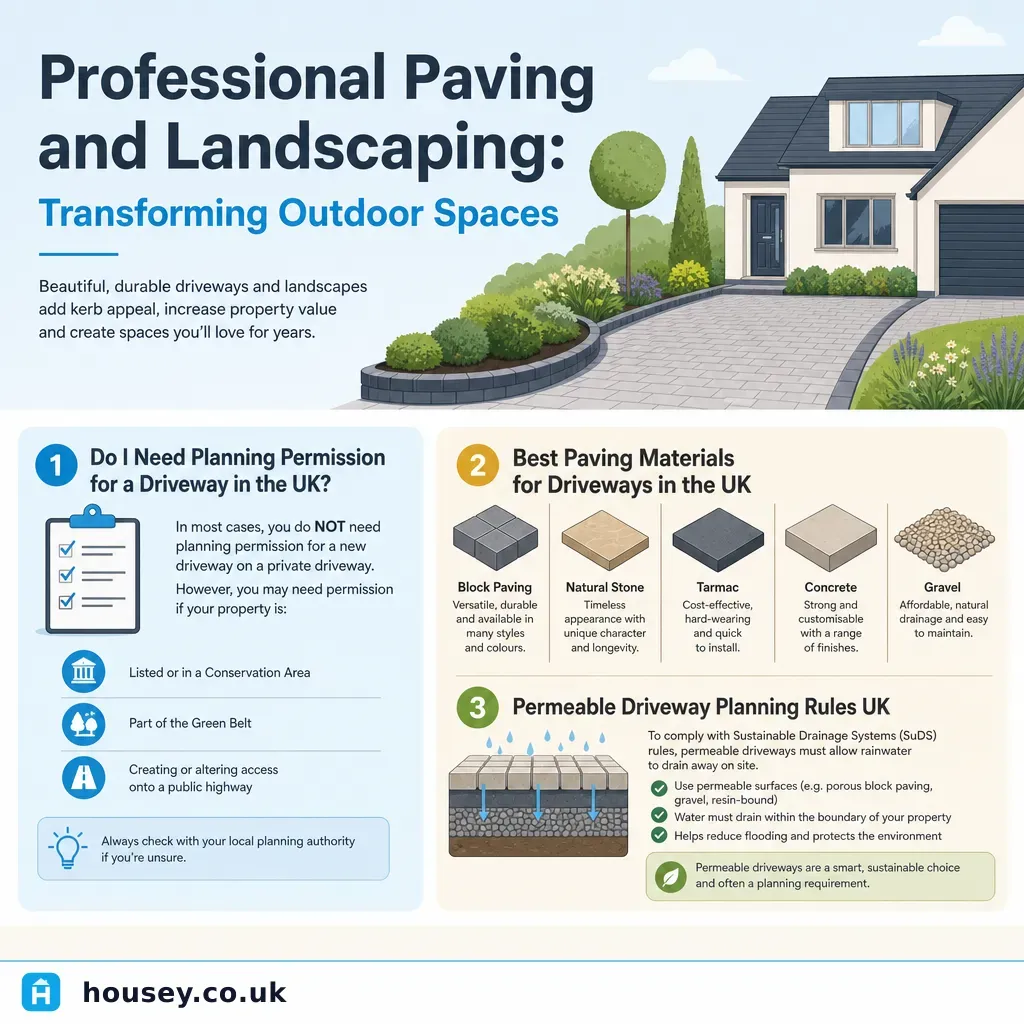
Professional Paving and Landscaping: Transforming Outdoor Spaces
Professional paving and landscaping can transform a garden or driveway, improving kerb appeal and adding usable outdoor space.