Split Roof Underlayment: Repair Approaches and Replacement Decisions
By Housey · Last reviewed 4th of May 2026
Split Roof Underlayment: Repair Approaches and Replacement Decisions
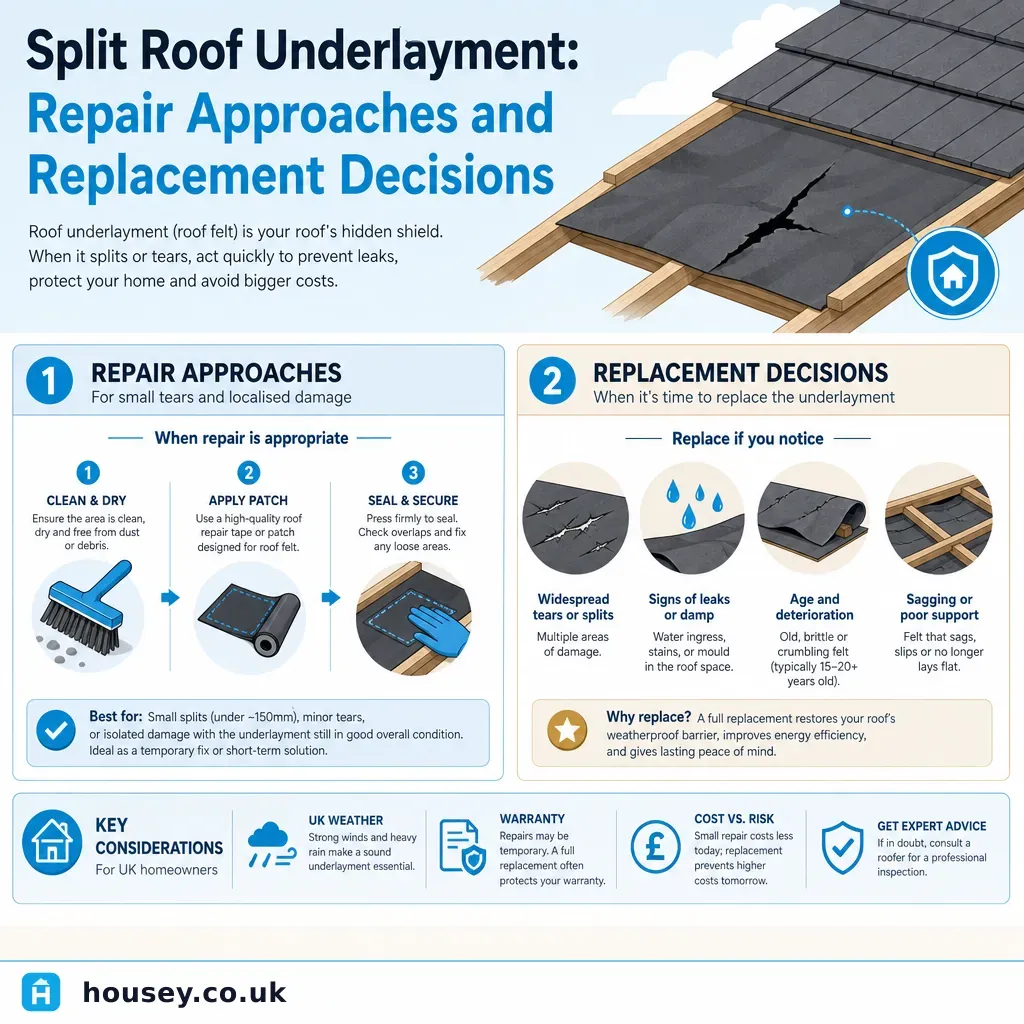
Roof underlayment — the layer beneath your tiles or slates — is the secondary line of defence keeping wind-driven rain out of your roof structure. UK homeowners most commonly discover a problem during a routine roof inspection, after a leak appears in the loft, or when a roofer lifts tiles for another job. Getting the repair-or-replace decision right can save thousands of pounds and prevent accelerating timber decay in the roof structure.
Key points
- Modern breathable roof membranes, classified to BS EN 13859-1, replaced traditional bitumen-based felt in most new UK builds from the early 1990s; repair materials and techniques differ significantly between the two types.
- Split or perished underlayment can allow water ingress even when overlying tiles appear intact from the ground or street level.
- Approved Document C of the Building Regulations requires roofs to resist weather and moisture; a failed underlay causing damp internally may be a compliance issue on newer properties.
- Patching isolated splits is only appropriate where the surrounding membrane is still pliable and structurally sound; brittle or degraded felt across a wide area almost always warrants full replacement.
- All work involving lifting tiles on a pitched roof above 2m height should be carried out by a qualified roofer using appropriate access equipment — this is not a safe DIY task.
What is roof underlayment and why does it split?
Roof underlayment sits between the roof deck (rafters and battens) and the outer tiles or slates. Its primary job is to intercept any water that passes under the outer covering and direct it safely to the gutter, while also providing a secondary wind barrier that reduces draughts in the roof space.
Traditional bitumen felt (to BS 747) was standard in UK housing until the 1990s. It is impermeable to vapour, which can trap moisture in the roof space, and becomes brittle with age — often cracking or splitting after 20–40 years due to UV exposure, thermal movement, and general weathering.
Breathable (vapour-permeable) membranes (to BS EN 13859-1, low-resistance category) became common from the 1990s and are now the default for new installations. They allow water vapour to escape from the roof structure while resisting liquid water, and tend to be more durable than bitumen felt — though they can still split if physically damaged during maintenance or affected by prolonged UV exposure on exposed rooflines.
Common causes of splits include:
- Thermal expansion and contraction cycling over decades
- Foot traffic during roof maintenance or solar panel installation works
- Nail corrosion causing localised tearing around tile fixing points
- Ice damage in prolonged cold periods
- General end-of-life degradation in properties built before the 1990s
How to assess the extent of the damage
Not all underlayment splits are visible from the loft hatch. A careful check helps establish whether you are dealing with a contained problem or widespread failure before speaking to a contractor.
From inside the loft:
- Check for daylight visible through the roof structure — this indicates an open gap rather than a minor split in the membrane.
- Look for water staining or wet patches on rafters, battens, or insulation directly below tile joints.
- Note whether staining is concentrated in one area or spread across several slopes. Concentrated damage often points to a localised split; widespread staining suggests general deterioration across the membrane.
From a professional inspection:
A professional roof survey by a qualified roofer will typically include lifting sample tiles to inspect underlay condition, checking batten fixings, and assessing the overall state of the outer covering. This gives you an independent written condition report, which is also useful when comparing contractor quotes for any works.
Repair or replace? A decision framework
Use this framework to guide the conversation with a roofer before committing to any scope of works:
- Choose targeted repair if: the split is isolated (one or two discrete areas), the surrounding membrane is still pliable and intact, the property is less than 30 years old, and the outer tiles have a long remaining service life.
- Choose partial or full re-membraneing if: the membrane is brittle or crumbling across multiple areas, the property is 30-plus years old and the felt has never been replaced, there is evidence of widespread moisture ingress to timbers, or tiles are already being stripped for another reason.
- Consult a roofer immediately if: you can see daylight through the roof deck, there is active water dripping into the loft during rain, or timbers appear saturated or show early signs of rot.
- Check your building warranties or insurance if the property is relatively new — underlayment failures on newer builds may fall under latent defects insurance such as NHBC Buildmark cover, which could alter the appropriate course of action.
Repair options for isolated splits
Where a professional confirms the rest of the membrane is sound, localised repairs typically involve one of the following approaches:
- Flashing or seam tape patches — self-adhesive butyl or vapour-permeable tape applied over and around the split. Suitable for modern breathable membranes.
- Bitumen-compatible patching felt — used on older bitumen-felt roofs where the surrounding material is still flexible enough to bond correctly.
- Batten-and-patch method — a small section of felt is cut out and a new piece is overlapped and secured to the existing battens, maintaining the drainage plane and avoiding pooling.
Repair patches are not a long-term solution if the surrounding material is nearing the end of its service life. A roofer should make this assessment before any patch work is agreed.
Repair vs. replacement: a comparison
Factor | Targeted repair | Full or partial replacement |
|---|---|---|
Best for | Isolated split, membrane otherwise sound | Widespread degradation, brittle or crumbling felt |
Typical scenario | Nail puncture on a 15-year-old breathable membrane | 1970s bitumen felt with multiple cracks across several slopes |
Cost indication | Lower upfront cost | Higher upfront but resets underlayment lifespan |
Disruption | Minimal tile lifting required | Substantial — full tile strip usually required |
Long-term risk if deferred | Low, if damage is genuinely contained | High — moisture damage to timbers and insulation accelerates |
Building Regulations | Unlikely to trigger formal compliance review | Full replacement on a notifiable project may require building control notification |
Indicative UK costs, last reviewed 2026-05-04. Obtain written quotes from at least two qualified roofers before committing to any scope of works.
Red flags: signs the problem is more serious
The following signs suggest the underlayment failure is part of a wider structural or moisture issue that warrants urgent professional assessment rather than a simple patch:
- Visible sagging or deformation of the roof deck between rafters
- Wet or soft timbers, or visible mould growth on rafters and ceiling joists
- Tiles shifting or lifting without obvious storm damage — this may indicate batten failure alongside the membrane problem
- A persistent musty smell in the loft even during dry weather
- Damp patches on upstairs ceilings that worsen or spread after rainfall
- Evidence of previous DIY repairs using incompatible materials, such as silicone sealant applied over a bitumen-felt split
If you spot any of these, arrange a professional inspection promptly rather than monitoring and waiting.
When to get professional help
All pitched-roof work above 2m should be carried out by a qualified roofer using appropriate access equipment. Seek professional advice if:
- You cannot determine the full extent of the split from the loft interior alone
- There are signs of timber decay or structural movement alongside the membrane failure
- You are planning a re-roofing project and need to understand whether building control notification applies to your works
- Your insurer requires a professional assessment report before settling a weather-damage claim
A professional roof survey provides a written condition report that is also useful documentation when comparing quotes from contractors.
How Housey can help
Housey can connect you with qualified roofers in your area who can inspect underlayment condition, advise on repair versus replacement, and provide written quotes for comparison. If you want an independent professional opinion before committing to works, you can also request a professional roof survey through Housey.
Frequently asked questions
Can I repair roof underlayment myself?
Working at height on a pitched roof above 2m is dangerous and should not be attempted as a DIY task. Even if you can see the split from inside the loft, identifying its full extent usually requires tiles to be lifted using appropriate scaffolding or access equipment. Always instruct a qualified roofer to carry out or supervise this work.
How long does roof underlayment last?
Traditional bitumen felt typically lasts 20 to 40 years before becoming brittle. Modern breathable membranes are generally more durable and may last 40 or more years under normal conditions. The roof pitch, exposure level, and frequency of maintenance access all influence how long the underlayment remains effective.
Does a split underlay always cause a leak?
Not immediately. A small split in a secondary membrane may not cause visible water ingress if overlying tiles are intact and well-lapped. However, it reduces the roof's protection margin considerably. If a tile is displaced during a storm, the underlayment is the only remaining barrier, so early inspection is worthwhile.
Does replacing roof underlayment need building control approval?
Re-roofing a dwelling is notifiable building work under Building Regulations in England. You should check with your local building control body before starting significant roof-stripping works. Straightforward like-for-like minor repairs are often exempt, but a complete re-roofing project usually requires building control notification and inspection.
What is the difference between roof felt and a breathable membrane?
Traditional roof felt (bitumen-based, to BS 747) is vapour-impermeable. Modern breathable membranes (to BS EN 13859-1) allow water vapour to pass through while resisting liquid water. This distinction matters for insulation: using an impermeable underlay alongside rafter insulation can cause condensation problems if the roof space is not correctly ventilated.
Sources and further reading
Useful next reads
 Improvement & Build
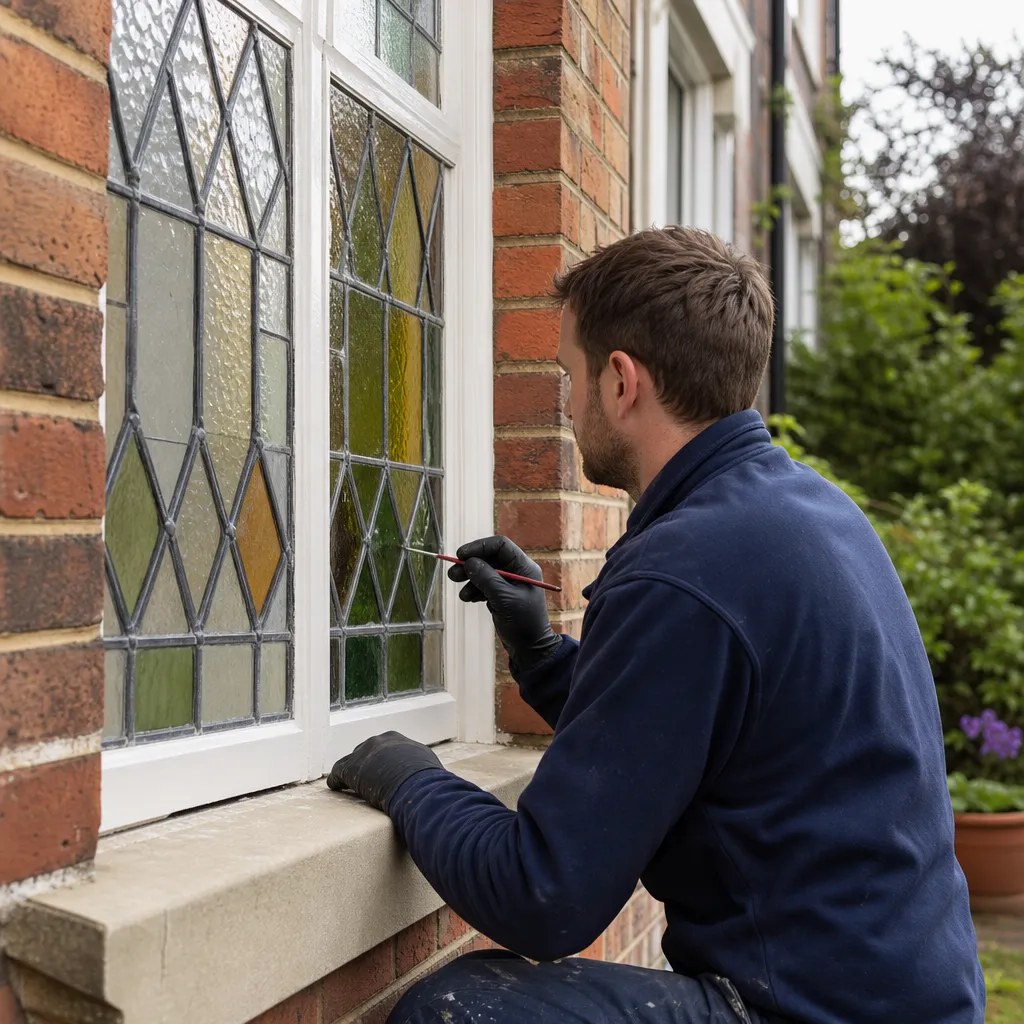
Sealing and Maintaining Historic Leaded Glass Windows: Preservation and Performance
Leaded glass windows are maintained using traditional linseed oil cement — not silicone or modern sealants, which prevent natural movement in the lead came.
 Improvement & Build
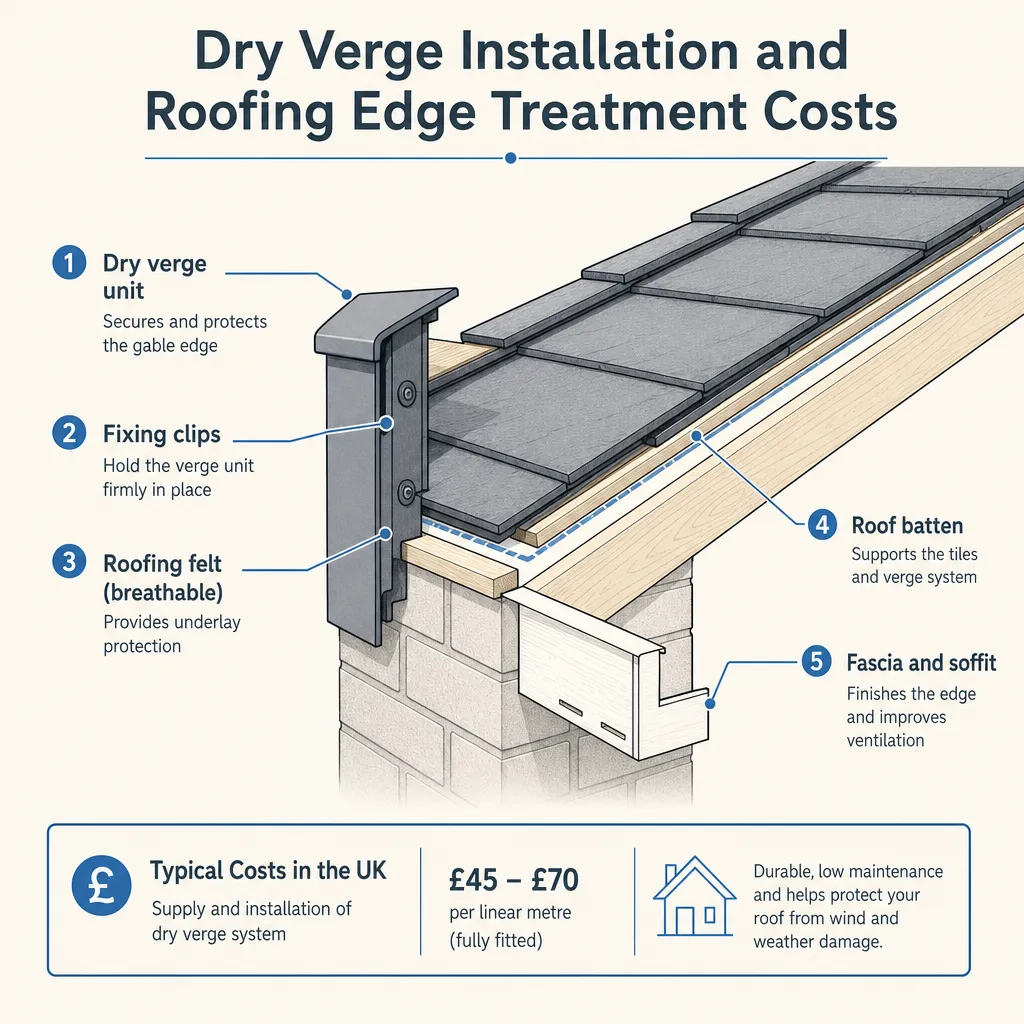
Dry Verge Installation and Roofing Edge Treatment Costs
A dry verge system replaces mortar bedding along the gable edge of a pitched roof with interlocking uPVC or aluminium units.
 Improvement & Build
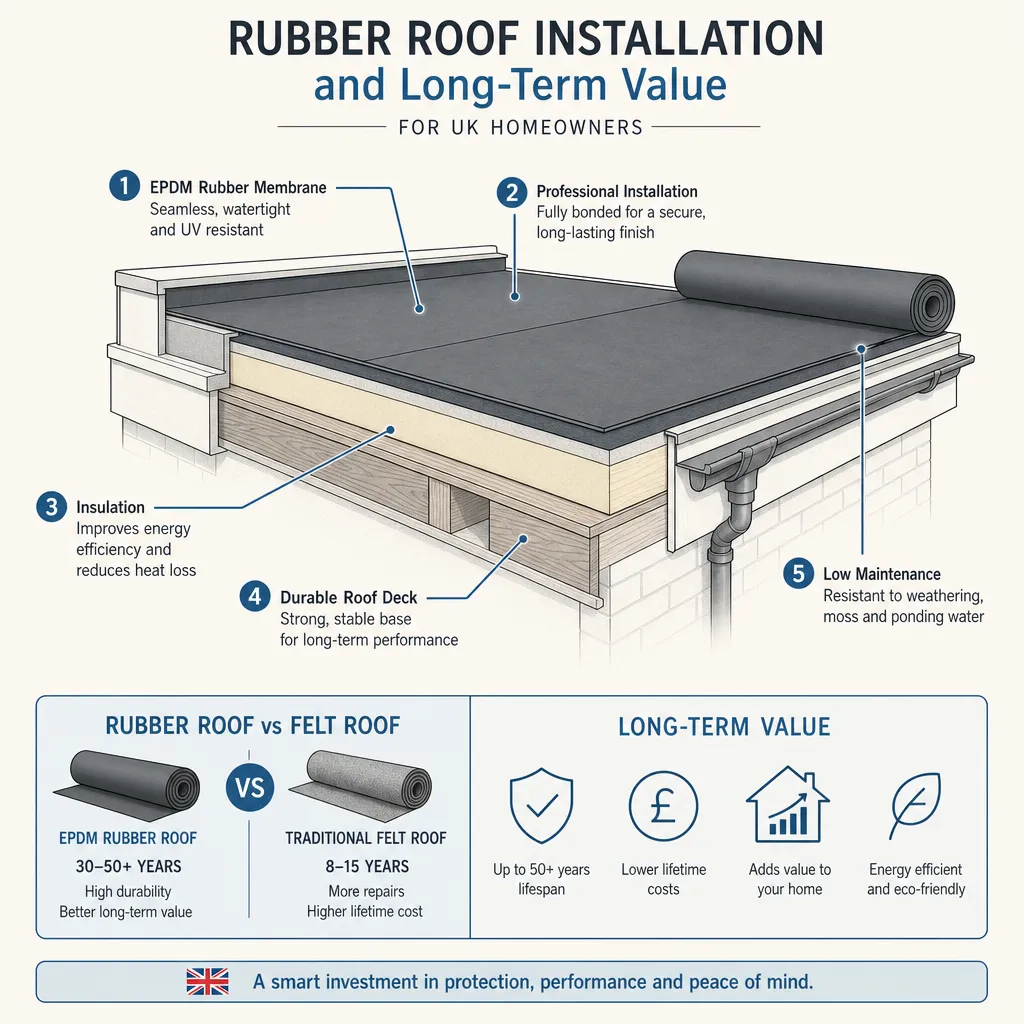
Rubber Roof Installation and Long-Term Value
EPDM rubber roofing is a synthetic membrane for flat and low-pitch roofs that typically lasts 30–50 years with minimal maintenance.
 Improvement & Build
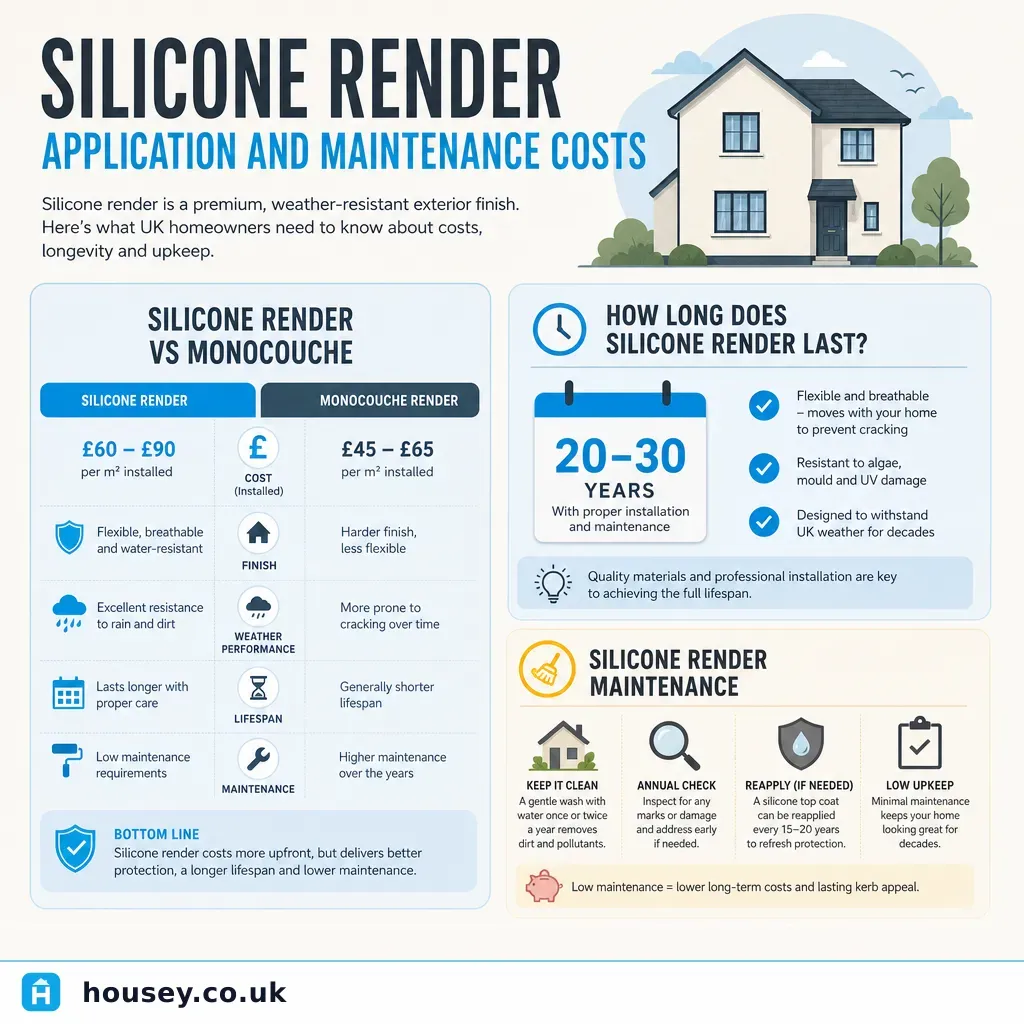
Silicone Render Application and Maintenance Costs
Silicone render typically costs £30–£70 per square metre installed across the UK, making a standard semi-detached house treatment around £3,000–£8,000.
 Improvement & Build
Storm Doors versus Screen Doors: Seasonal Purpose and Protection Compared
Storm doors are secondary outer doors that reduce draughts, rain ingress, and heat loss year-round, while screen doors are lightweight mesh panels that block insects during warm-weather ventilation.