Spray Foam Versus Fibreglass Insulation: Comparison and Costs
By Housey · Last reviewed 9th of May 2026
Spray Foam Versus Fibreglass Insulation: Comparison and Costs
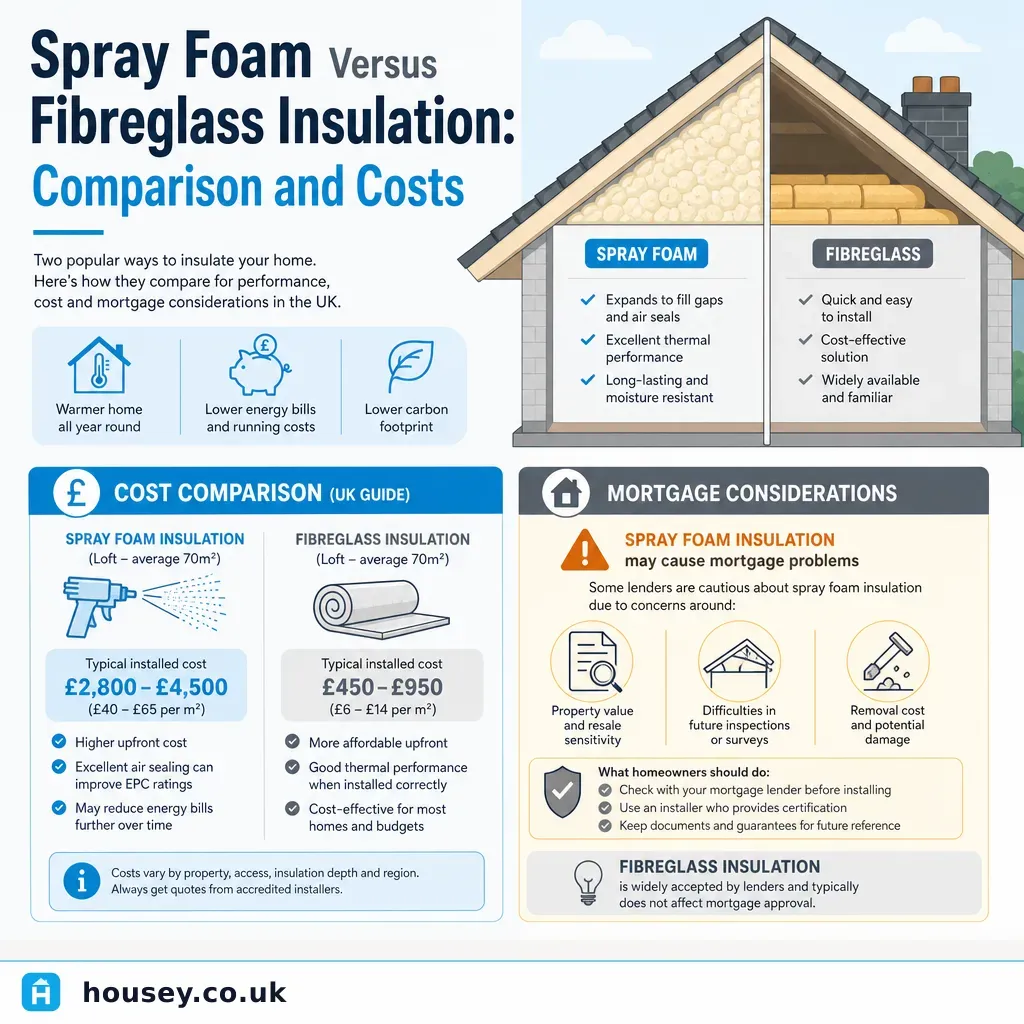
Choosing the right insulation material for a UK home involves more than comparing thermal performance on a data sheet. The decision affects your Energy Performance Certificate (EPC) rating, future mortgage applications, the long-term health of the building fabric, and whether the installation qualifies for government grant funding. For most homeowners, the practical choice comes down to fibreglass (glass wool) or spray polyurethane foam (SPF) — two products with substantially different properties, costs, and implications for the property.
Key points
- Fibreglass (glass wool) has a thermal conductivity of 0.032–0.044 W/mK; closed-cell spray foam achieves 0.022–0.028 W/mK — a meaningful difference, but one that rarely justifies the cost gap for a standard cold loft application.
- Closed-cell spray foam in roof spaces can affect mortgage eligibility — a concern raised by RICS and the Building Societies Association, with many high-street lenders restricting or declining loans on affected properties.
- Building Regulations Approved Document L (Conservation of Fuel and Power) requires loft insulation in new installations to achieve a U-value of 0.16 W/m²K or better.
- The ECO4 scheme (Energy Company Obligation, administered by Ofgem) can fund fibreglass-based loft and cavity wall insulation for eligible UK households; spray foam is generally not eligible for ECO4 funding.
- Grant-funded insulation work must be installed by a TrustMark-registered, PAS 2030-certified contractor to qualify.
What are these materials and how do they work?
Fibreglass insulation (also called glass wool or mineral wool) is made from recycled glass spun into fine fibres that trap air and slow the transfer of heat. It is sold in rolls, batts, and rigid slabs for loft floors, cavity walls, and internal wall applications. It has been the dominant UK domestic insulation product for decades and is well understood by surveyors, lenders, and building control officers.
Spray polyurethane foam (SPF) is a two-component liquid that expands rapidly on contact to form a continuous foam layer. Two types are relevant for residential use:
- Open-cell SPF: Softer, lower density, more vapour-permeable. Suited to some internal applications where air-sealing rather than vapour control is the priority.
- Closed-cell SPF: Dense, rigid, highly vapour-resistant, and significantly better performing thermally. Commonly applied to pitched roof slopes, flat roof decks, and hard-to-access voids.
Both eliminate thermal bridging more effectively than roll insulation laid between joists, but their behaviour over time — and their implications for property condition and value — differ substantially.
Comparison: spray foam versus fibreglass for UK homes
Factor | Fibreglass (glass wool) | Open-cell SPF | Closed-cell SPF |
|---|---|---|---|
Thermal conductivity (W/mK) | 0.032–0.044 | 0.035–0.040 | 0.022–0.028 |
Typical loft cost per m² | £5–£15 | £20–£40 | £30–£60 |
Total cost, semi-detached loft | £300–£600 | £1,000–£2,500 | £1,500–£3,500 |
Mortgage impact | None | Potential concern | Significant concern |
Removability | Easy | Moderate | Very difficult |
Moisture resistance | Low–moderate | Low | High |
Air-sealing performance | Poor | Moderate | Excellent |
ECO4 or grant-funded | Yes | Generally no | Generally no |
Expected lifespan | 25–40 years | 20–30 years | 30–50+ years |
Suitable for DIY installation | Yes (cold loft) | No | No |
Indicative UK costs, last reviewed 2026-05-09. Actual costs vary by region, property size, access, and installer. Always obtain at least three written quotes.
Where each material works best
Fibreglass is generally preferred for:
- Cold loft floors laid between and over joists to 270mm total depth — the most common UK domestic application.
- Cavity wall insulation top-ups or full fills (blown mineral wool or expanded polystyrene beads are most common).
- Internal wall insulation using rigid mineral wool boards.
- Properties where future sale, remortgage, or letting is likely.
- Homes eligible for ECO4, the Great British Insulation Scheme (GBIS), or Local Authority Flex (LA Flex) funding.
Spray foam may be considered for:
- Warm roof or room-in-roof conversions requiring a continuous, vapour-resistant insulation layer on the rafter slope.
- Hard-to-access spaces where rolls cannot be installed uniformly or safely.
- Specific retrofit scenarios confirmed as appropriate by a PAS 2035-compliant Retrofit Coordinator.
- Commercial-to-residential conversions with non-standard roof construction.
The mortgage problem with spray foam
This is the most consequential practical consideration for most UK homeowners. The Building Societies Association has noted that closed-cell spray foam in roof spaces affects mortgageability, and many high-street lenders have policies that restrict or decline lending on properties where it has been applied to the roof structure.
RICS surveyors carrying out Level 2 and Level 3 Home Surveys are required to flag spray foam in their reports. The principal concerns are:
- Spray foam bonds to roof timbers and rafters, making removal extremely difficult without risking structural damage to the roof.
- It prevents visual inspection of the roof structure — rafters, sarking boards, and fixings — during a survey.
- Incorrectly specified products, particularly open-cell foam on cold roofs, can cause moisture accumulation in the roof void.
If you are buying a property with existing spray foam insulation, commission a specialist assessment before exchange of contracts. If you are considering installing spray foam, consult your mortgage lender and a RICS surveyor before any work is agreed.
Cost guide
Indicative UK costs, last reviewed 2026-05-09. Source: Energy Saving Trust guidance, CIGA, and installer market data. Always obtain at least three written quotes; costs vary considerably by region and property.
Installation type | Fibreglass | Spray foam (closed-cell) |
|---|---|---|
Cold loft floor — semi-detached (~50 m²) | £300–£600 | £1,500–£3,500 |
Cavity wall insulation — semi-detached | £400–£700 | Not typically used |
Flat or cold roof (per m²) | £15–£30 | £30–£60 |
Room-in-roof or warm roof (per m²) | £20–£45 | £35–£70 |
Grants through ECO4 may reduce or eliminate the cost of fibreglass loft and cavity wall insulation for eligible households. Check eligibility through the Energy Saving Trust website or directly with your energy supplier.
Homeowner checklist: before you choose
When to get professional help
Insulation is often a straightforward decision for standard cavity or accessible cold loft applications in post-1920s homes. Seek professional advice before proceeding if:
- Your property has unusual construction: solid stone or brick walls, timber frame, thatched or unusual roof types, or listed building status.
- You are considering spray foam in any roof space or on any timber structure.
- Previous insulation is present and you are unsure of its type, age, or condition.
- You are applying for grant funding — a PAS 2035-compliant Retrofit Coordinator assessment is required for whole-house retrofit measures under most schemes.
- Your home has existing damp, condensation, or poor ventilation — these must be addressed before insulation is installed.
- You are unsure whether your walls are cavity construction (potentially suitable for fill) or solid (not suitable for standard cavity fill).
How Housey can help
Housey can connect you with vetted insulation installers across the UK and with professionals offering insulation assessments to help you choose the right product, specification, and installation method before committing to any work.
Frequently asked questions
Is spray foam insulation banned in the UK?
Spray foam is not banned in the UK, but closed-cell spray foam in domestic roof spaces causes significant mortgage problems with many high-street lenders. It remains a valid product in some specialist and commercial contexts when correctly specified, but it is generally not recommended for standard domestic loft applications without prior professional advice and lender confirmation.
Does loft insulation improve house value in the UK?
Good loft insulation typically improves your Energy Performance Certificate (EPC) rating, which can make a property more attractive to buyers and lenders. However, spray foam in loft spaces may have the opposite effect — deterring buyers and complicating remortgaging. Fibreglass insulation to the recommended 270mm depth is the most straightforward way to improve thermal performance without affecting saleability.
What depth of loft insulation do I need in the UK?
The Energy Saving Trust and Building Regulations Part L recommend a minimum depth of 270mm for cold loft floors using mineral wool. Many older UK homes have 100mm or less installed. Topping up to 270mm is one of the highest-value, lowest-cost energy improvements available to most UK homeowners, and may be grant-funded under ECO4 for eligible households.
Can I install fibreglass loft insulation myself?
Fibreglass rolls for accessible cold loft floors can be installed by a competent DIYer. Wear an FFP2 dust mask, gloves, and protective clothing — glass fibres are a skin and respiratory irritant. Note that insulation installed under grant schemes such as ECO4 must be fitted by a TrustMark-registered, PAS 2030-certified contractor to qualify for funding.
How long does loft insulation last?
Fibreglass (mineral wool) insulation typically performs well for 25–40 years if it remains dry and undisturbed. Closed-cell spray foam may last 30–50 years, but its permanence — and the difficulty of removing it without damaging roof timbers — is one of the key reasons it creates problems when a surveyor or lender needs to inspect the roof structure.
Sources and further reading
- Loft insulation guidance — Energy Saving Trust
- ECO4 scheme guidance — Ofgem
- Building Regulations Approved Document L: conservation of fuel and power — GOV.UK
- PAS 2035: retrofitting dwellings for improved energy efficiency — BSI Group
- Cavity insulation guarantee information — Cavity Insulation Guarantee Agency (CIGA)
- Spray foam insulation and mortgage lending — Building Societies Association
Useful next reads
 Energy & Retrofit
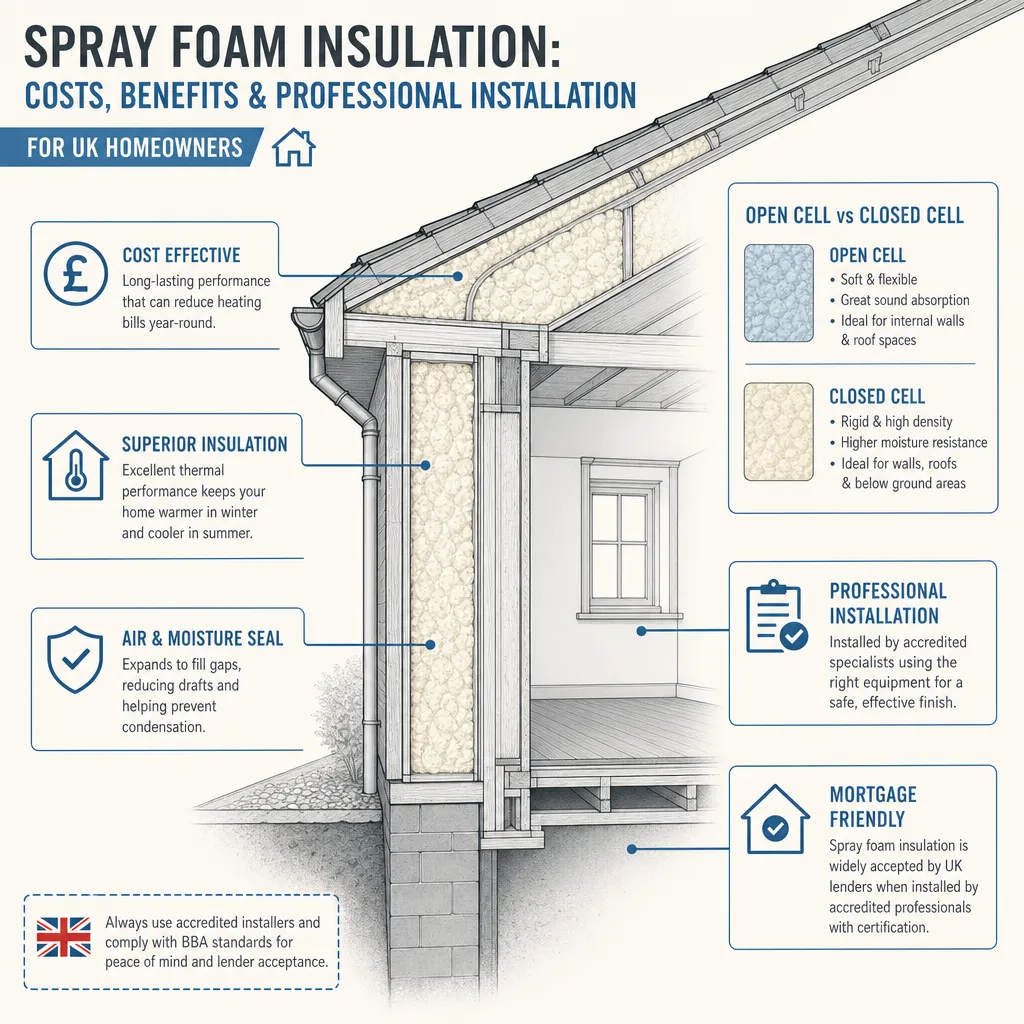
Spray foam insulation: costs, benefits and professional installation
Spray foam insulation costs between £15 and £60 per square metre installed in the UK, depending on whether open-cell or closed-cell foam is used.
 Energy & Retrofit
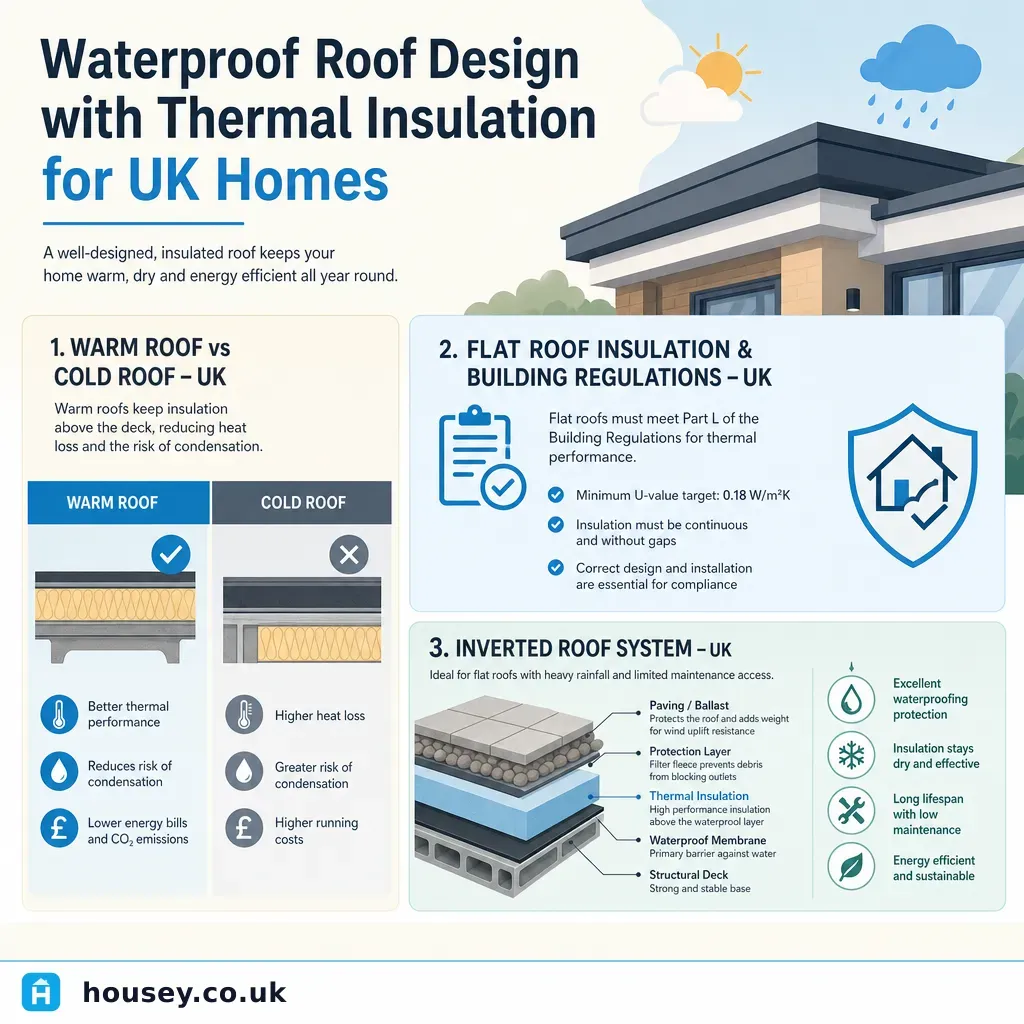
Waterproof Roof Design with Thermal Insulation for UK Homes
The two main approaches to combining waterproofing and thermal insulation in a roof are warm roof and cold roof construction.
 Energy & Retrofit
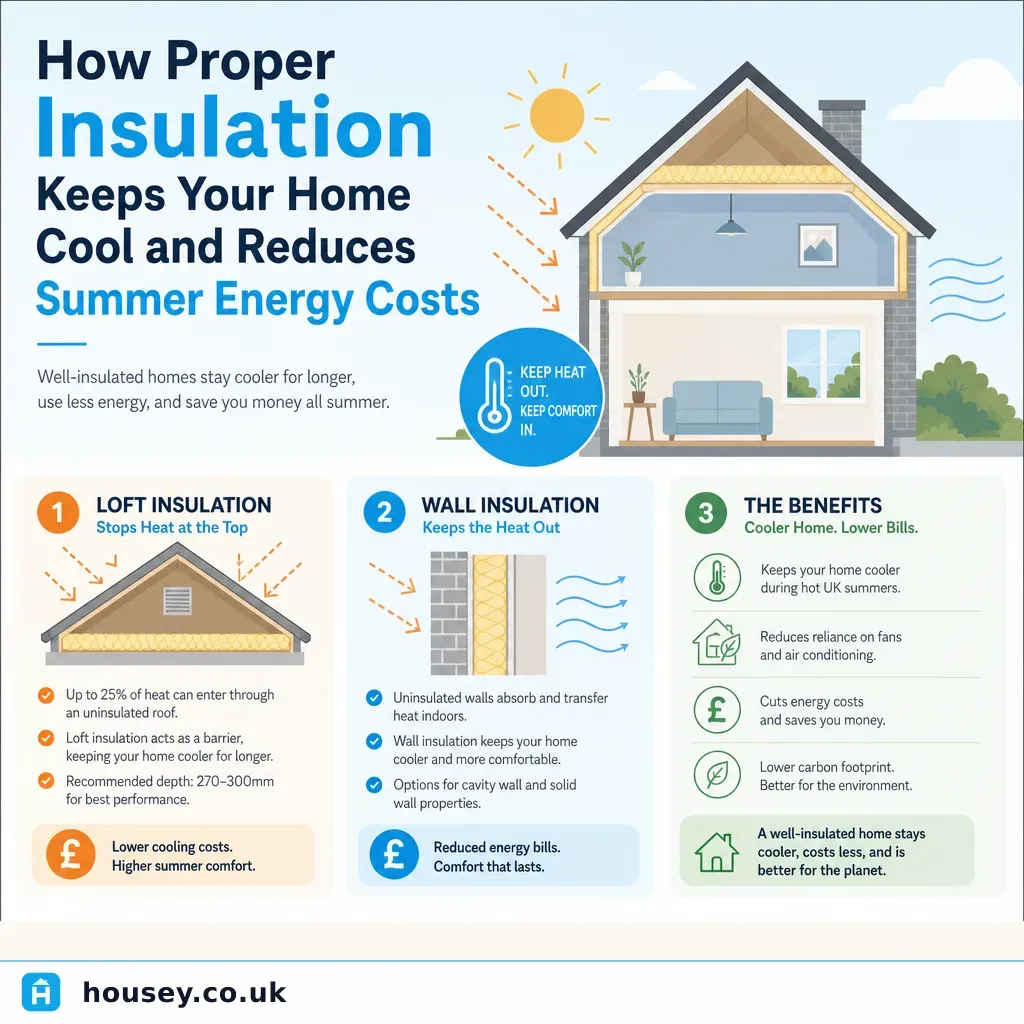
How Proper Insulation Keeps Your Home Cool and Reduces Summer Energy Costs
Insulation slows the flow of heat in both directions — in summer, it reduces how quickly outdoor heat enters your home.
 Energy & Retrofit
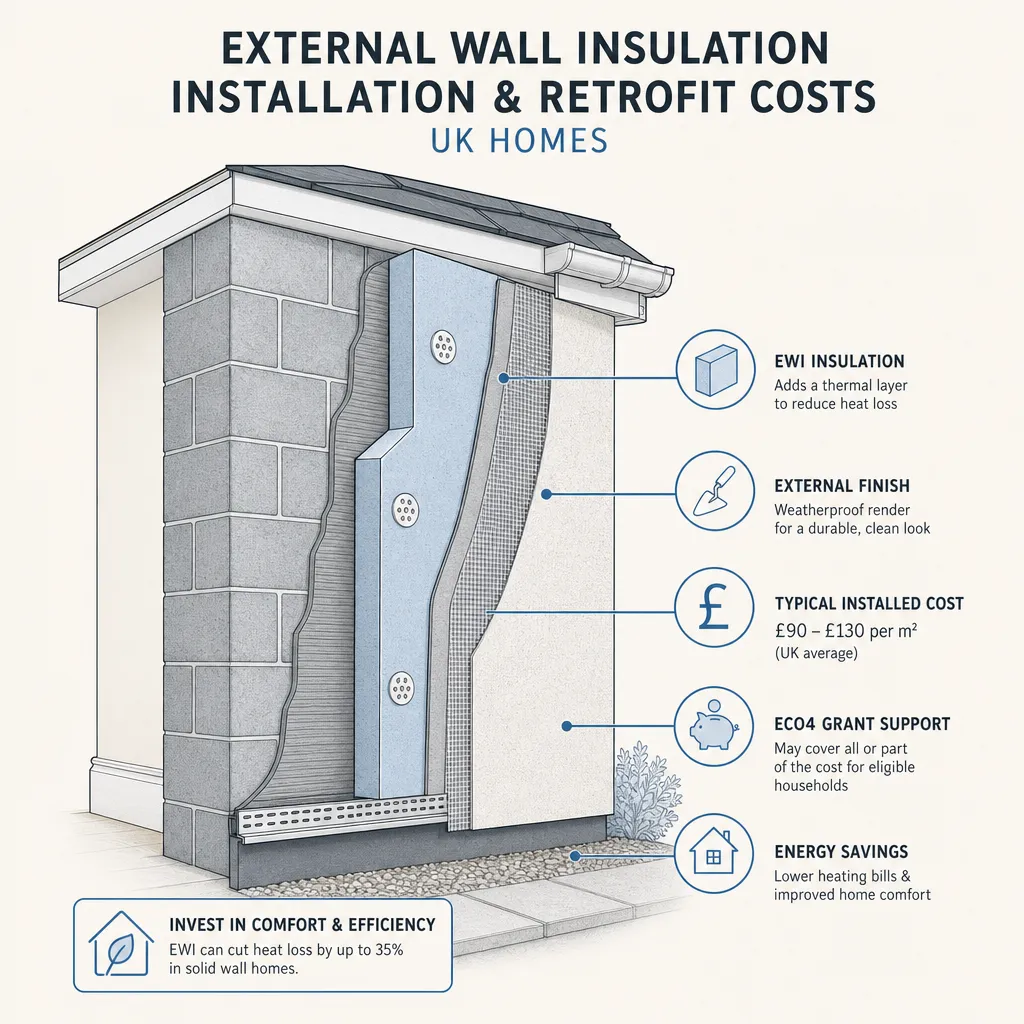
External Wall Insulation Installation and Retrofit Costs
External wall insulation (EWI) in the UK typically costs £8,000–£22,000 for a semi-detached home, depending on wall area, insulation type, and render finish.
 Energy & Retrofit
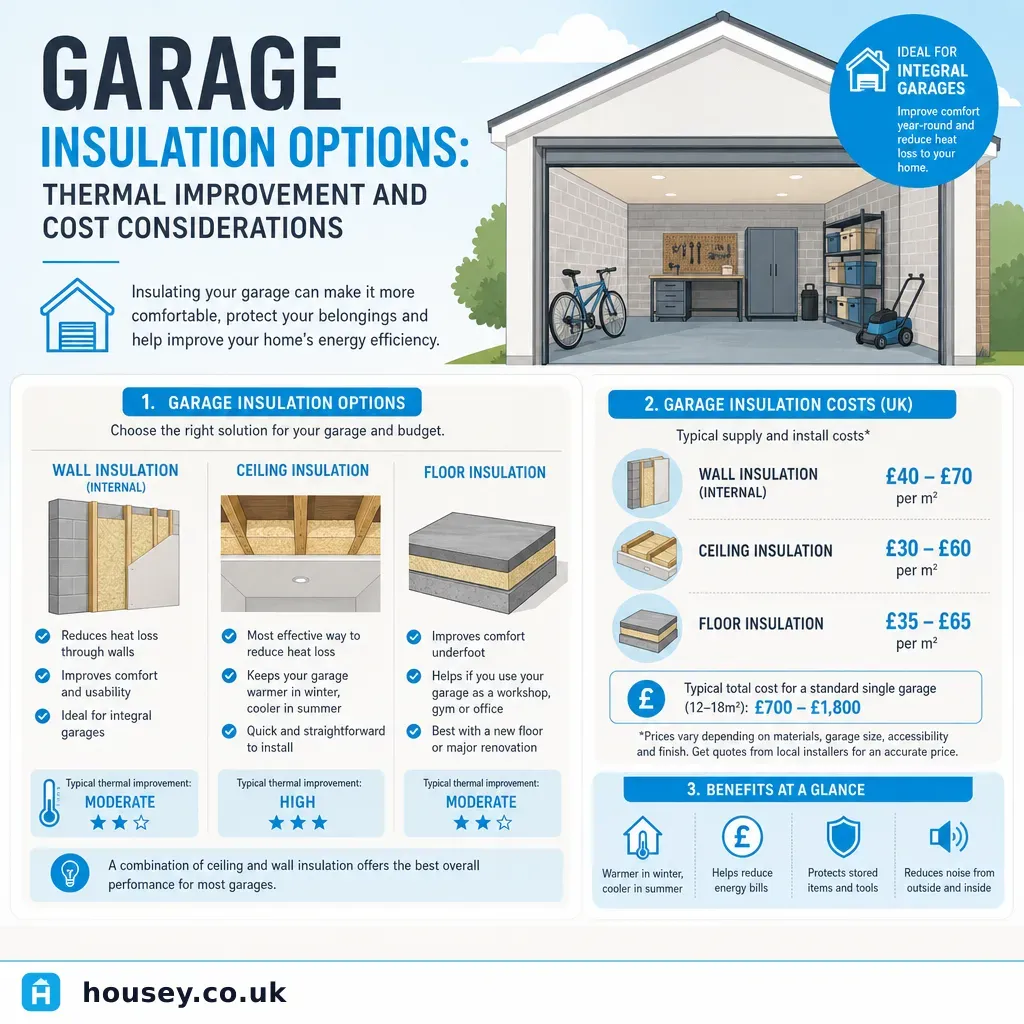
Garage Insulation Options: Thermal Improvement and Cost Considerations
Garage insulation options in the UK include mineral wool batts, rigid foam boards (PIR or EPS), and insulated garage doors.