Stacked stone fireplace transformation: renovation and design ideas
By Housey · Last reviewed 12th of May 2026
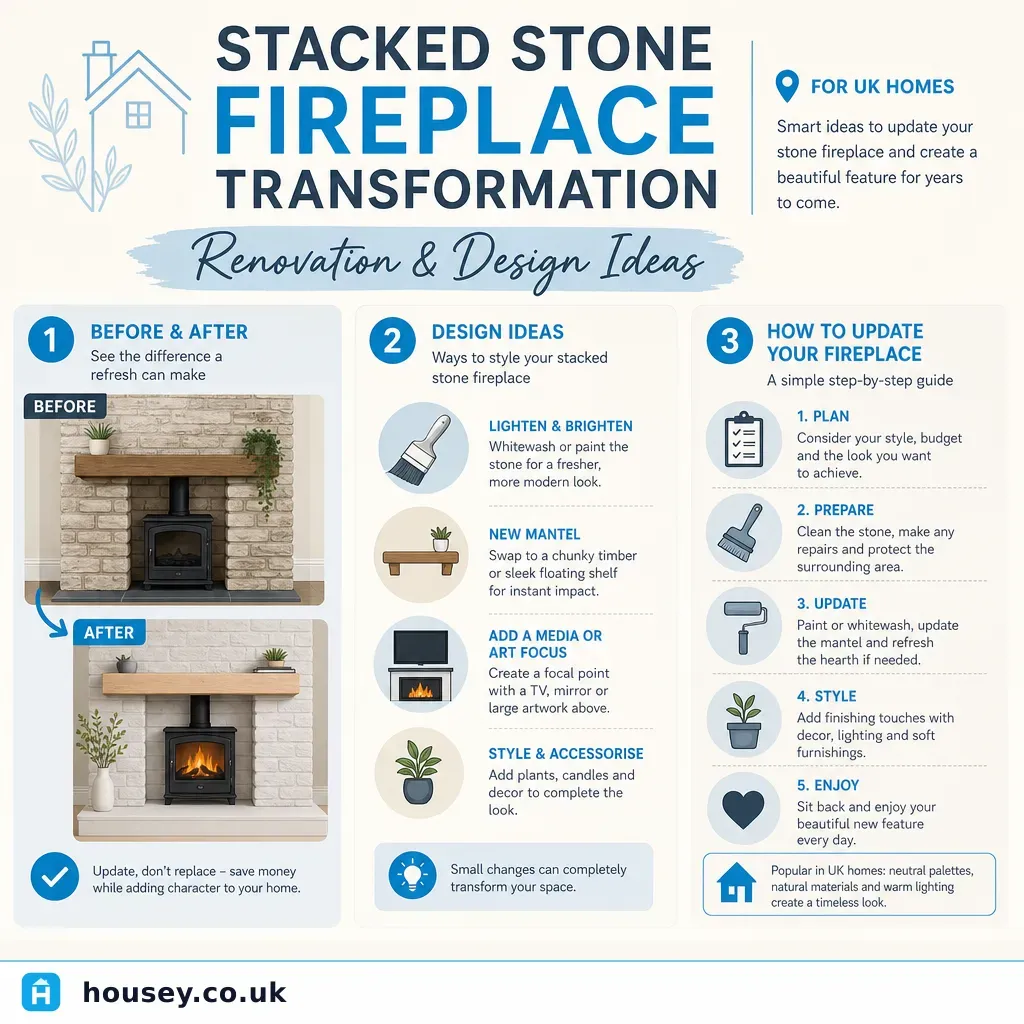
Stacked stone fireplace transformation: renovation and design ideas
A chimney breast is often the dominant architectural feature in a living room, hallway, or bedroom — yet many homeowners inherit a dated surround, plain plaster, or a bricked-up opening that does little for the space. Stone cladding has become one of the most popular ways to address this, and it suits an enormous range of UK properties: Victorian terraces, 1930s semis, contemporary new-builds, and rural cottages alike. The options available — and the regulations that govern them — vary considerably depending on how far you want to go.
Key points
- Natural stone (limestone, sandstone, slate, and quartzite) and reconstituted stone panel systems are the principal cladding options for UK homeowners updating a chimney breast.
- Building Regulations Approved Document J governs hearths, fireplace openings, and combustion air supply — any change that affects the fireplace opening or flue liner requires compliance.
- Listed building consent is required for any alteration — including cosmetic cladding — on a statutorily listed property; conservation area properties may also need prior notification from the local planning authority.
- HETAS-registered engineers must install or commission solid fuel and biomass appliances; cosmetic stone cladding around an existing appliance does not require HETAS registration, but the appliance's integrity should be confirmed first.
- Indicative UK installation costs range from approximately £500–£800 for reconstituted stone panel kits to £1,500–£3,500+ for hand-laid natural stone by a stonemason (Indicative UK costs, last reviewed 2026-05-12).
Natural stone vs reconstituted stone panels
Natural stone — limestone, slate, sandstone, quartzite — is quarried and cut to size. It is heavier, more variable in colour and texture, and typically more expensive than manufactured alternatives. Each piece is unique, which is central to the appeal, but it demands more skilled installation and a structural check if the chimney breast is already heavily loaded.
Reconstituted stone panels are manufactured from crushed stone aggregate set in concrete or resin. They are considerably lighter (often 5–15 kg/m² compared with 30–80 kg/m² for full-bed natural stone), easier to cut on-site, and available in consistent colourways. Panel systems designed for fireplace surrounds typically include corner pieces, hearth strips, and a compatible adhesive kit.
Option | Best for | Not ideal for | Skill level needed | Typical supply cost per m² |
|---|---|---|---|---|
Natural limestone | Period properties, authentic finish | Modern homes seeking uniformity | Stonemason or experienced builder | £80–£200+ |
Natural slate | Contemporary and industrial interiors | Properties with soft, warm palettes | Builder or tiler | £50–£150+ |
Reconstituted stone panels | DIY or quick professional fit | Listed buildings (check consent first) | Competent DIYer or builder | £30–£90 |
Stacked ledger panels | Log-burner surrounds, feature walls | Very confined chimney breasts | Builder or tiler | £40–£120 |
Indicative UK costs, last reviewed 2026-05-12. Prices vary by supplier, stone origin, and region.
What work is actually involved?
The scope depends on your starting point.
Cosmetic cladding of an existing plaster or brick chimney breast
This is the most straightforward scenario. The wall surface is prepared — cleaned, primed, or rendered to a flat base — stone is bonded using a suitable adhesive or mortar, and joints are pointed or left open depending on the panel system. A competent builder or experienced tiler can carry out this work without building control involvement.
Rebuilding or reconfiguring the surround
Altering the size or shape of the fireplace opening, repositioning the hearth, or adding a new lintel brings Building Regulations into scope. Approved Document J sets minimum hearth dimensions (typically 840 mm × 840 mm for solid fuel appliances), superimposed hearth thickness (at least 12 mm), and required clearances from combustible materials. A competent person familiar with fireplace construction should carry out this work.
Reopening a blocked or bricked-up fireplace
A bricked-up chimney breast may conceal a usable flue, a redundant void, or a structurally compromised opening. A chimney sweep or HETAS engineer should inspect the flue condition and ventilation before you proceed. If you then intend to install a solid fuel or biomass appliance, a HETAS-registered installer is legally required.
Choosing a stone style to suit your property
Stone style should reflect the property's era and interior palette.
- Victorian or Edwardian terrace: Limestone, Bath stone-effect reconstituted panels, or dark riven slate sit comfortably alongside period cornicing and dado rails.
- 1930s semi-detached: Warm sandstone tones complement the orange-brick palette typical of this era; avoid very pale or very dark stones that compete with the brickwork.
- Post-war or 1970s home: Ledger-style stacked panels with a horizontal grain suit the clean lines common in these properties.
- Contemporary or new-build: Smooth or lightly textured dark slate, quartz, or basalt creates a clean contrast against plain plastered walls.
Homeowner checklist before starting
When to get professional help
Most cosmetic stacked stone cladding is straightforward for a competent builder or tiler, but specialist input is essential when:
- The fireplace opening is being altered in size or position — Building Regulations Approved Document J and building control notification apply.
- The chimney breast shows signs of structural movement, damp penetration, or loose and bowed brickwork.
- You are reopening a previously blocked flue — a chimney sweep and HETAS inspection are needed before any appliance is commissioned.
- The property is listed or in a conservation area — consult a heritage consultant or your local planning authority before altering any building fabric.
- You intend to install or retain a wood-burning stove, multifuel stove, or solid fuel appliance — a HETAS-registered installer is a legal requirement.
How Housey can help
If your fireplace project forms part of a wider renovation — reconfiguring a chimney breast, opening up a living space, or creating a statement feature within an extension — our design-and-build firms and extension builders can help you plan and execute the work to specification. Use Housey to compare quotes from vetted local contractors with relevant fireplace and masonry experience.
Frequently asked questions
Do I need planning permission to clad a fireplace in stone in the UK?
In most cases, no. Cosmetic cladding of a chimney breast is permitted development for a standard house. However, listed buildings always require listed building consent, and properties in conservation areas may need prior approval. Check with your local planning authority if you are in any doubt before work begins.
Can I fit stacked stone panels myself?
Reconstituted stone panel systems are marketed as DIY-friendly, and many homeowners fit them on plaster or brick surfaces successfully. Any work affecting the fireplace opening, hearth, or an existing appliance should be left to a competent builder, as Building Regulations Approved Document J applies to those elements.
How long does a stone fireplace renovation take?
A cosmetic re-cladding of a chimney breast typically takes one to three days for a competent builder or tiler. More extensive work — rebuilding a surround, relaying a hearth, or reopening a blocked fireplace — may take three to seven days or more depending on complexity and access.
Will adding stone cladding to a fireplace affect my home insurance?
Cosmetic alterations rarely affect building insurance, but notify your insurer if you are reinstating a working fireplace or stove. Adding an active heat source changes the risk profile of the property, and failure to disclose material changes could affect a future claim.
Sources and further reading
- Building Regulations Approved Document J: Combustion Appliances and Fuel Storage Systems — GOV.UK
- HETAS: Competent Person Scheme for solid fuel and biomass appliances — HETAS
- Planning Portal: Listed buildings and conservation areas — Planning Portal
- Historic England: Making changes to your home — Historic England
Useful next reads
 Improvement & Build
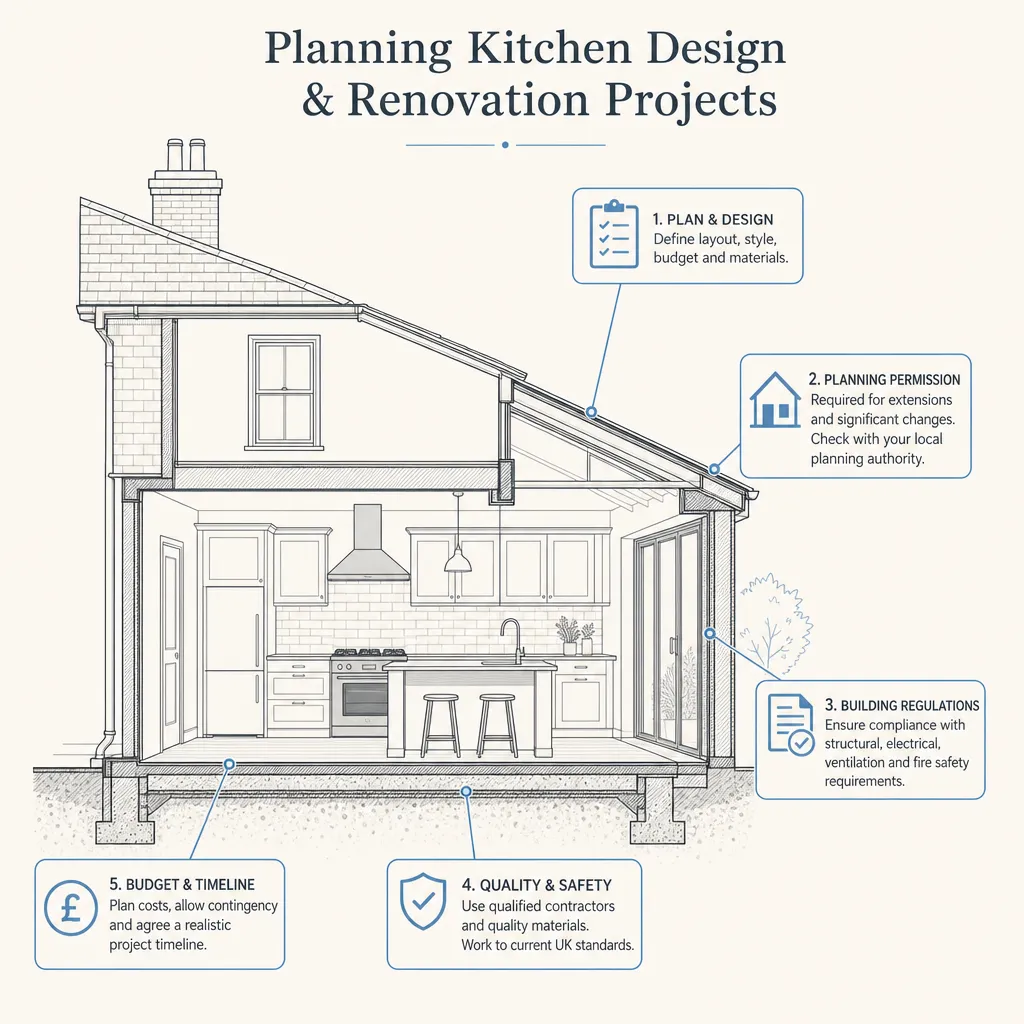
Planning kitchen design and renovation projects
Planning a kitchen renovation in the UK typically involves choosing a layout, setting a budget, deciding which contractors you need, and understanding which regulations apply.
 Improvement & Build
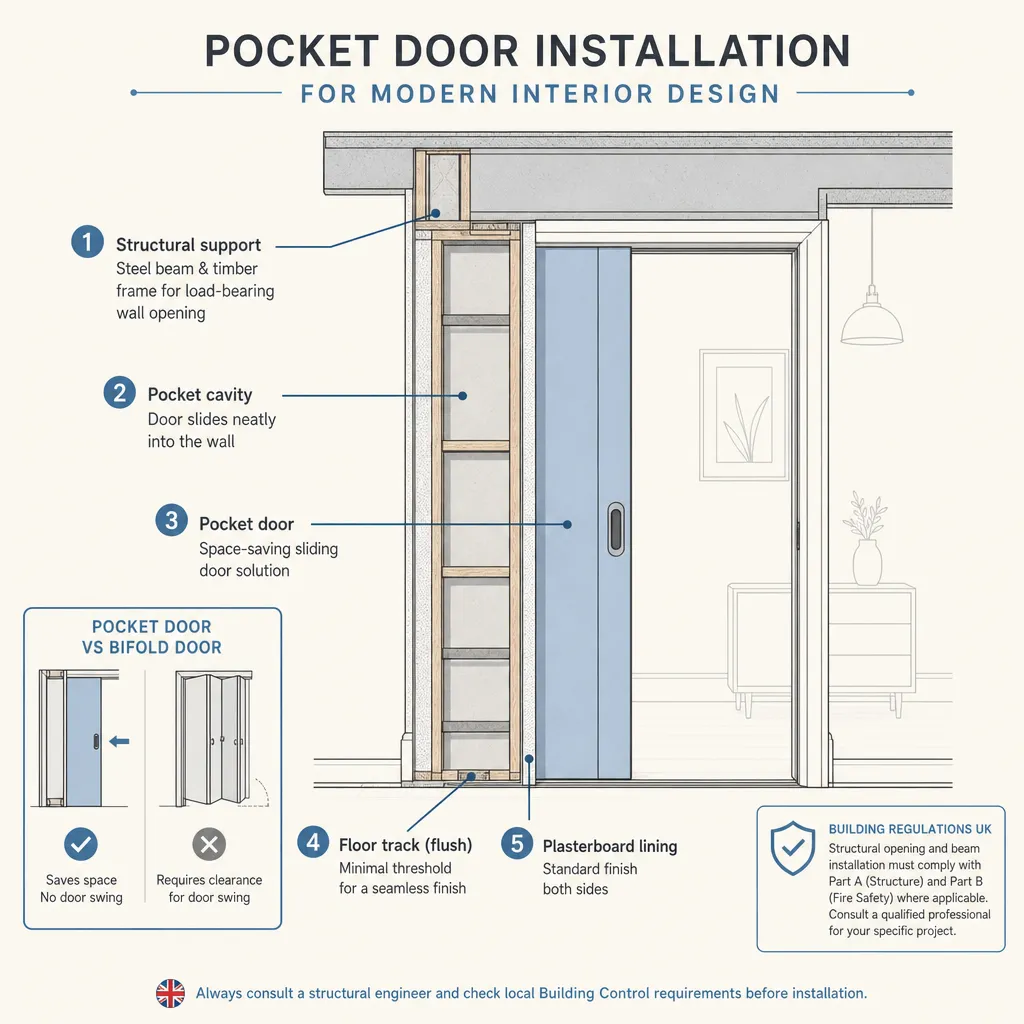
Pocket Door Installation for Modern Interior Design
A pocket door slides into a wall cavity on a top-hung track, saving the swing space of a standard hinged door.
 Improvement & Build
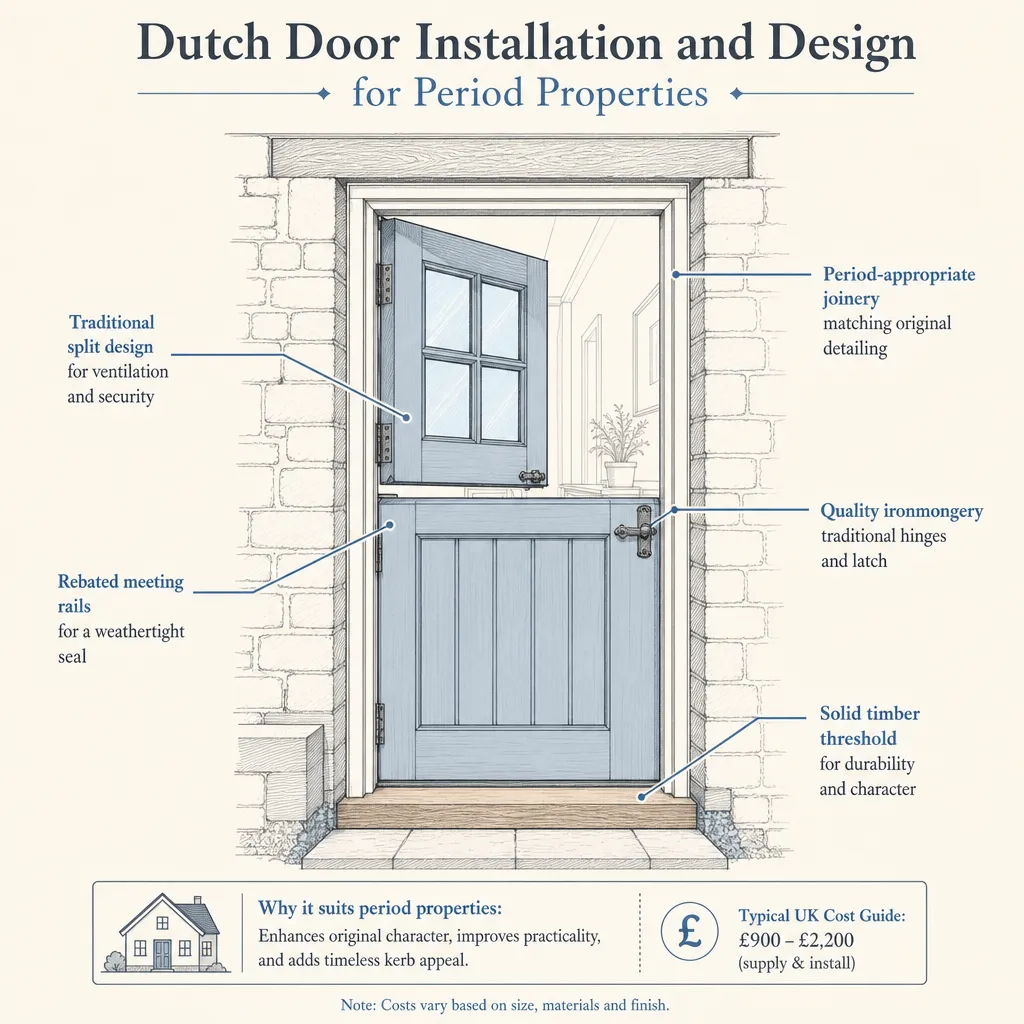
Dutch Door Installation and Design for Period Properties
A dutch door — also called a stable door — divides horizontally so the top and bottom halves open independently.
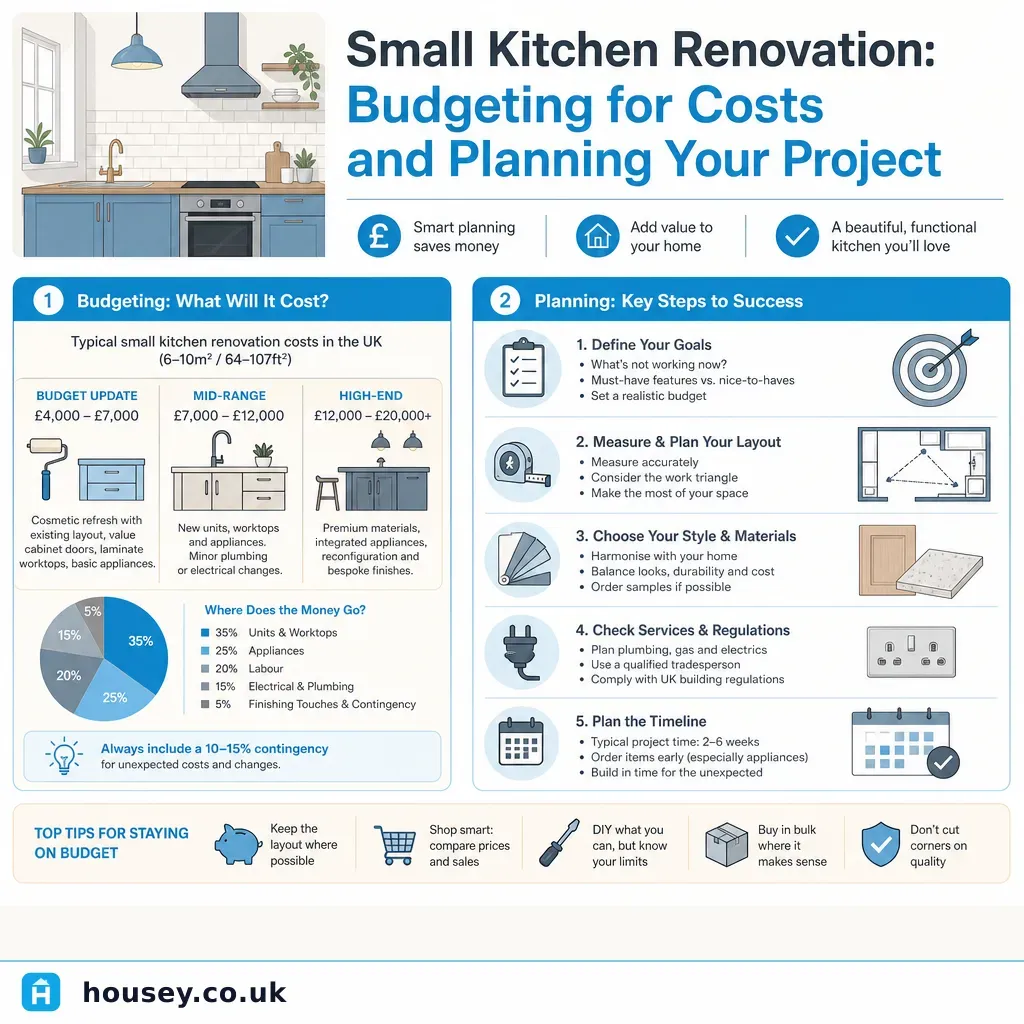 Improvement & Build
Small kitchen renovation: budgeting for costs and planning your project
A small kitchen renovation in the UK typically costs £5,000–£15,000 for a full refresh including new units, worktops, tiling, and appliances, though costs vary widely by specification, region, and whether structural changes or rewiring are involved.
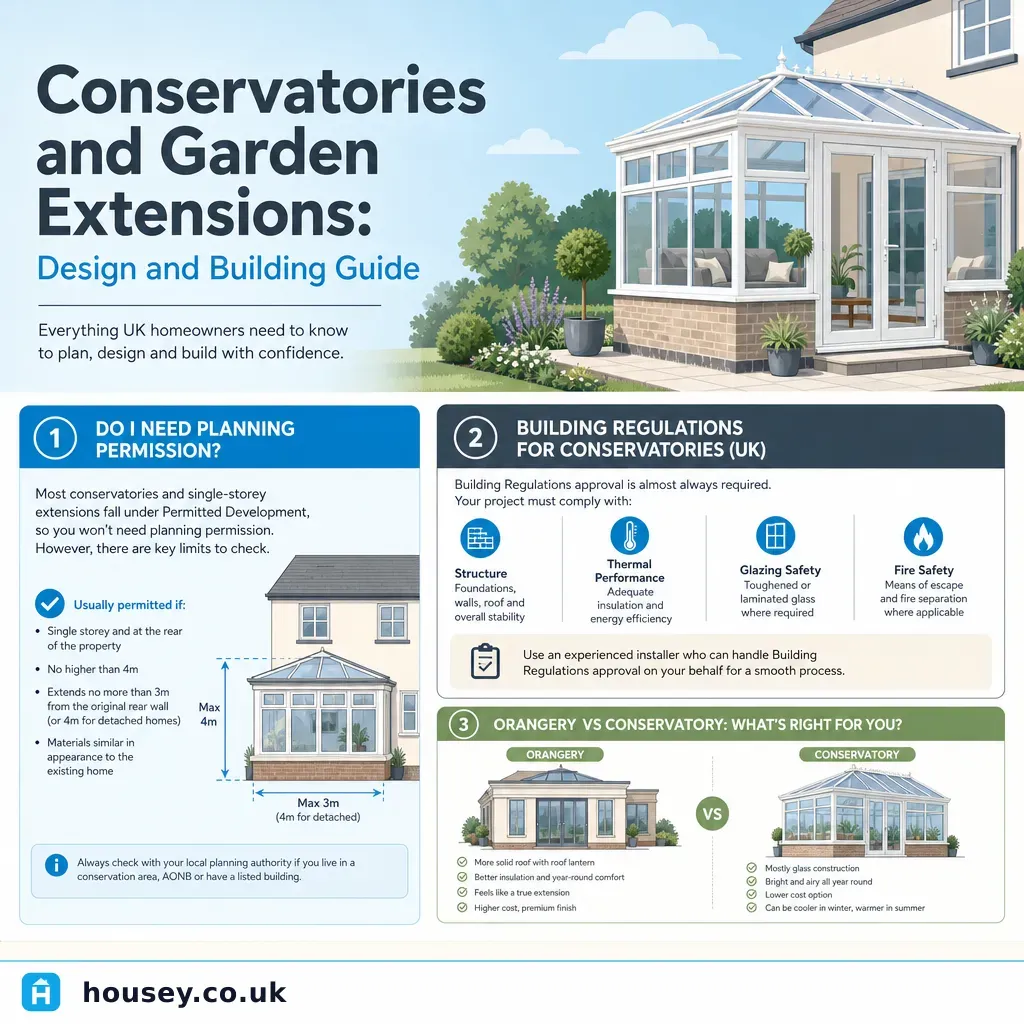 Improvement & Build
Conservatories and Garden Extensions: Design and Building Guide
Most conservatories qualify as permitted development in England if they are single-storey, within 50% of original curtilage, and meet dimensional limits.