Standard Window Sizes and Building Regulation Dimensions for UK Properties
By Housey · Last reviewed 1st of June 2026
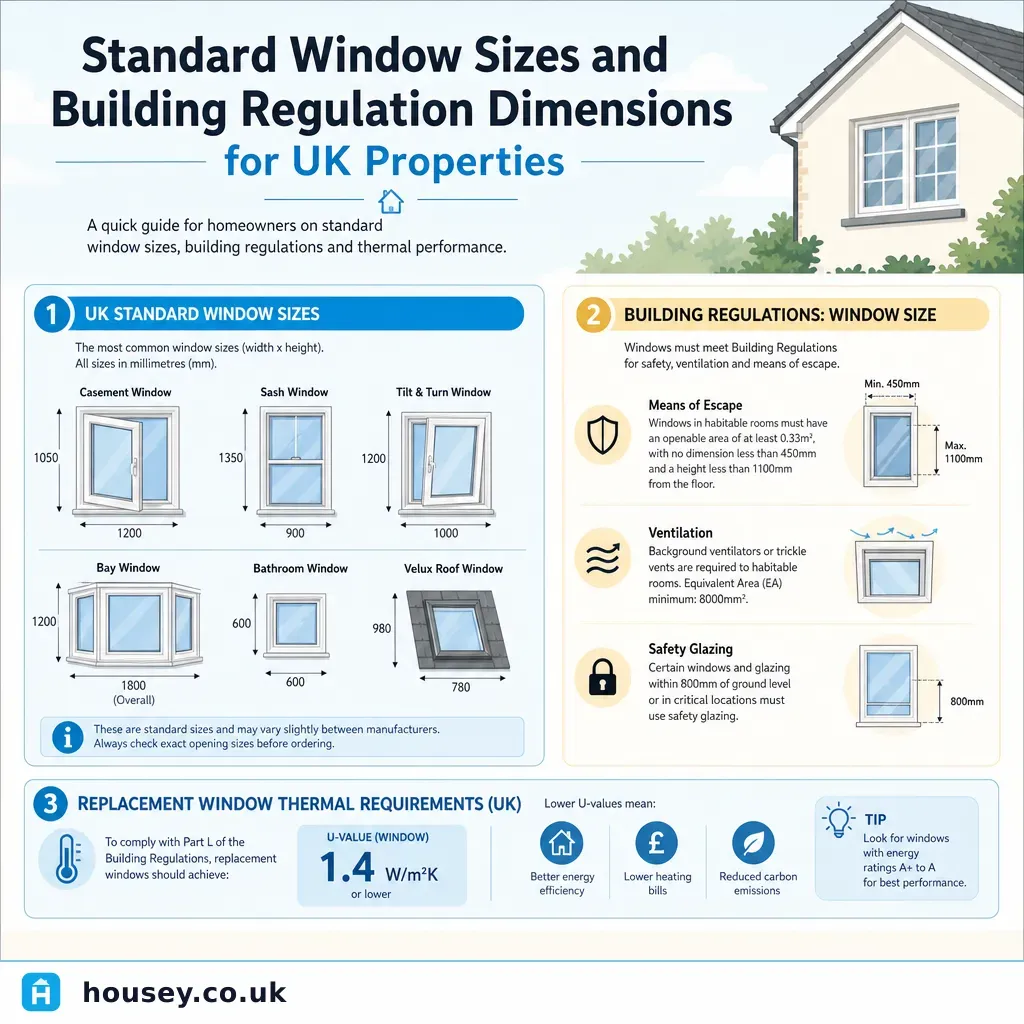
Standard Window Sizes and Building Regulation Dimensions for UK Properties
Window replacement is one of the most common home improvement projects in UK properties, yet the Building Regulations that govern it — covering thermal performance, ventilation, safety glazing, and means of escape — are frequently misunderstood or overlooked. Whether you are replacing existing frames like for like or planning to alter the size of an opening, understanding the relevant requirements before ordering helps avoid failed inspections, missing certificates, and complications at the point of sale.
Key points
- All replacement windows in England and Wales must comply with Building Regulations Parts L, F, and K — even for like-for-like replacements — covering thermal performance, ventilation, and safety glazing; FENSA or CERTASS registration allows the installer to self-certify compliance.
- Replacement windows must achieve a minimum whole-window U-value of 1.4 W/m²K under the 2022 edition of Approved Document L.
- Habitable rooms require a background ventilator of at least 5,000 mm² equivalent area (trickle vent) under Approved Document F; this applies even when replacing a window of identical size in the same opening.
- Safety glazing to BS EN 12150 or equivalent is required in all critical locations under Approved Document K: below 800mm from floor level, or within 300mm of a door frame up to 1500mm from the floor.
- First-floor habitable rooms require a means of escape window under Approved Document B with a clear opening of at least 0.33 m², minimum 450mm in both height and width, with the bottom of the opening no more than 1100mm above the floor.
Standard UK window dimensions
Manufactured window frames broadly follow a 150mm modular grid, though frame sizes will be somewhat smaller than the structural opening to allow for installation tolerances, sill bearing, and lintel clearance — typically 10–15mm per side. The measurements below refer to the structural (masonry) opening; confirm precise frame dimensions with your supplier before ordering.
Opening type | Common widths (mm) | Common heights (mm) | Typical use |
|---|---|---|---|
Small casement | 600–900 | 450–900 | Bathroom, utility, secondary bedroom |
Standard casement | 900–1200 | 900–1200 | Bedroom, dining room, study |
Wide casement / 2-light | 1200–1800 | 900–1200 | Living room, main bedroom |
Sliding sash (traditional) | 600–900 | 1200–1500 | Pre-war terrace and semi-detached |
Tilt-and-turn | 600–1200 | 600–1200 | Flat, apartment, restricted external access |
French casement (no centre post) | 1200–1800 | 1500–2100 | Living room opening to garden or terrace |
Bay (central sash) | 900–1500 | 1050–1500 | Victorian and Edwardian properties |
Measurements are structural (masonry) opening dimensions. Finished frame sizes will be approximately 15–25mm smaller in each dimension.
Building Regulations requirements by window function
Thermal performance — Approved Document L
All replacement windows must achieve a minimum whole-window U-value of 1.4 W/m²K under the 2022 edition of Approved Document L (Conservation of Fuel and Power). In practice:
- Standard double-glazed units with argon fill and a low-emissivity coating typically achieve 1.2–1.6 W/m²K — those at the lower end of this range meet the requirement comfortably.
- Triple-glazed units achieve 0.7–1.0 W/m²K, providing additional thermal comfort in north-facing or unheated rooms.
- Listed buildings and some conservation area properties may receive a dispensation for single-glazed timber windows that preserve historic character — discuss requirements with your local authority building control officer and conservation officer before ordering.
FENSA- or CERTASS-registered installers self-certify compliance and issue the competent person certificate. If the installer is not registered, you must submit a building notice to the local authority before work starts.
Ventilation — Approved Document F
Every habitable room must have:
- A background ventilator of at least 5,000 mm² equivalent area — typically a trickle vent built into the window head or frame section.
- A rapid ventilation opening area of at least one-twentieth (1/20th) of the floor area of the room — the openable sash provides this in most standard configurations.
If the existing window frame lacks a trickle vent, the replacement frame must include one. This requirement cannot be omitted on the grounds of matching an older specification — it applies to all replacement windows in habitable rooms regardless of like-for-like sizing.
Bathrooms additionally require mechanical extract ventilation rated at 15 l/s under Part F, independent of any window opening provision.
Safety glazing — Approved Document K
Safety glazing conforming to BS EN 12150 (toughened glass) or BS EN ISO 12543 (laminated glass) is required in every critical location:
- Glazing below 800mm from floor level in a window.
- Glazing within 300mm of a door frame, up to 1500mm from floor level.
- Any glazed panel forming part of or directly adjacent to a door.
Standard float glass must not be installed in critical locations, irrespective of the age of the property or any existing float glass installation that is being replaced.
Means of escape — Approved Document B
In a two-storey or taller dwelling, at least one window in each first-floor (and above) habitable room must provide a means of escape in the event of fire. The minimum clear opening must:
- Be at least 0.33 m² in area.
- Measure at least 450mm in both height and width, measured as the clear opening and not the frame.
- Have the bottom of the opening no more than 1100mm above the finished floor level.
Child-safety restrictors limiting the opening to under 100mm are permissible, provided the restrictor can be released without tools. Always confirm means of escape dimensions with the installer before ordering windows for first-floor habitable rooms.
Which window size do I need? — a decision guide
- If the existing masonry opening is sound and undisturbed, choose a replacement frame in the same opening — no building control application beyond FENSA certification is required.
- If you are enlarging or creating a new opening, a structural engineer must specify the lintel and Building Regulations approval (full plans or building notice) is required before structural work begins.
- If the room is a first-floor habitable room, confirm the window meets Approved Document B means of escape dimensions before placing the order.
- If the property is listed, listed building consent is very likely required for any window replacement regardless of whether it is like-for-like — contact the local planning authority's conservation officer first.
- If the property is in a conservation area, like-for-like replacement in matching materials is usually acceptable; changing from timber to uPVC, or altering glazing bar configuration, may require planning permission depending on local authority policy.
- Ask a FENSA-registered installer to survey and measure on site before ordering if the property predates 1940 and has splayed reveals, non-plumb openings, or irregular masonry.
What to ask before accepting a window quote
When to get professional help
Standard like-for-like replacements by a FENSA-registered installer typically require no additional professional input. However, seek professional advice if:
- The lintel above any window shows cracking, deflection, or rust staining — this may indicate structural movement requiring investigation.
- You wish to enlarge an existing opening or form a new one — a structural engineer must specify the lintel, and a building notice is required.
- The property is listed or in a conservation area.
- The building is a house converted into flats, where means of escape routes and fire compartmentation may be more complex than in a single dwelling.
- You are uncertain whether existing or proposed trickle vent provision meets the current Approved Document F requirements.
How Housey can help
Our network of window and door installers are FENSA-registered and can survey your existing openings, confirm Building Regulations compliance across Parts L, F, K, and B, and provide itemised quotes covering supply, installation, and competent person certification.
Frequently asked questions
Do replacement windows need Building Regulations approval?
Yes, replacement windows in England and Wales must comply with Building Regulations (Parts L, F, and K, and potentially Part B). However, FENSA- or CERTASS-registered installers self-certify compliance and issue the competent person certificate directly — you do not need to apply to the local authority separately. If the installer is not registered, a building notice must be submitted before work begins.
What is the minimum window size for a bedroom in the UK?
Building Regulations do not set a minimum window area for bedrooms in existing dwellings on purely habitable grounds, but Part F requires at least 1/20th of the floor area as a ventilating opening. First-floor bedrooms must also include a means of escape window under Part B, with a clear opening of at least 0.33 m² and a minimum of 450mm in both height and width.
Do I need planning permission to replace windows?
In most cases, no — replacing windows is permitted development for houses. Listed buildings almost always require listed building consent for any window replacement. In conservation areas, changing materials (for example from timber to uPVC) may require planning permission depending on local authority policy. Always check with your local planning authority if uncertain before ordering replacement frames.
What is a FENSA certificate and why does it matter?
A FENSA certificate is issued by a registered installer to confirm that replacement windows comply with Building Regulations. It is an important conveyancing document — solicitors routinely request it for any post-2002 window replacement when a property is sold. Missing certificates can delay or complicate a sale. Store the certificate with your property documents alongside your EPC and any Gas Safe or electrical certificates.
Sources and further reading
- Building Regulations Approved Document L (conservation of fuel and power) — GOV.UK
- Building Regulations Approved Document F (ventilation) — GOV.UK
- Building Regulations Approved Document K (protection from falling, collision and impact) — GOV.UK
- Building Regulations Approved Document B (fire safety) — GOV.UK
- FENSA — competent person scheme for windows and doors — FENSA
- Planning Portal — windows and doors — Planning Portal
Useful next reads
 Improvement & Build
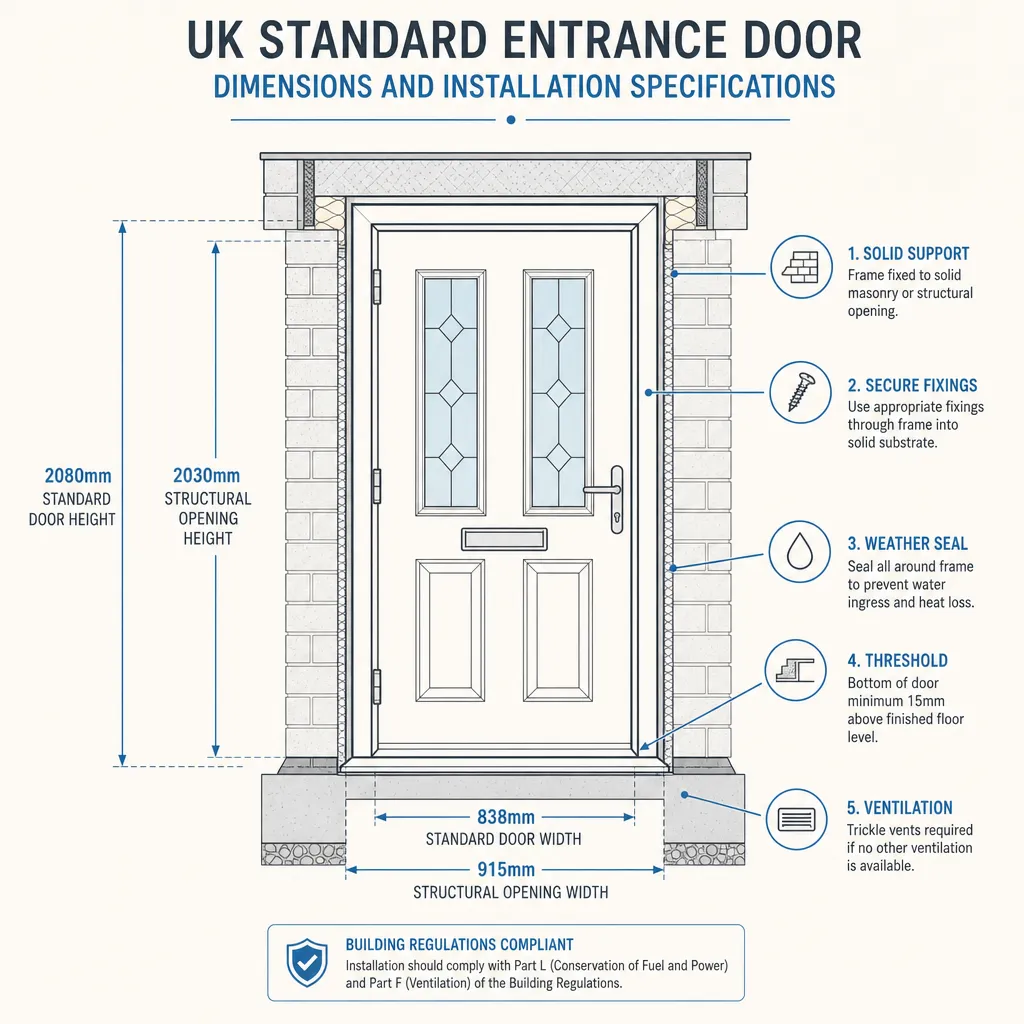
UK Standard Entrance Door Dimensions and Installation Specifications
The most common UK front door leaf size is 838 mm wide by 1981 mm high (33 × 78 inches), standard in most pre-2000 housing stock.
 Improvement & Build
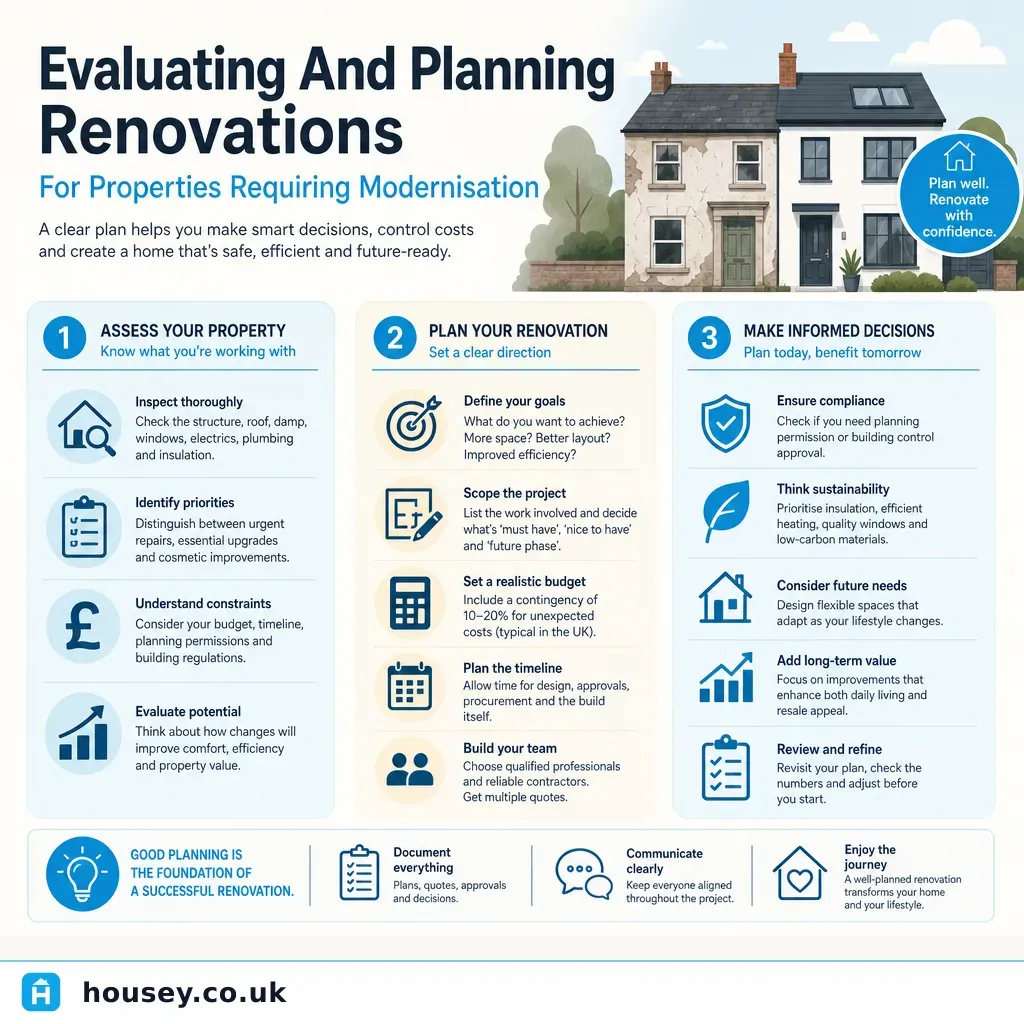
Evaluating And Planning Renovations For Properties Requiring Modernisation
Start by commissioning a condition survey — RICS Level 3 for pre-1919 properties — to identify structural defects, damp, and services issues before finalising a budget.
 Improvement & Build
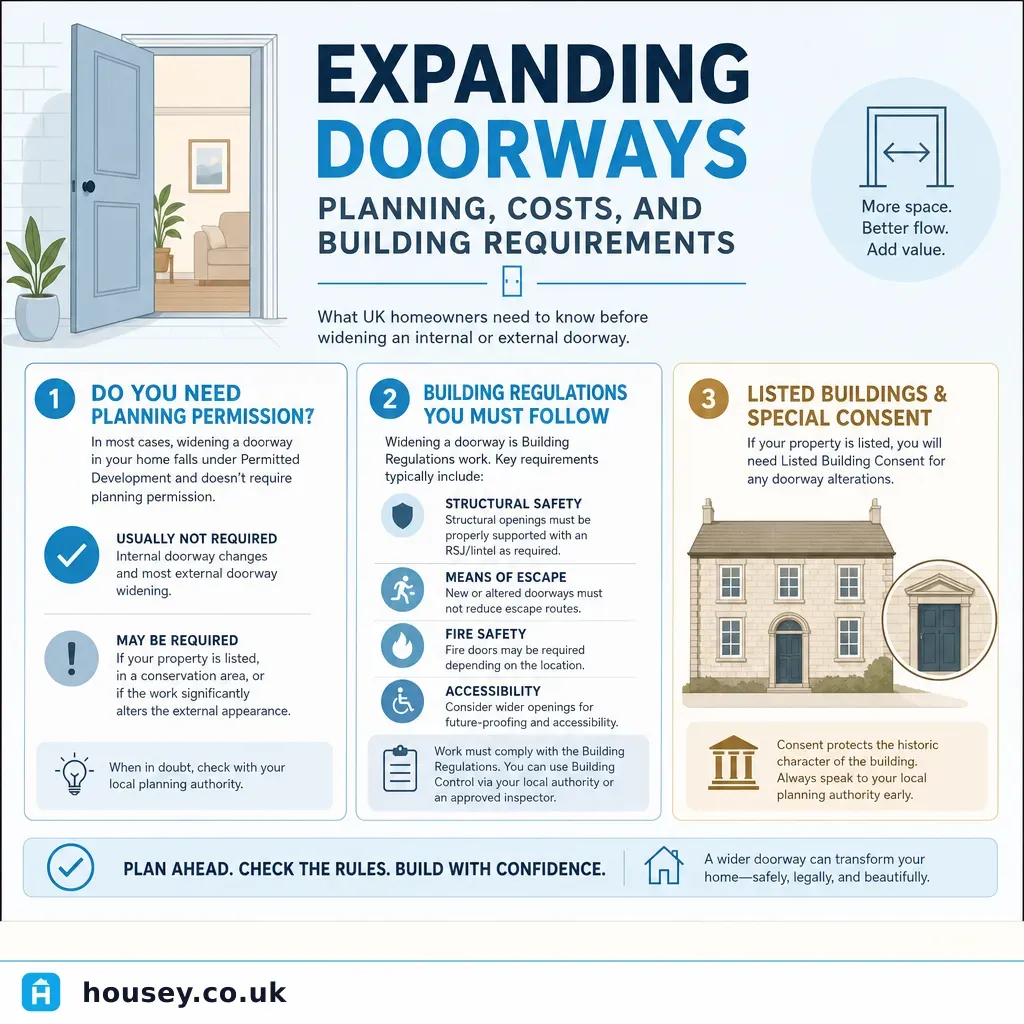
Expanding Doorways: Planning, Costs, and Building Requirements
Expanding a doorway in a load-bearing wall requires Building Regulations Part A approval and a structural engineer's lintel design.
 Improvement & Build
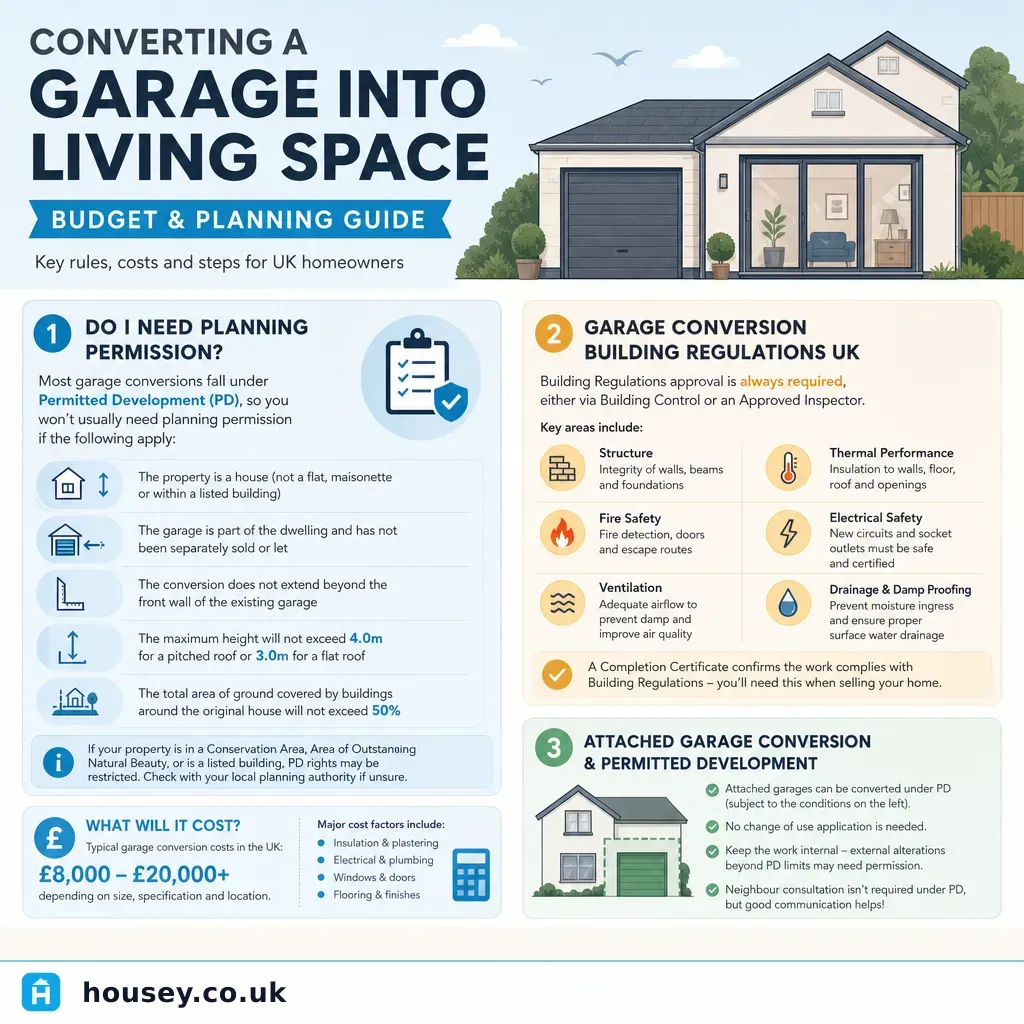
Converting a Garage into Living Space: Budget and Planning Guide
A single-garage conversion typically costs £8,000–£20,000 in the UK.
 Improvement & Build
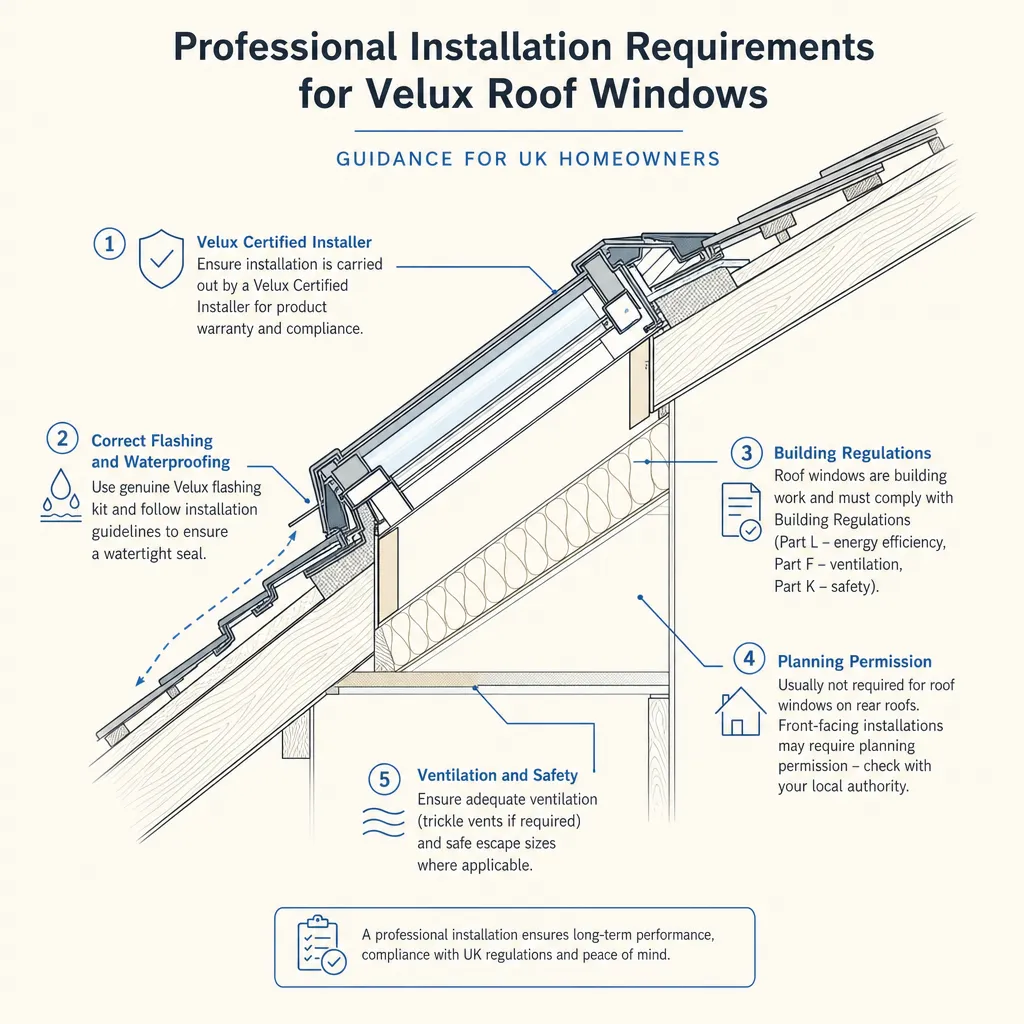
Professional Installation Requirements for Velux Roof Windows
Velux roof windows installed as replacements in the same opening usually fall under permitted development, but new openings or changes on listed buildings or in conservation areas require planning permission.