UK Standard Entrance Door Dimensions and Installation Specifications
By Housey · Last reviewed 31st of May 2026
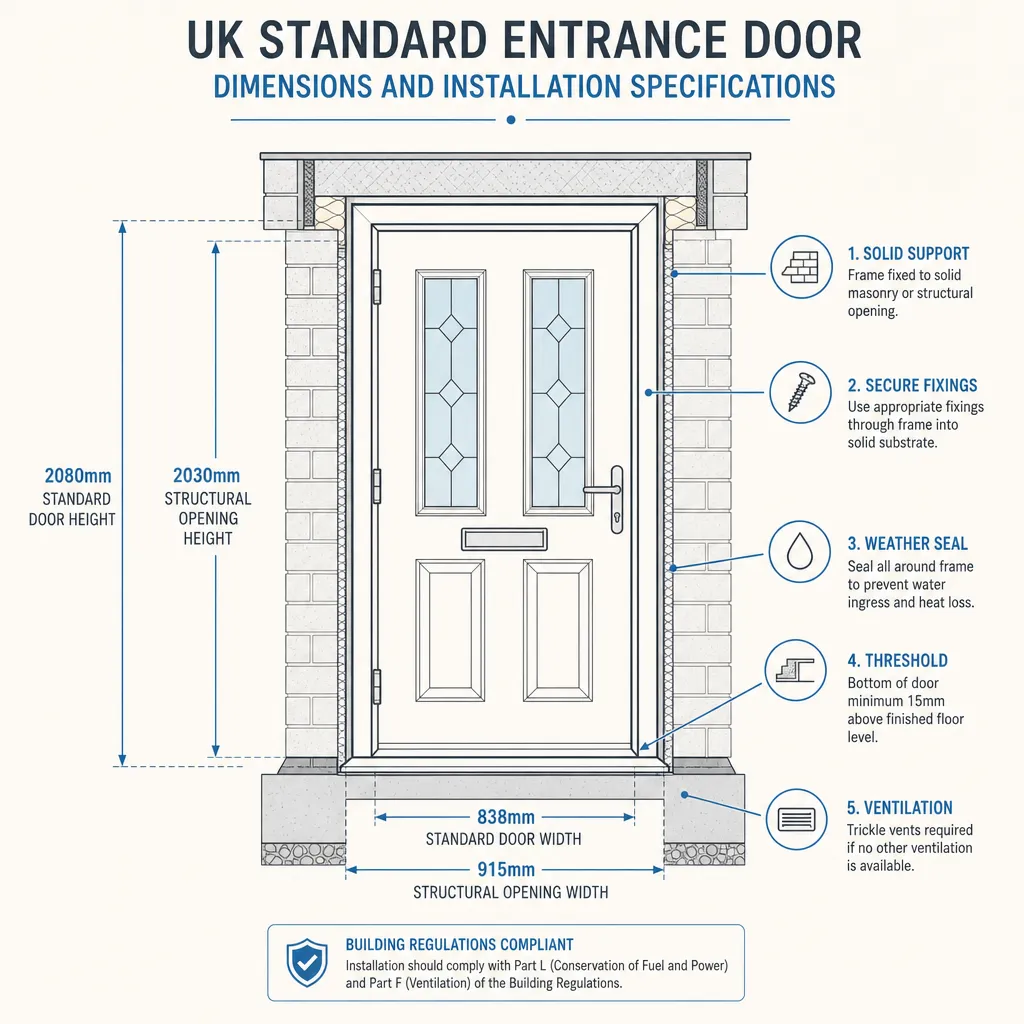
UK Standard Entrance Door Dimensions and Installation Specifications
Door sizing appears straightforward until a replacement order arrives and the frame is 25 mm too wide for the masonry opening — at which point work stops and costs escalate. The question of standard UK front door dimensions most often arises when homeowners are replacing an ageing timber door with a new composite or uPVC unit, when creating a new entrance as part of an extension, or when assessing whether a replacement will satisfy Building Regulations. UK door sizing draws on both imperial legacy measurements and metric standards, and the two systems coexist across housing stock ranging from Victorian terraces to contemporary new-builds.
Key points
- The most common UK front door leaf size is 838 mm wide × 1981 mm high (33 × 78 inches), an imperial-derived measurement standard in most pre-2000 housing stock.
- Modern metric sizing, increasingly used in new-build housing from the mid-1990s onwards, is typically 840 mm wide × 2040 mm high or 840 mm × 2100 mm.
- Building Regulations Approved Document M (Access to and use of buildings, 2015 edition) requires a minimum 775 mm clear opening width for the principal entrance door of a new dwelling at category M4(1).
- Replacement external doors in England and Wales are notifiable works under the Building Regulations 2010; the simplest compliance route is to use a FENSA-registered or CERTASS-registered installer under the Competent Person Scheme.
- Pre-1919 properties frequently have non-standard opening dimensions requiring a bespoke door set; always measure the masonry opening — not the existing door leaf — before ordering.
Standard UK door sizes: a reference guide
UK door sizing uses both imperial-derived and metric dimensions. The table below covers the most commonly encountered front door configurations.
Property situation | Door leaf width | Door leaf height | Door set width (approx.) |
|---|---|---|---|
Pre-2000 housing stock (imperial legacy) | 838 mm (33") | 1981 mm (78") | 915–950 mm |
Modern new-build metric (standard) | 840 mm | 2040 mm | 915–950 mm |
Modern new-build metric (tall) | 840 mm | 2100 mm | 920–960 mm |
Accessible / wider entrance | 900–1000 mm | 2100 mm | 975–1075 mm |
Period / Victorian (highly variable) | 762–914 mm | 1829–2083 mm | Measure on-site — bespoke likely |
Note: "door leaf" refers to the door panel itself. The door set — frame plus door — is larger. The masonry opening must accommodate the door set, fixing tolerances, and any draught-sealing or insulation.
What measurements do you need before ordering?
Three distinct measurements are required before ordering a replacement front door. Taking only the door leaf size is the most common and costly mistake.
- Door leaf dimensions: measure the existing door leaf — width × height × thickness. UK standard external door leaf thickness is typically 44 mm; some premium or highly insulated doors use 54 mm.
- Door set (frame) dimensions: measure the existing frame from outside edge to outside edge — overall width and height including any head and sill. This is the installed size the new door set must match or fit within.
- Masonry opening: the clear opening between brickwork or blockwork. This must be larger than the door set to allow for fixings, packers, and any expanding foam or mortar pointing around the frame.
When ordering a like-for-like replacement on a post-1920 property with an intact original frame, matching the existing door set dimensions is usually the right approach. For older or previously altered properties, start with the masonry opening and work back.
Which door size do you need? Decision guide
- Use 838 × 1981 mm if your property was built roughly between 1920 and the mid-1990s and the existing door appears original or has been replaced like-for-like. Measure to confirm before ordering.
- Use 840 × 2040 mm if your property is post-1995 and the existing frame appears to be metric specification.
- Use a 900–1000 mm wide door if you are creating a new entrance as part of an extension subject to Part M requirements, or if you wish to improve accessibility beyond the regulatory minimum.
- Commission a bespoke door set if your masonry opening does not match any standard dimension within approximately ±10 mm, or if the property is pre-1919 and the opening appears original.
- Consult a specialist joiner or conservation architect if the property is listed or in a conservation area — material, design, and finish restrictions are likely and require pre-approval from the local planning authority.
Building Regulations: compliance requirements
Replacement external doors in England and Wales are notifiable works under the Building Regulations 2010. Two compliance routes exist.
Route 1 — Competent Person Scheme (most common): Use a FENSA-registered or CERTASS-registered installer. The installer self-certifies that the installation complies with the relevant Approved Documents and issues a completion certificate. FENSA notifies the local authority and registers the installation on the national database — this certificate is important evidence when you sell the property.
Route 2 — Local Building Control: Apply to your local building control body before work begins. An inspector checks compliance. Use this route when a registered competent person is not involved, or for complex projects.
Part L (Conservation of fuel and power, 2022 edition, England) sets minimum thermal performance requirements for replacement doors. The current maximum U-value for a replacement door set is 1.4 W/m²K. Many modern composite and high-performance timber doors achieve 0.8–1.2 W/m²K. The U-value of the installed product is recorded on the FENSA or building control certificate.
Part M (Access to and use of buildings) applies to new dwellings and extensions creating a new entrance, not typically to like-for-like replacements. For new entrances at category M4(1), the minimum clear opening width is 775 mm; category M4(2) (accessible and adaptable dwellings) requires a wider, level-threshold entrance.
Failure to obtain the appropriate certificate can cause delays at point of sale, as solicitors' enquiries routinely ask for Building Regulations or FENSA evidence for replacement doors and windows.
Conservation areas and listed buildings
If your property is in a conservation area, the local planning authority may control the appearance and materials of replacement doors under an Article 4 Direction or existing planning conditions. uPVC front doors are frequently restricted in conservation areas; traditional painted timber designs may be required. Always check with the local planning authority before ordering if your property is in a designated area.
Listed building consent is required for any changes to a listed building that affect its character — including replacement external doors. Installing an inappropriate door can result in enforcement action and a requirement to reinstate the original. Historic England provides guidance on doors and windows in historic buildings for owners of listed and conservation area properties.
Homeowner checklist: before ordering a replacement front door
When to get professional help
Most like-for-like front door replacements are straightforward when using a FENSA-registered installer. Seek additional advice if:
- Your measurements suggest a non-standard opening and you are unsure whether to enlarge the masonry opening or commission a bespoke frame.
- The masonry surround shows cracking, movement, or deterioration that should be assessed before new fixings are made into it.
- Your property is listed or in a conservation area and you need guidance on permissible materials and design.
- You are creating a new door opening as part of an extension — this requires a structural lintel specification, building control approval, and may require structural engineering input.
How Housey can help
Housey connects homeowners with vetted window and door installers across the UK who can measure your existing opening, advise on standard or bespoke options, confirm FENSA registration, and handle Building Regulations compliance. Compare quotes from qualified installers before ordering.
Frequently asked questions
What is the standard front door size in the UK?
The most common UK front door leaf size is 838 mm wide by 1981 mm high (33 × 78 inches), an imperial-derived measurement standard in most pre-2000 housing stock. Modern metric sizing — typically 840 mm × 2040 mm — is increasingly common in post-1990s housing. Always measure your actual opening before ordering; never assume a standard size will fit without checking.
Do I need Building Regulations approval to replace my front door?
Yes. In England and Wales, replacement external doors are notifiable works under the Building Regulations 2010. The simplest route is to use a FENSA-registered or CERTASS-registered installer, who self-certifies the work and issues a completion certificate. If you use an unregistered installer, a separate building control application is required before work begins.
What is the minimum door width required for accessibility under UK Building Regulations?
Approved Document M (2015 edition) requires a minimum 775 mm clear opening width for the principal entrance door of a new dwelling at category M4(1). Category M4(2) accessible and adaptable dwellings require a wider, level-threshold entrance. These requirements apply to new dwellings and extensions creating a new entrance, not typically to like-for-like replacements.
What U-value does a replacement front door need to meet in England?
Under the 2022 Approved Document L (England), a replacement door set must achieve a maximum U-value of 1.4 W/m²K. Many modern composite and timber doors significantly better this, achieving 0.8–1.2 W/m²K. Scotland, Wales, and Northern Ireland operate their own Building Regulations with similar but distinct thermal performance requirements.
What if my period property has a non-standard door opening?
Commission a bespoke door set made to your opening's specific dimensions. Pre-1919 properties commonly have openings that do not match modern standard sizes. A specialist joiner or door manufacturer can supply a door set to custom dimensions. For listed buildings, the design and materials must be agreed with the local planning authority before ordering.
Sources and further reading
- Building Regulations Approved Document M — access requirements for new dwellings and extensions, GOV.UK
- Building Regulations Approved Document L (2022) — thermal performance requirements for replacement doors, GOV.UK
- FENSA: Competent Person Scheme — installer registration and self-certification for windows and doors
- Doors and windows in historic buildings — guidance for listed and conservation area properties, Historic England
- Planning Portal: conservation areas — planning requirements in designated conservation areas
Useful next reads
 Improvement & Build
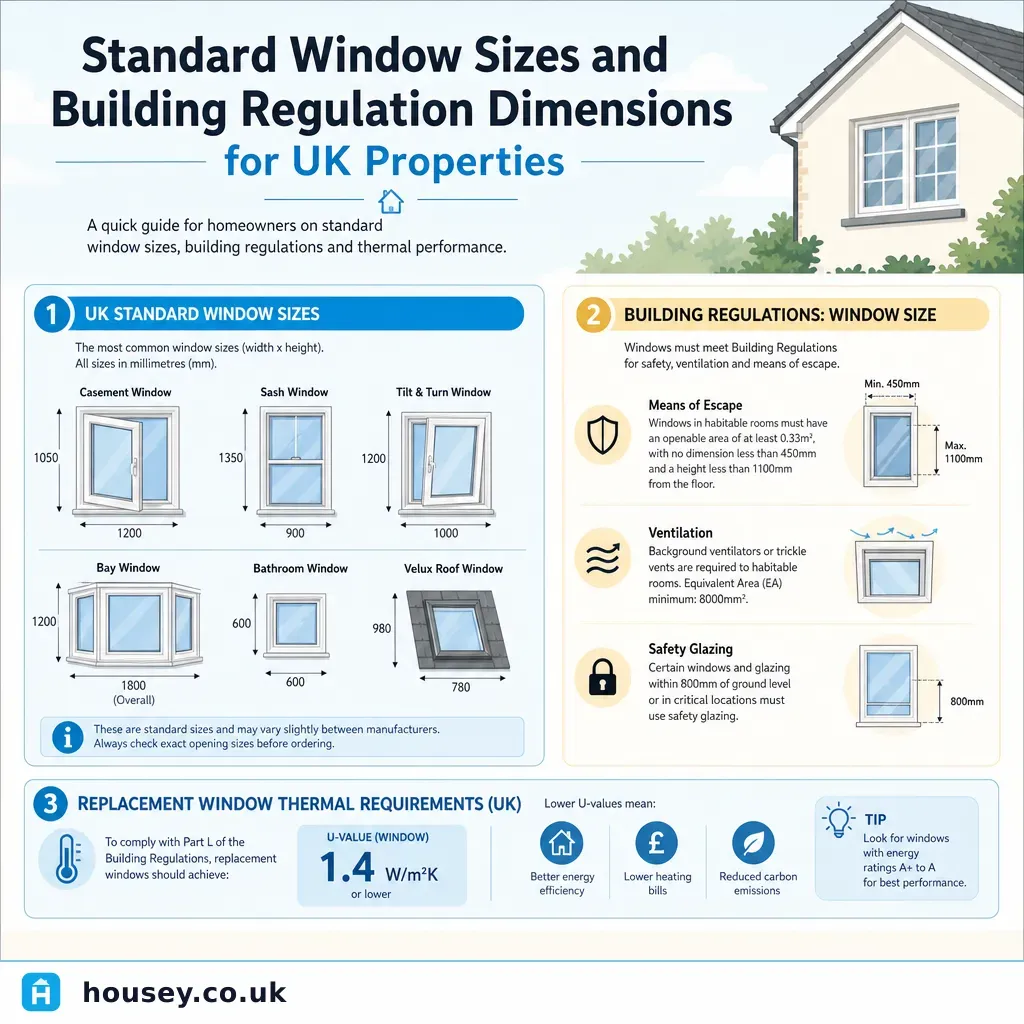
Standard Window Sizes and Building Regulation Dimensions for UK Properties
Standard UK window frames follow a roughly 150mm modular grid, with common sizes from 600mm to 2400mm wide and 450mm to 2100mm high.
 Improvement & Build
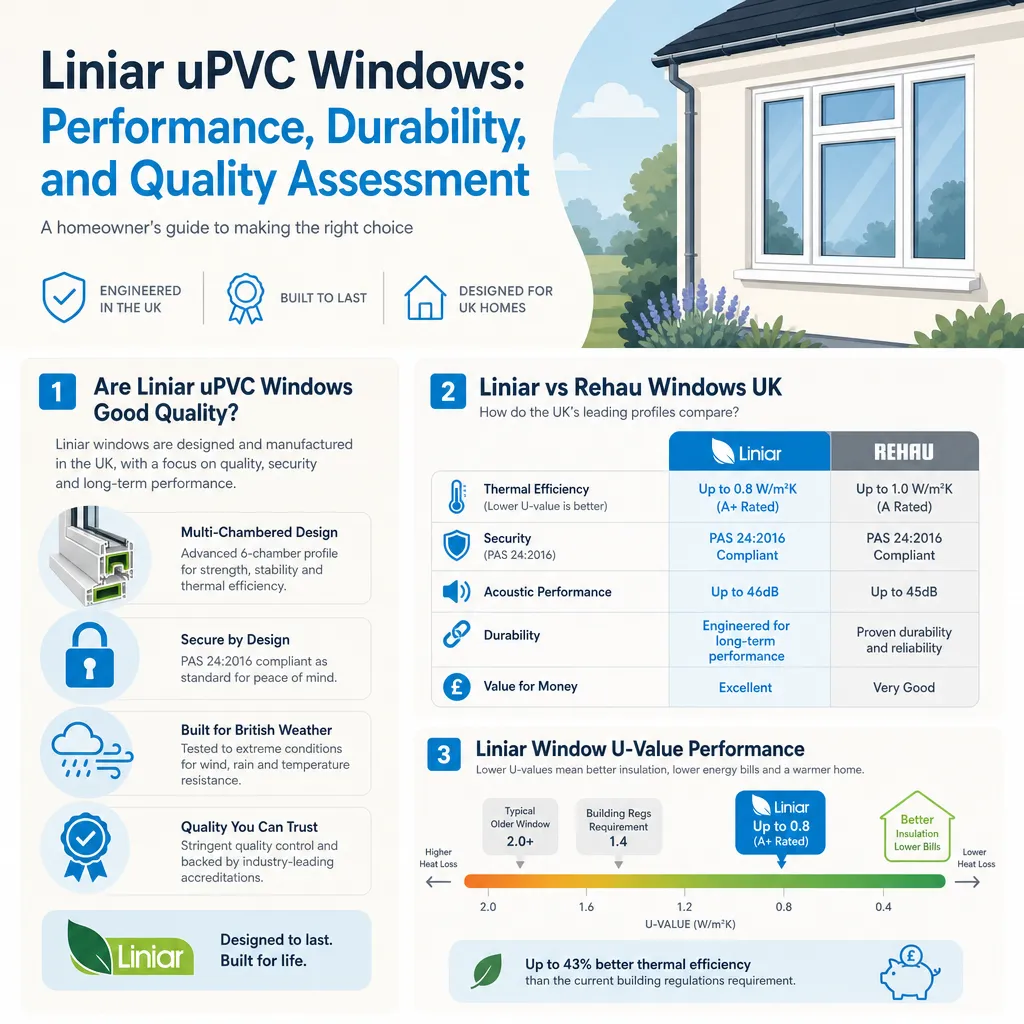
Liniar uPVC Windows: Performance, Durability, and Quality Assessment
Liniar uPVC window profiles are manufactured in the UK using multi-chambered, foamed frames.
 Improvement & Build
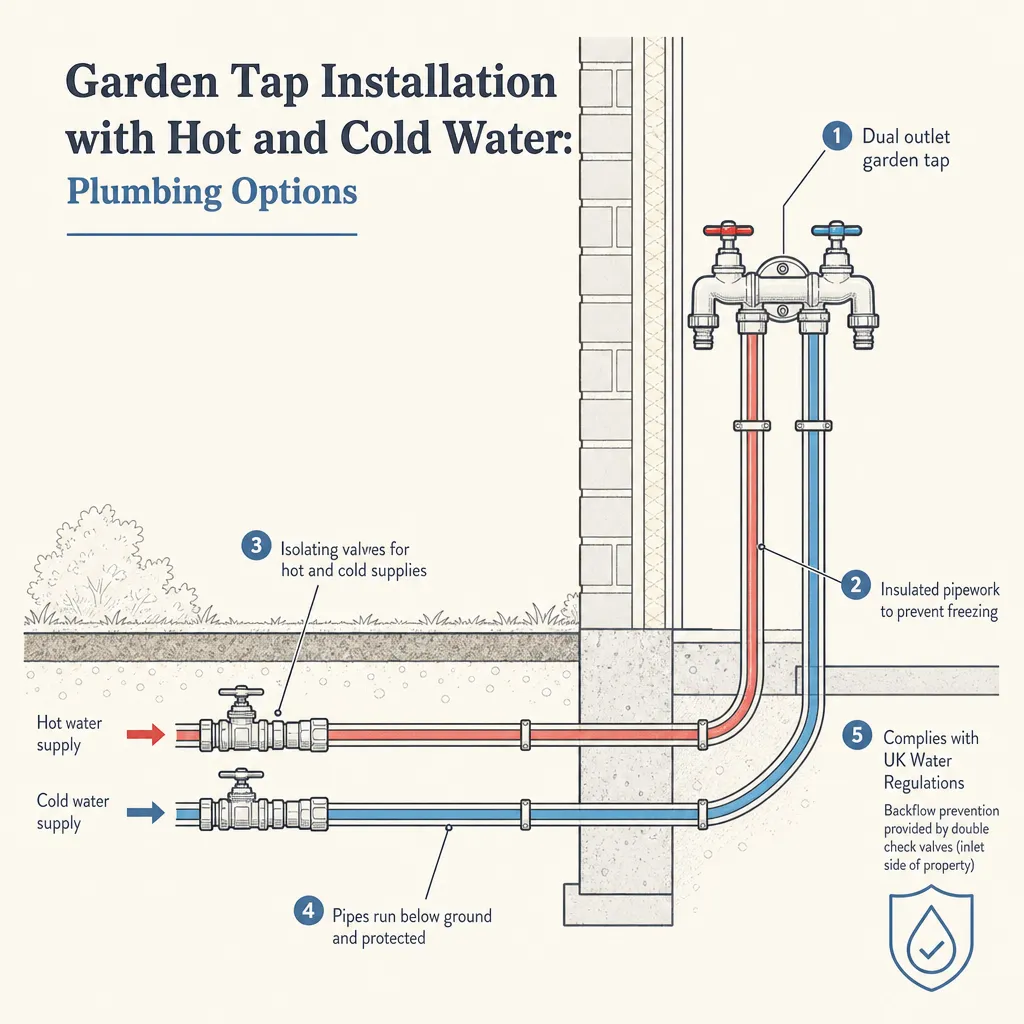
Garden Tap Installation with Hot and Cold Water: Plumbing Options
Adding a cold garden tap is a common DIY project, but routing hot water outdoors requires a plumber to connect to your domestic hot water system and comply with the Water Supply (Water Fittings) Regulations 1999.
 Improvement & Build
Sealing and Maintaining Historic Leaded Glass Windows: Preservation and Performance
Leaded glass windows are maintained using traditional linseed oil cement — not silicone or modern sealants, which prevent natural movement in the lead came.
 Improvement & Build
Greenhouse Construction: Glass Versus Polycarbonate Materials
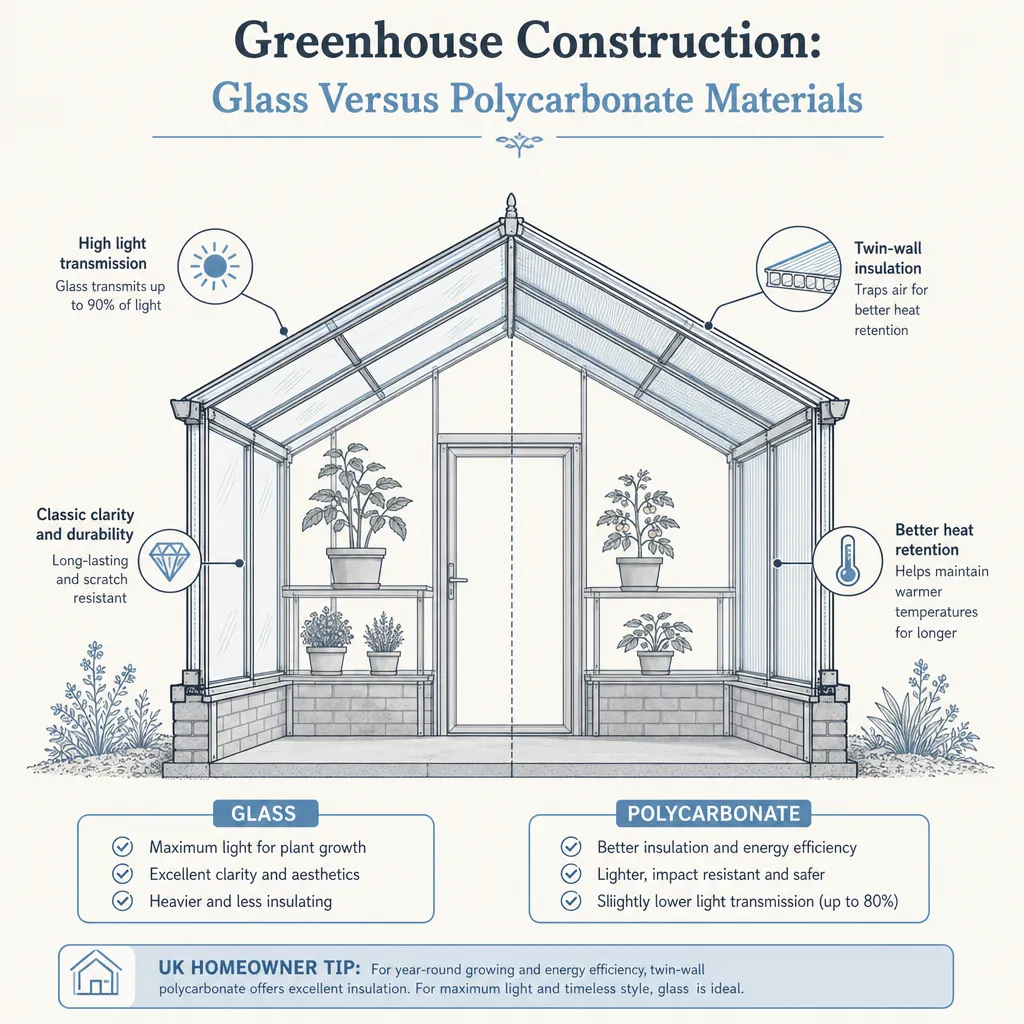
Glass transmits around 90% of available light and lasts indefinitely if unbroken, but insulates poorly and shatters into sharp fragments.