Stone-Coated Steel Roofing: Installation Costs and Material Durability
By Housey · Last reviewed 24th of May 2026
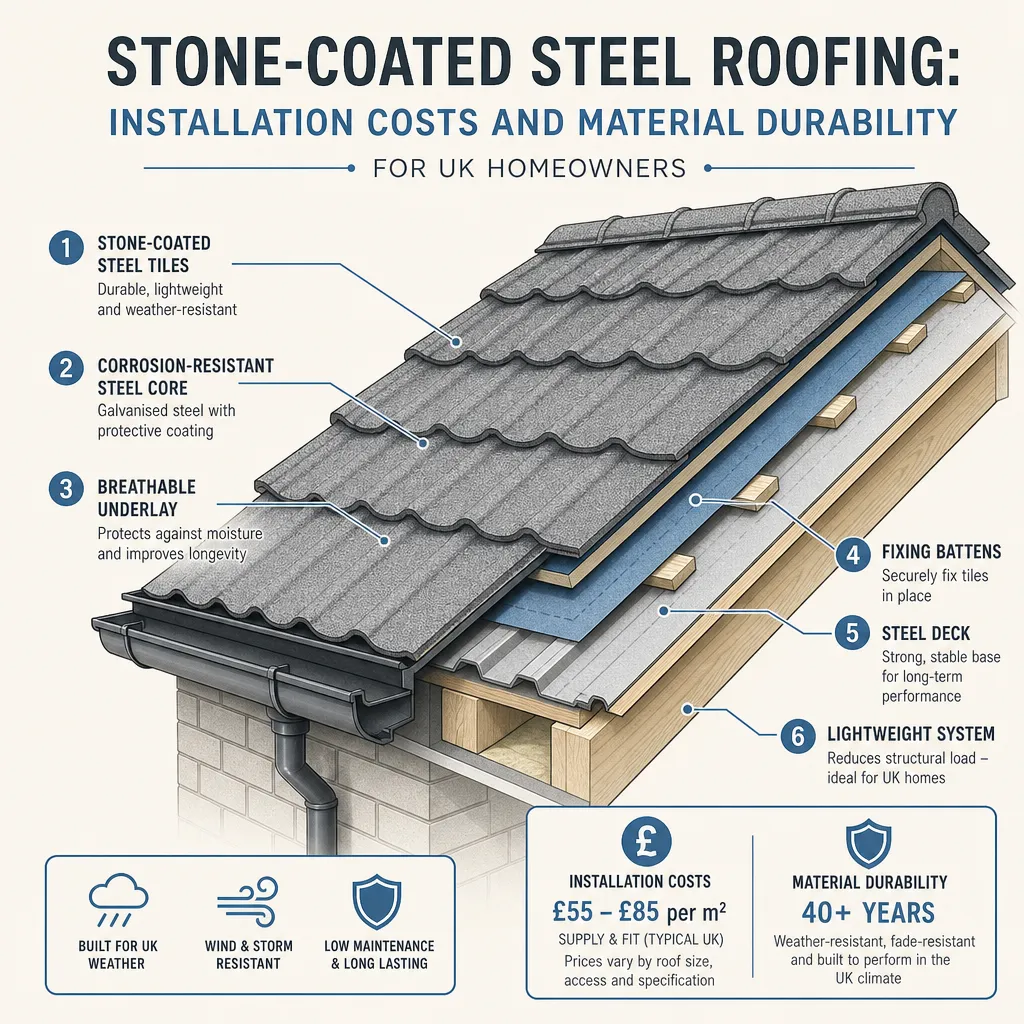
Stone-Coated Steel Roofing: Installation Costs and Material Durability
Homeowners replacing an ageing roof or comparing roofing materials often encounter stone-coated steel as a premium alternative to standard concrete interlocking tiles or clay. The question typically arises during a full re-roof, a roof-over on a failing existing surface, or when an architect specifies a lightweight material for a conversion or extension. Choosing the right roofing system has long-term financial implications — installation costs, expected lifespan, warranty terms, and whether the existing structure can support the chosen product all feed into the decision.
Key points
- Stone-coated steel roofing consists of a galvanised or Galvalume steel core coated with acrylic resin and natural stone granules, giving the appearance of traditional tile, slate, or shake.
- Indicative UK installed costs range from £80 to £150 per square metre; a typical 80 m² detached roof may cost £6,400–£12,000 including scaffold, strip-off, and new battens.
- Stone-coated steel tiles typically weigh 6–8 kg per m² — around one-fifth the weight of concrete tiles — making re-roofing without structural reinforcement feasible in many cases.
- Leading manufacturers quote lifespans of 40–70 years; most products carry 30–50 year manufacturer warranties.
- Stone-coated steel is not a standard roofing trade product: installation requires a contractor experienced with the specific system, and poor installation can void the manufacturer warranty.
What is stone-coated steel roofing?
Stone-coated steel tiles are manufactured from a galvanised or Galvalume (aluminium-zinc alloy coated) steel core, covered with a layer of acrylic resin, then embedded with natural stone granules to create texture and colour. The result is a panel or tile that mimics traditional clay tile, interlocking concrete slate, cedar shake, or Roman tile in appearance, while retaining the structural properties of steel.
Available profiles in the UK include:
- Tile profile: Mimics clay or concrete interlocking tile; the most common choice for standard pitched roofs
- Slate profile: Lower-profile finish suited to traditional UK streetscapes and conservation-adjacent properties
- Shake profile: Textured to resemble timber shingles; less common in the UK
- Roman or Mediterranean profile: Rounded barrel-tile appearance suited to contemporary self-builds
Products are sold in overlapping panels rather than individual tiles, which reduces the number of fixings and speeds installation compared with plain tile or slate.
Stone-coated steel vs other UK roofing materials
Material | Weight (kg/m²) | Typical lifespan | Installed cost (UK, per m²) | Key planning consideration |
|---|---|---|---|---|
Stone-coated steel | 6–8 | 40–70 years | £80–£150 | Usually permitted development |
Concrete interlocking tile | 40–50 | 25–40 years | £40–£80 | Usually permitted development |
Natural slate | 25–35 | 80–150 years | £80–£200+ | Conservation areas may require matching materials |
Clay plain tile | 55–70 | 60–100+ years | £90–£180 | As above |
Fibre cement slate | 20–25 | 25–40 years | £45–£90 | Usually permitted development |
EPDM flat roof membrane | 1–3 | 25–50 years | £50–£90 | Usually permitted development |
Indicative UK costs, last reviewed 2026-05-24. Weights and lifespans are approximate and product-specific. Obtain quotes from at least three experienced installers.
How much does stone-coated steel roofing cost in the UK?
Several factors drive the final cost:
Material: Stone-coated steel is priced at a premium over standard concrete or fibre cement tiles, typically £25–£50 per m² for the material alone. Prices vary by profile, colour, and manufacturer.
Roof geometry: A steeper pitch (above 45°) or a complex roof with multiple hips, valleys, and dormers adds to material waste and installation time. Simple gable-end roofs are cheaper to quote.
Access and scaffold: Most full re-roofs require scaffold, typically adding £800–£2,500 depending on building height and configuration.
Strip-off of existing covering: Removing existing tiles or slates adds labour and skip hire costs — typically £500–£2,000 for a standard semi-detached.
Underlays and battens: Building Regulations Part L requires appropriate breathable underlays; new battens are usually recommended during a full re-roof.
Indicative total cost ranges (last reviewed 2026-05-24):
- Small terraced house (40–50 m²): £3,200–£7,500
- Semi-detached (70–90 m²): £5,600–£13,500
- Detached house (90–150 m²): £7,200–£22,500
Always request itemised quotes that separate material, scaffold, strip-off, underlay and batten replacement, and labour.
Is stone-coated steel roofing suitable for my UK home?
Stone-coated steel suits a range of property types but is not universally appropriate. Use this guide to narrow down the decision:
- Choose stone-coated steel if the existing roof structure cannot support heavy concrete or clay tiles, the roof is on an extension or conversion with engineered timber trusses, or you want a long-warranty product with strong weather performance.
- Consider alternatives if the property is in a conservation area or AONB where the local planning authority requires matching traditional materials — some stone-coated steel profiles may not be accepted as a like-for-like replacement.
- Ask a structural engineer if the existing roof structure shows signs of deflection, sagging, or rafter rot — the lightweight advantage of steel becomes irrelevant if the structure itself needs attention first.
- Check with your local planning authority if the property is listed or in a conservation area before specifying any alternative roofing material, as material changes may require consent.
What to ask before accepting a quote
- Does the quote include scaffold erection and removal?
- Will the existing roof covering be stripped and disposed of, and is skip hire included in the price?
- Are new battens and a breathable underlay included? What underlay specification will be used?
- Which specific stone-coated steel product is being specified, and who manufactures it?
- Are you an approved installer for this manufacturer, and does installation qualify for a manufacturer-backed warranty?
- Is VAT included in the quoted price?
- What guarantee do you provide on labour, and for how long?
- How will roof ventilation be managed during and after installation?
- What is the process if existing timbers are found to be rotten once the covering is stripped?
When to get professional help
Roofing work at height carries inherent risk and should only be carried out by competent, insured contractors. Do not attempt to inspect or work on a roof above 2 m without appropriate access equipment and safety precautions.
Additional situations where professional input is essential before work proceeds:
- Any sign of structural deflection in the roof — a sagging ridgeline, bowed rafters, or spread at the eaves — warrants a structural engineer's assessment before re-roofing
- Properties in conservation areas, AONB, or National Parks require confirmation of planning and material requirements with the local authority before materials are ordered
- Suspected asbestos in existing roof components (some pre-1999 roof sheets, flashings, or vent hoods may contain asbestos) — arrange a survey by an accredited asbestos surveyor before any work begins
How Housey can help
Stone-coated steel roofing installation requires a contractor experienced with the specific product and installation system. Housey connects you with local roofers who can assess your roof, advise on the right specification and profile, and provide competitive quotes for the full re-roofing project.
Frequently asked questions
Does stone-coated steel roofing need planning permission in the UK?
Re-roofing with a similar material profile usually falls within permitted development rights in England. However, if the property is in a conservation area, National Park, or is listed, the local planning authority may require materials that match the area's character. Always confirm with the local authority before ordering materials.
Is stone-coated steel roofing noisy in rain?
In practice, stone-coated steel roofs installed on a timber batten framework with a breathable underlay transmit less rain noise than many people expect. The stone granule coating and air gap between panel and underlay absorb significant sound. Noise levels vary by installation quality and by property construction type.
How long does stone-coated steel roofing last in the UK?
Most manufacturers quote 40–70 years for the steel core with appropriate maintenance, and warranties of 30–50 years are common. The limiting factor in the UK climate is typically the condition of fixings, sealants, and flashings rather than the panels themselves, which are highly corrosion-resistant.
Can stone-coated steel roofing be installed over existing tiles?
Some manufacturers permit a roof-over installation without stripping existing tiles, reducing waste and labour costs. However, the existing structure must be assessed to confirm it can carry additional load and the existing surface must be sound. A roofer experienced with the specific system should advise on suitability.
Sources and further reading
- Building Regulations Approved Document L: Conservation of fuel and power — GOV.UK
- Planning Portal: permitted development for roofs — Planning Portal
- HSE: working at height regulations — Health and Safety Executive
Useful next reads
 Improvement & Build
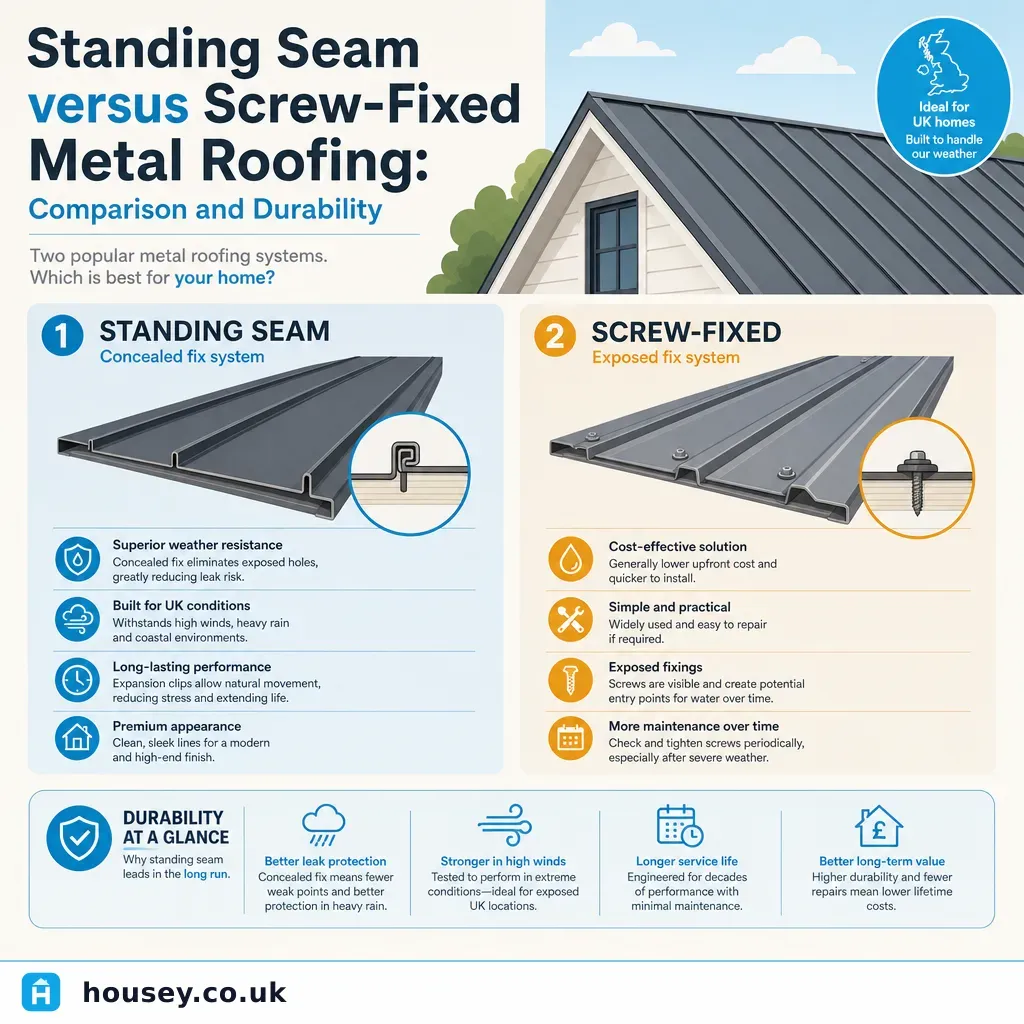
Standing Seam versus Screw-Fixed Metal Roofing: Comparison and Durability
Standing seam uses concealed clips to hold panels, keeping all fasteners out of the weatherline and giving a design life of 40–60 years or more.
 Improvement & Build
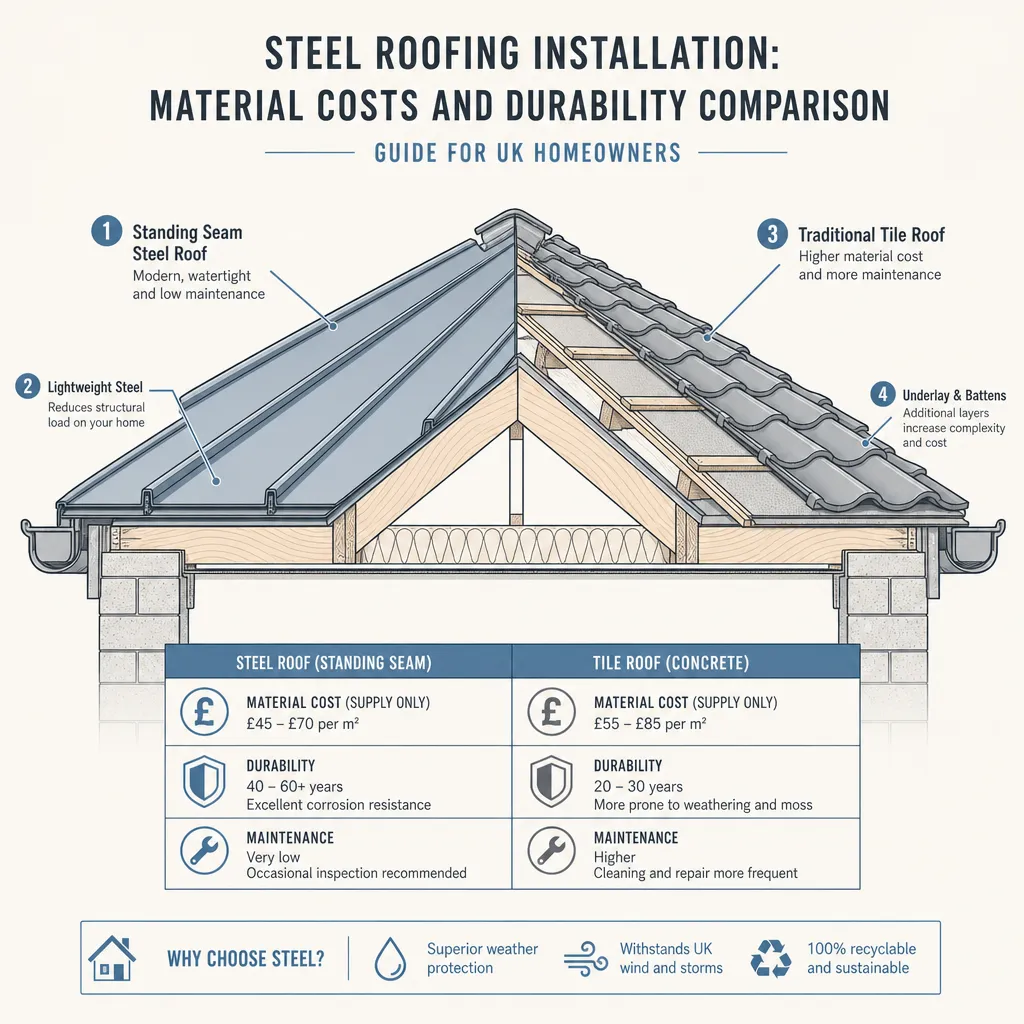
Steel Roofing Installation: Material Costs and Durability Comparison
Steel roofing comes in three main types for UK homes: standing seam (best for low-pitch contemporary roofs, 40–60 year lifespan), composite metal tile (traditional appearance), and corrugated sheet (outbuildings).
 Improvement & Build
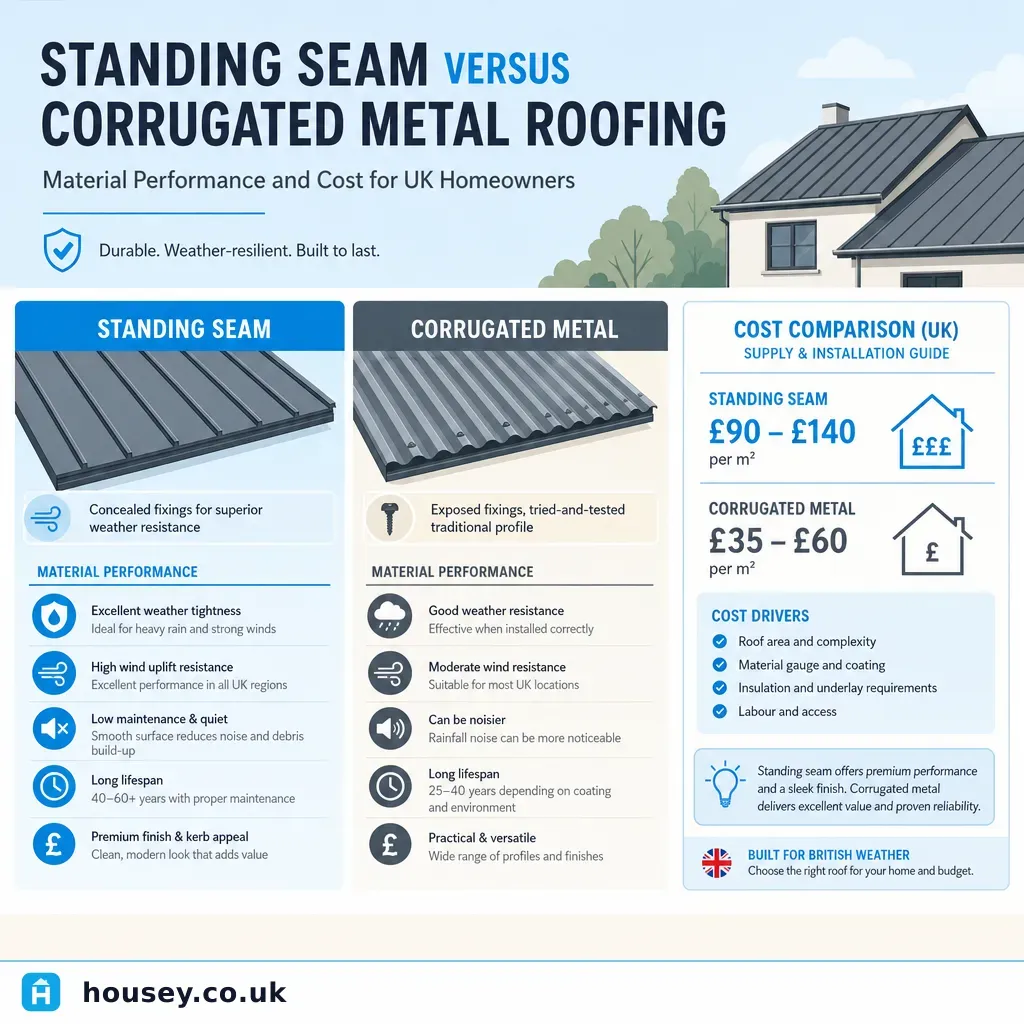
Standing Seam versus Corrugated Metal Roofing: Material Performance and Cost
Standing seam uses concealed clips on long panels running ridge to eave, suits pitches from 1.
 Improvement & Build
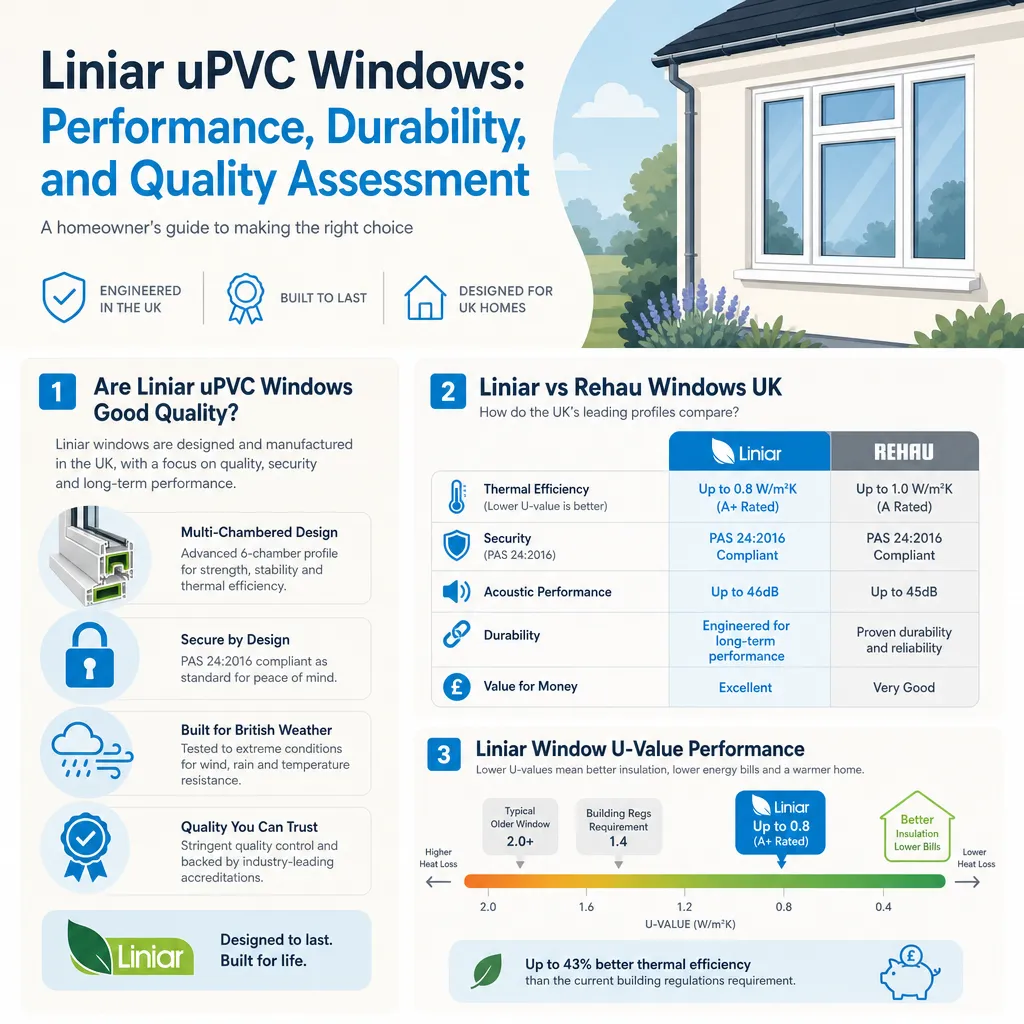
Liniar uPVC Windows: Performance, Durability, and Quality Assessment
Liniar uPVC window profiles are manufactured in the UK using multi-chambered, foamed frames.
 Improvement & Build
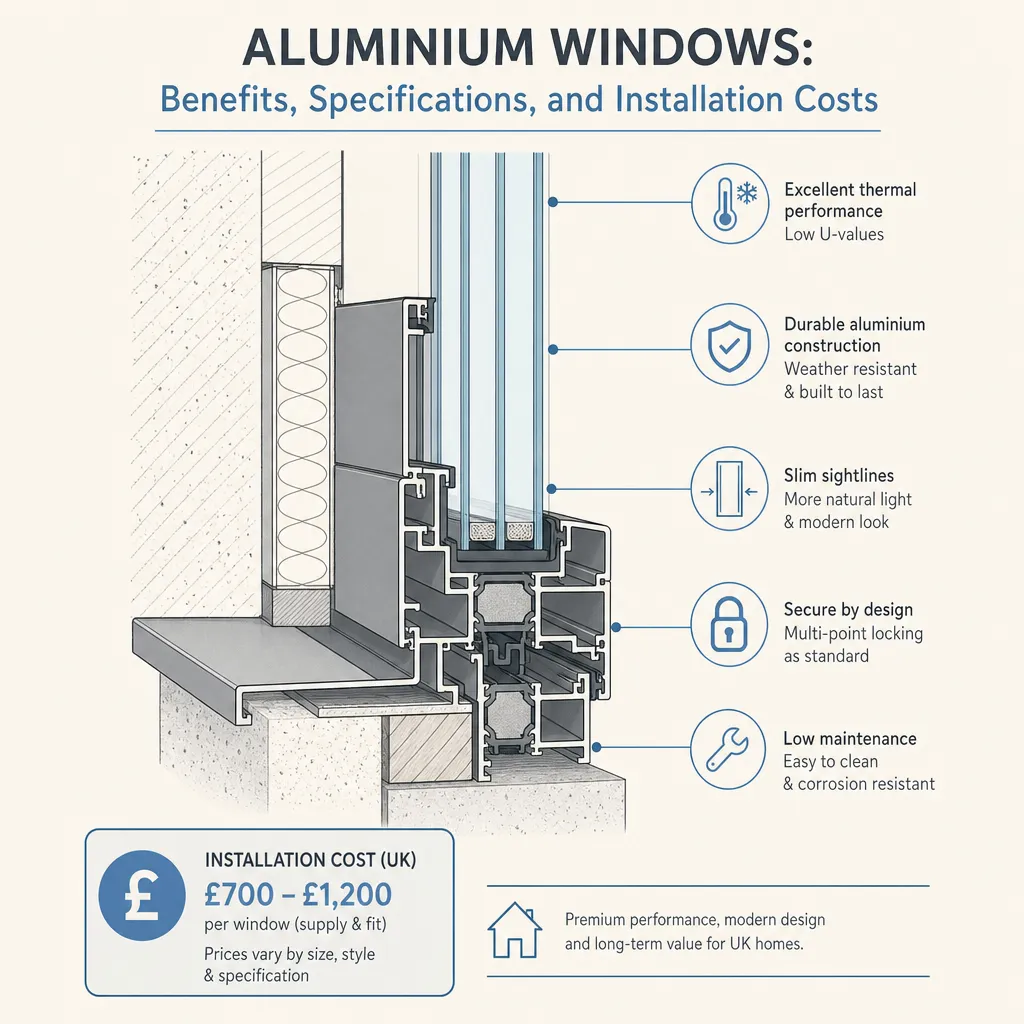
Aluminium Windows: Benefits, Specifications, and Installation Costs
Aluminium windows typically cost £600–£1,800 per window installed in the UK, depending on size and specification.