Starting a Garden: Practical Guidance for New Gardeners
By Housey · Last reviewed 30th of May 2026
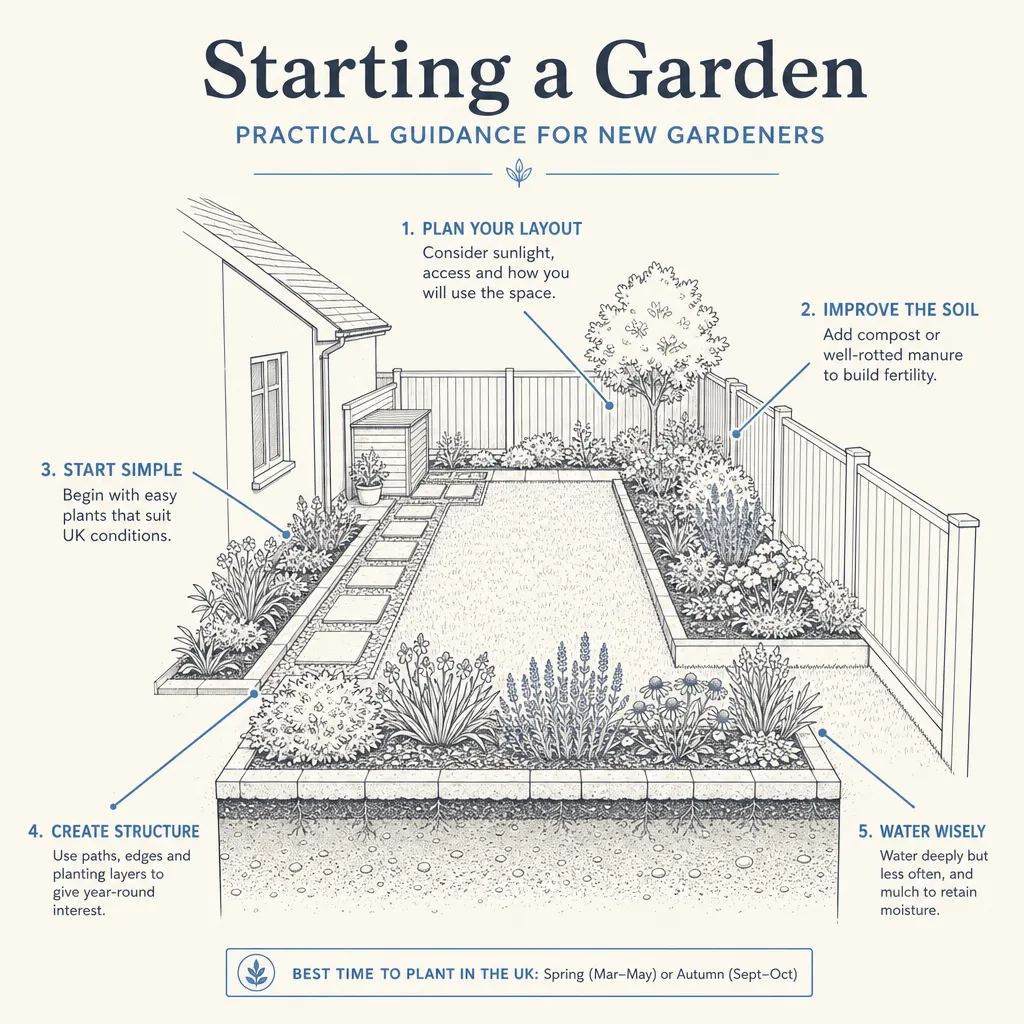
Starting a Garden: Practical Guidance for New Gardeners
A new garden — whether inherited from a previous owner or starting from bare soil after a build — presents both an opportunity and a practical challenge. In the UK, where soil types, rainfall, and light levels vary considerably from the Scottish Highlands to the South East, understanding your specific conditions before spending money on plants or materials makes all the difference. This question arises at every stage of homeownership, from first-time buyers inheriting a paved-over back yard to families upsizing into a property with a neglected half-acre.
Key points
- Most UK garden plants prefer a soil pH between 6.0 and 7.0; a basic soil test kit (around £5–£10 from garden centres) reveals whether yours is acidic or alkaline before you plant anything.
- Outbuildings such as sheds and greenhouses are usually permitted development if under 2.5 m in height and covering less than 50% of the garden — but check with your local planning authority if the property is listed or in a conservation area.
- The Royal Horticultural Society (RHS) recommends observing your plot across a full day before designing, noting where sun falls, where shade persists, and where water collects after rain.
- Heavy clay soil — common across much of England — can be improved by incorporating well-rotted organic matter such as garden compost or farmyard manure, ideally worked in during autumn ahead of spring planting.
- UK private gardens collectively cover more land than all the country's nature reserves combined, meaning even small, well-managed plots can meaningfully support local biodiversity.
Assessing your plot before you start
The most common mistake new gardeners make is buying plants before understanding their site. Before anything else, spend time observing what you have.
Soil type is the starting point. UK soils broadly fall into clay, sandy, loam, silt, chalk, and peat types. Clay soils hold water and nutrients well but drain poorly; sandy soils drain fast but dry out quickly. A simple ribbon test — rolling a handful of moist soil between your fingers — gives a rough indication: clay forms a long, smooth ribbon; sandy soil crumbles. For more precision, a soil test kit from a garden centre will confirm pH and sometimes nutrient levels.
Aspect and light determine what will thrive. South-facing gardens in the UK typically receive the most sunlight and suit sun-loving plants; north-facing plots favour shade-tolerant species such as hostas, ferns, and astilbes. Check your garden's aspect using a compass or a map application.
Drainage matters greatly, particularly in the UK's wetter regions. If the lawn turns waterlogged after rain, the soil may be compacted or poorly draining. This can often be improved with aeration, drainage channels, or raised beds, but persistent flooding may indicate a more significant issue worth investigating before investing in planting.
Existing features — trees, hedges, structures, or hard standing — affect what is possible. Note which features you want to keep, which to remove, and which boundary treatments you share with neighbours.
Which approach suits you: DIY or professional?
Whether to design and build your garden yourself or bring in a specialist depends on your confidence, available time, budget, and the scale of what you want to achieve.
Choosing your approach
- Choose DIY if your garden is modest in scale, you want a simple lawn with planting beds, you have time to invest, and the ground is not steeply sloped or heavily overgrown.
- Choose a garden designer if you have a larger or awkward plot, you want a considered design with hard landscaping (paving, walls, water features), or you want to maximise the property's resale appeal.
- Choose a landscape contractor if significant groundworks are needed — levelling, drainage, new paths, or removal of large trees or mature shrubs.
- Ask a professional if you discover underground services (pipes, cables), have persistent drainage problems, or need to alter boundary structures shared with neighbours.
- Check with your local planning authority if you want to add structures, change boundary heights, or the property is listed or in a conservation area.
Planning the layout
A garden layout that works for your household is more valuable than one that looks impressive in a photograph. Begin with function:
- How will you use the space? Seating, children's play, kitchen garden, entertaining lawn, wildlife habitat, or low-maintenance planting?
- Hard landscaping first. Paths, patios, and retaining walls are expensive to change later; plan these before planting.
- Zoning. Divide the garden into distinct areas if space allows: a lawn zone, a planting zone, and a utility zone (shed, bins, compost).
- Focal points. Even in a small garden, a single strong focal point — a specimen tree, a statement planter, or a water feature — creates structure and visual interest.
For most new gardeners, a rectilinear layout with clearly defined edges is easier to maintain than organic curves, which require precise edging and regular trimming to stay tidy.
Practical first steps: a garden starter checklist
What to plant first
New gardeners benefit from starting with resilient, low-maintenance species that establish readily in UK conditions. The RHS recommends beginning with a small number of reliable varieties rather than an ambitious planting scheme that may overwhelm in year two.
For sunny borders: lavender, salvia, echinacea, rudbeckia, and ornamental grasses are forgiving and support pollinators effectively.
For shaded areas: astilbe, hosta, hellebore, and hardy ferns establish well beneath trees or along north-facing boundaries.
For a kitchen garden: courgettes, climbing French beans, lettuce, and herbs such as mint, chives, and parsley are well-suited to UK beginners and need relatively little space to get started.
For structure and year-round interest: a mix of evergreen and deciduous shrubs provides consistent appeal with lower maintenance than perennial borders. Native species such as hawthorn, dogwood, or holly also support local wildlife and require minimal intervention once established.
When to get professional help
Most new gardeners can handle basic planting, lawn care, and simple raised beds without specialist help. Consider bringing in a professional when:
- Ground levels need significant alteration — levelling, terracing, or retaining walls
- Large trees need removal (always use a qualified arborist with appropriate insurance)
- Drainage problems are persistent or structural in nature
- Hard landscaping forms a major part of your plans
- You want a result that adds measurable kerb appeal or resale value to the property
- Boundary disputes arise when altering fences or hedges adjacent to neighbouring properties
How Housey can help
If your garden project has grown beyond a weekend effort, working with a professional garden designer can save both time and money by establishing the right layout and planting scheme from the outset. Housey connects you with local garden design specialists who can assess your specific plot and produce a plan tailored to your goals and budget.
Frequently asked questions
When is the best time to start a new garden in the UK?
Spring (March to May) is generally the best time, as soil temperatures are rising and growing conditions are improving. Groundworks and design planning can happen at any time of year. Autumn suits many shrubs and trees, which benefit from cooler conditions and rainfall to establish root systems before the following summer.
Do I need planning permission for a garden shed?
Most garden sheds are permitted development and do not require planning permission, provided they are under 2.5 m in height, cover less than 50% of the garden, and are not positioned forward of the principal elevation. Different rules apply to listed buildings and conservation areas — always check with your local planning authority before proceeding.
How long does it take for a new garden to look established?
A basic garden with a lawn, planting beds, and simple shrubs can look established within one to two growing seasons. More structural planting, including hedges and specimen trees, may take three to five years to reach maturity. Realistic timescales help avoid over-planting in year one, which often leads to overcrowding and remedial work later.
Should I hire a garden designer or tackle it myself?
For modest gardens with straightforward layouts, DIY is entirely achievable. A professional garden designer adds most value when the plot is awkward, the brief is complex, or hard landscaping forms a significant part of the scheme. Many designers also offer a one-off consultation or planting plan without full project management, which can be a cost-effective middle option.
Sources and further reading
- RHS Gardening Advice — Royal Horticultural Society
- Permitted Development for Outbuildings — Planning Portal
- Find a Property — HM Land Registry
- Healthy Soils — Soil Association
Useful next reads
 Improvement & Build
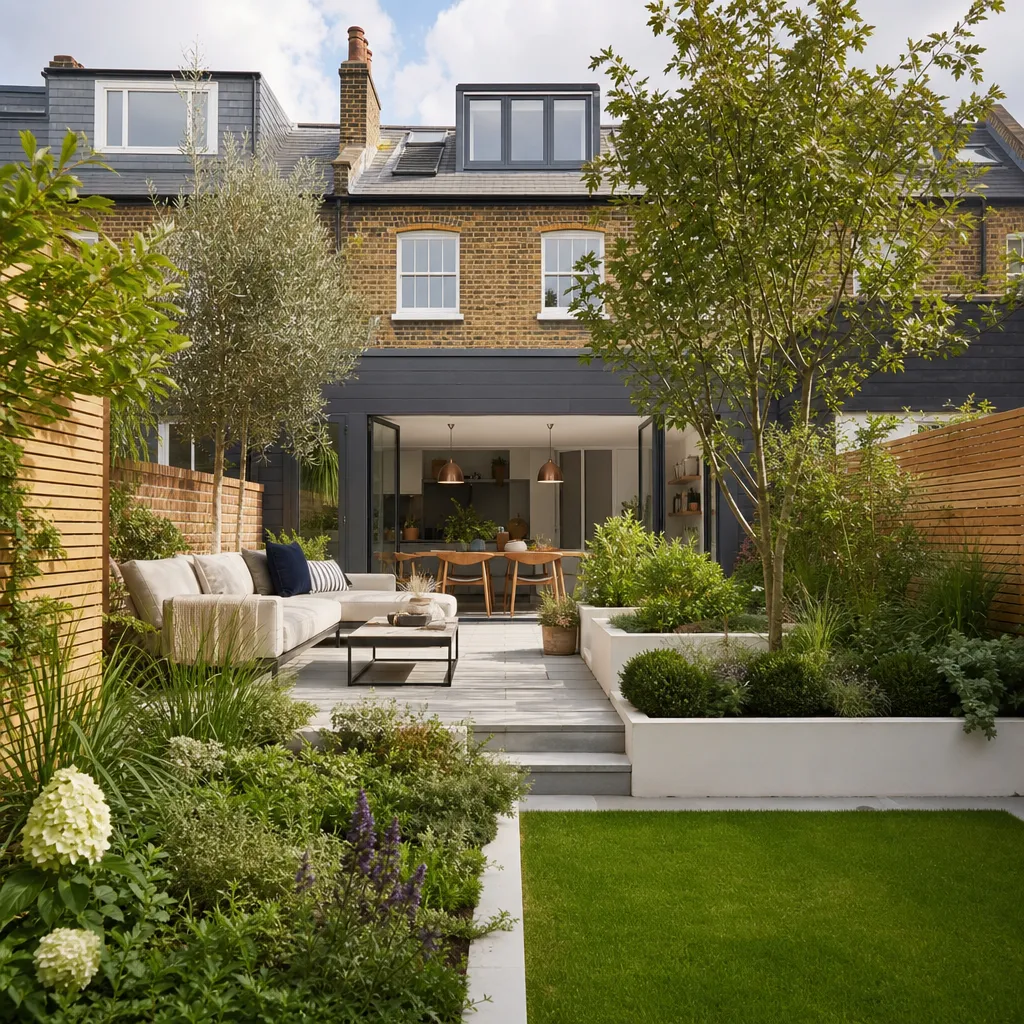
Seasonal Garden Transformations and Outdoor Design Ideas
A successful garden transformation in the UK works with the seasons rather than against them — establishing structure and hard landscaping in autumn or winter, planting in spring, and enjoying the results through summer.
 Improvement & Build
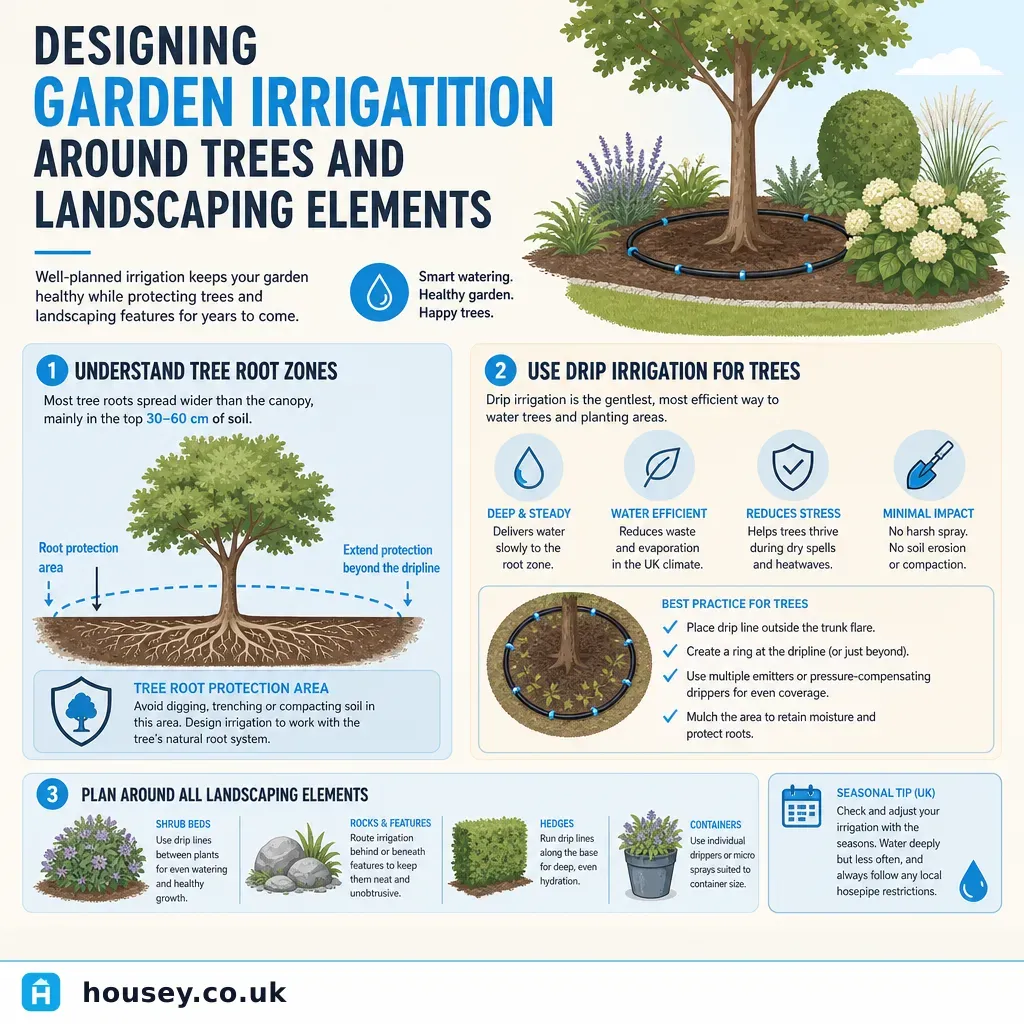
Designing Garden Irrigation Around Trees and Landscaping Elements
Design irrigation around trees by respecting the root protection area defined under BS 5837:2012, using drip or leaky pipe delivery rather than spray heads, and putting the tree zone on its own circuit.
 Improvement & Build
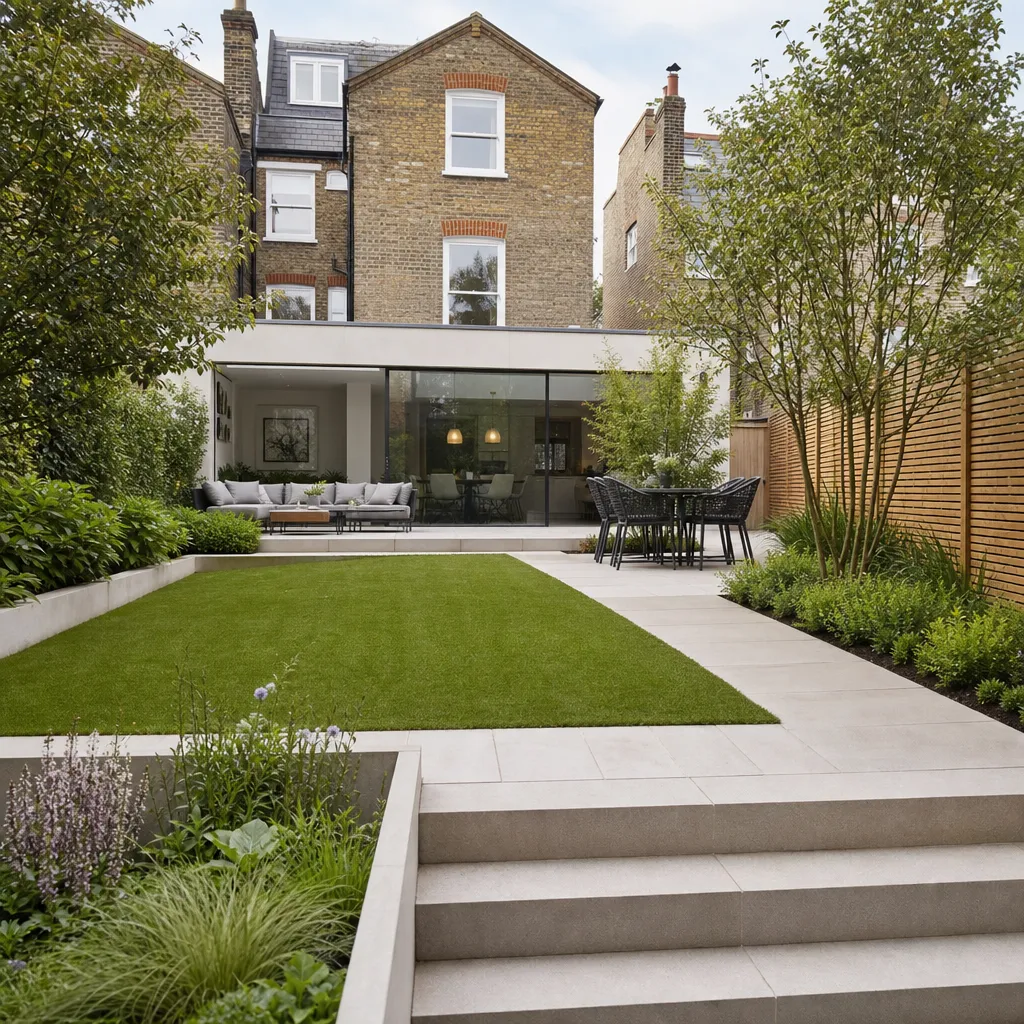
Garden Design Trends and Contemporary Landscaping Ideas
Contemporary UK garden design centres on low-maintenance naturalistic planting, multi-functional outdoor spaces, sustainable hard landscaping materials, and wildlife-friendly rewilded areas.
 Improvement & Build
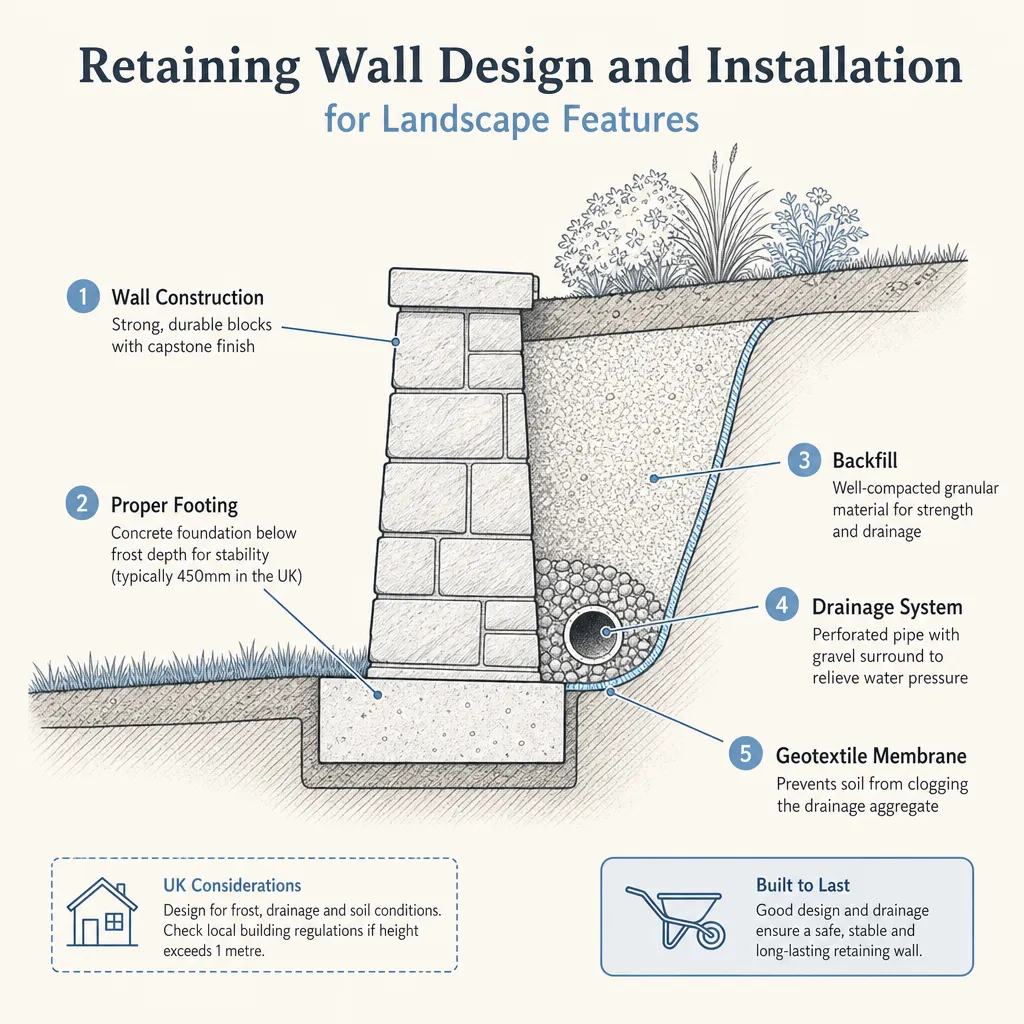
Retaining Wall Design and Installation for Landscape Features
A garden retaining wall holds back soil on a sloped plot using concrete blocks, stone, or timber.
 Improvement & Build
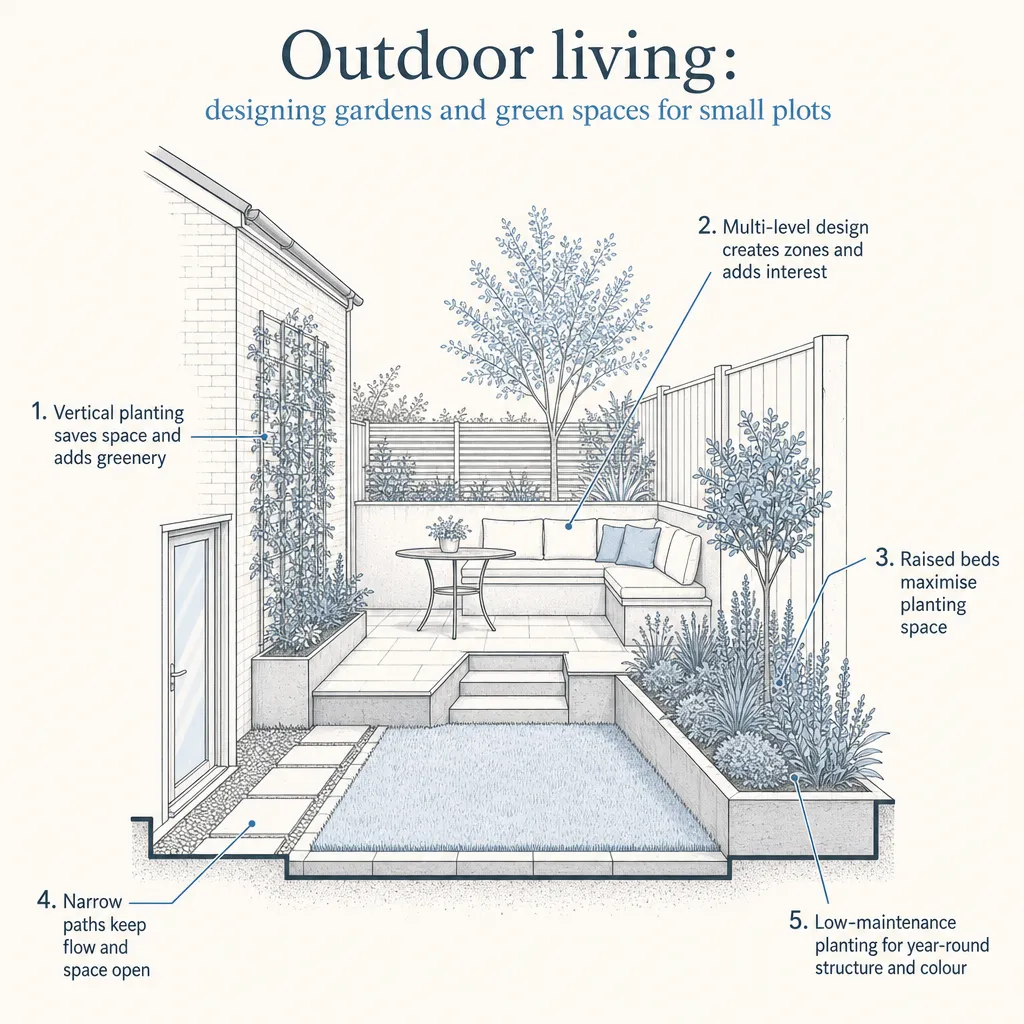
Outdoor living: designing gardens and green spaces for small plots
Small plots work best when divided into defined zones — seating, planting, and utility — before materials are chosen.