Steam Shower Installation: Features and Installation Costs
By Housey · Last reviewed 10th of May 2026
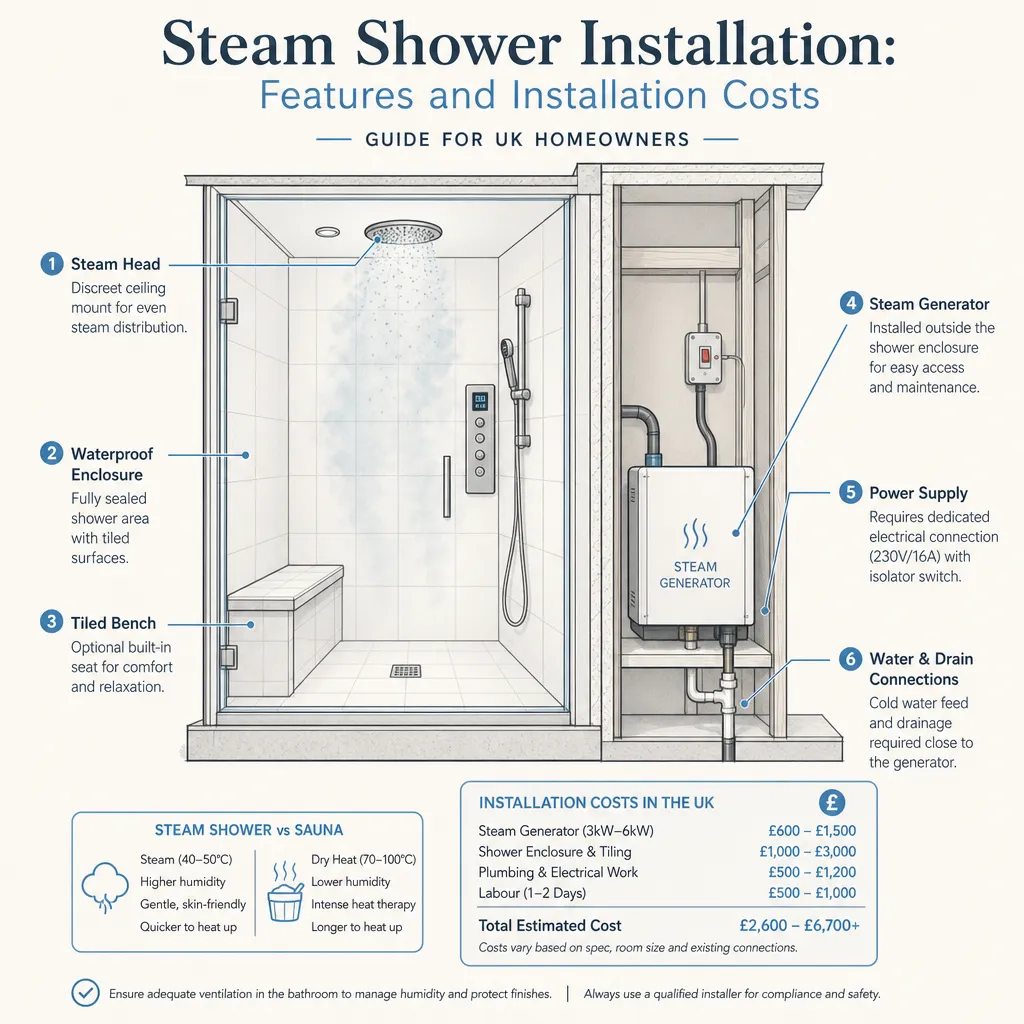
Steam Shower Installation: Features and Installation Costs
Steam showers have moved from the luxury hotel spa to mainstream UK bathroom renovation, driven by falling unit prices and growing interest in at-home wellness. If you are considering one as part of a bathroom refit or larger build, the decision involves more than selecting a cabinet — steam showers require dedicated waterproofing, a regulated electrical supply, drainage, and ventilation that a standard shower enclosure does not demand.
Key points
- Steam shower enclosures in the UK typically cost £500–£5,000; the generator and full installation add a further £800–£3,000 depending on complexity (Indicative UK costs, last reviewed 2026-05-10).
- Steam generators must be connected by a qualified electrician under Approved Document P of the Building Regulations; an Electrical Installation Certificate is required on completion.
- The generator is usually installed remotely — in an airing cupboard, beneath a bath panel, or in an adjacent void — and requires a dedicated cold water feed and a condensate drain.
- Combination units that function as both a shower and a steam room must have fully sealed walls, a vapour-tight door gasket, and an insulated sloped ceiling to prevent condensation dripping.
- Most manufacturers recommend a minimum enclosure of 900mm × 900mm for a single person; 1,200mm × 900mm is generally more comfortable.
What is a steam shower?
A steam shower is a sealed shower enclosure connected to a steam generator — a compact boiler that heats water to produce steam, maintaining the enclosure at 40–55°C during a session. Unlike a sauna, which uses dry heat, a steam shower operates at near 100% relative humidity and a lower temperature.
Most UK units are sold as self-contained enclosures (sometimes described as steam cabins or steam pods) with the generator integrated or designed for remote installation. Higher-end installations use a bespoke tiled enclosure with a separately specified generator, giving greater design flexibility but requiring more trade input.
Steam shower types: a comparison
Type | Best for | Typical unit cost | Key limitation |
|---|---|---|---|
Self-contained steam cabin | Standard bathroom refits | £500–£2,500 | Fixed design; limited bespoke finish options |
Bespoke tiled enclosure with remote generator | Extensions, new builds, premium refits | £1,500–£5,000+ (materials; labour separate) | Higher complexity; specialist waterproofing essential |
Combination steam and shower unit | Like-for-like shower replacement | £800–£3,000 | Generator placement must be planned in advance |
Full steam room conversion | Larger spaces; spa-standard fit-outs | £3,000–£10,000+ | Significant structural, drainage, and ventilation requirements |
Indicative UK costs, last reviewed 2026-05-10. Excludes electrical work, plumbing, and tiling unless stated.
What installation involves
A professional steam shower installation draws on four trade disciplines.
Plumbing: The generator needs a dedicated cold water feed (with a pressure-reducing valve if mains pressure exceeds 3–5 bar) and a drain line to a suitable waste point.
Electrical work: Steam generators are high-demand appliances — typically 3kW to 9kW. Under Approved Document P, installing a new circuit in a bathroom is notifiable work and must be carried out by an NICEIC- or NAPIT-registered electrician, or inspected by building control. An Electrical Installation Certificate must be issued on completion.
Waterproofing: Standard bathroom plasterboard and paint will fail at near-saturation humidity within months. Walls must be tanked with a waterproof membrane system (such as Schlüter-KERDI or equivalent), moisture-resistant substrate boards used under tiles, and the ceiling insulated and sloped to drain condensation away from bathers.
Ventilation: The containing bathroom still requires adequate extract ventilation under Approved Document F. An existing fan is usually sufficient; larger steam rooms may need a higher-rated continuous mechanical extract unit.
How much does installation cost?
Cost element | Typical range | Notes |
|---|---|---|
Enclosure (self-contained unit) | £500–£2,500 | Varies by brand, size, features |
Generator (where separate) | £400–£2,000 | Rated in kilowatts to match enclosure volume |
Electrical installation | £300–£800 | Notifiable under Part P; certificate required |
Plumbing | £150–£500 | Higher if new pipework runs needed |
Waterproofing and tiling (bespoke) | £500–£3,000+ | Depends on tile choice and labour rates |
Total indicative range | £1,500–£8,000+ | Wide variation by type and specification |
Indicative UK costs, last reviewed 2026-05-10. Obtain at least three quotes.
What to ask before hiring an installer
- Are you registered under Part P (NICEIC or NAPIT)? Who certifies the electrical work?
- Which waterproofing membrane system do you propose to use?
- Where will the generator be sited, and is there adequate space and ventilation there?
- What brand and model of generator are you specifying, and what is the warranty?
- Does the quote include removing the existing shower or bath?
- Is VAT included?
- What workmanship guarantee applies?
- Will you provide an Electrical Installation Certificate on completion?
- How will the ceiling be finished to prevent condensation dripping onto users?
Features to look for
Higher-end units and bespoke installations typically offer:
- Digital control panel: Precise temperature, duration, and steam intensity settings.
- Chromotherapy lighting: LED systems to complement the steam experience.
- Aromatherapy inlet: Essential oils introduced into the steam flow.
- Bluetooth audio: Integrated enclosure speakers.
- Multiple body jets: At varied heights alongside the overhead shower.
- Auto-drain and self-clean: Generator flushes after each session to limit limescale.
In hard water areas — particularly across the South East, East of England, and East Midlands — an inline scale inhibitor is worth factoring into the budget to protect the generator.
When to get professional help
Steam shower installation is not suitable as a DIY project. Qualified tradespeople must carry out all electrical work (notifiable under Part P), all waterproofing, and any new plumbing runs.
Red flags to watch for:
- An installer proposing standard plasterboard without a tanking membrane.
- Electrical work quoted with no mention of Part P certification or an Electrical Installation Certificate.
- No discussion of generator placement, water supply routing, or ventilation.
- A quote with no breakdown of individual cost elements.
- No mention of warranty on parts or labour.
How Housey can help
If your steam shower forms part of a wider building project — such as a new wet room within a house extension — Housey can connect you with vetted extension builders who can co-ordinate plumbing, electrical work, and specialist finishing across the full scope of works.
Frequently asked questions
Does a steam shower need planning permission?
In most cases, no. Installing a steam shower as part of an internal bathroom refit does not require planning permission. If the installation involves building a new room or extension, standard planning and building regulations rules apply. Always check with your local planning authority if any works affect the external structure of the property.
How long does a steam shower session typically last?
Manufacturers generally recommend sessions of 15–20 minutes at 40–45°C for most adults. Longer or hotter sessions are not recommended, particularly for those with cardiovascular conditions, high blood pressure, or who are pregnant. The enclosure should be ventilated and allowed to cool between sessions.
How do I maintain a steam shower?
After each session, leave the door ajar and briefly run the shower cold to rinse residue from surfaces. Most generators include an auto-flush function to reduce limescale. Descale every 3–6 months in hard water areas — more frequently where water hardness exceeds 200mg/l CaCO₃. Check door gaskets and seals annually for wear.
Can a steam shower be installed in any bathroom?
Not without assessment. The floor must support the unit weight, and the bathroom needs access for a cold water supply and a generator drain. Solid walls or limited pipework access in older homes may require more extensive preparatory work. A bathroom fitter or plumber can assess feasibility before you purchase a unit.
What is the difference between a steam shower and a sauna?
A sauna uses dry heat at 70–100°C with low humidity. A steam shower operates at lower temperatures — typically 40–55°C — but at near 100% relative humidity. Both have claimed wellness benefits, but the installation requirements and experience differ considerably. Steam showers are generally more practical to fit within a standard UK bathroom.
Sources and further reading
Useful next reads
 Improvement & Build
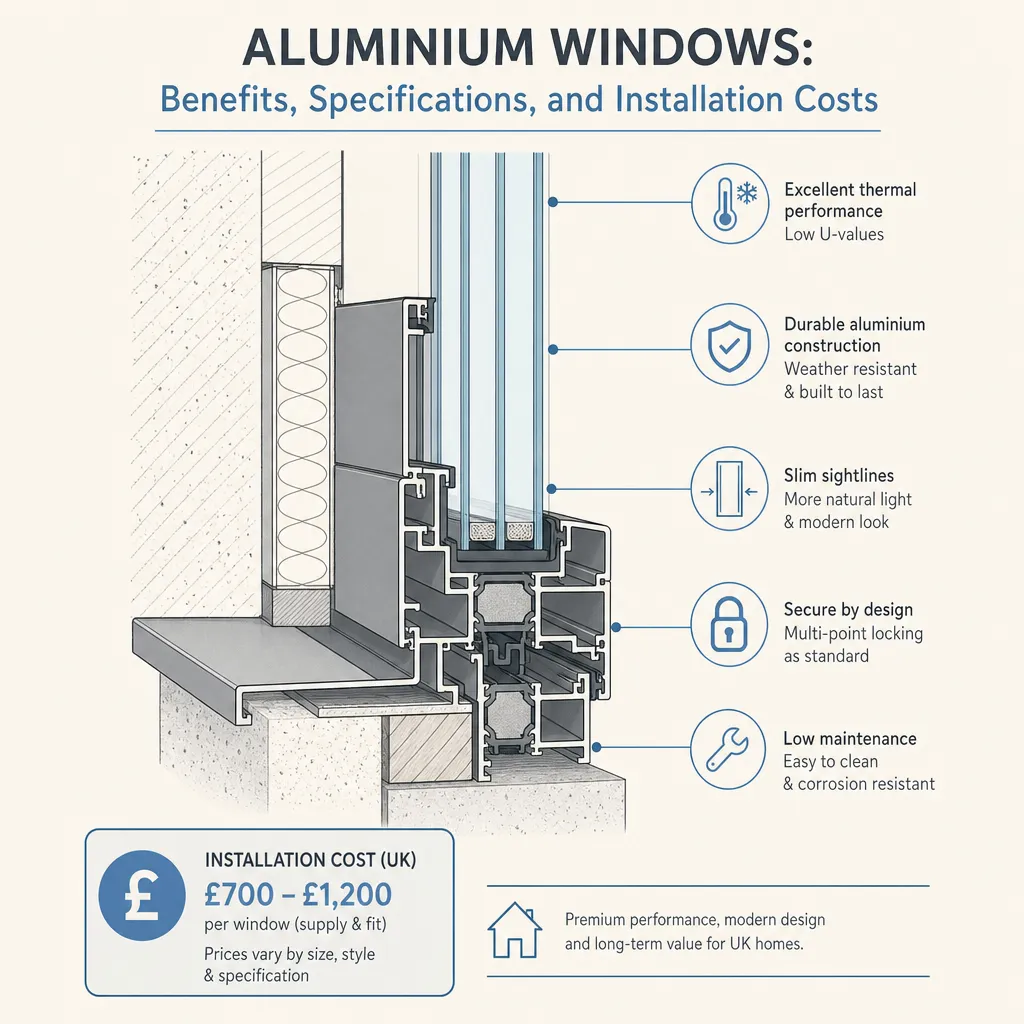
Aluminium Windows: Benefits, Specifications, and Installation Costs
Aluminium windows typically cost £600–£1,800 per window installed in the UK, depending on size and specification.
 Improvement & Build
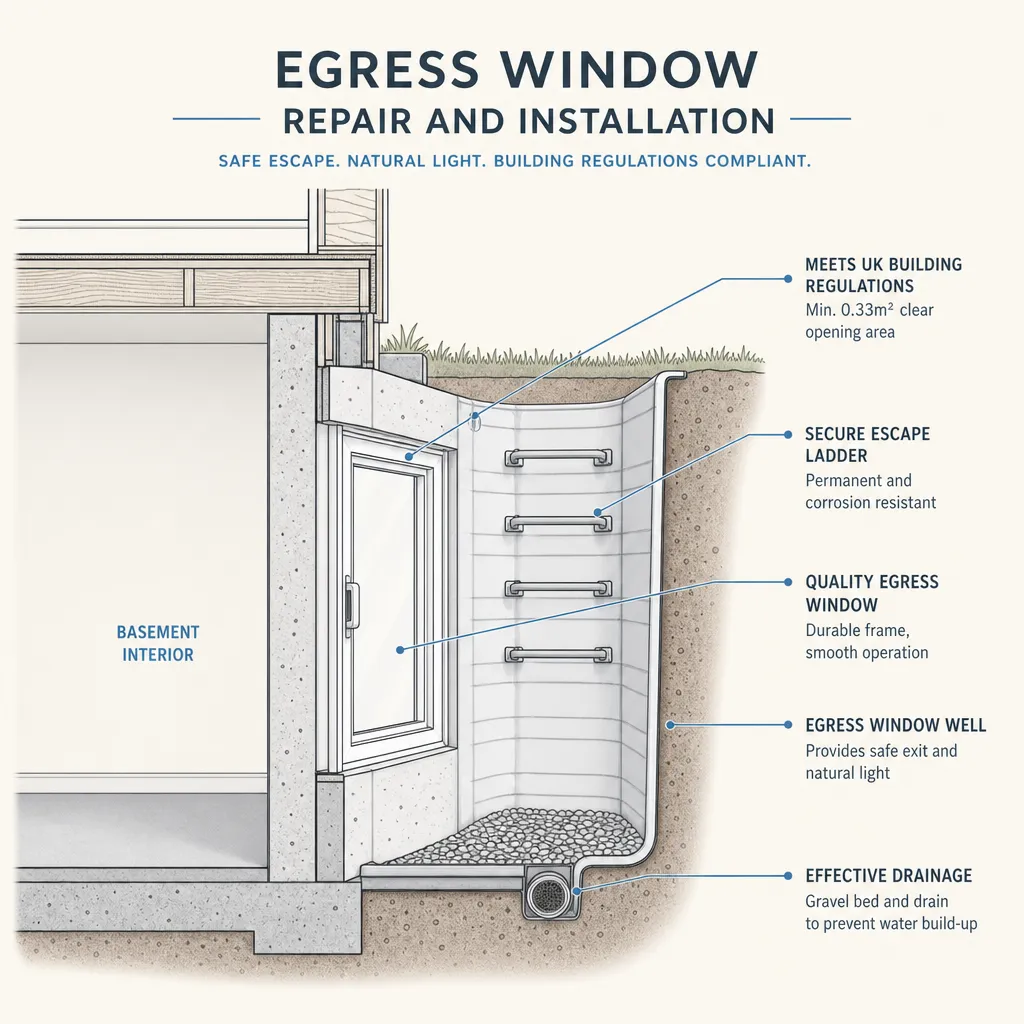
Egress Window Repair and Installation
An egress window is a window large enough to serve as an emergency escape route from a habitable room.
 Improvement & Build
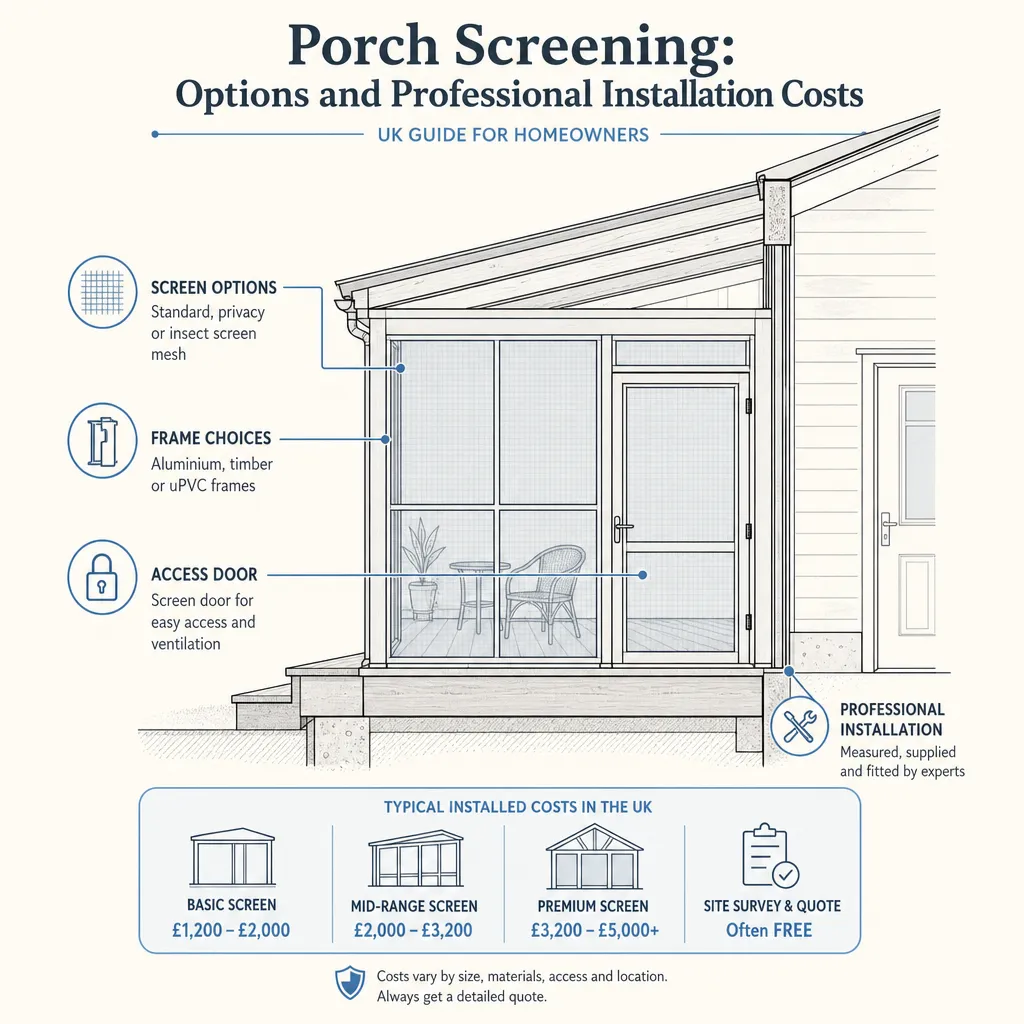
Porch Screening: Options and Professional Installation Costs
Porch screening ranges from simple insect mesh on a timber frame to bespoke aluminium-framed glazed enclosures.
 Improvement & Build
Building an Outdoor Kitchen: Design, Materials, and Investment
Building an outdoor kitchen in the UK costs roughly £3,000–£25,000 depending on size and materials.
 Improvement & Build
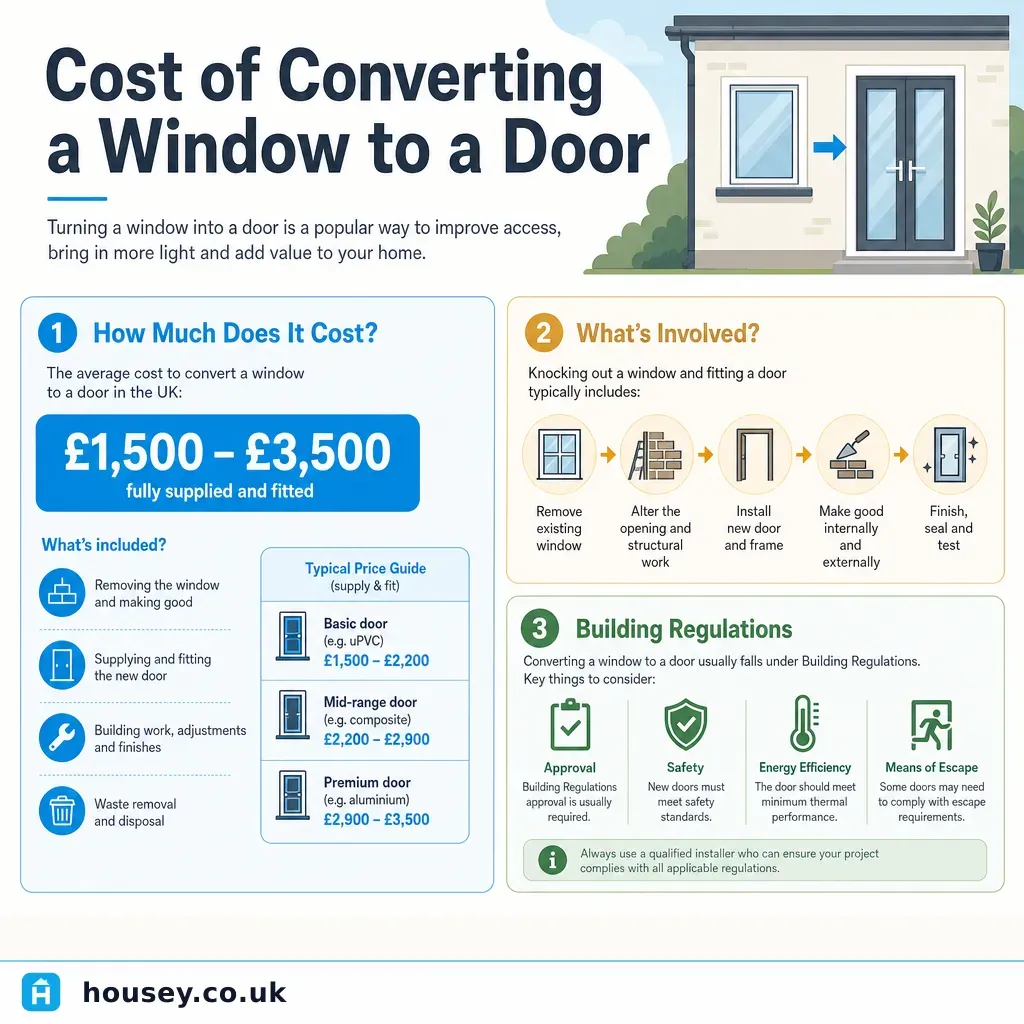
Cost of converting a window to a door
Converting a window to a door in the UK typically costs £1,500–£5,000 or more, depending on wall construction (cavity, solid, or timber frame), the type of door fitted, and whether a new or enlarged lintel is required.