Steel Frame Building Construction Costs
By Housey · Last reviewed 10th of May 2026
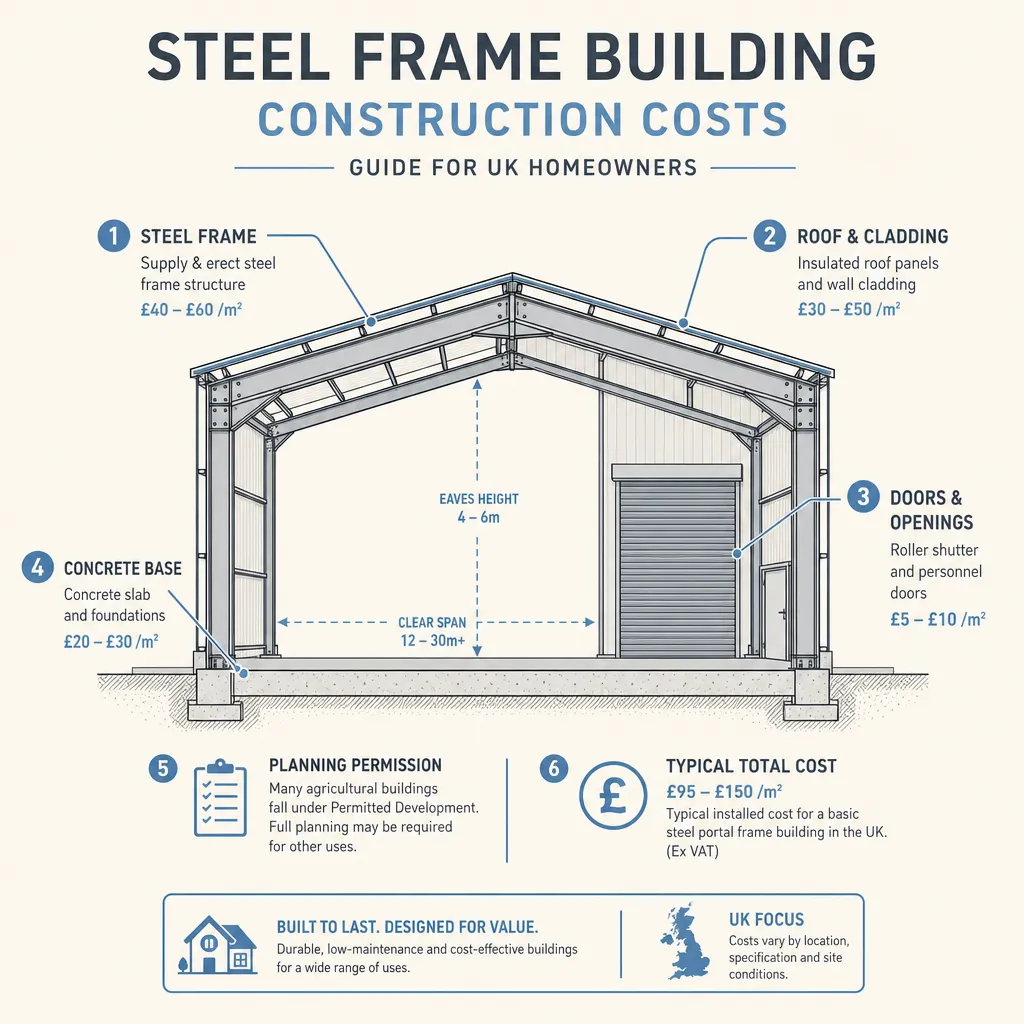
Steel Frame Building Construction Costs
Steel frame construction is a common choice for agricultural, industrial, commercial, and increasingly residential projects across the UK — chosen for its speed of erection, clear-span capability, and long design life. Whether you are planning a farm building, a light-industrial unit, or exploring alternatives to timber or masonry for a self-build, the overall budget depends heavily on what is included in scope. The structural frame is often only a fraction of the total cost once groundworks, cladding, services, building control, and fit-out are added.
Key points
- Indicative frame-and-cladding costs range from £150–£300/m² for an uninsulated agricultural portal frame to £350–£600/m² for a single-storey commercial steel building, before fit-out. (Indicative UK costs, last reviewed 2026-05-10.)
- Under Class A of Schedule 2, Part 6 of the Town and Country Planning (General Permitted Development) (England) Order 2015, agricultural buildings on holdings over 5 hectares may be erected without full planning permission, subject to prior approval requirements for buildings between 465m² and 1,000m².
- Building Regulations approval is required for most steel frame buildings; structural calculations must comply with BS EN 1993 (Eurocode 3) and must be prepared by a chartered structural engineer.
- Approved Document B (Fire Safety) requires fire protection to structural steelwork in multi-storey, residential, and publicly accessible buildings — typically intumescent coatings, encasement, or fire-protected ceiling systems.
- Steel fabrication lead times commonly run 8–16 weeks from order to site delivery, making early appointment of a structural engineer and frame supplier essential to programme management.
Types of steel frame building
Understanding the building category is essential before seeking cost guidance, as each type has a very different specification and cost profile.
Portal frame: The dominant form for UK agricultural and industrial buildings. Rigid steel frames — typically pairs of rafters meeting at an apex — create wide clear-span interiors without internal columns, commonly spanning 12–30m. Usually clad in box-profile steel sheeting or composite insulated panels.
Multi-storey structural steel frame: Used in commercial offices, retail, mixed-use, and residential high-rise construction. Uses hot-rolled I-sections, hollow structural sections, and composite floor systems. More complex design, fire protection, and connection details than a portal frame.
Light gauge steel frame (LGSF): Cold-formed steel sections used for residential and low-rise commercial buildings, functioning similarly to timber frame. Increasingly used for self-build and modular housing projects.
Prefabricated / kit buildings: Manufactured off-site to a fixed specification, delivered in sections, and erected on site. Faster and less bespoke than fully engineered frames, but limited in customisation.
How much does a steel frame building cost in the UK?
Indicative UK costs, last reviewed 2026-05-10. All costs exclude VAT. Prices vary significantly by location, site conditions, specification, and market conditions at the time of tender.
Building type | Frame + cladding (per m² GIA) | Indicative all-in project cost (per m² GIA) | Notes |
|---|---|---|---|
Agricultural portal frame — uninsulated | £150–£300 | £200–£450 | Minimal finishes; slab and drainage additional |
Agricultural portal frame — insulated | £200–£380 | £300–£600 | Lined walls and roof; welfare facilities extra |
Industrial / warehouse unit | £250–£450 | £450–£900 | Basic MEP; tenant fit-out excluded |
Commercial / office (single-storey) | £350–£600 | £600–£1,200 | Includes partitions, basic MEP, finishes |
Residential LGSF self-build | £300–£550 | £800–£2,000+ | Shell to turnkey; highly location-dependent |
GIA = gross internal area. All-in costs include frame, cladding, groundworks, drainage, and basic fit-out. Professional fees, planning, and building control are additional.
What drives steel frame building costs?
Span and height: Wider clear-spans and greater eaves heights require heavier steel sections. Taller multi-storey structures require fire protection measures that agricultural sheds do not.
Cladding specification: Unlined box-profile steel sheeting is the cheapest option. Insulated composite panels — PIR or mineral wool core, typically 80–200mm thick — cost significantly more but are needed to meet Part L for commercial and industrial buildings.
Ground conditions: Foundation cost is the biggest unknown. Firm, well-drained ground may need only shallow pad foundations; poor bearing capacity, high water tables, or disturbed land may require piling — adding tens of thousands to the project cost.
Fire protection: Required for multi-storey, residential, and publicly accessible buildings. Intumescent coatings, sprinkler systems, or encapsulation are significant additional costs not present in most agricultural projects.
Professional fees and statutory costs: Structural engineering, architectural drawings, planning applications, building control fees, and energy-compliance reports are not included in frame quotes but are a necessary part of the project budget.
Services and utilities: Electrical supply, lighting, heating, ventilation, water, foul drainage, and sprinklers add materially to the all-in cost of a functional building.
Steel frame vs alternative construction methods
Method | Typical frame cost (relative) | Erection speed | Max clear span | UK planning note | Typical UK use case |
|---|---|---|---|---|---|
Portal frame steel | Lower–moderate | Fast | 30m+ | Usually requires permission | Agricultural, industrial |
Timber frame (platform) | Similar | Moderate | Up to ~8m | Usually requires permission | Residential, low-rise commercial |
Masonry (brick / block) | Lower structure cost | Slower | Limited | Standard planning | Residential, small commercial |
Glulam / timber post-frame | Higher | Moderate | Up to ~20m | Usually requires permission | Bespoke, architectural |
Prefab / modular steel kit | Variable | Fastest | Moderate | Often requires permission | Storage, agriculture, workshops |
Planning permission and building regulations
Planning permission: Most steel frame buildings require a full planning application. The main exception is agricultural buildings under Class A of Schedule 2, Part 6 of the Town and Country Planning (General Permitted Development) (England) Order 2015. Qualifying criteria include holdings over 5 hectares, size limits, and siting conditions. Buildings between 465m² and 1,000m² require prior approval from the local planning authority for siting, design, and external appearance. In Scotland, Wales, and Northern Ireland, equivalent rules differ — always check with the relevant planning authority.
Building Regulations: Approval is required via Local Authority Building Control or a Registered Building Control Approver for all but very minor agricultural structures. Structural calculations to Eurocode 3, energy-compliance reports under Part L, fire safety strategy under Part B, and drainage design under Part H will typically be needed. A full plans application is generally recommended to identify issues before work starts on site.
Important limitations
This article provides general information about steel frame building costs and processes. Steel frame projects are complex, site-specific engineering and planning undertakings. Costs can vary substantially from the indicative ranges given here depending on ground conditions, specification, planning requirements, and contractor market conditions. Structural design, planning compliance, and building control are regulated professional services. Always engage a chartered structural engineer and, where required, an architect or planning consultant before committing to a project budget or programme.
What to ask a qualified professional
When appointing a structural engineer, architect, or design-and-build contractor for a steel frame project, ask:
- What structural form best suits my span requirements, use class, and site conditions?
- Which planning route applies — full application, prior approval, or permitted development — and what is the likely timetable?
- Has a ground investigation been carried out, and what foundation strategy does it support?
- What U-values and compliance strategy are required under Part L for this building type and use class?
- What fire protection measures apply under Approved Document B, and how do they affect programme and cost?
- Are structural design and Eurocode 3 calculations included in your fee scope?
- What programme allowance should I make for steel fabrication lead times?
- Who will carry out building control liaison, and is that included in the fee?
When to get professional help
A structural engineer and, in most cases, an architect or building surveyor should be engaged at the earliest feasibility stage. Seek professional input immediately if:
- You are unsure whether your proposed building qualifies as permitted development or requires a planning application.
- The site has a history of made ground, mining activity, previous industrial use, or a high water table.
- The building will be used for public access, human habitation, or food storage — all carry additional regulatory requirements.
- You have received a design-and-build quote that does not include structural calculations, planning support, or building control liaison.
- Neighbouring structures or services may be affected by groundworks or changes in loading.
How Housey can help
Housey can connect you with qualified structural engineering services practices and architecture services firms experienced in steel frame design. Get itemised fee proposals, compare credentials, and arrange an initial feasibility discussion before committing to a contractor or kit supplier.
Frequently asked questions
Do I need planning permission for a steel frame agricultural building?
Not always, but the rules are specific. Under Class A permitted development rights in England, agricultural buildings on holdings over 5 hectares may be erected without a full planning application, subject to conditions on size, height, and siting. Buildings between 465m² and 1,000m² require prior approval from the local planning authority. Always verify the current rules and your site circumstances with a planning consultant or your local planning authority before proceeding.
How long does it take to erect a steel frame building?
Frame erection for a straightforward portal-frame building of 500–1,000m² typically takes one to three weeks once fabricated sections arrive on site. Fabrication lead time from order to delivery is commonly 8–16 weeks. The total project programme — including design, planning consent, foundations, and fit-out — typically runs 6–18 months depending on planning speed and project complexity.
Is steel frame cheaper than timber frame?
For the structural frame alone, costs are broadly comparable; both vary significantly by specification. Steel generally offers greater clear-span capability and faster erection. Total project cost depends heavily on cladding, insulation, and fit-out. For residential applications, light gauge steel frame and timber frame are often similarly priced per square metre. Choose on the basis of span, performance, and programme — not frame cost alone.
Do steel buildings need fire protection?
Agricultural and many industrial buildings with low occupancy may not require additional fire protection to the steelwork. However, commercial buildings, buildings open to the public, and structures requiring a specific fire-resistance period under Approved Document B will need intumescent coatings, encasement, or fire-protected ceiling systems. A structural or fire engineer should advise based on use class and occupancy.
Sources and further reading
- Town and Country Planning (General Permitted Development) (England) Order 2015 — legislation.gov.uk
- Approved Document B: Fire Safety — GOV.UK Building Regulations
- Approved Document L: Conservation of fuel and power (non-domestic) — GOV.UK Building Regulations
- Steel Construction Institute — technical resources — Steel Construction Institute (SCI)
- SteelConstruction.info — cost and design guidance — British Constructional Steelwork Association (BCSA)
- Agricultural buildings — planning guidance — Planning Portal
Useful next reads
 Planning & Pre-Build
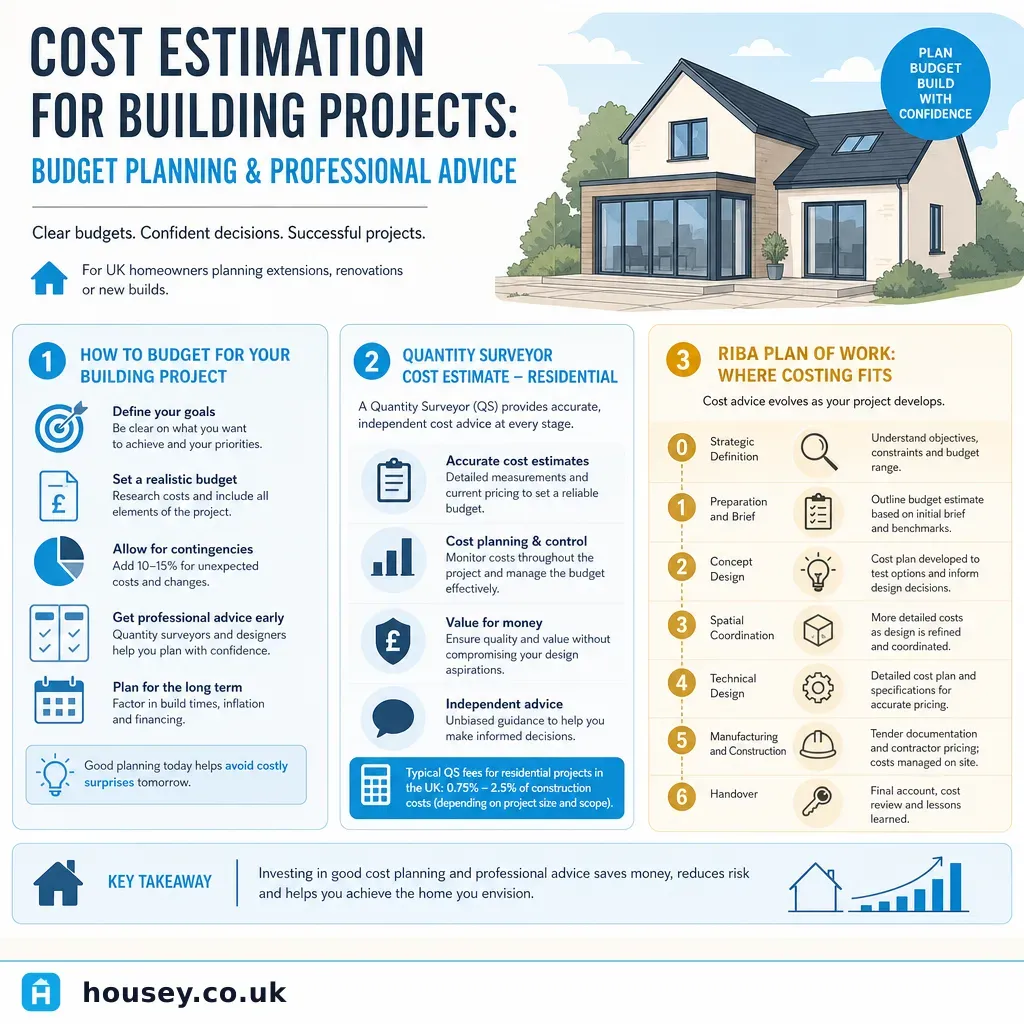
Cost Estimation for Building Projects: Budget Planning and Professional Advice
Build cost estimation involves calculating likely expenditure across design, materials, labour, fees, and contingency before committing to a project.
 Planning & Pre-Build
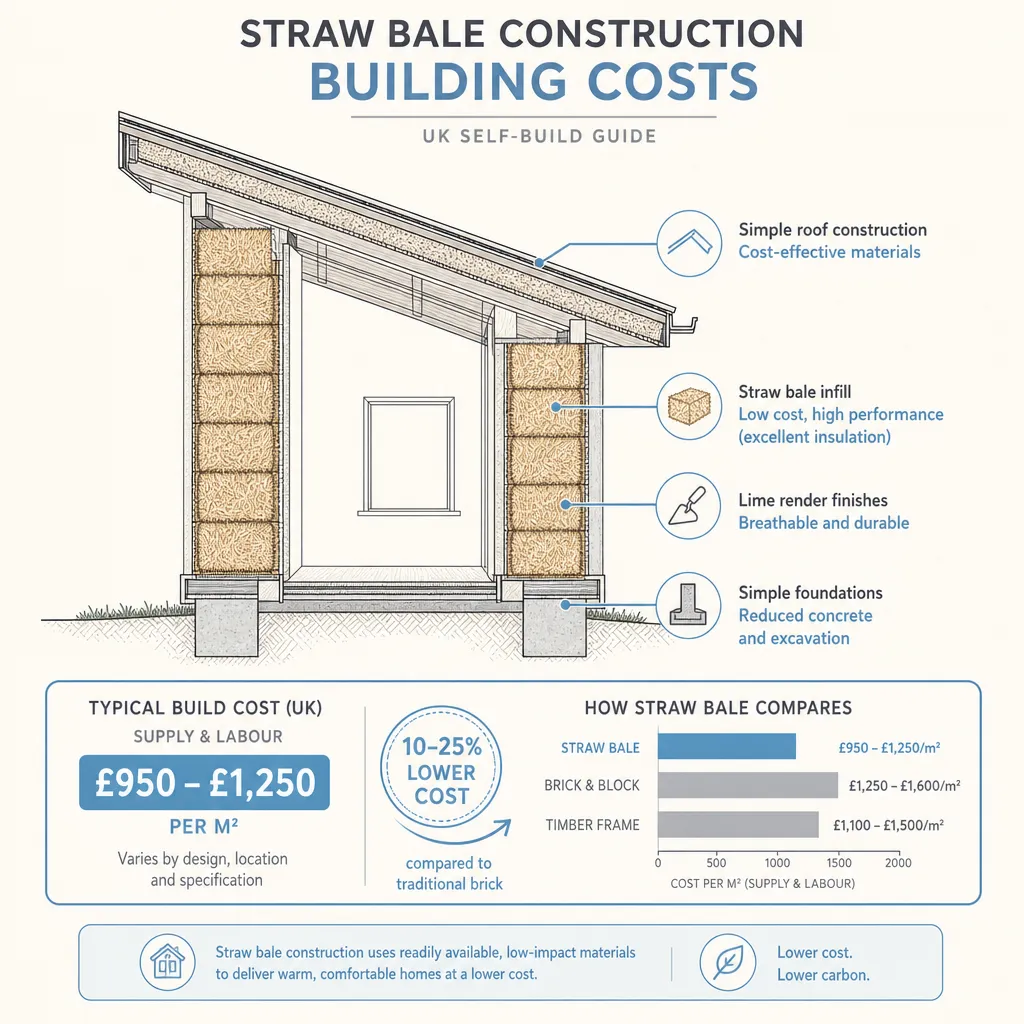
Straw Bale Construction Building Costs
Straw bale construction in the UK typically costs £1,500–£2,500 per square metre for a fully contracted self-build, though costs vary by design, render specification, and contractor experience.
 Planning & Pre-Build
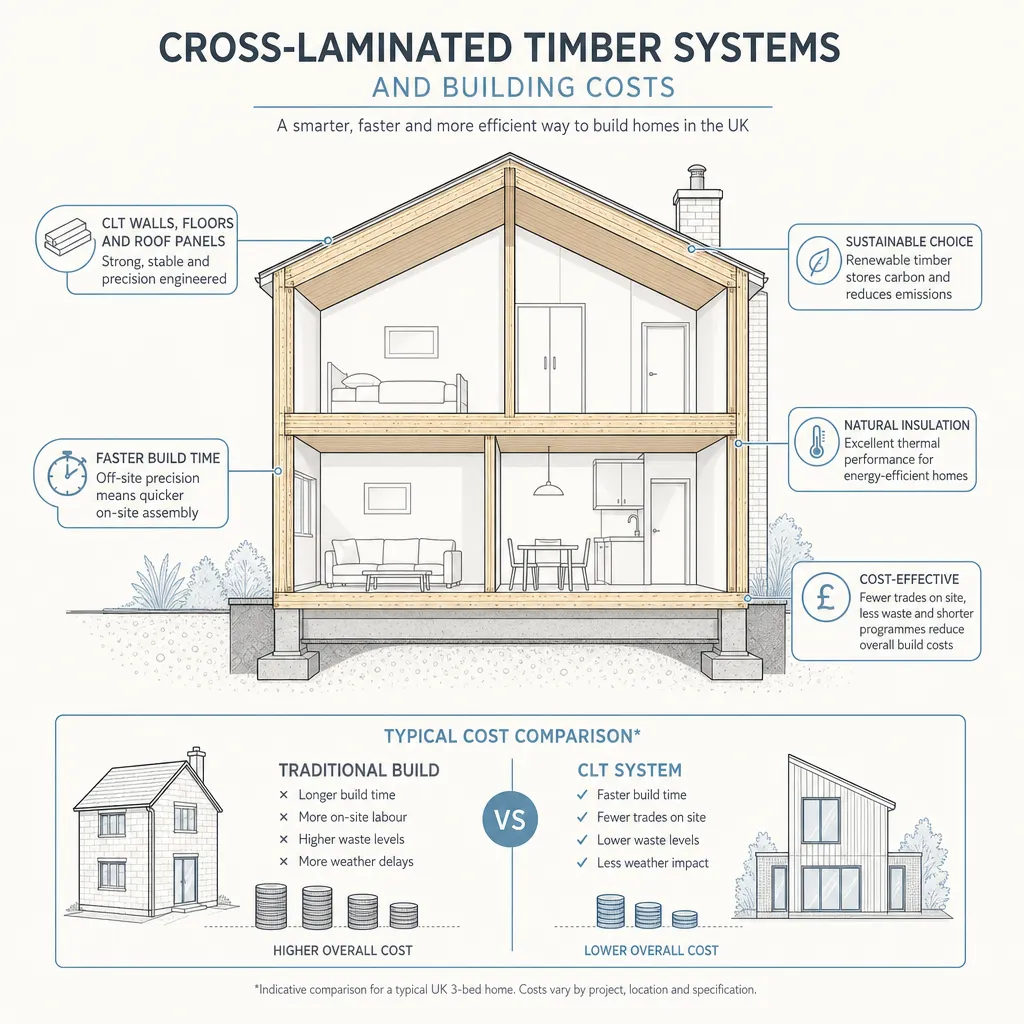
Cross-Laminated Timber Systems and Building Costs
Cross-laminated timber (CLT) panels for UK residential projects typically cost £150–£350 per m² for panel supply, with total build costs ranging from £1,800 to £3,000 per m² GIA including structure, envelope, and fit-out.
 Planning & Pre-Build
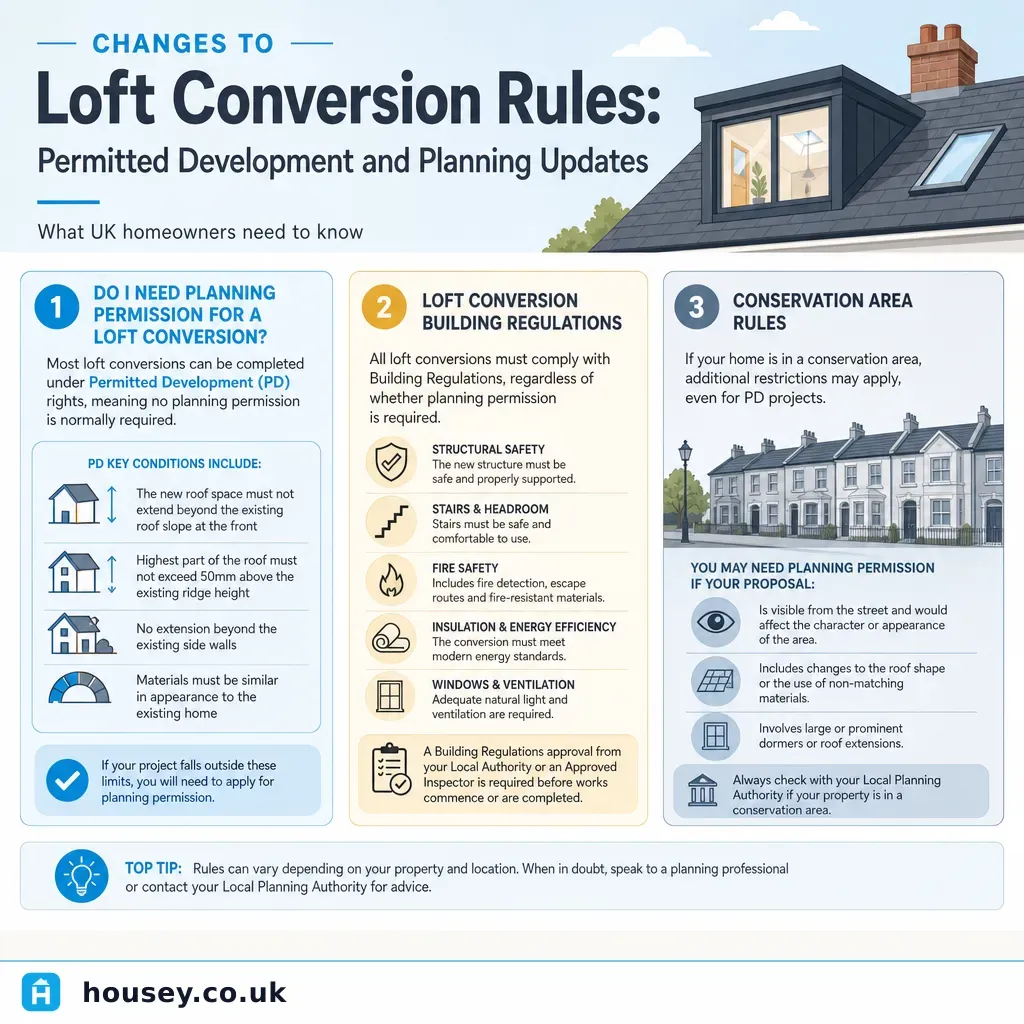
Changes to Loft Conversion Rules: Permitted Development and Planning Updates
In England, most loft conversions on standard houses qualify as Permitted Development under Class B of the GPDO 2015, allowing up to 40 cubic metres (terraced) or 50 cubic metres (detached or semi-detached) without a planning application — if conditions are met.
 Planning & Pre-Build
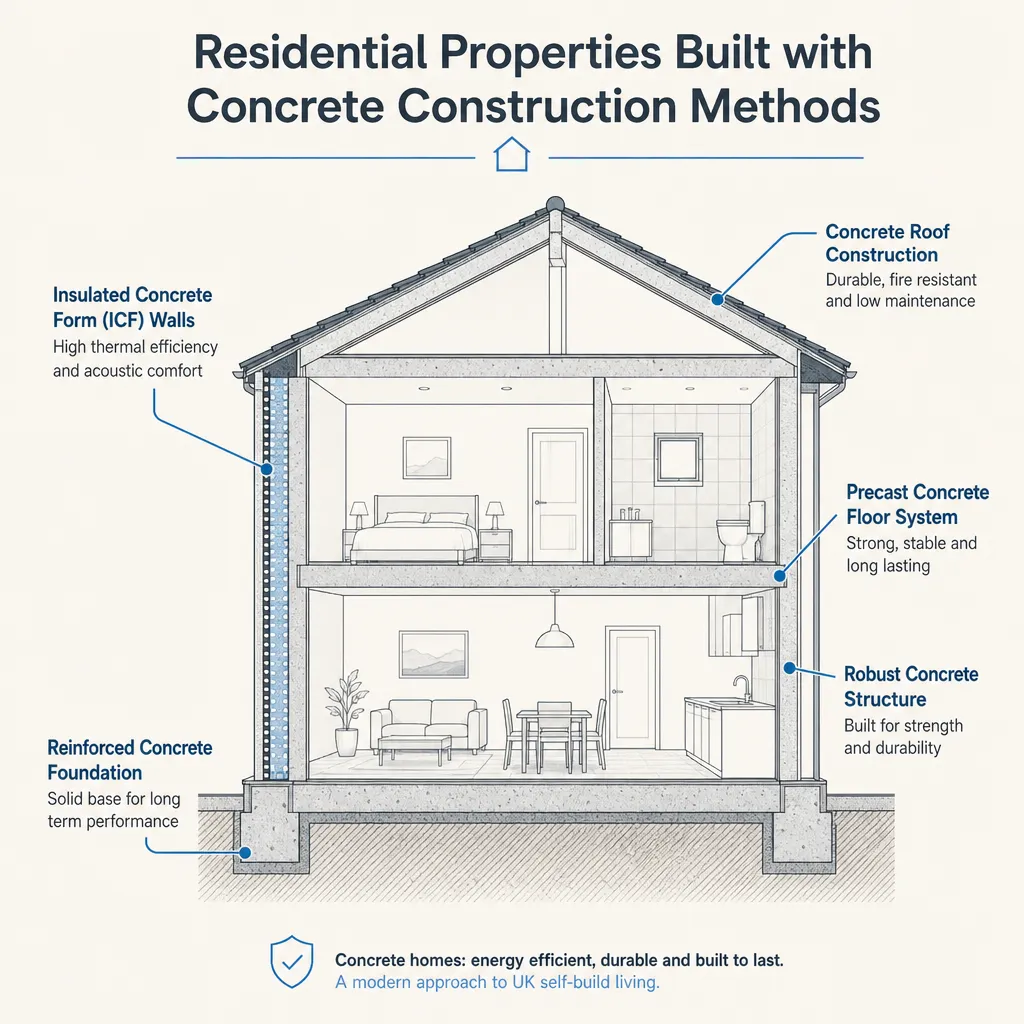
Residential Properties Built with Concrete Construction Methods
UK homes are built using several concrete methods: in-situ cast concrete, precast panel systems, insulating concrete formwork (ICF), and older non-traditional types such as Wimpey No-Fines and Laing Easiform.