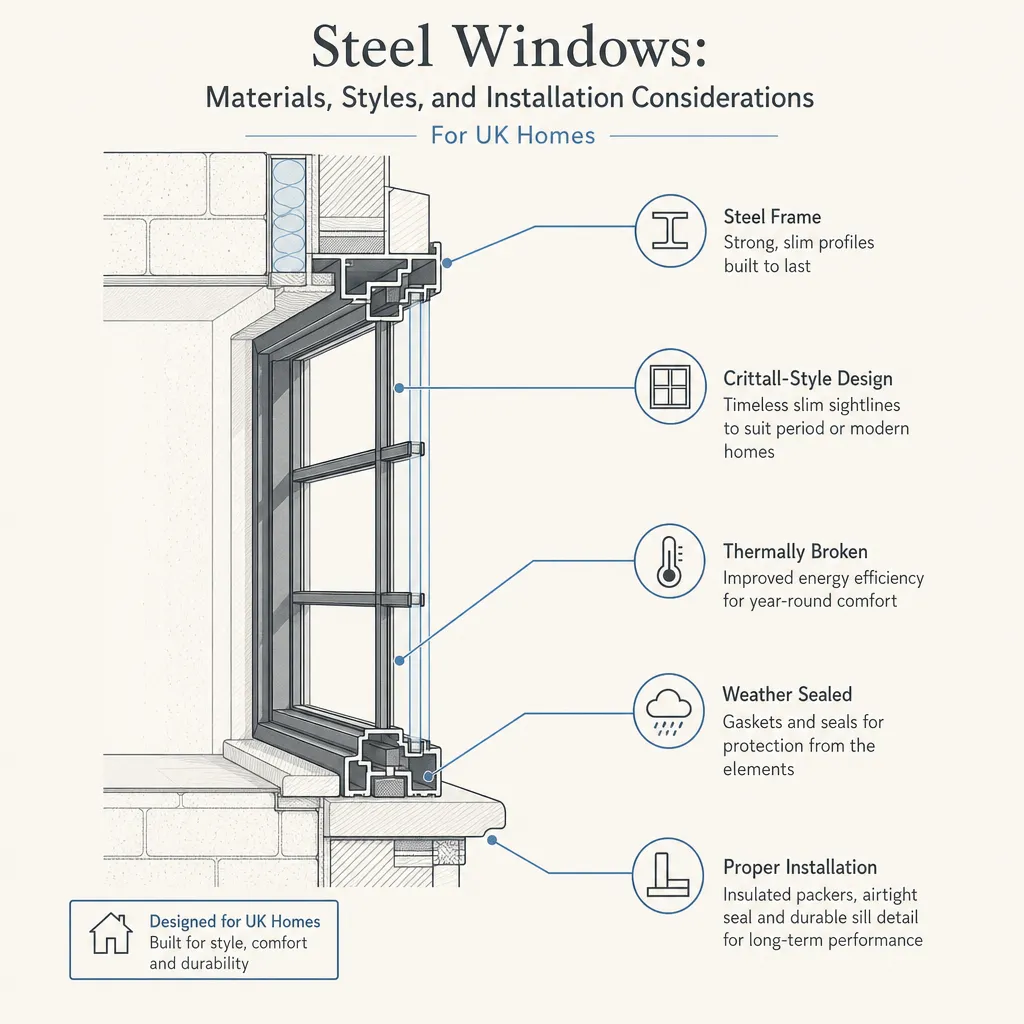
Steel Windows: Materials, Styles, and Installation Considerations
By Housey · Last reviewed 11th of May 2026
Steel Windows: Materials, Styles, and Installation Considerations
Steel windows appear in two very different contexts in the UK: as original single-glazed Crittall units in interwar and post-war houses, and as modern thermally broken frames in new-build properties and contemporary extensions. Whether you are restoring a 1930s semi or specifying windows for a new garden room, understanding how steel compares with other frame materials — and what installers and planners will require — helps you make a better specification decision before committing to a manufacturer.
Key points
- Thermally broken steel frames, with a polyamide or polyurethane thermal break, can achieve whole-window U-values of 1.6 W/m²K or better, complying with Building Regulations Approved Document L (2021 edition, England).
- In conservation areas and listed buildings, replacing windows — including original steel casements — may require planning permission or listed building consent; Crittall-pattern steel is frequently named in conservation area appraisals as the acceptable replacement profile.
- Steel window installations must be self-certified under FENSA or CERTASS, or notified via a local authority building notice — the same regulatory route as any other replacement window in England and Wales.
- Hot-dip galvanising followed by powder coating provides 20–30+ years of corrosion protection when chips and scratches are touched up promptly.
- Steel's high strength-to-depth ratio allows sightlines as narrow as 20–38 mm — significantly slimmer than uPVC (typically 60–100 mm) or aluminium (typically 35–60 mm).
How steel compares with other frame materials
Steel offers structural properties that other materials cannot replicate at the same sightline dimensions. The primary reason architects specify it — particularly for heritage and contemporary projects — is the slim visible profile, which allows a larger glass area within any given opening.
Material | Typical sightline | Whole-window U-value | Corrosion risk | Typical maintenance | Relative cost |
|---|---|---|---|---|---|
Steel (thermally broken) | 20–38 mm | ~1.4–1.8 W/m²K | Moderate | Repaint every 8–15 years | High |
Steel (non-broken, heritage) | 20–30 mm | ~3.0–5.8 W/m²K | Moderate | Repaint every 5–10 years | Medium–high |
Aluminium (thermally broken) | 35–60 mm | ~1.4–1.8 W/m²K | Low | Minimal | Medium–high |
uPVC | 60–100 mm | ~1.2–1.6 W/m²K | Very low | Minimal | Low–medium |
Timber (double-glazed) | 40–70 mm | ~1.4–1.8 W/m²K | Low if maintained | Repaint every 5–10 years | Medium–high |
Indicative data, last reviewed 2026-05-11. U-values depend on glazing specification and exact frame design. Request manufacturer performance data for any unit you specify.
Steel window styles
Heritage steel (single glazed): The original Crittall and similar products used in the 1920s–1960s. Characterised by very slim sightlines and putty-glazed geometric patterns. Thermally poor by modern standards — single glazing cannot meet current Part L requirements in a standard replacement scenario.
Thermally broken steel (modern): Steel inner and outer profiles separated by a polyamide thermal break, allowing double or triple glazing. These meet current Building Regulations Part L requirements and are used in contemporary extensions, new residential buildings, and sympathetic heritage restorations where double glazing is acceptable to planners.
Crittall-pattern (modern manufacture): Aluminium or steel frames produced with the characteristic thin, grid-divided profile of classic Crittall style, but with modern thermal performance. Widely specified in conservation areas where planning authorities want the visual character maintained alongside improved energy efficiency.
Industrial and loft style: Wide, multi-pane steel windows and doors used in kitchen extensions, garden rooms, and commercial-to-residential conversions. Often paired with steel bifold or sliding door systems for a unified aesthetic.
Planning and heritage considerations
Conservation areas: Replacing windows that contribute to the character of a conservation area — including original steel casements — may require planning permission in some areas, even where it would normally be permitted development. Some conservation area appraisals specifically designate acceptable replacement materials and frame profiles. Check with your local planning authority (LPA) before ordering.
Listed buildings: Any replacement window in a listed building requires listed building consent, regardless of the material or size. The LPA's conservation officer will advise on whether thermally broken steel, secondary glazing, or another solution is appropriate for the specific building.
Permitted development: Like-for-like replacement in a standard non-listed, non-conservation area property is generally permitted development in England. Enlarging an opening or substantially changing the profile may require a householder planning application.
Thermal performance and Building Regulations
The 2021 edition of Approved Document L (England) requires replacement windows to achieve a whole-window U-value of at least 1.4 W/m²K, or a Window Energy Rating of Band C as an alternative. Thermally broken steel frames with double or triple glazing can meet this requirement. Original single-glazed heritage steel frames cannot.
In listed buildings where double glazing is refused by the LPA, secondary glazing added to existing frames is often the only compliant route. Discuss the options with a specialist installer and the conservation officer before committing to a solution.
Installation: what to expect
Steel window installation differs from uPVC in several practical ways that affect timeline and cost:
- Lead times: Steel frames are fabricated to order; 8–16 weeks is typical for bespoke sizes. Plan your project timeline accordingly.
- Weight: Steel frames are heavier than uPVC or aluminium. Lintels and reveals should be assessed for condition before fitting.
- Site finishing: Powder-coated frames arrive pre-finished. Any cuts or damage during installation must be touched up immediately to prevent corrosion at exposed edges.
- Self-certification: Your installer must be registered with FENSA or CERTASS and issue a certificate on completion, or a building notice must be submitted to the local authority before works begin.
What to ask a steel window installer
- Are you FENSA- or CERTASS-registered for self-certification of replacement windows?
- What thermal break system does the frame use, and what is the tested whole-window U-value with the specified glazing unit?
- What is the frame finish, and what maintenance will be needed over the next 10–20 years?
- What lead times apply, and what happens if site dimensions change during the fabrication period?
- Do you have experience with conservation area or listed building projects — can you supply planning reference examples?
- Is VAT included in the quote, and are there additional charges for delivery, scaffolding, or frame disposal?
- What warranty is provided on frames, glazing seals, and ironmongery?
- Will you supply the FENSA or CERTASS certificate, and within what timeframe after completion?
When to get professional help
Consult a specialist installer or conservation architect when:
- The property is listed or in a conservation area — planning assessment is required before ordering anything.
- Original steel frames show significant corrosion affecting fixings or the surrounding masonry.
- You are enlarging an opening — structural and building control work is involved.
- You want a whole-house energy performance assessment before specifying replacement windows across a large property.
How Housey can help
Housey connects you with experienced window and door installers who work with steel, aluminium, and heritage frame materials. Get multiple quotes from vetted local specialists who understand FENSA certification, conservation area requirements, and current Building Regulations thermal performance standards.
Frequently asked questions
Do steel windows need planning permission?
Not usually for like-for-like replacement in a standard property. However, in conservation areas or for listed buildings, planning permission or listed building consent is typically required before any window replacement. Always check with your local planning authority first, as rules depend on the property's designation and any local conservation area policies in force.
Are modern steel windows energy efficient?
Yes — thermally broken steel frames with double or triple glazing can meet the current Building Regulations Part L minimum of 1.4 W/m²K. Original single-glazed heritage steel frames cannot meet this standard without replacement or the addition of internal secondary glazing, which is often the preferred approach in listed buildings where double glazing is not permitted.
How long do steel windows last?
Properly finished and maintained steel windows can last 40–60 years or more. Hot-dip galvanising plus powder coating provides the most durable base finish. Annual inspection and prompt touch-up of any chips or scratches prevents corrosion from developing at exposed edges, which is the most common maintenance failure point.
Can I get Crittall-style windows in double glazing?
Yes. Several manufacturers produce thermally broken steel frames with the characteristic slender, geometric profile of classic Crittall windows, combined with modern double-glazed units. These are widely specified in conservation areas where planning authorities want the visual character of original steel windows preserved alongside improved thermal performance.
Sources and further reading
- Approved Document L — Conservation of fuel and power (2021) — GOV.UK
- Windows: energy efficiency and historic buildings — Historic England
- Windows and doors — common projects guidance — Planning Portal
- FENSA — Glazing certification scheme — FENSA
Useful next reads
 Improvement & Build
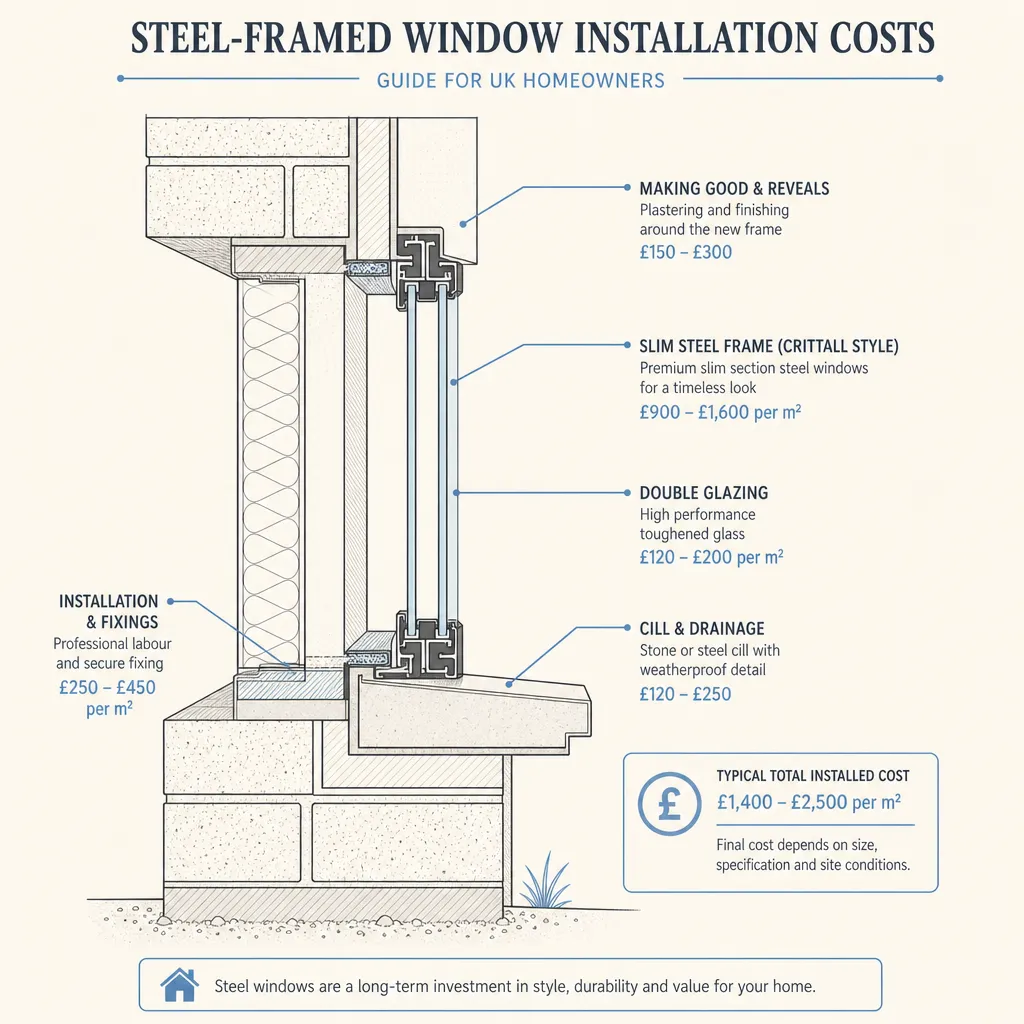
Steel-Framed Window Installation Costs
Steel-framed windows cost between £800 and £3,500 or more per window installed in the UK, depending on size, profile type, glazing specification, and whether old frames need removing.
 Improvement & Build
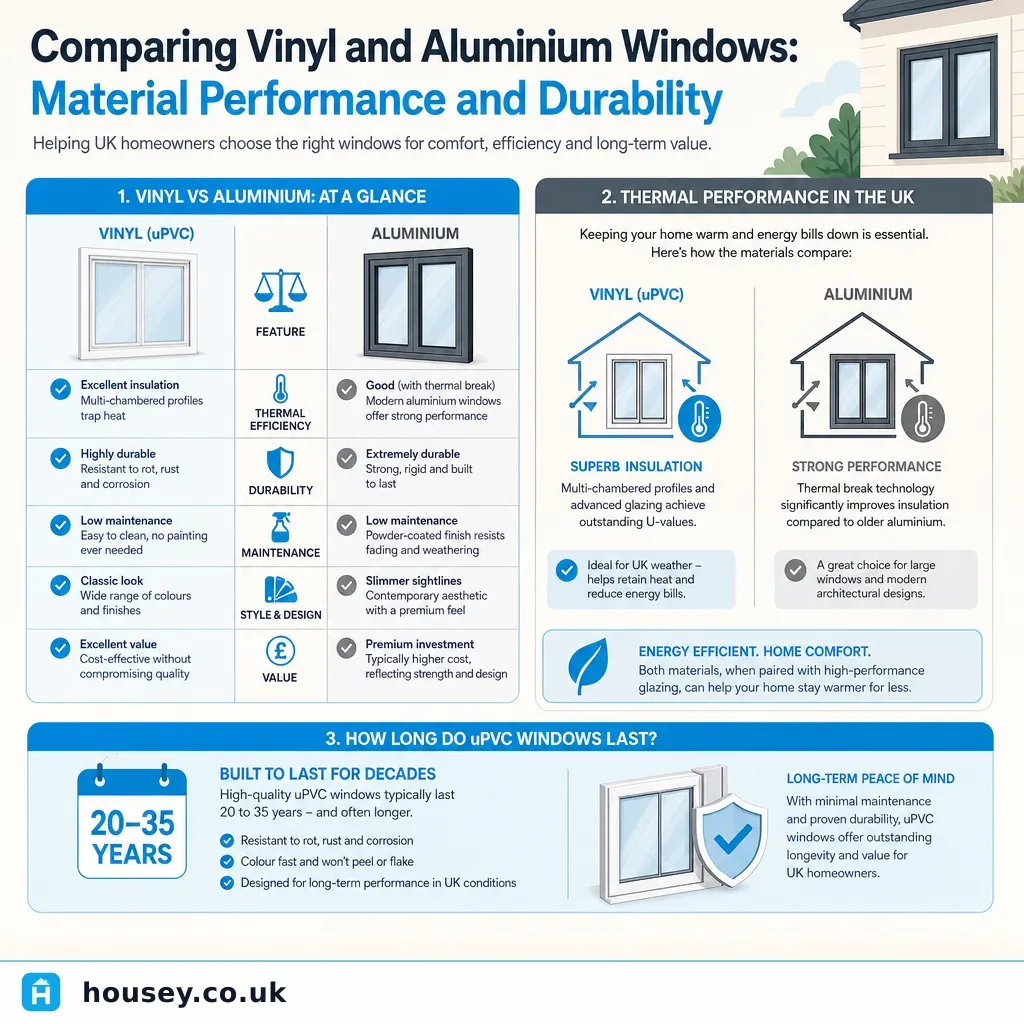
Comparing Vinyl and Aluminium Windows: Material Performance and Durability
uPVC (vinyl) and aluminium windows both meet UK Building Regulations Part L when properly specified.
 Improvement & Build
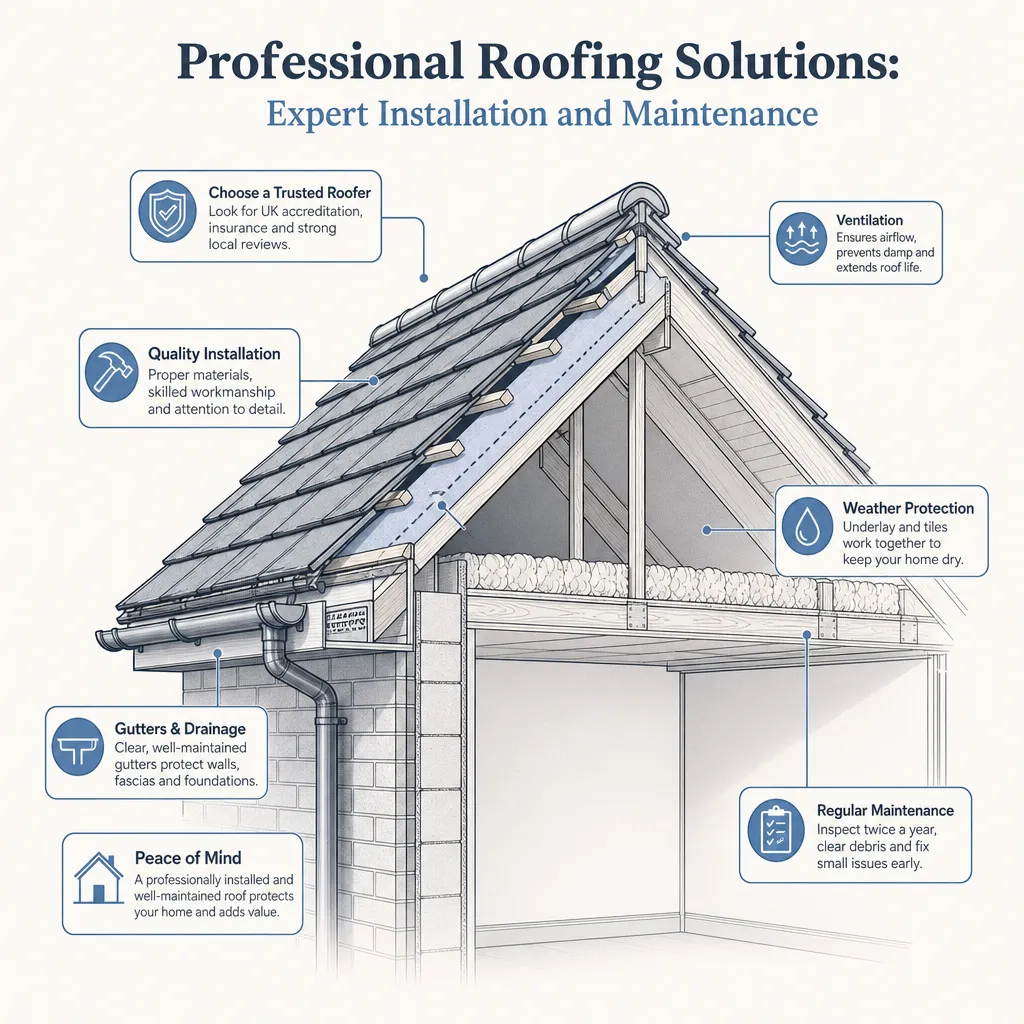
Professional Roofing Solutions: Expert Installation and Maintenance
A professional roofer should hold relevant trade qualifications such as NVQ Level 2 in Roofing Occupations, carry public liability insurance, and provide a written quotation.
 Improvement & Build
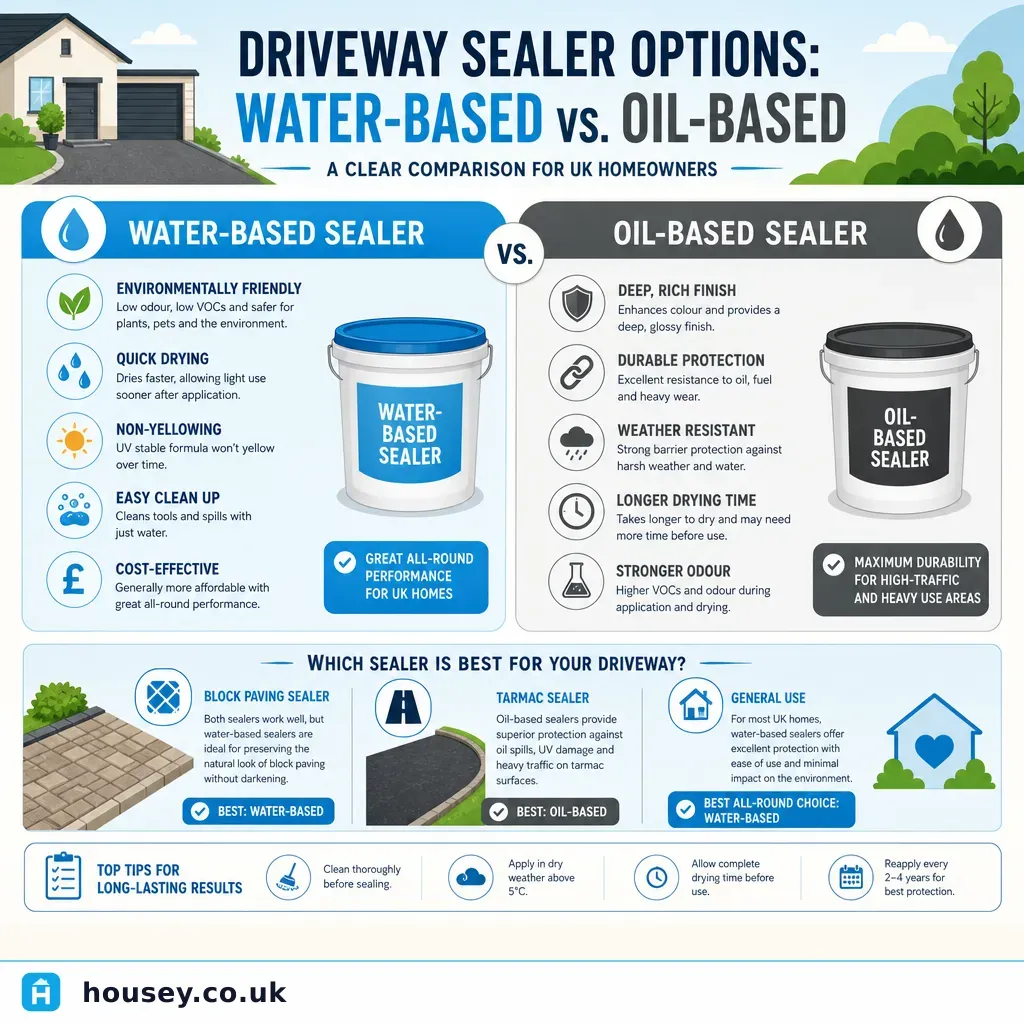
Driveway Sealer Options: Water-Based vs Oil-Based Comparison
Water-based driveway sealers are generally easier to apply, lower in VOCs, and suitable for most block paving and concrete surfaces.
 Improvement & Build
Driveway Sealers: Protection, Maintenance, and Longevity
Driveway sealers fall into two main categories: penetrating types absorbed into the substrate that leave no surface film, and film-forming types that coat and protect the surface.