Stone Step and Stair Construction: Outdoor Installation and Design
By Housey · Last reviewed 24th of May 2026
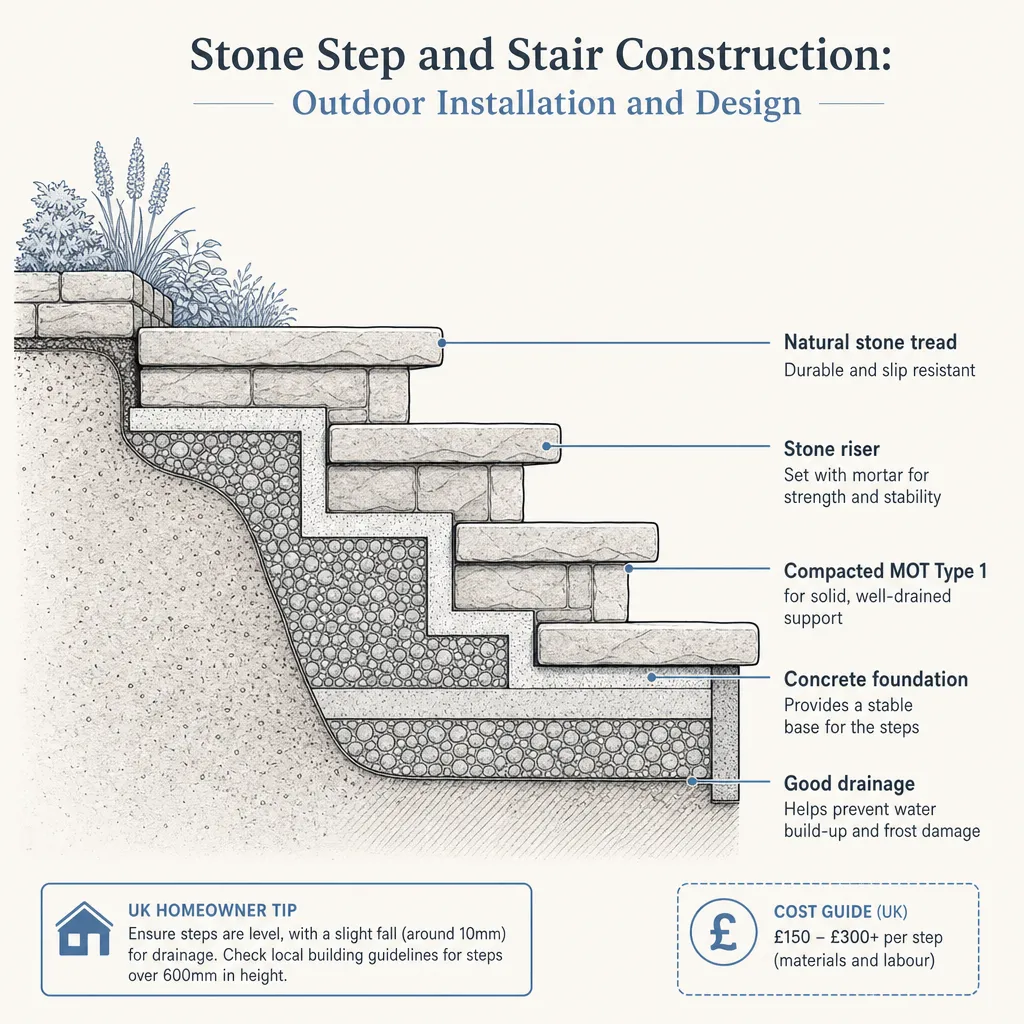
Stone Step and Stair Construction: Outdoor Installation and Design
Outdoor stone steps are a functional and enduring feature of UK gardens and property entrances, but they attract more scrutiny than most landscaping work — a step that settles, cracks, or becomes slippery is a safety hazard and a potential liability. The question of how to install them properly typically arises when redesigning a sloped garden, creating a defined route between levels, or upgrading a tired concrete or timber entrance stair.
Key points
- Outdoor stone steps typically cost £200–£500 per step installed in the UK, including subbase, foundation, tread, and risers, depending on stone type and site conditions. Indicative UK costs, last reviewed 2026-05-24.
- Each step should have a minimum tread depth of 300 mm and a riser height of 100–175 mm for safe outdoor use; Building Regulations Approved Document K (protection from falling) applies where steps form part of a building's access.
- A concrete strip foundation or compacted hardcore subbase is required below each run of steps — surface-laid stone without adequate footings will settle within one to three winters on UK clay soils.
- Slip resistance is a critical selection criterion: riven or textured stone finishes (riven sandstone, flamed granite) perform significantly better than sawn or polished surfaces when wet.
- Any steps that form the principal means of access to a dwelling and are being newly constructed may require building control notification, depending on scope and local authority interpretation.
Choosing the right stone for outdoor steps
Different stones perform differently as step material — weight-bearing capacity, weather resistance, and grip are more important criteria here than for flat paving.
Stone type | Best for | Avoid if | Slip resistance (wet) | Durability | Approx. tread cost |
|---|---|---|---|---|---|
Sandstone (riven) | Informal gardens, cottage aesthetics | High-traffic or heavily shaded areas | Good | Moderate | £40–£80 |
Granite (flamed or bush-hammered) | High traffic, driveways, contemporary gardens | Budget projects | Excellent | Excellent | £80–£150 |
Limestone (riven) | Period properties, formal gardens | Very shaded or north-facing sites | Good | Good | £50–£100 |
York Stone (reclaimed) | Period homes; authentic character | Consistent sizing required | Good | Excellent | £80–£130 |
Slate (riven) | Modern gardens, water features nearby | Freeze-thaw exposed northern sites | Good | Moderate | £45–£90 |
Approximate UK material costs per tread only, last reviewed 2026-05-24. Installed cost includes foundation, risers, bedding, and labour.
Which stone should you choose?
- Choose flamed or bush-hammered granite if steps are heavily used, adjacent to a drive, or on a shaded north-facing slope where grip is paramount.
- Choose riven sandstone if the garden is informal and sheltered, and the budget is mid-range.
- Choose reclaimed York Stone if the property is Victorian or Edwardian and authentic character is the priority — accept that thickness and sizing will vary between pieces.
- Choose riven limestone if the garden is formal or contemporary and is not heavily shaded or prone to biological growth.
- Ask a landscaper or structural engineer if the change in level exceeds four or five steps, there is evidence of ground movement nearby, or the steps adjoin the principal entrance to a dwelling.
- Check with your local planning authority if the property is listed or in a conservation area — external steps can require consent before work starts.
How outdoor stone steps are constructed
Foundation options
The choice of foundation depends on the number of steps, soil type, and expected load.
- Concrete strip foundation: the most common approach — a concrete pad or strip poured to 150–300 mm depth below ground level, depending on soil bearing capacity and frost depth. Required on clay-heavy soils.
- Compacted hardcore base: suitable for lightly loaded, shorter runs of steps on firm, free-draining ground. Minimum 150 mm of Type 1 MOT hardcore compacted with a plate compactor.
- Masonry risers on concrete: engineering brick or block risers are built on the concrete foundation; treads are then bedded on the risers in semi-dry mortar.
Drainage and tread falls
Each tread should slope 1–2% forward (towards the leading edge) so rainwater drains off the front rather than pooling on the surface. This detail is especially important in the UK's wet climate, where standing water accelerates freeze-thaw damage to mortar joints and stone edges.
Tread bedding and jointing
Stone treads are bedded on a semi-dry mortar mix and levelled to the required fall. Joints between treads and risers are pointed with mortar or a weatherproof resin compound. Hollow spots beneath treads — caused by insufficient mortar coverage — are a frequent cause of cracking within a few seasons.
Homeowner checklist: before work starts
When to get professional help
Most outdoor stone steps should be installed by an experienced landscaper or groundworker. Consider engaging a structural engineer if:
- There is more than a 1.5 m change in level.
- Ground conditions are poor, waterlogged, or show signs of previous movement.
- The steps adjoin a retaining wall.
- Steps form part of a new building access and building control has asked for structural calculations.
Red flags to watch for:
- A quote with no mention of foundation type or depth.
- Mortar-only bedding with no concrete foundation proposed for a clay-heavy site.
- No specification of drainage falls across the treads.
- Polished or sawn stone specified in a shaded or damp location without anti-slip treatment.
- Steps installed without adequate mortar coverage beneath the tread — hollow spots cause cracking within a few seasons.
How Housey can help
Housey connects you with trusted landscapers and experienced groundworkers who specialise in stone step installation across the UK. Get multiple itemised quotes, compare foundation specifications and stone choices, and proceed with confidence.
Frequently asked questions
Do outdoor stone steps need planning permission?
For most residential garden steps, planning permission is not required under permitted development rights in England. However, if the property is listed, in a conservation area, or the steps form part of a significant external alteration, planning permission or listed building consent may be needed. Check with your local planning authority if in any doubt.
How long do outdoor stone steps last?
Correctly installed stone steps on a proper concrete foundation can last 30–50 years or more. The most common causes of premature failure are an inadequate foundation (leading to settlement and cracking) and poor drainage (freeze-thaw damage to mortar joints and stone edges). Well-specified reclaimed York Stone steps can outlast the buildings they were originally installed on.
Do I need handrails on outdoor stone steps?
Building Regulations Part K requires a handrail for any stair with a rise of more than 600 mm forming part of a building's access. For purely garden steps, there is no specific regulatory requirement, but handrails are strongly advisable for steps used by elderly or mobility-impaired users, or for any run of more than three or four risers.
What is the best stone finish for UK outdoor steps?
Riven or textured finishes — such as riven sandstone, flamed granite, or bush-hammered limestone — offer significantly better slip resistance than sawn or polished surfaces when wet. In shaded or north-facing positions, choose a harder, denser stone such as granite or York Stone that resists algae and biological growth more effectively than softer sandstone.
Sources and further reading
- Approved Document K: Protection from falling, collision and impact — GOV.UK
- Common projects: householder guidance — Planning Portal
- Slip and trip prevention — Health and Safety Executive
- Repair and care of historic paving — Historic England
Useful next reads
 Improvement & Build
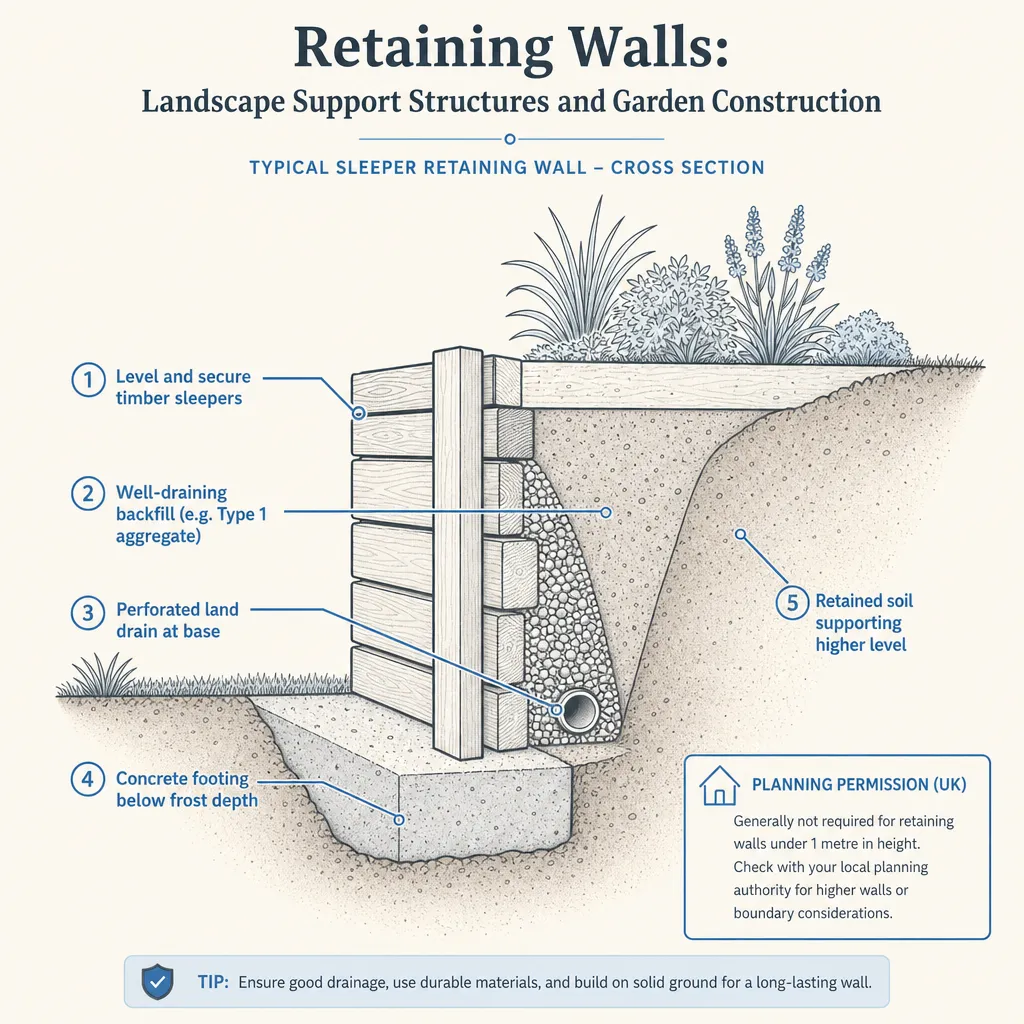
Retaining Walls: Landscape Support Structures and Garden Construction
A domestic retaining wall under 1 metre in height, away from buildings and boundaries, can usually be built by a landscaper or groundworker without structural calculations.
 Improvement & Build
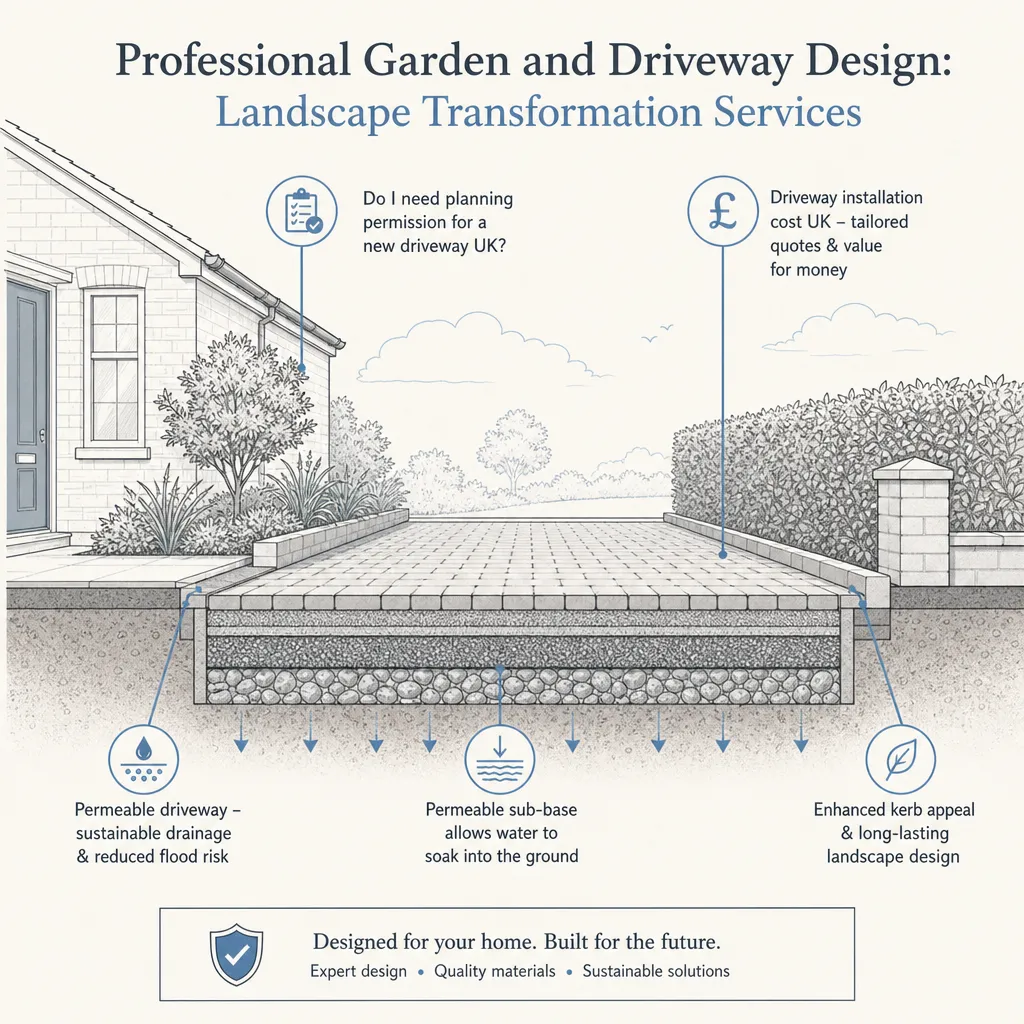
Professional Garden and Driveway Design: Landscape Transformation Services
Garden and driveway design combines hard landscaping — paving, block paving, gravel, resin — with planting and layout to improve kerb appeal and functionality.
 Improvement & Build
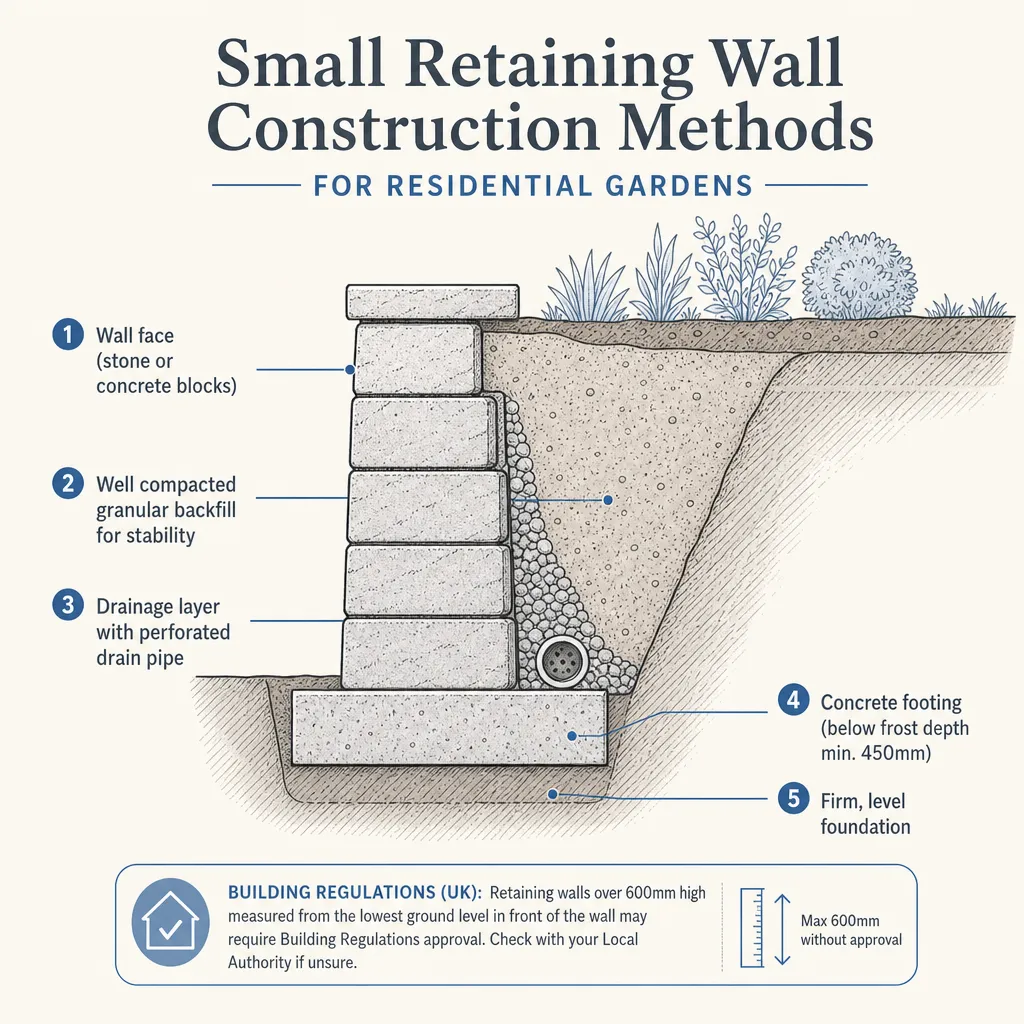
Small Retaining Wall Construction Methods for Residential Gardens
Small garden retaining walls up to 1 m are typically built using gravity methods, relying on mass to hold back soil.
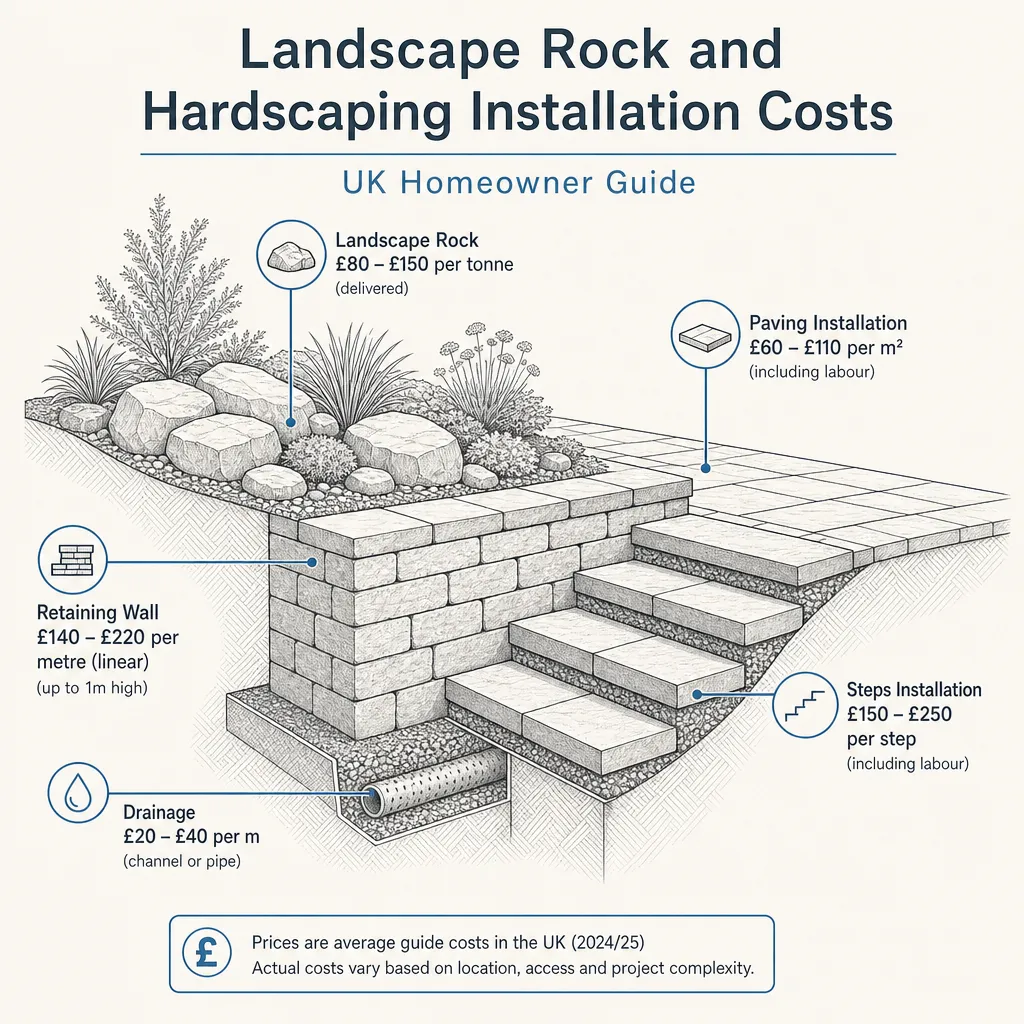 Improvement & Build
Landscape Rock and Hardscaping Installation Costs
Hardscaping and landscape rock installation costs in the UK vary widely by materials and scope.
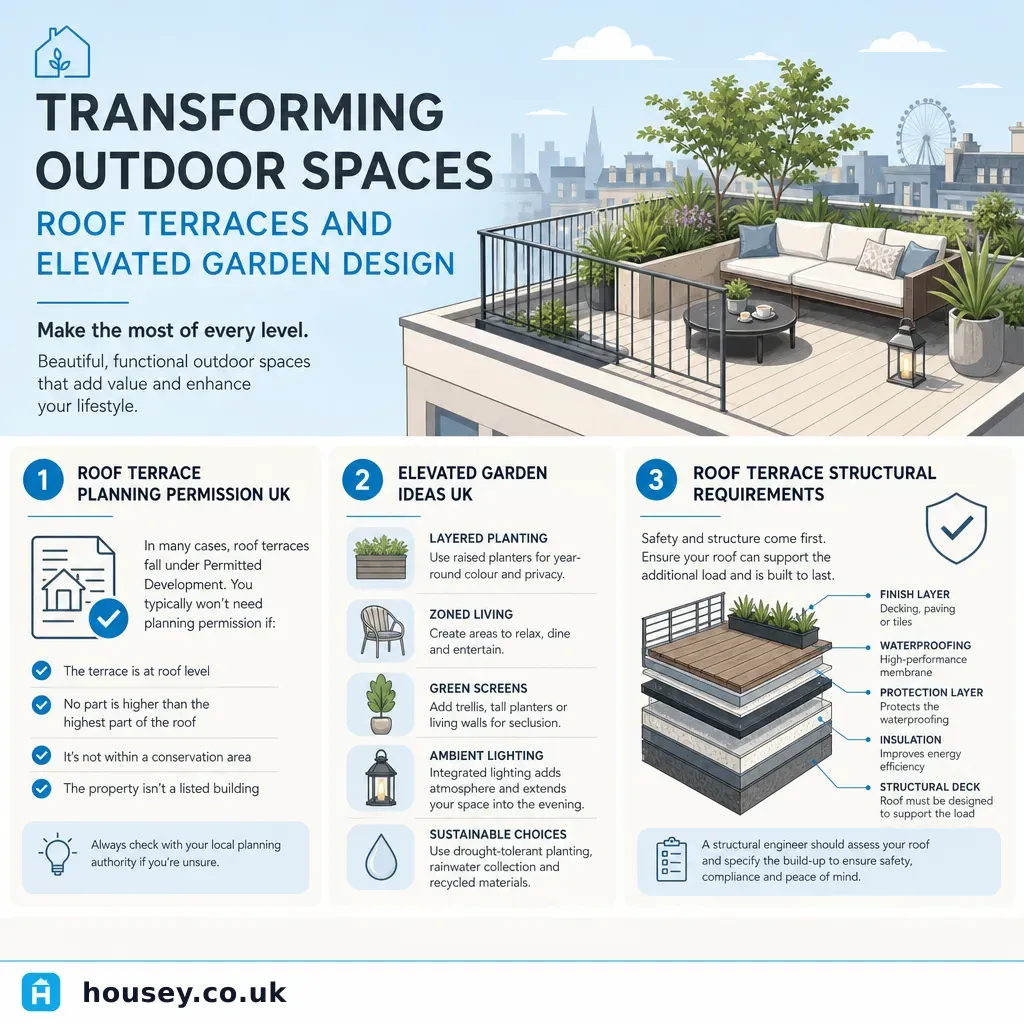 Improvement & Build
Transforming Outdoor Spaces: Roof Terraces and Elevated Garden Design
Roof terraces in the UK almost always need planning permission and a structural engineer's load capacity assessment before design work begins.