Storm Doors versus Security Doors: Protection Options Compared
By Housey · Last reviewed 24th of May 2026
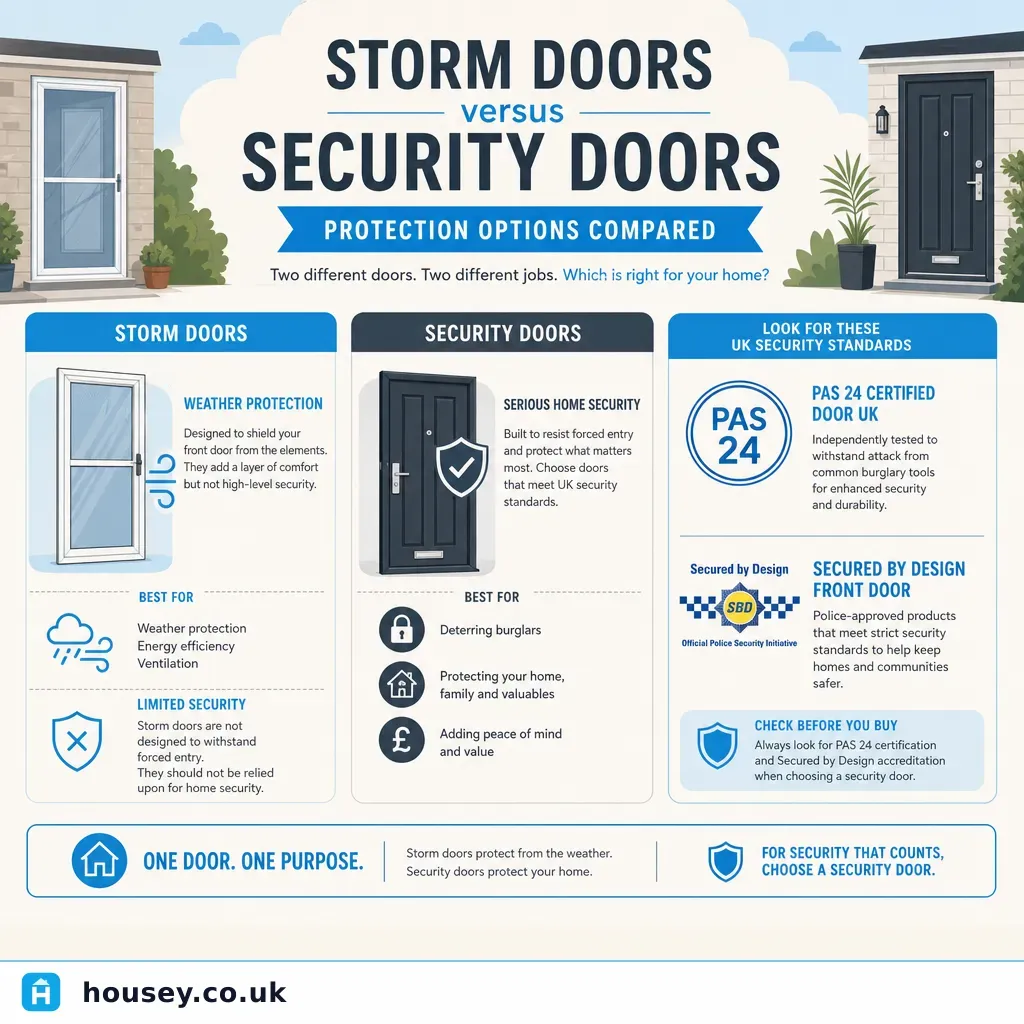
Storm Doors versus Security Doors: Protection Options Compared
Choosing the right external door is a practical decision that affects energy efficiency, home security, and day-to-day usability. The terms "storm door" and "security door" are sometimes used interchangeably in searches, but they describe products built for very different purposes. Understanding the distinction helps you avoid spending on a door that does not address your actual concern — whether that is winter draughts or resistance to a forced-entry attempt.
Key points
- PAS 24:2022 is the UK's enhanced-security performance specification for doorsets; products meeting it are generally accepted as satisfying Building Regulations Part Q for new dwellings and extensions.
- Secured by Design (SBD) is a police-backed accreditation scheme run by the National Police Chiefs' Council; SBD-certified doors have passed independent forced-entry testing.
- LPS 1175 is the Loss Prevention Certification Board standard for physical security, rated SR1 to SR6+; SR2 is commonly specified for domestic front doors in higher-risk areas.
- Storm doors — sometimes listed as "porch doors" or "secondary outer doors" by UK suppliers — are primarily weather and draught barriers and do not carry security certification.
- Multi-point locking with a BS TS007 three-star or Sold Secure Diamond (SS312) anti-snap cylinder is standard specification on UK security doors.
What is a storm door in the UK?
In North America, storm doors are a standard fixture: a secondary door hung directly in front of the main entrance to buffer it from wind, rain, and cold. The term is less established in UK trade literature — most UK suppliers list comparable products as porch doors, outer doors, or secondary external doors — but the product is available here and is often chosen for older or exposed properties.
A UK storm door typically uses a lighter-weight aluminium or uPVC frame, is often partially or fully glazed, and is fitted in front of the primary front door. Its main functions are:
- Draught reduction: creating a small airlock between the outer and inner doors that limits cold air infiltration and makes the hallway noticeably warmer.
- Weather protection: shielding the primary door and threshold from direct wind-driven rain, which can extend the lifespan of timber or composite primary doors.
- Basic deterrence: an additional door layer may slow a casual opportunist, but storm doors are not tested or rated as security products.
Storm doors generally do not carry PAS 24, LPS 1175, or Secured by Design certification. If burglary resistance is your primary concern, a storm door is not a substitute for a purpose-built security door.
What is a security door in the UK?
A security door is purpose-engineered to resist forced entry. In the UK residential market, this typically means:
PAS 24:2022 — the Publicly Available Specification published by BSI covering enhanced security performance for doorsets. Doors certified to PAS 24 have passed tests for mechanical performance, lock manipulation resistance, and destructive attack. Building Regulations Part Q requires doorsets in new dwellings and extensions to meet this or an equivalent standard.
Secured by Design (SBD) — a scheme run by the National Police Chiefs' Council. SBD-certified products have been independently tested and meet police-recommended security standards. Some insurers recognise SBD certification and may adjust premiums; check with your insurer before purchasing.
LPS 1175 — the Loss Prevention Certification Board standard, ranging from SR1 (resistant to a short, unaided attack with basic tools) to SR6+. SR2 is commonly specified for domestic front doors in higher-risk areas; commercial properties may require SR3 or above.
Hardware requirements: security doors in the UK typically feature steel-reinforced composite or solid-steel frames, multi-point locking systems (three to five locking points), and cylinders conforming to BS TS007 (three-star) or the Sold Secure Diamond (SS312) rating — both designed to resist the lock-snapping and picking methods most commonly used in domestic break-ins.
Storm door vs security door: comparison
Feature | Storm door | Security door |
|---|---|---|
Primary purpose | Weather and draught protection | Forced-entry resistance |
Typical materials | Aluminium or uPVC frame, glazed | Steel-reinforced composite or solid steel |
UK security standard | None (unrated) | PAS 24:2022, SBD, LPS 1175 SR1–SR6+ |
Locking system | Single-point or basic multi-point | Multi-point, BS TS007 or SS312 cylinder |
Satisfies Building Regs Part Q | No | Yes (if PAS 24 certified) |
Insurer recognition | Unlikely | Possible (SBD products) |
Best for | Exposed entrances, draughty porches, period properties | High-risk areas, new builds, HMOs, rental compliance |
Indicative installed cost | £300–£800 | £800–£2,500+ |
Indicative UK costs, last reviewed 2026-05-24. Prices vary by material, size, glazing, hardware, and installer location. Obtain at least three quotes.
Which option should you choose?
- Choose a storm door if your primary concern is cold draughts at the entrance, rain splash at the threshold, or protecting a period door from direct weather exposure.
- Choose a security door if you are in a higher-risk area, your insurer specifies enhanced door security, your property is an HMO or rental subject to licensing conditions, or you are adding an extension where Building Regulations Part Q applies.
- Consider a composite security door with good weathering data if you want both — many modern composite doors certified to PAS 24 also achieve strong thermal and weather performance.
- Consult your local police architectural liaison officer (ALO) if you are unsure what security standard is appropriate for your area; most UK police forces offer free home security advice.
What to ask before accepting a quote
- Does the door carry PAS 24:2022 certification, and can the installer provide the test certificate?
- Is it Secured by Design accredited?
- What is the cylinder specification — does it meet BS TS007 three-star or carry the Sold Secure Diamond (SS312) rating?
- How many locking points does the system have, and where are they positioned?
- Is the frame steel-reinforced, and what is the anchoring specification into the surrounding masonry?
- Is VAT included in the quoted price?
- What is the guarantee period for the door, frame, and hardware?
- Will you remove and dispose of the existing door and frame?
When to get professional help
External doorsets affect structural openings, weatherproofing, and security — errors are costly to reverse. Use a qualified installer rather than attempting the work yourself if:
- You are unsure whether the opening requires structural support before a new door can be fitted.
- The existing frame is rotten, cracked, or noticeably out of square.
- You need to demonstrate Part Q compliance to building control for an extension or new build.
- Your property is listed or in a conservation area, where material changes to external doors may need listed building consent or planning permission before work begins.
How Housey can help
Housey connects homeowners with vetted window and door installers who can assess your entrance, recommend products certified to PAS 24 or Secured by Design standards, and provide itemised quotes for comparison. Submit your job details to receive quotes from up to four local specialists.
Frequently asked questions
Does a storm door improve home security in the UK?
A storm door adds a physical barrier that may deter casual opportunists, but it is not a certified security product and does not satisfy Building Regulations Part Q. Storm doors carry no PAS 24 or Secured by Design certification. If burglary resistance is your priority, a purpose-built security door tested to PAS 24:2022 and ideally Secured by Design accredited is the appropriate choice.
Do I need planning permission to fit a security door?
Replacing a like-for-like external door on a house is usually permitted development and does not require planning permission. However, properties in conservation areas, listed buildings, or those subject to Article 4 directions may require consent before any external door changes. Check with your local planning authority or conservation officer before ordering a new door.
Will a security door reduce my home insurance premium?
Some insurers recognise Secured by Design-certified products and may offer a premium reduction. The saving varies significantly between providers, and not all insurers will recognise the accreditation. Check directly with your insurer before purchasing — ask whether the specific product qualifies and what documentation they require to apply any discount.
What is lock snapping and why does it matter for UK security doors?
Lock snapping is the most common forced-entry method used against UK front doors. An attacker grips the euro cylinder with pliers and snaps the visible section, exposing the locking mechanism. Anti-snap cylinders conforming to BS TS007 three-star or Sold Secure Diamond (SS312) are designed to break at a controlled internal point, preventing the lock from being accessed.
Sources and further reading
- Approved Document Q: security in new dwellings — GOV.UK
- Secured by Design product accreditation — National Police Chiefs' Council
- BSI PAS 24:2022 overview — BSI Group
- LPS 1175 physical security ratings — BRE Certification
- Sold Secure lock and cylinder standards — Sold Secure
Useful next reads
 Improvement & Build
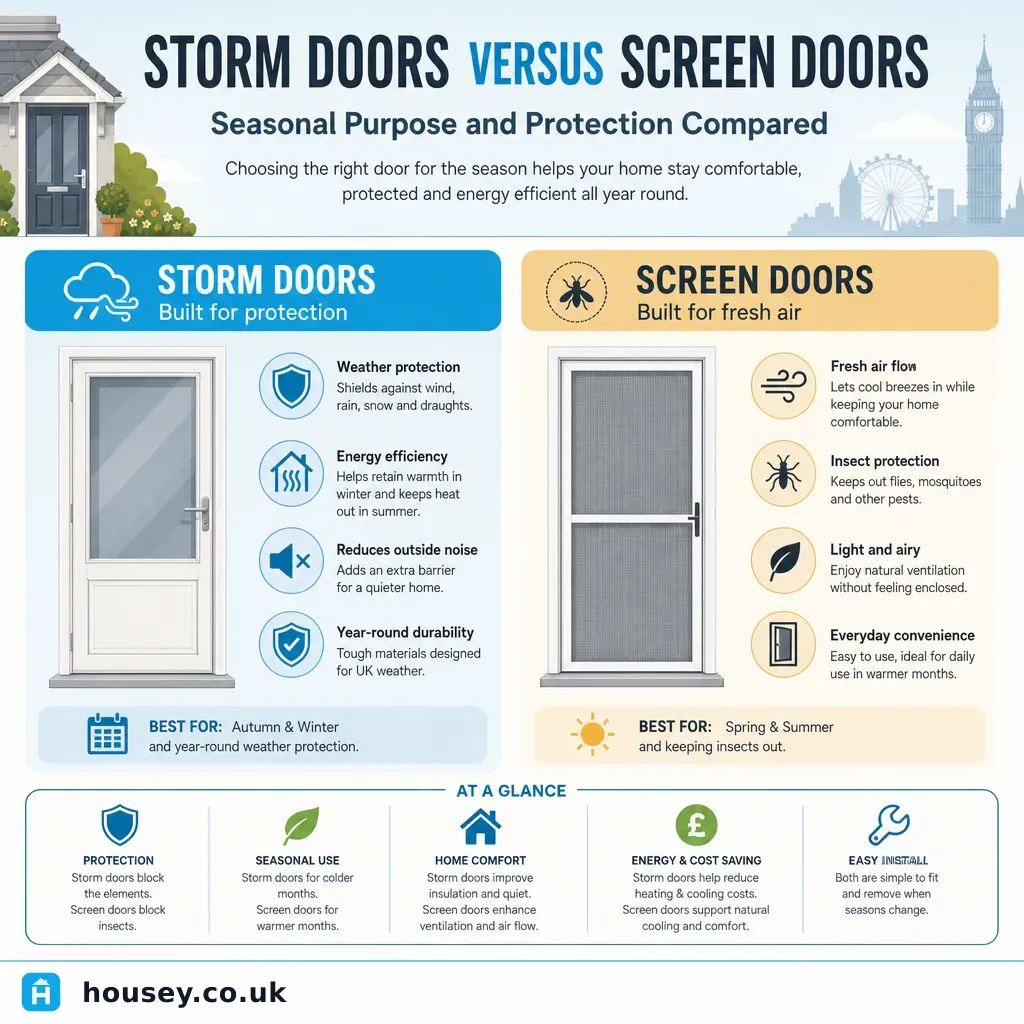
Storm Doors versus Screen Doors: Seasonal Purpose and Protection Compared
Storm doors are secondary outer doors that reduce draughts, rain ingress, and heat loss year-round, while screen doors are lightweight mesh panels that block insects during warm-weather ventilation.
 Improvement & Build
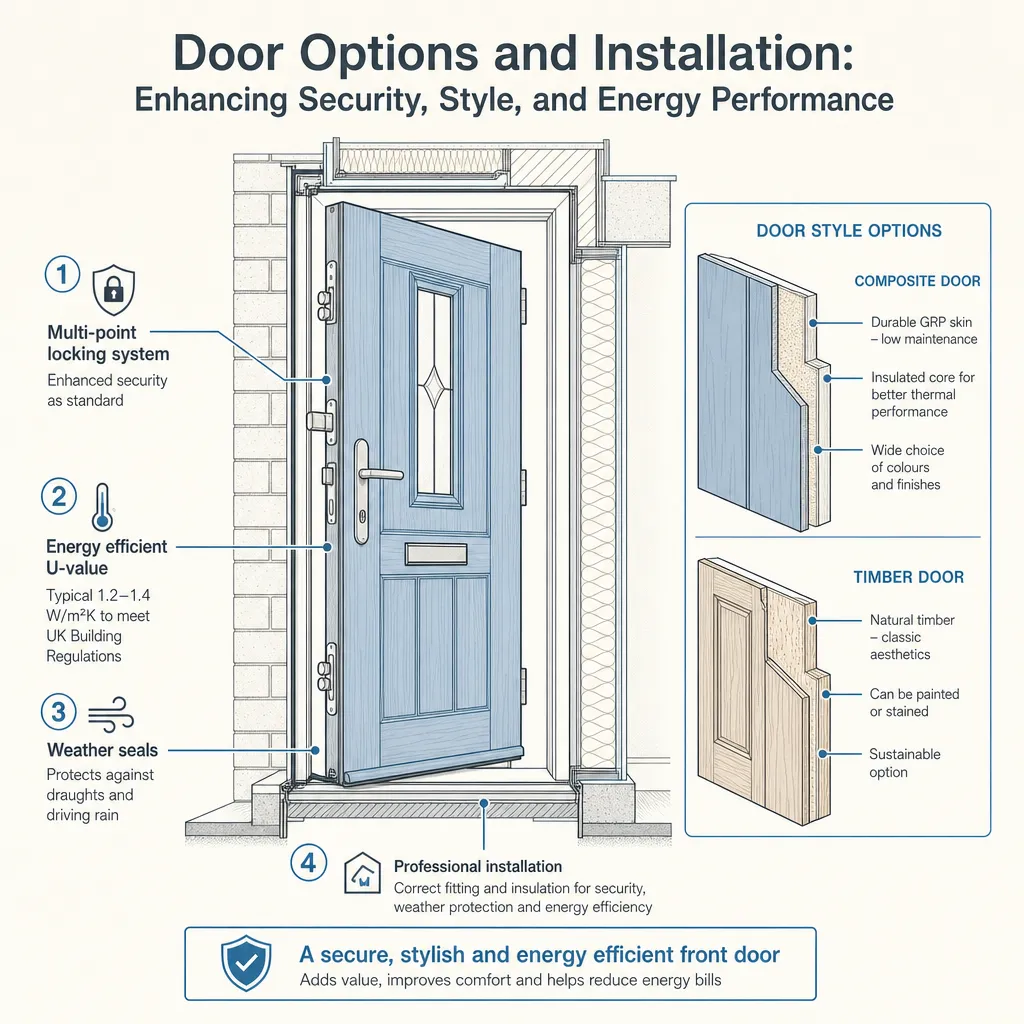
Door Options and Installation: Enhancing Security, Style, and Energy Performance
Choosing a new external door involves balancing security ratings, thermal performance, and style.
 Improvement & Build
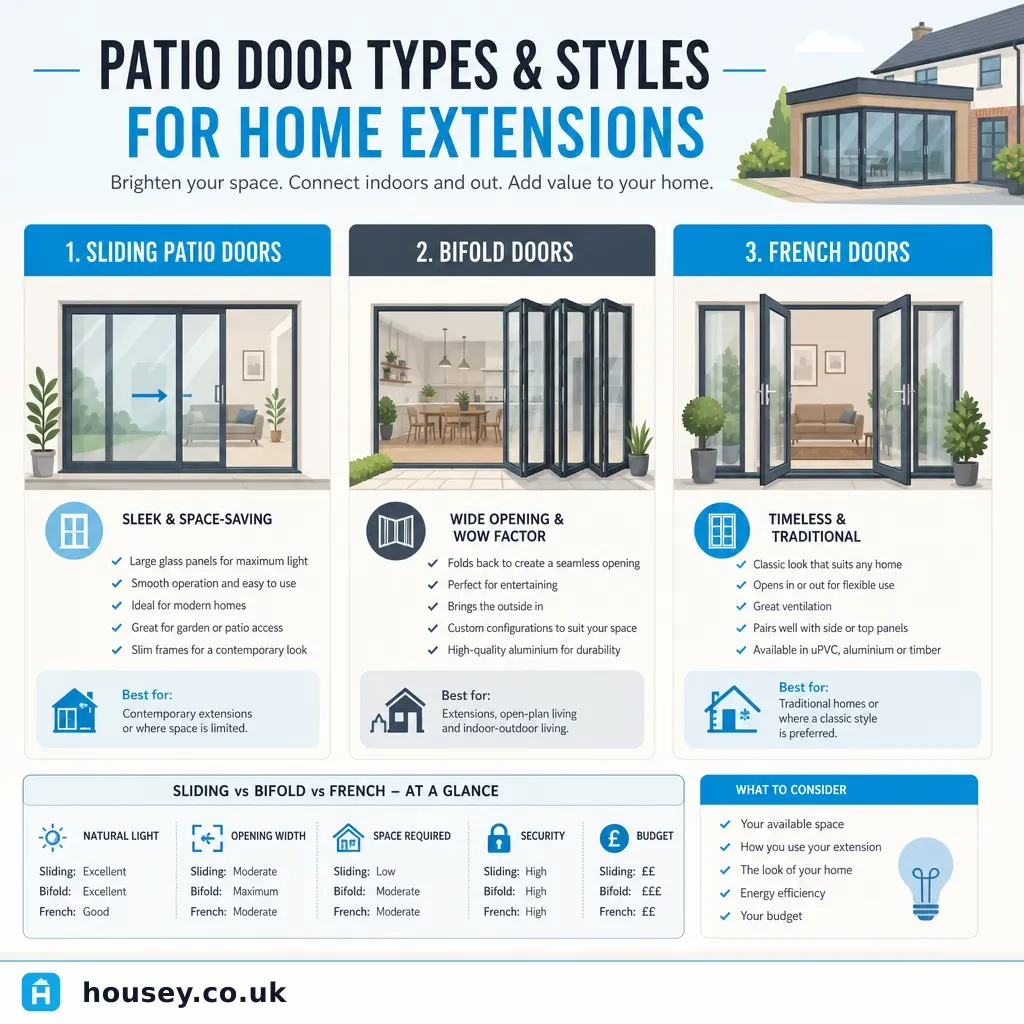
Patio Door Types and Styles for Home Extensions
For most UK home extensions, sliding doors suit openings up to 3.
 Improvement & Build
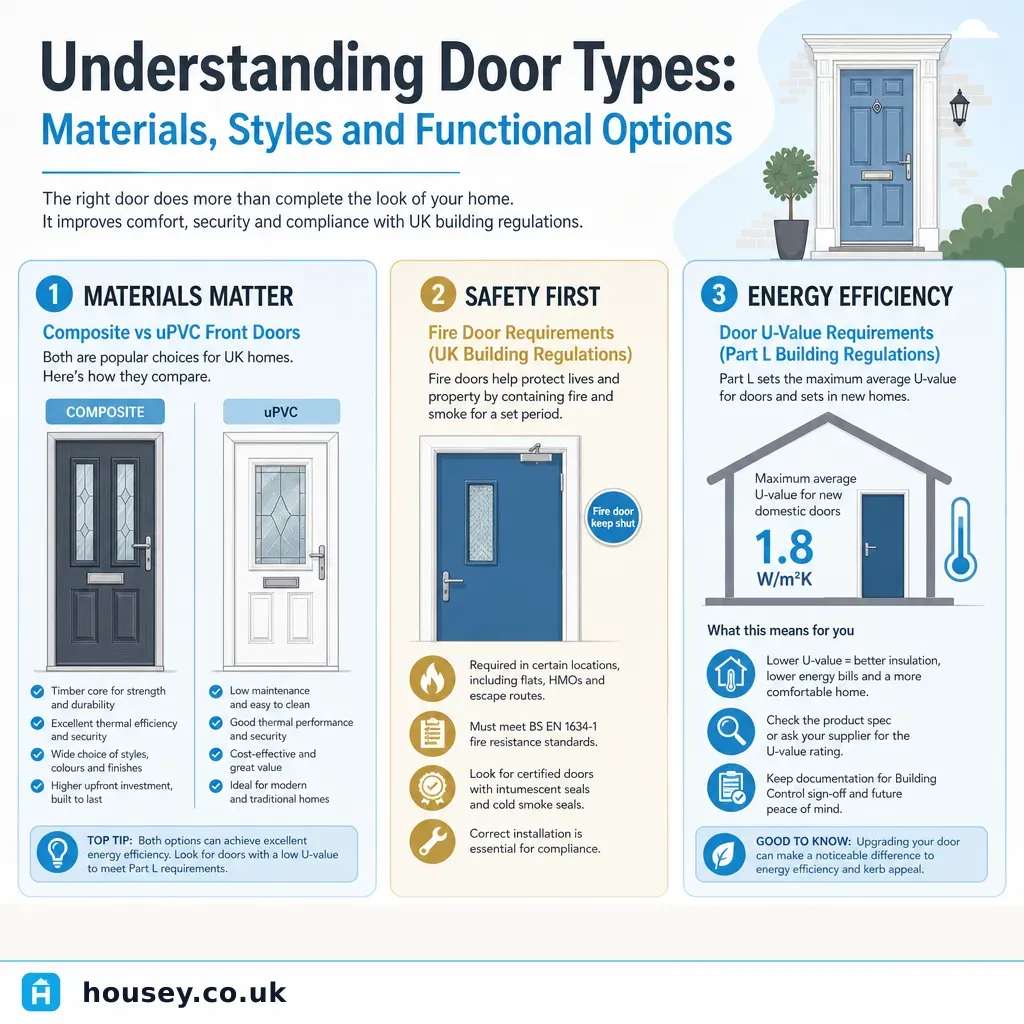
Understanding Door Types: Materials, Styles and Functional Options
Doors are available in timber, uPVC, aluminium, steel, and composite materials, each suited to different budgets, locations, and performance requirements.
 Improvement & Build
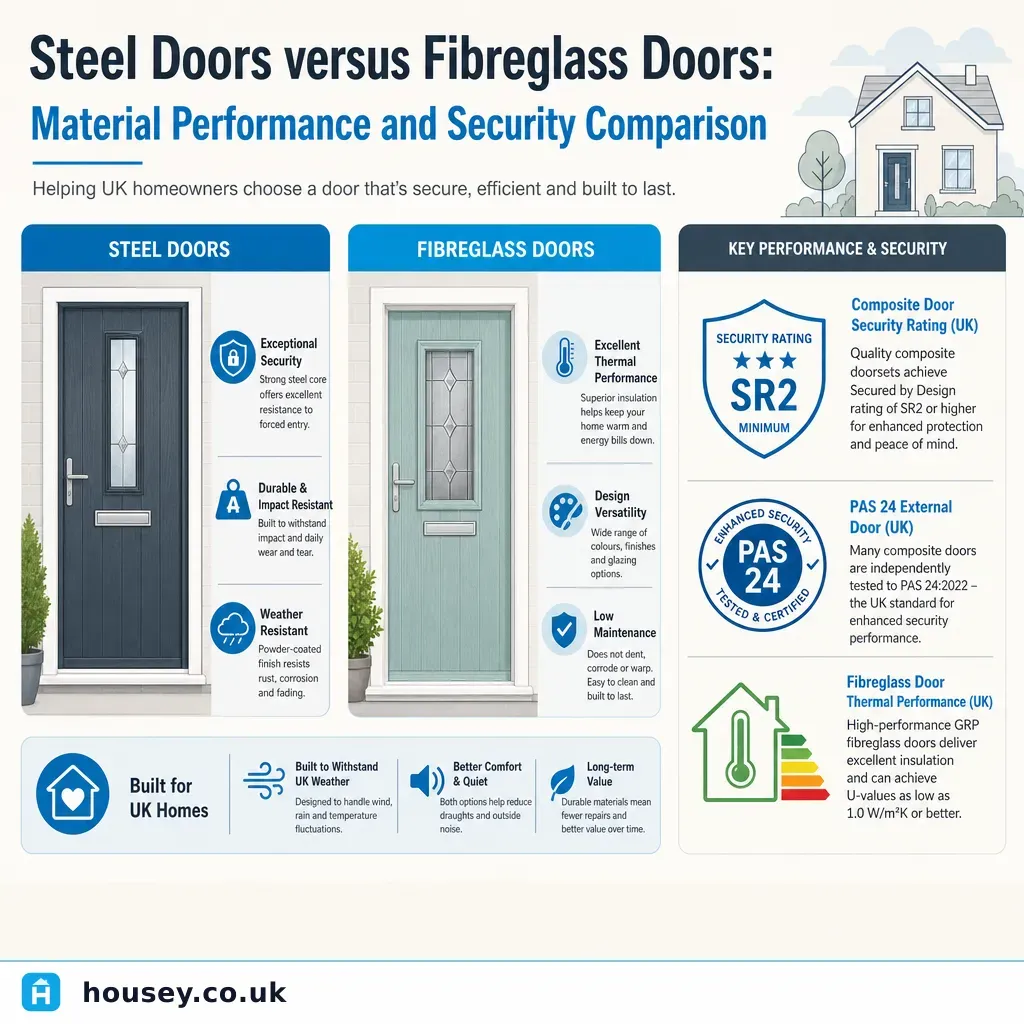
Steel Doors versus Fibreglass Doors: Material Performance and Security Comparison
Steel external doors offer higher forced-entry resistance and suit commercial-grade security requirements.